
Research article · 2023 · Full text
International Journal of Biology SciencesIsolation of salmonella from goats slaughtered at export abattoirs in Bishoftu town
Volume 5(1) · Pages 209–214 · DOI: 10.33545/26649926.2023.v5.i1c.188 ↗
Research areasIdentification and Quantification in Food
Abstract
Author-writtenA cross-sectional study was conducted between February, 2020 and March 2020 on apparently healthy slaughtered goats at Abyssnia export abattoirs located at Bishoftu towns to estimate the prevalence of salmonellosis from goat meat by the isolation and identification conventional tests. A total of 200 samples carcass swab (60), hand swab (40), knife swab (40) and faces (60) were collected from goats slaughtered at Abyssinia export abattoir. The samples were examined for the presence of Salmonella by the conventional techniques of Selective media and biochemical tests for isolation salmonella species. From the total of 200 animals examined, 5 (2.5%) were positive of which 4 (2%) were young and 1 (0.5%) were adult. Statistically significant difference (p=0.01) in the prevalence of Salmonella was observed between the age of goats. Of the total 200 samples examined from apparently healthy slaughtered goats, 5 (2.5%) samples were Salmonella positive. Salmonella was isolated from 1.5% carcass swab, 0% hand swab, 0.5% knife swab and 0.5% faces samples. However, there was significant difference between samples (P=0.01). The results of this study showed the potential risk of goats as sources of pathogen for humans in the study area. These findings stressed the need for implementation of preventing close contact of offal and carcass during evisceration.
Summary
Source-checkedPlain-language reading of the full paper, prepared with AI and checked against the text. Each point links to the authors' own words.
Why it matters
- Salmonellosis is a widespread foodborne zoonotic disease that causes significant illness and death in both humans and animals. View evidence ↗
- Salmonella is a primary cause of meat contamination, posing risks to both animal and human health. View evidence ↗
- Despite goat meat being a known source of Salmonella food poisoning in Ethiopia, there is limited published data on how the bacteria is conveyed in goats. View evidence ↗
The question
- The study aimed to isolate Salmonella from various sample types, including knife, hand, and carcass swabs, as well as feces, from goats slaughtered at the Abyssinia export abattoir. View evidence ↗
What they did
- A cross-sectional study was performed from February to March 2020 on apparently healthy goats at the Abyssinia export abattoirs in Bishoftu. View evidence ↗
- The researchers collected a total of 200 samples: 60 carcass swabs, 40 hand swabs, 40 knife swabs, and 60 fecal samples. View evidence ↗
- Goats were categorized by dentition: those with one pair of permanent incisors were 'young' (1-2 years), and those with two or more pairs were 'adult' (>2 years). View evidence ↗
- Salmonella was identified using conventional techniques involving selective media and biochemical tests. View evidence ↗
What they found
- Out of 200 animals examined, 5 (2.5%) tested positive for Salmonella. View evidence ↗
- Salmonella prevalence was significantly higher in young goats (2%) compared to adult goats (0.5%), with a p-value of 0.01. View evidence ↗
- The bacteria were isolated from carcass swabs (1.5%), knife swabs (0.5%), and fecal samples (0.5%), while no Salmonella was found in hand swabs (0%). View evidence ↗
- There was a statistically significant difference (p < 0.05) in the frequency of Salmonella isolation across the different sample sources. View evidence ↗
What it means
- The authors conclude that slaughtered goats are important sources of meat contamination, and consuming raw meat can lead to zoonotic salmonellosis. View evidence ↗
- The authors recommend the mandatory application of good hygiene practices during the slaughtering process. View evidence ↗
- The authors state that further studies, including molecular characterization of Salmonella, are needed. View evidence ↗
Visual summary
3 visualsIllustrations explain the paper; charts are replotted from the paper's own table values.
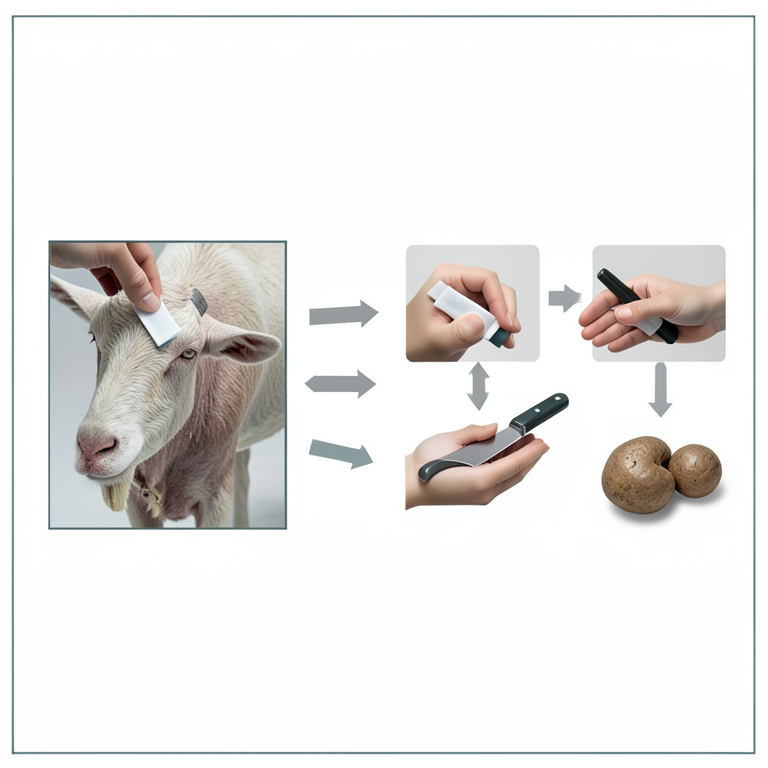
Sample Collection Workflow
AI-generated conceptual illustration (goat carcasses and slaughterhouse equipment). It explains the idea and does not show study data.
View source evidence ↗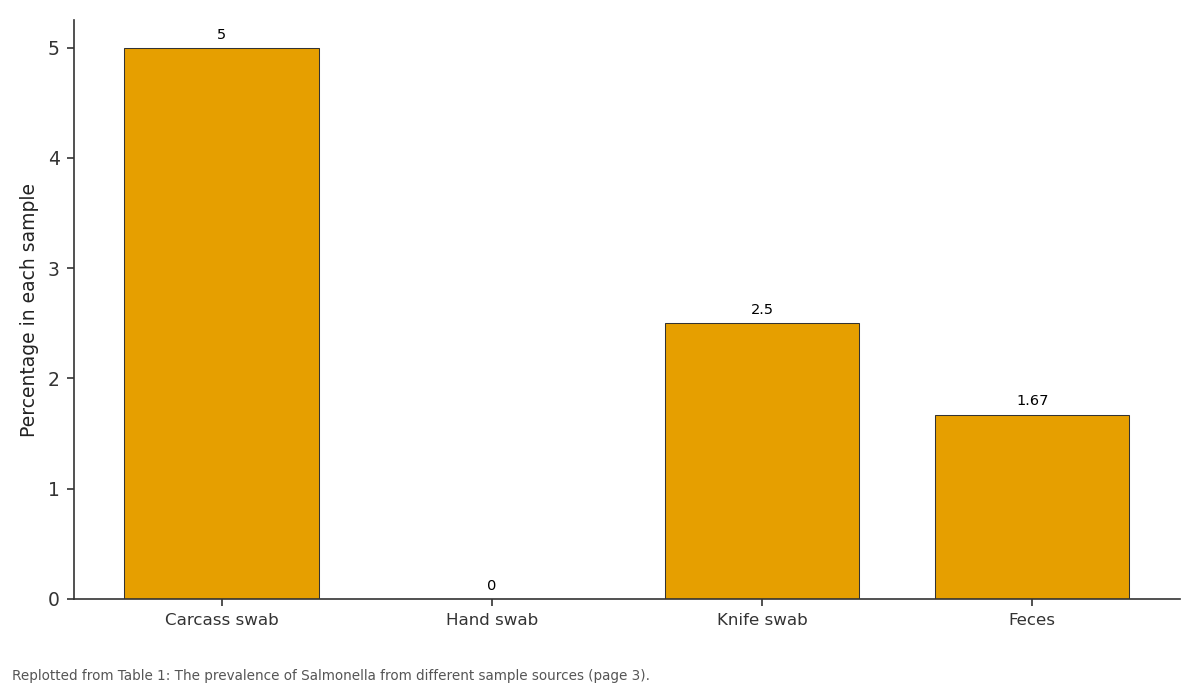
Percentage in each sample: Carcass swab vs Hand swab vs Knife swab vs Feces
Replotted from Table 1 (page 3) of the original paper. Every bar is the paper's own table value.
View source evidence ↗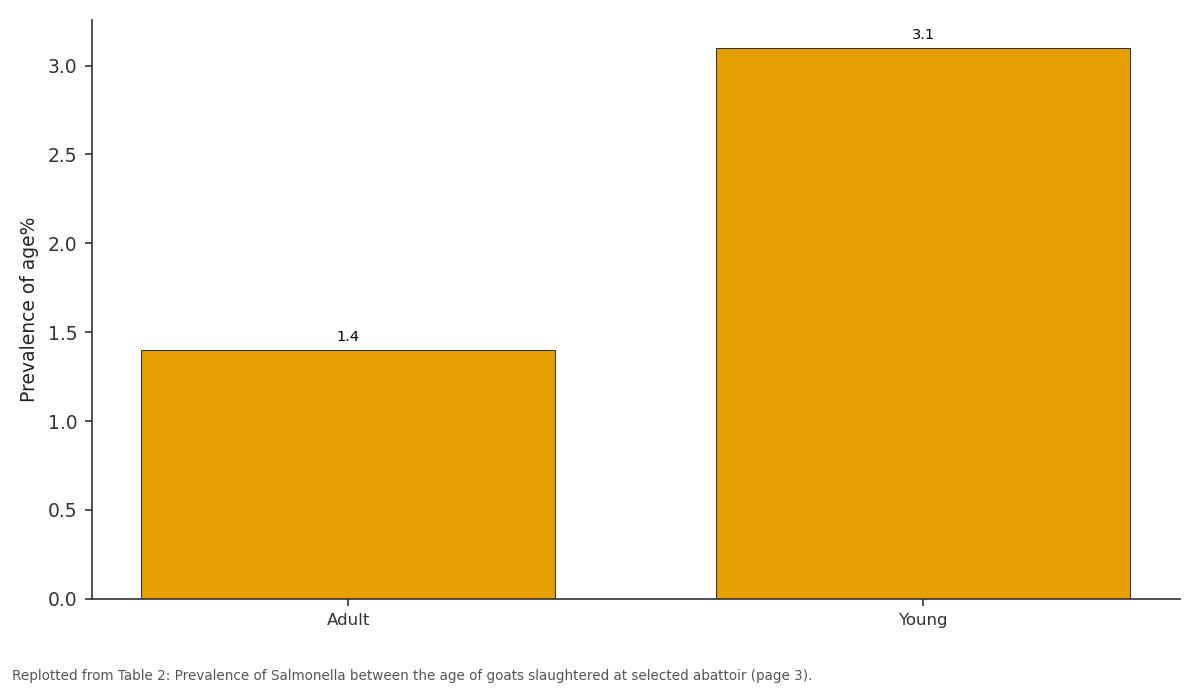
Prevalence of age%: Adult vs Young
Replotted from Table 2 (page 3) of the original paper. Every bar is the paper's own table value.
View source evidence ↗Figures & tables
From the original paper Table 1
 Table 2
Introduction
Ethiopia consist a diversity of livestock population and possess the large livestock population from the African countries (IBC, 2007) [1] . The goat population is estimated to be around 30.20 million heads.in which 1, 128, 000 goats were estimated to be consumed domestically (CSA, 2017). Livestock productions plays an important role to smallholder farmers and the national economy of the country in generating income to farmers, creating job opportunities, ensuring food security, providing services, contributing to asset, social, cultural and environmental values, and sustain livelihoods (Behnke, 2010; Endalew B, Ayalew, 2016) [4,12] . However, the sector is affected by infectious diseases (Viral, bacterial, parasitic and fungal diseases), feed shortage and lack of veterinary service (Ganteby, 1991) [17] . From bacterial disease, food borne zoonotic pathogenic disease such as Salmonella an importantly affect both human and animals in developing countries including Ethiopia. Salmonellosis is one of the widest spread food borne zoonoses with the main cause of mortality and morbidity to humans and animals (D'Aoust, 1994) [9] . Salmonellosis is a disease or a group of diseases caused by a wide variety of Salmonella serovars in various hosts including goat (OIE Manual, 2006) which remain a serious problem with public health significance throughout the world (Tabaraie et al., 1994) [34] . Salmonella are Gram negative, bacillus shaped, non-spore forming, aerobic and facultatively anaerobic organisms belong under family Enterobacteriaceae, were most of them have peritrichous flagella that use for motility (Freeman, 1985; Gene, 2002; OIE Manual, 2006) [13, 16] . They have two species such as, Salmonella enterica and Salmonella bongori. Salmonella enteric has six subdivisions of S. enterica subspecies 1-6 exist with over 2500 serovars currently identified and several common serovars to human clinical infections (Dworkin et al., 2006) [11] . The main forms of salmonellosis happen are in three forms which is peracute septicemia, acute enteritis, and chronic enteritis. Common clinical signs of salmonellosis are abortion, upset stomach, diarrhea, fever, and pain and also cramping in your belly.
Although, the clinical signs may vary from species to species (Blood et al., 2003) [5] . They are facultative intracellular pathogens that cause disease in animals, they are commonly asymptomatic carriers. Salmonella was a highly concentrated intensive study on cattle and sheep; however, there is little published information on the conveying of Salmonella in goats, although goat meat was one of a source of Salmonella food poisoning in Ethiopia (Kadaka et al. 2000) [22] . The diagnosed salmonellosis can be based on taking history and laboratory examination of the Salmonellosis using feces, carcass swab, feed and water (Carlton, 1998) [8] . However, identification Salmonella is the most difficult at clinical sign because the bacteria may be intermittently and it may be sample taking is important for examine. However, for identification of the bacteria at least requires as five days for use of standard cultural techniques (House and Smith, 1998) [18] . Thus, cultural technical for isolation of salmonellosis was: Pre-enrichment, enrichment, plating out and different biochemical and serological test according to the set of standards (Pieskus, 2006) [27] . The Ethiopia goat population was suffering from a contagious disease like Salmonellosis and Brucellosis. Salmonella is the main causes of meat contamination that can affect animal and human being (Pepin et al., 1997; Sierra et al., 1995) [28,33] . The risk factors for the exposure of salmonellosis contamination of animal carcasses and fresh meat during slaughter and dressing by the faeces, the skin, water, air, intestinal contents, processing equipment and humans, and can be transferred to the carcass during skin removal and evisceration (Hansson et al., 2000; Reid et al., 2002) [19,32] . Therefore, this study was designed to isolation of Salmonella from different type of samples (knife swab, hand swab, carcass swab and fecal) collected from goats slaughtered in Abyssinia export abattoir.
Materials and Methods
Materials and Methods
Study area
The study was conduct at Abyssinia export abattoirs in Bishoftu town, East Showa zone of Oromia regional state. Bishoftu town was located at 9°N latitude and 40°E longitude at altitude of 1850 masl with the annual average temperature ranges of 12.3 °C to 27.7 °C with an overall average of 18.7 °C. In thus, area the climate and soil type are the same with those in the highland areas in Ethiopia. It got heavy rain in the season of June to September with annual rain fall of 866 mm and which is 84% got in that long rainy season. However, the are many livestock farms of beef and dairy cattle, small ruminant, poultry and equines and there many modern slaughter services (abattoirs) in in the city. From these abattoirs, Ethiopia is exporting millions of tons of meat of cattle, sheep and goats to Middle East countries and gain good external currency. Hence, this designed to undertake Salmonella isolation from goats brought to Abyssinia Slaughtering Service House for slaughter.
Study design and animals
The cross-sectional study was conducted on isolation and identification of Salmonella from apparently healthy goats slaughtered at Abyssinia Export abattoir service from February 2020 to March 2020. Conveniently samples were collected from 200 goats purchased from different zones of Oromia region (Arsi, Hararghe, Bale and Borena). The animal was grouped into two classes as young and adult based on dentition by Vatta, (2005) [36] where the animal which have only one pair permanent of incisors teeth were considered as young (<1 year to 2 years) while the goats which have two or more pairs of permanent incisors teeth were considered as adult (>2 years).
Sample collection and transportation
Based on its accessibility of sample during the sample collection, the sample were collected from 200 goats provided for slaughtering at Abyssinia export abattoir. The samples were collected aseptically from goats during slaughtering operation. Thus, sample such as: feces, carcass swab, knife swab and hand swab were collected aseptically using sterile cotton swab for organ samples and put into sterile universal bottles with peptone water media for transportation according to the recommendation (Quinn and Markey, 2003) [29] . Each sample was collected from each slaughtered goat during operation. Because of fasting abattoir worker do not taken four sample at the same time from the same goat. All samples were labeled apparent identifying species of the animal, age and type of sample and sampling ID number. After putting the samples in an ice box with ice pack. The sample was transported immediately to AAU, CVMA veterinary public health laboratory for bacteriological processing.
Isolation Salmonella Sample preparation and inoculation on Nonselective Pre-enrichment
The fresh feces sample of 10 g was broken in to pieces by using Mortar and pestle and homogenized by homogenizer before transferred to pre-enriched in 90 ml of buffered peptone water (BPW) also. The swab samples were transferred to pre-enrichment of buffered peptone water in the ratio of 1:9 BPW (HI Media M1494, Mubi, India). The both the Swab and fecal sample were incubated for 24 hr at 37 °C.
Culturing Salmonella on selective Media
On the second day, 0.1 ml (100 uL) of the pre-enrichment broth will be transferred to 10 ml Rappaport-Vassiliadis soy peptone (RVS) and incubated at 37 °C overnight (18-24 hours). On the third day, the suspension culture of the Rappaport-Vassiliadis Soya Peptone broth (RVS) was taken a loop full of the suspension was inoculated on to xylose lysine deoxycholate International Journal of Microbiology (XLD) (HiMedia M031, Mubi, India) agars and incubated at 37 °C for 24 hr. The incubation was extended to 48 hr for those who did not show any growth during the 24 hr incubation. Typical Salmonella colonies having a slightly transparent zone of reddish color and a black center was isolated and sub cultured on nutrient agar (Oxoid CM0003, Basingstoke, England) and various biochemical tests were conducted.
Testing isolate by different biochemical tests
After the targeted bacteria was isolated and identified by using the selective media (XLD), the biochemical tests were performed by using: triple sugar iron agar (TSI), Methyl red (MR), Voges Proskauer (VP) (Himedia M070I, Mumbai, India), tryptone broth (Himedia M463, Mumbai, India) for indole test and Citrate tests for further identification and confirmation of the Salmonella. Paternally (Positive and negative the above media), the Salmonella was identified on the biochemical fermentation on the five above median. This mean that the presence of Salmonella was interpreted by color change, gas formation and formation of hydrogen sulfide on the above media. After the Salmonella was identified, it classified into motile and non-motile groups based on its motility in Motility media.
Data management and analysis
Data collected in the study and the results of laboratory investigations were entered into Microsoft Excel, edited, coded after done according to annex 3 and analyzed by statistical methods using proper statistical analysis (STATA) version 13.0. Descriptive statistics was used to determine the prevalence of salmonellosis in the study area. A P-value less than 0.05 at 95% confidence interval was considered for significance.
Results
This study conducted to isolate Salmonella species from goats slaughtered at Abyssinia export abattoir during February 2020 to March 2020 to isolate Salmonella species. A total of 200 samples from Abyssinia export abattoirs (60 carcass swab, 40 hand swab, 40 knife swab and 60 feces) were collected and examined for the presence of Salmonella species. Among these five Salmonella species was isolated of showing characteristics Salmonella., i.e., the colony appears as translucent with the black center and hydrogen sulfide production from thiosulfate is easily detected because colonies become dark or gloomy, due to the precipitation of ferric sulfide on XLD agar and positive on biochemical tests for Salmonella and. The Salmonella were isolated from all sample types except hand swab. The prevalence varied with sample site and time of sampling. When compere the prevalence of Salmonella by the sample sources, the Salmonella was more prevalent on carcasses (1.5%). In case of age, it's more prevalent on young (2%) than adult.
Prevalence of Salmonella from Different Sample Sources
Salmonella was isolated from the samples collected from Carcass swab 3 (1.5%), Hand swab 0(0%), Knife swab 1 (0.5%) and Feces 1 (0.5%) as it isolated and identified on the Selective media and Biochemical analysis of the sample. There was significant difference (p< 0.05) in the frequency of Salmonella isolation among the samples (Table 1).
| Types of samples | Examined | Positive | Percentage in each sample | Percentage in total | 2 | p-value |
|---|---|---|---|---|---|---|
| Carcass swab | 60 | 3 | 5% | 1.5% | 6.4431 | 0.011 |
| Hand swab | 40 | 0 | 0% | 0% | ||
| Knife swab | 40 | 1 | 2.5% | 0.5% | ||
| Feces | 60 | 1 | 1.67% | 0.5% | ||
| Total | 200 | 5 | 2.5% | 2.5% |
Table text extracted from the original PDF; superscript letters are shown inline. The original table image is below.
View original table image
Prevalence of Salmonella between the age of goats
The prevalence of the Salmonella was high in young goat when it compared with that of adult goats (2% and 0.5%, respectively) (Table 2). The prevalence of the Salmonella was different between the age of the goats from which the sample was collected. There was significant difference (p< 0.05) in the frequency of Salmonella isolation between adult and young (Table 2).
| Age | Examined | Positive | Prevalence of age% | Prevalence from total% | X2 | p-value |
|---|---|---|---|---|---|---|
| Adult | 70 | 1 | 1.4% | 0.5% | 6.4431 | 0.011 |
| Young | 130 | 4 | 3.1% | 2% | ||
| Total | 200 | 5 | 2.5% | 2.5% |
Table text extracted from the original PDF; superscript letters are shown inline. The original table image is below.
View original table image
Discussions
In the present study the carrier state of Salmonella in apparently healthy goats slaughtered at Abyssinia export abattoir was 2.5%. Among the total of 200 animals examined, 5 (2.5%) were positive for Salmonella of which 1 (0.5%) were adult and 4 (2%) were young. The prevalence of Salmonella was higher in young than adult. This difference was statistically significant (P=0.01). This variation in prevalence of Salmonella might be due management differences and handling of owner in this age (Wassie, 2004) [38] . The higher prevalence in young might be due to higher Salmonella carrier rate in the study population. The prevalence of Salmonella in apparently healthy slaughtered goats in this study was 2.5%. This result is consistent with the range cited by (D'Aoust, 1989) [10] which indicated that the prevalence of Salmonella in goats falls between 1 to 18.8%. Also, the result obtained was agreed with the result of Ferede et al., (2015) [14] done on the distribution of Salmonella was higher in young than adults that was 2%. However, this result is inverse of the previous reports. This variation in result may be due to the young was congregate with your mother and cross contamination during sampling or due to different bacteriological procedures followed. In the present study, Salmonella was isolated in 1.28% of the abdominal muscle of goat. Isolation of Salmonella from goat carcass swab was 17.7% in Dire Dawa municipal abattoir in Ethiopia.
The current finding also relatively granted with the reports by Molla, (2005) [39] , who detected 0.7% Salmonella isolates, 2% reported by Zubair and Ibrahim (2012) [41] and Bedaso et al. (2015) [42] who reported 0.54% from the slaughtered goats. However, it was lower than the previous findings by Teklu and Negussie (2011) [35] , who reported 11.7% in Modjo, Ethiopia and Woldemariam et al. (2005) [40] , who reported 9.8% in apparently healthy slaughtered sheep and goats in Bishoftu, Ethiopia and other reported by Wassie (2004) [38] in Addis Ababa abattoir, which was 3%. The difference in these results might be attributed to the difference in the stress condition and/or exposure of animal to the infected animal due to uncontrolled animal movement while held in the market and lairage which could lead to increased infection rate among the animal.
In Zambia Sharma et al. (2001) [43] was reported prevalence of 2.3% from carcass swab samples of goats. In Ethiopia, Ferede et al. (2015) [14] which was 17.7% was reported from apparently healthy goats at Dire Dawa municipal abattoir, and 16.7% prevalence reported from goats slaughtered at Elfora abattoir in Ethiopia (Woldemariam, 2003) [37] . The current study revealed that as the carcass contaminations of the study area were low and this indicates that they were found at good hygienic condition. The result report variation might be due to the variation in the ecology of study population, sampling technique and procedure sample type and bacteriological techniques based on isolate of Salmonella or distribution of Salmonella in the study population regardless of test samples and methods of detection.
The prevalence of Salmonella on the 40 samples of knife swab was 1(0.5%) at Abyssnia export abattoirs. This result was lower than the results of Teklu and Negussie (2011) [35] , who had reported 7.4% Salmonella prevalence from eviscerating knife swabs and other was reported 26.7 and 10% prevalence in two Botswana abattoirs (Motsoela et al., 2002) [25] . The variation might be associated with stress during transportation to the slaughterhouse, hygienic conditions of holding pens, processing practices, abattoir facilities and employee's hygiene and practices (Muluneh, 2019) [44] . Usually, healthy carriers' animals intermittently excrete only a few Salmonella, unless they undergo some kind of stress (example during transport or holding in the lairages prior to slaughter). This result was in consistence with Molla et al., (2006) [24] . It is generally accepted that the carcass of healthy slaughtered animals are free of bacteria at the time of slaughter, assuming that the animals are not in a state of exhaustion (Jay, 2000) [21] . These differences in prevalence of abdominal muscle may be due to hygienic condition of abattoirs and its environment.
Conclusion and Recommendation
In the present study, an overall of 2
References
26 in the original paper- Arruda SGB, Biscontini TMB, Stamford TLM. Microbiological characterization of goat meat subjected to different forms of management. Hygiene Alimentary. 2004;18(120):58-62.
- Alemayehu D, Molla B, Muckle A. Prevalence and antimicrobial resistance pattern of Salmonella isolates from apparently healthy slaughtered cattle in Ethiopia. Tropical Animal Health and Production. 2003;35(4):309-319.
- Behnke RH. The contribution of livestock to the economies of IGAD member states: study findings, application of the methodology in Ethiopia and recommendations for further work. IGAD. 2010;10:145.
- Central Statistics Agency. Agricultural sample survey. Livestock and livestock characteristic report (Private Peasant Holdings). April. Addis Ababa, Ethiopia. 2017;2:1-83.
- Cooke EM, Todd E. Epidemiology of foodborne illness: UK. Lancet. 1990;336(8718):790-793.
- D'Aoust JY. Salmonella and the international food trade. International Journal of Food Microbiology. 1994;24(1-2):11-31.
- Endalew B, Ayalew Z. Assessment of the role of livestock in Ethiopia: A Review. American-Eurasian Journal of Scientific Research. 2016;11(5):405-410.
- Ferede B, Desissa F, Feleke A, Tadesse G, Moje N. Prevalence and antimicrobial susceptibility of Salmonella isolates from apparently healthy slaughtered goats at Dire Dawa municipality abattoir, Ethiopia. Journal Microbial Antimicrob. 2015;7(1):1-5.
- Gould LH, Mungai E, Behravesh CB. Outbreaks attributed to cheese: differences between outbreaks caused by unpasteurized and pasteurized dairy products, United States, 1998-2011. Foodborne Pathogens and Disease. 2014;11(7):545-551.
- Gene O. The isolation, identification and serotyping of Salmonella isolated from domestic poultry in Kars district. Kafka's Univarsikesi Veteriner Fakultesi Dergisi. 2002;8(1):23-30.
- Hansson I, Hamilton C, Ekman T, Forslund K. Carcass quality in certified organic production, compared with conventional livestock production. Journal of Veterinary Medicine Series B-Infectious Diseases and Veterinary Public Health. 2000;47(2):111-120.
- Kadaka J, Itokazy K, Nakamura M, Taira K, Asato R. An outbreak of Salmonella Weltevreden food poisoning after eating goat meat. Infectious Agents Surreptitious Reproduction. 2000;21(3):164.
- Molla B, Mohammed A, Salah W. Salmonella prevalence and distribution of serotypes in apparently healthy slaughtered camels (Camelus dromedarius) in Eastern Ethiopia. Tropical Animal Health and Production. 2004;36(5):451-458.
- Molla W, Molla B, Alemayehu D, Muckle A, Cole L, Wilkie E. Occurrence and antimicrobial resistance of Salmonella serovars in apparently healthy slaughtered sheep and goats of central Ethiopia. Tropical Animal Health and Production. 2006;38(7-8):455-462.
- Motsoela C, Collison EK, Gashe BA. Prevalence of Salmonella in two Botswana abattoir environments. Journal of Food Protection. 2002;65(12):1869-1872.
- Pieskus J, Milius J, Michalskiene I, Zagrebneviene G. Нe distribution of Salmonella serovars in chicken and humans in Lithuania. Journal of Veterinary Medicine. A, Physiology, Pathology, Clinical Medicine. 2006;53(1):12-16.
- Pepin M, Russo P, Pardon P. Public health hazards from small ruminant meat products in Europe. Revue Scientifique et Technique (International Office of Epizootics). 1997;16(2):415-425.
- Reid C, Small A, Avery S, Buncic S. Presence of foodborne pathogens on cattle hides. Food Control. 2002;13(6-7):411-415.
- Sierra M, Gonzales-Fandos E, Garcia-Lopez M, Fernandez M, Prieto M. Prevalence of Salmonella, Yersinia, Aeromonas, Campylobacter and cold-growing Escherichia coli on freshly dressed lamb carcasses. Journal of Food Protection. 1995;58(11):1183-1185.
- Tabaraie B, Sharma BK, Sharma PR, Sehgal NR, Ganguly NK. Evaluation of Salmonella porins as a broad-spectrum vaccine candidate. Microbiology and Immunology. 1994;38(7):553-559.
- Teklu A, Negussie H. Assessment of risk factors and prevalence of Salmonella in slaughtered small ruminants and environment in an export abattoir, Modjo, Ethiopia. American-Eurasian Journal of Agricultural & Environmental Sciences. 2011;10(6):992-999.
- Woldemariam E, Molla D, Alemayehu D, Muckle A. Prevalence and distribution of Salmonella in apparently healthy slaughtered sheep and goats in Debrezeit, Ethiopia. Small Ruminant Research. 2005;58(1):19-24.
- Zubair AI, Ibrahim KS. Isolation of Salmonella from slaughtered animals and sewage at Zakho abattoir, Kurdistan Region, Iraq. Research Opinions in Animal and Veterinary Sciences. 2012;3(1):20-24.
- Bedaso KK, Dinsefa JH, Kifle AL, Biniam T. Study on prevalence and distribution of Salmonella isolates from apparently healthy sheep and goats slaughtered at Addis Ababa Abattoir enterprise, Ethiopia. Journal of Veterinary Science and Technology. 2015;6(6):1000268.
- Sharma R, Chisti Y, Banerjee UC. Production, purification, characterization, and applications of lipases. Biotechnology Advances. 2001;19(8):627-62.
- Woday A, Muluneh A, St Denis C. Birth asphyxia and its associated factors among new borns in public hospital, northeast Amhara, Ethiopia. PloS one. 2019;14(12):e0226891.