
Research article · 2024 · Full text
International Journal of Advanced Chemistry ResearchSynthesis, antibacterial and in silico study of 1, 3, 4 oxadiazole, triazole compounds derived from paracetamol
Volume 6(1) · Pages 23–30 · DOI: 10.33545/26646781.2024.v6.i1a.164 ↗
Research areasSynthesis and biological activityChemistry and Chemical EngineeringSynthesis and Characterization of Heterocyclic Compounds
Abstract
Author-writtenIn the current work, a series of compounds containing of [1, 3, 4] oxadiazole-2-thione and triazole structural framework synthesized by multistep reaction, the first step synthesis of ethyl 2-(4-acetamidophenoxy)acetate (P1) by reaction of N-(4 hydroxyphenyl) acetamide with ethylchloroacetate, This ester were converted to the corresponding N-[4-(2-hydrazineyl-2-oxoethoxy) phenyl] acetamide (P2) by reaction with hydrazine hydrate, which reacted with carbon disulfide to afford [1, 3, 4] oxadiazole -2- thion (P3). The compound was prepared by two methods, microwave and classic method after which derivatives of oxadiazole (P3a-P3b) were prepared from the reaction of S- alkylation with chloroacetic acid and methyl iodide. Then, triazole (P4) was prepared by reacting oxadiazole with 99% hydrazine hydrate. The prepared compounds were characterized by element analysis, 1H-NMR, 13C-NMR, and FT-IR spectral techniques biological activity of synthesized compounds was investigated against two groups of four bacterial genera. The compounds showed inhibitory activity against Klebsiella pneumonia bacteria whereas effective against other species. In silico molecular docking, study was performed for the active compound where the (P3a and P3b) compounds showed good docking scores and RMSD values with good binding mods. To anticipate the action, response, and transport of synthesized molecules in human metabolism In silico sADME calculations were conducted and showed the two compounds are safe and have good hydrophilicity.
Summary
Source-checkedPlain-language reading of the full paper, prepared with AI and checked against the text. Each point links to the authors' own words.
Why it matters
- Oxadiazoles are five-membered heterocyclic compounds that are highly significant in industrial and medical fields, including medicinal chemistry and pesticides. View evidence ↗
- The 1, 3, 4-oxadiazole ring is linked to diverse biological activities, including antimicrobial, anti-inflammatory, antioxidant, and anticancer properties. View evidence ↗
- Triazole is another key heterocyclic moiety used as a core for medicinal compounds due to its biological activities, including anticancer effects. View evidence ↗
The question
- The study aimed to synthesize a series of compounds based on paracetamol containing [1, 3, 4] oxadiazole-2-thione and triazole frameworks. View evidence ↗
What they did
- The synthesis involved a multistep process: paracetamol was reacted with ethylchloroacetate to form ester P1, which was converted to hydrazide P2, and then to oxadiazole-2-thione P3. View evidence ↗
- Compound P3 was synthesized using both classic and microwave methods; subsequently, derivatives P3a and P3b were created via S-alkylation, and triazole P4 was synthesized using 99% hydrazine hydrate. View evidence ↗
- The synthesized compounds were characterized using FT-IR, 1H-NMR, 13C-NMR, and element analysis. View evidence ↗
- Antimicrobial activity was tested against gram-positive (S. aureus, E. faecalis) and gram-negative (Klebsiella, E. coli) bacteria. View evidence ↗
- Molecular docking was performed using Auto Dock 4.2.6 to study the interaction of active compounds P3a and P3b with the Klebsiella pneumoniae AcrB enzyme. View evidence ↗
What they found
- In silico docking showed that P3b had a docking score of -7.6 kcal/mol and an RMSD of 0.00 with the Klebsiella pneumoniae AcrB enzyme. View evidence ↗
- Compound P3a showed a docking score of -7.1 kcal/mol and an RMSD of 2.65 with the target enzyme. View evidence ↗
- ADME studies indicated that compounds P3a and P3b fully comply with Lipinski's rule of five. View evidence ↗
- P3a and P3b were found to be non-inhibitors of CYP2D6, suggesting that hepatic dysfunction side effects are unlikely. View evidence ↗
What it means
- The authors concluded that the synthesized oxadiazole derivatives are effective antibacterial agents against Klebsiella pneumonia and act as inhibitors of the AcrB enzyme. View evidence ↗
Visual summary
2 visualsIllustrations explain the paper; charts are replotted from the paper's own table values.
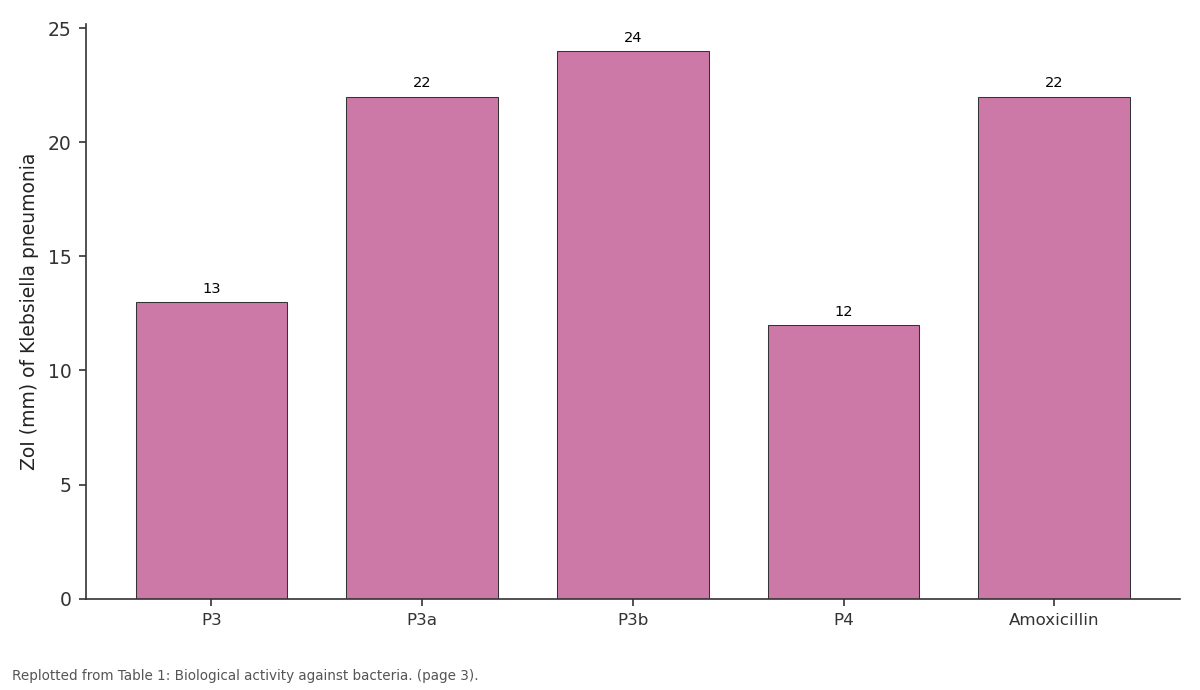
ZoI (mm) of Klebsiella pneumonia / 2x10⁻¹: P3 vs P3a vs P3b vs P4 vs Amoxicillin
Replotted from Table 1 (page 3) of the original paper. Every bar is the paper's own table value.
View source evidence ↗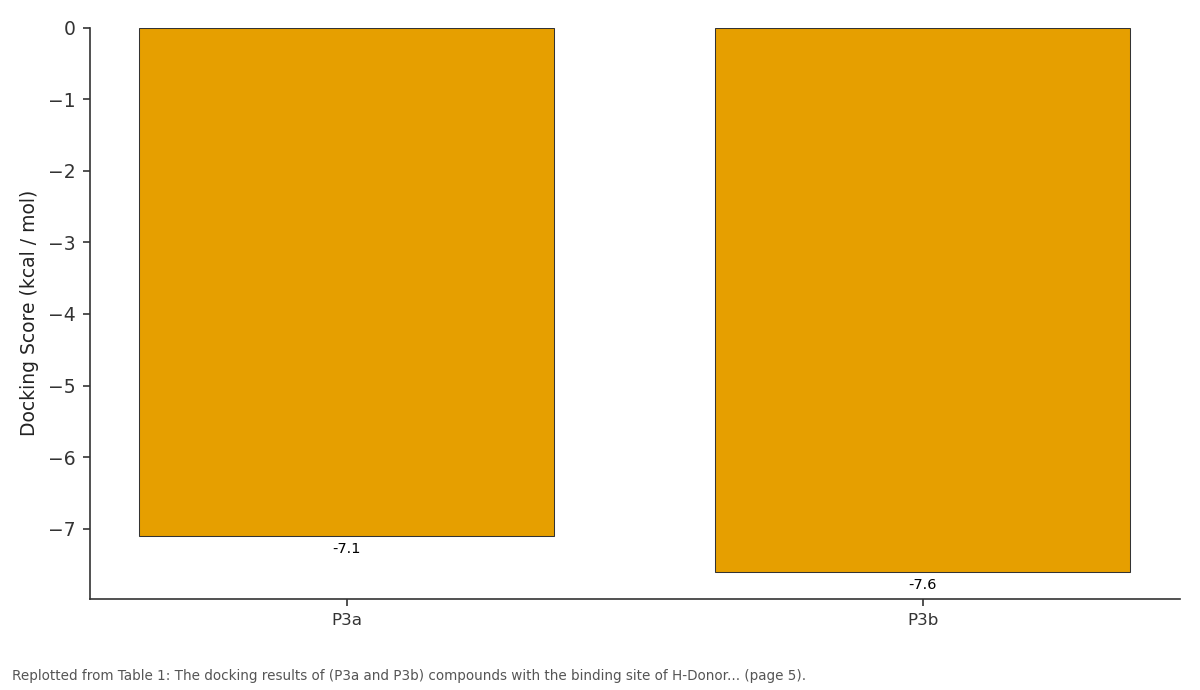
Docking Score (kcal / mol): P3a vs P3b
Replotted from Table 1 (page 5) of the original paper. Every bar is the paper's own table value.
View source evidence ↗Figures & tables
From the original paper Table 1
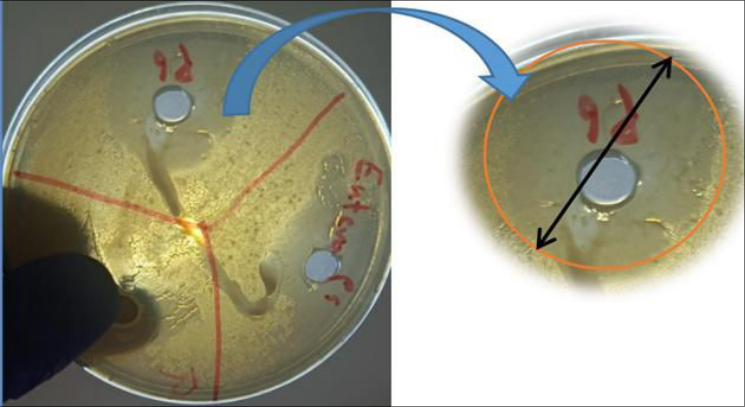 Figure 2
 Table 1
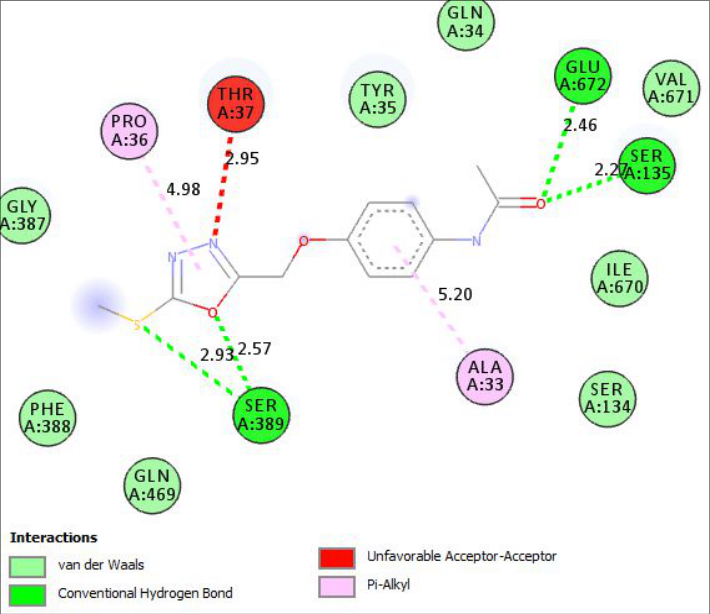 Figure 2
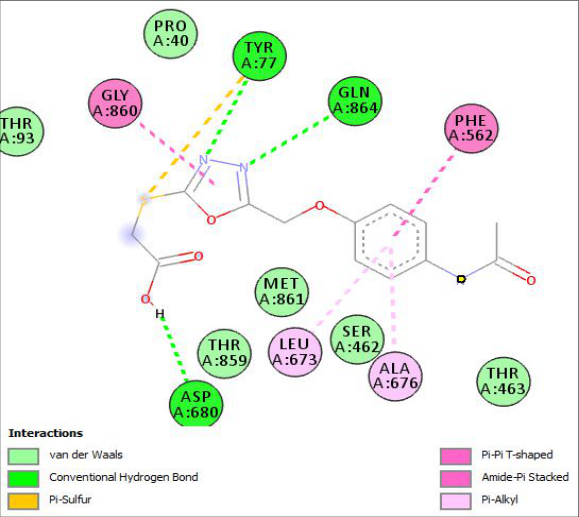 Figure 3
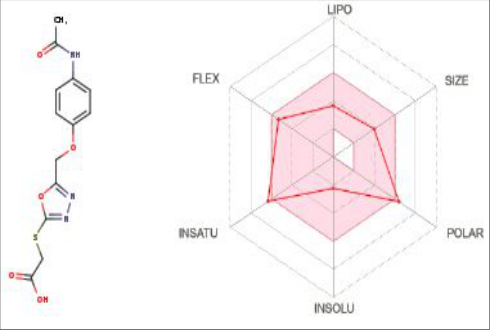 Figure 4
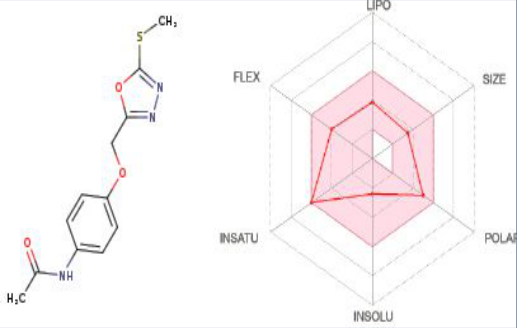 Figure 4
Introduction
Heterocyclic compounds with five-membered ring systems, consisting of two carbon atoms, two nitrogen atoms, and one oxygen atom, hold significant importance in both the medical and industrial fields, known as oxadiazolesm [1] have great importance in various areas of medicinal chemistry, pesticides as well as polymer and materials science. 1, 3, 4-Oxadiazole is a heterocyclic organic compound containing two carbon atoms at 2, 5 position, two nitrogen atoms at 3, 4 positions and one oxygen atom at 1 position, and two double bonds [2] . It derived from furan when the replacement of two methine (-CH=) by two nitrogen (-N=) at positions 3 and 4 [3] . 1, 3, 4-Oxadiazole ring is associated with various biological properties such as anti-inflammatory [4] , antimicrobial activity against Staphylococcus aureus, Staphylococcus epidermidis, and Escherichia coli [4] antiproliferative activity of the compounds against four different types of original cancer cells (HELA, HEPG2, BGC823, and SW1116) [6] , antioxidant [7] , pharmacological activity [8] , anti-breast cancer activity [9] , anti-influenza drugs [10] . Triazole is a heterocyclic organic compound containing two carbon atoms, three nitrogen atoms and two double bonds [11] . Triazole is a significant heterocyclic moiety that holds a distinctive place in the heterocyclic chemistry and medicine fields. It is valued for its numerous biological activities and serves as a core molecule for developing and synthesizing various medicinal compounds [12] , and anticancer activities against four types of human cancer cell lines including lung cancer (A549), breast cancer (MCF-7, MDA MB-231), and prostate cancer (DU-145) [13] . Antibacterial activities using the Acinetobacter baumannii ATCC 19606; Pseudomonas aeruginosa ATCC 19433; Citrobacter freundii ATCC 8090: Staphylococcus epidermidis ATCC 14990: Staphylococcus aureus ATCC 12600; [14] ,
International Journal of Advanced Chemistry Research https://www.chemistryjournals.net antifungal [15] , anti-oxidative stress and anti-inflammatory [16] , antitubercular [17] , antihypertensive agents [18] , antimicrobial [19] .
Experimental part 2.1 Chemistry
The Melting Points (MPs) of all derivatives were determined using the open capillary tube method (Staurt SMP10) melting point apparatus. The spectra of IR were obtained using a KBr disc on an FT-IR -8400s (SHIMADZU) at the chemistry lab at the College of Science, Tikrit University. 1 H NMR and 13 C NMR spectra were obtained using a deuterated solvent. i.e. the exchangeable protons were exchanged by D 2 O DMSO using 400 MHz ( 1 H NMR) and 100 MHz ( 13 C NMR). The chemical shift was expressed in 𝛿 ppm by using tetramethyl silane (TMS) as a reference.
Synthesis of ethyl 2-(4-acetamidophenoxy)acetate
(Paracetamol Ester) (P1) [20] (1. [21] (1.64 g, 0.0069 mol) of ethyl 2-(4-acetamidophenoxy) acetate (P 1 ) was dissolved in 10ml of ethanol in a 100 ml RBF (Round Bottom Flask), Then (5 ml /0.1030 mol) of hydrazine hydrate 80% was added to the mixture. The mixture was refluxed for 6 hr. The solution was concentrated, then poured onto crushed ice, filtered, washed with cold distilled water several times, and dried (Color: white, percentage yield: 58.76%, Melting point: 207-209 °C). [22] (2.210 g, 0.00932 mol) of ethyl 2-(4-acetamidophenoxy) acetate (P 1 ) was mixed with (7 ml) of hydrazine hydrate 80% in a 50 ml beaker. The solution was exposed to microwave irradiation (400 watt) for about 1 min.
Microwave method
Microwave method
Synthesis of N-(4-((5-mercapto-1, 3, 4-Oxadiazol-2yl) methoxy) phenyl) acetamide (Paracetamol
Oxadiazole) (P3) [22] 2.1.3.1 Classic method [23] (3. [26] (0.5 g, 0.001886 mol) of oxadiazole was dissolved in (15 ml) of dry acetone. Then (0.5 g, 0.003772 mol) of anhydrous potassium carbonate and (0.22 g/0.00235 mol) of chlouro acetic acid were added to the mixture and then refluxed for 8 hrs. The precipitate was concentrated, acidified with concentrated HCl, then filtered, and after that washed with cold distilled water and dried. Color: white, percentage yield: 40%, Melting point: (172 -175 °C). FT-IR (KBr, cm -1 ): [27] (2 g, 0.00754 mol) of N-{4-[(5-mercapot-1, 3, 4oxadiazole-2-yl) methoxy] pheny} acetamide was mixed with (0.73 ml/0.015 mol) of hydrazine hydrate (99%) in a 100 ml round bottom flask, then was 5ml of ethanol add to the solution. the solution was refluxed for 6 hr and concentrated, filtered, washed with cold distilled water, and dried. Color: pink, percentage yield: 40%, Melting point: (250-253 °C) FT-IR (KBr,Cm
Synthesis of N-(4-((4-amino-5-mercapto-4 H-1, 2, 4triazol-3 -yl) methoxy) phenyl) acetamide (Paracetamol Trizole) (P4)
Synthesis of N-(4-((4-amino-5-mercapto-4 H-1, 2, 4triazol-3 -yl) methoxy) phenyl) acetamide (Paracetamol Trizole) (P4)
Biological activity
Initially, the culture medium for testing biological activity was prepared according to the instructions of the preparing company. The biological activity (antimicrobial) of the compounds was studied on gram-positive bacteria Staphylococcus aureus, Enterococcus faecalis, and gramnegative bacteria Klebsiella and E. coli Activation of bacteria: The bacteria were activated before conducting the tests using NBLNB (Nutrient Broth liquid nutrient broth), by re-seeding them in the above medium. Then it was incubated in the incubator of the laboratory for 24 hours at 37 °C to be ready to test its biological effectiveness.
Inoculation of culture media and Sensitivity assay:
The bacterial inoculum was prepared. The biological effectiveness was recorded using the Agar-well diffusion method, according to what was stated by (Balouiri et al, 2016; Gonelimali et al, 2018) [27][28] . In this method, the bacterial inoculum is spread evenly across the culture medium using a glass diffuser. Subsequently, wells are created in the AM (agar medium) using a drill. A 6 mmdiameter sterilizer is used to load solutions with a volume of 100 microliters of each concentration in a way that allows three different concentrations of the same solution to be loaded onto one plate in which one bacterial model is grown. This step was repeated for all prepared solutions with their concentrations and each of the bacterial models used in this study. After loading the dishes with solutions, they were left for 15-20 minutes at RT, then they were placed in the incubator and the results were read after 18-24 hours. The effectiveness of the compounds was assessed by measuring the diameter of the inhibition zone in millimeters around each hole using an electronic ruler, Caliper, for all samples.
In silico studies 2.3.1 Molecular Docking (MD) study
MD study for the compounds that have high activity against of Klebsiella pneumonia bacteria (P3a, P3b) via employing Auto Dock 4.2.6 programs Klebsiella pneumoniae AcrB (PDB: ID:8FFS) were found from RCSB, PDB (Protein Data Bank) site. The minimization energy of new compounds was accomplished by using MM2 in chem 3D program. The ligand and protein preparation were achieved by the Auto DockTools-1.5.6 program. Finally, Discovery Studio 2020 Client was used to visualize 2D and 3D binding modes.
In silico ADMET study
ADMET studies for P 3a and P 3b compounds were performed online by (http://www.swissadme.ch/)
Results and Discussions 3.1Chemistry
This work includes the reaction of paracetamol with chloro ethyl acetate to produce paracetamol ester (P1) through a nucleophilic substitution mechanism. Paracetamol ester was converted into corresponding hydrazide (P2) through tetrahydric mechanism. Paracetamol 1, 3, 4 oxadiazole -2-thiol (P3) was synthesized by nucleophilic cyclization mechanism of (P2) compound with carbon disulfide. P 3a and P 3b were prepared by S-alkylation nucleophilic reaction of (P 3 ) with methyl iodide and chloroacetic acid respectively. Finally, the triazole derivatives (P 4 ) compound was prepared by reaction of P 3 compound with pure hydrazine, as depicted in the following synthetic path scheme: FT-IR Spectral data for (P 3 , P3a, P3b, P4) compounds revealed disappearance peak of (C=O) in (P 2 ) compound at 1645 cm -1 , in presence peak of (C=N) group at (1593 -1610) cm -1 . Spectral data measurements of 1 H-NMR showed matches the number of protons with proposed structures. 13 C-NMR spectral data revealed: the appearance of (C=N) cabons of oxadiazoles and triazoles at δ= 154 -164 ppm.
Biological part
The results of testing the effectiveness of various solutions against different bacterial species are shown in Table (1). The results in the tables and figure showed that these solutions have differentiated biological effectiveness against Klebsiella pneumonia bacteria according to their concentrations and as shown in the Tables listed below, where the diameter of the inhibition of the microphone Zone of Inhibition (ZoI) (mm) is between 12 to 24 mm.
In silico ADME
Insilico ADME studies exhibited the P3a and P3b compounds accordance completely with lipinisky limitations. Water solubility: P3a soluble moderately in water while P3b compound good soluble in water. Both componds have high GI absorbitions, no Blood Brain Barrier (BBB) penetration level, anticipated to be safe to CNS. The cytochrome p450 2D(CYP2D6) showed: two compounds non-inhibitors of CYP2D6 therefor the hepatic dysfunction side effect unexpected.
Conclusions
Finally, we developed and synthesized new chemical derivatives of paracetamol that includes oxadiazole and triazole moieties with reasonable yields, oxadiazole derivatives showed antibacterial activity against of Klebsiella pneumonia bacteria docking studies suggested the new compounds acts as a good inhibitory agent against Klebsiella pneumoniae AcrB enzyme. ADME studies showed: Two compounds (P3a and P3b) non-inhibitors of CYP2D6 therefor the hepatic dysfunction side effect unexpected and accordance completely with Lipinski limitations.
Figures and tables from the paper
| Compound | ZoI (mm) of Klebsiella pneumonia | — | — | ZoI (mm) of E. coli | — | — | — | ZoI (mm) S. aureus | — |
|---|---|---|---|---|---|---|---|---|---|
| 2x10⁻¹ | 2x10⁻² | 2x10⁻³ | 2x10⁻¹ | 2x10⁻² | 2x10⁻³ | 2x10⁻³ | 2x10⁻³ | 2x10⁻³ | |
| P3 | 13 | 13 | - | - | - | - | - | - | - |
| P3a | 22 | 0 | - | - | - | - | - | - | - |
| P3b | 24 | 12 | - | - | - | - | - | - | - |
| P4 | 12 | 0 | - | - | - | - | - | - | - |
| Amoxicillin | 22 | 19 |
Table text extracted from the original PDF; superscript letters are shown inline. The original table image is below.
View original table image
| Comp. No. | Docking Score (kcal / mol) | RMSD | Residue involve H-bond |
|---|---|---|---|
| P3a | -7.1 | 2.65 | A:SER135: H-Donor, A:SER389: H-Donor, A:SER389: H-Donor, A:GLU672: H-Donor |
| P3b | -7.6 | 0.00 | A:TYR77: H-Donor, A:GLN864: H-Donor, A:ASP680: H-Acceptor |
Table text extracted from the original PDF; superscript letters are shown inline. The original table image is below.
View original table image
References
28 in the original paper- Arora P, Arora V, Lamba HS, Wadhwa D. Importance of heterocyclic chemistry: A review. International Journal of Pharmaceutical Sciences and Research. 2012;3(9):2947.
- Sanchit S, Pandeya SN. Various approaches for synthesis of oxadiazole derivatives. International Journal of Research in Ayurveda & Pharmacy. 2011;4:1124.
- Abbasi MA, Akhtar A, Nafeesa Khatheeja ADIJA, Siddiqui SZ, Khan KM, Muhammad A, et al. Synthesis, structural characterization and enzyme inhibition studies on 5-(2-nitrostyryl)-1, 3, 4-oxadiazole-2-thiol derivatives. Journal of the Chilean Chemical Society. 2013;58(4):2186-2190.
- Bakht MA, Yar MS, Abdel-Hamid SG, Al Qasoumi SI, Samad A. Molecular properties prediction, synthesis and antimicrobial activity of some newer oxadiazole derivatives. European Journal of Medicinal Chemistry. 2010;45(12):5862-5869.
- Alzahrani HA, Alam MM, Elhenawy AA, Nazreen S. Synthesis, Antimicrobial, Antiproliferative, and Docking Studies of 1, 3, 4-Oxadiazole Derivatives Containing Benzimidazole Scaffold. Biointerface Research in Applied Chemistry. 2023;13(3):298.
- Zhang XM, Qiu M, Sun J, Zhang YB, Yang YS, Wang XL, et al. Synthesis, biological evaluation, and molecular docking studies of 1, 3, 4-oxadiazole derivatives possessing 1, 4-benzodioxan moiety as potential anticancer agents. Bioorganic & Medicinal Chemistry. 2011;19(21):6518-6524.
- Khadri MN, Begum AB, Sunil MK, Khanum SA. Synthesis, docking and biological evaluation of thiadiazole and oxadiazole derivatives as antimicrobial and antioxidant agents. Results in Chemistry. 2020;2:100045.
- Singh R, Chouhan A. Various approaches for synthesis of 1, 3, 4-Oxadiazole derivatives and their pharmacological activity. World Journal of Pharmacy and Pharmaceutical Sciences. 2014;3(10):1474-1505.
- Alotabi SH. Synthesis, characterization, anticancer activity, and molecular docking of some new sugar hydrazone and arylidene derivatives. Arabian Journal of Chemistry. 2020;13(3):4771-4784.
- Yu W, Cheng LP, Pang W, Guo LL. Design, synthesis and biological evaluation of novel 1, 3, 4-oxadiazole derivatives as potent neuraminidase inhibitors. Bioorganic & Medicinal Chemistry. 2022;57:116647.
- Kumar S, Khokra SL, Yadav A. Triazole analogues as potential pharmacological agents: A brief review. Future Journal of Pharmaceutical Sciences. 2021;7(1):106.
- Kumari M, Tahlan S, Narasimhan B, Ramasamy K, Lim SM, Shah SAA, et al. Synthesis and biological evaluation of heterocyclic 1, 2, 4-triazole scaffolds as promising pharmacological agents. BMC Chemistry. 2021;15:1-16.
- Pragathi YJ, Sreenivasulu R, Veronica D, Raju RR. Design, synthesis, and biological evaluation of 1, 2, 4thiadiazole-1, 2, 4-triazole derivatives bearing amide functionality as anticancer agents. Arabian Journal for Science and Engineering. 2021;46:225-232.
- Almajan GL, Barbuceanu SF, Almajan ER, Draghici C, Saramet G. Synthesis, characterization and antibacterial activity of some triazole Mannich bases carrying diphenylsulfone moieties. European Journal of Medicinal Chemistry. 2009;44(7):3083-3089.
- Wani MY, Alghamidi MSS, Srivastava V, Ahmad A, Aqlan FM, Al-Bogami AS. Click synthesis of pyrrolidine-based 1, 2, 3-triazole derivatives as antifungal agents causing cell cycle arrest and apoptosis in Candida auris. Bioorganic Chemistry. 2023;136:106562.
- Wang Y, Su R, Chen J, Liu X, Luo J, Lao Y, et al. Synthesis of 1, 3, 5-triphenyl-1, 2, 4-triazole derivatives and their neuroprotection by anti-oxidative stress and anti-inflammation and protecting BBB. European Journal of Medicinal Chemistry. 2023;260:115742.
- Wen Y, Lun S, Jiao Y, Zhang W, Hu T, Liu T, et al. Design, synthesis, and biological evaluation of 1, 2, 4triazole derivatives as potent antitubercular agents. Chinese Chemical Letters. 2023;35(3):108464.
- Liu J, Liu Q, Yang X, Xu S, Zhang H, Bai R, et al. Design, synthesis, and biological evaluation of 1, 2, 4triazole bearing 5-substituted biphenyl-2-sulfonamide derivatives as potential antihypertensive candidates. Bioorganic & Medicinal Chemistry. 2013;21(24):77427751.
- El-Saghier AM, Abd El-Halim HF, Abdel-Rahman LH, Kadry A. Green synthesis of new trizole based heterocyclic amino acids ligands and their transition metal complexes. Characterization, kinetics, antimicrobial and docking studies. Applied Organometallic Chemistry. 2019;33(1):e4641.
- Ilango K, Valentina P, Umarani N, Kumar T. Synthesis and characterization of 2, 5-disubstituted-1, 3, 4oxadiazoles as potential anti-inflammatory agents. Journal of Young Pharmacists. 2009;1(1):72.
- Gupta V, Pandurangan A. Synthesis of some paracetamol contening 2-oxo-azetidine derivatives and their antimicrobial activity. World Journal of Pharmaceutical Sciences. 2013;2(4):2156-2165.
- Taha NI. Synthesis of 1, 3-Oxazepine Derivatives Derived from 2-(1H-Benzo [d] [1, 2, 3] Triazol-1-yl) Acetohydrazide by Using Microwave Irradiation. International Journal of Organic Chemistry. 2017;7(3):219-228.
- Khatale PN, Bhajipale NS, Thangavel S, Thangavelu P, Mahajan NS. Synthesis, antiinflammatory evaluation and docking analysis of some novel 1, 3, 4-oxadiazole derivatives. Indian Journal of Chemistry (IJC). 2022;61(6):607-616.
- Al-Janabi AS, Al-Soumadaiy GA, Khear-Allah BA. Preparation ligand 5-(3-chlorophenyl)-1, 3, 4International Journal of Advanced Chemistry Research https://www.chemistryjournals.net oxadiazole-2-thiol by new method and complexation with transition metals. Oriental Journal of Chemistry. 2011;27(4):1465.
- Khatale PN, Bhajipale NS, Thangavel S, Thangavelu P, Mahajan NS. Synthesis, antiinflammatory evaluation and docking analysis of some novel 1, 3, 4-oxadiazole derivatives. Indian Journal of Chemistry (IJC). 2022;61(6):607-616.
- Abdelrehim ESM. Synthesis and screening of new [1, 3, 4] oxadiazole,[1, 2, 4] triazole, and [1, 2, 4] triazolo [4, 3-b][1, 2, 4] triazole derivatives as potential antitumor agents on the colon carcinoma cell line (HCT-116). ACS Omega. 2021;6(2):1687-1696.
- Balouiri M, Sadiki M, Ibnsouda SK. Methods for in vitro evaluating antimicrobial activity: A review. Journal of Pharmaceutical Analysis. 2016;6(2):71-79.
- Gonelimali FD, Lin J, Miao W, Xuan J, Charles F, Chen M, et al. Antimicrobial properties and mechanism of action of some plant extracts against food pathogens and spoilage microorganisms. Frontiers in Microbiology. 2018;9:389103.