
Research article · 2023 · Full text
International Journal of Biology SciencesEffect of tannin fruit extracts on Candida albicans yeast
Volume 5(1) · Pages 185–189 · DOI: 10.33545/26649926.2023.v5.i1c.180 ↗
Research areasFood Quality and Safety StudiesPhytochemicals and Antioxidant ActivitiesTannin, Tannase and Anticancer Activities
Abstract
Author-writtenThe results of the chemical detection showed that the active groups in the fruit extracts of the tannin plant contained glycosides, saponins, flavonoids, tannins, terpenes and phenols. A number of aqueous, alcoholic and acetone fruit extracts of Tannins were prepared, and their effect on inhibition of Candida albicans was tested, which were used in four concentrations 10, 20, 30, 40 (mg / ml). The effect of these extracts on yeast varied in terms of concentration and type of extract., in which the relationship in yeast inhibition showed a direct relationship, that is, with increasing concentrations, the rate of inhibition diameter increased. The results showed that the acetone extract showed very high effectiveness and came first in inhibiting C. albicans, as the average diameter of inhibition was 15.5 and 20 mm at a concentration of 10 and 20 mg / ml, respectively, while it increased to reach 24.5 and 28 mm at a concentration 30 and 40 mg/ml, respectively. As for the alcoholic extract, it came in the second place, which showed good activity against C. albicans, compared to the antibiotic and the acetone and aqueous extract, as the average diameter of inhibition was 4.5 and 5.66 mm at a concentration of 10 and 20 mg / ml, respectively, while it increased to 6.16 and 8.5 mm at the concentration of 30 and 40 mg / ml, respectively, while the effect of the aqueous extract came in the last place, which showed moderate effectiveness against yeast, as the average diameter of inhibition was 2 and 3.5 mm at the concentration of 10 and 20 mg / ml, respectively, while It increased to reach 4.5 and 6.66 mm at concentrations of 30 and 40 mg/ml, respectively.
Summary
Source-checkedPlain-language reading of the full paper, prepared with AI and checked against the text. Each point links to the authors' own words.
Why it matters
- Medicinal plants and herbs are critical natural sources for developing pharmaceutical drugs and treatments. View evidence ↗
- Tannins are a primary component of certain plants, typically making up 50-70% of their composition. View evidence ↗
- Tannins are believed to possess various pharmacological properties, including antifungal, antibacterial, anti-inflammatory, and astringent effects. View evidence ↗
The question
- The study aimed to test how aqueous, alcoholic, and acetone fruit extracts of tannins inhibit the yeast Candida albicans. View evidence ↗
What they did
- The researchers used three different solvents for extraction: distilled water, 95% alcohol, and 80% acetone. View evidence ↗
- The extracts were tested at four specific concentrations: 10, 20, 30, and 40 mg/ml. View evidence ↗
- Anti-nystatin at a concentration of 30 mg/ml was used as the positive control. View evidence ↗
What they found
- Chemical detection revealed that the tannin plant fruits contain glycosides, saponins, tannins, phenols, terpenes, and flavonoids, but lack alkaloids and resins. View evidence ↗
- Tannin fruit extracts showed inhibitory effects within 24 hours, whereas the control anti-nystatin required 48 hours to show its effect. View evidence ↗
- The positive control, anti-nystatin (30 mg/ml), produced an inhibition diameter of 29 mm. View evidence ↗
What it means
- The authors concluded that the acetone extract is the most efficient solvent for inhibiting C. albicans yeast. View evidence ↗
- The authors state that tannin plant extracts have high potential as antibacterial agents, supporting their use in traditional medicine. View evidence ↗
Figures & tables
From the original paper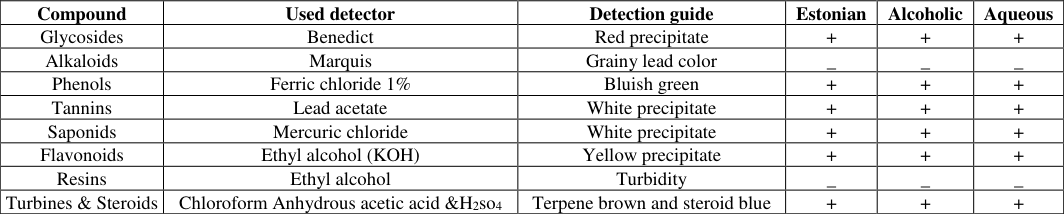 Table 1
 Table 2
Introduction
Medicinal plants and herbs are among the most important natural sources approved for obtaining the materials involved in the formulation of treatments and drugs and in the pharmaceutical industry, and since nature is rich in these plants, efforts and attention have been focused on nature and what it contains of herbs and plants that are characterized by their medical and therapeutic effectiveness [1] . The most important of these materials are phenols, alkaloids, tannins, volatile oils, organic acids, and others. These substances are often formed as natural by-products of metabolic processes [2] . Tannin is the main component of tannins, and its percentage ranges from (50-70%) of its various other components [3] . Tannins contain a phenolic acids, such as Gallic acid (3%), Syringic acid (5%), and varying proportions of Quercetin, P-Hydroxybenzoic Gebullic acid, M-Degallic acid, Degallic acid, Glucogallic acid, and others, Starch and resin are common components of tannins, especially in the early stages of Cyrenaica, in addition to flavones [4] . It is used tannins in the form of powder in the treatment of diarrhea and dysentery. It is also used in the treatment of gonorrhea, in the treatment of bloody sputum, inflammation of the mucous membrane Gastric Catarrh (Stomach ulcer), swelling of the spleen, hemorrhoids, polyposis, and in the treatment of eczema [5] . It is also used in the treatment of pharyngitis through gargling. gargle, inflammation of the kidneys and ureters, bleeding of the bladder, and in the treatment of putrefactive wounds and the prevention of contamination, and it is believed that it has many pharmacological properties, including that it is an astringent and antibacterial, antibacterial, antifungal and anti-inflammatory, and it can also be used as a local anesthetic, tannins were used in the past in the treatment of typhoid fever and in lowering blood sugar, as Hexa -Hepta -Galloyl -Glucose was isolated from tannins and in the treatment of burns and wounds and studies have shown that the preparations obtained from tannins are useful in treating cases of urinary tract infection and some cases of inflammation of the kidneys, ear and skin [6] .
Materials and Methods
Reagents used to detect the plant used in the study 1. Benedict's reagent was prepared by dissolving 137 grams of sodium citrate and 100 grams of monohydrate sodium carbonate in 800 ml of distilled water. The solution was filtered and added to the filtrate. Cupric sulphate solution 17.3 gm in 100 ml distilled water, complete the volume to 1000 ml using distilled water. This detector produces a red precipitate at the bottom, indicating the presence of glycosidic compounds [7] .
Marquis Reagent The reagent was prepared according
to what was mentioned in [8] for the purpose of detecting alkaloids as follows: Mix (1 ml of formaldehyde at a concentration of (40%), and add to 10 ml of concentrated sulfuric acid 3. Ferric chloride reagent % 1 was prepared according to the [9] method, as it weighed 1 gm of ferric chloride and placed in a graduated cylinder, then completed the volume to 100 ml. This solution was used to detect phenols, as it gives a bluish-green color.
Chemical detection of some active substances in plants Detection of tannins
The detection was carried out according to the method of [10] , where 1 ml of aqueous lead acetate solution (1%) was added to 1 ml of the extract and when a white precipitate is formed, the result is positive, which indicates the presence of tannins Detection of Saponins: The saponins were detected by following the following two methods: a) Shake the aqueous solution vigorously in the test tube, and the presence of saponins is indicated by the appearance of thick foam that remains for a long time [11] b) Add 1 ml of mercuric chloride solution (1%) To 1 ml of the extract, the appearance of a white precipitate indicates a positive detection [8] Detection of resins: The presence of resins was detected by the weight of 10 g of vegetable powder and 50 ml of ethyl alcohol with a concentration of 95% and leave the mixture in a water bath for two minutes. Then it was filtered and 100 ml of distilled water acidified with hydrochloric acid at a concentration of 4% was added to it. The presence of resins is indicated by the appearance of turbidity in it [12] .
Detection of flavonoids
Flavonoids were detected according to the method of [13] by adding 1 ml of potassium hydroxide (Ethanolic KOH) solution to 1 ml of plant extract. When a yellow precipitate appears, the result is positive, indicating the presence of Flavonoids Detection of alkaloids [8] followed the method by adding 3 ml of plant extract in a test tube and 2 ml of Marquise's reagent was added to it. When the tube was shaken, a pale gray color was formed indicating the presence of alkaloids. Detection of terpenes and steroids 1 gram of the dry extract is dissolved in a little chloroform and a drop of anhydrous acetic acid is added to it, then a drop of concentrated sulfuric acid is added to it, as the appearance of a brown color is evidence of The presence of terpenes, but if it turns blue after 3-5 minutes, it indicates the presence of steroids [14] . Detection of Glycosides The method of [7] was followed by adding 1 ml of aqueous plant extract to 5 ml of Benedict's reagent, where the appearance of a red precipitate confirms the presence of sugars, while the appearance of a blue color indicates the absence of sugars Detection of phenolic compounds 3 g of the extract was added to 2 ml of ferric chloride prepared by dissolving 1 g of ferric chloride in 100 ml of distilled water, as the green color appeared the bluish color indicates the presence of these substances [8] .
Preparation of Plant Extracts
Three types of solvents were used, distilled water, 95% alcohol, and 80% acetone. 40 g of plant form was mixed with 160 ml of distilled water, and the mixture was stirred by means of a shaker. Leave the mixture in the refrigerator to soak for 24 hours. It was then filtered through several layers of gauze and filtered again using filter papers (1. Whatman. No) to get rid of the unpulverized plant parts and remaining fibers. Then the extract was placed in the oven at a temperature of 40 °C until all the water evaporated and the extract remained in the base of Al-Baker [15] . Then the extracts, after drying, were placed in glass vials with tightly closed lids and kept in the freezer until use.
Preparation of Al coholic Extract
The alcoholic extract was prepared in the same way as in the preparation of the previous aqueous extract, except for replacing the distilled water with ethyl alcohol at a concentration of 95% [15] .
Preparation of Al aceton Extract
The acetone extract was prepared in the same way as in the previous preparation of the aqueous and alcoholic extract, except for the replacement of distilled water and ethyl alcohol with acetone at a concentration of 80% [15] .
Concentrations used in the study: Concentrations were used (10, 20, 30, 40) in mg/ml units
Sterilization of extracts and preparation of dilutions
Prepare a stocking solution by taking 1 gm of dry plant extract powder and dissolving it in 10 ml of sterile distilled water. The concentration of the storage solution became 100 mg / ml. Sterilize the solution by filtration using sterile filter papers (1. Whatman. No) to get rid of contaminants and obtain a sterile storage solution. And used as a source for the preparation of fears [16] .
The method of diffusion in the pits was followed by the method of [17] as follows 1. Pour 25 ml of the SDA agar into each plate. 2. Inoculated the feeding acres by spreading (0.1 ml by means of a sterile spreader from the yeast culture containing (1.5 x 10⁸) cells/ml, by comparing it with the standard stable turbidity solution, then the plates were left to dry at room temperature. 3. A hole with a diameter of 5 mm was made in the culture medium with a sterile cork (borer)
4. An amount of 0.2 ml of graduated concentrations prepared for plant extracts was added using a micropipette. A positive control hole was made by adding anti-nystatin 30 mg / ml 5. Three replications were made for each plate, then the plates were incubated at a temperature of 37 °C for a period of 48 hours, in a manner that determined the effectiveness of each concentration of the extract by measuring the inhibition zone.
Statistical analysis
The results of the study were analyzed statistically according to the Duncan polynomial test [18] , at a probability level of 5%, and this was implemented using the Excel program in the electronic calculator.
Results and Discussion
Chemical detection of some active substances in the extracts of the fruits of the tannins plant the results of the chemical detection showed some of the active substances in the extracts of the fruits of the tannins plant. The plant contained all of the glycosides, saponins, tannins, phenols, terpenes and flavonoids, but it did not contain alkaloids and resins, and this is consistent with what he found [19] , who found that the fruits of tannins do not contain alkaloids and resins. Glycosides are among the important compounds in the plant, and they are considered as one of the storage sources of sugary materials, which in turn are involved in the process of regulating osmotic pressure, and the transfer of some substances necessary for the plant's metabolism. It also plays a "protective" role against some pests and insects that infect plants [20] , It is decomposed by acids or yeasts into two substances: a sugary substance called Glycone, which is dextrose and has no pharmacological efficacy, except that it carries the non-sugar part of the glycoside to its area of influence in the human body, and one or several non-sugar substances called Aglycone or Genine, which is the pharmacologically active part, From the glucoside [21] . Tannins are polyphenols, and the term Tannin is derived from the ancient use of these phenols in the manufacture of animal skins, where tannins were used for tanning leather (Tanning agent). It is believed that tannins have a role in "water absorption, as is the case in colloids. Thus, they protect the plant from dehydration. They have a role in inhibiting the growth of microorganisms, and tannins have a diuretic effect." They are antioxidants and have the ability to inhibit mutagenic susceptibility to some mutations. Thus, they are considered anti-cancer [22] . As for the saponins, they produce soapy foam when shaken with water. They are chemical compounds of triterpenes or steroids found in many plants. Detergents were used before the discovery of soap. Saponins protect plants from insects and microorganisms as they affect the permeability of the cell membrane and thus facilitate the entry of toxic substances or cause a deficiency in the vital components of microorganism cells [23] . Phenols are organic compounds due to the presence of a hydroxyl group (OH) linked to a benzene ring or aromatic ring structures, and they form a hydrogen bond with the active part of the enzyme. Thus, the volumes of these enzymes change as well as their properties change, and therefore they are not effective in the cell, which leads to the stopping of certain pathways In the cell, which leads to its death, and phenols may bind with each other, stopping cancerous tumors, as they play an "Important" role in stopping cancer and inhibiting the representation of mutations. It also has an anti-inflammatory role [24] . As for flavonoids, they are organic compounds with a chemical composition consisting of three hexagonal rings, three hydroxyl groups, and two oxygen atoms. Flavonoids are derived from Flavanone, and there are more than 4000 flavonoids isolated from plants. It also has many effects, as it was found that it has the ability to inhibit the aggregation of blood platelets (Antithrombotic effect), and encourages the expansion of blood vessels and anti-inflammatory and anti-mutagenic [25] . Terpenes are non-nitrogenous chemical compounds, characterized by their sharp taste, antimicrobial, food preservatives, appetite stimulants, facilitating digestion, analgesics and tonics. Terpenes are the largest group of natural products in plants, with more than 20,000 compounds, including essential oils, flavorings, fragrances, and fat-soluble plant pigments [26] . The alkaloids, they are nitrogenous compounds that are colorless and odorless, and have a bitter and toxic taste (the toxicity of most plants is due to the presence of alkaloids in them) [27] . As for resins, they are plant materials with a complex chemical composition that result from the oxidation of some essential oils. It dissolves in alcohol, ether, and volatile oils, and it has become possible to manufacture many of them in the form of solid or semi-solid materials that are used in the manufacture of paints and plastics [28] .
Effect of extracts of the fruits of the tannins plant in the inhibition of C. albicans yeast
In recent times, strong tendencies have emerged towards plant extracts and biologically active compounds isolated from local plant species, because the use of medicinal plants plays a vital role in protecting the health needed by developing countries, because these plants may provide a new source as agents against Pathogenic bacteria, fungi, and viruses [29] . The results showed that the effect depended on the type and concentration of the extract. The acetone extract showed a high inhibitory effectiveness and came in the first place, followed by the alcoholic and then the aqueous extract. The diameters of growth inhibition of C. albicans increased with the increase in the concentration of the extract as in Table (2). The average diameter of acetone inhibition was (20, 15.5 mm, respectively, at concentrations of 10 and 20 mg/ml. While it increased to reach (24, 28 mm, respectively, at a concentration of 30, 40 mg / ml. As for the alcoholic extract, it showed a good inhibitory activity against C. albicans, the average diameter of inhibition was (5.66.4.5 mm, respectively, at a concentration of 200 mg / ml, while it increased to reach 8.5, 6.16 mm, respectively, at a concentration of 200 mg / ml. 30, 40 mg / ml. As for the aqueous extract, it also showed good inhibitory effectiveness, as the average diameter of inhibition was 3.5.2 mm, respectively, at a concentration of 10, 20 mg / ml. While it increased to reach 6.66.4.5 on a scale at a concentration of 30.40 mg / ml. The results showed that the effect of the extracts of the fruits of the gall plant against C. albicans showed during the first 24 hours. As for the antinystatin that was used for comparison, it showed its effect after 48 hours, in which the average diameter of inhibition was 29 mm at a concentration of 30 mg / ml. This indicates the strong effect of the active compounds present in the fruit extracts of the tannins plant, which gave a high inhibitory effect on the growth of C. albicans yeast within 24 hours. The results of the statistical analysis of Dunkin's multinomial test showed that there are significant differences at the level of probability 0.05 between the aqueous, alcoholic and acetone extracts, as the results indicated that the acetone extract was more efficient than the alcoholic and aqueous extracts, which did not show significant differences between them. It is known that tannin is a phenolic compound soluble in water, alcohol and acetone and gives a precipitate "with protein". It appears to be dependent on the presence of tannin in plant extracts [30]. And the high amounts of tannin content in the lobules of the tannin plant indicate that tannin may be responsible for the antibacterial activity in this study. As a result, the extracts of the lobules of the tannin plant have a high potential as an antibacterial agent, and this gives a reason for the use of the tannin plant in traditional medicine. For Diseases Associated with Bacterial Infection [31] . The current study agreed with the study carried out by [32] , where it was found that plant galls represent the best antibacterial when used at an inhibitory concentration between (5-40 mg.
Conclusion
The acetone extract of the fruits of the tannins plant comes first in inhibiting C. albicans yeast, and the alcoholic extract ranks second, then the aqueous extract. Anti-nystatin showed inhibitory activity against C. albicans yeast after 48 hours, while tannins extracts showed inhibitory activity within 24 hours. The fruits of the tannins plant contained many effective compounds such as phenols, glycosides, tannins, saponins and flavonoids.
Figures and tables from the paper
| Compound | Used detector | Detection guide | Estonian | Alcoholic | Aqueous |
|---|---|---|---|---|---|
| Glycosides | Benedict | Red precipitate | + | + | + |
| Alkaloids | Marquis | Grainy lead color | _ | _ | _ |
| Phenols | Ferric chloride 1% | Bluish green | + | + | + |
| Tannins | Lead acetate | White precipitate | + | + | + |
| Saponids | Mercuric chloride | White precipitate | + | + | + |
| Flavonoids | Ethyl alcohol (KOH) | Yellow precipitate | + | + | + |
| Resins | Ethyl alcohol | Turbidity | _ | _ | _ |
| Turbines & Steroids | Chloroform Anhydrous acetic acid &H2so4 | Terpene brown and steroid blue | + | + | + |
Table text extracted from the original PDF; superscript letters are shown inline. The original table image is below.
View original table image
| Extract type | Positive control | Negative control | Concentrations used are mg\ ml | — | — | — |
|---|---|---|---|---|---|---|
| 40 | 30 | 20 | 10 | |||
| Aqueous | 0.00 | 29 | 6.66 | 4.50 | 3.50 | 2.0 * |
| L | A | G | I | J | K | |
| Alcoholic | 0.00 | 29 | 8.50 | 6.16 | 5.66 | 4.50 |
| L | A | F | GH | H | I | |
| Estonian | 0.00 | 29 | 28.0 | 24.5 | 20.0 | 15.5 |
| L | A | B | C | D | E |
Table text extracted from the original PDF; superscript letters are shown inline. The original table image is below.
View original table image
References
26 in the original paper- Anulika NP, Ignatius EO, Raymond ES, Osasere OI, Abiola AH. The chemistry of natural product: Plant secondary metabolites. International Journal of Technology Enhancements and Emerging Engineering Research. 2016;4(8):01-09.
- Shi J, Wang Y, Wei H, Hu J, Gao MT. Structure analysis of condensed tannin from rice straw and its inhibitory effect on Staphylococcus aureus. Industrial Crops and Products. 2020;145:112-130.
- Al-Snafi AE. Traditional uses of Iraqi medicinal plants. IOSR Journal of Pharmacy. 2018;8(8):32-96.
- Baldwin A, Booth BW. Biomedical applications of tannic acid. Journal of Biomaterials Applications. 2022;36(8):1503-1523.
- Ahmed YM, Sulaiman RZ. Detection some active Compounds in the Leaves and Stems of Local Coriander Plant-Coriandrum sativum L. Tikrit Journal of Pure Science. 2018;23(3):06-15.
- Jagaba AH, Abubakar S, Lawal IM, Latiff AA, Umaru I. Wastewater treatment using alum, the combinations of alum-ferric chloride, alum-chitosan, alum-zeolite and alum-moringa oleifera as adsorbent and coagulant. International Journal of Engineering Management. 2018;2(3):67-75.
- Singh V, Kumar R. Study of phytochemical analysis and antioxidant activity of Allium sativum of Bundelkhand region. International Journal of LifeSciences Scientific Research. 2017;3(6):1451-1458. International Journal of Biology Sciences https://www.biologyjournal.net
- Al-Ani AJ, Nadir MT, Al-Khazraji NR. The antimicrobial activity of volatile oil isolated from some Iraq plants. J. Al-Anbar University. 1996;11(1):82-86.
- Al-Manhel AJ, Niamah AK. Effect of aqueous and alcoholic plant extracts on inhibition of some types of microbes and causing spoilage of food. Pakistan Journal of Food Sciences. 2015;25(3):104-109.
- Zarai Z, Boujelbene E, Salem NB, Gargouri Y, Sayari A. Antioxidant and antimicrobial activities of various solvent extracts, piperine and piperic acid from Piper nigrum. Lwt-Food science and technology. 2013;50(2):634-641.
- Abubakar AR, Haque M. Preparation of medicinal plants: Basic extraction and fractionation procedures for experimental purposes. Journal of Pharmacy & Bioallied Sciences. 2020;12(1):1-10.
- Abaza L, Youssef NB, Manai H, Haddada FM, Methenni K, Zarrouk M. Chétoui olive leaf extracts: influence of the solvent type on phenolics and antioxidant activities. Grasas y Aceites. 2011;62(1):96104.
- Mitcher LA, Bathala MS, Clark GW, Beal JL. Antimicrobial agents from higher plants. The quaternary alkaloids of Ptelea trifoliata. Lloydia. 1975;38:109-116.
- Perez C. Antibiotic assay by agar-well diffusion method. Acta Biologiae Et Medicinae Experimentalis. 1990;15:113-115.
- Mahmood AR, Abdullah MR. The effect of active compounds and trace elements extracted from Artemisia fruit on some liver enzymes in humans. Archives of Razi Institute. 2023;78(1):169-174.
- Alara OR, Abdurahman NH, Ukaegbu CI. Extraction of phenolic compounds: A review. Current Research in Food Science. 2021;4:200-214.
- Elnour AA, Mirghani ME, Musa KH, Kabbashi NA, Alam MZ. Challenges of extraction techniques of natural antioxidants and their potential application opportunities as anti-cancer agents. Health Science Journal. 2018;12(5):596.
- Das AK, Islam MN, Faruk MO, Ashaduzzaman M, Dungani R. Review on tannins: Extraction processes, applications and possibilities. South African Journal of Botany. 2020;135:58-70.
- Tatli Cankaya II, Somuncuoglu EI. Potential and prophylactic use of plants containing saponin-type compounds as antibiofilm agents against respiratory tract infections. Evidence-Based Complementary and Alternative Medicine. 2021;2021:01-04.
- Okigbo RN, Anuagasi CL, Amadi JE. Advances in selected medicinal and aromatic plants indigenous to Africa. Journal of Medicinal Plants Research. 2009;3(2):86-95.
- Halake K, Birajdar M, Lee J. Structural implications of polyphenolic antioxidants. Journal of Industrial and Engineering Chemistry. 2016;35:01-07.
- Alamgir AN, Alamgir AN. Secondary metabolites: Secondary metabolic products consisting of C and H; C, H, and O; N, S, and P elements; and O/N heterocycles. Therapeutic Use of Medicinal Plants and their Extracts: Phytochemistry and Bioactive Compounds. 2018;2:165309.
- Cadar E, Tomescu A, Erimia CL, Mustafa A, Sîrbu R. The impact of alkaloids structures from natural compounds on public health. European Journal of Social Science Education and Research. 2015;2(4):349.
- Altemimi A, Lakhssassi N, Baharlouei A, Watson DG, Lightfoot DA. Phytochemicals: Extraction, isolation, and identification of bioactive compounds from plant extracts. Plants. 2017;6(4):01-23.
- Brouwer P, Nierop KG, Huijgen WJ, Schluepmann H. Aquatic weeds as novel protein sources: Alkaline extraction of tannin-rich Azolla. Biotechnology Reports. 2019;24:e00368.
- Basri DF, Fan SH. The potential of aqueous and acetone extracts of galls of Quercus infectoria as antibacterial agents. Indian journal of Pharmacology. 2005;37(1):26-29.