
Research article · 2019 · Full text
International Journal of Agriculture and Food SciencePerception on health benefit of red meat consumption in Ogbomosho north local government area of Oyo State
Volume 1(3) · Pages 19–22 · DOI: 10.33545/2664844x.2019.v1.i3a.13 ↗
Research areasAgriculture Sustainability and Environmental ImpactLivestock Management and Performance ImprovementMeat and Animal Product Quality
Abstract
Author-writtenRed meat is meats which are red in their raw state by its high myoglobin content. Myoglobin is a type of protein found in meat which has a deep red color. Red meat contains high protein and fat which make it flavourful, high palatability (agreeable taste), source of protein and nutrients which make people love to consume it. Therefore, Perception on health benefit of red meats consumption in Ogbomosho North Local Government Area of Oyo State was investigated. Random sampling techniques were employed to collect information from 150 respondents through questionnaire and interviews. Descriptive and inferential statistics such as frequency counts, percentages, mean, PPMC were used in data analysis at 0.05 level of significance. Results of analysis revealed that majority (34.0% and 31.3%) of the respondents fell within the age range of 21 years to 30 years and 31years to 40years respectively and greater population of females (68.7%) than the males (31.3%). Over 48.0% had secondary as their educational qualification with most (67.3%) married, with fairly large household size1-3 and 4-6 persons in the study area. The results further revealed that there is negative significant relationship between the constraint (r=-0.374, p=0.000) and the perception of health benefits on red meat. The study further concluded that Respondents’ perception on health benefits of red meat is high. It is therefore recommended that Extension agents should also disseminate information of red meat and their health benefits and risks of red meat so as to improve awareness of meat. Also, Government should provide modern meat shop to aid hygienic handling of red meat for public health care in the study area.
Summary
Source-checkedPlain-language reading of the full paper, prepared with AI and checked against the text. Each point links to the authors' own words.
Why it matters
- Meat is a critical source of high-value biological proteins and vitamins that support human growth, development, and the formation of dental and gastrointestinal structures. View evidence ↗
- Red meat is widely consumed due to its high protein and fat content, which contribute to its flavor and palatability. View evidence ↗
- Certain components of red meat, such as fat content and compounds formed during high-temperature cooking, are associated with potential health risks like carcinogens. View evidence ↗
The question
- The study aimed to determine the perceptions of people in the Ogbomosho North Local Government Area of Oyo State regarding the health benefits of consuming red meat. View evidence ↗
What they did
- The researchers used random sampling to gather data from 150 respondents using interviews and questionnaires. View evidence ↗
- A multi-stage sampling process was used, starting with the random selection of three wards: Isale Afon, Saja, and Sabo-Tara. View evidence ↗
- Data were analyzed using frequency counts, percentages, means, and Point-Biserial Correlation (PPMC) at a 0.05 significance level. View evidence ↗
What they found
- The majority of the study participants (77.4%) were between 21 and 50 years old. View evidence ↗
- Female respondents made up the majority of the sample at 68.7%, compared to 31.3% males. View evidence ↗
- Respondents generally perceived red meat positively, with 60.7% agreeing it contains essential nutrients and 51.3% believing it is superior to white meat. View evidence ↗
- Many respondents were undecided about health risks, including 61.3% regarding suya and cancer risk and 41.3% regarding heart disease risk. View evidence ↗
- The overall perception of the health benefits of red meat was high, suggesting that participants were more aware of the benefits than the risks. View evidence ↗
- The primary constraints affecting the perception of red meat benefits were income level (60%), the price of meat (59.3%), and the health status of respondents (48.0%). View evidence ↗
- A statistically significant negative relationship (r = -0.374, p = 0.000) was found between the constraints faced and the perception of red meat's health benefits. View evidence ↗
What it means
- The authors recommend that extension agents provide balanced information on both the benefits and risks of red meat to improve public awareness. View evidence ↗
- The authors suggest that the government establish modern meat shops to ensure hygienic handling of red meat for better public health. View evidence ↗
Visual summary
3 visualsIllustrations explain the paper; charts are replotted from the paper's own table values.
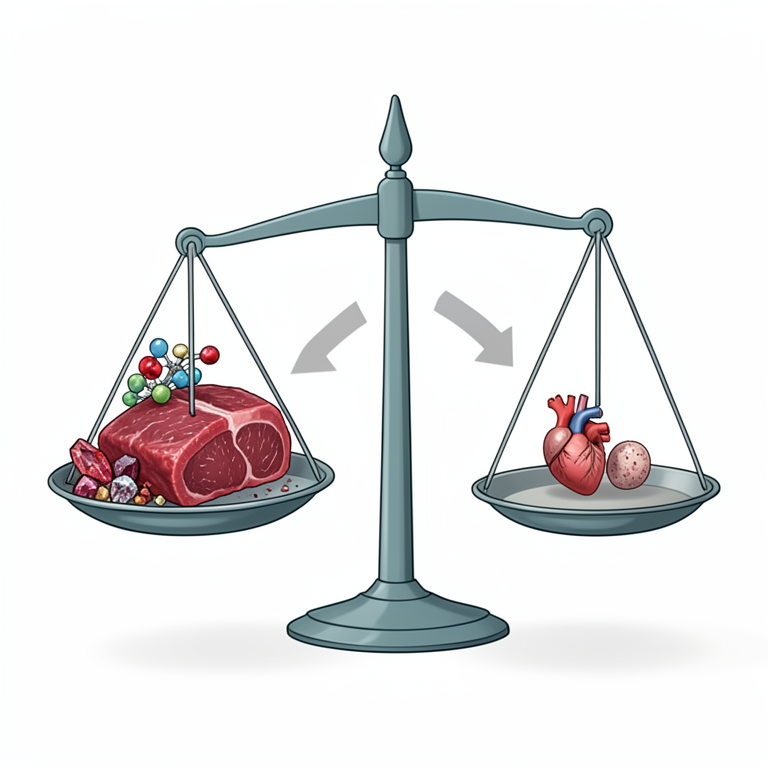
Perception Gap
AI-generated conceptual illustration (Red meat (beef and goat meat) and human cardiovascular and cellular organs). It explains the idea and does not show study data.
View source evidence ↗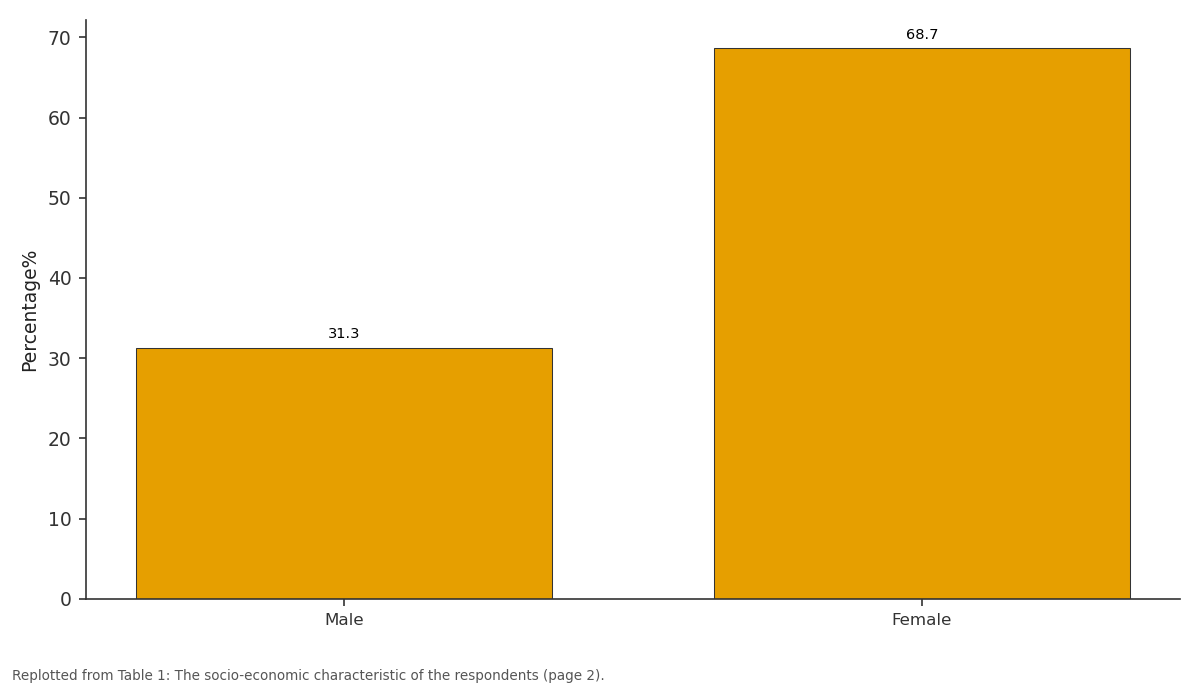
Percentage%: Male vs Female
Replotted from Table 1 (page 2) of the original paper. Every bar is the paper's own table value.
View source evidence ↗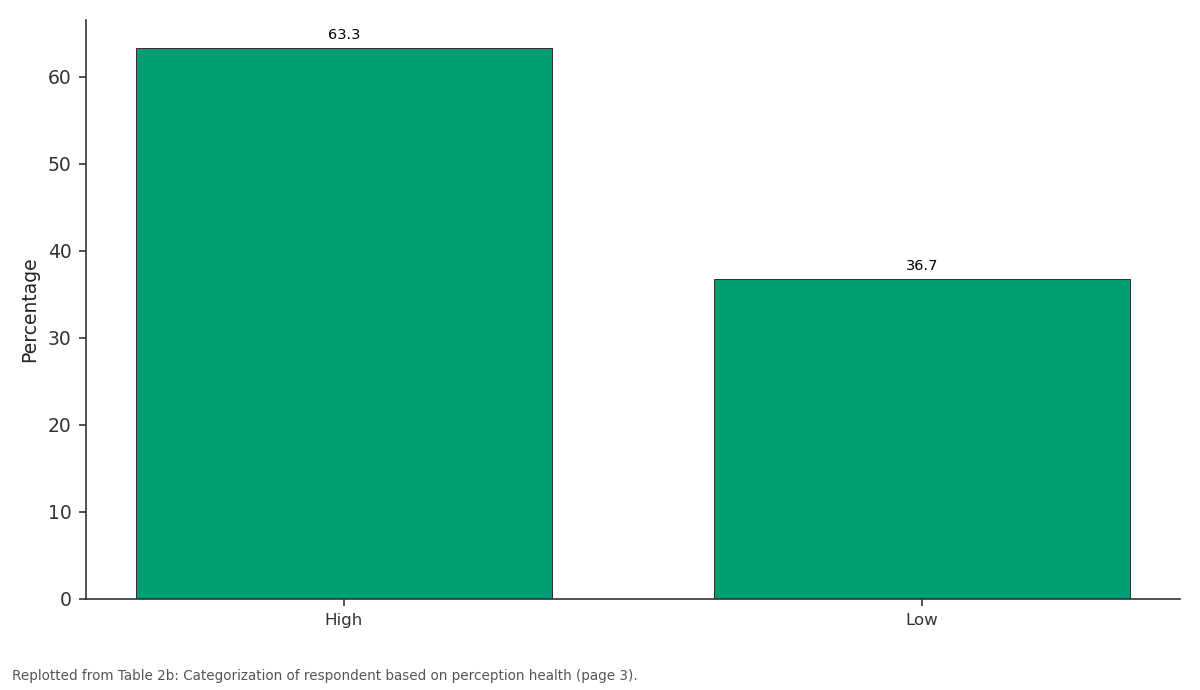
Percentage: High vs Low
Replotted from Table 2B (page 3) of the original paper. Every bar is the paper's own table value.
View source evidence ↗Figures & tables
From the original paper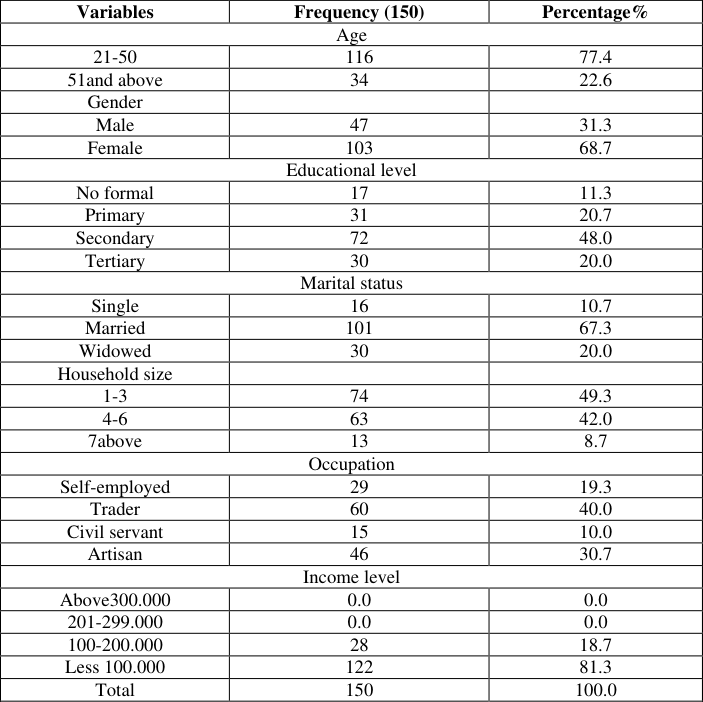 Table 1
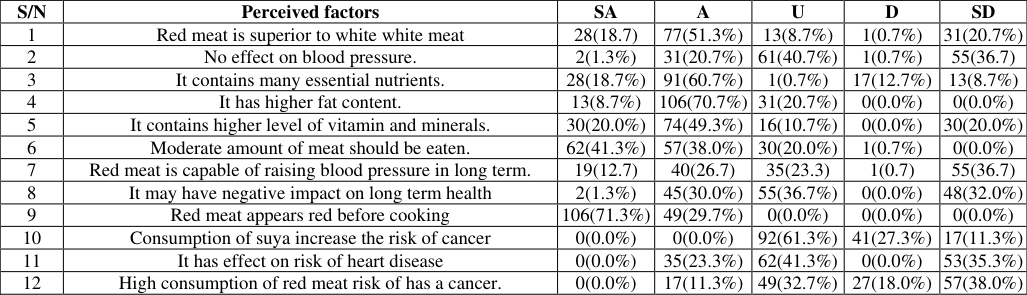 Table 2A
 Table 2B
 Table 3B
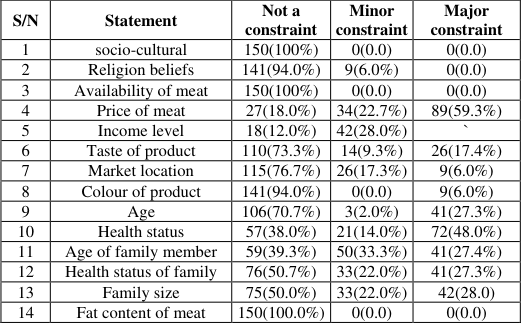 Table 3A
 Table 4
Introduction
Meat plays a significant share among the animal origin protein sources. Meat is food which contains amino acids of different types, quantity and rate which are necessary for growth, living and physiological functions of human beings. Red meat forms part of the habitual balance diet from man and also recognised that over many year evolution, humans have adapted to consuming large quantities of lean red meat. Constituents of red meat that have been proposed to be responsible for these associations include the fat content, fatty acid composition and the possible formation of carcinogenic compounds, such as heterocyclic amines (HCAs), by cooking meat at high temperatures (Birgham et al., 2003) [2] . Food is necessary for human existence and meat plays a key role in that existence. Meat products are rich source of nutrients that enable human growth and development. Enriched with high value biological protein and vitamins, meat facilitates the development of the gastrointestinal tract, cranio-dental features (teeth, jaw, etc) and posture (pereira and vicente, 2013) [10] . Preferential consumption exists in spite of the importance of meat as a source of protein with high biological value. Earlier reports (Burton and yound, 1992) [3] classified factors that affect the consumption of meat as economic, social and cultural Red meat is the main dietary source of DPA, which accumulate in mammals but not in oily fish (Givens & Gibbs, 2006) [6] . Little research exists on the clinical significance of DPA, but it has been suggested to be inversely related to atherosclerotic risk and risk of acute coronary events in middle-aged men from Finland. Red meat consumption contributes many vitamins and minerals to the diet that are essential for Health. It is a major source of protein, providing about 20g/100g of beef or lamb consumed. In consumption to vegetarians, omnivores have greater intakes of protein (Davey et al., 2003) [4] . Consumption a high protein (from lean red meat as an example) and low carbohydrate diet whilst controlling energy intake has recently been found to facilitate weight loss and weight maintenance when compared with consuming a diet of similar energy intake that is low in protein (Layman et al., 2003; Jones et al., 2003) [8,7] . The study was therefore undertaken to determine Perception on health benefit of red meats consumption in Ogbomosho North Local Government Area of Oyo State. The research's objectives have taken an overall overview pertaining to Perception on health benefit of red meats consumption in the study area.
Materials and Methods
This study was carried out in Ogbomosho North Local Government Area of Oyo State. It is located on the latitude 8.1 0 N and longitude 4.2 0 E. The area is situated within the tropical type with two season dry season which begins from October-March while rainy season is from April -September. It is has an area of 253km 2 and a population of 645,000 in 2006 census (NPC 2006) [9] . It also has a temperature of 26.1 0 c, the average rainfall is 1217mm. It covers total land mass of 207,978 square kilo meters.
International Journal of Agriculture and Food Science
The local government is bounded by Ogbomoso South, Orire and Surulere local government areas to west and east respectively. The predominate religions are Christian and Islam. The majority of the people are members of the Yoruba ethnic group. Yams, cassava, maize and tobacco are some of the notable agricultural products of the region.
Sampling Procedure and Sample Size
A Multi-stage sampling procedure was used to select respondents for the study. Random sampling selection was employed to select three wards (Isale Afon, Saja and Sabo-Tara) out of the ten wards in the local government, then two communities from each of the chosen wards were purposely selected based on their populations, with well structure questionnaire which gives a total 150 respondents as sample size.
Analysis of data
Data Collected were subjected to descriptive and inferential Statistical analysis using statistical tools included frequency counts, mean and percentage while inferential statistical used is PPMC.
Results and Discussion
Results and Discussion
Socio-economic characteristics of respondents
Result of analysis in Table1 revealed that selected socioeconomic characteristics of the respondents in the study area with majority (77.4%) respondents were within the age range of 21-50 years. The result revealed that 68.7% of the respondents were females while 31.3% were males. This implies that female respondents were more than male respondents in the study area. This result was in line with the observation of Diez et al., (2006) [5] who earlier reported that more female participated in their study for identifying market segments in meat and in the perception and preference for different meat types respectively. It was also revealed that majority (68.0%) of the respondents had secondary and tertiary education. The result further revealed that (67.3%) of the respondents were married with majority (49.3%) had 1-3 person as household size. Also, the income earned by the majority (81.3%) of respondents in the study area less than ₦100,000, followed by those earning between ₦100,000-200,000 with (18.7%). The result on the occupation shows that (40.0%) of the respondents are traders in the study area.
| Variables | Frequency (150) | Percentage% |
|---|---|---|
| Age | ||
| 21-50 | 116 | 77.4 |
| 51and above | 34 | 22.6 |
| Gender | ||
| Male | 47 | 31.3 |
| Female | 103 | 68.7 |
| Educational level | ||
| No formal | 17 | 11.3 |
| Primary | 31 | 20.7 |
| Secondary | 72 | 48.0 |
| Tertiary | 30 | 20.0 |
| Marital status | ||
| Single | 16 | 10.7 |
| Married | 101 | 67.3 |
| Widowed | 30 | 20.0 |
| Household size | ||
| 1-3 | 74 | 49.3 |
| 4-6 | 63 | 42.0 |
| 7above | 13 | 8.7 |
| Occupation | ||
| Self-employed | 29 | 19.3 |
| Trader | 60 | 40.0 |
| Civil servant | 15 | 10.0 |
| Artisan | 46 | 30.7 |
| Income level | ||
| Above300.000 | 0.0 | 0.0 |
| 201-299.000 | 0.0 | 0.0 |
| 100-200.000 | 28 | 18.7 |
| Less 100.000 | 122 | 81.3 |
| Total | 150 | 100.0 |
Table text extracted from the original PDF; superscript letters are shown inline. The original table image is below.
View original table image
Perception on Health benefits of Red Meat by respondents in the Study area
Result of analysis in table 2a showed that (71.3%) of respondents strongly agreed that red meat appear red before cooking, (70.0%) agreed to the statement that red meat contains higher fat content, (60.7%) of the respondents agreed that red meat contains essential nutrients, (51.3%) of the respondents agreed that red meat is superior to white, Also (49.3%) agreed that red meat contains higher level of vitamin and minerals. while, (61.3%) of the respondents undecided that consumption of suya increase the risk of cancer, (41.3%) undecided that It has effect on risk of heart disease, (40.7%) undecided that red meat has no effect on blood pressure. Also the result further revealed that respondents' perception on health benefits of red meat is high in the study. This implies that majority of the respondents are perceived of health benefit but not aware of the health risk of red meat. The result analysis revealed the constraint faced by respondents to perceived health benefits of red meat in the study area. Majority (60%) income level, (59.3%) price of meat and (48.0%) health status of the respondents constitutes major constraints facing health benefit of red meat in the study area. Also, revealed that majority (100.0%, 94.0%, 76.7%, 73.3%, 70.7%, 50.7% and 50.0%) of the respondents claimed that socio-cultural, availability of meat, fat content of meat, religion beliefs, colour of product, market location, taste of products, age, health status of family, and family size are not a constraint facing respondents health benefits of red meat in the study area. This is line with Adetunji and Rauf (2012) [1] who reported that respondent's choice for meat type was limited by level of income and price of meat. This result implies that majority of the respondents were not affected by constraint items stated as regard health benefit towards consumption of red meat. The result in table 3b revealed that the level of constraints faced by majority (50.7%) of the respondents is low in the study area. This indicate that constraints items stated does not prevent majority of the respondents on consumption as regard health benefits of red meat in the study area. The hypothesis was tested with the aid of PPMC. The result of analysis in table 4 revealed that there is negative significant relationship between the constraint (r=-0.374, p=0.000) and the perception of health benefits on red meat. The implication is that the level of constraints faced by the respondents posed a significant threat to perception on health benefits of red meat in the study area.
Conclusion and Recommendations
The study revealed that majority of the respondents fell within the age range of 21 years to 30 years and 31years to 40years and greater population of females. Nearly half of the respondents had secondary as their educational qualification with most married, with fairly large household size1-3 and 4-6 persons in the study area. Respondents' perception on health benefits of red meat is high in the study. The level of constraints faced by majority of the respondents is low in the study area. The study thus, concludes that there are mirages of constraints such as income level, price of meat and health status of the respondents militating against perception on health benefit of red meat in the study area.
It is therefore recommended that Extension agents should also disseminate information of red meat and their health benefits and risks of red meat so as to improve awareness of meat. Also, Government should provide modern meat shop to aid hygienic handling of red meat for public health care in the study area.
Figures and tables from the paper
| S/N | Perceived factors | SA | A | U | D | SD |
|---|---|---|---|---|---|---|
| 1 | Red meat is superior to white white meat | 28(18.7) | 77(51.3%) | 13(8.7%) | 1(0.7%) | 31(20.7%) |
| 2 | No effect on blood pressure. | 2(1.3%) | 31(20.7%) | 61(40.7%) | 1(0.7%) | 55(36.7) |
| 3 | It contains many essential nutrients. | 28(18.7%) | 91(60.7%) | 1(0.7%) | 17(12.7%) | 13(8.7%) |
| 4 | It has higher fat content. | 13(8.7%) | 106(70.7%) | 31(20.7%) | 0(0.0%) | 0(0.0%) |
| 5 | It contains higher level of vitamin and minerals. | 30(20.0%) | 74(49.3%) | 16(10.7%) | 0(0.0%) | 30(20.0%) |
| 6 | Moderate amount of meat should be eaten. | 62(41.3%) | 57(38.0%) | 30(20.0%) | 1(0.7%) | 0(0.0%) |
| 7 | Red meat is capable of raising blood pressure in long term. | 19(12.7) | 40(26.7) | 35(23.3) | 1(0.7) | 55(36.7) |
| 8 | It may have negative impact on long term health | 2(1.3%) | 45(30.0%) | 55(36.7%) | 0(0.0%) | 48(32.0%) |
| 9 | Red meat appears red before cooking | 106(71.3%) | 49(29.7%) | 0(0.0%) | 0(0.0%) | 0(0.0%) |
| 10 | Consumption of suya increase the risk of cancer | 0(0.0%) | 0(0.0%) | 92(61.3%) | 41(27.3%) | 17(11.3%) |
| 11 | It has effect on risk of heart disease | 0(0.0%) | 35(23.3%) | 62(41.3%) | 0(0.0%) | 53(35.3%) |
| 12 | High consumption of red meat risk of has a cancer. | 0(0.0%) | 17(11.3%) | 49(32.7%) | 27(18.0%) | 57(38.0%) |
Table text extracted from the original PDF; superscript letters are shown inline. The original table image is below.
View original table image
| Variable | Frequency | Percentage | Mean |
|---|---|---|---|
| High | 95 | 63.3 | 37.1 |
| Low | 55 | 36.7 | |
| Total | 150 | 100 |
Table text extracted from the original PDF; superscript letters are shown inline. The original table image is below.
View original table image
| Variables | Frequency | Percentage | Mean |
|---|---|---|---|
| High | 74 | 49.3 | 23.6 |
| Low | 76 | 50.7 | |
| Total | 150 | 100.0 |
Table text extracted from the original PDF; superscript letters are shown inline. The original table image is below.
View original table image
| S/N | Statement | Not a constraint | Minor constraint | Major constraint |
|---|---|---|---|---|
| 1 | socio-cultural | 150(100%) | 0(0.0) | 0(0.0) |
| 2 | Religion beliefs | 141(94.0%) | 9(6.0%) | 0(0.0) |
| 3 | Availability of meat | 150(100%) | 0(0.0) | 0(0.0) |
| 4 | Price of meat | 27(18.0%) | 34(22.7%) | 89(59.3%) |
| 5 | Income level | 18(12.0%) | 42(28.0%) | ` |
| 6 | Taste of product | 110(73.3%) | 14(9.3%) | 26(17.4%) |
| 7 | Market location | 115(76.7%) | 26(17.3%) | 9(6.0%) |
| 8 | Colour of product | 141(94.0%) | 0(0.0) | 9(6.0%) |
| 9 | Age | 106(70.7%) | 3(2.0%) | 41(27.3%) |
| 10 | Health status | 57(38.0%) | 21(14.0%) | 72(48.0%) |
| 11 | Age of family member | 59(39.3%) | 50(33.3%) | 41(27.4%) |
| 12 | Health status of family | 76(50.7%) | 33(22.0%) | 41(27.3%) |
| 13 | Family size | 75(50.0%) | 33(22.0%) | 42(28.0) |
| 14 | Fat content of meat | 150(100.0%) | 0(0.0) | 0(0.0) |
Table text extracted from the original PDF; superscript letters are shown inline. The original table image is below.
View original table image
References
10 in the original paper- Adetunji MO, Rauf MO. Analysis of Household Demand for meat in south west, Nigeria. Global Journal of Science Frontier Research Agriculture and Biology, 2012, 12(1). Print ISSN: 0975-5896. Online ISSN: 2249-4626.
- Birgham SA, Nichlas ED, Robert L, Pietro E, Nadia S, Teresa N. et al. Dietary fibre in food and protechin against coloreical cancer in the European Prospective investigation into cancer and nutrition (EPIC) an observational study. The Lancet. 2003; 361(9368):1496-1501.
- Burton M, Young T. The structure of changing taste for meat and fish in Great Britain. European Review of Agricultural Economics Journal. 1992; 19(2):165-180.
- Davey GK, Spencer EA, Appleby PN, Allen NE, Knox KH, Key TJ. et al. EPIC-Oxford: Lifestyle characteristics and nutrient intakes in a cohort of 33883 meat eaters in the UK. Public Health Nutrition. 2002; 6(3):259-268.
- Dıez J, Del Coz JJ, Bahamonde A, Olleta JL, Macie S, Campo MM. et al. Identifying market segments in beef:Breed, slaughter weight and ageing time implications. Meat science. 2006; 74:667-675.
- Givens DI, Gibbs RA. Very long chain n-3 polyunsaturated fatty acids in the food chain in the UK and the potential of animal-derived foods to increase intake. Nutrition Bulletin. 2006; 31:104-110. ISSN 0141-9684. https://doi.org/10.1111/j.1467-3010.2006.00.554.x
- Jones RM, Jones PJ. Effect of stocking rates on animal gain, pasture yield and composition and soil properties from setaria-ntrogen and setaria-legume pastures in coastal southeast Queensland. Tropical Grassland. 2003; 37(2):65-83. http://www.tropicalgrasslands asn.au/Tropical.
- Layman DK, Boileau RA, Erickson DJ, Painter JE, Shine H, Sather C. et al. A reduced ratio of dietary carbohydrate to protein improves body composition and blood lipid profiles during weight loss in adult women. Journal of Nutrition. 2003; 133(2):411-7.
- NPC. Population and Development Review. 2006; 33(1):206-210. Published by Population by Population council. https://www.jst or.org/stable/25434601 page count 5.
- Pereira PMCC, AFRB Vicente. "Meat Nutritional Composition and Nutritive Role in the Human Diet. Meat Science. 2013; 93:586-592.