
Research article · 2024 · Full text
International Journal of Research in AgronomyVegetative propagation of Detarium microcarpum Guill. & Perr. by root segment cuttings: Effect of substrate and length of cuttings
Volume 7(1) · Pages 104–109 · DOI: 10.33545/2618060x.2024.v7.i1b.195 ↗
Research areasAfrican Botany and Ecology StudiesPlant Diversity and EvolutionBotanical Research and Applications
Abstract
Author-writtenDetarium microcarpum is one of the species of socio-economic interest in the Guinea savannah highlands of Cameroon. Unfortunately, it is coming under increasing pressure in the wild. The aim of the present work was to contribute to the domestication of this Caesalpiniaceae by root segment cuttings in the Bini-Dang locality. Specifically, the effect of substrate and length of root segment cuttings on the ability of this species to bud and root was evaluated. The root segment cuttings were taken in the locality of Karna manga in the early hours of the morning and then transported to the nursery. They were then broken into 15, 20 and 25 cm cuttings. The cuttings thus described were grown in a vertical position in three substrates: black soil, a homogeneous sand/sawdust mixture and a homogeneous black soil/sawdust mixture. The experimental design used was a split-plot with 3 replicates. The first factor was the substrate and the second was the length of the cuttings. The experimental unit was 10 cuttings. At the end of the trial, the results showed that the substrate made up of a homogeneous sand/sawdust mixture was better for budding with 27.77±5.71% despite the non-significant difference between substrates (0.1459 > 0.05). With regard to the length of the cuttings, those of 25 cm showed a good aptitude for budding with 28.88±4.54% compared with those of 15 cm and 20 cm. Analysis of variance revealed a significant difference between lengths (0.0236 < 0.05). At the end of the trial, none of the cuttings had developed adventitious roots. These results are useful for developing domestication strategies for this species.
Summary
Source-checkedPlain-language reading of the full paper, prepared with AI and checked against the text. Each point links to the authors' own words.
Why it matters
- Detarium microcarpum is a socio-economically important species in Cameroon's Guinea savannah highlands that is currently facing increasing pressure in its natural habitat. View evidence ↗
- The species is valued for its wood, used in construction, charcoal, and firewood, as well as its edible fruit pulp sold in local markets. View evidence ↗
- Vegetative propagation is considered a faster and more cost-effective alternative to seedlings, which grow slowly due to poor germination conditions in dry tropical savannahs. View evidence ↗
The question
- The study aimed to evaluate how different substrates and cutting lengths affect the budding and rooting ability of Detarium microcarpum. View evidence ↗
What they did
- Root fragments were divided into three specific lengths for testing: 15 cm, 20 cm, and 25 cm. View evidence ↗
- Cuttings were planted vertically in three different substrates: black soil, a sand/sawdust mixture, and a black soil/sawdust mixture. View evidence ↗
- The researchers used a split-plot design with three replicates, where the experimental unit consisted of 10 cuttings. View evidence ↗
- Budding was monitored weekly, and rooting was assessed at the end of the trial, with rooting defined as a root length of 1 cm or more. View evidence ↗
What they found
- The sand/sawdust mixture had the highest budding rate (27.77±5.71%) compared to the black soil/sawdust mixture (15.55±5.55%), though the difference between substrates was not statistically significant. View evidence ↗
- Cutting length significantly affected budding, with 25 cm cuttings showing a higher budding rate (28.88±4.54%) than 15 cm cuttings (10±3.72%). View evidence ↗
- The interaction between substrate and cutting length did not significantly influence budding, despite rates ranging from 3.33±0% (15 cm in black soil/sawdust) to 40±17.32% (20 cm in sand/sawdust). View evidence ↗
- All cuttings that produced buds did so exclusively on the proximal side. View evidence ↗
- No adventitious roots developed on any of the cuttings by the end of the experiment. View evidence ↗
What it means
- The authors concluded that 25 cm cuttings grown in a homogeneous sand/sawdust mixture are the most effective for budding. View evidence ↗
- Future research is needed to examine the effects of season, mother plant age, cutting source, and growth regulators on budding and rooting. View evidence ↗
Visual summary
1 visualsIllustrations explain the paper; they do not show study data.
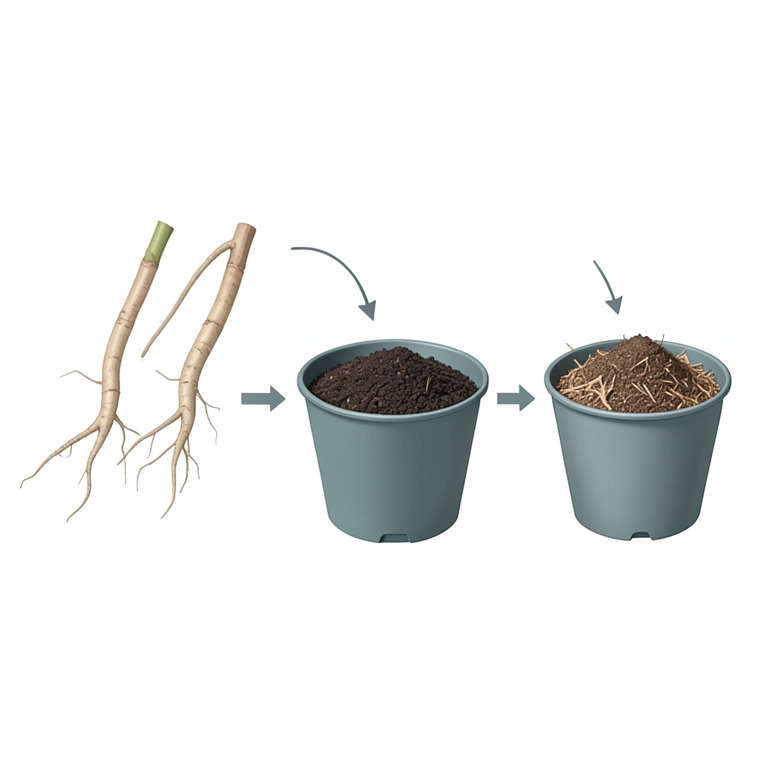
Experimental Design Overview
AI-generated conceptual illustration (Detarium microcarpum root segment cuttings). It explains the idea and does not show study data.
View source evidence ↗Figures & tables
From the original paper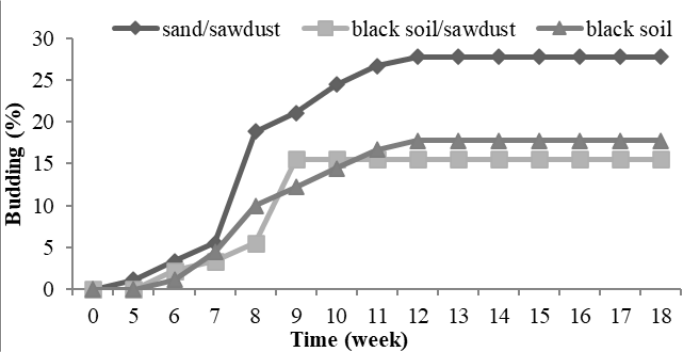 Figure 1
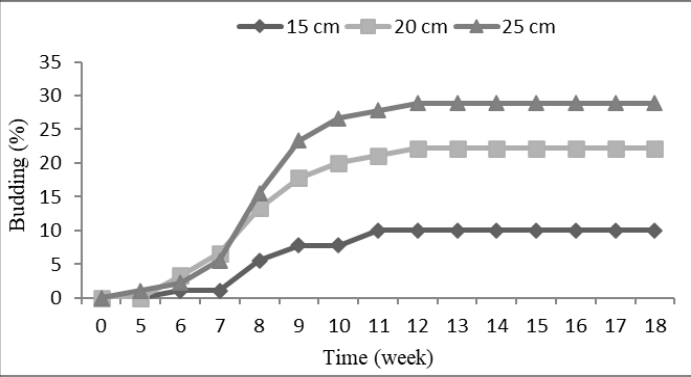 Figure 2
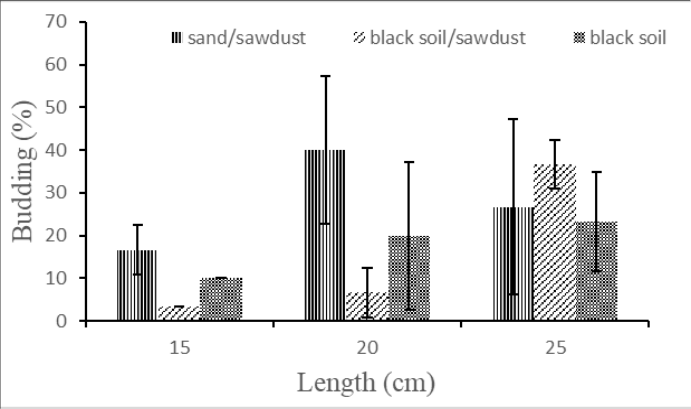 Figure 3
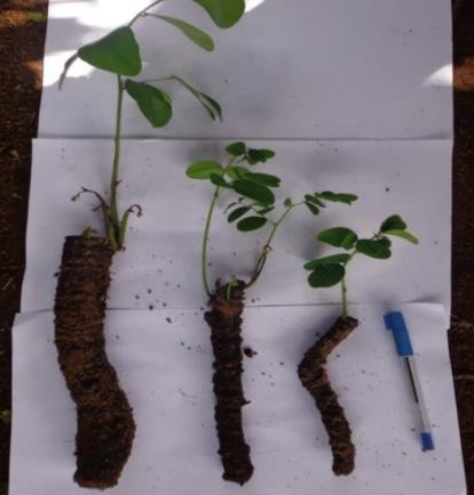 Figure 4
Introduction
For centuries, woody plants have played an important role in the food supply and socioeconomics of rural populations [1] . In addition to wood, they provide non-wood forest products that are part of people's daily needs [2] . Unfortunately, these woody plants are coming under increasing pressure due to people's need for plant products, bush fires, overgrazing and climate change [3] . Detarium microcarpum is one of the species of socio-economic interest that is highly valued by the populations of the Guinea savannah highlands of Adamaoua in Cameroon [4] . D. microcarpum wood is used for firewood, charcoal production and construction [5,6] . The fruit pulp is consumed and sold on local markets [4,7] . In addition, population growth in the Guinea savannah highlands is leading to a reduction in forest areas, and there are increasing difficulties in satisfying the population with non-timber forest products, timber and the ecological services provided by this species [8] . It is therefore necessary to test techniques for multiplying this species with a view to introducing it into farmers' production systems. In dry tropical savannahs, conditions for plant germination and development are generally poor and the growth of woody species from seedlings is slow [9,10] . Vegetative propagation, which is quicker and cheaper, appears to be an alternative [11] . It copies the parental characteristics and ensures early fruiting [12,13] . It is an option for mass production of seedlings in the short term and makes it possible to increase the production of plant formations. One of the greatest advantages of vegetative propagation is the speed with which the genetic qualities of the selected genotype can be reproduced, unlike in seminiculture [14] . In Africa, very little work has been done on root segment cuttings of Detarium microcarpum, with the exception of [7] in Burkina Faso. In the agro-ecological conditions of the Guinea savannah highlands of Cameroon, no work has been done on this Caesalpiniaceae. The main objective of the present work is to contribute to the domestication of Detarium microcarpum by root segment cuttings in the agro-ecological conditions of the Guinea savannah highlands, with a view to their conservation and introduction into farmers' production systems. Specifically, the aim is to assess the effect of the substrate and the length of the cuttings on the ability of this species to bud and root.
Materials and Methods
The work was carried out in the Guinea savannah highlands of Adamaoua, located between latitudes 6° 00' and 8° 00' North and longitudes 11° 30' and 15° 30' East. The climate is Guinean, with two seasons: a rainy season from April to October and a dry season from November to March [15] . The average monthly temperature ranges from 20 °C to 26 °C. Average annual rainfall is 1,500 mm/year [16] . Most of the region's soil consists of red ferralitic structures developed on old basalt [17,18] . The vegetation ranges from shrubby savannahs to wooded savannahs dominated by Daniellia oliveri and Lophira lanceolata [19] . This flora has been severely degraded by human activities, so much so that the density of these species has declined to date [20] . The region is made up of several ethnic groups, the most common of which are the Foulbé, Mboum, Péré, Koutine, Haoussa, Niza'a and Dourou [15] .
Description of the nursery and the polypropagator
The cuttings trial was carried out in a polypropagator installed in the nursery of the Laboratory of Biodiversity and Sustainable Development at the University of Ngaoundéré, located near the Bini river (Alt: 1079 m; LN: 7°24'; LE: 13°32'). The polypropagator is housed in a sheet metal shed that provides shade. 06 sheets of transparent sheet metal are inserted into the roof to filter the light. The polypropagator is made from local materials and is shaped like a paralepiped. It is subdivided into 03 parted. The framework is made of wood and covered with transparent polyethylene, which ensures favourable conditions for the development of the cuttings. The relative humidity in the polypropagator is between 80 and 100%, while the temperature varies between 23 and 28 °C [36] . From bottom to top, the following layers are arranged inside the polypropagators: a thin layer of fine sand, large pebbles, medium-sized pebbles, gravel, sand and finally the rooting substrates [4] . Inside the polypropagator, a PVC pipe is attached to the corner of the polypropagator so that the water level can be gauged regularly.
Methodology Choice of species
Detarium microcarpum is one of the species of great socioeconomic importance in the Guinea savannah highlands. It provides numerous non-timber forest products (flowers, fruit, medicines, etc.) and timber products that are the subject of a flourishing trade in local and regional markets [8] . The work consisted of careful excavation of the root system of a few D. microcarpum mother plants in leaf in the Karna manga locality. The root fragments thus removed, which ranged from 1 to 4 cm in diameter [3] , were protected with moistened newspaper and then transported to the nursery using a cooler containing ice blocks in the early hours of the morning [7,21] . Using secateurs, the root fragments were cut into root segment cuttings of 15, 20 and 25 cm [13,14,21] . The proximal end of each cutting was slightly bevelled [7] . The cuttings were grown in an upright position in three substrates: black soil, homogeneous sand/sawdust mixture and homogeneous black soil/sawdust mixture. Approximately 1 cm of the proximal end of the cuttings was left outside the substrate. The sawdust was collected from a sawmill in the town of Ngaoundéré and left to decompose. It came from Terminalia superba (Combretaceae), Milicia excelsa (Moraceaea) and Terminalia altissima (Combretaceae). The black soil was taken from the nursery site itself. The sand was collected from the river in the locality of Ndom, not far from the Ngaoundéré cliff. The experimental design was a split-plot with 03 replicates. The substrates were the main treatments and the lengths of the cuttings were the secondary treatments. The expérimental unit was 10 cuttings.
Data collection and analysis
Data was collected weekly for budding (from the date of appearance of the first bud) and at the end of the experiment for rooting. A cutting is rooted when the length of the root is greater than or equal to 1 cm, otherwise it is put back into the substrate [22] . The place where the buds appeared on the cutting (proximal, medial or distal pole) was also noted during the evaluation of the trial. The data collected was subjected to an analysis of variance. Significant means were separated using the Duncan Multiple Range Test. The statistical programme used for the analysis of variance was Statgraphics plus 5.0. We used Microsoft Office 2010 Excel to draw the graphs.
Results
Results
Budding of cuttings
The first leafy shoots appeared 5 years after the root segment cuttings were grown.
Effect of substrate on budding
The lag time was 18 weeks after the root segment cuttings were grown. The budding rate ranged from 15.55±5.55% in root segment cuttings grown in homogeneous black soil/sawdust mixture substrate to 27.77±5.71% in those grown in homogeneous sand/sawdust mixture substrate (Figure 1). Despite this variation, analysis of variance showed no significant difference between substrates (0.1459 > 0.05).
Effect of the length of the cuttings on budding
With regard to the effect of the length of the cuttings, the budding rate varied between 10±3.72% for cuttings with root segments of 15 cm and 28.88±4.54% for those of 25 cm (Figure 2). Analysis of variance showed a significant difference between the lengths of the cuttings (0.0236 < 0.05).
Effect of substrate*cuttings length interaction on budding
Concerning the substrate*cuttings length interaction effect, at the end of the trial the budding rate varied from 3.33±0% in 15 cm root segment cuttings grown in homogeneous substrate black soil/sawdust to 40±17.32% in 20 cm root segment cuttings grown in homogeneous substrate sand/sawdust (sa/c) (Figure 3). Despite this variation, the analysis of variance did not indicate a significant difference (0.1254 > 0.05). In this experiment, the neoformed buds developed into leafy axes. With regard to the position in which the buds appeared on the root segment cuttings, 100% of the root segment cuttings produced buds exclusively on the proximal side (Figure 4).
Discussions Budding
The first leafy shoots appeared five weeks after the root segment cuttings were taken into cultivation. In the same ecological zone as that in which the present work was carried out, [23] observed on Vitex doniana that the first buds appeared 6 weeks after the cuttings were planted. In Burkina Faso, [7] noted that buds appeared on D. microcarpum five weeks after the root segment cuttings were planted. In fact, the earliness of budding varies according to the species, the age of the mother plants and the substrate used. At the end of the trial, although there was no significant difference between the substrates, the homogeneous sand/sawdust substrate proved to be the best for budding. Porous substrates allow water and air to circulate around the cuttings, thus improving budding [22] . Similarly, [24] on Sclerocarya birrea in the same locality used a range of substrates (sawdust, sand, topsoil, homogeneous sand/sawdust mixture, homogeneous black soil/sand mixture, homogeneous black soil/sawdust mixture and homogeneous black soil/sawdust/sand mixture), of which sawdust (22.2%) was found to be the best for budding in the species in question. In Benin, [25] used four substrates (sandy ferruginous soil, ferralitic soil, lateritic soil, clayey ferruginous soil) in Daniellia oliveri and obtained a high recovery rate (70±2.8%) in root segment cuttings inserted in sandy ferruginous soil. This result indicates that the potential of substrates varies according to their physico-chemical composition. Generally, larger cuttings react better to trauma than smaller ones. The former accumulate more carbohydrates than the latter. The breakdown of these carbohydrates, which are the main sources of energy in the budding process, is controlled by phytohormones [26] . [23] in the same area on Vitex doniana obtained a high budding rate (66.94±15.38%) in 20 cm cuttings. Furthermore, [7] in Burkina Faso noted a high budding rate (33±5%) in 20 cm cuttings compared with 10 cm cuttings in D. microcarpum. The combined effect of substrate*cuttings length did not influence the budding rate. [23] on Vitex doniana in the same area noted a high budding rate (80.33±20.38%) in 20 cm root segment cuttings grown in the black soil/sawdust substrate. Concerning the position of bud appearance on root segment cuttings, 100% of root segment cuttings produced buds exclusively on the proximal side. In the same vein, [27] in Burkina Faso reported on Faidherbia albida that 90% of the cuttings developed leafy axes on the proximal pole. However, [36] reported contradictory results for Vitex doniana. These different behaviours suggest that the location of neoformed buds varies according to the species and the time at which the cuttings are taken.
Rooting
At the end of the trial, none of the cuttings had developed adventitious roots. On the same species in Burkina Faso, the cuttings rooted [7] . The authors [27] noted adventitious roots in Faidherbia albida cuttings eight weeks after planting. In the same locality where the present trial was carried out, [28,29] noted the rooting of root segment cuttings of Bombax costatum and Vitex doniana eighteen weeks after the cuttings were planted. Rooting of root segment cuttings depends on several factors, including the season of collection of the cuttings, the age of the mother plants and the origin of the cuttings [7,23,30] . The period of the year when the concentration of carbohydrates is abundant in the mother plants is the most favourable for vegetative propagation. Several authors have mentioned the importance of carbohydrates and growth regulators on vegetative propagation in particular [31,32,33] . The formation of buds and roots requires energy supplied by carbohydrates [34] . The use of phytohormones also plays a significant role in the rooting of cuttings. [30] in Turkey improved the rooting of apple cuttings using 3-indole butyric acid, Agrobacterium rubi and Bacillus subtilis. [35] in Egypt treated Lavandula angustifolia cuttings with Agrobacterium rhizogene, yeast and 3-indole butyric acid. These authors reported a high rooting rate in cuttings treated with Agrobacterium rhizogene and 3-indole butyric acid.
Conclusion
The aim was to contribute to the domestication of Detarium microcarpum by root segment cuttings in the Guinea savannah highlands of Adamaoua, Cameroon. The homogeneous sand/sawdust mixture and the 25 cm long cuttings proved to be the best budding treatments. As for rooting, at the end of the trial, none of the cuttings had developed adventitious roots. In future investigations, it would be important to determine the effect of the season, to assess the age of the mother plants, to test the effect of the source of the cuttings and the effect of growth regulators on the ability of this Caesalpiniaceae to bud and root.
Acknowledgement
AcknowledgementsWe would like to thank the Conservation Action Research Network for funding part of this work.
References
22 in the original paper- Moupela C, Vermeulen C, Daïnou K, Doucet J. Le noisetier d'Afrique (Coula edulis Baill.). Un produit forestier non ligneux méconnu. Biotechnol Agron Soc Environ. 2011;15(3):485-495.
- Akouèthê A, Damigou B, Koffi A. Contribution à la multiplication, par graines et par bouturage de segments de tiges et de racines de 03 Fruitiers spontanés de la région des savanes au Togo: Haematostaphis barteri HOOK. F., Lannea microcarpa ENGL. et K. KRAUSS et Sclerocarya birrea (A. RICH.) HOCHST. Eur Sci J. 2014;10(6):18577431.
- Mapongmetsem PM, Kaptchie V, Tefempa HB. Diversity of local fruit trees and their contribution in sustaining the rural livelihoods in northern Cameroon. Ethiop J Environ Stud Manage. 2012;5(1):32-46.
- Ky-Dembélé C, Tigabu M, Bayala J, Savadogo P, Boussim IJ, Odén PC, et al. Clonal propagation of Detarium microcarpum from root cuttings. Silva Fenn. 2010;44(5):775-786.
- Mapongmetsem PM, Djoumessi M, Yemele Tonleu M, Fawa G, Doumara G, Noubissie Tchiagam JB, et al. Domestication de Vitex doniana: Effet du substrat, de la stimulation hormonale et de la position du noeud sur l'enracinement. J Agric Environ Dev Int. 2012;10(1):23-45.
- Lykke AM, Hoft M, Barik SK. Quantitative ethnobotanique. People and Plants working paper. 1999;6:149.
- Meunier Q, Bellefontaine R, Monteuuis O. La multiplication végétative d'arbres et arbustes médicinaux au bénéfice des communautés rurales d'Ouganda. Bois For Trop. 2008;295(2):71-82.
- Mapongmetsem PM, Tchotsoua M, Duguma B, Nkongmeneck BA. Some strategies for reversing Adamaoua highlands degradation. Int Rev Anthropol Linguist. 2000;5:107-126.
- Nwokeke BC, Onyeka EU, Onuegbu NC, Osuji MC. Effect of Detarium microcarpum seed gum on acceptability of wheat-sorghum composite noodles. Int. J Agric. Food Sci. 2022;4(1):4-11. DOI: 10.33545/2664844X.2022.v4.i1a.58
- Mapongmetsem PM, Djomba E, Fawa G, Oumarou Z, Youhana D, Bellefontaine R, et al. Vegetative Propagation of Vitex doniana Sweet. from Root Segments Cuttings: Effects of Substrate and Length of Cuttings on the Rooting Ability. Ann Exp Biol. 2017;5(1):18-24.
- Mapongmetsem PM, Sonou AP, Raouguedam J, Koye LB, Fawa G. Vegetative propagation of Sclerocarya birrea (A. Rich.) Hochst. from root segments cuttings: effect of substrate and root diameter. Ann Exp Biol. 2016;4(2):23-32.
- Houehounha R, Avohou TH, Sinsin B, Tandjiekpon AM. Approches de régénération artificielle de Daniellia oliveri (Rolfe) Hutchison et Dalziel. Int J Biol Chem Sci. 2009;3(1):7-19.
- Loescher WH, McCamant T, Keller JD. Carbohydrate Reserves, Translocation, and Storage in Woody Plant Roots. Hortic Sci. 1990;25(3):274-281.
- Harivel A, Bellefontaine R, Boly O. Aptitude à la multiplication végétative de huit espèces forestières d'intérêt au Burkina Faso. Bois For Trop. 2006;288(2):3950.
- Fawa G, Zéphirin OH, Rodrigue MAD, Baptiste BJ, Marie MP. Root segment cuttings of Bombax costatum Pellegr. & Vuillet: Effects of Diameter and Alignment. Asian J Res Agric Forestry. 2023;9(3):103-111.
- Fawa G, Anguessin B, Binwé JB, Oumarou Z, Mapongmetsem PM. Root segments cuttings of Vitex doniana Sweet: effect of origin and alignment. Int J Biol Chem Sci. 2023;17(3):996-1005.
- Hussain I, Ruffo roberto S, Carlos colombo R, Marinho de assis RA. Cutting types collected at different seasons on Black Berry multiplication. Rev Bras Frutic. 2016;39(3):18.
- Halil K, Aslantas R, Ozkan G, Guleryuz M. Effects of indol-3-butyric acid (IBA), plant growth promoting rhizobacteria (PGPR) and carbohydrates on rooting of hardwood cutting of MM106 Apple rootstock. Afr J Agric Res. 2009;4(2):60-64.
- Inga A, Uldis K. Effect of environmental factors on the propagation of deciduous azalea by cuttings. I. Influence of stock plant management on rooting and carbohydrate status. Acta Univ Latviensis. 2005;69:31-40.
- Andreja UK, Maja T, Anton I. Morphological and physiological changes during adventitious root formation as affected by auxin metabolism: Stimulatory effect of auxin containing seaweed extract treatment. Agricultura. 2013;1(2):17-27.
- Mahmoud MK, El-baset MMA. A comparative study to improve rooting of English lavender stems cuttings. Afr J Agric Res. 2014;9(50):3632-3637.
- Mapongmetsem PM, Fawa G, Noubissie-Tchiagam JB, Nkongmeneck BA, Biaou SSH, Bellefontaine R, et al. Vegetative propagation of Vitex doniana Sweet from root segments cuttings. Bois For Trop. 2016;327(1):29-37.
Cited by 2
From OpenAlex, OpenCitations and reference lists read by Scinovex
- Influence of substrate and length on the ability of root segments cuttings of Ximenia americana L. to regenerate
Binwe Jean-Baptiste, Hamawa Yougouda, Wangbitching Jean De Dieu, Madi Ameti Damba Rodrigue, Apana Ewodo Joseph Hervé, Oumarou Haman Zephirin · International Journal of Research in Agronomy · 2024
Ximenia americana L. is one of the most popular local edible fruit species in Cameroon. The aim of this work is to contribute to the domestication of Ximenia americana by root segments cutting (RSC). To this end, the favorable sampling period of cuttings for this species was indirectly determined by quantifying carbohydrate content in the laboratory, and the influence of substrate and length of root segment cuttings on the ability of this species to form adventitious buds and roots was also evaluated. The root system of adult mother trees was carefully excavated, and lateral root segments were
- Vegetative Propagation of Bombax costatum Pellegr. Vuillet (Malvaceae) by Root Segment Cutting: Effect of Substrate and Length of Cuttings in the Guinean Savannas Highlands (Adamawa Cameroon) ↗
Dangaï Youhana, Fawa Guidawa, Hamawa Yougouda, Oumarou Haman Zephirin, Mapongmetsem Pierre Marie · American Journal of Agriculture and Forestry · 2026
Bombax costatum is a native species of significant socioeconomic importance in the Guinean savannah highlands of Cameroon. This study aimed to evaluate the effects of substrate type and root cutting length on the regenerative capacity of root segments, specifically their ability to produce new leafy shoots and adventitious roots. Root systems were excavated from adult mother plants, and fragments of…
❝ 0PDF