
Research article · 2023 · Full text
International Journal of Advanced Biochemistry ResearchPotential neuroprotective effect of Lauric acid on rotenone: Induced Parkinson's disease in experimental rats
Volume 7(2) · Pages 281–285 · DOI: 10.33545/26174693.2023.v7.i2d.261 ↗
Research areasSirtuins and Resveratrol in MedicineNuclear Receptors and SignalingParkinson's Disease Mechanisms and Treatments
Abstract
Author-writtenBackground: Parkinson's disease (PD) is a chronic neuro-degenerative condition characterized by impaired motor function. It is defined by a lack of dopamine in the brain and the specific degradation of dopaminergic neurons in the Substantia Nigeria. The objective of this research was to examine the regulatory impact of Lauric acid (LA) on mitochondrial biogenesis in a rat model of rotenone-induced PD. Materials and methods: this experiment has been carried out on sixty albino male rats categorized into 4 groups; group І (control group), group II (LA-treated group) and group IIІ (Rotenone-administered group) and Group IV (Rotenone and LA-treated group). Each group underwent catalepsy test neurobehavior and measurement of the protein carbonyl content (PCC) and (parkin interacting substrate) PARIS levels in brain tissue homogenate. Results: This study showed that LA has significantly improved the locomotor activity in PD group with decreased PC and PARIS levels in brain tissue homogenate. Conclusion: LA improves mitochondrial biogenesis, and possesses antioxidant effects in experimentally induced PD.
Summary
Source-checkedPlain-language reading of the full paper, prepared with AI and checked against the text. Each point links to the authors' own words.
Why it matters
- Parkinson's disease (PD) is a chronic neurodegenerative condition marked by the loss of dopaminergic neurons in the Substantia Nigeria, which leads to impaired motor function. View evidence ↗
- Lauric acid (LA) is a 12-carbon fatty acid primarily found in coconut and palm nut oil, where it makes up 45-53% of the composition. View evidence ↗
The question
- The study aimed to investigate how Lauric acid (LA) regulates mitochondrial biogenesis in rats with rotenone-induced Parkinson's disease. View evidence ↗
What they did
- The experiment used 60 albino male rats weighing between 120 and 150 grams. View evidence ↗
- The rotenone group received subcutaneous injections of 1.5 mg/kg of rotenone every other day for 3 weeks. View evidence ↗
- The LA-treated group received 50 mg/kg/day of lauric acid via oral gavage for 3 weeks. View evidence ↗
- On day 21, the researchers measured neurobehavior using a catalepsy test and analyzed brain tissue for protein carbonyl content (PCC) and PARIS levels via ELISA. View evidence ↗
What they found
- Rotenone administration caused a significant increase in catalepsy and a decrease in rearing count compared to the control group (p<0.001). View evidence ↗
- Treatment with lauric acid significantly increased the number of rears per 5 minutes in the rotenone-treated group, indicating improved locomotor activity. View evidence ↗
- Protein carbonyl content (PCC) in the brain increased from 4.65±1.92 nmol/mg in the control group to 11.44±4.27 nmol/mg in the rotenone group, but decreased to 7.36±1.88 nmol/mg when LA was co-administered (p<0.001). View evidence ↗
- Brain PARIS levels rose from 266.200±124.78 pg/mg in controls to 862.933±179.78 pg/mg in the rotenone group, and were reduced to 552.400±130.37 pg/mg with LA treatment (p<0.001). View evidence ↗
- A strong positive correlation (r = 0.809, p < 0.001) was found between brain tissue levels of PARIS and PCC. View evidence ↗
What it means
- The authors conclude that lauric acid restores mitochondrial function by reducing oxidative stress and could serve as a neuroprotective adjuvant for managing Parkinson's disease. View evidence ↗
Visual summary
3 visualsIllustrations explain the paper; charts are replotted from the paper's own table values.
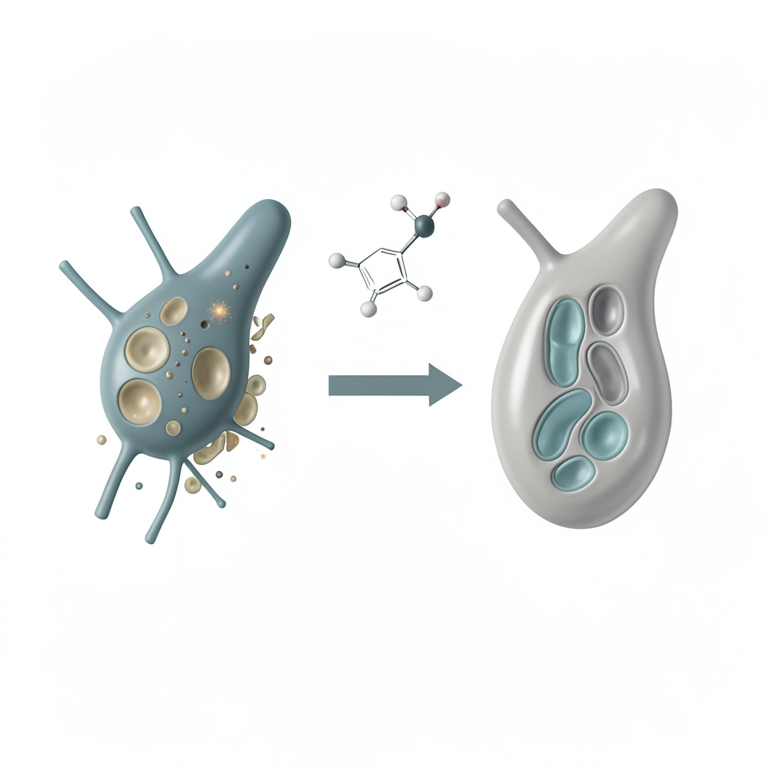
Proposed Neuroprotective Mechanism of Lauric Acid
AI-generated conceptual illustration (rat dopaminergic neurons and mitochondria). It explains the idea and does not show study data.
View source evidence ↗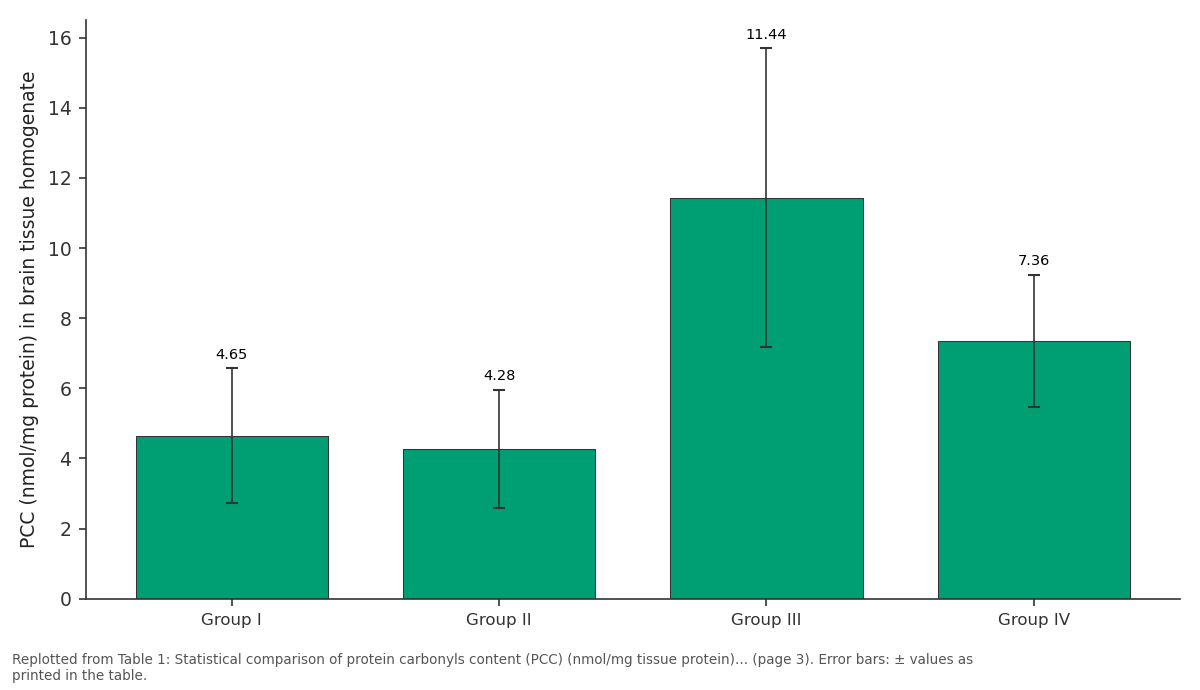
PCC (nmol/mg protein) in brain tissue...: Group I vs Group II vs Group III vs Group IV
Replotted from Table 1 (page 3) of the original paper. Every bar is the paper's own table value.
View source evidence ↗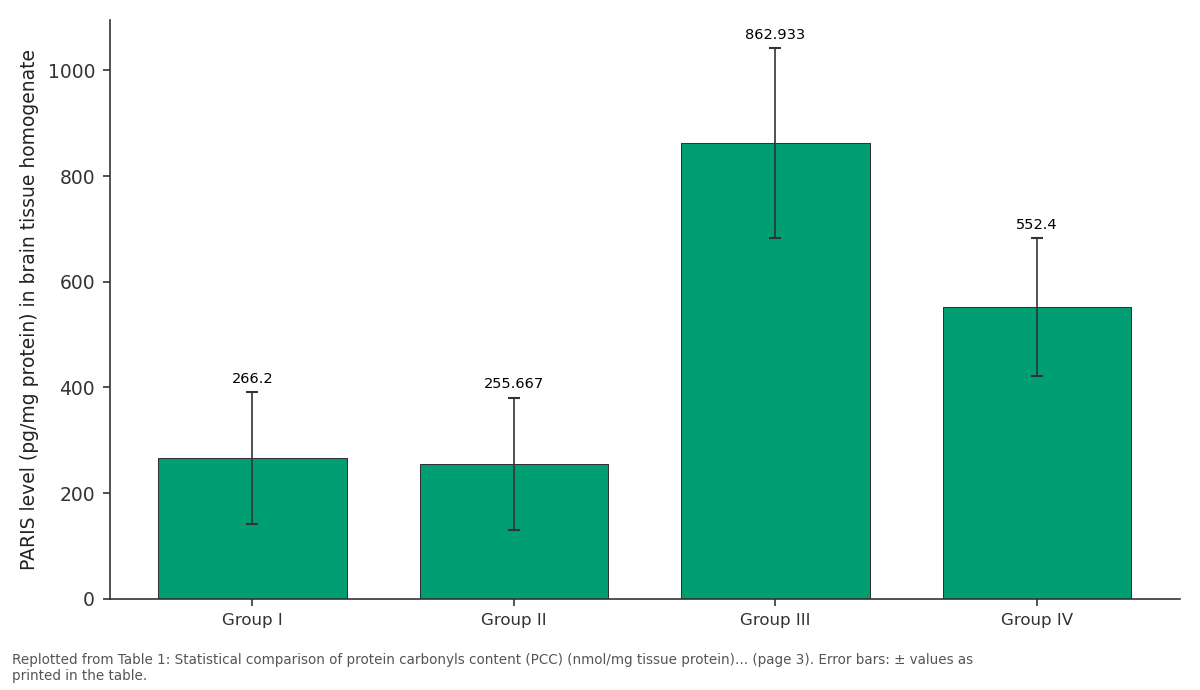
PARIS level (pg/mg protein) in brain tissue...: Group I vs Group II vs Group III vs Group IV
Replotted from Table 1 (page 3) of the original paper. Every bar is the paper's own table value.
View source evidence ↗Figures & tables
From the original paper Table 1
 Table 2
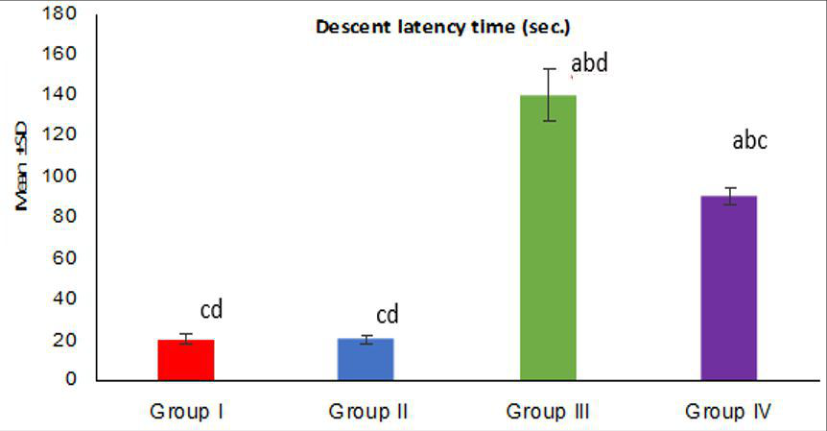 Figure 1
Introduction
Parkinson's disease (PD) is the 2 nd most prevalent age-related neuro-degenerative condition, following Alzheimer's disease [1] . Globally, the general population has an average prevalence of PD of 0.3%. However, this incidence increases to 1.0% in those aged over 60 years and further rises to 3.0% in those aged over 80 years. The worldwide prevalence is projected to rise from 6.2 million instances in 2015 to 12.9 million instances by 2040 [2] . The clinical presentation includes resting tremor, bradykinesia, rigidity, and postural instability [3] . Rotenone, a pesticide derived from Leguminosae plants, selectively hinders mitochondrialcomplex-I and leads to the destruction of dopaminergic neurons, resulting in a behavioral condition similar to PD [4] . Remarkably, administering a small dose of rotenone directly under the skin of rats for a duration of 4 weeks appears to accurately mimic nearly all the behavioral and neuropathological characteristics of Parkinson's disease. These include slowed movement, walking difficulties, tremors, rigidity, degeneration of dopamineproducing neurons in the nigrostriatal pathway, and formation of aggregates of α-synuclein [5] . Moreover, the rotenone model has a high level of reproducibility and might serve as an exceptional tool for exploring novel neuroprotective techniques. This model is limited by its significant morbidity, as well as the need for extensive labor and time investment [3,6] . The primary fatty acid found in coconut oil is lauric acid (LA), that consists of a 12-carbon backbone [7] . It is often present in several types of plants and animal fats, particularly in palm nut oil and coconut, where it constitutes 45-53% of the composition. The physiological and metabolic characteristics of LA exhibit certain attributes of coconut oil. Coconut oil is efficiently digested, easily consumed, and LA is effectively distributed and aids in reducing fat accumulation. LA has substantial antibacterial activity against gram-positive pathogens and effectively combats parasites and illnesses, as shown by many experiments [8] .
This experiment aimed to evaluate how LA affects certain regulators of mitochondrial biogenesis in a rat-model of rotenone-induced PD. The goal was to have a deeper comprehension of the fundamental mechanics and explore the possible utilization of LA as a neuroprotective drug in PD.
Materials and Methods
Materials and Methods
Materials Chemicals
All solvents and chemicals utilised in this study, unless otherwise stated, have been purchased from Sigma Aldrich (Sigma, St. Louis, USA). All solvents and chemicals utilized during the experiment were of a high analytical grade. Rotenone (99% purity, CAS NO: 83-79-4), LA (>98% purity, CAS NO: 143-07-7) and rotenone was dissolved in 1% dimethyl sulfoxide (DMSO) prior to subcutaneous injection.
Animals
The present research included a sample of 60 albino male rats, with a mean weight for their bodies ranging from 120 to 150 grams. These rats were procured from the animal colony used for research at Tanta University. Throughout the course of the investigation, the rats had been accommodated in wire mesh enclosures and provided unrestricted availability to water. The rats were maintained in a controlled-environment with consistent circumstances, including a temperature of 25 ºC and a lighting regimen of 12-h dark/12-h light cycle. The rats underwent regular weekly weighing. This investigation had been performed in the Medical Biochemistry Department, Faculty of Medicine, Tanta University, Egypt, in adherence to the guidelines provided by the ethics committee of Medical Research, Faculty of Medicine, Tanta University, Egypt. (Approval code: 34454/2/21).
Experimental design
After acclimatization for 1 week, rats had been randomly allocated into 4 groups equally with 15 rats each as follows:
Group I (control group): animals in this group had been received a vehicle solution containing 1% DMSO at a dosage of 0.1 mL/100 grams/ day; S.C for 3 weeks.
Group II (LA-treated group): animals in this group had been received only LA via oral gavage at a dosage of 50 mg/kg/day for 3 weeks [16] .
Group III (Rotenone-administered group): animals in this group received 11 S.C injecting of rotenone every other day at a dosage of 1.5 mg/kg dissolved in 1% DMSO for 3 weeks.
Group IV (Rotenone and LA-treated group):
The animals in this experimental group were subjected to a combination of rotenone, administered by subcutaneous injecting every other day at a dosage of 1.5 mg/kg dissolved in a 1% DMSO solution, and LA, given orally via gavage at a dosage of 50 mg/kg/day. This combined treatment was administered daily for a duration of 3 weeks, with the LA administration occurring 1 hour before to the rotenone injection on the designated days.
Methods
At the end of the work on the 21 st day rats were exposed to neurobehavioral assessment by Catalepsy test.
Catalepsy test neurobehavior
The evaluation of catalepsy included the utilization of the bar test, whereby rats had been positioned in a half-rearing stance with both forepaws resting on a bar situated 10 cm above the base. Subsequently, the duration till the removal of one or both paws was documented. The designated threshold for descent delay time was established at 180 seconds [9] .
Tissue sampling
Decapitation was the method of sacrificing rats, brains had been immediately meticulously dissected, subjected to a rinsing process using ice-cold saline solution in order to eliminate any unwanted substances. The extra saline was absorbed using filter paper fragments. The brain tissues were cooled on ice and then partitioned into two halves.
Redox status parameter Protein carbonyl content (PCC) assay:
The detection of protein carbonyl contents involves their reaction with DNPH to form acid hydrazones followed by its spectrophotometric quantification.
Immunoassay of PARIS
The level of PARIS in brain tissue homogenate was identified by an ELISA employing a product that is readily accessible for purchase as a kit (Catalogue number # 201-11-2124) supplied by Sun Red Biotechnology Co., Shanghai, China.
Statistical analysis
The study's findings were analyzed utilizing the SPSS, version 16.0 for Windows (SPSS, Chicago, IL), with mean and standard deviation being the statistical measures used. The statistical technique used for conducting multiple comparisons and assessing the statistical significance across experimental groups was one-way analysis of variance (ANOVA), as well as a post hoc test. The correlation study was calculated utilizing Pearson's correlation. P-value < 0.05 was considered significant
Results
Results
Behavioral assessment of the effect of Lauric acid on rotenone model of PD
When contrasted to the vehicle control group, rats administered with rotenone exhibited a substantial drop in rearing count (p<0.001) and a substantial rise in catalepsy (p<0.001), as shown by a reduction in the bar test's descending latency time (Figure 1). (n = 10). a denotes a significant difference compared to group I; b denotes a significant difference compared to group II; c denotes a significant difference compared to group III; d denotes a significant difference compared to group IV, by one-way analysis of variance followed by post hoc Tukey's test
The ameliorative effect of Lauric acid on redox status and mitochondrial biogenesis PCC (nmol/mg protein) and brain PARIS level (pg/mg protein) in brain tissue homogenate of PD rats was revealed to be substantially elevated (p<0.001) as contrasted with other studied groups. However, in rotenone cotreated with LA, PCC and brain PARIS levels were significantly decreased (p<0.001). Table 1.
| — | Group I | Group II | Group III | Group IV | P-value |
|---|---|---|---|---|---|
| PCC (nmol/mg protein) in brain tissue homogenate | 4.65±1.92 | 4.28±1.68 | 11.44±4.27 | 7.36±1.88 | <0.001* |
| PARIS level (pg/mg protein) in brain tissue homogenate | 266.200±124.78 | 255.667±125.12 | 862.933±179.78 | 552.400±130.37 | <0.001* |
Table text extracted from the original PDF; superscript letters are shown inline. The original table image is below.
View original table image
Discussion
Parkinson's disease (PD) is a Neuro-degenerative condition characterised mostly by impairments in motor function. The process of aging is the most significant risk factor in the developing of PD. Recent molecular genetic research has provided evidence indicating that hereditary factors, alongside aging and environmental variables, significantly contribute to the onset of the condition. Furthermore, it has been shown that the death rate among those diagnosed with Parkinson's disease is three times higher compared to agematched individuals without the condition [10] . The current research provided evidence that the injection of rotenone resulted in rigidity and bradykinesia. This was confirmed by a substantial increase in descending latency time, as seen in the catalepsy test, in the group that received rotenone in contrast to the control groups. The findings presented in this study are consistent with the results stated by Singh et al. [11] , Shahid et al. [12] and Haider et al. [13] These previous studies demonstrated that rats administered with rotenone experienced a significant increase in latency to move (p<0.01) and a decrease in the number of squares crossed (p<0.01) contrasted to the control group.
Moreover, the current work revealed that treatment with lauric acid resulted in a substantial rise of number of rears/5 mins in rotenone and LA treated group suggesting that LA might have a positive impact on improving locomotor activity. In line with our outcomes, Zaidi et al. [14] showed that A reduced dosage of LA specifically enhances motor activity and has advantageous outcomes on behavioral functioning in PD caused by haloperidol. Protein carbonyls (PCs) exhibit distinctive stability and a broad spectrum of functional effects, setting them apart from other oxidative changes. Protein carbonylation, which occurs by the direct metal-catalyzed oxidation of amino acid side chains or the addition of reactive aldehydes to amino acid side chains, is considered a reliable indicator of pathogenic reactive oxygen species (ROS) generation in several cell types and tissues [15] .
In the present study, the PC concentration in brain tissue homogenate of PD rats was significantly increased as contrasted to control groups. Supporting our findings, previous studies revealed that a significant increased PC was existed in the neocortex and hippocampus in AD and in Lewy bodies of PD [15,16] .
However, our findings indicated that LA treatment showed a significant decrease in PCC level. Moreover, Shaheryar et al. [17] stated that LA has a neuroprotective impact through decreasing oxidative stress.
In addition, The PARIS (ZNF746) protein is a substrate of the E3 ubiquitin ligase parkin, which builds up in models where parkin is deactivated and in the brains of patients with PD. The degeneration of dopamine neurons in conditional parkin knockouts is contingent upon the presence of PARIS [18] .
In the present study, the PARIS concentration in brain tissue homogenate of PD rats was substantially elevated as contrasted with control groups. Our findings were comparable to Shin et al. [18] who showed that The PARIS levels in the cingulate cortex of PD individuals, who have a deficiency in functional parkin, are doubled compared to age-matched controls. However, LA treatment showed a substantial reduce in PARIS level suggesting a protective role of lauric acid against mitochondrial dysfunction. This might be explained by the finding reported previously by Tham et al. [19] who showed that The application of lauric acid successfully reinstated the process of creating new mitochondria in the macrophages that were resistant to insulin. This was achieved by enhancing the synthesis of ATP, consumption of oxygen, content and potential of mitochondria. Additionally, it stimulated the expression of genes responsible for regulating mitochondrial biogenesis, namely TFAM and PGC-1α. Additionally, our results showed that a substantial positive correlation was existed among brain tissue levels of PARIS and PCC levels. That was also observed by Leathem et al. [20] who found that mitochondrial biogenesis defect indices were associated with a substantial rise in protein and lipid oxidation and with a substantial decline in antioxidant capacity in brain tissue of PD.
Conclusion
Lauric acid was found to restore mitochondrial function through alleviation of oxidative stress, therefore, it might provide a potentially effective neuroprotective medicinal adjuvant for the management of PD.
Figures and tables from the paper
| Parameters | — | PCC (nmol/mg protein) in brain tissue homogenate |
|---|---|---|
| PARIS (pg/mg protein) in brain tissue homogenate | R | 0.809 |
| P-value | <0.001* |
Table text extracted from the original PDF; superscript letters are shown inline. The original table image is below.
View original table image
References
18 in the original paper- Pang SYY, Ho PWL, Liu HF, Leung CT, Li L, Chang EES, et al. The interplay of aging, genetics and environmental factors in the pathogenesis of Parkinson's disease. Translational Neurodegeneration 2019;8(1):23.
- Dorsey ER, Bloem BR. The Parkinson Pandemic-A Call to Action. JAMA Neurology. 2018;75(1):9-10.
- Habib CN, Mohamed MR, Tadros MG, Tolba MF, Menze ET, Masoud SI. The potential neuroprotective effect of diosmin in rotenone-induced model of Parkinson's disease in rats. European Journal of Pharmacology. 2022;914:174573.
- Zhang ZN, Zhang JS, Xiang J, Yu ZH, Zhang W, Cai M, et al. Subcutaneous rotenone rat model of Parkinson's disease: Dose exploration study. Brain Research. 2017;1655:104-13.
- Troshev D, Berezhnoy D, Kulikova O, Abaimov D, Muzychuk O, Nalobin D, et al. The dynamics of nigrostriatal system damage and neurobehavioral changes in the rotenone rat model of Parkinson's disease. Brain Research Bulletin. 2021;173:1-13.
- Alharthy KM, Althurwi HN, Albaqami FF, Altharawi A, Alzarea SI, Al-Abbasi FA, et al. Barbigerone Potentially Alleviates Rotenone-Activated Parkinson's Disease in a Rodent Model by Reducing Oxidative Stress and Neuroinflammatory Cytokines. ACS Omega 2023;8(5):4608-4615.
- Zaidi A, Khan M, Shaheryar Z, Ahmed H. Lauric acid: Its role in behavioral modulation, neuro-inflammatory and oxidative stress markers in haloperidol induced Parkinson's disease. Pakistan journal of pharmaceutical sciences. 2020;33:755-63.
- Waku I, Magalhaes MS, Alves CO, de Oliveira AR. Haloperidol-induced catalepsy as an animal model for parkinsonism: A systematic review of experimental studies. European Journal of Neuroscience. 2021;53(11):3743-67.
- Funayama M, Nishioka K, Li Y, Hattori N. Molecular genetics of Parkinson's disease: Contributions and global trends. Journal of Human Genetics. 2023;68(3):125-130.
- Singh R, Zahra W, Singh SS, Birla H, Rathore AS, Keshri PK, et al. Oleuropein confers neuroprotection against rotenone-induced model of Parkinson's disease via BDNF/CREB/Akt pathway. Scientific Reports. 2023;13(1):2452.
- Shahid Nadeem M, Khan JA, Al-Abbasi FA, AlGhamdi SA, Alghamdi AM, Sayyed N, et al. Protective Effect of Hirsutidin against Rotenone-Induced Parkinsonism via Inhibition of Caspase-3/Interleukins-6 and 1β. ACS omega. 2023;8(14):13016-13025.
- Haider S, Madiha S, Batool Z. Amelioration of motor and non-motor deficits and increased striatal APoE levels highlight the beneficial role of pistachio supplementation in rotenone-induced rat model of PD. Metabolic brain disease. 2020;35:1189-1200.
- Sharma A, Weber D, Raupbach J, Dakal TC, Fließbach K, Ramirez A, et al. Advanced glycation end products and protein carbonyl levels in plasma reveal sex-specific differences in Parkinson's and Alzheimer's disease. Redox Biology. 2020;34:101546.
- Sultana R, Perluigi M, Newman SF, Pierce WM, Cini C, Coccia R, et al. Redox proteomic analysis of carbonylated brain proteins in mild cognitive impairment and early Alzheimer's disease. Antioxidants & redox signaling. 2010;12(3):327-336.
- Shaheryar ZA, Khan MA, Hameed H, Zaidi SAA, Anjum I, Rahman MSU. Lauric acid provides neuroprotection against oxidative stress in mouse model of hyperglycaemic stroke. European Journal of Pharmacology. 2023;956:175990.
- Shin JH, Ko HS, Kang H, Lee Y, Lee YI, Pletinkova O, et al. PARIS (ZNF746) repression of PGC-1α contributes to neurodegeneration in Parkinson's disease. Cell. 2011;144(5):689-702.
- Tham YY, Choo QC, Muhammad TST, Chew CH. Lauric acid alleviates insulin resistance by improving International Journal of Advanced Biochemistry Research https://www.biochemjournal.com mitochondrial biogenesis in THP-1 macrophages. Molecular Biology Reports. 2020;47:9595-607.
- Leathem A, Ortiz-Cerda T, Dennis JM, Witting PK. Evidence for Oxidative Pathways in the Pathogenesis of PD: Are Antioxidants Candidate Drugs to Ameliorate Disease Progression? International Journal of Molecular Sciences. 2022;23(13):6923.
Cited by 9
From OpenAlex, OpenCitations and reference lists read by Scinovex
- D-ribose-L-cysteine and lauric acid co-treatment confers multi-pathway neuroprotection in an alpha-synuclein transgenic Drosophila model of Parkinson’s disease ↗
Olumayowa Kolawole Idowu, Ademola Ayodele Oremosu, Olufunke Olubusola Dosumu · Metabolic Brain Disease · 2026
❝ 1 - Balance rehabilitation treatment in patients with parkinson’s disease: A randomized controlled pilot study ↗
Sunayana Ghosh Dostider · International Journal of Advanced Academic Studies · 2025
Background: Parkinsons disease (PD) is a progressive neurologic disorder characterized by motor symptoms, including balance impairment, which increases the risk of falls and affects quality of life.Objective: This randomized controlled pilot study aimed to evaluate the effectiveness of a balance confidence in daily activities.Conclusion: This pilot study indicates that a targeted balance rehabilitation program can effectively enhance both static and
- Patient safety in IoMT: Addressing the hidden risks of thermal overload ↗
Jitendra Pal Singh, Khushboo Mishra, Deepa Sonal, Binay Kumar Mishra · International Journal of Circuit Computing and Networking · 2025
The rapid progress in wearable medical devices, powered by the Internet of Medical Things (IoMT), has transformed patient monitoring and healthcare delivery in significant ways. However, these devices often encounter challenges related to heat generation during extended usage, which can impact both patient safety and device functionality. This paper delves into the thermal dynamics of wearable medical devices, emphasizing the
- Ameliorative effect of Bacopa monnieri on neuromuscular coordination in a30p α-synuclein transgenic Drosophila melanogaster ↗
Saraswathi YS, Shakunthala V · Acta Entomology and Zoology · 2025
Parkinson’s disease (PD) is a neurodegenerative disorder characterized by progressive motor impairment associated with the aggregation of α-synuclein (α-syn) protein. Transgenic Drosophila melanogaster expressing the human α-syn A30P mutant exhibit age-dependent neuromuscular deficits, modeling key aspects of PD. B. monnieri (Brahmi) is a medicinal herb known for neuroprotective and nootropic effects. In this study, we investigated whether B. monnieri supplementation
- Studies of trace elements and heavy metals in the leaves of Murraya koenigii Linn. (Curry leaves) Plant ↗
Neelesh Kumar Pandey, Ravi Prakash, RB Singh · International Journal of Chemical Research and Development · 2024
Dry leaves of Murraya koenigii Linn. were digested with HNO3, and HCIO4, and the contents of the trace elements such as Fe, Ca, Zn, P, Mg, Cu, Mn, Cr, Pb, Cd, As, Hg were determined by atomic absorption spectroscopy. These elements were found to be within the permissible limits.
- Neurobehavioral, histopathological and immunohistochemical effects of Ginkgo biloba and Cichorium intybus hydro-alcoholic extracts in experimentally alzheimer rats ↗
Karrar AR Al-Salim, Areej GH Al-Charak · International Journal of Neurology Sciences · 2024
Impaired memory and cognitive function are the main features of Alzheimer’s disease (AD). Unfortunately, currently available treatments cannot cure or delay AD progression. Moreover, the blood-brain barrier hampers effective delivery of treatment to the brain. Therefore, we aimed to evaluate the impact of hydroalcoholic extract of ginko biloba and cicurium intybus as protective compound from neurodegenerative effect of Alzheimer disease
- The gut-brain axis: A gateway to understanding health and disease
Oly Banerjee · International Journal of Biology Sciences · 2024
The gut-brain axis, a complex bidirectional communication network between the gastrointestinal tract and the central nervous system, plays a crucial role in maintaining homeostasis and influencing health. This review explores the multifaceted interactions within the gut-brain axis, highlighting its role in both health and disease. Emerging research underscores the influence of gut microbiota on brain function, emphasizing how alterations in microbial composition can impact mental health conditions such as depression, anxiety, and neurodegenerative disorders. Additionally, the gut-brain axis is
- Expression of some selected genes with possible link to the pathogenesis and disorders of preeclampsia ↗
Ibikunle Akinlua, Oluwafemi John Adedokun, M. F. Asaolu, Akinwumi Ogundajo · International Journal of Molecular Biology and Biochemistry · 2024
Preeclampsia (PE) is a disease associated with pregnancy and a major cause of morbidity and mortality worldwide. In spite of researches in understanding the pathogenesis of PE, the underline mechanism is not yet clear. This study was carried out to evaluate the expression of selected genes that may be linked to pathways associated with the pathogenesis and disorders of PE
- Comparative phytochemical analysis and medicinal potential of Gloriosa superba and Celastrus paniculatus: A quantitative evaluation of bioactive compounds ↗
Pachbhai Mangesh Dhananjay, Arvind K. Joshi, Chandresh Kumar Singh · International Journal of Bioscience and Biochemistry · 2024
Medicinal plants play a crucial role in both traditional and modern medicine due to their diverse bioactive compounds. Gloriosa superba (Flame lily) and Celastrus paniculatus (Intellect tree) are well-known for their therapeutic potential, yet comprehensive quantitative phytochemical analyses remain limited. This study aims to quantify key bioactive compounds in these plants and evaluate their medicinal significance. Fresh tubers of G.