
Research article · 2024 · Full text
International Journal of Biology SciencesThe gut-brain axis: A gateway to understanding health and disease
Volume 6(2) · Pages 167–169 · DOI: 10.33545/26649926.2024.v6.i2c.249 ↗
Research areasInfant Health and Development
Abstract
Author-writtenThe gut-brain axis, a complex bidirectional communication network between the gastrointestinal tract and the central nervous system, plays a crucial role in maintaining homeostasis and influencing health. This review explores the multifaceted interactions within the gut-brain axis, highlighting its role in both health and disease. Emerging research underscores the influence of gut microbiota on brain function, emphasizing how alterations in microbial composition can impact mental health conditions such as depression, anxiety, and neurodegenerative disorders. Additionally, the gut-brain axis is implicated in gastrointestinal diseases, where disruptions in signaling pathways can lead to disorders like irritable bowel syndrome (IBS) and inflammatory bowel disease (IBD). The review delves into the underlying mechanisms, including immune system modulation, neural pathways, and microbial metabolites, that mediate gut-brain communication. Furthermore, it discusses potential therapeutic strategies targeting the gut-brain axis, such as probiotics, prebiotics, and dietary interventions, offering promising avenues for treating various conditions. By integrating current findings, this review aims to provide a comprehensive understanding of the gut-brain axis, highlighting its significance in health and disease and identifying future research directions for optimizing therapeutic approaches.
Summary
Source-checkedPlain-language reading of the full paper, prepared with AI and checked against the text. Each point links to the authors' own words.
Why it matters
- The gut-brain axis (GBA) is a complex, two-way communication network between the central nervous system and the gastrointestinal tract that is essential for maintaining the body's internal balance. View evidence ↗
- Studying the GBA provides a way to understand various health conditions, including mood disorders, immune-related issues, gastrointestinal disorders, and neurodegenerative diseases. View evidence ↗
The question
- The aim of this review is to explore the various interactions within the gut-brain axis and highlight how it functions in both healthy and diseased states. View evidence ↗
What they did
- The authors conducted a review focusing on the anatomy of the GBA, communication mechanisms, the roles of the ENS, immune system, and microbiome, and potential therapeutic strategies. View evidence ↗
What they found
- The vagus nerve serves as the primary neural pathway of the GBA, transmitting bidirectional signals that influence gut sensitivity, secretion, and motility. View evidence ↗
- Approximately 90% of the body's serotonin is produced in the gut, which creates a direct link between the gastrointestinal tract and the regulation of mood. View evidence ↗
- Microbial imbalance, known as dysbiosis, can trigger inflammatory responses that use cytokines to signal the brain, thereby affecting cognitive function and behavior. View evidence ↗
- Gut microorganisms can influence brain function by producing Short-Chain Fatty Acids (SCFAs) that are capable of crossing the blood-brain barrier. View evidence ↗
- In Parkinson's Disease (PD), gastrointestinal dysfunction frequently appears years before motor symptoms, suggesting the gut may contribute to the disease's onset. View evidence ↗
- Alzheimer's disease may be linked to systemic inflammation caused by gut dysbiosis, which can promote neuroinflammation and cognitive decline. View evidence ↗
- The gut contains approximately 70% of the body's immune cells, making gut health critical to overall immune system function. View evidence ↗
- Clinical trials have shown that psychobiotics, probiotics specifically targeting mental health, can reduce symptoms of depression and anxiety. View evidence ↗
What it means
- The authors conclude that therapies targeting the gut-brain axis could revolutionize the treatment of immune-related diseases, neurodegenerative conditions, depression, and IBS. View evidence ↗
- The authors state that further research is required to fully understand the underlying mechanisms of the GBA to better harness its potential for disease prevention and health improvement. View evidence ↗
Visual summary
1 visualsIllustrations explain the paper; they do not show study data.
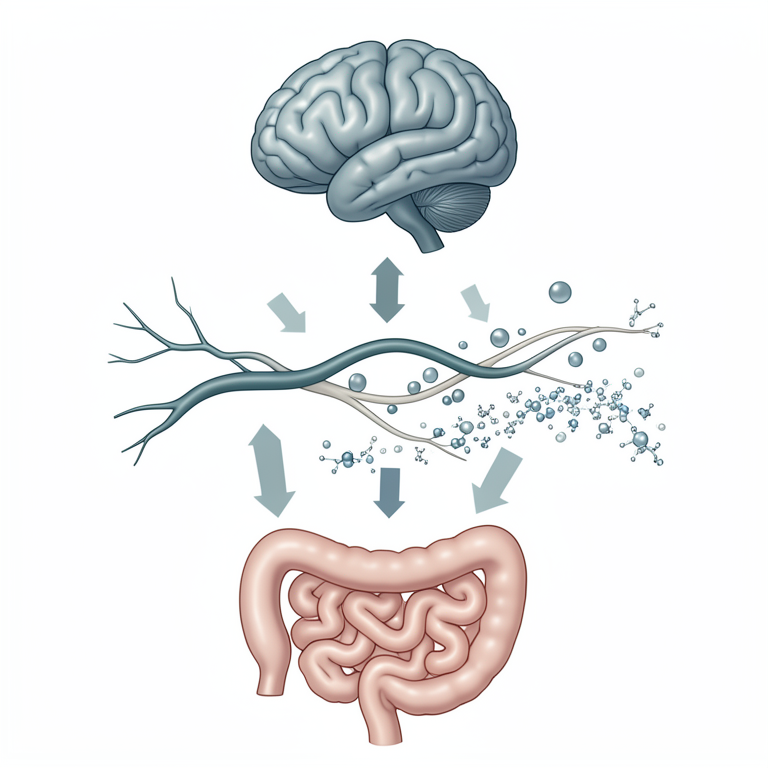
Bidirectional Communication Pathways
AI-generated conceptual illustration (human brain and gastrointestinal tract). It explains the idea and does not show study data.
View source evidence ↗Introduction
The concept of the Gut-Brain Axis (GBA) has garnered significant attention in both scientific and medical communities over recent years. This intricate bidirectional communication network between the Central Nervous System (CNS) and the Gastrointestinal (GI) tract is not only essential for maintaining homeostasis but also plays a critical role in the onset and progression of various diseases. Research into the GBA has revealed profound insights into its impact on physical and mental health, highlighting its potential as a gateway to understanding a variety of health conditions, including neurodegenerative diseases, gastrointestinal disorders, mood disorders, and immune-related issues (Carabotti et al., 2015) [1] . This review explores the anatomy of the gut-brain axis, the mechanisms through which the two systems communicate, and its implications for health and disease. It also delves into the roles of the microbiome, immune system, and Enteric Nervous System (ENS) within the GBA, followed by a discussion of therapeutic strategies targeting this axis (Carabotti et al., 2015) [1] .
Anatomy of the gut-brain axis
At the core of the GBA is a complex communication system that links the CNS, including the brain and spinal cord, to the Enteric Nervous System (ENS), which governs the function of the GI tract. The ENS is often referred to as the "second brain" due to its ability to operate autonomously, though it constantly communicates with the brain. This bidirectional communication involves.
Neural pathways
The vagus nerve, which is the main component of the parasympathetic nervous system, is the most prominent neural pathway in the GBA. It transmits signals from the gut to the brain and vice versa, affecting gut motility, secretion, and sensitivity (Mayer, 2011) [2] .
International Journal of Biology Sciences https://www.biologyjournal.net
Endocrine pathways
Hormones released by the gut, such as serotonin, ghrelin, and cholecystokinin, influence mood, appetite, and cognitive function. Interestingly, about 90% of serotonin is produced in the gut, linking it directly to mood regulation (Mayer, 2011) [2] .
Immune System
The gut is home to a large portion of the body's immune system. Cytokines, immune cells, and microbial metabolites interact with both the CNS and ENS, influencing inflammation and immune responses (Mayer, 2011) [2] .
Microbiome
The gut microbiota, a vast collection of bacteria, fungi, and viruses residing in the intestines, plays an essential role in modulating the gut-brain interaction. The composition of these microorganisms affects the production of neurotransmitters and other signaling molecules, significantly influencing both physical and mental health (Cryan & Dinan, 2012) [3] .
Mechanisms of gut-brain communication
The gut-brain axis communicates through multiple interconnected mechanisms that include neural, hormonal, and immune pathways.
Neural mechanisms
The vagus nerve is central to the neural component of the GBA, providing a direct physical connection between the brain and the gut. It transmits sensory information from the gut to the brain, including the state of satiety, gut movement, and the presence of inflammation or infection (Cryan & Dinan, 2012) [3] . Furthermore, the ENS, often considered a quasi-autonomous nervous system, directly controls local gut functions like motility and enzyme secretion, but it can be modulated by the brain through the vagus nerve.
Hormonal and neurotransmitter mechanisms
Gut hormones and neurotransmitters are central to the GBA. Notably, the gut is a major producer of serotonin, a neurotransmitter widely associated with mood and cognition. Gut bacteria can produce or influence the production of neurotransmitters such as Gamma-Aminobutyric Acid (GABA), dopamine, and serotonin, which can signal the brain through both direct and indirect pathways. Moreover, gut-derived hormones like ghrelin and leptin regulate appetite and food intake, influencing brain function.
Immune mechanisms
The Gut-Associated Lymphoid Tissue (GALT) is a significant component of the immune system and plays an active role in GBA signaling. The gut is constantly exposed to potential pathogens, and a balanced interaction between the immune system and the gut microbiota is crucial for maintaining health. When dysbiosis, or microbial imbalance, occurs, it can trigger inflammatory responses, which are communicated to the brain through cytokines, influencing behavior and cognitive function. Chronic inflammation from the gut can even contribute to neuroinflammatory conditions such as Alzheimer's disease and depression (Cryan & Dinan, 2012) [3] .
Microbiota-driven mechanisms
The gut microbiota is one of the most exciting and recent discoveries in the gut-brain axis. These microorganisms communicate with the CNS through multiple channels, including the production of Short-Chain Fatty Acids (SCFAs), which can cross the blood-brain barrier and affect brain function. Gut bacteria also play a role in the metabolism of tryptophan, a precursor to serotonin, influencing its availability and thus mood and cognition. Moreover, microbial dysbiosis has been linked to various diseases, such as Irritable Bowel Syndrome (IBS), depression, anxiety, and even Parkinson's disease (Abo Asi et al., 2023) [7] .
Implications for health
The gut-brain axis is crucial to the maintenance of health, influencing processes ranging from digestion to mental well-being. When GBA communication is disrupted, it can lead to a wide range of health issues, from gastrointestinal disorders to neuropsychiatric conditions (Moloney et al., 2014) [5] .
Mental health
Emerging research reveals a strong connection between gut health and mental health. The role of the gut microbiota in regulating neurotransmitter levels suggests that microbial dysbiosis may contribute to conditions like depression, anxiety, and stress-related disorders. Studies have shown that probiotics, or "psychobiotics," which promote a healthy gut microbiome, may have antidepressant and anxiolytic effects (Bercik et al., 2012) [6] . Moreover, stress has been shown to alter gut microbiota composition, increasing intestinal permeability, leading to "leaky gut," and driving inflammatory processes that exacerbate mental health conditions. The interaction between chronic stress and gut dysfunction is particularly evident in conditions like Irritable Bowel Syndrome (IBS), where patients frequently exhibit both gastrointestinal and psychological symptoms.
Neurodegenerative diseases
The gut-brain axis has been implicated in the development and progression of neurodegenerative diseases such as Parkinson's Disease (PD) and Alzheimer's disease. In PD, gastrointestinal dysfunction often precedes motor symptoms by many years, suggesting that gut abnormalities might contribute to the onset of the disease. Researchers have observed altered gut microbiota in patients with Parkinson's, which could influence the misfolding of alpha-synuclein, a protein associated with the disease, thus highlighting the GBA's role in its pathogenesis (Moloney et al., 2014) [5] .
Similarly, Alzheimer's disease, characterized by amyloid plaque accumulation in the brain, has been linked to systemic inflammation, potentially originating from gut dysbiosis. Inflammatory mediators from the gut may cross the blood-brain barrier, promoting neuroinflammation and contributing to cognitive decline (Moloney et al., 2014) [5] .
Gastrointestinal disorders
Many gastrointestinal disorders, such as Irritable Bowel Syndrome (IBS), Inflammatory Bowel Disease (IBD), and functional dyspepsia, have been linked to dysfunction in the GBA. IBS, for example, is often accompanied by anxiety and depression, illustrating the close relationship between gut and brain health. The exact mechanisms linking gut disturbances to these mental health conditions are not fully understood but may involve microbial dysbiosis, abnormal gut motility, and altered communication between the ENS and CNS (Evrensel & Ceylan, 2015) [8] .
Therapeutic implications
The growing understanding of the GBA has opened new avenues for therapeutic interventions aimed at modulating gut-brain communication. These therapies range from dietary interventions to medications and probiotics, targeting both the gut microbiota and its interactions with the CNS.
Probiotics and prebiotics
Probiotics, which are live microorganisms that provide health benefits when consumed, have shown promise in modulating the GBA, particularly in mood disorders like anxiety and depression. Prebiotics, which are non-digestible fibers that feed beneficial gut bacteria, also play a role in promoting a healthy gut microbiome, thereby influencing brain health. Clinical trials investigating psychobiotics (probiotics with mental health benefits) have demonstrated reductions in symptoms of anxiety and depression.
Dietary interventions
Diet plays a significant role in shaping the gut microbiota and, by extension, influencing the gut-brain axis. Diets rich in fiber, fermented foods, and polyphenols have been associated with improved gut microbiome diversity and reduced inflammation. Conversely, diets high in sugar, processed foods, and unhealthy fats can lead to dysbiosis and an increased risk of both mental health issues and inflammatory diseases.
Pharmacological approaches
Medications targeting the gut-brain axis are being explored for treating both gastrointestinal and neurological disorders. For instance, drugs that modulate serotonin levels, such as Selective Serotonin Reuptake Inhibitors (SSRIs), are commonly used to treat both IBS and depression, reflecting the shared pathways involved. Emerging research is also investigating the potential of targeting microbial metabolites and SCFAs as therapeutic agents in neurodegenerative diseases (Sampson & Mazmanian, 2015) [9] .
Conclusion
The gut-brain axis represents a revolutionary area of research, offering deep insights into how the health of our gut influences not just digestion but also mental well-being, immune function, and neurological health. The bidirectional communication between the gut and brain, mediated by the nervous, immune, and endocrine systems, underlines the importance of maintaining a healthy gut environment. With advances in understanding the gut microbiome and its role in this complex axis, new therapies targeting the GBA have the potential to revolutionize treatment approaches for a range of conditions, from IBS and depression to neurodegenerative and immune-related diseases. Moving forward, more research is needed to fully understand the mechanisms that underpin this intricate system and how we can harness its potential to improve health and prevent disease.
References
9 in the original paper- Carabotti M, Scirocco A, Maselli MA, Severi C. The gut-brain axis: interactions between enteric microbiota, central and enteric nervous systems. Ann Gastroenterol. 2015;28(2):203-209.
- Mayer EA. Gut feelings: the emerging biology of gutbrain communication. Nat Rev Neurosci. 2011;12(8):453-466.
- Cryan JF, Dinan TG. Mind-altering microorganisms: the impact of the gut microbiota on brain and behaviour. Nat Rev Neurosci. 2012;13(10):701-712.
- Ghaisas S, Maher J, Kanthasamy A. Gut microbiome in health and disease: linking the microbiome-gut-brain axis and environmental factors in the pathogenesis of systemic and neurodegenerative diseases. Pharmacol Ther. 2016;158:52-62.
- Moloney RD, Desbonnet L, Clarke G, Dinan TG, Cryan JF. The microbiome: stress, health and disease. Mamm Genome. 2014;25(1-2):49-74.
- Bercik P, Collins SM, Verdu EF. Microbes and the gutbrain axis. Neurogastroenterol Motil. 2012;24(5):405413.
- Abo Asi HS, El Tokhy AK, Gaballah HH, Hamooda HM, Alashwah NE. Potential neuroprotective effect of lauric acid on rotenone-induced Parkinson's disease in experimental rats. Int J Adv Biochem Res. 2023;7(2):281-285. DOI:10.33545/26174693.2023.v7.i2d.261.
- Evrensel A, Ceylan ME. The gut-brain axis: The missing link in depression. Clin Psychopharmacol Neurosci. 2015;13(3):239-244.
- Sampson TR, Mazmanian SK. Control of brain development, function, and behavior by the microbiome. Cell Host Microbe. 2015;17(5):565-576.