
Research article · 2023 · Full text
International Journal of Veterinary Sciences and Animal HusbandryA prospective study on prevalence and antibiogram study of Salmonella isolated from backyard poultry in rural areas in and around Hyderabad
Volume 8(6S) · Pages 01–03 · DOI: 10.22271/veterinary.2023.v8.i6sa.808 ↗
Research areasSalmonella and Campylobacter epidemiologyIdentification and Quantification in FoodAquaculture disease management and microbiota
Abstract
Author-writtenSalmonellosis is a bacterial infection caused by Salmonella, a member of Enterobacteriaceae family. It is one of the most prevalent diseases in birds, causing high losses in poultry industry and food poisoning in human. There is a limited information about the prevalence of Salmonella spp. in backyard chickens. The current investigation was conducted to determine the prevalence and antibiotic resistance of Salmonella in backyard chicken. A total of 250 samples were aseptically collected from backyard chicken from rural areas in and around Hyderabad. Samples included cloacal swabs and fecal samples. All the collected samples were tested for Salmonella isolates using traditional method and confirmed by ABST. Out of 250 samples 17 (6.8%) isolates of Salmonella were formed. Antimicrobial susceptibility of the isolates against 11 antimicrobial agents was determined by the standard disc diffusion method. 100% of the tested Salmonella isolates were found to be resistant to oxytetracycline and 82.3% strains showed resistance to tetracycline. Whereas erythromycin and levofloxacin showed 58.8% and 52.9% resistance respectively. No isolate showed resistance to ciprofloxacin. Isolates against ampicillin (76.4%), ceftriaxone (70.5%), and ciprofloxacin (94.1%) showed the highest sensitivity. The isolates exhibited intermediate sensitivity to neomycin (47.05%), chloramphenicol (58.8%), and gentamycin (76.4%). With the increased popularity of keeping backyard chickens, the current study emphasizes the zoonotic risk from Salmonella spp. associated with country chicken.
Summary
Source-checkedPlain-language reading of the full paper, prepared with AI and checked against the text. Each point links to the authors' own words.
Why it matters
- Salmonellosis, caused by Salmonella bacteria, is a common avian disease that leads to significant economic losses in the poultry industry and causes food poisoning in humans. View evidence ↗
- Backyard poultry farming is a vital resource for poor rural families in India, with the population of these birds increasing by 45.48% to 317.07 million according to the 20th Livestock Census (2019). View evidence ↗
- Birds in backyard farming systems are more susceptible to severe diseases because they are exposed to various infectious agents. View evidence ↗
The question
- The study aimed to determine how common Salmonella is in backyard chickens and to evaluate the antibiotic resistance of the isolated strains. View evidence ↗
What they did
- Researchers collected 250 samples (100 cloacal swabs and 150 fecal samples) from country chickens in five rural areas around Hyderabad. View evidence ↗
- Samples were processed using pre-enrichment in buffered peptone water followed by selective enrichment in tetrathionate broth for 24 hours at 37 °C. View evidence ↗
- Primary isolation was performed on BGA, MA, and SS agars, with subsequent confirmation on XLD agar. View evidence ↗
- The 17 isolated Salmonella strains were tested against 11 different antibiotics using the Kirby-Bauer disc diffusion method on Muller-Hinton agar. View evidence ↗
What they found
- The overall prevalence of Salmonella among the 250 samples was 6.8%, with 17 positive isolates. View evidence ↗
- Salmonella was found in 6% of cloacal swabs (6/100) and 7.3% of fecal samples (11/150). View evidence ↗
- All 17 Salmonella isolates (100%) were resistant to oxytetracycline. View evidence ↗
What it means
- The authors conclude that Salmonella in backyard poultry has developed antibiotic resistance, particularly to oxytetracycline and tetracycline, necessitating careful antibiotic selection. View evidence ↗
- The study highlights a zoonotic risk to humans from Salmonella associated with country chickens as backyard poultry farming becomes more popular. View evidence ↗
Visual summary
2 visualsIllustrations explain the paper; charts are replotted from the paper's own table values.
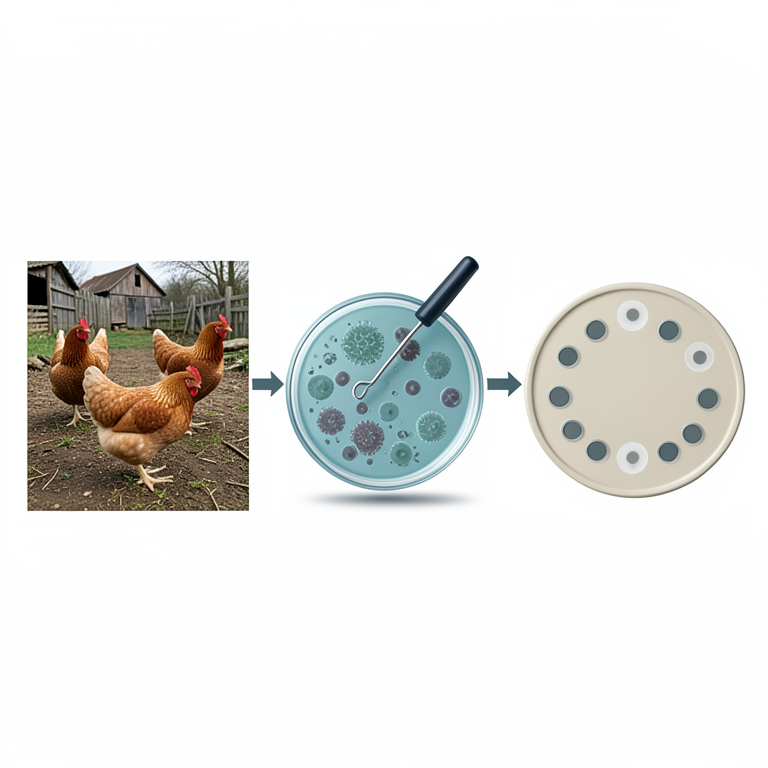
Study Workflow
AI-generated conceptual illustration (backyard country chickens and Salmonella bacteria in a laboratory setting). It explains the idea and does not show study data.
View source evidence ↗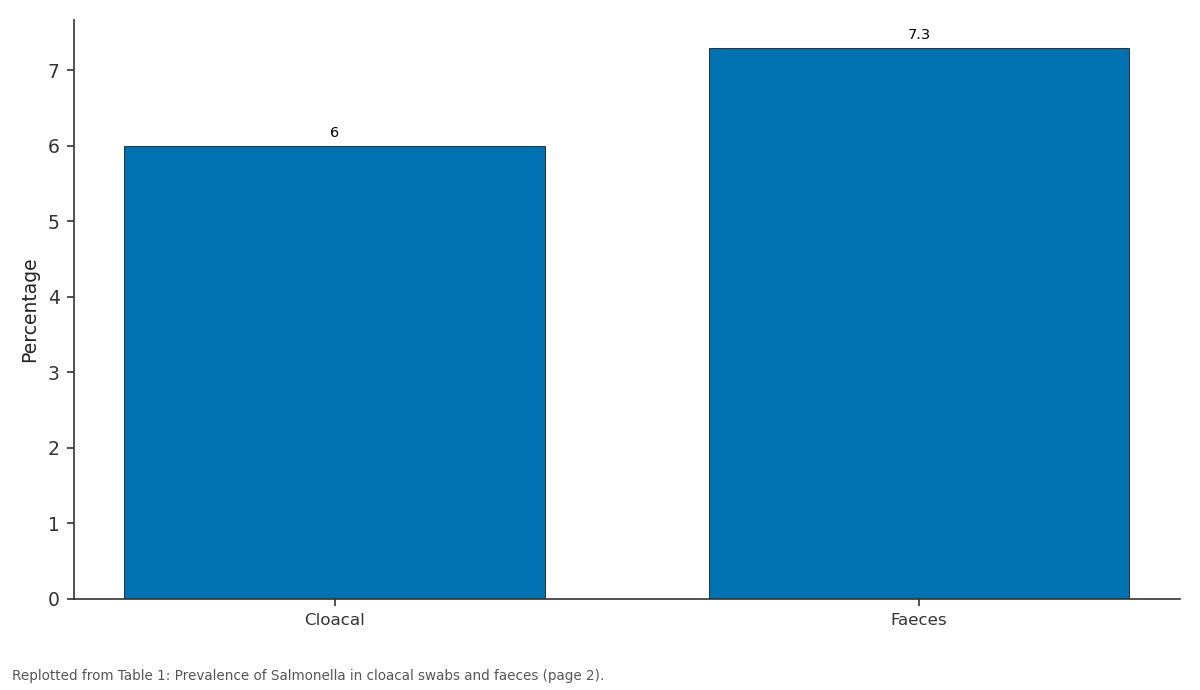
Percentage: Cloacal vs Faeces
Replotted from Table 1 (page 2) of the original paper. Every bar is the paper's own table value.
View source evidence ↗Figures & tables
From the original paper Table 1
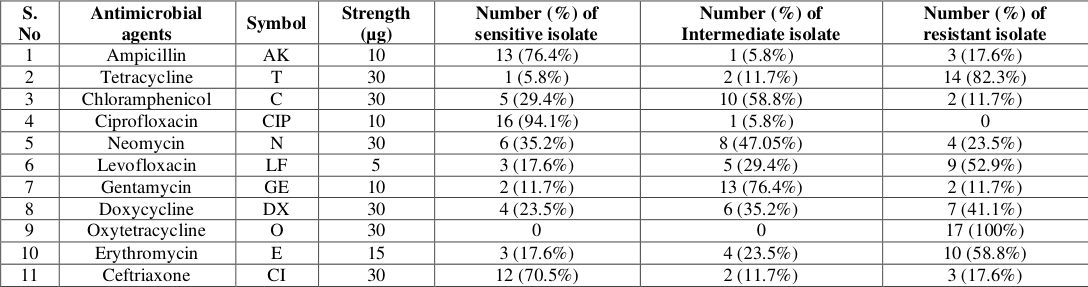 Table 2
Introduction
Backyard poultry farming is a traditional method of rearing poultry birds with limited number of country birds by farmers to attain their needs. This provides profit in the very shortest time with low investment and ensures availability of eggs and meat even in remote areas. It is an environmentally friendly method because these are very active in pest control and provide manure. It is a system with low input and output (Sonkar et al., 2020) [1] . Backyard poultry farming is practiced by most of the poor and marginalized rural families all over India. In terms of population, there was a tremendous increase in backyard poultry (45.48%) from 217.49 million to 317.07 million from previous to recent census (20 th Livestock Census, 2019) [2] . Eggs and meat of these birds acts as major and cheapest sources of protein for rural Indian people. The eggs produced by country birds may not contribute to the major proportion of total production, it aids the rural people in self-employment and caters much needed animal protein (Singh et al., 2020) [3] . There is a little infrastructure required for backyard poultry farming, and it is easily managed by women, elderly family members, and children. The majority of the constraints of this farming in India are the high mortality rates of young birds due to a lack of good infrastructure and farmers scientific knowledge of bird nutrition or medications (Kumar et al., 2019) [4] . Backyard poultry accounts for nearly 30% of total egg production in the United States. Because this method of rearing involves exposing birds to a variety of infectious agents, these birds are predisposed to severe disease conditions. (Megha et al., 2016) [5] . Backyard chickens can also become infected if they encounter Salmonella-carrying wild animals, domestic mammals, or commercial poultry (Jafari et al., 2007) [6] . The poultry industry suffers significant economic losses because of this infection.
Antibiotic use contributes to selection pressures that favour the growth of antibiotic-resistant pathogens (Obi et al., 2012) [7] . So, this study was conducted to isolate, characterize, and determine the antibiotic resistance of Salmonella in backyard chickens.
Materials and Methods
Materials and Methods
Sample collection:
According to OIE standards, a total of 250 samples i.e., 100 cloacal swabs and 150 fecal samples of country chickens were collected from rural areas such as Budwel, Kismatpur, Rajendranagar, Bairagiguda, and Kothwalguda of Hyderabad. After collecting aseptically, the samples were transported to the Department of Veterinary Public Health and Epidemiology for isolation and characterization of Salmonella spp.
Bacterial isolation and identification:
After collection, the clocal swabs and 1 g faeces from each fecal sample were pre-enriched in 9 ml of buffered peptone water. Later, 1ml of pre-enriched samples were placed in the freshly prepared tetrathionate broth for selective enrichment and incubated for 24 hours at 37 °C. After incubation, a loop full of inoculum was then streaked on to brilliant green agar (BGA), MacConkey agar (MA) and Salmonella-Shigella (SS) agar as a selective medium for primary isolation and incubated at 37 °C for 24 h. Susceptible colonies were again streaked on Xylose Lysine Dextrose (XLD) agar then incubated for 24 hours and examined for the growth of characteristic colonies of Salmonella. The colonies were stained using Gram's method and examined under a microscope to look for Gramnegative rods. Most of the gram-negative bacteria are motile, so the hanging drop method was used to determine the motility of the bacteria. To prepare the hanging drop, one drop of cultured broth was placed on a clean cover slip and placed inversely over the concave depression of the hanging drop slide. Soft Paraffin was applied around the edge of the concave depression slide to improve cover-slip attachment and prevent air current and fluid evaporation. The hanging drop slide was carefully examined under a compound microscope. The motile and non-motile organisms were distinguished by observing motility in contrast to the bacteria's swinging movement. Isolated organisms were subjected to biochemical tests: indole test, nitrate reduction, urease, Voges Proskauer, methyl red and sugar fermentation tests.
Antibiogram study:
On Muller-Hinton agar, 17 isolates were tested for antimicrobial susceptibility against 11 commonly used antibiotics from different groups using the disc diffusion method or the Kirby-Bauer method (Bauer et al., 1966) [8] . Antibiotics with the following concentrations and zones of inhibition as determined by the Clinical and Laboratory Standard Institute (CLSI, 2022) [9] . Gentamicin (10 µg), levofloxacin (5 µg), tetracycline (30 µg), ciprofloxacin (5 µg), ampicillin (10 µg), oxytetracycline (30 µg) nalidixic acid (30 µg), chloramphenicol (30 µg), ceftriaxone (30 µg), doxycycline (30 µg), neomycin (30 µg). By using a sterile inoculating loop a single bacterial colony was taken from the surface of SS agar was removed and inoculated in BHI (brain heart infusion) broth, following the 24 h of incubation at 37 °C, the broth was streaked by using sterile swabs on Mueller-Hinton agar and antimicrobial discs were plated onto Muller Hinton agar using sterile forceps. The plates were incubated overnight at 37 °C. After incubation, the plates were examined, and the diameters of the inhibition zones were measured. Susceptibility and resistance were determined (Table 2).
| S. No | Antimicrobial agents | Symbol | Strength (µg) | Number (%) of sensitive isolate | Number (%) of Intermediate isolate | Number (%) of resistant isolate |
|---|---|---|---|---|---|---|
| 1 | Ampicillin | AK | 10 | 13 (76.4%) | 1 (5.8%) | 3 (17.6%) |
| 2 | Tetracycline | T | 30 | 1 (5.8%) | 2 (11.7%) | 14 (82.3%) |
| 3 | Chloramphenicol | C | 30 | 5 (29.4%) | 10 (58.8%) | 2 (11.7%) |
| 4 | Ciprofloxacin | CIP | 10 | 16 (94.1%) | 1 (5.8%) | 0 |
| 5 | Neomycin | N | 30 | 6 (35.2%) | 8 (47.05%) | 4 (23.5%) |
| 6 | Levofloxacin | LF | 5 | 3 (17.6%) | 5 (29.4%) | 9 (52.9%) |
| 7 | Gentamycin | GE | 10 | 2 (11.7%) | 13 (76.4%) | 2 (11.7%) |
| 8 | Doxycycline | DX | 30 | 4 (23.5%) | 6 (35.2%) | 7 (41.1%) |
| 9 | Oxytetracycline | O | 30 | 0 | 0 | 17 (100%) |
| 10 | Erythromycin | E | 15 | 3 (17.6%) | 4 (23.5%) | 10 (58.8%) |
| 11 | Ceftriaxone | CI | 30 | 12 (70.5%) | 2 (11.7%) | 3 (17.6%) |
Table text extracted from the original PDF; superscript letters are shown inline. The original table image is below.
View original table image
Results and Discussion
The current study aimed to isolate, characterize, and determine antibiotic resistance of Salmonella spp. isolated from country chicken from various rural areas in and around Hyderabad. Cultural and staining characteristics, motility, and biochemical tests all confirmed that the isolates were Salmonella. The antibiotic sensitivity and resistance patterns of the isolates were identified in this study. After 24 hours of incubation at 37 °C, Cloacal swab samples inoculated into nutrient broth revealed the growth of bacteria. The presence of turbidity and cultural characteristics on different agars indicated bacterial growth. The thin smears prepared with the colony from SS agar, MC agar and BG agar for Gram's staining revealed Gram-negative, pink colored, small rodshaped appearance, arranged in single or paired under the microscopic examination. When the isolates were examined under a microscope using a hanging drop slide, they were all found to be motile. All the isolates were Methyl-red positive, Voges-Proskauer and Indole negative, fermented dextrose, maltose and mannitol with the production of acid but did not ferment lactose and sucrose. Acid production was indicated by the color change from reddish to yellow. Eleven (7.3%) out of 150 fecal samples and six (6%) out of 100 cloacal swabs yielded positive results. Overall, Salmonella prevalence was found to be 6.8% (Table 1). The results were in accordance with the report of Samanta et al (2014) [10] . However, the study by Das et al (2017) [11] found 13.24% prevalence, which was nearly twice as high as the current study, and the study by Manning et al (2015) [12] found 10.4% isolation rate. Eleven different antibiotics were employed, each at a different therapeutic concentration. All isolates showed higher resistance (100%) to oxytetracycline, followed by tetracycline (82.3%), erythromycin (58.8%), levofloxacin (52.9%), and doxycycline (41.1%). These findings are consistent with the observations made by Samanta et al. (2014) [10] regarding isolates showing resistance to oxytetracycline (100%) and tetracycline. Bhuvaneswari et al. (2016) [13] also found nearly sixty percent of the Salmonella isolates were resistant to erythromycin. The highest sensitivity was revealed by isolates against ciprofloxacin (94.1%), ampicillin (76.4%), and ceftriaxone (70.5%). The higher sensitivity observed in the current study against ciprofloxacin is similar to that reported in previous studies by Bhuvaneswari et al. (2016) [13] . The isolates were intermediately sensitive to gentamycin (76.4%), chloramphenicol (58.8%), neomycin (47.05%). In contrast, Arora et al. (2013) [14] reported that most of the isolates were sensitive to gentamycin (76%).
| S. No | Source | No of samples | No of positive samples | Percentage |
|---|---|---|---|---|
| 1 | Cloacal | 100 | 6 | 6% |
| 2 | Faeces | 150 | 11 | 7.3% |
| Total | 250 | 17 | 6.8% |
Table text extracted from the original PDF; superscript letters are shown inline. The original table image is below.
View original table image
Conclusion
The presence of Salmonella isolates in native chickens in and around Hyderabad was determined in present study. Salmonella isolates have demonstrated higher resistance to oxytetracycline and tetracycline. This indicate that Salmonella had developed antibiotic resistance. So one should be careful regarding selection of antibiotics in case of backyard poultry.
All things considered, it is clear that antibiotic resistance and Salmonella prevalence in chickens are serious issues. Furthermore, Salmonellosis is extremely important for public health.
Acknowledgement
AcknowledgementThe authors would like to sincerely thank the University authorities for providing necessary facilities to carry out the present research work.
References
10 in the original paper- Kumar M, Dahiya SP, Ratwan P. Backyard poultry farming in India: A tool for nutritional security and women empowerment. Biological Rhythm Research. 2021;52(10):1476-1491.
- Megha SB, Madhavaprasad CB, Karabasanavar N, Achur RN, Shilpa AG, Bagalkote PS, et al. Isolation and characterization of Salmonellae from backyard poultry. Frontier Journal of Veterinary and Animal Sciences. 2016;5(1):21-23.
- Jafari RA, Ghorbanpour M, Jaideri A. An investigation into Salmonella infection status in backyard chickens in Iran. Int J Poult Sci. 2007;6(3):227-229.
- Obi OJ, Ike AC. Prevalence and antibiogram profile of Salmonellae in intensively reared and backyard chickens in Nsukka Area, Nigeria. Nigerian Journal of Biotechnology. 2015;30:18-25.
- Bauer AW, Kirby WM, Sherris JC, Turck M. Antibiotic susceptibility testing by a standardized single disk method. Am. J Clin. Pathol. 1966;45(4):493-496.
- Samanta I, Joardar SN, Das PK, Sar TK, Bandyopadhyay S, Dutta TK, et al. Prevalence and antibiotic resistance profiles of Salmonella serotypes isolated from backyard poultry flocks in West Bengal, India. Journal of Applied Poultry Research. 2014;23(3):536-545.
- Das D, Panda SK, Jena B, Nanda H. Conventional and molecular detection of Salmonella species in backyard poultry of Odisha state in India. J Entomol Zool Stud. 2017;5:837-840.
- Manning J, Gole V, Chousalkar K. Screening for Salmonella in backyard chickens. Preventive veterinary medicine. 2015;120(2):241-245.
- Bhuvaneswari M, Santhanam Shanmughapriya, Natarajaseenivasan, Kalimuthusamy. Prevalence of Multi drug-Resistant (MDR) Salmonella enteritidis in Poultry and Backyard Chicken from Tiruchirappalli, India. Microbiology Journal. ISSN 2153-0696. 2015;5:28-35. 10.3923/mj.2015.28.35.
- Arora D, Kumar S, Singh D, Jindal N, Mahajan NK. Isolation, characterization and antibiogram pattern of Salmonella from poultry in parts of Haryana, India. Adv Anim Vet Sci. 2013;1(5):161-163.