
Research article · 2023 · Full text
International Journal of Advanced Chemistry ResearchMicrowave assisted organic synthesis of nitrogen, oxygen and sulphur containing heterocycles
Volume 5(2) · Pages 23–27 · DOI: 10.33545/26646781.2023.v5.i2a.155 ↗
Research areasSynthesis and biological activitySynthesis and Characterization of Heterocyclic CompoundsMicrowave-Assisted Synthesis and Applications
Abstract
Author-writtenMicrowave assisted organic synthesis is one among the handy methods included in Green Chemistry. The main objective of this work was to synthesize useful nitrogen, oxygen and sulphur containing heterocyclic compounds. Generally, such heterocyclic compounds are of prime interest when medicinal chemistry is concerned for their pronounced response towards various pharmacological tests. Apart from this, basically their synthetic route is of much importance. Use of solvent free reaction conditions enable eco-friendly synthesis of heterocycles. Likewise, coumarin, chalcone and amino thiadiazole derivatives were prepared using various starting materials to promote green synthesis. Knoevenagel, Schiff base formations etc. helped mechanistically to understand the way of product formations. Selected compounds were subjected for various characterization techniques like FT-IR, 1H NMR, 13C NMR and LCMS for strong conclusion.
Summary
Source-checkedPlain-language reading of the full paper, prepared with AI and checked against the text. Each point links to the authors' own words.
Why it matters
- Microwave-assisted organic synthesis is considered a useful method within the framework of Green Chemistry. View evidence ↗
- Heterocyclic compounds containing nitrogen, oxygen, and sulphur are highly valued in medicinal chemistry due to their strong pharmacological responses. View evidence ↗
- Employing solvent-free reaction conditions allows for the eco-friendly synthesis of these heterocyclic structures. View evidence ↗
The question
- The primary goal of the study was to synthesize useful heterocyclic compounds containing nitrogen, oxygen, and sulphur. View evidence ↗
What they did
- The researchers used a 1050 W microwave instrument (230 V-50 Hz) for the irradiation process. View evidence ↗
- The synthesized compounds were characterized using FT-IR, 1H NMR, 13C NMR, and LCMS to confirm their structures. View evidence ↗
- 3-cinnamoyl coumarin was produced by reacting 1 mmol of 3-acetyl coumarin with 1 mmol benzaldehyde in dilute NaOH under 140W microwave irradiation for 40 seconds. View evidence ↗
- 2-Amino 1, 3, 4-thiadiazole derivatives were synthesized by treating 1 mmol of acid with 1 mmol thiosemicarbazide under 140W microwave irradiation for 90 seconds. View evidence ↗
- 5-substituted 1, 3, 4-Thiadiazol-2-yl-thiourea was synthesized by mixing 1 mmol of 5-substituted 2-Amino 1, 3, 4 thiazole with 1 mmol ammonium thiocyanate in dilute HCl, irradiated at 140W for 120 seconds. View evidence ↗
What they found
- The synthesis of 3-acetyl coumarin resulted in a yield of 88% with a melting point of 114-116 °C. View evidence ↗
- The synthesis of 3-cinnamoyl coumarin resulted in a yield of 62% with a melting point of 181-183 °C. View evidence ↗
- The synthesis of 2-amino 1, 3, 4-thiadiazole (8a) resulted in a yield of 85% with a melting point of 192-194 °C. View evidence ↗
- The synthesis of 2-amino 5-phenyl 1, 3, 4-thiadiazole (8b) resulted in a yield of 80% with a melting point of 219-222 °C. View evidence ↗
- The synthesis of 1, 3, 4-thiadiazol-2-yl-thiourea (10a) resulted in a yield of 73% with a melting point of 192-195 °C. View evidence ↗
- The synthesis of 5-phenyl 1, 3, 4-thiadiazol-2-yl-thiourea (10b) resulted in a yield of 61% with a melting point of 206-208 °C. View evidence ↗
What it means
- The authors conclude that the products were obtained in good yields and the reaction times were shorter compared to existing literature. View evidence ↗
Visual summary
2 visualsIllustrations explain the paper; charts are replotted from the paper's own table values.
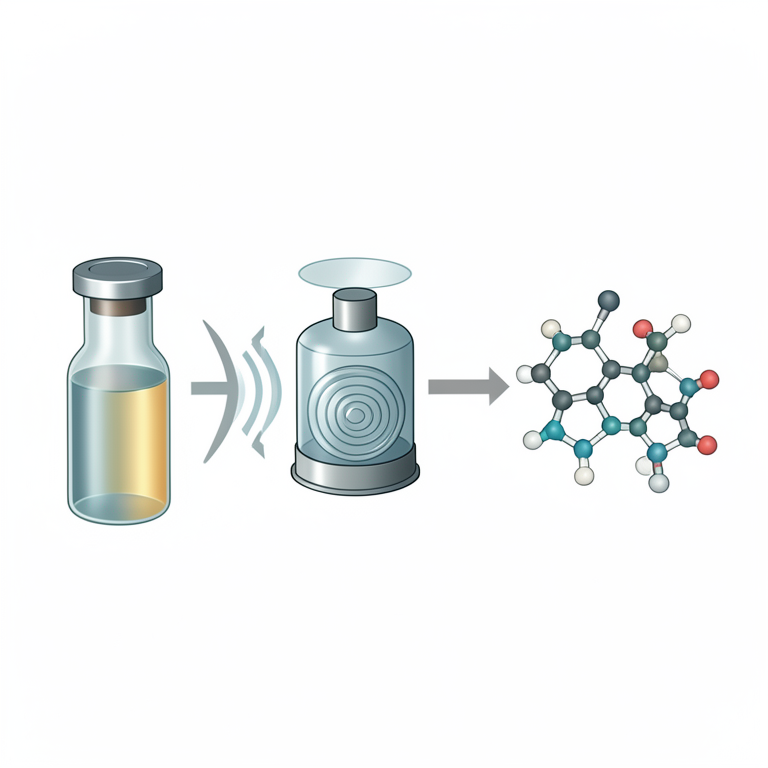
Microwave Synthesis Workflow
AI-generated conceptual illustration (chemical reactants in a glass vial inside a laboratory microwave reactor). It explains the idea and does not show study data.
View source evidence ↗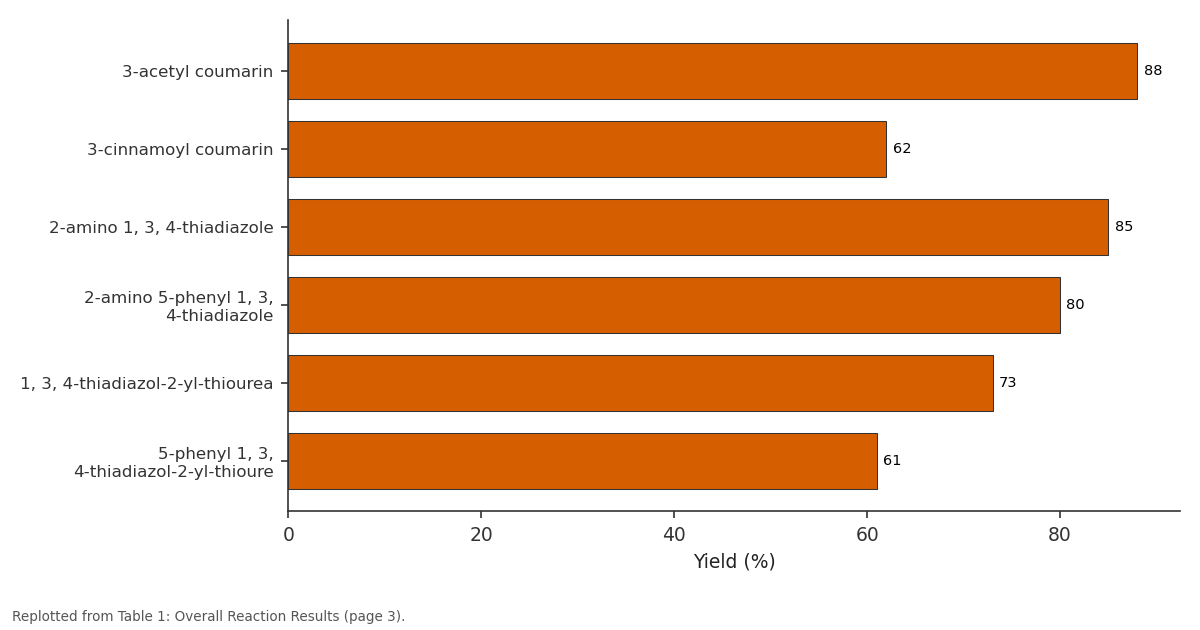
Yield (%): 3-acetyl coumarin vs 3-cinnamoyl coumarin vs 2-amino 1, 3... vs 2-amino 5-phenyl 1, 3... vs 1, 3...
Replotted from Table 1 (page 3) of the original paper. Every bar is the paper's own table value.
View source evidence ↗Figures & tables
From the original paper Table 1
 Table 1
Introduction
Greener pathway of Organic synthesis is now an emerging field in the arena of synthetic organic chemistry research wherein Microwave heating is one of the major tools for combating the hazardous effects caused by toxic chemicals in the reactions [1] . The advantages of this technique have created its own impact in the eco-friendly approach towards healthy and safe environment. This can avoid the possibilities of unwanted side reactions, improved reproducibility and uniform heating throughout the course of reaction [2,3] . The wide applications in the synthesis of heterocycles like benzimidazoles [4] and coumarins [5] via Pechmann condensation have been reported with efficient high yield. Coumarin-purine hybrids have been effectively synthesized using microwave source of radiation resulted in showing potent antioxidant activity [6] . Fused ring heterocycles containing Nitrogen and Oxygen have been effectively studied and reported encompassing green synthetic routes [7] . Oxadiazole derivatives were found to possess anti-tumor activity [8] while imidazo [1, 2-a] pyridine derivatives with antimicrobial activity [9] and served as PDE inhibitors [10] prepared via greener microwave synthetic protocols. The new synthetic strategies developed for 1, 3, 4 thiadiazole 2-amine derivatives by Kokovina et al. gave an idea of them exhibiting biological activity using one pot synthesis [11] whereas Mishra et al. developed via Microwave and Ultrasonic methods [12] proposed study on their biological evaluation. Chalcones derivatives synthesized under solvent free microwave conditions by Ajani and coworkers possessed antibacterial activity [13] . Imidazole based coumarin derivatives [14] synthesized under the influence of Microwave irradiation by Ashok et al., manifested clear antimicrobial activity. Optimized Microwave assisted synthetic procedures have been inculcated for the synthesis of novel coumarin analogues and resulted in greater antifungal response with very low concentration [15] . Coumarin substituents have also been catalyzed by deep eutectic solvents like choline chloride/zinc chloride using Knoevenagel condensation [16] . Konradova et al., carried out Witting reaction between salicylaldehyde and ylides which reported products in two cases; One at lesser exposure to microwave radiation obtained coumarin and cinnamic ester derivatives while other gave only coumarin on prolonged reaction time [17] . Acetyl coumarins are found to be synthesized using amino acids like L-Proline as a green catalyst reacting with substituted salicylaldehyde and ethyl acetoacetate led multicomponent reaction with better yields [18] . The derivatives of coumarin having influential Acetylcholinesterase (AChE) enzyme inhibition serve as vital targets for the treatment of Alzheimer disease [19][20][21] . Other than the medicinal applications, class of cyanocoumarins [22] and iminocoumarins [23] is found to be fluorescent in nature with splendid optical properties. Apart from coumarins, bioactive 1, 3, 4-thiadiazole 2-amine derivatives, as the part of our interest, have been exclusively reported for exhibiting unique phenomena called dual fluorescence effect [24][25][26][27] .
Materials and Methods
2.1 Materials: Salicylaldehyde, Ethyl acetoacetate, Piperidine, Ethanol, Benzaldehyde, Formic Acid, Benzoic acid, Thiosemicarbazide, Ammonium acetate, dil. HCl, dil. NaOH used were of analytical grade and employed without any further purification. All chemicals were procured from Loba Chemie Pvt. Ltd. 230 V-50 Hz; 1050 W Microwave instrument was used for irradiation. Perkin Elmer Spectrum Two Universal ATR device with LiTaO3 detector was used to record FT-IR Spectrum. 1 H and 13 C NMR spectrum was recorded using 400 MHz JNM-ECZ400S/L1 Jeol NMR Spectrometer and Bruker Avance III HD NMR Spectrometer. Chloroform-d and DMSO-d6 solvent containing 99.8 atom % D and 0.03% (v/v) TMS as reference standard were procured from Sigma Aldrich. LCMS (ESI) 1525u Binary HPLC and Xevo G2-XS QTof models employed for characterization were developed by Waters USA.
Synthesis of 3-acetyl coumarin (3)
3-acetyl coumarin (3) was synthesized via Knoevenagel condensation reaction by Valizadeh et al. [28] with certain modifications in the reaction conditions. 9 mmol Salicylaldehyde (1) and 12 mmol Ethyl acetoacetate (2) were mixed with few drops of Piperidine in the presence of minimum quantity of E thanol. The reaction mixture was then kept for Microwave irradiation at 140W and the reaction was carried out for 30 sec as described in the Scheme 1. The crude was recrystallized using Ethanol. [29]
Results and Discussion:
The following Table 1. Shows the overall results of the products synthesized in the above reaction schemes.
| Sl. No. | Component | Product | Reaction Time under MW (sec) | Melting Point (°C) | Yield (%) |
|---|---|---|---|---|---|
| 1 | 3 | 3-acetyl coumarin | 30 | 114-116 | 88 |
| 2 | 5 | 3-cinnamoyl coumarin | 40 | 181-183 | 62 |
| 3 | 8a | 2-amino 1, 3, 4-thiadiazole | 90 | 192-194 | 85 |
| 4 | 8b | 2-amino 5-phenyl 1, 3, 4-thiadiazole | 90 | 219-222 | 80 |
| 5 | 10a | 1, 3, 4-thiadiazol-2-yl-thiourea | 120 | 192-195 | 73 |
| 6 | 10b | 5-phenyl 1, 3, 4-thiadiazol-2-yl-thiourea | 120 | 206-208 | 61 |
Table text extracted from the original PDF; superscript letters are shown inline. The original table image is below.
View original table image
| Component No. | R |
|---|---|
| a | H |
| b | C6H5 |
Table text extracted from the original PDF; superscript letters are shown inline. The original table image is below.
View original table image
Conclusion
After the successful reactions upon microwave irradiation, the selected products were satisfactorily proved through the characterization tools being used for the analysis. Products obtained were of good yield with the application of uniform power. The time duration is comparatively less when compared with the literature study. Various heterocycles synthesized could be subjected for biological activities as their synthesis is convenient and follow eco-friendly approach.
Acknowledgement
Sincere acknowledgement to St. Aloysius College (Autonomous), Mangaluru for FT-IR analysis. Indeed, we are grateful to NMR Instrument Centre, Mangalore University, Mangalagangotri and Tran-Sci Institute of Applied NMR Research, Transzend Scientific Pvt Ltd.
Bengaluru for 1 H NMR and 13 C NMR analyses. LCMS analysis was carried out at LCMS facility, IOE, University of Mysore, Manasagangotri, Mysore for which we are indebted for their valuable cooperation.
References
26 in the original paper- Ravichandran S, Karthikeyan E. Microwave synthesis-a potential tool for green chemistry. International Journal of ChemTech Research. 2011;3(1):466-470.
- Anastas P, Eghbali N. Green Chemistry: Principles and Practice. Chemical Society Reviews. 2010;39(1):301312. DOI: https://doi.org/10.1039/B918763B.
- Hayes BL. Recent advances in microwave-assisted synthesis. Aldrichimica Acta. 2004 Jan 1;37(2):66-77.
- Habibi A, Valizadeh Y, Mollazadeh M, Alizadeh A. Green and high efficient synthesis of 2-aryl benzimidazoles: Reaction of arylidene malononitrile and 1, 2-phenylenediamine derivatives in water or solvent-free conditions. International Journal of Organic Chemistry. 2015;5(04):256. DOI: https://doi.org/10.4236/ijoc.2015.54025.
- Vahabi V, Hatamjafari F. Microwave assisted convenient one-pot synthesis of Microwave assisted convenient one-pot synthesis of coumarin derivatives International Journal of Advanced Chemistry Research https://www.chemistryjournals.net via Pechmann condensation catalyzed by FeF3 under solvent-free conditions and antimicrobial activities of the products. Molecules. 2014;19(9):13093-13103. DOI: https://doi.org/10.3390/molecules190913093.
- Mangasuli SN, Hosamani KM, Managutti PB. Microwave assisted synthesis of coumarin-purine derivatives: An approach to in & NBSP; In vitro antioxidant, DNA cleavage, crystal structure, DFT studies and Hirshfeld surface analysis. Heliyon. 2019;5(1):1131. DOI: https://doi.org/10.1016/j.heliyon.2019.
- Gabr MT, El-Gohary NS, El-Bendary ER, El-Kerdawy MM, Ni N. Microwave-assisted synthesis and antitumor evaluation of a new series of thiazolylcoumarin derivatives. EXCLI Journal. 2017;16:1114-1131. DOI: https://doi.org/10.17179/excli2017-208.
- Rajitha G, Ravibabu V, Ramesh G, Rajitha B. Synthesis and antimicrobial activity of novel imidazo [1, 2a]pyridinopyrimidine-2, 4, 6 (1H, 3H, 5H)-triones and thioxopyrimidine-4, 6 (1H, 5H) diones. Research on Chemical Intermediates. 2016;42:1989-1998. DOI: https://doi.org/10.1007/s11164-015-2130-2.
- Kumbar MN, Kamble RR, Kamble AA, Salian SR, Kumari S, Nair R, et al. Design and Microwave Assisted Synthesis of Coumarin Derivatives as PDE Inhibitors. International Journal of Medicinal Chemistry. 2016;2016(1):9890630.
- Mishra PS, Mishra R, Gupta RJ, Mazumder R, Malviya R. Efficient Green Synthesis and Biological Evaluation of Thiadiazole Derivatives. Letters in Applied Nano Bio Science. 2021;10(3):2594-2604. DOI: https://doi.org/10.33263/LIANBS103.25942604.
- Ajani OO, Akande MM, October N, Siyanbola TO, Aderohunmu DV, Akinsiku AA, et al. Microwave assisted synthesis, characterization and investigation of antibacterial activity of 3-(5-(substituted-phenyl)-4, 5dihydro-1H-pyrazol-3-yl)-2H-chromen-2-one derivatives. Arab Journal of Basic and Applied Sciences. 2019;26(1):362-375. DOI: https://doi.org/10.1080/25765299.2019.1632141.
- Ashok D, Ramakrishna K, Nagaraju N, Reddy MR, Dharavath R, Sarasija M. Microwave-Assisted Synthesis of Substituted 2-(2H-Chromen-3-yl)-5phenyl-1H-imidazole Based Coumarin Derivatives and Their Antimicrobial Activity. Russian Journal of General Chemistry. 2021;91(4):711-716. DOI: https://doi.org/10.1134/S1070363221040216.
- Zhang RR, Liu J, Zhang Y, Hou MQ, Zhang MZ, Zhou F, et al. Microwave-assisted synthesis and antifungal activity of novel coumarin derivatives: Pyrano [3, 2-c ]chromene-2, 5-diones. European journal of medicinal chemistry. 2016;116:76-83. DOI: https://doi.org/10.1016/j.ejmech.2016.03.069.
- Keshavarzipour F, Tavakol H. The synthesis of coumarin derivatives using choline chloride/zinc chloride as a deep eutectic solvent. Journal of the Iranian Chemical Society. 2016;13:149-153. DOI: https://doi.org/10.1007/s13738-015-0722-9.
- Konrádová D, Kozubíková H, Doležal K, Pospíšil J. Microwave-Assisted Synthesis of Phenylpropanoids and Coumarins: Total Synthesis of Osthol. European Journal of Organic Chemistry. 2017;2017(35):52045213. DOI: https://doi.org/10.1002/ejoc.201701021.
- Srikrishna D, Dubey PK. Microwave-assisted efficient and convenient one-pot synthesis of novel 3-(4aminothieno [2, 3-d] pyrimidin-5-yl) coumarins under solvent-free conditions. Chemistry of Heterocyclic Compounds (NY). 2018;54:736-743. DOI: https://doi.org/10.1007/s10593-018-2340-9.
- Anand P, Singh B, Singh N. A review on coumarins as acetylcholinesterase inhibitors for Alzheimer's disease. Bioorganic & Medicinal Chemistry. 2012;20(3):11751180. DOI: https://doi.org/10.1016/j.bmc.2011.12.042.
- Bagheri SM, Khoobi M, Nadri H, Moradi A, Emami S, Jalili-Baleh L, et al. Synthesis and Anticholinergic Activity of 4-hydroxycoumarin Derivatives Containing Substituted Benzyl-1, 2, 3-triazole Moiety. Chemical Biology & Drug Design. 2015;86(5):1215-1220. DOI: https://doi.org/10.1111/cbdd.12588.
- Razavi SF, Khoobi M, Nadri H, Sakhteman A, Moradi A, Emami S, et al. Synthesis and evaluation of 4substituted coumarins as novel acetylcholinesterase inhibitors. European Journal of Medicinal Chemistry. 2013;64:252-259. DOI: https://doi.org/10.1016/j.ejmech.2013.03.021.
- Phadtare SB, Jarag KJ, Shankarling GS. Greener protocol for one pot synthesis of coumarin styryl dyes. Dyes and Pigments. 2013;97(1):105-112. DOI: https://doi.org/10.1016/j.dyepig.2012.12.001.
- Rabahi A, Makhloufi-Chebli M, Hamdi SM, Silva AMS, Kheffache D, Boutemeur-Kheddis B, et al. Synthesis and optical properties of coumarins and iminocoumarins: Estimation of ground-and excitedstate dipole moments from a solvatochromic shift and theoretical methods. Journal of Molecular Liquids. 2014;195:240-247. DOI: https://doi.org/10.1016/j.molliq.2014.02.029.
- Matwijczuk A, Kluczyk D, Górecki A, Niewiadomy A, Gagoś M. Solvent Effects on Molecular Aggregation in 4-(5-Heptyl-1, 3, 4-thiadiazol-2-yl) benzene-1, 3-diol and 4-(5-Methyl-1, 3, 4-thiadiazol-2-yl) benzene-1, 3diol. The Journal of Physical Chemistry B. 2016;120(32):7958-7969. DOI: https://doi.org/10.1021/acs.jpcb.6b06323.
- Matwijczuk A, Kluczyk D, Górecki A, Niewiadomy A, Gagoś M. Spectroscopic Studies of Fluorescence Effects in Bioactive 4-(5-Heptyl-1, 3, 4-Thiadiazol-2yl)Benzene-1, 3-Diol and 4-(5-Methyl-1, 3, 4Thiadiazol-2-yl) Benzene-1, 3-Diol Molecules Induced by pH Changes in Aqueous Solutions. Journal of Fluorescence. 2017;27:1201-1212. DOI: https://doi.org/10.1007/s10895-017-2053-y.
- Kluczyk D, Matwijczuk A, Górecki A, Karpińska MM, Szymanek M, Niewiadomy A, et al. Molecular Organization of Dipalmitoylphosphatidylcholine Bilayers Containing Bioactive Compounds 4-(5-Heptyl1, 3, 4-thiadiazol-2-yl) Benzene-1, 3-diol and 4-(5Methyl-1, 3, 4-thiadiazol-2-yl) Benzene-1, 3-diols. The Journal of Physical Chemistry B. 2016;120(47):1204712063. DOI: https://doi.org/10.1021/acs.jpcb.6b09371.
- Matwijczuk A, Kamiński D, Górecki A, Ludwiczuk A, Niewiadomy A, Maćkowski S, et al. Spectroscopic Studies of Dual Fluorescence in 2-((4Fluorophenyl)amino)-5-(2, 4-dihydroxybenzeno)-1, 3, 4-thiadiazole. The Journal of Physical Chemistry A. 2015;119(44):10791-10805.
- Li Z, Yu JL, Yang JY, Shi SY, Wang XC. Polymersupported dichlorophosphate: a recoverable new reagent for synthesis of 2-amino-1, 3, 4-thiadiazoles. Journal of Chemical Research. 2005;2005(5):341-343.
Cited by 7
From OpenAlex, OpenCitations and reference lists read by Scinovex
- Benzimidazole motifs in drug discovery: sustainable synthetic strategies and emerging biological applications ↗
Glanish Jude Martis, Santosh Laxman Gaonkar · RSC Advances · 2026
Benzimidazole compounds have laid a strong foundation both in the domains of synthetic organic chemistry and in biological advances. The green synthesis of these materials, which favour sustainability with respect to nature is highly important. Photocatalysis, microwave-assisted and ultrasound-assisted synthesis of benzimidazoles have numerous advantages over conventional methods of synthesis. Various modes of synthesis and catalysis have been developed to…
❝ 4PDF - The role of alkaloids in natural products chemistry ↗
A Leclerc, Pierre Fournier · International Journal of Herbal Medicine · 2024
Alkaloids are a class of naturally occurring organic compounds containing basic nitrogen atoms, primarily found in plants, fungi, and marine organisms. With their diverse chemical structures and significant biological activities, alkaloids have been of great interest in natural products chemistry for centuries. This review discusses the chemical properties, biosynthesis, classification, and biological activities of alkaloids. Emphasis is placed on their
- Synthetic exploration of nitrogen-containing 5- and 6-membered heterocycles and their fused derivatives ↗
Glanish Jude Martis, Praveen S. Mugali, Santosh Laxman Gaonkar · Synthetic Communications · 2025
Nitrogen-containing heterocycles have created their own hallmark in the field of organic synthesis, chemical sciences and biological sciences. From the past five years, the recent advances observed in the synthesis of N-containing heterocycles via conventional methods by making use of different reagents, bases and appropriate solvent-systems is a salient prospective of this review. The chemistry behind such syntheses is more…
❝ 2 - A brief review on synthesis and characterization of copper oxide nanoparticles and its applications ↗
Ishaq Ahmad, Mohit Kumar · International Journal of Physics and Applications · 2025
Copper oxide nanoparticles (CuO NPs) have emerged as one of the most promising nanomaterials due to their unique physicochemical properties and diverse applications. This review provides a comprehensive overview of various synthesis methods, characterization techniques, and applications of copper oxide nanoparticles. The synthesis methods discussed include chemical precipitation, sol-gel, hydrothermal, microwave-assisted, and green synthesis approaches. Characterization techniques such as X-ray
- Silica sulfuric acid catalyzed an efficient and green protocol for the synthesis of 2-amino-5-aryl-1, 3, 4-thiadiazole ↗
Suryakant N Birajdar, Rajkumar G Momle, Suresh G. Vedpathak · Journal of Research in Chemistry · 2024
This study has been undertaken to investigate an efficient and green protocol for the cyclocondensation of substituted aromatic carboxylic acids 1a-i and thiosemicarbazide 2 under solvent-free conditions using silica sulfuric acid (SSA) as a catalyst. Mild reaction conditions with high yield, fast rate of reaction, avoidance of toxic acids, Reusability of catalysts are significant advantages which make this method safe,
- Synthesis, characterization and antimicrobial activity of sulphonamide derivative from phenyl thiourea ↗
Gholap Rutuja Jalandar, Dhobale Sushmita Suresh, Khutal Tejaswinee Digambar, L. PRAKASH · International Journal of Pharmacy and Pharmaceutical Science · 2025
The synthesis and characterization of sulphonamide derivatives have gained significant attention due to their promising antimicrobial properties. In this study, we explore the reaction between P-acetamido benzene sulphonamide and phenyl thiourea, aiming to design and synthesize compounds with enhanced bioactivity. The synthesized compounds are then characterized using various techniques such as Fourier-transform infrared (FTIR) spectroscopy, nuclear magnetic resonance (NMR) spectroscopy
- Sustainable organic synthesis through green chemistry: Pathways to eco-friendly innovation ↗
Chinki · International Journal of Forensic Medicine · 2025
Green chemistry and sustainable organic synthesis are progressive fields that aim to revolutionize traditional chemical practices by integrating environmental responsibility with scientific innovation. Green chemistry focuses on designing chemical processes and products that reduce or eliminate the use and generation of hazardous substances, thereby minimizing ecological and human health risks. Sustainable organic synthesis applies these principles to the construction of