
Research article · 2023 · Full text
International Journal of Agriculture and Food ScienceThe digital transformation of agri marketing: Managing customer experience
Volume 5(2) · Pages 94–102 · DOI: 10.33545/2664844x.2023.v5.i2b.150 ↗
Research areasInnovation and Socioeconomic Development
Abstract
Author-writtenDigital marketing is essential to India's agriculture sector's broader digital transformation. The agriculture industry in India is vital to the economy, as it employs and provides income for a substantial portion of the population. With the advent of digital technologies, agricultural product marketing and sales have undergone a swift transformation. Given the unique characteristics of the agriculture sector, such as the fragmented supply chain, lack of digital literacy among farmers, and limited internet penetration in rural areas, managing customer experience in digital marketing for agricultural products in India presents numerous challenges. Nonetheless, the opportunities for managing customer experience in digital marketing for agricultural products in India are vast, such as the expanding market potential for digital agriculture, the increasing adoption of smartphones and mobile internet, the emergence of e-commerce platforms and marketplaces, and so on. To surmount these obstacles and take advantage of these opportunities, best practices include developing user-friendly and accessible digital platforms, providing farmers with timely and relevant information and services, etc. The paper concludes with implications for future research and practice, concluding remarks and suggestions for managing the consumer experience in digital marketing for agricultural products in India.
Summary
Source-checkedPlain-language reading of the full paper, prepared with AI and checked against the text. Each point links to the authors' own words.
Why it matters
- Agriculture is a cornerstone of the Indian economy, contributing more than 18% of the GDP and providing employment for over 40% of the workforce. View evidence ↗
- The Indian agricultural sector faces significant systemic hurdles, including inefficient supply chains, low productivity, and a lack of access to markets and modern technology. View evidence ↗
- In the shift toward digital marketing, managing the customer experience is vital for building consumer trust and brand loyalty. View evidence ↗
The question
- The study aims to identify best practices and strategies for managing the customer experience within India's digital agricultural marketing landscape. View evidence ↗
What they did
- The authors conducted a review of relevant research, literature, and reports to analyze the digital transformation of agri-marketing. View evidence ↗
- The analysis was structured around three objectives: identifying challenges, exploring opportunities, and analyzing best practices for customer experience management. View evidence ↗
What they found
- A significant digital divide exists in India, where only 37% of the rural population has internet access compared to 69% of the urban population. View evidence ↗
- Active internet usage is low in rural areas (31% vs 66% urban), with approximately 811 million Indians lacking internet access, 80% of whom reside in rural regions. View evidence ↗
- The agricultural supply chain in India is highly fragmented, involving numerous intermediaries that lead to inefficiencies and high transaction costs. View evidence ↗
- AI in agriculture is projected to reach a value of $2.6 billion by 2025, growing at a CAGR of 22.5%. View evidence ↗
- Direct-to-consumer (D2C) models are becoming more popular, especially in urban areas, allowing producers to bypass intermediaries and offer better prices. View evidence ↗
- Customer feedback is highly influential in India, with 79% of consumers valuing user reviews as much as personal recommendations. View evidence ↗
What it means
- The authors recommend that policymakers and companies prioritize user-friendly platforms, transparent transactions, and stakeholder collaboration to improve the digital customer experience. View evidence ↗
- Successful digital transformation in agri-marketing requires a coordinated effort across all stakeholders, including farmers, businesses, and the government. View evidence ↗
Visual summary
1 visualsIllustrations explain the paper; they do not show study data.
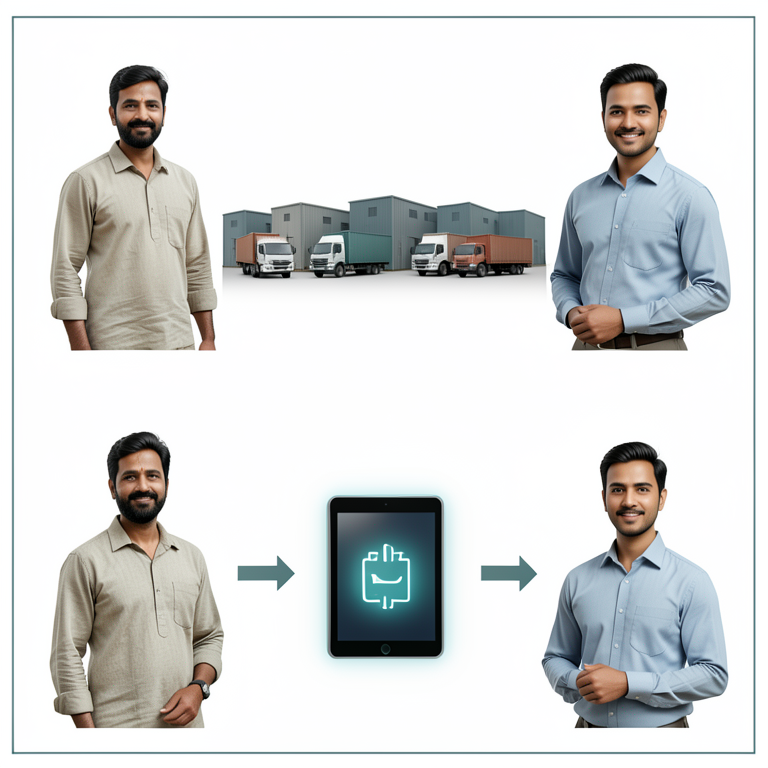
Supply Chain Transformation
AI-generated conceptual illustration (Indian farmers and urban consumers). It explains the idea and does not show study data.
View source evidence ↗Figures & tables
From the original paper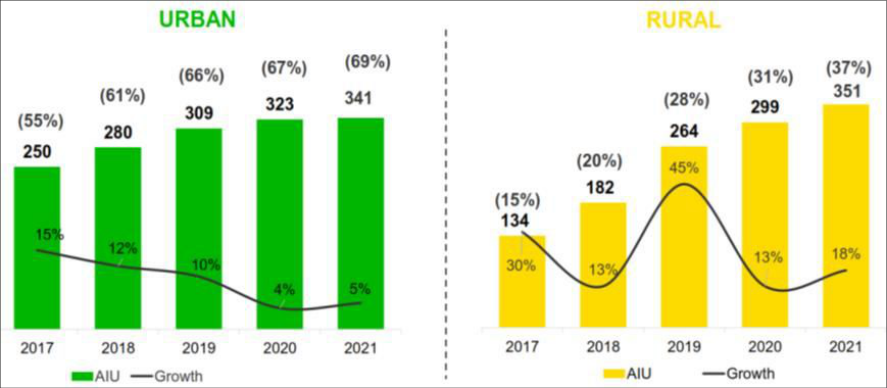 Figure 1
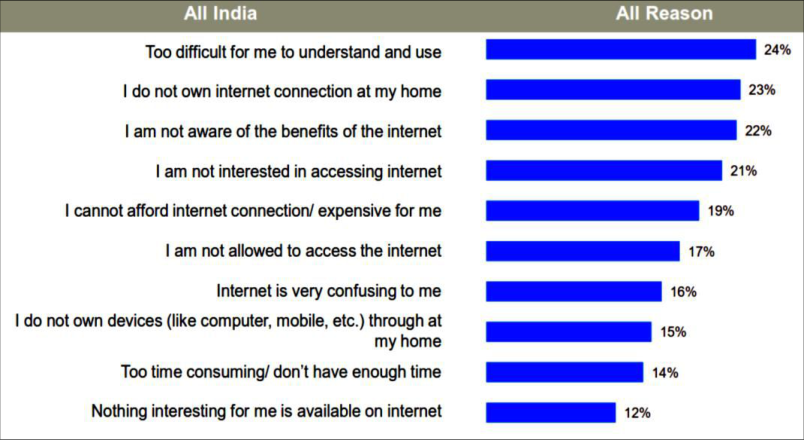 Figure 2
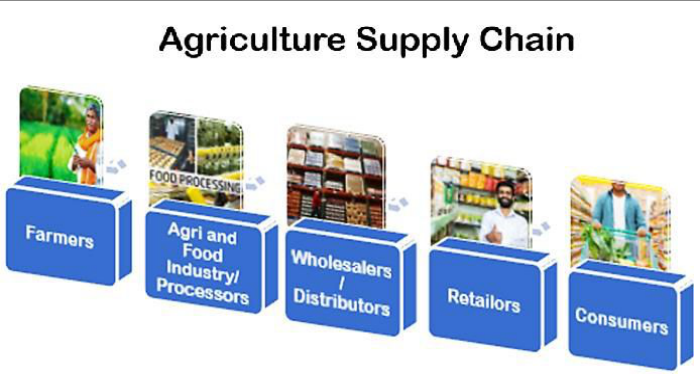 Figure 3
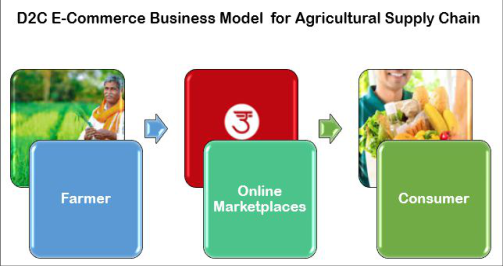 Figure 4
Introduction
India is one of the world's largest agricultural producers and exporters, with agriculture accounting for over 18% of the country's GDP and employing over 40% of the labour force (Times of India, 2023) [33] . Over the past few years, the agro-industry has experienced a roller coaster of changes and advancements in cultivation approaches and techniques. Technologies have evolved, and innovations continue to increase yield and decrease expenses. Although farmers can now use smartphones and the internet to research the best farming practices, the adoption rate of agricultural technologies in India still needs to be increased. As a result, India's agriculture industry confronts many obstacles, such as low productivity, an inefficient supply chain, a lack of market access, and limited adoption of technology and innovation. In recent years, digital technologies have emerged as a potential remedy to these issues, providing opportunities to enhance agricultural efficiency, productivity, and profitability. (United Digital agriculture uses information and communication technology (ICT) and data ecosystems to make farming profitable and sustainable while providing everyone with safe, wholesome, and inexpensive food (Bergvinson, 2016) [5] . It is also known for implementing agriculture technology (AgTech) to integrate agricultural output from the field to the customer. These technologies can provide the agricultural sector with the knowledge and resources required to make more informed decisions and increase output. In addition, digital marketing platforms benefit producers by increasing the selling price and reducing the cost of promoting agricultural products. (Reddy, Sudhakar, 2021) [26] . In its report, the Committee on Doubling Farmers' Income (DFI) acknowledged the significance of digital technology, arguing that it can coordinate and modernize rural India's agricultural activities, thereby bringing about a revolution. The agricultural value system increasingly employs digital technologies. Several initiatives are in place to facilitate farmers' access to technology and information, which has increased farmers' knowledge.
The government has taken the following measures to advance digital agriculture in the nation The government has completed the main design elements of the framework for the India Digital Environment of Agriculture (IDEA), which will establish the federated farmers' database structure. The National e-Governance Plan for Agriculture (NeGP-A) provides funding to the state (s)/UT(s) for initiatives utilizing cutting-edge technologies such as artificial intelligence (AI), machine learning (ML), robotics, drones, data analytics, and blockchain. The Agricultural Mechanization Sub Mission (SMAM) has been operational. By putting small and marginal farmers at the centre of the program and supplying them with farm mechanization, the system aims to "reach the unreached." The National Agriculture Market (e-NAM) is a pan-Indian electronic trading site that connects the current Agricultural Product Market Committee (APMC) mandis to create a uniform national market for agricultural commodities. Funds are deposited directly into the bank accounts of eligible producers through the direct benefit transfer mechanism of the PM KISAN Scheme.
The agriculture industry in India is vital to the economy, as it employs and provides income for a substantial portion of the population. With the advent of digital technologies, agricultural product marketing and sales have undergone a swift transformation. However, this transformation has also given businesses several challenges in managing the consumer experience. This study will examine best practices and strategies for managing customer experience in digital marketing for agricultural products in India, drawing from relevant research.
Literature Review
In managing customer experience, numerous types of research are conducted; the following are literature reviews to help comprehend the management of customer experience by businesses in the digitalisation era. Rashida (2018) [31] suggested that digital agriculture has the potential to benefit the economy, society, and culture by boosting agricultural productivity, cost-effectiveness, and market opportunities. It can also provide environmental benefits through resource efficiency and adaptation to climate change, as well as social and cultural benefits through enhanced communication and inclusion. According to market forecasts for the next ten years, a "digital agricultural revolution" will be the most recent development that could ensure agriculture continues to meet the global population's needs. The third significant revolution in modern agriculture is known as digital agriculture. Improving agricultural productivity, costefficiency, and market prospects may have economic repercussions. However, the transition must be executed cautiously to prevent the widening digital divide between economies and industries. This is true for individuals with varying capacities for adopting innovative technologies. FAO UN (2019) [10] recommended that governments establish an appropriate regulatory environment for the digital agriculture transition to realize its maximum potential. Designing and managing digital government initiatives requires a high administrative capacity, which is out of reach for some nations, particularly LDCs and developing nations.
In addition, governments should provide farmers, potential private sector investors, and startup companies with the socioeconomic case for the digitalization of subsistence agriculture to close the digital divide. To support this transformation in policy and regulation, governments in developing nations and LDCs must undertake a substantial capacity-building effort. Smartphones used by smallholder farmers for agricultural marketing could alter the game, according to Gaurav and Nilesh (2022) [7] . It enhances customer comprehension of market prices and agricultural product demand. Despite these alternatives, it is essential to remember that each problem has a finite number of viable solutions. If you have sophisticated marketing skills, you can recover more benefits than if you do not. The agriculture extension mechanism increasingly relies on technology to provide farmers with pertinent responses. To promote digital agripreneurship, businesses must develop a population of digitally trained individuals. Consider the case where the new app is extensively promoted on social media. By demonstrating its benefits and how it differs from other m-Agri applications, more farmers who do not presently use it will adopt it. Well-planned advertising employs both verbal and nonverbal cues to communicate. The government and several enterprises are funding agricultural marketing initiatives to benefit farmers. In the future years, farmers' incomes will need to triple, while their output will need to double.
In their study, Peter & Latha (2021) [22] propose that the Technology Acceptance Model, which serves as the foundation for much research on the dissemination of information technology (IT), will be more valuable if it is combined with specific issues such as infrastructure, perception, and trust on the consumer side as well as more fundamental parts of the security aspects of technology and service on the side of the information providers concerning India's agriculture sector. N. Rameshkumar found in his study that digital marketing is crucial during a pandemic. The producers would benefit from an increase in selling price and a reduction in marketing expenses. Numerous young producers have adopted digital marketing. The federal and state administrations formulate a policy for establishing a sustainable digital agriculture market, including farmer education campaigns on digital marketing.
According to Sudhakar Reddy (2021) [26] , farmers benefit from digital marketing platforms because they increase the selling price and decrease the cost of marketing their agricultural products, such as cotton lint, maize, and vegetables. In addition, digital marketing is a helpful information and business tool. Additionally, he claims that digital media facilitates the sale of vast crops. Lastly, he advised state and federal governments in India to develop long-term plans and policies for the digital agriculture industry.
Ashok and Naresh (2020) [3] discovered that marketers must proceed cautiously because some consumers need to prepare for the advanced technology-based business revolution. This encompasses a significant portion of rural areas in Indian states. On the other hand, consumers in certain regions of India are so adamant about utilizing high-tech products and services that businesses are under pressure to develop novel concepts. These gaps may be caused by a lack of education or literacy, inadequate infrastructure development, irregular regional economic growth, linguistic diversity, an unequally dispersed population (reach problem), exposure gaps, etc. Huma, Muhammad, et al.'s (2022) [32] study indicates that profitable agricultural enterprises can use blockchain technology to complete tasks effectively and efficiently. This result is the result of blockchain technology, which offers numerous benefits such as secure transactions, the prevention of product fraud, reliability, transparency, integrity, and integrity, as well as straightforward data retrieval and traceability. In addition to facilitating supply chain management, blockchain technology can provide data transparency for recycling. Multiple participants in the supply chain have access to the same data and information without actively sharing monitoring systems. In addition, with the technology in place, recyclers can track waste as it travels through the chain, and key stakeholders in the agricultural supply chain can assess one another's recycling efforts. Regina, Thomas, et al. (2021) [29] stated that public initiatives in developing nations could assist in transforming the numerous intriguing private-sector examples of digital agriculture into thriving businesses and disseminating their benefits to more producers and consumers. Potential interventions include the development of knowledge and skills, the provision of communication infrastructure, and the financing of applied research in support of digital technologies. However, government intervention is necessary to capitalize on the opportunities presented by digital agriculture and to mitigate its potential drawbacks, such as the increasing consolidation of agricultural input industries.
A combination of private initiatives and prudent public action is necessary to ensure that digital agriculture results in an "agricultural revolution" that benefits farmers, farmworkers, consumers, and the environment globally.
To successfully influence the 230 million rural consumers dispersed across approximately 600, 000 villages in rural India, Ashok (2017) [30] suggested that marketers must significantly alter their perspectives on the prospering and expanding rural markets. Given the well-documented issues with traditional communications, such as advertising and direct marketing, there is a clear need for academics and practitioners to reevaluate the best methods to deliver brand messages. Recent attention has shifted to the significance of experience in brand performance and how the interaction between internal and external brand representatives can extend consumer brand relationships by co-producing added value. Sridevi, in 2021 [23] . The segment of agricultural products is significantly influenced by consumer behaviour. To compete with the changing purchasing patterns of urban consumers in the market for agricultural products, agricultural product marketers must be innovative and dynamic. The study revealed that while consumers were typically devoted to agricultural products, they needed to know their availability and images. Indeed, the respondent was drawn to agricultural products. In order to successfully market agricultural products, marketers must create promotions that are both moral and practical. Additionally, they must make their products available in large quantities and an extensive selection.
Sakthivel & Nachimuthu (2017) [20] . Their research examines consumer contentment with a handful of high-quality, longlasting products, particularly in the Erode District. Marketing is continuous prior to production and after sales. Marketing is the practice of creating customers. Everyone enjoys enduring items. The most important aspect of the products is their quality, and respondents were generally pleased with the prices. Additionally, customers have valued product qualities such as durability and customer service. This study endeavoured to cast light on the unpredictability of customer satisfaction in all forms of marketing, although it is widely acknowledged that this concept could be more reliable.
Objectives
The following are the objectives of the study 1. To identify the key challenges agricultural product marketers face in managing customer experience in India's rapidly changing digital marketing landscape. 2. To explore the opportunities presented by the digital marketing landscape for managing customer experience in the agriculture sector in India.
To analyze the best practices for managing customer experience in digital marketing for agricultural products in India
Challenges of managing customer experience in digital marketing for agricultural products in India Lack of Digital Infrastructure and Internet Penetration in Rural Areas 37% of India's rural population has Internet access, compared to 69% of the urban population, according to a report by the Internet and Mobile Association of India (IAMAI, 2022) [12] . This digital divide has created a significant barrier for businesses to reach and engage with rural consumers, representing a substantial portion of the Indian agriculture market. Furthermore, even in areas with access to the internet, the quality of digital infrastructure could be better, resulting in slow internet speeds and connectivity issues. This makes it difficult for businesses to provide a seamless digital customer experience, which hurts consumer loyalty and satisfaction. This difficulty is compounded by the fact that many rural consumers in India have low levels of digital literacy and need to familiarize themselves with using digital technologies to purchase agricultural products. have not yet adopted the Internet, with 80 percent living in rural areas. "Difficulty in understanding the Internet" is the leading deterrent and absence of awareness, particularly in rural India (IAMAI, 2022) [12] . This digital illiteracy can make it difficult for businesses to reach and engage their intended audience, resulting in low consumer engagement and conversion rates.
In addition, many Indian farmers and consumers are unaware of the advantages of digital technologies for agricultural marketing. They may be acclimated to traditional methods of purchasing and selling agricultural products, such as physical markets or intermediaries, and may need to trust or comprehend online platforms. This makes it difficult for businesses to persuade their target market of the advantages of using digital agricultural marketing channels.
Fragmented supply chain and distribution channels
According to a report by the Federation of Indian Chambers of Commerce and Industry (FICCI), India's agricultural supply chain is highly fragmented, with multiple intermediaries involved in bringing agricultural products from cultivators to consumers (FICCI, 2017) [34] . This fragmentation leads to inefficiencies, high transaction costs, and poor quality control, all of which have a negative impact on the consumer experience.
In addition, the need for a standardized and organized distribution network in rural areas can make it difficult for businesses to reach their target market effectively. Farmers and consumers in rural areas frequently rely on local markets or intermediaries to purchase and sell agricultural products, which may not be accessible via digital channels.
Source: Survey Data
Source: Survey Data
Difficulty maintaining quality standards and ensuring transparency in online transactions
Quality control is essential in agriculture because it affects the overall consumer experience. However, the need for standardization in quality control practices across various regions and supply chains can contribute to inconsistent product quality and negative customer experiences.
In addition, ensuring pricing transparency, product origin, and authenticity in online transactions can be difficult. Due to the absence of direct interaction with the products before purchase, customers may need clarification on the quality and authenticity of online agricultural products. This can result in a loss of confidence in the online platform, negatively affecting the consumer experience.
Competition from unorganized and informal Markets
Agriculture has the greatest proportion of the unorganized sector due to its small and fragmented holdings. According to the International Monetary Fund (IMF), managing consumer experience in digital marketing for agricultural products can be a significant challenge. Customers can be enticed away from digital platforms by the lower prices and more flexible credit terms of informal markets. In addition, these markets frequently need more quality control and regulation, resulting in consistent product quality and negative customer experiences. These unorganized and informal markets can also make it difficult for digital platforms to establish themselves on the market.
Regulatory and policy challenges
Agriculture remains a highly regulated industry in India, with multiple government agencies possessing supervisory authority. Both the federal government and individual states impose regulatory controls. (Nusrat Hassan, Yosef) In addition, businesses must adhere to numerous regulations and policies about food safety, quality control, and product labelling. These regulations can vary between states and regions, making it difficult for businesses to navigate the regulatory environment. In addition, the absence of a defined regulatory framework for agricultural e-commerce can cause uncertainty and confusion among businesses and consumers.
In addition, a lack of infrastructure and resources for enforcing regulations can make it challenging to ensure regulatory compliance. This can lead to consistent product quality and positive customer experiences, undermining the digital platform's credibility.
Opportunities to manage customer experience in digital marketing for agricultural products in India
Large and growing market potential for digital agriculture With a population exceeding 1.4 billion individuals. India is the world's most populous nation, with 70% of its population residing in rural areas and relying on agriculture (NABARD, 2021) [19] . In a report, NITI Aayog predicted that by 2025, artificial intelligence in agriculture would be worth $ 2. Therefore, India's expanding market potential for digital agriculture presents an opportunity to improve customer experience management in digital marketing for agricultural products.
Increasing adoption of smartphones and mobile internet
India has the second-largest number of smartphone users worldwide, and this figure is projected to increase in the coming years. As more producers and consumers in rural areas access smartphones and mobile internet, the potential for digital marketing to reach a larger audience grows. This opportunity is especially pertinent to agricultural marketing because it enables producers to access information about markets, weather conditions, and other agricultural resources via smartphones. Moreover, mobile-based platforms can facilitate direct communication between producers and buyers, potentially reducing the need for intermediaries and enhancing the supply chain's transparency.
In addition, the proliferation of mobile-based Unified Payment Interface (UPI) payment systems like Paytm, Google Pay, and PhonePe has facilitated the digitalization of transactions, making it simpler for farmers to receive payments from buyers without needing physical currency. This has the potential to reduce transaction costs and increase agricultural market efficiency.
Emergence of e-commerce platforms and marketplaces for agricultural products E-commerce platforms such as BigBasket, Grofers, and Amazon, as well as marketplaces such as Udaan and Ninjacart, have begun providing producers with a more extensive customer base and greater direct market access. These platforms facilitate the connection between producers, buyers, and consumers, resulting in a more transparent and effective agricultural supply chain. In addition, these platforms provide farmers with value-added services such as logistics, quality control, and financial services, allowing them to administer their businesses better. For example, Udaan, an online B2B marketplace, offers logistics, payments, and credit facilities to its clients, including farmers, traders, and retailers.
Source: Survey Data
Source: Survey Data
Potential for direct-to-consumer models and bypassing intermediaries
One of the opportunities for managing customer experience in digital marketing for agricultural products in India is the potential for direct-to-consumer (D2C) models, which can circumvent intermediaries and offer producers better prices for their produce. Better quality control and more transparent transactions for producers and consumers can also result. Due to the expansion of e-commerce platforms and social media, direct-to-consumer (D2C) models are gaining popularity in India, particularly in urban areas where consumers desire fresh organic produce. Companies such as Ninjacart BigBasket and Udaan also provide direct-to-consumer (D2C) solutions for farmers by procuring directly from them and delivering them to urban consumers.
Possibility of leveraging data analytics and artificial intelligence for personalized customer experiences
The rapidly expanding availability and abundance of digital data in agriculture enables businesses to use data analytics and artificial intelligence (AI) to provide customized consumer experiences. By analyzing consumer preferences, purchase behaviour, and market trends, businesses can develop targeted marketing strategies and provide consumers with customized products and services. This can assist in enhancing the overall customer experience, boosting customer satisfaction, and fostering brand loyalty. Moreover, AI-powered tools such as chatbots and virtual assistants can provide consumers with personalized recommendations and assistance, enhancing the customer experience. India has a substantial opportunity to leverage data analytics and AI in agriculture. A vast quantity of data can be analyzed to gain insights into consumer behaviour and preferences as the number of internet users and smartphone owners continues to rise. AgNext uses AI-powered platforms to assist farmers with soil testing and crop analysis, while Ninjacart uses data analytics to optimize supply chain operations and provide customized customer recommendations.
Supportive policy and regulatory framework
The Indian government has recently taken numerous measures to support and promote digital agriculture. The government's Digital India initiative seeks to provide digital infrastructure and services to all citizens, including those in rural areas, thereby improving farmers' access to digital technologies. Moreover, the government has launched some programs and initiatives to promote e-commerce and digital transactions in agriculture. The e-NAM platform was launched in 2016 to create a unified national market for agricultural commodities and to allow farmers to sell their produce directly to online customers (Ministry of Agriculture and Farmers' Welfare, 2021) [17] .
In addition, the government has taken steps to regulate and support e-commerce in the country, including the recent introduction of the Consumer Protection (E-Commerce) Rules, 2020, which aim to protect consumers and promote equitable business practices in the e-commerce sector. These enabling policies and regulations promote the digital marketing of agricultural products in India. In addition, they can offer businesses opportunities to enhance the consumer experience via online platforms.
Best practices for managing customer experience in digital marketing for agricultural products in India Developing user-Friendly and Accessible Digital Platforms and Interfaces
It is essential to consider producers' and consumers' digital literacy and familiarity with technology to ensure they can easily use digital platforms. This can be accomplished by designing straightforward, instinctive interfaces that require minimal technical knowledge. In addition, it is crucial to ensure that the platforms are accessible to users with varying levels of technological proficiency, including those with lowend devices and sluggish Internet connections. (Kumar et al., 2017) [15] assert that ICTs can facilitate farmers' access to timely and pertinent information and facilitate the creation and dissemination of knowledge within the agricultural community. e-NAM, a government-run online marketplace for agricultural products, is another illustration. E-NAM provides farmers with real-time market price data, enabling them to make well-informed judgments regarding where to sell their products. The platform also provides access to online payment and delivery services, streamlining the purchasing and selling process and improving the consumer experience (Ministry of Agriculture and Farmers' Welfare, 2021) [17] .
Ensuring quality control and transparency in online transactions
This can be accomplished by providing comprehensive product descriptions, product images and videos, certifications and quality marks, and customer reviews and feedback. To develop consumer confidence, online platforms should provide clear information on product origin, production methods, and certification. Moreover, through computer education programs such as awareness camps, short-term courses, and internet clubs for farmers, the desire to embrace and implement modern technology in farming techniques will increase in popularity (Shibi & Aithal, 2022) [4] . Moreover, E-commerce platforms should implement quality assurance mechanisms to maintain quality standards and guarantee that products meet regulatory requirements. Moreover, secure and transparent payment systems can increase consumer confidence and trust in online transactions. Payment systems that provide multiple payment options and secure payment gateways can decrease transactional friction and enhance the consumer experience.
Building trust and credibility through customer feedback and ratings
Customer ratings and feedback is a recommended method for attaining this objective. Businesses can improve their products and services and develop customer trust and credibility by providing a platform for customers to provide feedback and ratings. It is feasible to acquire new clients and retain existing customers only with consumer feedback and complaints. Customer feedback provides data that can be used to make more informed business decisions. Customer feedback provides valuable insight into what consumers think of products and services, thereby contributing to the success of a business. (Client Heartbeat. 2015) [8] According to research conducted by Dixa in 2023, 79% of consumers place equal importance on user reviews and personal recommendations. Customer reviews and evaluations are among the most influential factors in Indian consumer purchase decisions. In addition, the report suggests that businesses can increase customer loyalty and repeat purchases by promptly addressing customer feedback and rectifying any issues. AgroStar, an Indian agritech startup that connects farmers with suppliers and offers farming advice, is one example of a platform that leverages consumer feedback and ratings. The AgroStar app enables consumers to rate products and services and provides personalized suggestions based on their ratings. Bigbasket, an Indian online grocery store that enables customers to rate products and provide feedback, is another example. This feedback enhances the company's product offerings and consumer experience.
Collaborating with other stakeholders in the value chain for seamless operations
Collaboration among stakeholders in the agricultural value chain can aid in overcoming the obstacles associated with managing consumer experience in digital marketing for agricultural products in India. This includes partnerships among producers, agribusinesses, logistics providers, and online marketplaces. By collaborating, they can ensure the timely delivery of high-quality products that exceed customer expectations. The collaboration between the Indian e-commerce platform BigBasket and the horticulture department of the Karnataka state government illustrates this. BigBasket collaborated with the department to source fresh produce directly from farmers, eliminating the need for intermediaries and ensuring that farmers receive fair product prices. This also led to a consistent supply of high-quality goods for customers. The partnership between the Indian agritech startup Ninjacart and farmers is another illustration. Ninjacart collaborates with smallholder farmers to provide them with access to technology, training, and financing, enabling them to cultivate high-quality commodities that can be sold on its platform. By collaborating with farmers, Ninjacart can ensure a consistent supply of high-quality products for its consumers.
Innovating and experimenting with new digital marketing models and strategies
With the constantly evolving digital landscape, companies must keep up with the latest trends and technologies to remain competitive and meet customers' changing needs. This may incorporate social media, influencers, content, or additional digital marketing strategies. As an illustration of this best practice, consider the use of chatbots for customer service and engagement. Chatbots are computer programs that simulate client conversations. In the agricultural industry, they are increasingly used to responding instantly to customer inquiries, processing orders, and performing other duties. Farmguide, an agri-tech company, has created a chatbot that can answer farmers' questions about agriculture, weather, pests, and other farming-related topics. Using chatbots, businesses can provide a more efficient and personalized consumer experience. Another example of innovation is using blockchain technology to provide transparency and traceability in the agricultural supply chain. Using blockchain technology to create digital records of transactions and product movements can increase transparency and reduce fraud. The agri-tech company AgriChain, for instance, uses blockchain to provide a secure platform for farmers to offer their produce directly to consumers, circumventing intermediaries and ensuring traceability and quality control.
Conclusion
Managing the consumer experience in digital marketing for India's agricultural products presents both obstacles and opportunities. The obstacles include competition from unorganized and informal markets, regulatory and policy issues, a need for more awareness and digital literacy among farmers, and restricted access to technology and infrastructure. However, the opportunities for managing customer experience in digital marketing for agricultural products in India are enormous, including the large and growing market potential for digital agriculture, the increasing adoption of smartphones and mobile internet, the emergence of e-commerce platforms and marketplaces, the potential for direct-to-consumer models and bypassing intermediaries, and the potential for leveraging data analytics and artificial intelligence for personalized marketing. To overcome these challenges and seize these opportunities, best practices for managing customer experience in digital marketing for agricultural products in India include developing user-friendly and accessible digital platforms and interfaces, providing relevant and timely information and services to farmers and consumers, ensuring quality control and transparency in online transactions, building trust and credibility through customer feedback and ratings, collaborating The paper suggests that companies and policymakers should focus on enhancing the user-friendliness and accessibility of digital platforms, providing relevant and timely information and services, ensuring quality control and transparency in online transactions, building trust and credibility through customer feedback and ratings, and collaborating with other stakeholders along the value chain to facilitate seamless operations. In addition, businesses should consider innovating and experimenting with new digital marketing models and strategies to remain competitive in the swiftly evolving digital landscape. Managing customer experience in digital marketing for agricultural products in India necessitates a concerted effort from all stakeholders, including policymakers, farmers, businesses, and consumers, to address the challenges and capitalize on the opportunities presented by the rapidly changing digital marketing landscape.
Figures and tables from the paper
References
19 in the original paper- Arief AS, Putri SE, Suroso A, Syakhrani AW, Rahmini N. Digital Technology Management Challenges in Marketing Local Farm Products in Developing Countries: Analysis of International Publication Findings. Jurnal Iqra': Kajian Ilmu Pendidikan. 2021;6(2):96-107.
- Ashok K, Naresh B. Opportunities and challenges in digital marketing. Vigyan Varta. 2020;1(4):47-50.
- Birner R, Daum T, Pray C. Who drives the digital revolution in agriculture? A review of supply-side trends, players, and challenges. Applied Economic Perspectives and Policy. 2021;43(4):1260-1285.
- Deng Z, Lu Y, Wei KK, Zhang J. Understanding customer satisfaction and loyalty: An empirical study of mobile instant messages in China. International journal of information management. Farmers' Welfare in India. 2010;30(4):289-300.
- Godey B, Manthiou A, Pederzoli D, Rokka J, Aiello G, Donvito R, et al. Social media marketing efforts of luxury brands: Influence on brand equity and consumer behaviour. Journal of Business Research. 2016;69(12):5833-5841. http://blog.clientheartbeat.com/why-customerfeedback-is-important/
- IAMAI. Internet in India; c2021-2022.
- Khan HH, Malik MN, Konečná Z, Chofreh AG, Goni FA, Klemeš JJ. Blockchain technology for agricultural supply chains during the COVID-19 pandemic: Benefits and cleaner solutions. Journal of Cleaner Production. 2022;347:131268.
- Kumar S, Sangeetha V, Singh P, Burman RR, Bhowmik A, Kumar SA. Constraints Faced by Farmers in Utilizing Rice-Related Information through Rice Knowledge Management Portal (RKMP). Indian Journal of Extension Education. 2017;53(1):84-89.
- Nachimuthu K, Sakthivel G. A study on consumer's awareness and behaviour towards durable goods in erode district. Clear International Journal of Research in Commerce & Management. 2017;8(5):69. International Journal of Agriculture and Food Science https://www.agriculturaljournals.com
- Panigrahi A. Exploring Indian rural market-prospects and problems. Rural India: Strategizing Business. 2017;1:4-12.
- Peter A, Latha S. A study on online marketing of agricultural products in Sivagangai district. International Journal of Emerging Technologies and Innovative Research. 2021;8(3):2803-2806.
- Sridevi R. A Study on Customer Satisfaction Towards Buying Agricultural Products from Farmers (With Special Reference to Coimbatore). Journal of Interdisciplinary Cycle Research. 2021;8:2102-2112.
- Rameshkumar N. Impact of digital marketing in the agricultural sector. EPRA International Journal of Multidisciplinary Research (IJMR). 2022;8(3):18-22.
- Reddy TS. The impact of digital marketing on agricultural business in India. Nveo-natural volatiles & Essential Oils Journal Nveo. 2021;8(4):426-437.
- Verhoef, Verhoef Peter, Reinartz Werner, Krafft Manfred. Customer Engagement as a New Perspective in Customer Management. Journal of Service Research. 2010;13:247-252.
- Regina PF, Sheeba S, CP UH, Aneesha MM, Kavya CM, Ebitha VO, et al. Effectiveness of Structured Teaching Programme Regarding Polycystic Ovarian Syndrome among Adolescent Girls in GVHSS Koonathara. International Journal of Women Health Nursing. 2021 May 19;4(1):64-74.
- Ashok AH, Marques TR, Jauhar S, Nour MM, Goodwin GM, Young AH, et al. The dopamine hypothesis of bipolar affective disorder: the state of the art and implications for treatment. Molecular psychiatry. 2017;22(5):666-679.
- Gnanaprakasam RJN, Wu R, Wang R. Metabolic reprogramming in modulating T cell reactive oxygen species generation and antioxidant capacity. Frontiers in Immunology. 2018;9:1075.
- FICCI. Knowledge paper on plastic industry for infrastructure; c2017. Retrieved from http://ficci.in/ spdocument/20872/reportPlastic-infrastructure-2017-ficci.pdf (last accessed 12 April 2017)
Cited by 11
From OpenAlex, OpenCitations and reference lists read by Scinovex
- Transforming Agriculture through Cloud-Based Social Networking Applications ↗
Lalita Devi Pila · International Journal of Scientific Research in Computer Science Engineering and Information Technology · 2025
This article explores the transformative impact of cloud-based social networking applications on agricultural practices, examining how these digital platforms are revolutionizing farmer communication, collaboration, and decision-making processes. It investigates various aspects of digital agricultural platforms, including real-time communication networks, knowledge exchange systems, collaborative problem-solving frameworks, data-driven management approaches, market intelligence tools, resource optimization strategies, and community development initiatives. Through analysis…
❝ 2PDF - ЕВОЛЮЦІЯ МАРКЕТИНГУ АГРАРНОЇ ПРОДУКЦІЇ В ЕПОХУ ЦИФРОВИХ ТЕХНОЛОГІЙ: ВІД ТРАДИЦІЙНИХ КОМУНІКАЦІЙ ДО СИСТЕМ BIG DATA-АНАЛІТИКИ ↗
Сергій Олександрович Кобернюк, Олександр Юрченко · Актуальні проблеми сталого розвитку · 2025
ЕВОЛЮЦІЯ МАРКЕТИНГУ АГРАРНОЇ ПРОДУКЦІЇ В ЕПОХУ ЦИФРОВИХ ТЕХНОЛОГІЙ: ВІД ТРАДИЦІЙНИХ КОМУНІКАЦІЙ ДО СИСТЕМ BIG DATA-АНАЛІТИКИ Анотація.У статті розглянуто суть та еволюцію маркетингової товарної політики в агросекторі.З'ясовано специфіку маркетингової товарної політики в аграрному секторі.Досліджено особливості цифровізації як чинника перетворення маркетингової діяльності.Зокрема, окреслено напрями цифрової трансформації агробізнесу.Обґрунтовано роль цифрових платформ, маркетплейсів і соціальних мереж у просуванні продукції.Досліджено вплив цифровізації на трансформацію маркетингових…
❝ 2PDF - Rurban marketing: Bridging rural and Urban markets ↗
Rajani Deokate, Balasaheb Shivale, Nitin Zaware · International Journal of Research in Marketing Management and Sales · 2025
Rurban marketing is an emerging concept that focuses on integrating rural and urban markets by leveraging the strengths of both. With increasing urbanization and digitalization, businesses are exploring opportunities in semi-urban and rural markets to cater to growing consumer demand. This research paper examines the concept of rurban marketing, its significance, strategies, challenges, and future prospects. The study also explores
- Digital Transformation in Agricultural Marketing: Advancing India's Agri-Trade Ecosystem ↗
Ankita A Mathur, Bhumit A Shah · IBMRD s Journal of Management & Research · 2025
Digital transformation is rapidly reshaping industries globally, and agriculture is no exception. In India, where agriculture plays a pivotal role in the economy and livelihoods of millions, the adoption of digital technologies in agricultural marketing holds immense potential to revolutionize the agri-trade ecosystem. This paper explores the multifaceted ways digital transformation impacts agrarian marketing in India, examining the key drivers,…
❝ 1PDF - Digital platforms in agricultural marketing: A case study of accessibility, scope, and constraints in Chikkaballapur District, Karnataka
Varun Prasanna M, MR Yalajeri, Bhavana Kabber, Rakesh BL, Soyal Rajesa Mujavar, L. Gowthami · International Journal of Agriculture Extension and Social Development · 2026
This research study examined the accessibility, usage pattern, scope, and constraints of digital platforms in agricultural marketing in Chikkaballapur district. Based on primary data from 120 farmers using a mixed-method approach, the study examines digital platforms such as e-NAM, Unified Market Platform (UMP), social media, Krishi Bandhu, and e-Samridhi.The findings revealed that UMP was the most widely used platform, with 96.66% of farmers using it regularly, while social media was mainly used for information (73.34%). e-NAM (52.5%) and UMP (54.16%) are the most preferred platforms for mark
- Digitalization of financial transactions in Indian Agriculture: An empirical study of cashless adoption among farmers in Namakkal District, Tamil Nadu
Sowthanya C, Senthamizhkumaran VR, Devipriya EK, 3Hardika S, Monika S, Rajaram R · International Journal of Agriculture Extension and Social Development · 2026
Agriculture is undergoing a decisive shift as digital infrastructure and mobile-based financial tools reshape how farmers transact, save and access credit. This paper examines the transition of agricultural financial transactions from a cash-dominated system to one increasingly mediated by mobile banking, the Unified Payments Interface (UPI), digital wallets and internet-enabled trading platforms such as the National Agriculture Market (e-NAM). The study situates this transition within India's broader digital-governance ecosystem, including the Digital India Programme, BharatNet, the IndiaAI M
- Digital agri-nutrition marketing for consumer awareness of healthy foods
Satish Verma, Arjun Patel, Priya Yadav · International Journal of Agriculture and Nutrition · 2025
Digital agri-nutrition marketing can align public-health goals with the realities of mobile shopping by pairing simple nutrition signals with journey-level prompts at the moment of choice. This three-arm cluster-randomised study (24 clusters, ≈1,440 adults across rural, peri-urban, and urban India) tested: (1) Control (generic safety tips), (2) FOPL-Education (short-video/WhatsApp modules that teach interpretive front-of-pack labels), and (3) FOPL-Education + CX-Nudges (education plus prompts at search, product page, and checkout). Interventions ran for eight weeks (three touchpoints/week). Pr
- Digital agri-food marketing and its role in farmer-consumer relations
Miriam Atieno Okoth, Prof. Daniel Kiprotich Cheruiyot, Anne Wairimu Mwangi · International Journal of Agriculture Extension and Social Development · 2025
Digital channels are reshaping the food quality experience (FQE) by lowering search and coordination costs, enabling provenance disclosure, and facilitating direct farmer-consumer interactions through social commerce, e-commerce, and interoperable traceability systems. This mixed-methods study conducted in Indian districts (farmers, n=420; consumers, n=310; key-informant interviews, n=15) examines how multi-channel digital strategies and transparency tools influence perceived quality (freshness, safety, authenticity), engagement, trust, and repeat purchase. Quantitative analyses tested a pathw
- Consumer spending patterns in digital food commerce ↗
Suman Thapa, Priya Rathi, Rajesh Poudel · International Journal of Financial Management and Economics · 2025
This study examines consumer spending patterns in digital food commerce, focusing on three primary channels: e-grocery, online food delivery (OFD), and quick commerce (q-commerce). Utilizing data from 1, 000 households in tier-1 and tier-2 cities in India, the research investigates how delivery speed, promotional discounts, platform trust, and other factors influence consumer behavior. Descriptive statistics, regression models, and structural equation…
❝ 0PDF - Managing food quality experience through digital channels ↗
Lukas Schneider, Anna Müller, Felix Bauer, Katharina Vogel, Jonas Weber, Marie Hoffmann · International Journal of Research in Management · 2025
Digital channels now mediate how consumers form, test, and update their food quality experience across the full journey. This study integrates platform/social cues (reviews and ratings), visual-sensory cues (image-based signals of freshness/temperature/crispness), and assurance/traceability cues (interactive QR/2D codes exposing batch, expiry, and origin) into a single pathway connecting expectations to perceived food quality, satisfaction, trust, and behaviour. Using a 12-month,…
❝ 0PDF - A study on AI-driven digital marketing: Enhancing consumer engagement and efficiency ↗
V. Dhayalan, V.P. Preethi · International Journal of Foreign Trade and International Business · 2024
Artificial intelligence (AI) has completely changed a number of industries, including digital marketing. AI-driven digital marketing tactics are becoming more and more important for companies looking to boost operational effectiveness, tailor user experiences, and increase consumer engagement. In order to determine the independent and dependent variables that influence artificial intelligence's efficacy in digital marketing, this article examines the impact of