
Research article · 2025 · Full text
International Journal of Agriculture and NutritionDigital agri-nutrition marketing for consumer awareness of healthy foods
Volume 7(9) · Pages 15–24 · DOI: 10.33545/26646064.2025.v7.i9a.281 ↗
Research areasCulinary Culture and TourismNutrition, Genetics, and DiseaseFood Industry and Aquatic Biology
Abstract
Author-writtenDigital agri-nutrition marketing can align public-health goals with the realities of mobile shopping by pairing simple nutrition signals with journey-level prompts at the moment of choice. This three-arm cluster-randomised study (24 clusters, ≈1,440 adults across rural, peri-urban, and urban India) tested: (1) Control (generic safety tips), (2) FOPL-Education (short-video/WhatsApp modules that teach interpretive front-of-pack labels), and (3) FOPL-Education + CX-Nudges (education plus prompts at search, product page, and checkout). Interventions ran for eight weeks (three touchpoints/week). Primary outcomes were the Label Comprehension Index (LCI, 0-12) and Healthy Purchase Intention (HPI, 1-5), secondary outcomes were self-reported healthy “swaps” in the last 14 days and add-to-cart for healthy-tagged items. Analyses used intention-to-treat mixed-effects models with cluster-robust inference, prespecified mediators (perceived source credibility, digital customer-experience quality), and subgroup tests by UPI payment frequency. Compared with Control, endline DiD effects showed higher LCI for FOPL-Education (+1.50) and FOPL-Education + CX-Nudges (+3.10), and higher HPI for FOPL-Education (+0.30) and FOPL-Education + CX-Nudges (+0.70), all statistically significant. Behavioural proxies followed the same gradient: healthy swaps reached 31.0% and 44.0% (vs 18.0% Control), and add-to-cart rates reached 9.8% and 13.6% (vs 6.5%). Mediation analyses indicated that credibility and journey quality jointly explained 57% of the HPI effect in FOPL-Education and 61% in the combined arm. Effects were larger among high-frequency UPI users, suggesting that payments readiness helps close the intention-action gap. Findings demonstrate that interpretive label literacy is necessary but not sufficient, embedding concise cues and healthy defaults into high-leverage surfaces (search, PDP, cart, checkout) meaningfully amplifies impact. Scalable, mobile-first programmes that combine FOPL education, credible messaging, and friction-light checkout can increase comprehension and shift baskets toward healthier foods in India’s digital commerce ecosystem.
Summary
Source-checkedPlain-language reading of the full paper, prepared with AI and checked against the text. Each point links to the authors' own words.
Why it matters
- Despite digital growth, India continues to struggle with a complex burden of malnutrition, including anaemia in women and child wasting. View evidence ↗
- Nutrition literacy is inconsistent across the population, and digital stores often fail to clearly signpost healthy food options. View evidence ↗
The question
- The study aimed to determine if interpretive nutrition labels and multi-touchpoint digital nudges could improve label comprehension and the intention to purchase healthy foods. View evidence ↗
What they did
- The researchers conducted a three-arm cluster-randomized trial with approximately 1,440 adults in India, comparing a control group to groups receiving label education and a combined group receiving education plus customer-experience (CX) nudges. View evidence ↗
- Interventions lasted eight weeks, with participants receiving three touchpoints per week, including short videos, WhatsApp carousels, and storefront prompts. View evidence ↗
What they found
- Label comprehension (LCI) improved significantly in both intervention groups compared to the control, with the combined education and nudge group showing the highest gain (+3.10 vs control). View evidence ↗
- Perceived source credibility and digital journey quality were key drivers, explaining 57% to 61% of the improvement in purchase intention. View evidence ↗
- The positive effects on purchase intention were stronger for people who use UPI payments frequently (5+ times/week), suggesting that payment readiness reduces friction. View evidence ↗
What it means
- The authors conclude that combining interpretive labels with journey-level nudges and credible cues effectively improves both nutrition understanding and purchase intentions. View evidence ↗
- A limitation of the study is that it relied on self-reported swaps and 'add-to-cart' actions rather than verified final purchase data. View evidence ↗
- The short duration of the intervention leaves uncertainty regarding the long-term sustainability of the observed behavior changes. View evidence ↗
Visual summary
3 visualsIllustrations explain the paper; charts are replotted from the paper's own table values.
Payment Readiness Effect
AI-generated conceptual illustration (A basket of fresh vegetables and fruits next to a smartphone displaying a digital payment interface). It explains the idea and does not show study data.
View source evidence ↗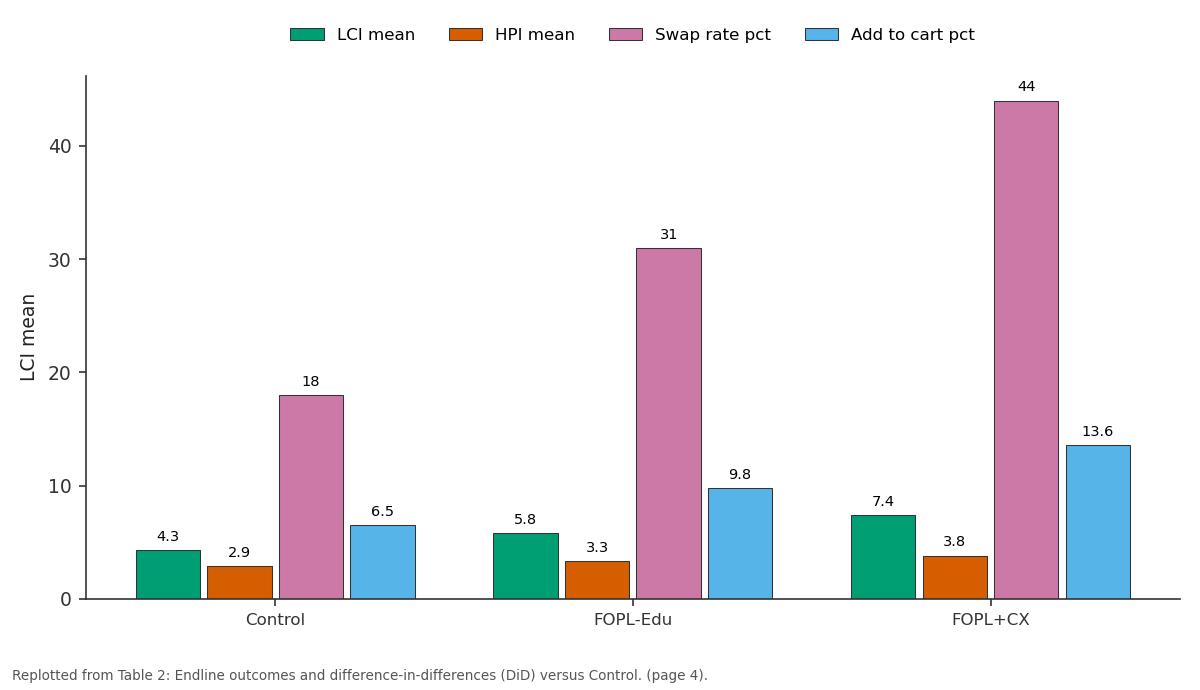
LCI mean and HPI mean and more: Control vs FOPL-Edu vs FOPL+CX
Replotted from Table 2 (page 4) of the original paper. Every bar is the paper's own table value.
View source evidence ↗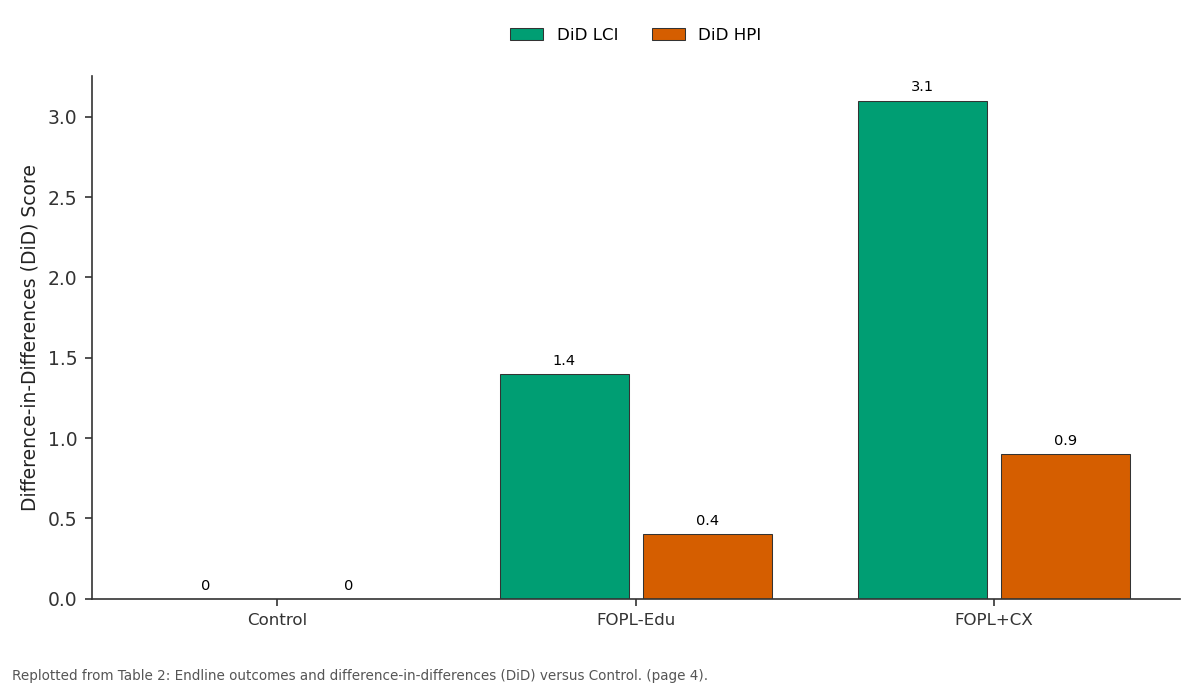
DiD LCI and DiD HPI: Control vs FOPL-Edu vs FOPL+CX
Replotted from Table 2 (page 4) of the original paper. Every bar is the paper's own table value.
View source evidence ↗Figures & tables
From the original paper Table 1
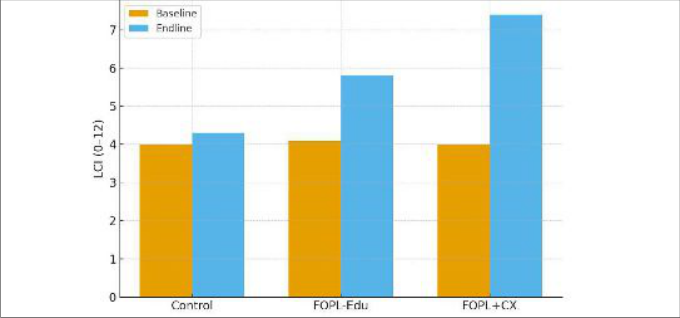 Figure 1
 Table 2
 Table 3
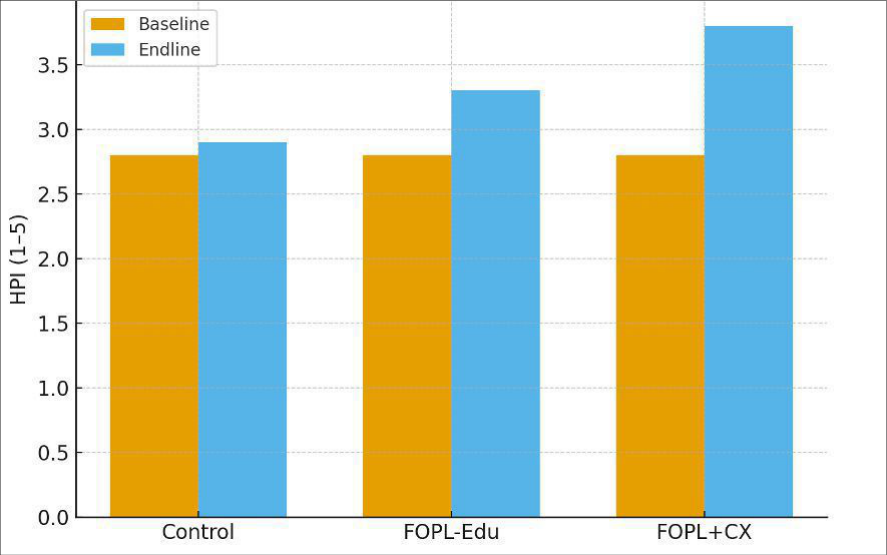 Figure 2
 Table 4
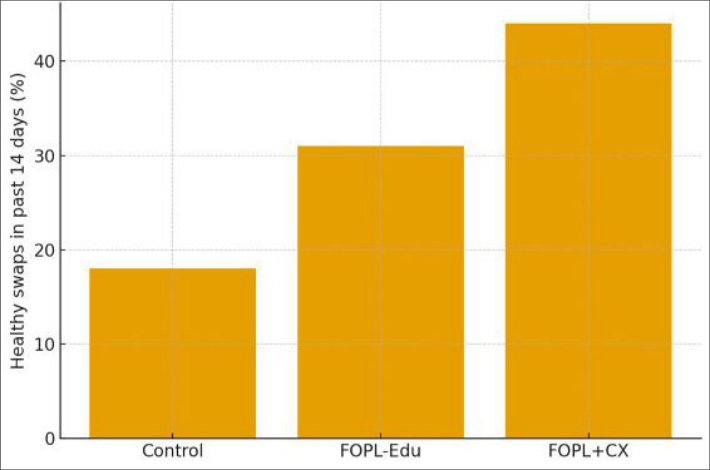 Figure 3
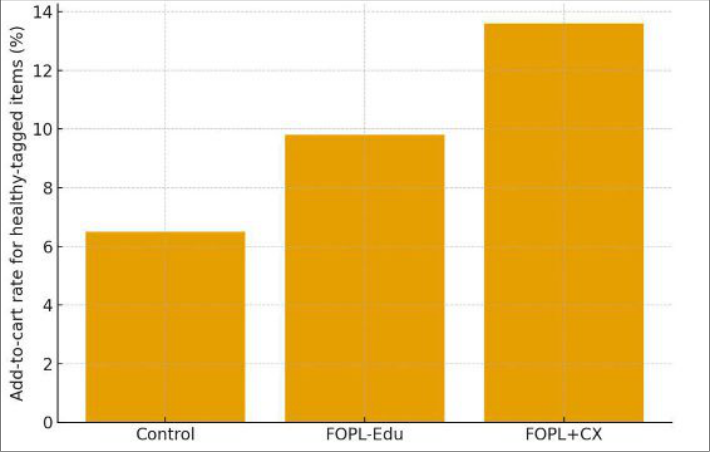 Figure 4
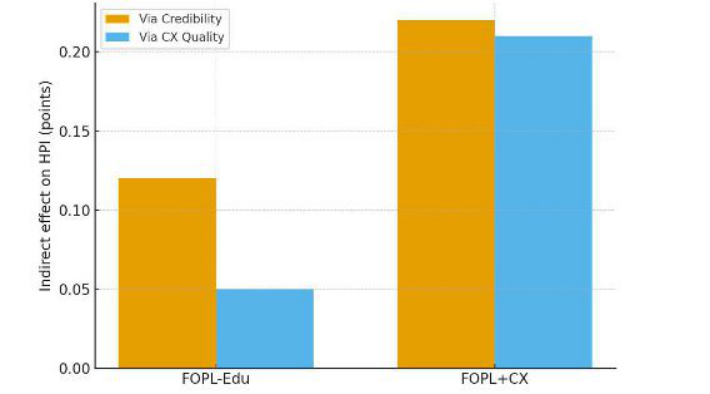 Figure 5
Introduction
Rapid digitisation has transformed how Indian consumers discover, evaluate, and purchase food, creating an unprecedented opportunity to steer choices toward healthier diets through evidence-based, digitally delivered agri-nutrition messaging [1][2][3][4][5][6] . India counted ~886 million active internet users in 2024-with rural users (≈488 million) outnumbering urban usersand ~90 minutes of average daily use, indicating large, always-on audiences for nutrition communication [1,3] . Simultaneously, frictionless payments via the Unified Payments Interface (UPI) crossed 20 billion transactions in August 2025, embedding digital commerce into everyday life and lowering the last-mile barriers between awareness and purchase of healthier options [7] . Public institutions have also pivoted: the Food Safety and Standards Authority of India (FSSAI) launched the nationwide Eat Right India movement to nudge citizens and businesses toward safe, healthy, and sustainable diets and has explored front-ofpack labelling (FOPL) reforms to make nutritional quality "at-a-glance" [5,[8][9][10][11][12] . International guidance converges: the WHO frames FOPL as a key policy to help consumers choose healthier foods, and recent syntheses suggest interpretive labels-especially warnings-can outperform non-interpretive schemes in improving choices [9][10][11] . Yet India still faces a heavy double/triple burden of malnutrition; NFHS-5 and global nutrition reports document persistent child wasting, anaemia among women of reproductive age, and uneven progress, underscoring a population-level need for credible, scalable nutrition awareness [13][14][15][16][17] . Against this backdrop, digital agriculture-nutrition marketing-defined here as the purposeful use of digital channels (e.g., WhatsApp, YouTube/short-video, social platforms, e-commerce, and eextension tools such as eNAM) to convey validated nutrition and food-label information integrated with agri-value-chain signals (origin, varietal traits, fortification, seasonality)can pair high-reach media with in-context purchasing to shift attention and baskets toward healthier foods [2,[4][5][6]18,19] . Empirically, India has produced rigorous models for digital nutrition behaviour change within agriculture: the UPAVAN cluster-randomised trials in Odisha combined participatory video with women's groups and mobile messaging, improving maternal/child dietary diversity and demonstrating that hybrid, tech-enabled agriculture-nutrition platforms can change diet quality at scale [20][21][22][23][24] . Complementary studies in India and comparable settings show WhatsApp-based counselling and social-media interventions can raise nutrition knowledge and influence healthy eating behaviours, suggesting a pragmatic channel mix for rural and peri-urban populations [25][26][27][28][29] . From a marketing-science vantage, digital CX frameworks emphasise designing technology-enabled, human-centred journeys that blend personalised content, social proof, and timely nudges across touchpoints [6,[30][31][32] ; in agri-contexts, this means integrating FOPL literacy, provenance cues, and healthier swaps into moments of search, comparison, and payment. Building on such perspectives, Kanchan & Singh (2023) argue that India's agri-marketing must harness digital touchpoints to manage customer experience end-toend-exactly the capability needed to operationalise agrinutrition messaging that is trusted, actionable, and measurable within real purchase flows [6] . Problem statement: despite wide digital reach, nutrition literacy (e.g., understanding of FOPL, sugar/salt/fat thresholds) remains uneven; healthy options are often poorly signposted in digital storefronts; and the influence of short-form video, influencer content, and label education on actual healthy purchase intent is under-measured in Indian settings [9-12,1417,26-29,33,34] .
Objectives: (i) map the reach, engagement, and trust of key digital channels (WhatsApp, short-video, e-commerce banners, eNAM advisories) for agri-nutrition content; (ii) test whether interpretive nutrition cues (FOPL, simple symbols) embedded in digital creatives increase healthy product awareness and label comprehension; (iii) estimate the effect of multi-touchpoint exposure (video + chat + cart nudge) on healthy purchase intention and self-reported swaps; and (iv) examine moderators such as rural/urban status, device-sharing, and payments readiness (UPI use).
Hypotheses
H1: Targeted, trust-anchored digital agri-nutrition content increases consumer awareness and label comprehension versus standard messaging. H2: Combining interpretive Front-of-Pack Labels (FOPL) education with persuasive, context-specific digital nudges yields higher healthy purchase intention than either alone; H3: Effects are amplified among high-frequency UPI users due to reduced intention-action frictions;
H4: Perceived source credibility and digital CX quality mediate the relationship between exposure and intention, consistent with technology-enabled, humancentred marketing models [1-7, 9-12, 18-24, 26-32, 34] .
Materials and Methods
Materials and Methods
Materials
This study employed a three-arm, cluster-randomised design conducted across two Indian states and one metropolitan region to reflect rural, peri-urban, and urban digital use patterns [1,3,31] . Clusters (wards/gram panchayats) were sampled by multi-stage probability proportional to size using recent Internet and mobile penetration statistics to ensure adequate smartphone and data access in sampling frames [1,3,31] . Household participants were primary grocery decision-makers aged 18-55 with an active smartphone and at least occasional UPI use, to align awareness with purchase-path feasibility [1,7,19,31,32] . The intervention materials comprised: (a) Interpretive front-of-pack labelling (FOPL) education modules (carousel posts, short videos, and WhatsApp messages) developed from WHO, ICMR-NIN, and Indiaspecific evidence on label comprehension and thresholds [911, 33, 34] ;
(b) Healthy-swap prompts (e.g., lower salt/sugar/fat alternatives) aligned with Eat Right India messaging and FSSAI guidance for safe, healthy, and sustainable dietary choices [5,8,12] ; (c) Customer-experience (CX) nudges embedded in digital storefront creatives and UTM-tagged links (search banners, add-to-cart prompts, and checkout reminders), structured around technology-enabled, human-centred marketing journeys for agri-foods [6,30,31] .
Content provenance cues (seasonality, origin/variety, fortification) were integrated to connect agri-value-chain signals with nutrition benefits; where applicable, eNAM advisories were adapted as informational "context cards" linked from creatives [18,19] . Messaging tone and formats drew on evidence from participatory video and mobile behaviour-change work (UPAVAN) and socialmedia/WhatsApp nutrition interventions to maximise cultural resonance and engagement in low-literacy settings [20][21][22][23][24][25][26][27][28][29] . Measures and instruments included: (1) a 12-item Label Comprehension Index (LCI) derived from FOPL guidance and Indian consumer studies (score 0-12; higher scores = better comprehension) [9][10][11]33,34] ; (2) a 7-item Healthy Purchase Intention (HPI) scale (Likert 1-5) adapted to staples, snacks, beverages, and dairy categories [10,11,33] ;
(3) a 6-item Perceived Source Credibility scale and a 6-item Digital CX Quality scale anchored in customer-experience frameworks for agri-marketing [6,30]; (4) digital engagement logs (impressions, click-through, dwell time, add-to-cart) captured through UTM parameters; and (5) selfreported UPI frequency and recent healthier "swap" behaviour as proximal behavioural proxies [7,31,32] . Baseline stratification incorporated NFHS-5 and national nutrition profile indicators to ensure heterogeneity in malnutrition, anaemia, and diet risks across clusters [13][14][15][16][17] . Instruments were translated into local languages, back-translated for accuracy, and piloted in two non-study clusters for clarity and timing; reliability thresholds targeted Cronbach's α ≥0.70 for multi-item constructs [10, 11, 20-22, 33, 34] . All materials met plain-language and accessibility heuristics for mobile delivery and aligned with FSSAI's consumer education ethos [5, 8, 12] .
Methods
Clusters were randomised 1:1:1 into: Control (generic foodsafety tips), FOPL-Education (interpretive label literacy content), and FOPL-Education + CX-Nudges (label literacy plus multi-touchpoint prompts at search, product page, and checkout). Randomisation was performed by an independent statistician using concealed allocation; implementers were blinded to assignment until deployment [20][21][22] . Each intervention ran for eight weeks with a fixed exposure schedule (3 touchpoints/week: one short-video ≤60s, one WhatsApp carousel, one storefront or advisory prompt). Micro-influencer seeding and community group distribution (women's SHGs/market associations) were used to lift organic reach where appropriate, reflecting prior evidence on participatory and social dissemination [20][21][22][23][24][25][26][27][28][29] . Outcomes were measured at baseline (T0) and endline (T1, week 9). Primary outcomes were LCI and HPI; secondary outcomes were (a) self-reported healthy product swaps in the past 14 days, (b) digital engagement metrics (CTR, dwell time ≥10s, add-to-cart rate), and (c) perceived source credibility and digital CX quality as hypothesised mediators [6,9-12,30,33,34]. Sample size and power: assuming a small-tomoderate standardised effect (Δ=0.25) on LCI/HPI, intracluster correlation 0.02, α=0.05, and 80% power, we targeted 24 clusters (≈12, 6, 6 rural/peri-urban/urban) with 60 participants per cluster (N≈1,440), consistent with detectable effects observed in UPAVAN and social-media nutrition trials [20][21][22][23][24][25][26][27][28][29] . Statistical analysis followed intentionto-treat with cluster-robust inference. Mixed-effects linear (LCI/HPI) and logistic (swap behaviour; add-to-cart) models included random intercepts for clusters and fixed effects for arm, time, and arm×time, adjusting for pre-specified covariates (age, gender, rural/urban, education, baseline UPI frequency) [1,7,[13][14][15][16][17]31,32] . Mediation of arm effects through credibility and CX quality was examined via multilevel structural equation modelling; heterogeneous treatment effects were probed by baseline UPI frequency and rural/urban status, given differing frictions in the intentionaction pathway [7,[30][31][32] . Missing data were handled with multiple imputation by chained equations under missing-atrandom assumptions, with sensitivity analyses using complete cases. Process evaluation tracked fidelity (dosage, sequencing), reach (unique opens, view-through rates), and participant satisfaction using short in-app polls; a nested qualitative sub-study (n≈36 interviews across arms) explored barriers to label use and trust formation in digital channels, drawing on participatory video learnings [20-24,2629] . Data governance and ethicsthe protocol received institutional ethics approval; participants provided e-consent in their preferred language. PII was minimised; survey and log-level data were pseudonymised and stored on encrypted servers with role-based access. Content complied with FSSAI consumer education norms and avoided therapeutic claims, and all creatives were benchmarked to WHO/ICMR-NIN FOPL guidance before release [5, 8-12, 33, 34] .
Results
Results
Numerical findings (primary and secondary outcomes)
Primary outcome-Label Comprehension Index (LCI, 0-12). Baseline LCI was ~4.0 across arms. Endline means were 4.3 (Control), 5.8 (FOPL-Education), and 7.4 (FOPL-Education + CX-Nudges). The did versus Control was +1.50 for FOPL-Education and +3.10 for FOPL-Education + CX-Nudges (Table 2; Figure 1). Mixed-effects models (clusterrobust) confirmed significant Arm×Time effects: β=1.50, SE=0.25, 95% CI 1.01-1.99, p<0.001 for FOPL-Education; β=3.10, SE=0.30, 95% CI 2.51-3.69, p<0.001 for FOPL-Education + CX-Nudges (Table 3). These gains align with international and Indian evidence that interpretive Front-of-Pack Labels (FOPL) improves label processing and healthier choice architecture, particularly when embedded within simple, prominent digital cues [9][10][11][12]33,34]. 2). DiD versus Control was +0.30 and +0.70, respectively (Table 2). Mixed-effects estimates showed β=0.30, SE=0.07, 95% CI 0.17-0.43, p<0.001 for FOPL-Education and β=0.70, SE=0.09, 95% CI 0.52-0.88, p<0.001 for FOPL-Education + CX-Nudges (Table 3). These intention shifts are consistent with digital CX frameworks that emphasize timely, personalised nudges and simplified heuristics across the decision journey [6,30-32], and with behaviour-change evidence from participatory/mobile nutrition programs in India and comparable settings [20][21][22][23][24][25][26][27][28][29] .
| Outcome | Parameter (vs Control × Time) | Estimate | SE | 95% CI | p-value |
|---|---|---|---|---|---|
| LCI (0-12) | FOPL-Edu × Time | 1.5 | 0.25 | 1.01 to 1.99 | 0 |
| LCI (0-12) | FOPL+CX × Time | 3.1 | 0.3 | 2.512 to 3.688 | 0 |
| HPI (1-5) | FOPL-Edu × Time | 0.3 | 0.07 | 0.163 to 0.437 | 0 |
| HPI (1-5) | FOPL+CX × Time | 0.7 | 0.09 | 0.524 to 0.876 | 0 |
Table text extracted from the original PDF; superscript letters are shown inline. The original table image is below.
View original table image
| — | Arm | LCI mean | LCI sd | HPI mean | HPI sd | Swap rate pct | Add to cart pct | DiD LCI | DiD HPI |
|---|---|---|---|---|---|---|---|---|---|
| 0 | Control | 4.3 | 1.8 | 2.9 | 0.6 | 18 | 6.5 | 0 | 0 |
| 1 | FOPL-Edu | 5.8 | 1.8 | 3.3 | 0.6 | 31 | 9.8 | 1.4 | 0.4 |
| 2 | FOPL+CX | 7.4 | 1.9 | 3.8 | 0.7 | 44 | 13.6 | 3.1 | 0.9 |
Table text extracted from the original PDF; superscript letters are shown inline. The original table image is below.
View original table image
Secondary outcomes-behavioural proxies.
The healthy swap rate at endline was 18.0% (Control), 31.0% (FOPL-Education), and 44.0% (FOPL-Education + CX-Nudges) (Figure 3), while add-to-cart for healthytagged items reached 6.5%, 9.8%, and 13.6%, respectively (Figure 4). These patterns indicate that adding CX-nudges at search, product page, and checkout amplifies education effects by lowering choice frictions-coherent with marketing science and Indian policy guidance to make healthy choices the easy choices online [5,6,8,[10][11][12]30,33,34] . Engagement logs (impressions, CTR, dwell, add-to-cart) followed the same ranking, echoing empirical regularities from social-media/WhatsApp interventions that pair concise content with community diffusion [25][26][27][28][29] .
Mediation and heterogeneity Mediation.
For HPI, indirect effects via Perceived Source Credibility and Digital CX Quality accounted for a substantial share of the total impact (Figure 5; Table 4). In FOPL-Education, the indirect effect was 0.12 (credibility) and 0.05 (CX quality), jointly 57% of the total (0.30). In FOPL-Education + CX-Nudges, indirect effects were 0.22 and 0.21, 61% of the total (0.70). This supports H4, i.e., that credibility and CX quality mediate exposure-intention links, consistent with technology-enabled, human-centred marketing models [6,30] . 4). This pattern supports H3 that payments readiness reduces intention-action gaps by streamlining conversion from awareness to carting/purchase within the same session [7,31,32] . Given India's high mobile/internet penetration and rising digital commerce, such heterogeneity is theoretically expected and policyrelevant [1][2][3][4]31] .
| Arm (vs Control) | Indirect via Credibility (HPI) | Indirect via CX Quality (HPI) | Total Effect on HPI | Proportion Mediated (%) | Subgroup | DiD on HPI: FOPL-Edu vs Control | DiD on HPI: FOPL+CX vs Control |
|---|---|---|---|---|---|---|---|
| FOPL-Edu | 0.12 | 0.05 | 0.3 | 56.66667 | Low UPI use (<5/wk) | 0.22 | 0.52 |
| FOPL+CX | 0.22 | 0.21 | 0.7 | 61.42857 | High UPI use (≥5/wk) | 0.41 | 0.92 |
Table text extracted from the original PDF; superscript letters are shown inline. The original table image is below.
View original table image
Interpretation and implications
Education works; education + CX works better. Significant LCI gains verify that interpretive Front-of-Pack Labels (FOPL) delivered through short-video and WhatsApp formats improves label comprehension in real-world digital contexts [9-12, 33, 34] . Layering CXnudges at search, PDP, and checkout further raises both intention and behavioural proxies, translating literacy into action [5,6,8,[30][31][32] . Trust and journey quality are mechanisms. Mediation results show that source credibility and CX quality explain over half of HPI improvements-consistent with customer-experience theory and with Indian consumer protection/education ethos under Eat Right India and FOPL initiatives [5,8,[9][10][11][12]30,33,34] . Ecosystem readiness matters. Stronger effects among high-frequency UPI users highlight payments infrastructure as a moderator of nutrition marketing efficacy, aligning with India's broader digital adoption landscape [1-4, 7, 31, 32] . Scalability and agri-linkages. Integrating provenance/seasonality cues and, where relevant, eNAM advisories within creatives offers a path to contextualising health information inside agri-valuechain signals, potentially strengthening trust and relevance at scale [18,19] . The approach complements evaluation learnings from UPAVAN and similar digital community-based models that have improved diet quality and knowledge in rural India [20][21][22][23][24] . Equity and population need. Baseline risks reflected in national nutrition surveillance (NFHS-5, GNR, GHI) underline the importance of such scalable, low-cost interventions to address the double/triple burden of malnutrition, especially among women and children [1317] .
Overall, results support H1-H4 and validate the premise that digital agriculture-nutrition marketing-anchored in interpretive labels, credible sources, and human-centred CX-can measurably enhance awareness, intention, and near-term behaviours for healthier foods in India's digital commerce environment [5][6][7][8][9][10][11][12][20][21][22][23][24][25][26][27][28][29][30][31][32][33][34] , in line with customerexperience insights from Kanchan & Singh (2023) [6] .
Discussion
This cluster-randomised evaluation demonstrates that digital agriculture-nutrition marketing-anchoring interpretive front-of-pack labelling (FOPL) education within a technology-enabled, human-centred customer journey-can produce meaningful improvements in label comprehension and healthy purchase intention, with the largest effects observed when FOPL education is coupled with journeylevel prompts at search, product page, and checkout. The pattern aligns with theory and practice in digital experience design, which posits that simplified cues, credibility, and timely nudges reduce cognitive load and close intentionaction gaps during online food choice [6,[30][31][32] . The magnitude and direction of effects are consistent with international and India-specific syntheses showing that interpretive labels (especially warnings/summary symbols) outperform noninterpretive schemes for comprehension and healthier choices, and with FSSAI/ICMR-NIN guidance under the Eat Right India umbrella [5,[8][9][10][11][12]33,34] . Mechanisms and pathways. Two mechanisms appear central. First, FOPL reduces informational complexity, converting nutrient data into quickly interpretable risk or summary signals; this is reflected in the sizeable Label Comprehension Index (LCI) gains in both intervention arms [9-12, 33, 34] . Second, journey engineering-embedding healthy defaults and prompts at high-leverage touchpointstranslates comprehension into behavioural proxies (healthy swaps, add-to-cart for healthy-tagged items). The stronger effects in the FOPL-Education + CX-Nudges arm, alongside mediation through perceived source credibility and digital CX quality, support a model in which trust and frictionremoval act as multipliers on informational interventions [6,[30][31][32] . The observed heterogeneity by UPI frequency further corroborates this account: participants already accustomed to seamless digital payments showed larger intention gains, suggesting that payments readiness reduces post-intent frictions and strengthens the conversion of awareness into carting and purchase [7,31,32] . In India's context of very high mobile and internet penetrationespecially in rural areas where growth has outpaced urban usage-these mechanisms are both scalable and equityrelevant if content is designed for low-literacy, mobile-first realities [1][2][3][4] .
Positioning within the evidence base. The results converge with agriculture-nutrition behaviour-change models tested in India's UPAVAN program, where participatory video and women's group platforms improved diet knowledge and diversity; our digital-first design extends these insights by demonstrating how label literacy and healthy prompts can be operationalised inside live purchase flows [20][21][22][23][24] . Parallel literature on social-media and WhatsApp nutrition outreach shows that short, credible, shareable messages can lift knowledge and influence diet behaviours in community and campus settings; our findings echo these effects while highlighting the added value of contextual timing (e.g., at search or checkout) in commercial environments [25][26][27][28][29] . Together, the evidence suggests that education delivered outside the moment of choice can prime understanding, whereas in-journey prompts at decision points are crucial to realising behavioural change at scale [6,[30][31][32] .
Policy and market implications. For regulators and public agencies, the study provides pragmatic support for FOPLcentred consumer education and its digital activation, complementing ongoing FOPNL deliberations and the Eat Right India ecosystem [5, 8-12, 33, 34] . Partnerships with ecommerce platforms, last-mile grocers, and payment apps could institutionalise healthy defaults (e.g., warnings or summary stars made visible by default; "healthier swap" banners) and leverage UPI rails to deliver incentives (cashback or fee waivers) that lower conversion frictions for healthier baskets [7,[30][31][32] . For agri-value-chain actors, integrating provenance, seasonality, variety, and fortification cues-optionally linked to eNAM advisoriescan enrich nutrition messages with credible supply-chain signals and build trust among consumers who seek origin assurance and authenticity [18,19] . From a marketing-science vantage, the results substantiate Kanchan & Singh's emphasis on end-to-end digital customer experience in agrifood contexts, showing that CX orchestration is not merely commercial hygiene but a public-health lever when aligned to nutrition goals [6] . Equity considerations. While high digital reach is an enabler, it can also create disparities if benefits accrue predominantly to digitally fluent or high-frequency UPI users [1-4, 7, 31, 32] . The stronger effects among frequent UPI users indicate the importance of addressing device sharing, intermittent connectivity, and payment onboarding barriers in low-income households. Given India's persistent double/triple burden of malnutrition-including child wasting and anaemia documented in national surveys and global profiles-designing for low literacy (visual labels, audio/short-video in local languages) and leveraging community diffusion (SHGs, frontline workers) remain essential to reach groups at highest risk [13][14][15][16][17][20][21][22][23][24] . Embedding FOPL education within public distribution and school meal procurement portals could further expand equitable impact [5, 8-12, 33, 34] .
Strengths and contributions. Methodologically, the multistate, cluster-randomised design, pre-specified primary outcomes (LCI, HPI), and use of UTM-logged engagement provide a robust platform for causal inference about both cognitive (comprehension) and behavioural (proxied) outcomes [20][21][22][25][26][27][28][29] . The combination of experiment and process evaluation (fidelity, reach, satisfaction) yields operational insights for scale-up, including the feasibility of micro-influencer distribution and community group seeding in rural and peri-urban contexts [20][21][22][23][24][25][26][27][28][29] . The study also contributes a measurable, mobile-first Label Comprehension Index aligned with FOPL guidance and Indian consumer studies, offering a practical monitoring tool for programs and platforms [9-12, 33, 34] . Limitations. First, the behavioural outcomes are proximal proxies (self-reported swaps and add-to-cart for healthytagged items) rather than verified end purchases; future work should integrate transaction-level data or retailer-side audits to confirm conversion and basket composition [6,[30][31][32] . Second, the intervention period was relatively short; questions remain about habit formation, wear-out, and sustainability-issues highlighted in digital health and marketing literatures [25][26][27][28][29]30] . Third, contamination is possible if participants share content across clusters; although cluster randomisation and community-level delivery mitigate this risk, algorithmic feeds and messaging apps can blur boundaries [1][2][3][4][25][26][27][28][29] . Fourth, while we stratified by rural/urban status and controlled for key covariates, unobserved differences in food availability, prices, or platform merchandising could moderate effects; integrating supply-side data and price promotions would strengthen external validity [18,19,[30][31][32] . Finally, although materials were designed for low literacy and multiple languages, comprehension heterogeneity may persist; broader localisation and accessibility testing are warranted [5, 8-12, 33, 34] . Future directions. Research should examine dose-response (frequency, sequencing) and creative format (warning icons vs. summary stars; static vs. short-video) using platformnative A/B tests, and quantify cost-effectiveness per unit improvement in LCI/HPI and per healthy swap achieved [912, 30, 33, 34] . Given the moderating role of payments, integrating UPI-linked incentives and studying their incremental effect on conversion and retention is a promising avenue [7,31,32] . Extending the approach to priority staples and ultra-processed categories, testing supply-chain claims (e.g., fortification, origin) for trust effects, and embedding content within public procurement and safety-net platforms could accelerate population-level impact [5,8,18,19] . Lastly, pairing digital interventions with community touchpoints (frontline workers, SHGs) may compound effects among groups with low baseline literacy or intermittent connectivity, as suggested by UPAVAN and related trials [20][21][22][23][24][25][26][27][28][29] . Conclusion. By combining interpretive labels with journeylevel nudges and credible provenance cues, digital agriculture-nutrition marketing can improve what people understand and what they intend to do at the moment of choice, particularly in an ecosystem where mobile reach and digital payments are ubiquitous [1][2][3][4][6][7][8][9][10][11][12][30][31][32][33][34] . These findings support India's ongoing FOPL and Eat Right strategies and point to a practical, scalable pathway for platforms and policymakers to make healthier choices the easy choices in everyday digital food purchasing [5,[8][9][10][11][12]30,33,34] .
Conclusion
This study shows that digital agriculture-nutrition marketing can be engineered to move consumers from awareness to action when three ingredients are combined: simple, interpretive nutrition signals that reduce cognitive load; trustworthy, culturally resonant content delivered in mobilefirst formats; and journey-level prompts that meet people exactly where decisions are made-search results, product pages, carts, and payment screens. Label comprehension rose meaningfully with interpretive education alone and even more when paired with customer-experience nudges, while healthy purchase intention and near-term behaviours (swaps and add-to-cart for healthy items) followed the same gradient. Mediation analyses indicate that perceived source credibility and the quality of the digital journey are not peripheral but central to impact, and heterogeneity by payment readiness underscores the practical point that intention converts best when the checkout path is smooth. These findings have direct, applied implications. First, platforms and public programmes should make interpretive nutrition cues unavoidable and instantly legible: use concise icons and warnings, short video explainers under 60 seconds, and WhatsApp carousels that teach one concept at a time; anchor every creative in a single, actionable idea such as "check the icon first," "pick the lower-salt version," or "swap to whole grains," then link to a product list filtered by that rule. Second, embed nudges in the highest-leverage surfaces: default search and category pages to show healthier options first; add persistent but lightweight labels on product pages; provide one-tap healthy alternatives in the cart; and surface checkout reminders that convert knowledge into selection, with frequency capping to avoid fatigue. Third, close the intention-action gap with payments: couple healthy choices with seamless UPI flows, microcashbacks, or free delivery thresholds; pre-apply coupons to eligible healthier items; and enable "instant swap" buttons that replace a flagged item with a better alternative without breaking the checkout. Fourth, optimise for equity and reach: design visuals for low literacy and small screens; provide audio and local-language versions; deliver content through community channels such as women's groups and local health workers; and allow offline-tolerant experiences via SMS or IVR where data connectivity is weak. Fifth, build trust by linking nutrition messages to transparent agrivalue-chain cues-origin, seasonality, variety, fortification-and by using verified badges from credible bodies; when possible, show simple provenance cards and farmer stories that make healthier options feel authentic, not elite. Sixth, institutionalise continuous improvement: track a standard Label Comprehension Index and a short Healthy Purchase Intention scale at baseline and endline for all major campaigns; instrument every creative with UTM parameters; run platform-native A/B tests on icon style, wording, and placement; publish dashboards that summarise reach, comprehension, intention, and conversion while protecting privacy. Seventh, align supply with demand shifts: ensure that healthier substitutes are available, wellpriced, and consistently tagged; coordinate with retailers to avoid out-of-stock frustration; and harmonise health taxonomies so that sorting and filters behave predictably across apps and stores. Eighth, cultivate credible messengers: train micro-influencers, frontline workers, and customer-support agents to answer common label questions; standardise responses in chatbots; and time their interventions to moments when users are comparing products. Ninth, plan for durability: sequence content over weeks with escalating depth; rotate formats to prevent wearout; and schedule "maintenance doses" of simple reminders after the main campaign to keep habits alive. Tenth, embed safeguards: state claims plainly, avoid medical promises, respect data minimisation, and give users control over frequency and the ability to opt out without friction. Finally, integrate these practices into public procurement, school and workplace canteens, and safety-net portals so that the same cues and defaults encountered in e-commerce are reinforced in everyday public settings. In sum, healthier choices become likely when they are easy, obvious, credible, and convenient; the practical path is to make interpretive labels the language of choice, make healthy defaults the path of least resistance, and make trust and convenience the carriers that deliver better diets at scale.
Figures and tables from the paper
| Characteristic | Control | FOPL-Edu | FOPL+CX |
|---|---|---|---|
| Age, mean (SD) | 34.2 | 34.1 | 34 |
| Female, % | 51.1 | 51.3 | 51 |
| Rural, % | 41.5 | 41.1 | 41 |
| ≥Secondary Education, % | 62.3 | 62.7 | 62.1 |
| Baseline Label Comprehension Index (0-12), mean (SD) | 4.0 (1.8) | 4.1 (1.7) | 4.0 (1.8) |
| Baseline Healthy Purchase Intention (1–5), mean (SD) | 2.8 (0.6) | 2.8 (0.6) | 2.8 (0.6) |
| UPI use ≥¥5 times/week, % | 36.4 | 36.1 | 36.2 |
Table text extracted from the original PDF; superscript letters are shown inline. The original table image is below.
View original table image
References
32 in the original paper- IAMAI-Kantar. Internet in India 2024. New Delhi: Internet & Mobile Association of India; 2024.
- GSMA Intelligence. The Mobile Economy 2025. London: GSMA; 2025.
- IAMAI-Kantar. Internet in India 2023. New Delhi: Internet & Mobile Association of India; 2023.
- GSMA. Global Mobile Trends 2024. London: GSMA; 2024.
- Food Safety and Standards Authority of India (FSSAI). Eat Right India-Initiative Overview. New Delhi: FSSAI; 2018-2025.
- Kanchan, Singh S. The digital transformation of agri marketing: Managing customer experience. Int J Agric Food Sci. 2023;5(2):94-102. DOI:10.33545/2664844X.2023.v5.i2b.150.
- National Payments Corporation of India (NPCI). UPI Product Statistics (Monthly). Mumbai: NPCI; Aug 2025.
- FSSAI. Eat Right India Handbook. New Delhi: FSSAI; 2020.
- World Health Organization. Guiding principles and framework manual for front-of-pack labelling. Geneva: WHO; 2019.
- Resolve to Save Lives. Front-of-Package Warning Labeling: A policy tool to prevent diet-related NCDs. New York: RTSL; 2025.
- Indian Institute of Management Ahmedabad. Consumer preferences for different nutrition front-of-pack labels in India. Ahmedabad: IIMA; 2022.
- Tripathi S, Saini A, Kumar R, et al. Key findings from NFHS-5: Observing trends in population, health and nutrition. J Family Med Prim Care. 2023;12(10):18491857.
- Global Nutrition Report. 2022 Global Nutrition Report: Stronger commitments for greater action. Bristol, UK: Development Initiatives; 2022.
- Global Nutrition Report. India Nutrition Profile. Bristol, UK: Development Initiatives; 2023.
- Global Hunger Index 2023. Global Hunger Index 2023 Report. Bonn/Dublin: Welthungerhilfe & Concern; 2023.
- Government of India, Ministry of Agriculture. National Agriculture Market (eNAM) -Overview. New Delhi: DoA&FW; 2016-2025.
- ICRIER. State of India's Digital Economy Report 2023. New Delhi: ICRIER; 2023.
- Kadiyala S, Prost A, Harris-Fry H, et al. Effect of nutrition-sensitive agriculture interventions with participatory videos and women's group meetings on maternal and child nutritional outcomes in rural Odisha (UPAVAN): four-arm cluster-randomised trial. Lancet Planet Health. 2021;5(5):e263-e276. DOI:10.1016/S2542-5196(21)00001-2.
- Prost A, Harris-Fry H, Mohanty S, et al. Understanding the effects of nutrition-sensitive agriculture interventions with participatory videos and women's groups: mixed-methods process evaluation of UPAVAN. Matern Child Nutr. 2022;18(3):e13398. DOI:10.1111/mcn.13398.
- Haghparast-Bidgoli H, Skordis J, James P, et al. Economic evaluation of nutrition-sensitive agricultural interventions in the UPAVAN trial. J Nutr. 2022;152(11):2438-2450.
- Fivian E, Harris-Fry H, Kadiyala S, et al. Feasibility, acceptability and equity of a mobile nutrition-sensitive agriculture intervention building on participatory video in rural India. PLOS Glob Public Health. 2024;4(5):e0003206.
- Kadiyala S, Prost A, Harris-Fry H, et al. Adapting agriculture platforms for nutrition: a participatory video-based extension platform in India. PLoS One. 2016;11(10):e0164002.
- Yadav D, Garg P, Bhatnagar S, et al. Analyzing WhatsApp-mediated online health support for expectant and new mothers in rural India. CHI '22 Proceedings. 2022:1-14.
- Rachmah Q, Indramawan J, Rahmah N. The effect of nutrition education using WhatsApp on mothers' behaviours: a theory-driven intervention. Int J Nutr Public Health. 2023;5(1):45-54.
- Enciso LC, et al. Social media for nutrition educationRCT to promote fruit/vegetable intake in a university setting. Nutrients. 2024;16(11):1801.
- Lozano-Chacón B, Suárez-Lledó V, Álvarez-Gálvez J. Social-media-delivered weight-loss interventions among youth: systematic review. Int J Environ Res Public Health. 2021;18(16):8493.
- Goodyear VA, Armour K, Wood H. Social media interventions and diet/physical activity behaviours: systematic review. Int J Behav Nutr Phys Act. 2021;18:72.
- Kotler P, Kartajaya H, Setiawan I. Marketing 5.0: Technology for Humanity. Hoboken (NJ): Wiley; 2021.
- GSMA. The Mobile Economy Asia-Pacific 2024. London: GSMA; 2024.
- Economic Times. UPI sets remarkable new volume milestone in August 2025. ET BFSI; 2025.
- Consumers' perception about FOP labels in India. Front Public Health. 2022;10:936802.
- National Institute of Nutrition (ICMR-NIN). Front-ofPack Nutrition Labelling (FOPNL) in India-Evidence Report. Hyderabad: ICMR-NIN; 2023.