
Research article · 2022 · Full text
International Journal of Veterinary Sciences and Animal HusbandryThe effect of natural products in binding aflatoxins in chicken feed on growth of broilers
Volume 7(3) · Pages 19–24 · DOI: 10.22271/veterinary.2022.v7.i3a.418 ↗
Research areasMycotoxins in Agriculture and FoodAnimal Nutrition and PhysiologyPesticide Residue Analysis and Safety
Abstract
Author-writtenThis experiment evaluated the effects of a commercial binder ((Novasil®) and two natural products with the potential to bind Aflatoxin B1 (AFB1) on the growth performance of broilers. There were eight dietary treatments; treatment 1 (control), treatment 2 (control + AFB1), treatment 3 (control + (Novasil®)), treatment 4 (control + (Novasil®) +AFB1), treatment 5 (control + RHA), treatment 6 (control + RHA+ AFB1), treatment 7 (control + Banana peels) and treatment 8 (control + Banana peels + AFB1). The two natural binders were banana peels and rice husk ash (RHA). Four treatments (1, 3, 5 and 7) were formulated without aflatoxins while the other four (2, 4, 6 and 8) contained AFB1. All dietary treatments were formulated to meet the National Research Council (NRC, 1994) requirements for broiler grower and finisher feeds. The AFB1 concentration in the feeds was 100 ppb. One hundred and forty four unsexed day-old Arbo Acre day-old broiler chicks were randomly assigned to the eight treatments with three replicates each consisting of six chickens. The experimental period was forty two days. During the first 21 days, broilers were fed a grower feed and from 22-42 days, a finisher feed. The experimental design was a CRD with a 2 by 4 factorial arrangement. Feed intake, feed efficiency and chicks’ weight were calculated on weekly basis for each bird. Data were analyzed using the general linear model (GLM) procedure of Statistical Analysis System software (SAS, 2009). The results showed that diets containing AFB1 did not significantly affect all the performance parameters. Feed efficiency of diet with rice husk ash was significantly (p
Summary
Source-checkedPlain-language reading of the full paper, prepared with AI and checked against the text. Each point links to the authors' own words.
Why it matters
- Aflatoxin B1 (AFB1) is the most common aflatoxin found in animal feeds and can lead to immunosuppression, reduced growth rates, and decreased feed intake in poultry. View evidence ↗
- The high incidence of aflatoxins in tropical and subtropical regions is driven by warm and humid conditions that favor their growth. View evidence ↗
- While mycotoxin binders are effective, the high cost of commercial options limits their use, creating a need for affordable, locally available alternatives. View evidence ↗
The question
- The study aimed to evaluate how a commercial binder (Novasil®) and two natural products affect the growth performance of broilers exposed to Aflatoxin B1. View evidence ↗
What they did
- The two natural products tested as potential aflatoxin binders were rice husk ash (RHA) and banana peels. View evidence ↗
- Feeds used in the contaminated treatment groups contained an AFB1 concentration of 100 ppb. View evidence ↗
- The researchers measured weight, feed intake, and feed efficiency for each bird on a weekly basis. View evidence ↗
What they found
- Diets containing 100 ppb of AFB1 did not cause a significant decrease in daily feed intake, body weight gain, or feed efficiency across the grower, finisher, or overall periods. View evidence ↗
- During the finisher phase, rice husk ash resulted in significantly higher feed efficiency compared to both banana peels and the commercial binder (Novasil®). View evidence ↗
- Over the full 42-day period, both rice husk ash and banana peels provided significantly higher overall feed efficiency than the commercial binder. View evidence ↗
- Adding banana peels or rice husk ash to non-contaminated feed did not significantly alter feed intake, weight gain, or feed efficiency, suggesting these materials are safe for inclusion. View evidence ↗
What it means
- The authors concluded that natural binders like banana peels and rice husk ash significantly improve overall feed efficiency in AFB1-contaminated feed compared to the commercial binder. View evidence ↗
- The authors suggest that the improved feed efficiency indicates that these natural binders have a superior binding capacity compared to the commercial binder. View evidence ↗
- The authors note that the low inclusion level of 1.9% used in the study may be why no significant changes in body weight gain were observed. View evidence ↗
Visual summary
3 visualsIllustrations explain the paper; charts are replotted from the paper's own table values.
Comparison of Toxin Binders
AI-generated conceptual illustration (broiler chickens and feed additives). It explains the idea and does not show study data.
View source evidence ↗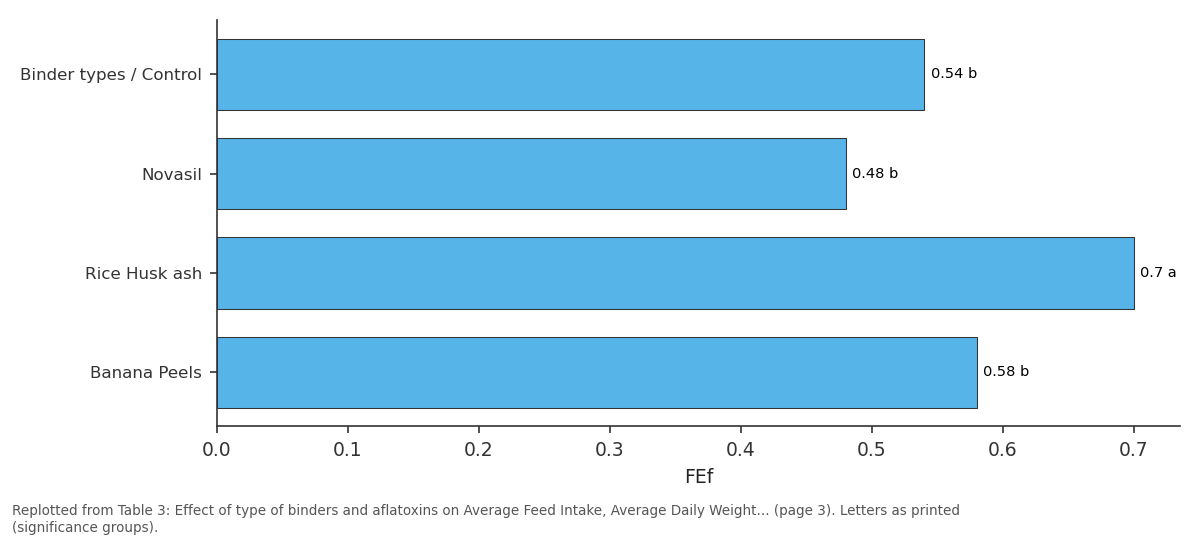
FEf: Binder types / Control vs Novasil vs Rice Husk ash vs Banana Peels
Replotted from Table 3 (page 3) of the original paper. Every bar is the paper's own table value.
View source evidence ↗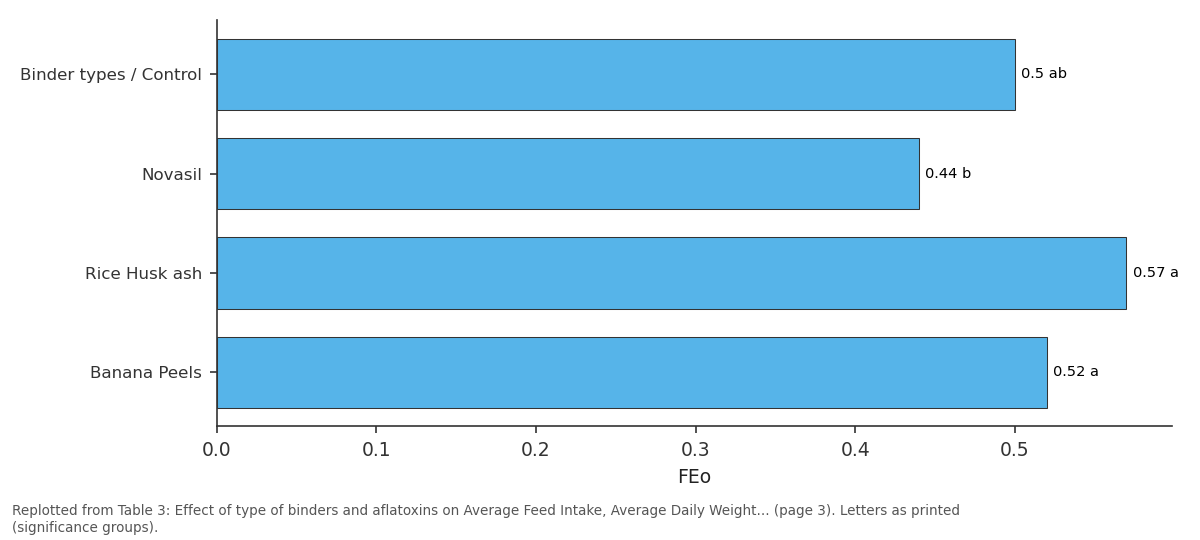
FEo: Binder types / Control vs Novasil vs Rice Husk ash vs Banana Peels
Replotted from Table 3 (page 3) of the original paper. Every bar is the paper's own table value.
View source evidence ↗Figures & tables
From the original paper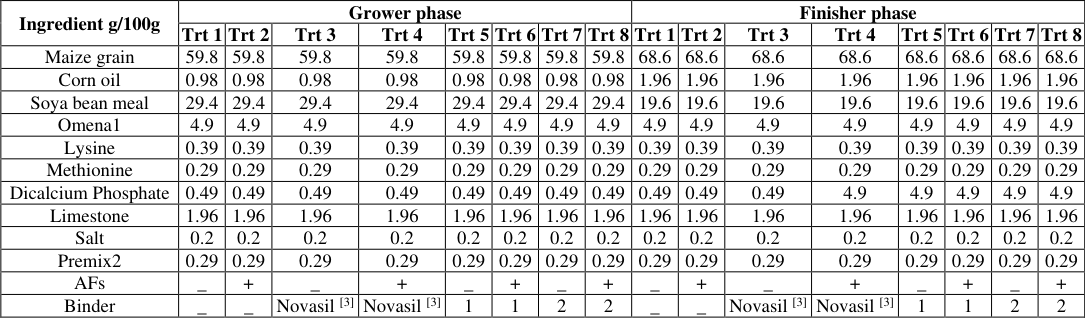 Table 1
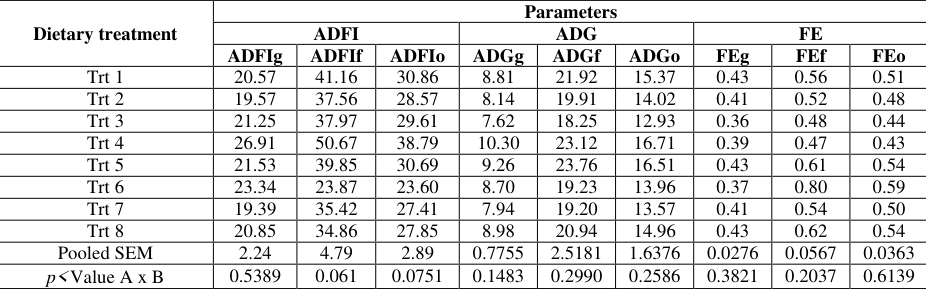 Table 2
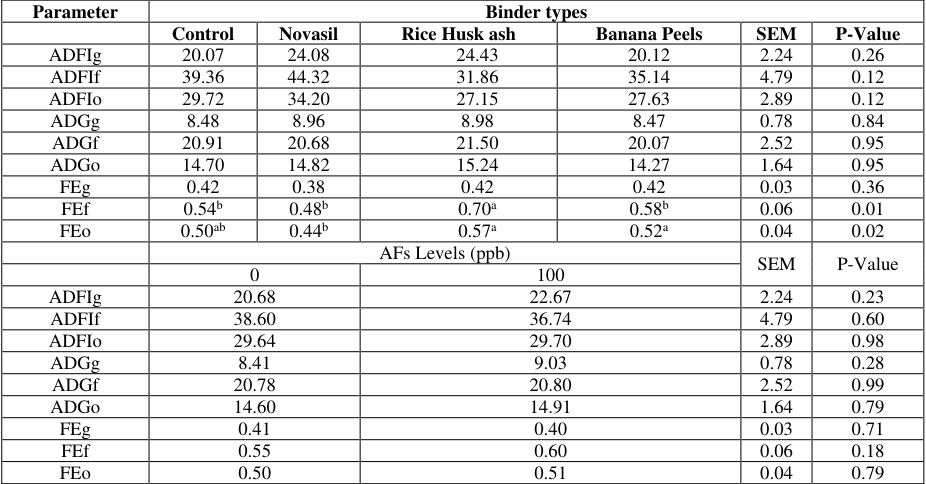 Table 3
Introduction
Aflatoxins (AFs) contamination in food and feeds contributes to food insecurity [12] . Aflatoxins are produced by Aspergillus flavus, Aspergillus parasiticus and Aspergillus nomius [12] . Of the four AFs naturally produced, only AFB1 is the most common in feeds and it causes oxidative stress, immunosuppression, decreased feed intake, and growth rate in poultry [13,30] . Tropical and subtropical regions are characterized by warm and humid conditions which favors the growth of aflatoxins hence the reason for the high incidence of AFs reported in these regions [12] . Additionally, inferior quality grains are more often directed to the formulation of poultry feeds which predisposes them to fungal contamination especially if the grains are damaged [17] . Some of the negative effects of aflatoxins in chicken include; immunosuppression, low body body weight, unexpected mortality, and poor feed efficiency [27] . There have been safety concerns about aflatoxins residues in the meat, eggs and dairy products which are caused by frequent contamination of the animal feed ingredients with mycotoxins. Carryover of the toxins from the feedstuffs into animal tissues or/and biological fluids results in these residues in food products which is an end-user problem [27] . Moreover, the International Agency for Research on Cancer (IARC) classified aflatoxins as group one carcinogens [5] .
The increased knowledge and awareness about potential of health hazards due to aflatoxins to both man and farm animals has pushed the producers, researchers and government institutions to look for more technologies which can reduce aflatoxins content in feeds and food [23] . Conventional strategies for reducing AFs that have been used includes; irradiation, bio-degradation and physical separation; adsorption/biosorption, filtration and extraction [24] . The most economical and feasible of these is adsorption which employs the use of inorganic clay minerals (mostly bentonites and zeolites) and organic materials (activated charcoals, processed plant fibers, yeast cell walls and polymeric organic compounds) which are an effective way of reducing AFs in poultry carcasses [24,4] . Mycotoxin binders reduce AFs by decreasing their availability and absorption while synthetic polymers, vitamins and enzymes converts AFs to non-toxic metabolites [13] .
Bentonites have been tested in many animal species including chicken, turkey poults, ducklings, pigs, lambs, mink, trout, tilapia fish, dairy cows and goats for its potential in binding mycotoxins [6] . Novasil, a commercial bentonites has shown promising results in reducing aflatoxin M1 (AFM1) and AFB1 concentration [6] . Agricultural by-products e.g. grape pomace, artichoke waste, almond hulls, plantain peels and grape seeds can be utilized as potential AFB1 biosorbents [10] . This strategy is simple, economic and ecofriendly. The efficacy of these biosorbents is attributed to the presence of soluble fibre contents, lignin, flavonoids and their high ability to bind water and oil [10] . They also have Omega-3 fatty acids and dietary phenols bioactive compounds which have a potential to bind mycotoxins [14] . Plantain peel, almond hull, carobos, grape seeds and Malvasia grape pomace were found to bind AFB1 at 67%, 87%, 100%, 83% and 94% respectively [10] . Biosorbents usually contains many functional groups (hydroxyl, carbonyl, sulfhydrl, phenolic, esters etc.) which help to eliminate mycotoxins using different modes of action including; hydrogen bonding, physiochemical interactions, and secondary bond forces [24] . An effective biosorbent should have a high binding efficacy at all pH ranges in the gastrointestinal tract to avoid dissociation of the bound aflatoxins [10] . Some binders can limit the bioavailability of amino acids and minerals [32] . Despite the fact that binders are good for combating aflatoxins problem, commercial binders are expensive which restrain their use by farmers. Therefore, there is a need to identify locally available materials with binding capacity which will help reduce economic burden and importation of commercial binders [27] . This experiment tested the efficacy of locally available materials in binding AFB1 in broiler feed and the performance of broilers.
Materials and Methods
Materials and Methods
Source of aflatoxins
Clean (tested, aflatoxin-free) maize grain were inoculated with Aspergillus flavus obtained from contaminated samples. The clean maize was incubated for 60 days at 31 °C as described by [19] . The level of AFB1 was determined by analyzing samples using the HPLC as per the (AOAC, 2008) guidelines. The concentration of AFB1 in the contaminated diets was 100ppb.
Experimental birds, Design, Management and Diets
This experiment was approved by Egerton University Research Ethic committee (Approval No. EUREC/APP/110/2021) and NACOSTI (License No. NACOSTI/P/20/6919). One hundred and forty four unsexed day-old Arbo Acre broiler chicks which had been vaccinated against Gumboro and Newcastle were purchased from KENCHIC, a commercial hatchery in Kenya. At Egerton University the chicks were weighed and their initial weight recorded, then randomly assigned to the eight treatments with 3 replications each consisting of six broilers. The experimental design was a CRD with 2 by 4 factorial arrangement, whereby factor one was aflatoxins level (0, 100 ppb) and the second one was binder (no binder, binder 1, binder 2 and commercial binder). The experimental period was forty two days. Artificial brooding was done using infrared bulbs, adjusted to 32 °C during the first week and later reduced by 2 °C per week [13] . Feed offered was adlibitum and freshwater was given to the chicks at all times. The grower and finisher diets (Table 1) were formulated to meet or exceed the NRC (1994) requirements for Poultry. Eight dietary treatments were formulated to test binding capacity of the two natural binders (banana peels and rice husk ash (RHA). The dietary treatments included; T1 (control), treatment 2 (control + AFB1), treatment 3 (control + Novasil®), treatment 4 (control + Novasil® +AFB1), treatment 5 (control + RHA), treatment 6 (control + RHA+ AFB1), treatment 7 (control + Banana peels) and treatment 8 (control + Banana peels + AFB1). The basal diet was compounded using the locally available feed ingredients which were screened for AFB1 before using for feed formulation. All diets were formulated to contain approximately 22.03% CP and 3064 Kcal ME per kilogram for the grower phase while the finisher phase contained 18% CP and 3209 Kcal ME per kilogram. 4.9 4.9 4.9 4.9 4.9 4.9 4.9 4.9 4.9 4.9 4.9 4.9 4.9 4.9 4.9 [3] Novasil [3] 1 1 2 2 _ _ Novasil [3] Novasil [3] 1 1 2 2
| Ingredient g/100g | Grower phase | — | — | — | — | — | — | — | Finisher phase | — | — | — | — | — | — | — |
|---|---|---|---|---|---|---|---|---|---|---|---|---|---|---|---|---|
| Trt 1 | Trt 2 | Trt 3 | Trt 4 | Trt 5 | Trt 6 | Trt 7 | Trt 8 | Trt 1 | Trt 2 | Trt 3 | Trt 4 | Trt 5 | Trt 6 | Trt 7 | Trt 8 | |
| Maize grain | 59.8 | 59.8 | 59.8 | 59.8 | 59.8 | 59.8 | 59.8 | 59.8 | 68.6 | 68.6 | 68.6 | 68.6 | 68.6 | 68.6 | 68.6 | 68.6 |
| Corn oil | 0.98 | 0.98 | 0.98 | 0.98 | 0.98 | 0.98 | 0.98 | 0.98 | 1.96 | 1.96 | 1.96 | 1.96 | 1.96 | 1.96 | 1.96 | 1.96 |
| Soya bean meal | 29.4 | 29.4 | 29.4 | 29.4 | 29.4 | 29.4 | 29.4 | 29.4 | 19.6 | 19.6 | 19.6 | 19.6 | 19.6 | 19.6 | 19.6 | 19.6 |
| Omena1 | 4.9 | 4.9 | 4.9 | 4.9 | 4.9 | 4.9 | 4.9 | 4.9 | 4.9 | 4.9 | 4.9 | 4.9 | 4.9 | 4.9 | 4.9 | 4.9 |
| Lysine | 0.39 | 0.39 | 0.39 | 0.39 | 0.39 | 0.39 | 0.39 | 0.39 | 0.39 | 0.39 | 0.39 | 0.39 | 0.39 | 0.39 | 0.39 | 0.39 |
| Methionine | 0.29 | 0.29 | 0.29 | 0.29 | 0.29 | 0.29 | 0.29 | 0.29 | 0.29 | 0.29 | 0.29 | 0.29 | 0.29 | 0.29 | 0.29 | 0.29 |
| Dicalcium Phosphate | 0.49 | 0.49 | 0.49 | 0.49 | 0.49 | 0.49 | 0.49 | 0.49 | 0.49 | 0.49 | 0.49 | 4.9 | 4.9 | 4.9 | 4.9 | 4.9 |
| Limestone | 1.96 | 1.96 | 1.96 | 1.96 | 1.96 | 1.96 | 1.96 | 1.96 | 1.96 | 1.96 | 1.96 | 1.96 | 1.96 | 1.96 | 1.96 | 1.96 |
| Salt | 0.2 | 0.2 | 0.2 | 0.2 | 0.2 | 0.2 | 0.2 | 0.2 | 0.2 | 0.2 | 0.2 | 0.2 | 0.2 | 0.2 | 0.2 | 0.2 |
| Premix2 | 0.29 | 0.29 | 0.29 | 0.29 | 0.29 | 0.29 | 0.29 | 0.29 | 0.29 | 0.29 | 0.29 | 0.29 | 0.29 | 0.29 | 0.29 | 0.29 |
| AFs | + | + | + | + | + | + | + | + | ||||||||
| Binder | _ | _ Novasil [3] | Novasil [3] | _ 1 | 1 | _ 2 | 2 | _ | _ Novasil [3] | Novasil [3] | _ 1 | 1 | _ 2 | 2 |
Table text extracted from the original PDF; superscript letters are shown inline. The original table image is below.
View original table image
Data collection
Feed intake, feed efficiency and chicks' weight were computed weekly for each bird and weight gain was calculated as the weight difference of two consecutive weighing. Daily Feed Intake was computed as the difference between feed offered and feed remaining before the next feeding. Feed efficiency was calculated as weight gain divided by feed intake.
Statistical analysis
All the data from the experiment were analyzed using the GLM (General Linear Models) procedure of the Statistical Analysis System software (SAS, 2009). Overall data were analyzed using two-way ANOVA. The difference between the means was separated using Tukey's Range Test Procedure (HSD) and LSD. The statistical model was;
Where, Y ijk = Effect of response variable (feed intake, weight gain and feed conversion ratio) µ= overall mean α i = effect of the i th binders (i=1, 2, 3, 4) β j = effect of j th aflatoxins level (j=1,2) (αβ) ij = interaction effect of i th binder on j th level of aflatoxins ε ijk = random error term
Results and Discussions
The results of the effect of treatments on growth performance are presented in Tables 2 and3. Means within row a without a superscript do not differ significantly (p<0.05) ADFI = average daily feed intake during grower phase, ADG = the average daily body weight gain, FE= represents the Feed Efficiency, g = during grower phase, f =during finisher phase, o= the overall period A = aflatoxins B1 effect, B = binder effects, A x B = interaction effects. Means within a row without a superscript do not differ significantly (p<0.05) ADFI = average daily feed intake during grower phase, ADG = the average daily body weight gain, FE = represents the Feed Efficiency, g = during grower phase, f = during finisher phase, o = the overall period A = aflatoxins B1 effect, B = binder effects, A x B = interaction effects
Effects of aflatoxins on the performance of broilers
The results of this experiment show that broiler diets spiked with AFB1 (100 ppb) did not significantly (p>0.05) decrease daily feed intake, daily body weight gain and feed efficiency during the grower, finisher and overall periods. In agreement, [23] , found no significant effect on feed intake, weight gain and feed conversion rate. Researchers who used higher levels of AFB1 (500 ppb and 170 ppb) in poultry diets still observed no decrease on the weight and feed intake [11,15] . The insignificant AFB1 effect on feed intake could be explained by the fact that aflatoxins normally reduce energy availability which results to birds consuming more feed to meet their energy requirements [23] . Some collaborators found out that birds fed higher concentration of AFB1 had low weight compared to ones that consumed low AFB1 concentrations [14,35,29] , which could behave resulted from a possible adaptation of the chronic AFB1 exposure. Additionally, the weight gain reductions at higher pharmacological AFB1 doses could be due to its biphasic nature that indirectly stimulates an overcompensation response to the initial disruption [35] . It is possible to lack a noticeable effect on the growth performance of the animals fed contaminated diets but detect the residues in the liver, [8] , thus predisposing the consumers to their harmful effects. On the contrary, other studies found significant effect aflatoxins contaminated diets on body weight gain, feed intake and feed efficiency probably due difference in species and age [20,32,1,28,7,26,25,21] .
Effects of natural toxin binder inclusion on the growth performance of broilers fed diets with/without aflatoxins
The addition of the Banana peels and rice husk binders to the non-contaminated feed did not significantly (p>0.05) affect daily feed intake, daily weight gain and feed efficiency. This implies that the two natural products are safe for inclusion in broiler diets. In line with these findings, several authors working with binders found similar effects on broilers [20,28,7] . Of three inclusion levels (10%, 20% and 30%) of banana peels, a significant body weight increase was recorded only in the 30% inclusion level [34] . Maybe the low inclusion levels (1.9%) used in this study is the reason for no change observed in body weight gain. On the other hand, the addition of Novasil to the non-contaminated diet led to a non-significant decrease in average daily weight gain which was recorded other researchers who used Hydrated Sodium Calcium Aluminosilicates (HSCAS) [9] . This was contrary to the fact that clays are known to indiscriminately bind important minerals, vitamins and fatty acids and also release toxic compounds (heavy metals or dioxins) hence causing the decreased weight gain [36] . There was no significant increase in average daily feed intake and average daily weight gain observed when Novasil binder was added into the AFB1 contaminated diet. Similarly, some authors found no significant increase in body weight and feed intake when 0.5% HSCAS containing binder was added to AFB1 contaminated diets [21] . When different levels of sodium bentonites were added to AFB1 contaminated layer diets, 3% inclusion significantly increased feed intake while to 1.5% inclusion did not [11] . The inclusion levels in this study were 1.9%and thus it might have caused the non-significant increase in feed intake and body weight gain. Banana peels and rice husk binders added to AFB1 contaminated diets did not affect feed intake and weight gain significantly. The overall FE however, showed that broilers on diets with RHA and banana peels binder had feed efficiency that was significantly (p<0.05) different from the commercial binder. Phenols in the banana peel aid in the binding of aflatoxins. On the contrary, phenol-containing binder did result in higher feed efficiency compared to a clay binder [23] . Rice husk ash had a significantly higher feed efficiency compared to the commercial binder. This could be explained by the excellent aflatoxins binding capacity (85%) of RHA which is a result of its high cation exchange capacity [3] . On the contrary, a binder containing clay had no significant effect on performance parameters when compared to a binder containing activated charcoal [23] .
Conclusions
The incorporation of Banana Peels and Rice hush ash natural binders in AFB1 contaminated feed had a significant improvement in overall feed efficiency compared to the commercial binder in broilers.
Acknowledgement
AcknowledgementsThe authors would first like to thank the Center of Excellence in Sustainable Agriculture and Agribusiness Management (CESAAM) of Egerton University and the National Research Fund of Kenya (NRF-Kenya), for financially supporting this study. Second, the Mycotoxins Research Laboratory and Animal science Laboratory, Egerton University, for providing the required equipment used in this study.
Figures and tables from the paper
| Dietary treatment | Parameters | — | — | — | — | — | — | — | — |
|---|---|---|---|---|---|---|---|---|---|
| ADFI | ADG | FE | |||||||
| ADFIg | ADFIf | ADFIo | ADGg | ADGf | ADGo | FEg | FEf | FEo | |
| Trt 1 | 20.57 | 41.16 | 30.86 | 8.81 | 21.92 | 15.37 | 0.43 | 0.56 | 0.51 |
| Trt 2 | 19.57 | 37.56 | 28.57 | 8.14 | 19.91 | 14.02 | 0.41 | 0.52 | 0.48 |
| Trt 3 | 21.25 | 37.97 | 29.61 | 7.62 | 18.25 | 12.93 | 0.36 | 0.48 | 0.44 |
| Trt 4 | 26.91 | 50.67 | 38.79 | 10.30 | 23.12 | 16.71 | 0.39 | 0.47 | 0.43 |
| Trt 5 | 21.53 | 39.85 | 30.69 | 9.26 | 23.76 | 16.51 | 0.43 | 0.61 | 0.54 |
| Trt 6 | 23.34 | 23.87 | 23.60 | 8.70 | 19.23 | 13.96 | 0.37 | 0.80 | 0.59 |
| Trt 7 | 19.39 | 35.42 | 27.41 | 7.94 | 19.20 | 13.57 | 0.41 | 0.54 | 0.50 |
| Trt 8 | 20.85 | 34.86 | 27.85 | 8.98 | 20.94 | 14.96 | 0.43 | 0.62 | 0.54 |
| Pooled SEM | 2.24 | 4.79 | 2.89 | 0.7755 | 2.5181 | 1.6376 | 0.0276 | 0.0567 | 0.0363 |
| p<Value A x B | 0.5389 | 0.061 | 0.0751 | 0.1483 | 0.2990 | 0.2586 | 0.3821 | 0.2037 | 0.6139 |
Table text extracted from the original PDF; superscript letters are shown inline. The original table image is below.
View original table image
| Parameter | Binder types | — | — | — | — | — |
|---|---|---|---|---|---|---|
| Control | Novasil | Rice Husk ash | Banana Peels | SEM | P-Value | |
| ADFIg | 20.07 | 24.08 | 24.43 | 20.12 | 2.24 | 0.26 |
| ADFIf | 39.36 | 44.32 | 31.86 | 35.14 | 4.79 | 0.12 |
| ADFIo | 29.72 | 34.20 | 27.15 | 27.63 | 2.89 | 0.12 |
| ADGg | 8.48 | 8.96 | 8.98 | 8.47 | 0.78 | 0.84 |
| ADGf | 20.91 | 20.68 | 21.50 | 20.07 | 2.52 | 0.95 |
| ADGo | 14.70 | 14.82 | 15.24 | 14.27 | 1.64 | 0.95 |
| FEg | 0.42 | 0.38 | 0.42 | 0.42 | 0.03 | 0.36 |
| FEf | 0.54b | 0.48b | 0.70a | 0.58b | 0.06 | 0.01 |
| FEo | 0.50ab | 0.44b | 0.57a | 0.52a | 0.04 | 0.02 |
| AFs Levels (ppb) | SEM | P-Value | ||||
| 0 | 100 | |||||
| ADFIg | 20.68 | 22.67 | 2.24 | 0.23 | ||
| ADFIf | 38.60 | 36.74 | 4.79 | 0.60 | ||
| ADFIo | 29.64 | 29.70 | 2.89 | 0.98 | ||
| ADGg | 8.41 | 9.03 | 0.78 | 0.28 | ||
| ADGf | 20.78 | 20.80 | 2.52 | 0.99 | ||
| ADGo | 14.60 | 14.91 | 1.64 | 0.79 | ||
| FEg | 0.41 | 0.40 | 0.03 | 0.71 | ||
| FEf | 0.55 | 0.60 | 0.06 | 0.18 | ||
| FEo | 0.50 | 0.51 | 0.04 | 0.79 |
Table text extracted from the original PDF; superscript letters are shown inline. The original table image is below.
View original table image
References
33 in the original paper- Ali Rajput S, Sun L, Zhang N, Mohamed Khalil M, Gao X, Ling Z, et al. Ameliorative effects of grape seed proanthocyanidin extract on growth performance, immune function, antioxidant capacity, biochemical constituents, liver histopathology and aflatoxin residues in broilers exposed to aflatoxin B1. Toxins. 2017;9(11):371.
- Ali DM, Abdel-Rahman TM, Abo-hagger AA, Ahmed MS. In vitro and In vivo Assessment of Banana Peel Powder as an Aflatoxins Biosorbent. Egyptian Journal of Botany. 2019;59(2):399-411.
- Ayo EM, Matemu A, Laswai GH, Kimanya ME. An in vitro evaluation of the capacity of local Tanzanian crude clay and ash-based materials in binding aflatoxins in solution. Toxins. 2018;10(12):510.
- Candlan EP, Sito IQ, Yalda MY, Taheer SN, Shareef AM. Aflatoxin B1 residues in imported and local broiler, s breast and thigh muscle in Kurdistan region. Iraqi Journal of Veterinary Sciences. 2015;29(1-2):1-5.
- Choochuay S, Phakam J, Jala P, Maneeboon T, Tansakul N. Determination of aflatoxin B1 in feedstuffs without clean-up step by high-performance liquid chromatography. International journal of analytical chemistry, 2018, ID 4650764, 8 pages, 2018. https://doi.org/10.1155/2018/ 4650764.
- Deng Y, Velázquez ALB, Billes F, Dixon JB. Bonding mechanisms between aflatoxin B1 and smectite. Applied Clay Science. 2010;50(1):92-98.
- Denli M, Blandon JC, Guynot ME, Salado S, Perez JF. Effects of dietary Afla Detox on performance, serum biochemistry, histopathological changes, and aflatoxin residues in broilers exposed to aflatoxin B1. Poultry Science. 2009;88(7):1444-1451.
- Fowler J, Li W, Bailey C. Effects of a calcium bentonite clay in diets containing aflatoxin when measuring liver residues of aflatoxin B1 in starter broiler chicks. Toxins. 2015;7(9):3455-3464.
- Gowda NKS, Ledoux DR, Rottinghaus GE, Bermudez AJ, Chen YC. Efficacy of turmeric (Curcuma longa), containing a known level of curcumin, and a hydrated sodium calcium alum inosilicate to ameliorate the adverse effects of aflatoxin in broiler chicks. Poultry science. 2008;87(6):1125-1130.
- Greco D, D'Ascanio V, Santovito E, Logrieco AF, Avantaggiato G. Comparative efficacy of agricultural by-products in sequestering mycotoxins. Journal of the Science of Food and Agriculture. 2019;99(4):1623-1634.
- Gul H, Khan S, Shah Z, Ahmad S, Israr M, Hussain M. Aflatoksin-Bağlayıcı Lokal Sodyum Bentonitin'in Yumurtacı Tavukların üretim Performansı üzerine Etkileri. Kafkas Universitesi Veteriner Fakultesi Dergisi. 2017;23(1):31-37.
- Khayoon WS, Saad B, Yan CB, Hashim NH, Ali ASM, Salleh MI, et al. Determination of aflatoxins in animal feeds by HPLC with multifunctional column cleanup. Food chemistry. 2010;118(3):882-886.
- Kilany OE, Helmi RA, Fares IM, Mahmoud M. Effects of Chemical and Biological Anti-mycotoxins on Performance, Haematological, Biochemical and Immunological Parameters of Broiler Chickens during Aflatoxicosis. Egyptian Academic Journal of Biological Sciences, F. Toxicology & Pest Control. 2020;12(1):141162.
- Magnoli AP, Monge MP, Nazar FN, Magnoli CE, Cavaglieri LR, Bagnis G, et al. Combined effects of aflatoxin B1 and corticosterone treatment on selected performance indices and liver histopathology in Japanese quail. Poultry science. 2012;91(2):354-361.
- Manafi M, Khosravinia H. Effects of aflatoxin on the performance of broiler breeders and its alleviation through herbal mycotoxin binder, 2012;15(1):55-63
- Marroquin-Cardona A, Deng Y, Taylor JF, Hallmark CT, Johnson NM, Phillips TD. In vitro and in vivo characterization of mycotoxin-binding additives used for animal feeds in Mexico. Food additives and Contaminants. 2009;26(5):733-743.
- Mohammed RR, Chong MF. Treatment and decolorization of biologically treated Palm Oil Mill Effluent (POME) using banana peel as novel biosorbent. Journal of environmental management. 2014;(132):237-249.
- Mohapatra D, Mishra S, Sutar N. Banana and its byproduct utilisation: an overview. Journal of Scientific and Industrial Research. 2010;69(5):323-329.
- Mukandungutse BI, Tuitoek JK, King'ori AM, Obonyo MA. The effect of fermentation with and without Saccharomyces cerevisiae on the levels of aflatoxin in maize. Livestock Research for Rural Development. 2019;31(11):172.
- Nazarizadeh H, Pourreza J X. Evaluation of three mycotoxin binders to prevent the adverse effects of aflatoxin B1 in growing broilers. Journal of Applied Animal Research, 2019;47(1):135-139.
- Neeff DV, Ledoux DR, Rottinghaus GE, Bermudez AJ, Dakovic A, Murarolli RA, et al. In vitro and in vivo efficacy of a hydrated sodium calcium aluminosilicate to bind and reduce aflatoxin residues in tissues of broiler chicks fed aflatoxin B1. Poultry Science. 2013;92(1):131137.
- Palade LM, Dore MI, Marin DE, Rotar MC, Taranu I. Assessment of Food By-Products' Potential for Simultaneous Binding of Aflatoxin B1 and Zearalenone. Toxins. 2021;13(1):2.
- Rafiu TA, Babatunde GM, Ibrahim OOK, Akanbi AO, Ojelade RA. Toxin and toxin-binders affecting the performance, organs, haematology and histological characteristics of broilers fed with infected diets. International Journal of Livestock Production. 2019;10(2):33-42.
- Rasheed U, Ain QU, Yaseen M, Santra S, Yao X, Liu B. Assessing the Aflatoxins Mitigation Efficacy of Blueberry Pomace Biosorbent in Buffer, Gastrointestinal Fluids and Model Wine. Toxins. 2020;12(7):466.
- Rashidi N, Khatibjoo A, Taherpour K, Akbari-Gharaei M, Shirzadi H. Effects of licorice extract, probiotic, toxin binder and poultry litter biochar on performance, immune function, blood indices and liver histopathology of broilers exposed to aflatoxin-B1. Poultry science. 2020;99(11):5896-5906.
- Saki A, Rahmani A, Mahmoudi H, Tabatabaei MM, Zamani P, Khosravi AR. The ameliorative effect of mycosorb in aflatoxin contaminated diet of broiler chickens. Journal of Livestock Science and Technologies. 2018;6(1):39-47.
- Saleemi MK, Ashraf K, Gul ST, Naseem MN, Sajid MS, Mohsin M, et al. Toxicopathological effects of feeding aflatoxins B1 in broilers and its ameliosration with indigenous mycotoxin binder. Ecotoxicology and environmental safety. 2020;187:109712.
- Saminathan M, Selamat J, Abbasi Pirouz A, Abdullah N, Zulkifli I. Effects of nano-composite adsorbents on the growth performance, serum biochemistry, and organ weights of broilers fed with aflatoxin-contaminated feed. Toxins. 2018;10(9):345.
- Śliżewska K, Cukrowska B, Smulikowska S, CieleckaKuszyk J. The Effect of Probiotic Supplementation on Performance and the Histopathological Changes in Liver and Kidneys in Broiler Chickens Fed Diets with Aflatoxin B1. Toxins. 2019;11(2):112.
- Sulav Adhikari. Supplementation of Toxin Binders in Broiler to Study its Performance. Acta Scientific Agriculture. 2018;2(7):83-87.
- Thuita FN, Tuitoek JK, King'ori AM, Obonyo MA. Prevalence of aflatoxins contamination in commercial broiler feeds in Kenya. Livestock Research for Rural Development. 2019;31(1): pp.Article 3 ref.17.
- Valchev I, Marutsova V, Zarkov I, Ganchev A, Nikolov, Y. Effects of aflatoxin B1 alone or co-administered with Mycotox NG on performance and humoral immunity of turkey broilers. Bulgarian Journal of Veterinary Medicine. 2021;20(1):617-624.
- Vila-Donat P, Marín S, Sanchis V, Ramos AJ. New mycotoxin adsorbents based on tri-octahedral bentonites for animal feed. Animal Feed Science and Technology. 2019;(255):114228.