
Research article · 2023 · Full text
International Journal of Research in AgronomyImpact of loranthaceae infestation in some yield parameters of cultivated grapefruit in Njombe locality (Littoral-Cameroon)
Volume 6(2) · Pages 05–09 · DOI: 10.33545/2618060x.2023.v6.i2a.175 ↗
Research areasHorticultural and Viticultural Research
Abstract
Author-writtenCitrus fruits are the most widely grown fruits in the world because of their many medicinal benefits. They are are a source of income for both individual producers and countries. The objective of this study was to assess the impact of mistletoes on grapefruit yield. Experiments carried out in one of the orchards of the IRAD Polyvalent Agricultural Research Station in Njomb-Penja subdivision. Data were sampled on 90 individuals divided in three level of parasitism, on which morpho metrical parameters were taken, and species of mistletoes recorded. Yield parameters such as number of mature fruits, their weight and diameter were taken on each tree during three months. As the results, three species of mistletoes were recorded on grapefruit trees Phragmanthera capitata, Helixanthera mannii and Tapinanthus bangwensis. The infection intensity was 8.9±4.9 tufts/tree. Weakly parasitized trees showed a greater number of mature fruits, weight and fruit diameter than moderately parasitized trees and heavily parasitzed trees. Negative significantly correlation between number of fruits and their weight have been found respectively on moderately parasitized trees (p= 0.002) and heavily parasitized trees (p= 0.000). The impact ratio was greater on heavily parasitized trees (IR= 2.42) and lower on weakily parasitized trees (IR= 0.48). Linear regression showed the increase of impact ratio with the number of mistletoes tufts. The Impact Threshold calculted on the regression line was 7 tufts per tree. Depper studies must be carry on the mistletoes-host plant to understand well their relationship.
Summary
Source-checkedPlain-language reading of the full paper, prepared with AI and checked against the text. Each point links to the authors' own words.
Why it matters
- Citrus fruits are economically significant as they provide income for both individual producers and their respective countries. View evidence ↗
- Mistletoes are hemiparasitic plants that divert water and nutrients from their host, which can lead to reduced crop yields. View evidence ↗
The question
- The study aimed to determine how mistletoe infestation impacts the fruit production of grapefruit in the littoral region of Cameroon. View evidence ↗
What they did
- The research was conducted from September to December 2021 at an IRAD Polyvalent Agricultural Research Station orchard in the Njomb-Penja subdivision. View evidence ↗
- The study sampled 90 grapefruit trees, with 30 trees each assigned to three levels of parasitism: weakly, moderately, and heavily parasitized. View evidence ↗
- Researchers measured yield parameters including the number of fruits per tree, as well as the weight and diameter of the fruits. View evidence ↗
- An Impact Ratio (IR) was calculated by dividing the number of mistletoe tufts by the fruit yield per tree to assess the parasite's effect. View evidence ↗
What they found
- Three mistletoe species were identified on the grapefruit trees: Phragmanthera capitata, Helixanthera mannii, and Tapinanthus bangwensis. View evidence ↗
- The average infection intensity across the studied trees was 8.9±4.9 tufts per tree. View evidence ↗
- While weakly parasitized trees had a higher number of fruits than moderately or heavily parasitized trees, this difference was not statistically significant (p= 0.17). View evidence ↗
- A significant negative correlation between the number of fruits and their weight was found in moderately parasitized (p= 0.002) and heavily parasitized trees (p= 0.000). View evidence ↗
- The Impact Ratio (IR) increased with parasitism levels, ranging from 0.48±0.64 in weakly parasitized trees to 2.42±1.89 in heavily parasitized trees. View evidence ↗
- Based on linear regression, the impact threshold was determined to be 7 tufts per tree, above which mistletoes have a negative impact on yield. View evidence ↗
What it means
- The authors recommend a new classification for parasitized trees: weakly parasitized (1-7 tufts per tree) and heavily parasitized (over 7 tufts per tree). View evidence ↗
- The authors state that further research on other citrus species is needed to better understand the relationship between mistletoes and their host plants. View evidence ↗
Visual summary
1 visualsIllustrations explain the paper; charts are replotted from the paper's own table values.
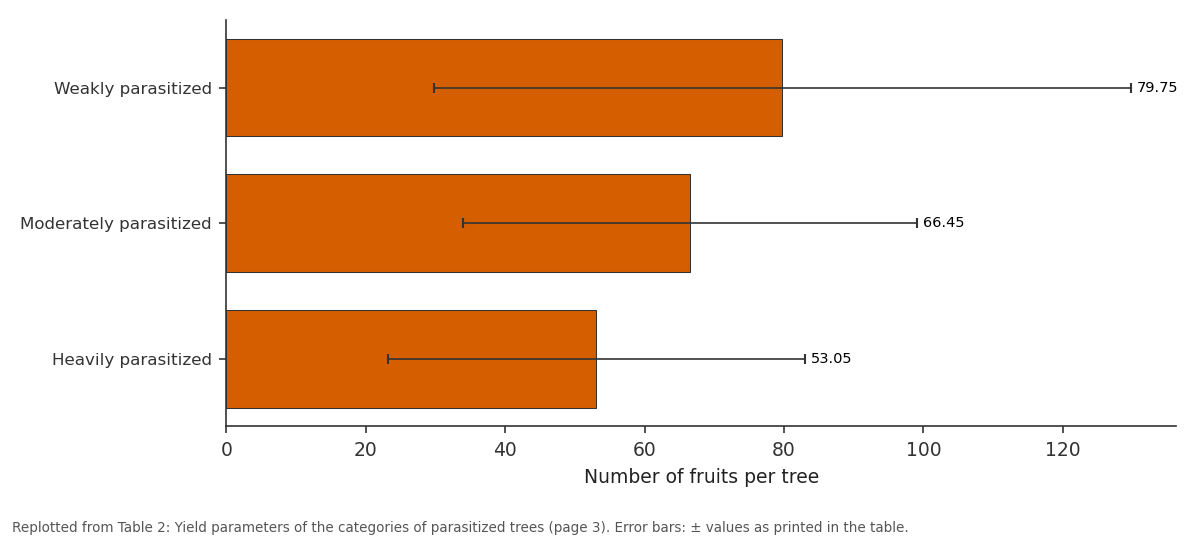
Mean±SD: Weakly parasitized vs Moderately parasitized vs Heavily parasitized
Replotted from Table 2 (page 3) of the original paper. Every bar is the paper's own table value.
View source evidence ↗Figures & tables
From the original paper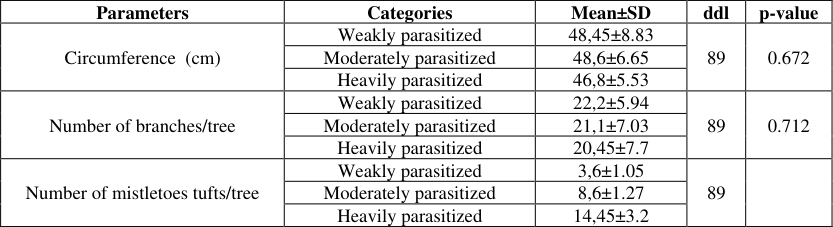 Table 1
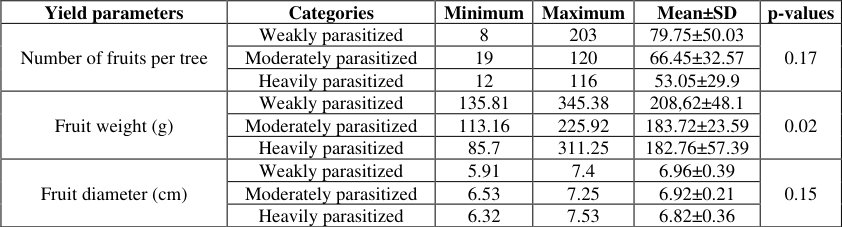 Table 2
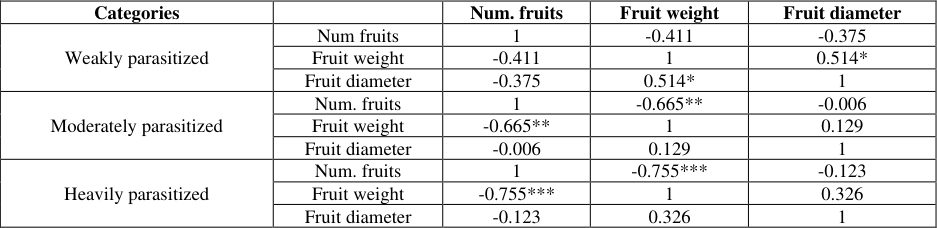 Table 3
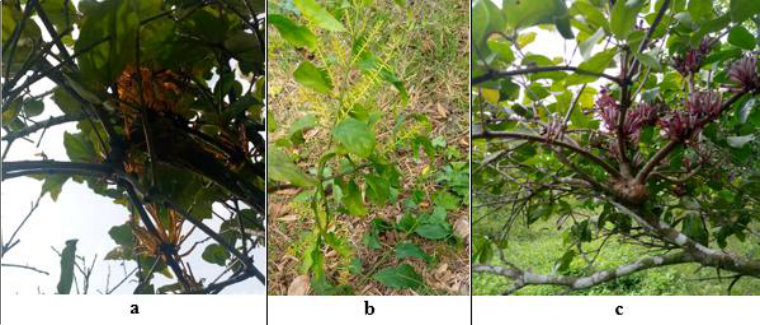 Figure 1
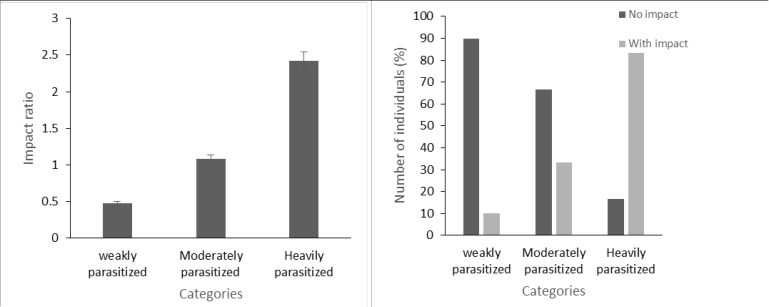 Figure 2
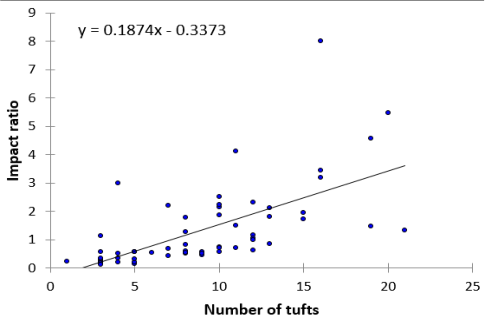 Figure 3
Introduction
Citrus which are considered one of the most important fruit crops in the world, are widely grown in tropical and subtropical areas. Their world production reached 7.4 million metric tons in 2009-2010 [1] . Citrus fruits are of great economic importance, as they constitute a source of income for both individual farmers and producing countries [2] . In Tropical Africa, citrus fruits are generally produced in systems where they play an important role. Indeed, they are sources of income for households and quality nutritional inputs, particularly for their richness in mineral elements, vitamins and fibers. Due to their perennial nature, they are also one of the elements for restoring ecological balances after deforestation [3] . Despite their nutritional, economic and medicinal importance, the cultivation of citrus fruits faces enormous difficulties. Its profitability is limited by many constraints, in particular the lack of mastery of technical itineraries by producers, low accessibility to agricultural inputs, low productivity and competitiveness, ignorance of production and especially the presence of pests and diseases [4] . Mistletoes are chlorophyllian hemiparasites and epiphytes plants which grow on the aerial parts of the host plants. These parasites are linked to their host by a real structural and physiological connection consisting of an absorption system or sucker that allows the removal of water and mineral substances from the host for their benefit [5] . These plants are sometimes underestimated by farmers even though they cause a lot of damage to their crops [6] . The Mistletoes are responsible for economic, ecological, morphological and technological damages which varies according to the crops or the parasitized ligneous species [7] . Trophic diversion of water, nutrients and mineral elements from the host by Mistletoes cause reductions in the yield of host tree, thus leading to a drop in production. This trophic despoliation causes the undernourishment of the distal part of the branch, which results in a small diameter thus contributing to a decrease in the vitality of the plants [8,9] . Mistletoes are widely distributed in Africa, especially in Ivory Coast, Nigeria, Gabon and Cameroon where they strongly parasitize cash crops such as cocoa, coffee, rubber, avocado, citrus, and other forest species [29,11] . In Cameroon, Mistletoes have been reported on citrus species such as orange, grapefruit, and mandarin [12] . Although quantitative yield losses due to Mistletoes on citrus have been initiated in West Africa region, it will be interesting to experiment it in another area. This work therefore aims to determine the impact of Mistletoes on the fruit production of Grapefruit in the littoral region of Cameroon.
Material and methods Description of the study area
The study took place in one of the orchards of the Polyvalent Research Station of the Institute of Agricultural Research for Development in the subdivision of Njombe-Penja, Moungo division, Littoral region. The subdivision of Njombé-Penja is bounded to the north by the municipality of Loum, to the south by the district of Mbanga, to the east by Yabassi and to the west by the municipality of Melong. The climate is of the equatorial type with two seasons, a rainy season from mid-March to October and a dry season from November to March. The temperature varies from 26 to 30 °C, the average rainfall is 2500 to 4000 mm per year. The rainy season begins gradually from March and after a stabilization in June, there is heavy rainfall from July to October, with a maximum in September.
Sampling method
For this study, two criteria were used for the selection of grapefruit individuals: i) the presence of mature fruits on the trees, and ii) the presence of the Mistletoes tufts. The work was carried out in the period from September to December 2021. On each selected individual, four stakes corresponding to the four cardinal points were placed on the ground by projection of the ends of the foliage, and connected by a string. Other parameters were also taken on the selected trees: circumference of the trunk, number of main branches, species of Mistletoes, and number of tufts of Mistletoes.
Individuals were split into three categories based on parasite density [13] :
• weakly parasitized (1 -5 tufts) ;
• moderately parasitized (6 -10 tufts); • Heavily parasitized (more than 10 tufts).
For this study, 30 individuals per each category of paratized trees were chosen, with a total of 90 trees. The yield parameters taken on each tree were the number of fruits fallen at the inside the collection system, the weight and diameter of each fruit.
Data processing and statistical analyzes
Spearman's rank coefficient made it possible to study the correlation between the morphometrical parameters and the number of fruits harvested on the one hand, and the correlation between the circumference of the fruit and its weight. To assess the difference in prevalence of mistletoes' impact on fruit yield, an Impact Ratio (IR) was constructed as the ratio of the number of tufts of Mistletoes (n) to fruit yield per tree (N) [14] . According to these authors, the impact of mistletoes on production is negative when IR > 1. In order to determine the number of clumps of mistletoes corresponding to the impact threshold on grapefruit, a linear regression of the IR as a function of the number of tufts was studied and the impact threshold was determined by solving the equation of regression line y = ax + b. With y= 1 for threshold, the Impact Thresold (IT) which correspond to the number of tufts x was obtained by solving the equation of the regression line
Results
Results
Morphomeetrical parameter of paratized trees
The grapefruit trees studied showed an average circumference of 47.95±7.06 cm. Moderately parasitized trees showed the greater but not significantly circumferences than weakly parasitized and heavily parasitized trees. The average of main branches numbered was 21.25±6.85 branches/tree. The higher number was recorded on weakly parasitized trees, followed by moderately parasitized and heavily parasitized trees. Significantly difference was found between the average of number of tufts of misletoes, with a gradient of heavily parasitized trees to weakly parasitized trees (Table 1). Three species of Mistletoes were identified in the study site, they are: Helixanthera mannii (Oliv.) Danser, Phragmanthera capitata (Sprengel) Balle and Tapinanthus bangwensis (Engl. & Krause) Danser (Figure 1).
| Parameters | Categories | Mean±SD | ddl | p-value |
|---|---|---|---|---|
| Circumference (cm) | Weakly parasitized | 48,45±8.83 | 89 | 0.672 |
| Moderately parasitized | 48,6±6.65 | |||
| Heavily parasitized | 46,8±5.53 | |||
| Number of branches/tree | Weakly parasitized | 22,2±5.94 | 89 | 0.712 |
| Moderately parasitized | 21,1±7.03 | |||
| Heavily parasitized | 20,45±7.7 | |||
| Number of mistletoes tufts/tree | Weakly parasitized | 3,6±1.05 | 89 | |
| Moderately parasitized | 8,6±1.27 | |||
| Heavily parasitized | 14,45±3.2 |
Table text extracted from the original PDF; superscript letters are shown inline. The original table image is below.
View original table image
Production traits of parasitized trees: A total of 5998 fruits were harvested for this study, an average of 66.42 fruits/tree. The number of fruits was higher on weakly parasitized trees, followed by moderately parasitized and heavily parasitized [10] . However Kruskal-Wallis tests did not reveal significant differences (p= 0.17) between these categories. The average weight of fruits harvested was 191.7±43.03 g/fruit/tree. Weakly parasitized trees showed a significantly geater fruit weight per tree (p= 0.02) than moderately parasitized trees and highly parasitized trees. For the fruit circumference, weakly parasitized trees recorded fruits with the largest but not significant diameters than moderately parasitized, and heavily parasitized trees (Table 2).
| Yield parameters | Categories | Minimum | Maximum | Mean±SD | p-values |
|---|---|---|---|---|---|
| Number of fruits per tree | Weakly parasitized | 8 | 203 | 79.75±50.03 | 0.17 |
| Moderately parasitized | 19 | 120 | 66.45±32.57 | ||
| Heavily parasitized | 12 | 116 | 53.05±29.9 | ||
| Fruit weight (g) | Weakly parasitized | 135.81 | 345.38 | 208,62±48.1 | 0.02 |
| Moderately parasitized | 113.16 | 225.92 | 183.72±23.59 | ||
| Heavily parasitized | 85.7 | 311.25 | 182.76±57.39 | ||
| Fruit diameter (cm) | Weakly parasitized | 5.91 | 7.4 | 6.96±0.39 | 0.15 |
| Moderately parasitized | 6.53 | 7.25 | 6.92±0.21 | ||
| Heavily parasitized | 6.32 | 7.53 | 6.82±0.36 |
Table text extracted from the original PDF; superscript letters are shown inline. The original table image is below.
View original table image
Correlations between fruits parameters
Spearman's rank coefficient revealed a positive and significant correlation between number of fruits and fruit weight in weakly parasitized trees. In moderately parasitized and heavily parasitized trees, this correlation was positive, but not significant. However, number of fruit correlated negatively and very significantly with fruit weight in moderately parasitized. This correlation was higher significantly on heavily parasitized trees trees. It was not found a significant correlation on weakly parasitized trees. The correlation between fruit number and fruit circumference was negative but not significant in the three categories of paratized trees (Table 3).
| Categories | — | Num. fruits | Fruit weight | Fruit diameter |
|---|---|---|---|---|
| Weakly parasitized | Num fruits | 1 | -0.411 | -0.375 |
| Fruit weight | -0.411 | 1 | 0.514* | |
| Fruit diameter | -0.375 | 0.514* | 1 | |
| Moderately parasitized | Num. fruits | 1 | -0.665** | -0.006 |
| Fruit weight | -0.665** | 1 | 0.129 | |
| Fruit diameter | -0.006 | 0.129 | 1 | |
| Heavily parasitized | Num. fruits | 1 | -0.755*** | -0.123 |
| Fruit weight | -0.755*** | 1 | 0.326 | |
| Fruit diameter | -0.123 | 0.326 | 1 |
Table text extracted from the original PDF; superscript letters are shown inline. The original table image is below.
View original table image
Impact ratio of Loranthaceae on parasitized trees
The global average impact ratio calculated on the trees was IR= 1.33±1.08. The highest impact index was obtained on heavily parasitized trees (IR= 2.42±1.89), followed by moderately parasitized trees (IPR= 1.08±0.73), and weakly parasitized trees (0.48±0.64). A negative effect of Mistletoes on the yield was recorded in 38 individuals (42.22%) of the population studied. The negative was recorded in three individuals of weakly parasitized trees (10%); in moderately parasitized trees, there was 10 individuals (33.33%), and 25 individuals (83.33%) of heavily parasitized trees (Figure 2). Figure 3 represents the linear regression of the impact on production as a function of the number of tufts of Mistletoes. A positive correlation between these two variables was found from the equation of the regression line whose formula was y = 0.187x-0.337. The calculated x showed a value of x= 7.19, so an Impact Threshold of IT= 7 tufts /tree.
Discussion
Loranthaceae species of grapefruit trees Three species of Mistletoes were recorded on grapefruit trees in the study area. These species have been previously reported in the neighboring localities of Penja and Tombel where they were present on Cola nitida and Theobroma cacao [7 15] , This number is lower than the number of species recorded on T. cacao in southern Cameroon [16] , and on citrus fruits in southern Benin [9] . This difference could be due to climatic conditions. Indeed, climatic conditions influence the distribution of Mistletoes [17] .
Intensity of parasitism
The average number of clumps in our study was 8, 88±4,917 tufts/tree. It is substantially equal to the 9.36 tufts recorded on tree legumes in Côte d'Ivoire by [18] . This average is higher than the 3.3 tufts/tree of rubber trees reported in the South West Region of Cameroon by [28] and the 4.98 tufts/tree found on citrus plantations in the South of Cameroon. Benin by [9] . Parasite density depends on intrinsic and extrinsic factors of individuals. Thus, the geographical position, the type of dissemination or even the thickness of the cortical parenchyma are factors that can cause the parasite density to vary from one individual to another.
Impact of Loranthaceae on the production traits
The number of fruits produced did not vary significantly between the different categories of parasitized trees. This means that Mistletoes have no effect on the fruit production of grapefruit. Similar result was found on her a tree in natural and cultivated environments in Benin [20] . However, a significant difference was observed in fruit weight. Indeed, the fruits of the weakly parasitized trees had a significantly higher weight than the moderately and heavily parasitized trees. This means that trees with higher parasite loads produce lighter fruits. This result agreed with the work of [21] and [22] who found an effect of Mistletoes on the number of fruits of her a tree mistletoes have a sucker which is a physiological connection between the host and the parasite. This results in trophic diversion of mistletoes on the host plant resulting in a general weakening of the tree, and leading to a drop in yield [23] . In Ghana, [24] reported the occurrence of mistletoes in citrus orchards with a drastic 95% yield drop when attacked, 65% poor citrus growth and 55% mortality when severely infested .
Circumference was positively correlated with number of fruits in all categories of parasitized trees; the latter is therefore proportional to production. Similar result obtained by [25] on rubber trees in the industrial plantation of Mitzic in Gabon where the average production, per tree and per tapping, increases according to the circumference of the trunk.
Parasitism impact ratio
The study of linear regression showed that impact ratio increases with the number of tufts of Mistletoes. The impact ratio of weakly parasitized trees was less than 1, meaning that there is no negative impact on the yield. This should induce that mistletoes shouldn't automatically assessed on weakly parasitized trees. The impact threshold found at seven tufts of mistletoes reflects the fact that mistletoes have a negative impact on grapefruit yield. Indeed, the impact ratio increase with the number of tufts of mistletoes. Similar results were found on citrus in Ghana and Sudan [26,27,20] , thought individuals that carry a greater parasite load should be more sensitive to other environmental stresses like drought, light deficiency, soil nutrient deficiency, and the combined effect of mistletoes and environmental stress should mostly induce an impact on shea tree fruit yield. The Impact Threshold found in the study was seven tufts. In view of this result, a new classification of parasitized trees can be established: weakly parasitized trees (1-7 tufts per tree), and heavily parasitized trees (over 7 tufts per tree).
Conclusion
Mistletoes have an effect on grapefruit. Three species of have been found, Phragmanthera capitata, Helixanthera mannii and Tapinanthus preussi. The number of clumps of Mistletoes did not have a significant effect on the number of fruits, however, the fruits of the weakly parasitized trees showed a higher weight than the moderately parasitized and strongly parasitized trees. The number of clumps had a positive impact on the impact ratio. Indeed, the yield of trees decreases while their parasite load increases. Further researches should be carried on the other citrus species for a better understanding of the mistletoes-host plant relation.
References
22 in the original paper- Amon ADE, Yao KM, Kouakou KJL, Soro D. Identification, Phenology, Ecological Habitat and Damage Caused by Loranthaceae in Plantations of Rural Area of Daloa, Côte d'Ivoire. International Journal of Environment Agriculture and Biotechnology. 2020;5(5):1372-1377. DOI: 10.22161/ijeab.55.25
- Tafokou RBJ, Dondjang JP, Nkongmeneck B-A, Smith M, Kemeuze V. Diversity and sustainable management of Loranthaceae in the western highlands of Cameroon. Bois et forêts des tropiques. 2010;303(1):41-52.
- Dibong SD, Din N, Priso RJ, Taffouo VD, Fankem H, Salle G, et al. Parasitism of host trees by the Mistletoes in the region of Douala (Cameroon). African Journal of Environmental Science and Technology. 2008;2(11):371378.
- Dibong SD, Mony R, Ndiang Z, Ondoua JM, Boussim IJ, Amougou A, et al. The struggle against Phragmanthera capitata (Sprengel) S. Balle (Mistletoes) parasite of agrosystem's fruit trees in Cameroon?. Journal of Agricultural Biotechnology and Sustainable Development 2010;2(5):76-81.
- Houenon GJ, Yédomonhan H, Adomou AC, Tossou GM, Akoègninou A, Traore D, et al. Specific diversity of Mistletoes citrus parasites and their impacts on citrus production in southern Benin. European Journal of Scientific Research. 2012;4:527-538.
- Biyon Ngotta JB, Nkoue Nkouemou GH, Nyaka AN, Dzoyem C, Iyodi AB, Taffouo VD. Impact of Loranthaceae infestation in some yield parameters of cultivated grapefruit in Njombe locality (Littoral-Cameroon). Int J Res Agron. 2023;6(2):05-09.
- Azo'o JRN, Tchatat M, Mony R, Dibong SD. Parasitism and ethnobotany of Loranthaceae in Lokomo (East Cameroon). Journal of Animal and Plant sciences. 2013;19(2):29232932.
- Ngotta BJB, Wafo TYD, Nnanga JF, Iyodi AB, Mokake Ebenye S, Taffouo VD. Biodiversity and parasitism of Mistletoes on citrus cultivated in the Mongo department. GSC Advanced Research and Reviews. 2022a;11(2):37-44. DOI: https://doi.org/10.30574/gscarr.2022.11.2.0122.
- Houehanou TD, Kindomihou V, Stevart T, Tente B, Houinato M, Sinsin B. Variation of Loranthaceae impact on Vitellaria paradoxa C. F. Gaertn. fruit yield in contrasting habitats and implications for its conservation. Fruits. 2013;68:109-120. DOI: 10.1051/fruits/2013057 www.fruits-journal.org.
- Ondoua JM, Dibong SD, Taffouo VD, Ngotta Biyon JB. Parasitism of cocoa seed fields by Mistletoes in the locality of Nkoemvone (South Cameroon). Journal of Applied Biosciences. 2015;(85):1774-1803.
- Ahamide ID, Tossou MG, Hounnankpon Y, Adomou AC. Diversity of Mistletoes and their impact on Vitellaria Paradoxa CF Gaertn. a fruit tree with high socio-economic value in North Benin. European Scientific Journal. 2017;24(13):1857-7431. DOI: https://doi.org/10.19044/esj.2017.v 13n24p217.
- Soro K, Gnahoua GM, Traore D. Parasitism of Mistletoes in tree legume plantations in the forest zone of Côte d'Ivoire. Agronomie Africaine. 2009;1:59-69.
- Painkra A, Puranik HV, Shamim M, Sahu L, Chawra U. Quantification of microclimate and its effect on yield of field crops under Agri-horti system in Western plain zone of Uttar Pradesh. Int. J Adv. Chem. Res. 2021;3(2):39-46. DOI: 10.33545/26646781.2021.v3.i2a.65
- Houehanou TD, Kindomihou V, Sinsin B. Effectiveness of Conservation areas in protecting Shea trees against Hemiparasitic plants (Mistletoes) in Benin, West Africa. Plant Ecology and Evolution. 2011;144(3):267-274. doi:10.5091/plecevo; c2011. p.485.
- Sinha A, Bawa KS. Harvesting techniques, hemiparasites and fruit production in two non-timber forest tree species in south India. Forest Ecology and Management. 2002;168(13):289-300. https://doi.org/10.1016/S0378-1127(01)007472.
- Ward D, Shrestha MK, Musli I. Are mistletoes killing Ziziphus spin-christy? Israel Journal of Plant Sciences 2006;54:113-117. DOI:10.1560/IJPS_54_2_113.
- Massako F, Mony R, Tchata M, Dibong SD. Inventory and evaluation of Loranthaceae infestation on butternut tree species (Dacryodes edulis (G. Don) H. J. Lam) in the northeast of Douala, Cameroon. Sciences, Technologies et Développement. 2014;15:87-92.
- Asare-Bediako E, Addo-Quaye AA, Tetteh JP, Buah JN, Van DP, Acheampong RA. Prevalence of mistletoe on citrus trees in the Abura-Asebu-Kwamankese district of the Central Region of Ghana. International Journal of Scientific & Technology Research. 2013;2(7):122-127.
- Engone ONL, Salle G. Should we eradicate Phragmanthera capitata, a parasite of rubber trees in Africa? Comptes Rendus de Biologies. 2006;239:185-195.
- Osman AM, Sudan GB, Wad M. A note on mistletoe (Loranthus spp.) incidence on citrus trees in the Gezira State, Sudan. University of Khartoum Journal of Agricultural Sciences. 2007;15(1):163-167.
- Ngotta JB, Dibong SD, Taffouo VD, Ondoua JM , Bilong P. Level of parasitism of rubber trees by Mistletoes in the South West Region of Cameroon. Journal of Applied Biosciences. 2015;96:9055-9062.
- Danser (Mistletoes) on the cocoa tree (The Obroma cacao L.) in Gabon. Revue de Cytologie et Biologies Végétales 2005;29:13-21.