
Research article · 2021 · Full text
International Journal of Veterinary Sciences and Animal HusbandryEconomic implication of feeding Prosopis juliflora pod meal with enzyme to grower pigs
Volume 6(5) · Pages 11–16 · DOI: 10.22271/veterinary.2021.v6.i5a.376 ↗
Research areasBotanical Research and ChemistryPolysaccharides Composition and ApplicationsRuminant Nutrition and Digestive Physiology
Abstract
Author-writtenA feeding trial was conducted to investigate the effect of inclusion of enzyme treated ground Prosopis juliflora pod meal (PPM) on the performances of growing pigs. Thirty Landrace x Large white crosses of 20±3 kg with an equal number of barrows and gilts were allotted to five treatment diets in a randomized block design with each treatment having six pigs. The dietary treatments were: Trt1 - containing 0% PPM and 0.035% Enzyme per kg of diet, Trt2 - containing 0% PPM and 0% Enzyme, Trt3 - containing 10% PPM and 0.035% Enzyme, and Trt4 - containing 20% PPM and 0.035%Enzyme, Trt5;diet containing 30% PPM and 0.035% Enzyme per kg of diet, respectively. The multi-enzyme Natuzyme® was added to the dietary treatment according to manufacturer’s instructions at a rate of 350mg/kg feed material. Feed intake, feed conversion ratio and body weight gain was collected. For the economics analysis, inclusion of enzyme treated Prosopis pod meal calculation was based on the weight gain and feed intake obtained from feeding trial. The objective was to determine the cost of including treated mature Prosopis juliflora pod meal in growing pig’s diets. Total feed cost was then calculated as the product of feed intake per pig and the cost per kg of each treatment diet. Total feed cost per kilogram gain of each treatment was calculated as the total feed cost divided by the body weight gain of each pig per treatment diet. Data was analysed using SAS 9.0 (2002) using a one way analysis of variance. Means separation was conducted using Tukey’s HSD. From the results Trt5 (124.54 KES/kg) resulted to the lowest feed cost per kilogram gain compared to Trt2, Trt3 and Trt4 (132.20 KES/kg). Enzyme inclusion resulted to a lower feed cost per kilogram gain when Trt1 (111.13 KES/kg) compared to Trt2 (140.80 KES/kg) p
Summary
Source-checkedPlain-language reading of the full paper, prepared with AI and checked against the text. Each point links to the authors' own words.
Why it matters
- Pig farming is socially and economically important for smallholder farmers in Kenya, acting as a financial safety net. View evidence ↗
- The cost of pig production has risen because humans and livestock compete for the same food cereals and oilseeds. View evidence ↗
- Prosopis juliflora is an invasive plant in Kenya's arid regions whose pods are considered a nutritionally good alternative feed for livestock. View evidence ↗
- Non-ruminants like pigs cannot efficiently use the nutrients in these pods because they lack the enzymes needed to digest the high levels of plant cell wall components. View evidence ↗
The question
- The study aimed to determine how feeding grower pigs a diet containing enzyme-treated Prosopis juliflora pod meal affects the overall cost of feeding. View evidence ↗
What they did
- Five diets were tested: a control with no pod meal (PPM) and no enzyme (Trt2), a diet with enzyme only (Trt1), and three diets combining enzyme with 10%, 20%, or 30% PPM (Trt3, Trt4, and Trt5). View evidence ↗
- The Natuzyme® multi-enzyme complex was added to the diets at a rate of 350mg/kg. View evidence ↗
- Economic analysis focused on comparing the cost of feed required to produce one kilogram of weight gain across the different treatment groups. View evidence ↗
What they found
- Adding enzyme alone (Trt1) significantly reduced the feed cost per kilogram gain to 111.1 KES/kg compared to the control without enzyme (Trt2) at 140.80 KES/kg. View evidence ↗
What it means
- The authors conclude that increasing the amount of enzyme-treated Prosopis pod meal improves the feed cost per kilogram gain, with 30% being the most cost-effective level. View evidence ↗
- The authors state that the addition of enzymes reduces the cost per kilogram of weight gain. View evidence ↗
- The economic benefit of using Prosopis juliflora pods may be limited in peri-urban areas due to increased transport costs compared to rural farms located near the trees. View evidence ↗
Visual summary
1 visualsIllustrations explain the paper; they do not show study data.
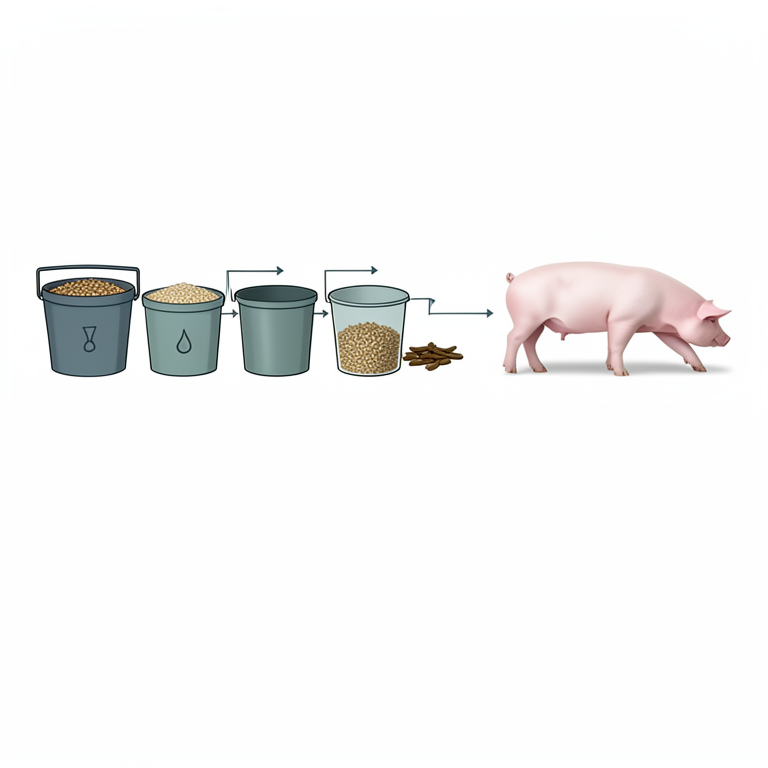
Experimental Diet Groups
AI-generated conceptual illustration (grower pigs and Prosopis juliflora pods). It explains the idea and does not show study data.
View source evidence ↗Figures & tables
From the original paper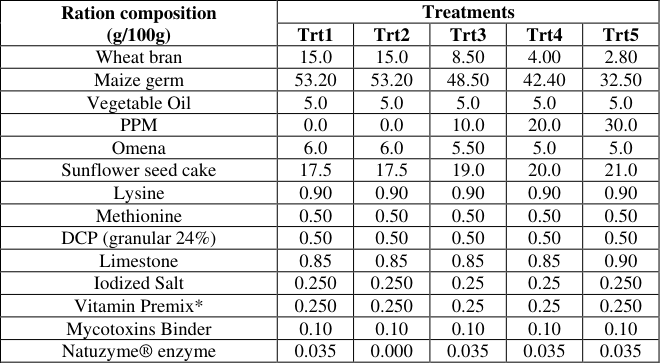 Table 1
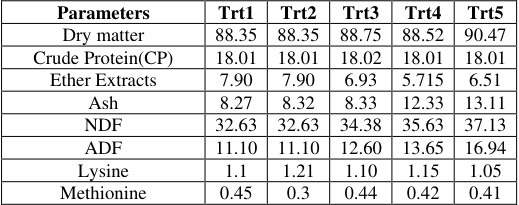 Table 2
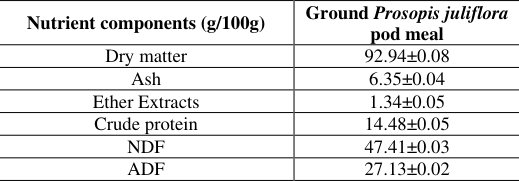 Table 3
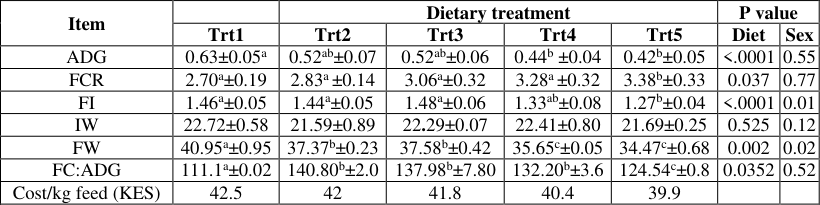 Table 4
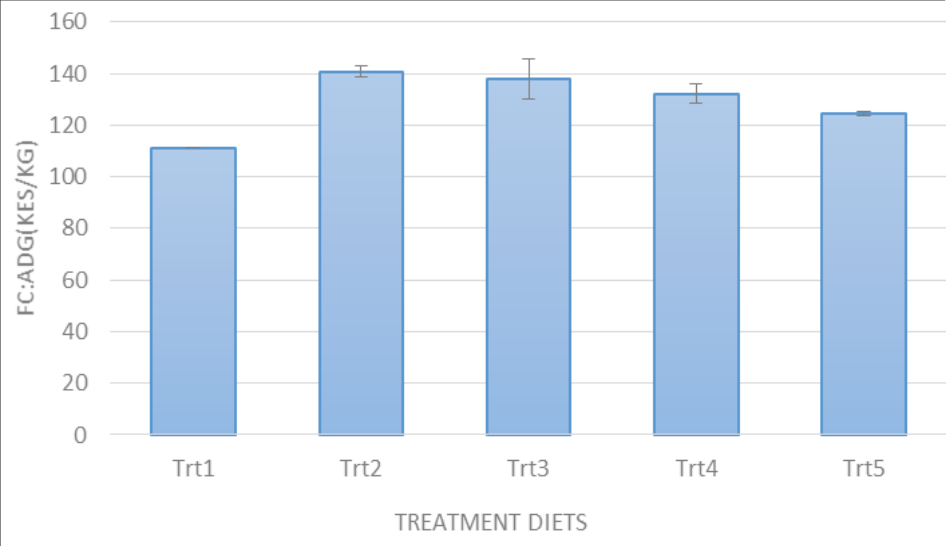 Figure 1
Introduction
Pigs play crucial social economic roles to smallholders farmers in Kenya while providing a cushion in times of financial crisis [9] . Pig farming is becoming highly relevant to farmers shifting from ruminants to non-ruminants due to the short breeding cycle, high fecundity and high feed conversion ratio [5] . However, pig production has recently been experiencing increased cost of feeds mainly due to the increased competition for food cereals and oilseeds with man [8] . Smallholder farmers have begun to focus and rely more on alternative feed resources such as leguminous tree pods (acacia and Prosopis juliflora pods) and leaves (Calliandra calothyrsus and Sesbania sesban leaves) [18] . Prosopis juliflora is an exotic invasive plant widely distributed in arid and semi-arid regions due to its ability to withstand harsh and dry climatic conditions of Kenya [18] .Prosopis juliflora pods from these trees have been evaluated by several authors and were found to be of good nutritional quality for both ruminants and non-ruminants [18,11] . However, the pods contain a high level of plant cell wall components that lower the efficiency of utilization of the nutrients by non-ruminants which lack endogenous fibre digestive enzymes [8] . Prosopis juliflora pods were reported to contain 69.5% cellulose, 53.5% hemicellulose and 97% higher lignin content relative to maize [2] . Dietary fibre including pectins, cellulose, hemicellulose, β-glucans, fructans, oligosaccharides, lignin, and resistant starch affects the voluntary feed intake of pigs which ultimately affect growth performance [13] . Further the apparent digestibility of fibre is (40-50%) in growing pigs, this inevitably reduces the energy value of feed [15] . One way to counteract the effect of low digestibility of the pod and improve the nutritive values of the pod has been the use of exogenous fibrolytic enzymes [2] . Fibrolytic exogenous enzymes have accelerated the use of alternative feed that are fibrous due to their ability to break down the soluble and insoluble non-starch polysaccharides. Upon the breakdown of fibre and availability of the encapsulated nutrients, the resultant products are readily accessible for the intestinal microflora, thereby providing multiple beneficial effects on whole animal [2] . A study by [2] reported that the use of enzyme treatment of prosopis pod meal significantly improved apparent metabolizable energy of the pods in poultry with positive effects on animal performance. Feed cost is a major factor constraining increased pork production thus impacting pork producer's profitability [7] . The high cost of conventional feed has meant more livestock producers use agro-industrial by-products and/or unusual feeds such as Prosopis juliflora pods (PPM). Bio-economic value analysis is important in ensuring that animal production makes economic sense especially when a feed is being investigated to replace the conventional feed. Several researchers have reported increased feed costs per unit muscle deposition when livestock feed ingredients were treated. For instance [18] [17] reported a reduction in cost when fermented prosopis pod meal and seeds were included in the animal's diets. Further, combining exogenous enzyme with nonconvectional ingredient was observed to be a valid practice to reduce the cost of feeding and to allow better utilization of non-convectional feed material. These feed materials are regarded to be of low digestibility due to their fibre content that is difficult to be utilized by pig's endogenous enzymes [1] . However, there is scanty information available on the economics implication of feeding grower pigs on enzyme treated prosopis pod meal. The study aim was to evaluate the economic implication of feeding enzyme treated prosopis pod meal on the cost of feeding.
Material and Methods
Material and Methods
Experimental location
The feeding trial was conducted in a commercial pig farm in Oleguruone Sub-County, Nakuru County. The area is 0° 35 9̍ South and 0° 35 15̍ East. The area is 2400 -3100 mm above sea level and receives an average annual rainfall of 1200-1500 mm. The average temperature is 12 °C in the coolest seasons, 23 °C during the wet seasons and 27 °C during the hot dry periods [17] .
Preparation of the pod meal and experimental diets
The diets were formulated using maize germ, wheat bran, sunflower seed meal, Omena (Rastrineobola argentea) and Ground Prosopis juliflora pod meal (PPM) (Table 1). ' N and 35 ° 37'E [9] by hand-picking from the ground underneath the Prosopis trees after vigorous shaking. The pods were dried under the sun, sorted then milled [17] and used in the making of the treatment diets. Natuzyme® was supplied by Coopers Kenya and was included at the rate of 350mg/kg of feed in dry form as per the manufacturer's instructions and recommendations. The enzyme contained (12,000 units/g of xylanase,6,000 units/g of cellulase, 1,500units/g of phytase, 700 units/g of beta-glucanase, 700 unit/g protease and 400 unit/g of alphaamylases) presented in powder form. The compositions (per kg of diet) of the diets were as follows:
| Ration composition (g/100g) | Treatments | — | — | — | — |
|---|---|---|---|---|---|
| Trt1 | Trt2 | Trt3 | Trt4 | Trt5 | |
| Wheat bran | 15.0 | 15.0 | 8.50 | 4.00 | 2.80 |
| Maize germ | 53.20 | 53.20 | 48.50 | 42.40 | 32.50 |
| Vegetable Oil | 5.0 | 5.0 | 5.0 | 5.0 | 5.0 |
| PPM | 0.0 | 0.0 | 10.0 | 20.0 | 30.0 |
| Omena | 6.0 | 6.0 | 5.50 | 5.0 | 5.0 |
| Sunflower seed cake | 17.5 | 17.5 | 19.0 | 20.0 | 21.0 |
| Lysine | 0.90 | 0.90 | 0.90 | 0.90 | 0.90 |
| Methionine | 0.50 | 0.50 | 0.50 | 0.50 | 0.50 |
| DCP (granular 24%) | 0.50 | 0.50 | 0.50 | 0.50 | 0.50 |
| Limestone | 0.85 | 0.85 | 0.85 | 0.85 | 0.90 |
| Iodized Salt | 0.250 | 0.250 | 0.25 | 0.25 | 0.250 |
| Vitamin Premix* | 0.250 | 0.250 | 0.25 | 0.25 | 0.250 |
| Mycotoxins Binder | 0.10 | 0.10 | 0.10 | 0.10 | 0.10 |
| Natuzyme® enzyme | 0.035 | 0.000 | 0.035 | 0.035 | 0.035 |
Table text extracted from the original PDF; superscript letters are shown inline. The original table image is below.
View original table image
1. Trt1 = diet containing 0% PPM and 0.035% Enzyme 2. Trt2 =diet containing 0% PPM and 0% Enzyme 3. Trt3 =diet containing 10% PPM and 0.035% Enzyme 4. Trt4 =diet containing 20% PPM and 0.035% Enzyme 5. Trt5 =diet containing 30% PPM and 0.035% Enzyme
Management of Experimental animals and Experimental design
The grower pigs were identified using ear tags then placed in pens with concrete floors (3m x 3m) that had dry wood shavings as beddings. The grower pigs were dewormed using subcutaneous injectable Ivermectin® to control external parasite and provided with injectable multivitamin before the start of the experiment. The pigs used for the experiment were provide experimental diets for 7days for adaptation before the beginning of the data collection. The grower pigs were fed from concrete troughs while water was provided ad libitum using drinking-nipples throughout the feeding trial (35 days) period. Biosecurity measures were put in place to prevent diseases while the well-being of the pigs was monitored to identify sick animals. Experimental animals consisted of 15 barrows and 15 gilts with an average weight of 20±3kgs which were crosses between Landrace and Large white. The experimental animals randomly allotted to the five treatment diets in a randomized complete block design with sex as a blocking factor.
Proximate analysis
The feed samples from each experimental diet were collected and taken to Egerton university animal nutrition laboratory for proximate analysis. Dry matter was determined by drying in a hot air oven at 105 °C for 24 h [3] , Ash by burning samples in a muffle furnace at 550 °C for 8h [3] , Ether Extract using Soxhlet method (using ether) [3] . Crude protein (N x 6.25) determination was by the micro-Kjeldahl method through digestion, distillation and titration [3] . Constituents of the cell wall, Neutral Detergent Fibre (NDF) and Acid Detergent Fibre (ADF), were determined using the Van Soest method [22] .
Data collection
Individual pig body weight from each pen was recorded on a weekly basis using a digital weighing scale with 10 grams accuracy. The weekly weights recorded were used to compute the body weight gains. Feed was offered at 0800 hrs while refusals were collected during the next day prior to feeding. The refusals were weighed using a digital weight balance then used to compute daily feed intake. Body weight gains and daily feed intake were used to compute the feed conversion ratio.
Economic analysis
The economic analysis were based on the calculation of feed cost per kilogram weight gain according to the methodology by [5] . This calculations compared the cost of feed per 1 kg weight gain across the different diets. The feed cost per diet was computed by multiplying the price per kilogram of each ingredient by the proportion of each ingredient in the five diets. Recent prices of ingredients at the time of conducting the experiments were used (January 2nd, 2020). Total feed cost was then calculated as the product of total feed consumed during the experimental period and the cost per kg of each diet. Thus, the total feed cost per kilogram of gain (KSH/kg) Kenyan shillings equals to the total feed cost divided by total body weight gain. The cost of per kg of Prosopis juliflora pod meal was calculated based on the collection fee paid, transport cost and the cost for milling and mixing with other ingredients. The cost of enzyme was also incorporated within the calculations.
Statistical analysis
Data collected from ADG, FCR FI and FC: ADG (KES/kg) were subjected to the analysis of variance using the General linear model procedure of statistical analysis system version 9.0, Mean separation was conducted using Tukey's HSD (Honest Significant Difference) test at 0.05 level of significance (means were considered different if p<0.05). Initial weight of the pigs was fitted as a covariate while sex was used as a blocking factor.
The model used was:
where; Y ijk = response variable of interest μ = population mean T i = fixed i th treatment effect (Trt1, Trt2, Trt3, Trt4 and Trt5) S f = fixed effect of sex (gilts and barrows) β k = fixed effect of initial weight used as a covariate ε ijk = random error
Results and Discussion
The chemical composition of the diets and the Prosopis juliflora pod meal was done in duplicates. The results of DM, CP NDF, and ADF of the diets and Prosopis juliflora pod meal are presented in Table 3. The DM, Ash, Crude protein, NDF and ADF composition of PPM in this study were within the range cited by several authors [20] . Similarly [11] Reported that the proximate composition of Prosopis juliflora pods from Baringo was 94.4% DM, 12.56% CP, 4.37% ash, 45.87% NDF and 29.71% ADF which were close to those in this study. Results of proximate analysis for the diets Table 2 showed an increase of NDF and ADF as the level of inclusion of PPM increased in the diet. Diets with 30% Prosopis juliflora pod meal with enzyme (Trt5) had the highest NDF and ADF, 37.13 and 16.94% respectively. The diets were isonitrogenous and isocalorific. Means within a row with the different superscript letters are statistically different (p<0.05). Trt1 = 0% PPM and 0.035% enzyme per kg of diet; Trt2 = 0% PPM and 0% enzyme per kg of diet; Trt3 = 10% PPM and 0.035% enzyme per kg of diet, Trt4 = 20% PPM and 0.035% enzyme per kg of diet, Trt5= 30% PPM and 0.035% enzyme per kg of diet; ADG =Average daily gain (kg/day); FI=feed intake (kg); FCR feed conversion ratio, IW=initial weight (kg), FW= final weight (kg), FC:ADG= Feed cost per kilogram gain of the diets(KES/KG), KES: Kenyan shilling, ± represent standard error of mean
| Parameters | Trt1 | Trt2 | Trt3 | Trt4 | Trt5 |
|---|---|---|---|---|---|
| Dry matter | 88.35 | 88.35 | 88.75 | 88.52 | 90.47 |
| Crude Protein(CP) | 18.01 | 18.01 | 18.02 | 18.01 | 18.01 |
| Ether Extracts | 7.90 | 7.90 | 6.93 | 5.715 | 6.51 |
| Ash | 8.27 | 8.32 | 8.33 | 12.33 | 13.11 |
| NDF | 32.63 | 32.63 | 34.38 | 35.63 | 37.13 |
| ADF | 11.10 | 11.10 | 12.60 | 13.65 | 16.94 |
| Lysine | 1.1 | 1.21 | 1.10 | 1.15 | 1.05 |
| Methionine | 0.45 | 0.3 | 0.44 | 0.42 | 0.41 |
Table text extracted from the original PDF; superscript letters are shown inline. The original table image is below.
View original table image
Production performance of grower pigs
There was an increase of FI when pigs were offered a diet containing 10% of PPM compared to the control. This could have been attributed to pigs consuming more feeds to compensate for lower digestible energy associated with increasing PPM level in the diet. However, as the levels of PPM increased in the diet, the FI decreased probably due to higher amount of fibre components. These results corroborates with [23] who reported a reduction in the feed intake when growing to finisher pigs were offered diets containing palm kernel meal rich in ADF and NDF. From this study, Prosopis juliflora pod meal contains high ADF and NDF which may contribute to the bulkiness of the feed associated with increased feed bulk density. The high content of insoluble fibre also has a high water holding capacity properties; this combined with the bulkiness could have led to increased gut fill, resulting to depressed feed intake. In addition, Prosopis juliflora pod meal has been reported to contain some antinutritive factors that may have affected the FI. Tannins have been observed to affect feed intake in diets with levels greater than 10% inclusion in broilers, due to the increased bitterness associated with tannins [18] . Results from the average daily gain (ADG) of Trt2 (Control without enzyme) compared to Trt3, Trt4, and Trt5 were not significantly different (p>0.05) though there was a decrease in the feed intake as the level of PPM increased across the diets.
Similarly, [13] investigated the use of Natuzyme® multienzyme complex in rice bran diet offered to weaned piglets and concluded that there was an improvement in body weight gain as a result of increased dietary digestible energy and apparent digestibility of nitrogen. This could probably explain why inclusion of Prosopis juliflora pod meal up to 30% of the diet had no negative effect on growth rate as the enzyme probably counteracted the effects of increasing fibre in the diets. Feed conversion ratio was observed to increase as the amount of PPM increased in the diet with Trt5 having a significantly (p<0.05) lower FCR compared to Tr1, Tr2, Tr3 and Tr4.
Economic benefit of including treated prosopis pod meal
The high cost of feed is as a result of the competition between man and livestock for these feed ingredients [13] .Smallholders farmers rearing pigs in tropics are often financially constrained therefore they are unable to access commercial feeds, hence the use of cheaper alternative feed ingredients such as prosopis pod meal seems to be a more attractive option [4] . The cost of feeding the pigs was lower in Trt5 compared to Trt2, Trt3 and Trt4 at (p<0.05) Figure 1. Trt5 had the highest inclusion of Prosopis juliflora pod meal; as a consequence, it replaced a considerable amount of wheat bran and maize bran which were considerably expensive. Prosopis juliflora pods for the study were obtained at a lower cost relative to other energy or protein ingredients used in this study as only the cost of labour for collection; transport and milling cost were factored in. These results were consistent with the findings of [17] in a feeding trial with lambs using Prosopis juliflora pod meal-based diets where the cost of feeding reduced as the level of prosopis pod meal increased in the diet. However, it best to note that as the distance from the rural areas where Prosopis juliflora is obtained increases, the cost of the pods tends to increase. As such, the use of Prosopis juliflora might be less interesting in peri-urban areas than in remote countryside farms which are closer to Prosopis juliflora pod tree vegetation. The utilization of forages for pig's nutrition was making good economic returns to farmers in rural areas where forages were abundant and closer to the production areas than in peri-urban areas where transport cost made it an uneconomical solution [17] . The use of enzyme resulted to a low cost per kg when Trt1 compared to Trt2.Enzymes have been shown to improve feed efficiency that inevitably reduces the cost per kilogram gain.
Conclusion
An increase in treated prosopis pod meal led to a better feed cost per kilogram gain the addition at 30% enzyme treated pod meal was more cost effective The addition of enzyme led to a reduced cost per kg gain.
Acknowledgement
AcknowledgementAuthors wish to thank ManiTese Italian Non-Governmental Organization through the Network for Eco-Farming in Africa (NECOFA) for funding this research and Egerton University Animal Sciences Department for laboratory analyses services. The materials and procedures of this study had been approved by approved by Egerton University Research Ethics Committee with approval No. EUREC/APP/109/2021 and National Commission of Science and Technology of Kenya under the permit No: NACOSTI/P/20/6926.
Figures and tables from the paper
| Item | — | Dietary treatment | — | — | — | P value | — |
|---|---|---|---|---|---|---|---|
| Trt1 | Trt2 | Trt3 | Trt4 | Trt5 | Diet | Sex | |
| ADG | 0.63±0.05a | 0.52ab±0.07 | 0.52ab±0.06 | 0.44b ±0.04 | 0.42b±0.05 | <.0001 | 0.55 |
| FCR | 2.70a±0.19 | 2.83a ±0.14 | 3.06a±0.32 | 3.28a ±0.32 | 3.38b±0.33 | 0.037 | 0.77 |
| FI | 1.46a±0.05 | 1.44a±0.05 | 1.48a±0.06 | 1.33ab±0.08 | 1.27b±0.04 | <.0001 | 0.01 |
| IW | 22.72±0.58 | 21.59±0.89 | 22.29±0.07 | 22.41±0.80 | 21.69±0.25 | 0.525 | 0.12 |
| FW | 40.95a±0.95 | 37.37b±0.23 | 37.58b±0.42 | 35.65c±0.05 | 34.47c±0.68 | 0.002 | 0.02 |
| FC:ADG | 111.1a±0.02 | 140.80b±2.0 | 137.98b±7.80 | 132.20b±3.6 | 124.54c±0.8 | 0.0352 | 0.52 |
| Cost/kg feed (KES) | 42.5 | 42 | 41.8 | 40.4 | 39.9 |
Table text extracted from the original PDF; superscript letters are shown inline. The original table image is below.
View original table image
References
22 in the original paper- Al-Marzooqi W, Al-Kharousi K, Kadim IT, Mahgoub O, Zekri S, Al-Maqbaly R, et al. Effects of feeding Prosopis juliflora juliflora pods with and without exogenous enzyme on performance, meat quality and health of broiler chickens. International Journal of Poultry Science 2015;14(2):76-88.
- AOAC. Official Methods of Analysis. 18th Edition, Association of Official Analytical Chemists 2006.
- Asindu M, Ouma E, Elepu G, Naziri D. Farmer demand and willingness-to-pay for sweetpotato silage-based diet as pig feed in Uganda. Sustainability 2020;12(16):6452.
- Chia SY, Tanga CM, Osuga IM, Alaru AO, Mwangi DM, Githinji M, et al. Meal on Growth Performance, Blood Profiles and Economics of Growing Pigs in Kenya. Animals 2019;9(705):1-19.
- Choge S, Pasiecznik N, Harvey M, Wright J, Awan S, Harris P. Prosopis juliflora pods as human food, with special References to Kenya#. Water SA 2009;33(3).
- Choi HB, Jeong JH, Kim DH, Lee Y, Kwon H, Kim YY. Influence of rapeseed meal on growth performance, blood profiles, nutrient digestibility and economic benefit of growing-finishing pigs. Asian-Australasian journal of animal sciences 2015;28(9):1345.
- De Vries S, Pustjens AM, Schols HA, Hendriks WH, Gerrits WJJ. Improving digestive utilization of fibre-rich feedstuffs in pigs and poultry by processing and enzyme technologies: A review. Animal Feed Science and Technology 2012;178(3-4):123-138.
- FAO. Fuelwood/ afforestation and extension in Baringo - Phase II, Kenya. Project Finding and recommendations FAO/Government cooperative program FO; GCP/KEN/051/AUL 1992.
- Kagira JM, Maingi N, Kanyari PWN, Githigia SM, Ng'ang'a JC, Gachohi JM. Characteristics of pig trade in low income settings in Busia District, Kenya. Tanzania Veterinary Journal 2010;27(1):27-35.
- Kambashi B, Boudry C, Picron P, Bindelle J. Forage plants as an alternative feed resource for sustainable pig production in the tropics: a review. Animal 2014;8(8):1298-1311.
- Khobondo JO, Kingori AM, Manhique A. Effect of incorporation of ground Prosopis juliflora juliflora pods in layer diet on weight gain, egg production, and natural antibody titer in KALRO genetically improved indigenous chicken. Tropical Animal Health and Production 2019;51(8):2213-2218.
- Madubuike FN, Ekenyem BU, Obih TKO. Performance and cost evaluation of substituting rubber seed cake for groundnut cake in diets of growing pigs. Pakistan Journal of Nutrition 2006;5(1):59-61.
- Muthui NJ, Matofari JW, King'ori AM, Hülsebusch CG. Estimation of daily nutrient allowances for pigs fed with alternative feed resources in smallholder enterprises in Kenya. Tropical Animal Health and Production 2019;51(4):799-808.
- Noblet J, Le Goff G. Effect of dietary fibre on the energy value of feeds for pigs. In Animal Feed Science and Technology 2001;90:35-52.
- NRC. Nutrient Requirements of Swine, 11th Edition. National Academy Press, Washington DC, USA 2012.
- Obeidat BS, Abdullah AY, Al-Lataifeh FA. The effect of partial replacement of barley grains by Prosopis juliflora juliflora pods on growth performance, nutrient intake, digestibility, and carcass characteristics of Awassi lambs fed finishing diets. Animal Feed Science and Technology 2008;146(1-2):42-54.
- Odero-Waitituh JA, King'ori AM, Guliye AY. Effect of replacing maize with milled mature pods of Prosopis juliflora juliflora on performance of finishing broiler chicken. Livestock Research for Rural Development 2016;28(2).
- Odero-Waitituh JA, Kingori AM, Ambula MK. Bioeconomic Implications of Feeding Fermented Ground Mature Prosopis juliflora Pods to Grower Rabbits. Journal of Economic Impact 2020;2(2):43-49.
- Sawal RK, Ratan R, Yadav SBS. Mesquite (Prosopis juliflora) pods as a feed resource for livestock-A review. Asian-Australasian Journal of Animal Sciences 2004;17(5):719-725.
- Yusuf ND, Ogah DM, Hassan DI, Musa MM, Doma UD. Effect of decorticated fermented prosopis seed meal (Prosopis africana) on growth performance of broiler chicken. International Journal of Poultry Science 2008;7(11):1054-1057.
- Van Soest PJ, Robertson JB, Lewis BA. Methods for Dietary Fibre, Neutral Detergent Fibre, and Nonstarch Polysaccharides in Relation to Animal Nutrition. Journal of Dairy Science 1991;74(10):3583-3597. #
- Zeng Z, Jiang J, Yu J, Mao X, Yu B, Chen D. Effect of dietary supplementation with mulberry (Morus alba L.) leaves on the growth performance, meat quality and antioxidative capacity of finishing pigs. Journal of Integrative Agriculture 2019;18(1):14315
Cited by 1
From OpenAlex, OpenCitations and reference lists read by Scinovex
- Effects of Prosopis juliflora pods on sheep performance and carcass traits, and their methane mitigation potential as assessed in vitro ↗
Assefa Tadesse, Natascha Titze, M. Rodehutscord, Aberra Melesse · Journal of Applied Animal Research · 2025
This study aimed to assess the effect of partial substitution of concentrate mix (CM) with Prosopis juliflora pod (PJP) on growth performance and carcass traits in sheep, and its potential to reduce methane (CH4) production in vitro. A total of 25 yearling rams with an initial body weight of 15.8±1.53 kg was randomly assigned to five treatment diets. The diets…
❝ 1PDF