
Research article · 2019 · Full text
International Journal of Horticulture and Food ScienceStudy of preliminary phytochemical analysis of Bacopa monnieri (L.) wettst
Volume 1(2) · Pages 41–43 · DOI: 10.33545/26631067.2019.v1.i2a.28 ↗
Research areasMedicinal Plants and NeuroprotectionEssential Oils and Antimicrobial ActivityAdvanced Chemical Sensor Technologies
Abstract
Author-writtenA medicinal plant possesses curative properties mainly due to the presence of alkaloids, glycosides, saponin, carbohydrates, protein, phytosterols, flavonoids and tannin etc. They are naturally synthesized by the plants. The plants are important renewable source of raw materials for the production of variety of chemicals which can be utilized by mankind. It becomes necessary to find out the chemical constituents present in a particular medicinal plant which are used to cure the human and animal disease. An attempt has been made to correlate the biological activity with the chemical constituents of the plants or part used in medicine. In the present study, simple phytochemical screening procedures were carried out to find the various constituents present in the extract of petroleum ether, benzene, chloroform, acetone, ethanol of Bacopa monnieri (L.) Wettest.showing the presence of flavonoids, terpenoids, saponin, and cardiac glycosides, carbohydrates. The plant is used as ethnobotany and ethnoveterinary medicines.
Summary
Source-checkedPlain-language reading of the full paper, prepared with AI and checked against the text. Each point links to the authors' own words.
Why it matters
- Medicinal plants derive their healing properties from naturally synthesized phytochemicals like alkaloids, glycosides, and flavonoids. View evidence ↗
- Plants serve as essential renewable sources of raw materials for creating various chemicals used by humans. View evidence ↗
- Bacopa monnieri, known as brahmi, is traditionally used to treat asthma and snakebites in humans, and paralytic attacks or colds in animals, as well as for memory enhancement in Ayurveda. View evidence ↗
The question
- The study aimed to identify the phytochemical constituents present in Bacopa monnieri using five different solvent extracts. View evidence ↗
What they did
- Plant tubers were collected from the Nimar region, washed, dried, and ground into a fine powder. View evidence ↗
- Twenty-five grams of plant powder underwent successive soxhlet extraction for 8 hours using 250ml of petroleum ether, benzene, chloroform, acetone, and ethanol. View evidence ↗
- Standard qualitative methods were used to test for alkaloids, flavonoids, glycosides, saponins, tannins, proteins, carbohydrates, and phytosteroids. View evidence ↗
What they found
- Alkaloids were found to be present in all five solvent extracts (petroleum ether, benzene, chloroform, acetone, and ethanol). View evidence ↗
- Glycosides were detected in petroleum ether, benzene, and ethanol extracts, but were absent in chloroform and acetone extracts. View evidence ↗
- Saponins were present in benzene, chloroform, and acetone extracts, but absent in petroleum ether and ethanol extracts. View evidence ↗
- Carbohydrates were only detected in the acetone and ethanol extracts. View evidence ↗
- Flavonoids were present in the chloroform and ethanol extracts, but absent in petroleum ether, benzene, and acetone extracts. View evidence ↗
- Phytosterols were not detected in any of the five solvent extracts tested. View evidence ↗
What it means
- The authors conclude that Bacopa monnieri is a potent source for modern drugs for humans and animals due to its diverse phytochemical content. View evidence ↗
- The study is intended to pave the way for future pharmacological research to discover new drug sources. View evidence ↗
Visual summary
1 visualsIllustrations explain the paper; they do not show study data.
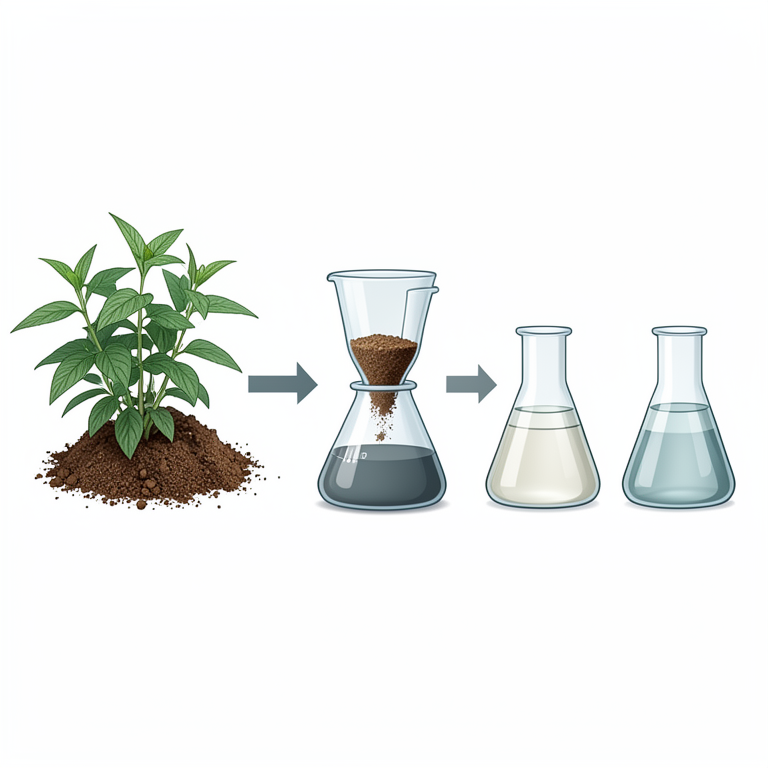
Extraction Workflow
AI-generated conceptual illustration (Bacopa monnieri plants). It explains the idea and does not show study data.
View source evidence ↗Figures & tables
From the original paper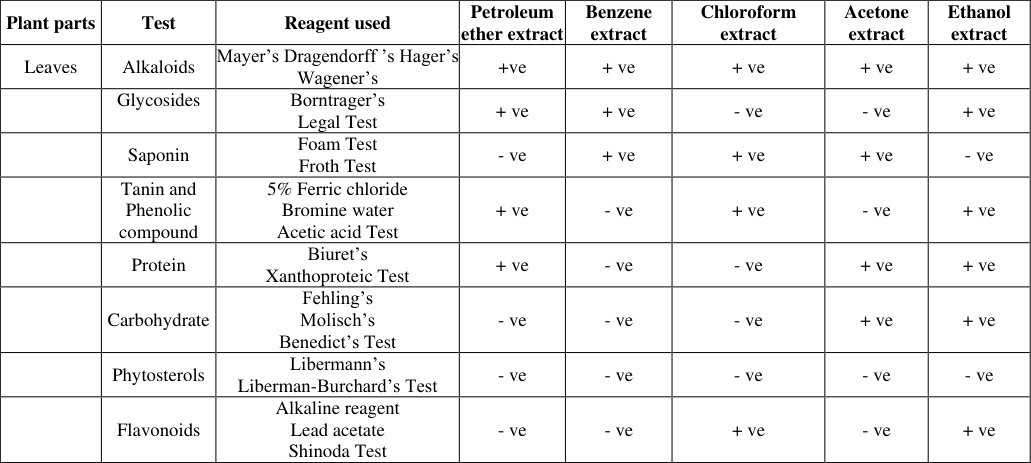 Table 1
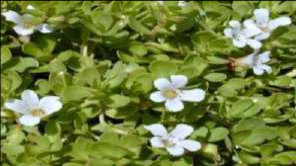 Figure 1
Introduction
Medicinal plants are considerably useful and in expensively essential for human and animal survival. They contain variety of active constituents that are used for the treatment of human and animal diseases, in health care and troubles. (Stary and Hans, 1998) [11] . The medicinal properties of plant can be significantly attributed to a variety of phytochemical constituents synthesized in different plant tissues. Most of the phytochemical constituents are considered as the fundamental source for the development of pharmaceutical industries and interpretation of herbal drugs. (Savitharanam et al. 2011) [12] . Phytochemicals are considered as non-nutritive chemicals produced by plants. They possess defensive or disease preventive properties. Primarily these chemical constituents are produced by plants for their own protection. The scientific investigation demonstrates that a number of phytochemicals can protect human civilization against various diseases. Hence such knowledge about the phytochemical constituents derived from the plant is advantageous and valuable for the production of different complex chemical substances (Veerachari and Bopaiah 2011) [12] . A medicinal plant possesses curative properties mainly due to the presence of alkaloids, glycosides, saponin, carbohydrates, protein, phytosterols, flavonoids and tannin etc. They are naturally synthesized by the plants. The plants are important renewable source of raw materials for the production of variety of chemicals which can be utilized by mankind. It becomes necessary to find out the chemical constituents present in a particular medicinal plant which are used to cure the human and animal disease. An attempt has been made to correlate the biological activity with the chemical constituents of the plants or part used in medicine. Bacopa monnieri (L.) Wettst. Locally called brahmi belongs to Plantaginaceae traditionally used in asthma, snakebite. In ethnoveterinary decoction is used to treat paralytic attack and cough and cold of animals. In ayurveda it is used as antistress and as a brain tonic for memory enhancing. In the present study, simple phytochemical screening procedures were carried out to find the various constituents present in the extract of petroleum ether, benzene, chloroform, acetone, and ethanol of Bacopa monnieri L. showing presence of flavonoids, terpenoids, saponin, steroid and cardiac glycosides, carbohydrates. The plant is used as ethnobotany and ethnoveterinary medicines.
Material and Methods
Plant material is collected from different region of Nimar. Tuber were thoroughly washed, shed dried, and then grind to fine powder. About 25 gm. powder of plant material was subjected to successive soxhlet extraction with 250ml. of various solvent i.e. petroleum ether, benzene, chloroform, acetone, ethanol for 8 hours. Qualitative estimation of some major phytochemical constituents such as alkaloids, flavonoids, glycosides, saponin, tannin, protein, carbohydrates, and physeteroidea was carried out by using standard methods.
Detection of alkaloids
To a few ml of filtrate, few drops of Wagner's reagent are added by the side of the test tube. Formation of reddishbrown precipitate indicates the presence of alkaloids.
Test for glycosides
About 3ml extract was mixed with dil.H2SO4, boiled and finally filtered. Equal volume of chloroform was added to cold filtrates. The organic solvent was separated and mixed ammonia solution. Ammonical layer turned pink or red indicates the presence of anthraquinone glycosides.
Test for carbohydrates
Extract was mixed with equal volume of Benedict's reagent in test tube. Solution was heated in boiling water bath for 5 min. It was turned green, yellow or red, indicates the presence of carbohydrates.
Test for saponins
Small amount of extract was shaken with little quantity of water. If foam produced persists for 10 minutes indicates the presence of saponins.
Test for tannin and phenols
To 2-3ml extract mixed with few drops of 5% FeCl3 solution. Formation of deep blue black colour indicates the presence of tannin and phenols.
Test for flavonoids
Extract was treated with few drops of sodium hydroxide solution intense yellow colored was formed It becomes colorless on addition of dilute acid, indicates the presence of flavonoids.
Test for Phytosteroids and terpenoids
About 2ml extract was with mixed chloroform and then added 1-2ml acetic anhydride and 2 drops of conc.H2SO4 drawn from the side of test tube. Appearance of first red, then blue and finally green colour indicates the presence of steroids.
Test for protein
About 3ml extract was treated with 4% sodium hydroxide and few drops of 1% copper sulphate solution. Formation of purplish violet or pink colour indicated the presence of proteins.
Result and Discussion
The result of the preliminary phytochemical screening of Bacopa monnieri (L.) Wettst. In table shows the presences of different phytochemicals prepared in different solvent extracts. Flavonoids, terpenoids, saponin, steroid and cardiac glycosides, carbohydrates are present in the test. Due to this phytochemical compound the plant used against different human and animal ailments. Bacopa monnieri (L.) Wettst.
Family-Plataginaceae
Family-Plataginaceae
Conclusion
The presence of various phytochemicals such as alkaloids, flavonoids, saponin, tannin phenolic compound and cardiac glycosides in the plant of Bacopa monnieri (L.) Wettst. confirms that this plant species is a potent source for modern drugs using in different ailments of human as well as animals. The present study not only for preliminary contribution to the medico-botany investigation but due to the presence of such phytochemicals also shows a way for pharmacological research in future for the discovery of new sources of drugs for human and animals also.
Figures and tables from the paper
References
13 in the original paper- Bagei NA, Kanu JK. Preliminary phytochemical studies in Salvia species. Europian J of pharma. 2004; 45:27-29.
- Balakrishnan N, Sharma A. Preliminary phytochemical and pharmacological activities of Luffa cylindrical L. Fruit. Asian J Pharm Clin Res. 2013; 6:113-116.
- Dasgupta S, Parmar A, Patel H. Preliminary phytochemical studies of Kalanchoe Gastonis-bonnieri. Int. J Pharm Bio Sci. 2013; 4:550-557.
- Doss A. Preliminary phytochemical screening of some Indian medicinal plants. Anc Sci Life. 2009; 29:12-16.
- Harborne JB (Eds.). Phytochemical Methods: A guide to modern techniques of plant analysis. 3rd ed. Chapman and Hall, London ISBN: 0-412-57270-2, 1998, 302.
- Khandelwal KR. Practical Pharmacognosy Techniques and Experiments. Edn 9, Nirali Prakashan, Pune, 2003.
- Kirtikar KR, Bashu BD. Indian Medicinal Plants. Interna tional Book Distributors, Dehradun, 1998; 1:1045-1048.
- Kokate CK. Practical pharmacognosy. Vallabh prakashan, Delhi, 2005, 107-111.
- Savithramma N, Linga Rao M, Prabha B. Phytochemical studies of Dysophylla myosuroides (Roth.) Benth. In. Wall. and Talinum cuneifolium (Vahl.) Willd. Res. J Phyto. 2011; 5(3):163-169.
- Shukla Achuta Nand, Srivastava Sharad, Rawat AKS. An ethnobotanical study of medicinal plants of Rewa district, Madhya Pradesh Indian Journal of Traditional Knowledge. 2010; 9(1):191-202.
- Stary F, Hans S. The National guides to medical herbs and plants. Tiger Books. Int. Plc. UK, 1998.
- Veerchari U, Bopaiah AK. Preliminary phytochemical evaluation of the leaf extracts of five Cassia Species. J Chem. Pharm. Res. 2011; 3(5):574-583.
- Vijyalakshmi R, Ravindran R. Preliminary comparative phytochemical screening of root extracts of Diospyros ferrea (Wild.) Bakh and Arvalanata (L.) Juss. Ex Schultes. Asian J Plant Sci Res. 2012; 2:581-587.