
Research article · 2020 · Full text
International Journal of Agriculture Extension and Social DevelopmentOn farm evaluation-cum-demonstration of improved enset fermenter in West Shawa zone, Ethiopia
Volume 3(2) · Pages 91–94 · DOI: 10.33545/26180723.2020.v3.i2b.136 ↗
Research areasBanana Cultivation and ResearchSeed and Plant BiochemistryAfrican Botany and Ecology Studies
Abstract
Author-writtenThe prime objective of the current demonstration activity was to demonstrate farmers and agricultural extension personnel improved enset fermenter then to collect feedback on the performance of the technology showcased. The research was undertaken in Toke Kutaye and Dire Enchini districts involving 45 farmers in the two districts with 98 percent women participation. The study used both quantitative and qualitative methods of analysis in which narration, explanation and simple descriptive statistics were applied. The result revealed that the variation in duration of fermentation was not statistically significant between the kocho fermentation methods of local and improved device. In the contrary the mean difference of kocho yield using fermentation methods of local and demonstrated device is significant at 5% significant level Furthermore FGDs were held among farmers, development agents, and woreda experts. They positively rated the device as compared to the traditional enset fermenting method and some farmers wondered if they could access the device. On the basis of the results, then it was concluded that the technology demonstrated was of improvement that can render a viable solution to an unaddressed problem faced by women farmers for years. Therefore, the technology would be recommended for wider promotion in pre scaling up/out form in other enset culture areas of Ethiopia
Summary
Source-checkedPlain-language reading of the full paper, prepared with AI and checked against the text. Each point links to the authors' own words.
Why it matters
- Enset is a highly productive crop in Ethiopia known as the 'tree against hunger' because it helps mitigate seasonal food shortages. View evidence ↗
- Kocho is a common enset product made through anaerobic fermentation, which is the most critical but manually time-consuming stage of production. View evidence ↗
- Traditional fermentation in earthen pits is labor-intensive, time-consuming, and lacks adequate hygiene, placing a disproportionate burden on women. View evidence ↗
The question
- The study aimed to demonstrate an improved enset fermenter to farmers and extension personnel and collect feedback on its performance. View evidence ↗
- The research sought to evaluate the new technology against traditional methods to identify areas for future engineering improvements. View evidence ↗
What they did
- The evaluation was conducted in the Toke Kutaye and Dire Enchini districts of the West Shawa zone in the central Ethiopia highlands. View evidence ↗
- The study involved 45 farmers across the two districts, with women making up 98% of the participants. View evidence ↗
- The improved fermenter is a wooden, three-compartment box sealed with WHO-recommended polyethylene plastic and equipped with rubber wheels for mobility. View evidence ↗
- Quantitative measurements focused on fermentation duration, the weight of the fermented mass, and the number of participants in extension activities. View evidence ↗
What they found
- While the improved device had a shorter average fermentation time (21.7 days) compared to the conventional method (at least 40 days), this difference was not statistically significant (p=0.066). View evidence ↗
- The improved device produced a higher mean yield of kocho (45.4 kg) compared to the underground method (31.6 kg) from the same amount of pulp. View evidence ↗
- The increase in kocho yield using the improved device was statistically significant at the 5% level (p=0.0491). View evidence ↗
- Participating women reported high satisfaction with the device, noting its ability to reduce the hardships associated with enset processing. View evidence ↗
What it means
- The authors conclude that the improved fermenter provides a viable solution to long-standing problems faced by women farmers. View evidence ↗
- The authors recommend scaling up the distribution of the improved fermenter within the study areas. View evidence ↗
Visual summary
3 visualsIllustrations explain the paper; charts are replotted from the paper's own table values.
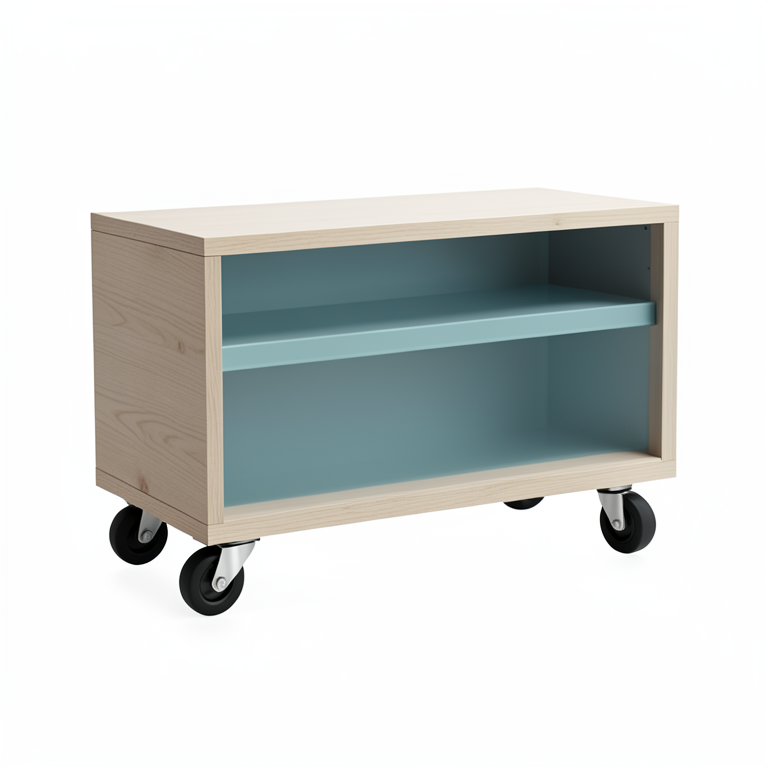
Improved Enset Fermenter Design
AI-generated conceptual illustration (wooden enset fermenter box with wheels). It explains the idea and does not show study data.
View source evidence ↗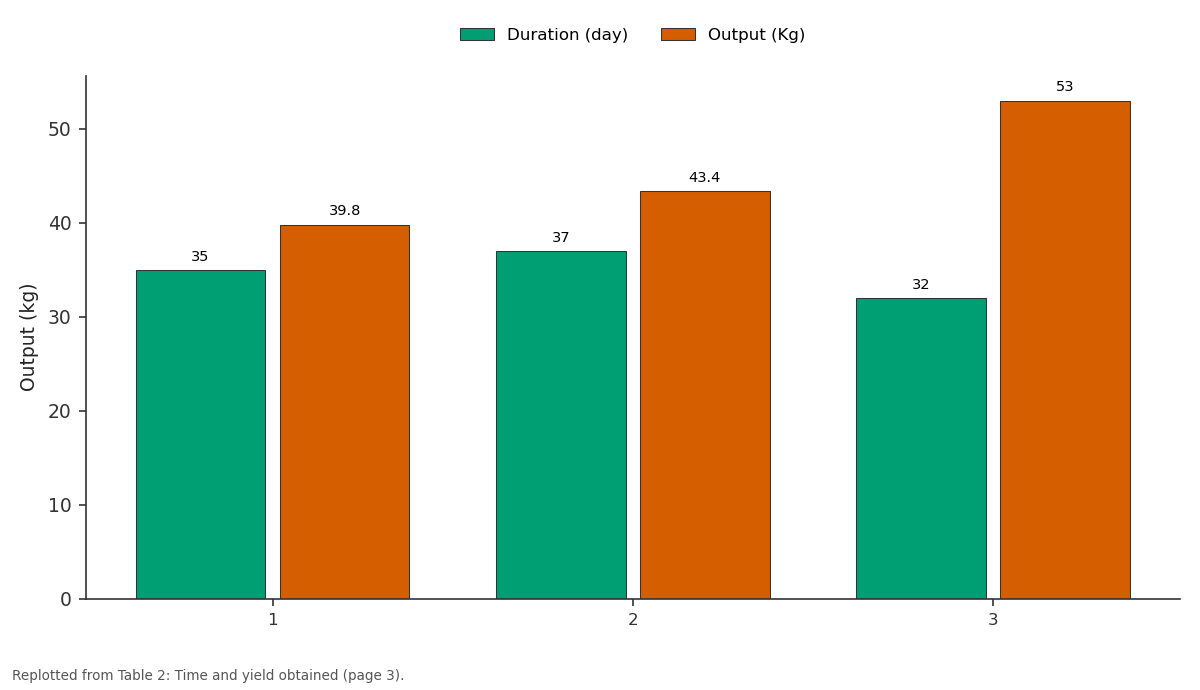
Duration (day) and Output (Kg): 1 vs 2 vs 3
Replotted from Table 2 (page 3) of the original paper. Every bar is the paper's own table value.
View source evidence ↗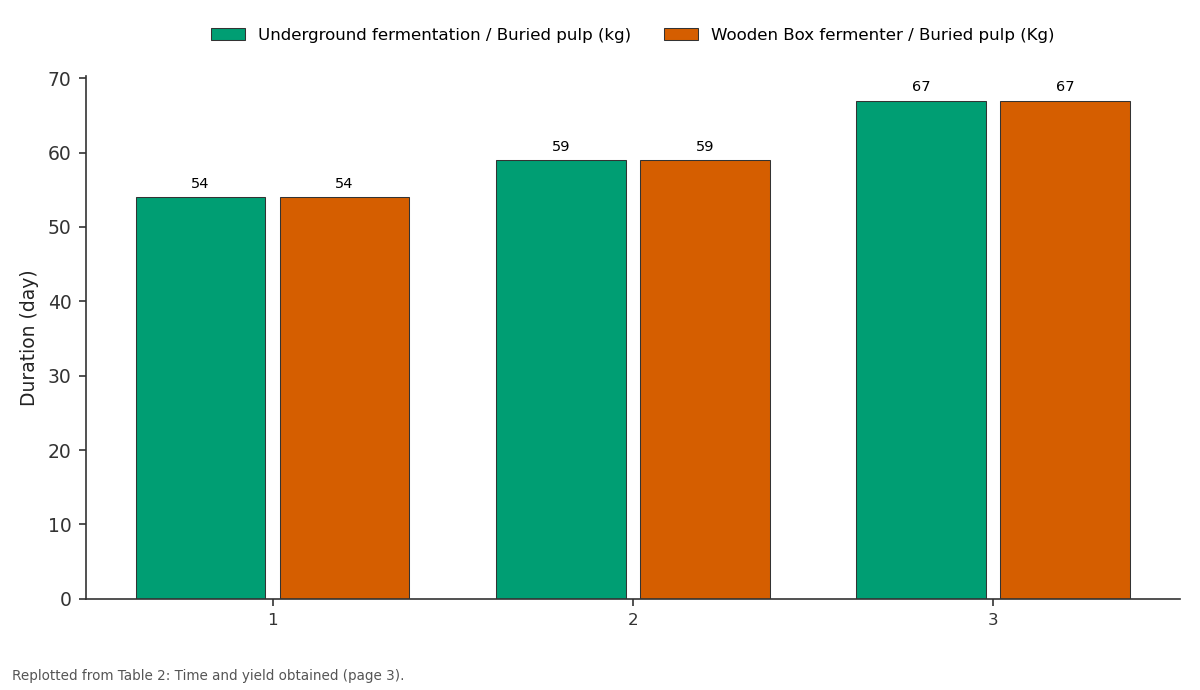
Underground fermentation / Buried pulp (kg) and Wooden Box fermenter / Buried pulp (Kg): 1 vs 2 vs 3
Replotted from Table 2 (page 3) of the original paper. Every bar is the paper's own table value.
View source evidence ↗Figures & tables
From the original paper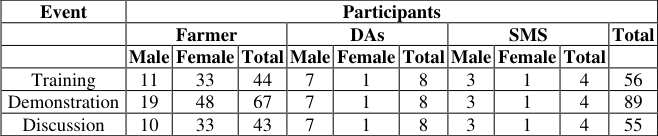 Table 1
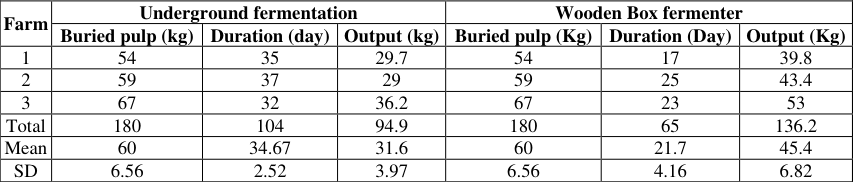 Table 2
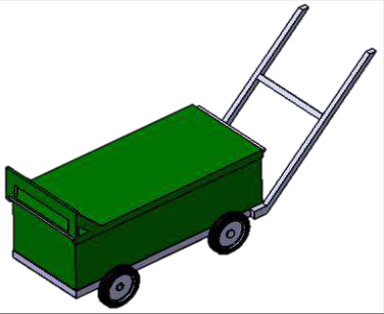 Figure 1
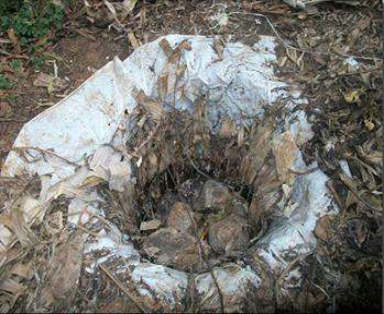 Figure 1
Introduction
Enset is a perennial monocarpic herbaceous plant taxonomically belongs to the order Zingiberales, family Musaceae and genus Ensete. Morphologically it resembles a banana plant and is thus named 'false banana'. As a common feature, both enset and banana have an underground corm, a stout pseudo-stem of overlapping leaf sheath, large paddle-shaped fronds and produce a massive pendulous inflorescence with big orange fruit. But Enset differs from common bananas in that the edible part of it is not the seedy rubbery fruits it bears, instead the single corm underground and the pseudo-stem above the ground. Enset is a classic multipurpose crop whose domestication, cultivation and farming system exclusively occur in Ethiopia though its wild relatives are known to exist in much of tropical East and Southern Africa and the genus extends across Asia to china (Borrell et al., 2020) [3] . Enset is dubbed the tree against hunger as it has exceptionally high productivity and the ability to cushion seasonal food deficit. Enset plantation in Ethiopia as a food crop has long history. Many scientists of different disciplines have developed theories that assume enset domestication in Ethiopia to 10, 000 years (Jacob, 2004). The southern Nations, Nationalities and peoples and part of the Oromia national regional states form the geographical center of enset cultivation (Temesgen et al., 2014) [11] , and the various ethnic groups in these regions recognize and exploit many enset landraces. Here enset is a crop up on which around 20 million of people rely as a staple and co-staple source of food (Borrell et al., 2019) [2] . Enset agriculture gives foodstuffs locally named as Kocho, Bulla and Amicho. Kocho is the bulk of the fermented starchy food obtained from the mixture of the scraped leaf sheaths and grated corm whereas Bulla is the sediment of insoluble starchy product separated from processed enset portion by squeezing and decanting the liquid. It is consumed mainly as porridge, in gruel and as crumbled forms. Amicho is boiled corm of enset that cooked and consumed immediately in a similar manner to roots and tubers of other crops. Moreover enset is known to have several uses including non-food applications and highly integrated with the economic, social and cultural life of enset growing societies (Admasu and Struik, 2001) [1] . It provides a good quality fiber, livestock feed, construction materials and means of earning cash income (Funte et al., 2010) [4] . Local people also believe that particular enset landraces have various medicinal properties (Nyunja et al., 2009) [10] . In addition, enset plant help to prevent soil erosion and conserves soil, which contributes to the sustainability of the farming system particularly in steep land (Mohammed et al., 2013) [9] . Kocho is the most prevalent product obtained by anaerobic fermentation. Fermentation is the most crucial stage in making of Enset food product which manually was quite dilatory; it is a process introduced by a variable microorganism that turns raw materials into the desired final product. Fermentation has also been identified to improve the nutritional quality, digestibility and safety of enset based foods (Hiwot Bekele, 2015) [7] . It also contributes to the development of acceptable texture, flavor and reduces toxicity of plant raw materials. However, harvesting of the enset plant, preparing for fermentation and food preparations follow the traditional route by using the indigenous knowledge and practices. In the first step the leaf www.extensionjournal.com sheath of pseudo stem are cut in to a workable size and get decorticated; the corm tissue and stalks of inflorescence are grated and mixed with the pulp decorticated from the leaf sheaths. Afterward the mixed biomass is buried in an earthen pit of about one meter in diameter and one meter deep, wrapped airtight by enset leaves and some heavy stones, and then left to ferment for anywhere between three months and two years, depending on environmental factors. Fermentation of enset like this in earthen pit can have detrimental effect of the nutrient content of the food. According to Borrell et al. (2020) [3] the fermented kocho stored in pit cannot free from microbial contaminators and spoilers. The enset leaves, the soil, air and the handlers of the fermenting kocho contribute to the spectrum of microorganisms found in it. Of these, some contribute to the rapid spoilage and deterioration of kocho. As stated by Gebreegziabher and & Tsegay (2020) [5] , underneath ground generates clostridium bacteria that secret butyric acid giving unpleasant smell to the end products. Loss of kocho due to spoiler organisms is occasionally high in pits where there are air pockets or where anaerobic conditions have not been maintained (Hunduma and Ashenafi, 2010) [8] . The other spoilage organisms associated with kocho bring about uncommon inherent sensory attributes characteristics like softness, sliminess and discoloration. Similar data reported by Weldemichael et al. (2019) [12] , revealed that the enset fermentation approach performed in the earthen pit is exhausted, labor and time-intensive, considered unsatisfactory with respect to meeting acceptable hygiene, and disproportionally carried out by women. To overcome the problems in scientific way, a team of researchers, at Bako agricultural engineering research center have developed improved enset fermenting technology with a capacity of fermenting up to 3oo kg of kocho in three weeks or so (Gizachew et al., 2019) [6] . It is a box like implement contains three compartments totally sealed by polyethylene plastic which was recommended by WHO for food packing. The technology was made out of wood using nails to fix the components as well as fitted with two rubber wheels for easy movement from yard to yard where enset processing often carried out. The above research authors further stated that the implement fabricated is as light as possible, can locally construct, cheap, and easily process and protect kocho from pathogen infestation. Nonetheless Farmers were unaware about availability of this new technology. Hence this research was conducted with an intension to demonstrate the potentiality of the technology to farmers. More specifically the project intended to create awareness of farmers about the availability of the technology; create and strengthen linkage among key actors; evaluate the performance of new technology side by side with the prevailing enset fermentation method, and collect feedback that may highlight some features or problems that engineers can address in their future prototype updating
Materials and Methods
Materials and Methods
Location description
The research areas were Toke Kutaye and Dire Enchini districts, West Shawa of the central Ethiopia highlands. These two districts share boundaries with each other and almost similar in socio-cultural set-up, environmental conditions, farming system and are likely to experience similar challenges. With their capital Toke-kutaye and Dire-Enchini were located at about 135 and 165 km west of Addis Ababa respectively. The major agro-ecological zones of the study areas are semi-arid, sub-humid, and humid with uni-modal rain fall characteristics falling from March to mid-October. In normal years, the annual average rain fall ranges from 800 to 1800 mm while the annual average temperature of the districts varies from 13-24 °C. Agriculture is the primary occupation of inhabitants of these districts. The major annual crops common to both districts include cereals, highland pulse and oil crops, Enset being the dominant perennial crop of the area covering total area of 345 m 2 . The latter substantially contributes to both food security, and environmental sustainability as rationalized by farmers. Of cereal crop teff, wheat and burley are the dominant while horse bean and linseed are the major ones from pulse and oil crop. Most of these crops are grown for food and as cash sources as well. Like to many parts of Ethiopia, the study area is endowed with significant number of domestic animals namely cattle, sheep, goats, horses and poultry.
Research site and farmer selection
There are 22 districts in west shawa Zone, in almost all of which enset plant is being produced. However, due to facilities paucity, only two districts mentioned above were selected grounded the fact that both districts are representative to the rest districts of the zone with regard to enset production, consumption and marketing. From Toke Kutaye Maruf and from Dire Enchini Homi-Anne and Arfanjo-Daga kebeles were chosen depending on their location with respect to the main road. With the full awareness and involvement of district and kebele level agriculture extension personnel, a total of forty five households, fifteen from each kebele, were selected and constituted the participants for this research.
FRG establishment and farmer training
Once the required farmers were selected, meetings on which farmers were presented a detail explanation of FRG and its objectives were held in each and every kebele considered for the study. On this gathering, farmers were briefed on the process of participatory technology demonstration and evaluation as well as group learning and experience sharing. The meeting was also an occasion arranged to establish linkage and define roles and responsibilities of the participating stakeholders at individual and group levels. Following the completion of discussion, Three FRGs largely made up of women, were established taken neighborhood affinity into account. The project used a household approach; which mean that training and other extension events designed for this research targeted all the members of household as one entity. In the presence of research team, extension personnel, DAs and local leaders, farmers chose four knowledgeable women (in processing enset) among them to host the demonstration. Eventually a three-day training workshop that help farmers understand machine's operating techniques simple maintenance, and possible hazards to themselves and other, were scheduled and given to the farmers and government agricultural extension workers (experts and development agents), ahead of carrying out on farm technology demonstration
Materials
Enset fermentation pit, newly developed box, and matured enset plant were researchable materials. Timber, Angle iron, 4 tires, Polyethylene plastic (recommended by WHO for food packing and processing) were raw materials that required to fabricating the technology. Some of these materials were purchased some were kindly provided by farmers. Four implements were multiplied by the center, there were disseminated to the host farmers and one was left for the center as a sample
Data Type and collection Methods
The data for this activity was in both quantitative and qualitative types. The quantitative data were collected on length of fermentation, weight fermented mass (dough weight), number of farmer, extension worker and non-FRG members attended extension promotion activities. Unquantifiable data and feed backs information was amassed through FGD. The quality (purity) of Kocho was also qualitatively evaluated using 8 trained sensory panelists by preference test method on the bases of the texture, taste, ripeness, color, softness, and odor of the pancake against fermentation methods under investigation
Method of Data analysis
The whole data gleaned for the research was subjected to inferential (t-test), descriptive and narrative mechanics of analysis.
Result and Discussion
Result and Discussion
Farmers' awareness creation
Having tailed the first objective, the created knowledge and awareness to farmers and development agents considering that they were not aware of the technology and its uses. This was made possible through farmers' interaction, field day, training sessions and few technology distributions. Table 1 showed extension activities conducted Upon returning from training, the farmers and agricultural extension agents participated in the organized field demonstration exercises along with invited neighbors and evaluated the technology in demonstration concurrently with their prevailing practices 89 Attendees would get a chance to observe, learn first-hand how the device work to help determine which methods might appropriate for enset processing. Three focus group discussions with 55 participants were conducted just on the demonstration site.
| Event | Participants | — | — | — | — | — | — | — | — | — |
|---|---|---|---|---|---|---|---|---|---|---|
| Farmer | DAs | SMS | Total | |||||||
| Male | Female | Total | Male | Female | Total | Male | Female | Total | ||
| Training | 11 | 33 | 44 | 7 | 1 | 8 | 3 | 1 | 4 | 56 |
| Demonstration | 19 | 48 | 67 | 7 | 1 | 8 | 3 | 1 | 4 | 89 |
| Discussion | 10 | 33 | 43 | 7 | 1 | 8 | 3 | 1 | 4 | 55 |
Table text extracted from the original PDF; superscript letters are shown inline. The original table image is below.
View original table image
The results grasped during these discussions were presented in the 3.3 section of this research. The above table represents the descriptive statistics. In average, fermentation in which the conventional method was employed took no less than 40 days whereas 21.7 days for the improved device. However, although the means difference were in wide range, the variation in duration of fermentation was not statistical significant between the kocho fermentation methods of local and improved method (t=3.691, P-value 0.066). But for timeliness consideration the investigator felt that it was necessary to completely ferment the kocho placing in the fermenting box. The kocho yield of enset in terms of weight using wooden box fermenter was investigated and compared with the yield obtained through conventional method. The mean value of kocho output fermented underground was 31.6kg with standard deviation of 3.97. It was measured to be 47% of the original kocho stored (60 kg). In the contrary throughout the site the kocho fermented through demonstrated device was observed to have high weighted mean value than that of pit. The mean score of fresh weight of kocho after fermentation using the device was equal to 45.4 kg from the same pulp buried. the mean difference of kocho yield using fermentation methods of local and demonstrated device is significant (t = 3. 412, p-value 0.0491) at 5% significant level.
Evaluation of kocho fermenting methods in terms of yield and fermentation time
Evaluation of kocho fermenting methods in terms of yield and fermentation time
Farmers Feedback
Farmers who participated in the demonstration were encouraged to give feedbacks from their observation of enset fermenter's performance. By and large almost all women have expressed their fascination and satisfaction with the introduced device innovated to reduce the hardship faced by women in enset processing for food. Time and labor saving benefits of the technology were perceived values of the device by both farmers and their neighbors. Participant stakeholder confirmed that kocho fermenter demonstrated has better relative advantage over tradition practices.
Conclusion and Recommendation
The project created knowledge and awareness to farmers and development agents considering that they were not aware of the technology and its uses. The yield of kocho obtained from enset fermenting in the introduced device is high weighted than that of pit, so it can be concluded that a technology built and demonstrated is a step in the right direction and a little bit of improvement that can render a viable solution to an unaddressed problem faced by women farmers for years. Therefore scaling up/out of this technology in the study areas is recommendable.
Figures and tables from the paper
| Farm | Underground fermentation | — | — | Wooden Box fermenter | — | — |
|---|---|---|---|---|---|---|
| Buried pulp (kg) | Duration (day) | Output (kg) | Buried pulp (Kg) | Duration (Day) | Output (Kg) | |
| 1 | 54 | 35 | 29.7 | 54 | 17 | 39.8 |
| 2 | 59 | 37 | 29 | 59 | 25 | 43.4 |
| 3 | 67 | 32 | 36.2 | 67 | 23 | 53 |
| Total | 180 | 104 | 94.9 | 180 | 65 | 136.2 |
| Mean | 60 | 34.67 | 31.6 | 60 | 21.7 | 45.4 |
| SD | 6.56 | 2.52 | 3.97 | 6.56 | 4.16 | 6.82 |
Table text extracted from the original PDF; superscript letters are shown inline. The original table image is below.
View original table image
References
12 in the original paper- Admasu Tsegaye, Struik PC. Enset (Ensete ventricosum (Welw.) Cheesman) kocho yield under different crop establishment methods as compared to other carbohydrate-rich food crops. Neth. J Agric. Sci. 2001;49:81-94.
- Borelle JS, Biswas MK, Goodwin M, Blomme G, Schwarzacher T, Heslop-Harrison JS, et al. Enset in Ethiopia: A poorly characterized but resilient starch staple. Annals of Botany. 2019;123(5):747-766. https://doi.org/10.1093/aob/mcy214 [Crossref], [PubMe d], [Web of Science ®], [Google Scholar]
- Borrell JS, Goodwin M, Blomme G, Jacobsen K, Wendawek AM, Gashu D, et al. Enset-based agricultural systems in Ethiopia: A systematic review of production trends, agronomy, processing and the wider food security applications of a neglected banana relative. Plants, People, Planet. 2020;2(3):212-228. https://doi.org/10.1002/ppp3.10084 [Crossref], [Google Scholar]
- Funte S, Negesse T, Legesse. Feed Resources and Their Management Systems in Ethiopian Highlands: The case of Umbulo Wacho Watershed in Southern Ethiopia Tropical and Subtropical Agro ecosystems, Vol. 12, Núm. 1, enero-abril, 2010, 47-56. Universidad Autónoma de Yucatán México 2010.
- Gebreegziabher BG, Tsegay BA. Proximate and mineral composition of Ethiopian pea (Pisum sativum var. abyssinicum A. Braun) landraces vary across altitudinal ecosystems. Cogent Food and Agriculture, 2020, 6(1).
- Gizachew Tefera, Abdeta Tadesse, Abdo Hussein. Development and Evaluation of Enset Fermenting Box. International Journal of Engineering Research & Technology (IJERT): October-2019, 8(10).
- Hiwot Bekele. Effect of Enset (Ensete ventricosum (Wele) Cheesman) Variety and Fermentation on Nutritional Composition, Anti-nutritional Factors, Physicochemical Characteristics and Functional property of Bulla. Food and Nutritional Sciences. Addis Ababa, Ethiopia, 2015.
- Hunduma T, Ashenafi M. Effect of Altitude on Microbial Succession During Traditional Enset (Ensete Ventricosum) Fermentation. International Journal of Food Safety, Nutrition and Public Health, 2010.
- Mohammed B, Martin G, Laila M. Nutritive values of the drought tolerant food and fodder crop enset, African Journal of Agricultural Research. 2013;8(20):23262333.
- Nyunja ARO, Onyango JC, Erwin B. The Kakemaga forest medicinal plant resource and their utilization by the adjacent Luhya community. International Journal of Tropical Medicine. 2009;4(3):82-90.
- Temesgen M, Bizuayehu T, Marcello C, Mario E. Indigenous knowledge, use and on-farm management of enset (Ensete ventricosum (Welw.) Cheeseman) diversity in Wolaita, Hawassa University, School of Plant and Horticulture Science, Hawassa, Ethiopia, 2014. Link: https://bit.ly/3hiCSJt
- Weldemichael H, Stoll D, Weinert C, Berhe T, Admassu S, Alemu M, et al. Characterization of the microbiota and volatile components of kocho, a traditional fermented food of Ethiopia. Heliyon. 2019;5(6):e01842. 10.1016/j.heliyon.2019.e01842