
Research article · 2022 · Full text
International Journal of Research in AgronomyStudying altitude influence on Uludağ fir soil macro nutrients in Kastamonu, Turkey
Volume 5(1) · Pages 43–48 · DOI: 10.33545/2618060x.2022.v5.i1a.98 ↗
Research areasPlant Ecology and Soil SciencePlant Ecology and Taxonomy StudiesNuts composition and effects
Abstract
Author-writtenSoil macronutrients (P, K, Ca +2 and Mg +2 ) showed significant differences between the altitudes (p<0.05).Mean soil macronutrients; Mg, P and K concentrations were significantly higher at the higher altitude than those at the lower altitude, whereas mean soil Ca +2 concentration was lower at the higher altitude than those at the lower altitude.Soil micronutrients, Mn +2 , Na, Zn +2 , Cl, Al and Co concentrations were also significantly higher at the higher altitude than those at the lower altitude.In conclusion, our results indicate that topographical factors, the slope aspect in this present study, can significantly affect soil properties and soil organic carbon and total nitrogen content.Therefore, those factors should be considered in future studies.
Summary
Source-checkedPlain-language reading of the full paper, prepared with AI and checked against the text. Each point links to the authors' own words.
Why it matters
- Soil quality is critical because it is influenced by various factors that can either improve or hinder the sustainability of woodland and crop production. View evidence ↗
- The formation of soil is a long-term process involving both physical and chemical mechanisms. View evidence ↗
- Macronutrients are essential soil-derived elements that typically make up more than 0.1% of a plant's total dry weight. View evidence ↗
The question
- The study aimed to investigate how slope position affects soil properties, total nitrogen, and soil organic carbon in Black pine (Pinus nigra) forests in Daday, Kastamonu. View evidence ↗
What they did
- The research was conducted in the mountainous Daday region of Kastamonu, Turkey, characterized by elevations up to 3000 m and steep slopes between 40% and 60%. View evidence ↗
- Soil samples were collected from two specific altitude positions: the top of the slope at 1189 m and the bottom at 871 m. View evidence ↗
- The researchers used ANOVA to test for significant differences between slope positions, followed by Tukey's HSD test for results where p < 0.05. View evidence ↗
What they found
- In contrast to other macronutrients, the mean concentration of Calcium (Ca) was lower at the higher altitude than at the lower altitude. View evidence ↗
- Several micronutrients, including Manganese (Mn), Sodium (Na), Zinc (Zn), Chlorine (Cl), Aluminum (Al), and Cobalt (Co), showed significantly higher concentrations at the higher altitude. View evidence ↗
- Sulfur (S) was the only macronutrient that did not show significant variation across different altitudes or soil depths. View evidence ↗
- Iron (Fe) and Copper (Cu) concentrations remained stable, showing no significant variation between altitudes or soil depths. View evidence ↗
What it means
- The authors concluded that altitude significantly impacts various soil parameters for Black pine in the Daday region. View evidence ↗
- The authors recommend that future studies consider topographical factors, such as slope aspect, as they significantly affect soil properties, total nitrogen, and organic carbon. View evidence ↗
- The authors state that further research on supplements in over-the-ground materials across more forest types is needed to fully understand the relationship between topography and the environment. View evidence ↗
Visual summary
1 visualsIllustrations explain the paper; they do not show study data.
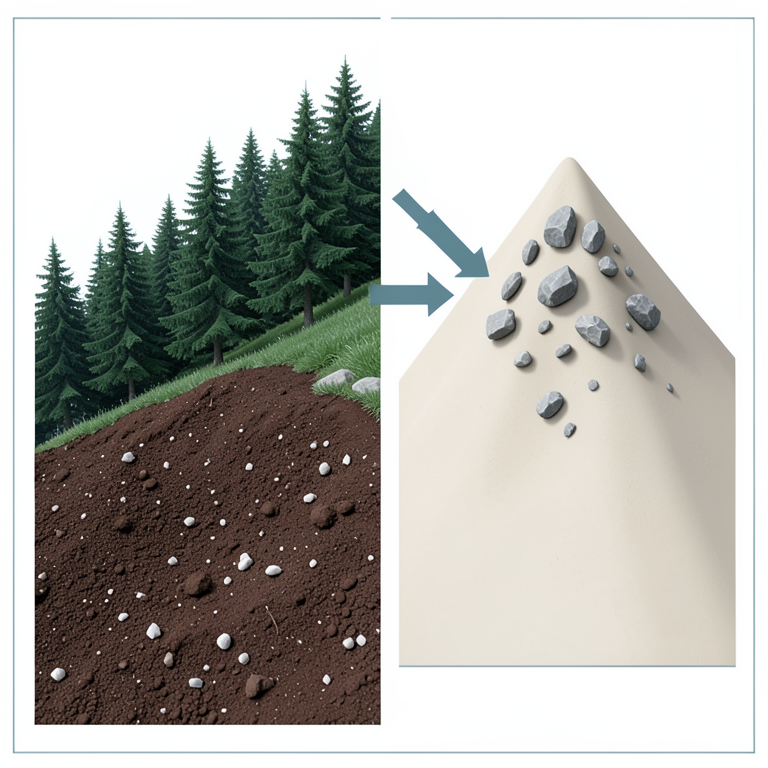
Altitude Nutrient Gradient
AI-generated conceptual illustration (Uludağ fir trees (Abies nordmanniana) on a mountain slope). It explains the idea and does not show study data.
View source evidence ↗Figures & tables
From the original paper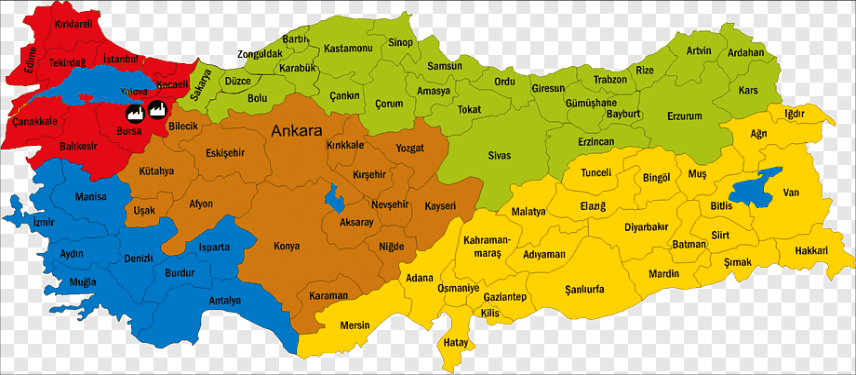 Figure 1
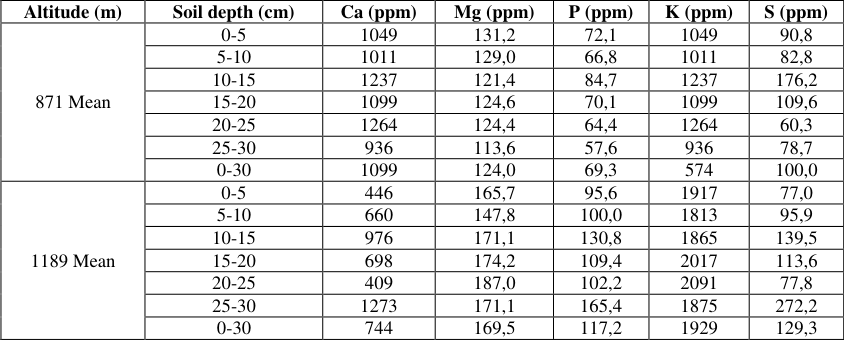 Table 1
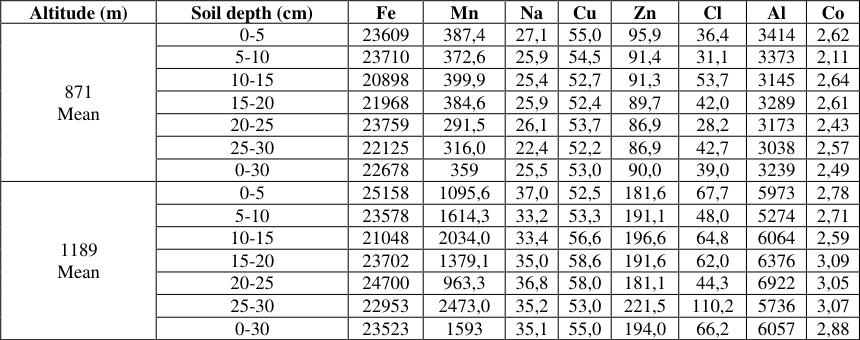 Table 2
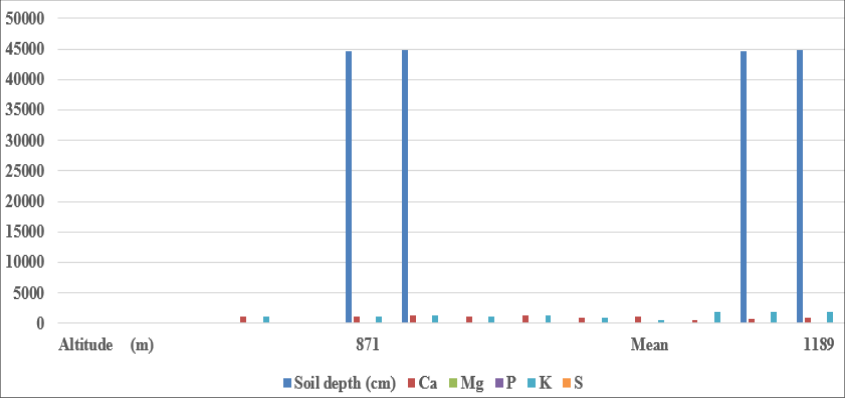 Figure 2
Introduction
Soil quality is influenced by multiple factors that enhance or decrease the sustainability of the crop and woodland production, and range. These factors can be described based on chemical, physical or biological interference. Also, these factors can be broken down into land usage and management, and influence of environment in which socio-economic influence the most. (Warkentin & fletcher 1977) [33] . Soil formation is a physical and chemical approach. This approach has been made throughout decades. During this formation layers are made which caused to process of the hydrological and fuel terrestrial cycles. Soil has the best capacity to store water and fuel which are stored by adhesive and cohesive forces (Bandel, V et al., 2000) [3] . Water is added to the soil by precipitation and when the soil exceeds the water holding in its content then the exceeded amount is transferred to the groundwater cycle or to the surface in which the surface moisture is encountered by sun heat and evapotranspiration occurs and joins the climate cycle and transfers to other places which controls the soil process. Latent heat flux and leaching illustrate the solute flux and soil development that forms biogeochemical cycling (Chadwick et al., 2003) [6] . The soil quality is redundant because everyone knows that how and where good soils are found. Quantifying soil based on quality varies based on verities in nature. Based on soil formation and deformation the soil series can be found everywhere (Karlen et al., 1997) [29] .
Soil-derived macronutrients
The six soil-derived macronutrients are present in plants at relatively high concentrationsnormally exceeding 0.1 percent of a plant's total dry weight. This translates into a minimum need of 20 pounds of each macronutrient per acre each year.
Nitrogen
Plants require large amounts of nitrogen for adequate growth. Plants take up N from the soil as NH4 + (ammonium) or NO3 (nitrate) A typical plant contains 1.5 percent nitrogen on a dry weight basis, but this can range from 0.5 percent for a woody plant to up to 5.0 percent for a legume. Nitrogen is a component of amino acids, which link together to form proteins. Nitrogen is also a Component of protoplasts and enzymes (Lee S, 1999) [8] . Once in the plant, N is mobile-it can move from older plant tissue to new tissue.
Consequently, if N is deficient in plants, the older leaves often turn yellow-green or yellow first. As the deficiency progresses the entire plant yellows. The major natural source of N in soils is organic matter (Karlen D, et al. 1997) [29] .
Phosphorus
A typical plant contains 0.2 percent P on a dry weight basis, however, depending on the plant species this value can range from 0.1 to 0.5 percent. Plants take up P as an anion (ion with a negative charge)-H2PO - 4 , HPO4 or PO4. The actual form of the anion is dependent on soil pH. Phosphorus is mobile within plants and can travel from old plant tissue to new plant tissue on demand. P deficiency in plants is hard to diagnose by eye because deficiency symptoms are not commonly visible.
Potassium
Plants typically contain 1.0 percent K on a dry weight basis. This value can range from 0.5 to 5.0 percent depending on the plant species. Potassium is held by the clays in soils and is taken up by plants as K + . Potassium is mobile in plants. Potassium deficiencies can be diagnosed by looking at the older plant tissue. Deficiencies appear along the outer margins of older leaves as streaks or spots of yellow (mild deficiencies) or brown (severe deficiencies). Potassium plays several roles in plants. It is important for water and energy relationships and has been linked to improved cold hardiness. Soils in the Pacific Northwest generally contain adequate amounts of potassium. Deficiencies are isolated to soils where alfalfa and potatoes have been grown for several decades (Azlan A, et al. 2016) [2] .
Sulfur
Plants take up S from the soil as SO4, (sulfate). Because the plantavailable form of S is negatively charged, it can be leached out of plant root zones with precipitation or irrigation. A typical plant contains 0.1 percent S on a dry weight basis, but this can range from 0.05 to 0.5 percent S. Sulfur, like N, is a component of some amino acids that link together to form proteins. Sulfur is also a component of plant protoplasts and enzymes. Once in the plant, sulfur has only fair mobility. New plant tissue will show a sulfur deficiency first, often turning yellow-green or yellow.
Calcium
A typical plant contains 0.5 percent Ca on a dry weight basis. However, woody plants may contain up to 5.0 percent Ca. Plants take up calcium as Ca2 + . Calcium is required for cell division, cell elongation, and cell structure. Since Ca is not mobile in plants, calcium deficiency symptoms appear at their growing tips. Soils in the Pacific Northwest contain plenty of calcium. Consequently, calcium deficiencies plants grown under agronomic, horticultural, or lawn and garden situations have never been observed in the region.
Magnesium
Plants typically contain 0.2 percent Mg on a dry weight basis. This value can range from 0.1 to 1.0 percent depending on the plant species. Magnesium is held by the clays and organic matter in soils and is taken up by plants as Mg2 + . Magnesium is mobile in plants. Magnesium deficiencies can be diagnosed by looking at the older plant tissue. Deficiencies appear as "interveinal chlorosis" in older leaves-the veins of the leaves stay dark green while the areas between the veins appear yellow-green, yellow, or white. Magnesium is a component of chlorophyll. Most soils in the Pacific Northwest contain adequate amounts of Mg for plant growth. Magnesium deficiencies are isolated to soils with pH values below 5.2 (Plaster E 2013, Lamma OA, & Swamy, AVVS 2018) [17,9] .
Soil-derived micronutrients
The eight soil-derived micronutrients are present in plants at relatively low concentrations-often just a few parts per million (ppm) of a plant's total dry weight. Even though plants require only small amounts of micronutrients, a deficiency will harm them as much as a lack of N or P. Plants need 0.5 to 2 pounds per acre of most micronutrients per year.
Boron
Plants require about 20 ppm of B. Boron is taken up by plants as an uncharged molecule(H3BO3) or as an anion (H2BO3 -, HBO3) Since the plant-available form of B is not positively charged it can be leached out of soils and is often lost from the plant root zone by over irrigation or high precipitation (Parras-Alcántara L, 2015) [25] . Boron promotes the translocation of sugars and cell development and is believed to be important for growth regulators. Boron is not mobile in plants. Consequently, B deficiency symptoms most often appear on the growing tip of the plant In B-deficient plants, the growing tip is often deformed (Rezaei H., et al. 2015) [19] .
Chlorine
You may not realize it but chlorine is classed as a plant micronutrient meaning that it is essential for the proper growth of plants. It is important to note though, that it is the ion (Cl -) rather than the gas (Cl2) that is used by plants (Johnson DW, & Curtis PS, 2001) [28] . In particular, chlorine is important for plant photosynthesis as it is involved in the opening and closing of stomata (pores in leaves that enable plants to take in and release carbon dioxide, oxygen and other gases as required. It also helps ensure leaves are firm (Lamma 2016) [16] .
Copper
Copper is taken up by plants as Cu2 + . Concentrations of Cu in plants average 6 ppm, but can range from 2 to 20 ppm. Copper is a component of plant cytochromes and is needed for enzyme activation. Copper is not mobile in plants deficiencies appear first in the youngest plant tissue Most soils contain adequate levels of copper for plant growth.
Copper deficiencies are most likely on soils that contain more than 8 percent organic matter-only about 1 percent of the soils in the Pacific Northwest. For additional information on Cu (Lamma et al. 2021) [11] .
Iron
Plants take up iron as Fe2 + . A typical plant contains 100 ppm of Fe, but Fe content range from 50 to 1,000 ppm depending on plant species. Iron is needed for chlorophyll synthesis, metabolic processes, and enzyme activation. Iron is not mobile in plants, so Fe deficiencies first appear on younger leaves. The characteristic deficiency symptom is interveinal chlorosis on the younger leaves. In general, there is plenty of plant-available Fe in acid and neutral pH soils.
Manganese
Manganese is taken up as Mn2 + by plants. Concentrations of Mn in plants average 50 ppm, but can range from 20 to 200 ppm. Manganese is required in the Hill reaction of photosystem II and is important for enzyme activation. Manganese is not mobile in plants, so deficiencies appear first in the youngest plant tissue (Lamma et al. 2018) [9] .
Molybdenum
Plants take up molybdenum as MoO4 A typical plant contains only 0.1 ppm of Mo. However, this small amount of Mo allows plants to utilize N. In addition, legumes require Mo for nitrogen fixation. Molybdenum is not mobile in plants, so deficiency symptoms appear in younger plant tissue first. Molybdenumdeficient plants turn yellow-green to yellow. Most Mo deficiencies occur when legumes are grown in soils with pH values less than 5.4.
Nickel
Soils with high Ni contents occur in several parts of the world, especially in areas with ultramafic rocks which cause serious environmental impacts. This book aims to extend the knowledge on the risks and problems caused by elevated Ni contents and to cover the existing gaps on issues related to various aspects and consequences of high Ni contents in soils and plants (Lamma et al., 2018) [9] .
Zinc
Zinc is an essential plant micronutrient. It is important for production of plant growth hormones and proteins and is involved in sugar consumption. Good root development as well as carbohydrate and chlorophyll formation are also dependent on zinc. Maintaining adequate zinc levels is important for enabling plants to withstand low air temperatures. Zinc is also involved in the synthesis of auxin, a plant hormone that helps plants determine whether to focus on growing tall or becoming bushy. Deficiencies do occur in soils where the topsoil or organic matter has been removed. (Bhaskar, B et al. 2004) [4] .
Aim of study
The main aim of this present study was to investigate the effects of slope position on soil properties, soil organic carbon and total nitrogen content and stock capacities of Black pine (Pinus nigra) in Daday, Kastamonu.
3-Material and Methods
3-Material and Methods
Description of sampling sites
This study was carried out in the Kastamonu province, Daday, north-west of Kastamonu, Turkey, (41°28′43″ N, 33°28′00″ E) (Figure 1), a mountainous region with steep slopes (ranging from 40 to 60%) and high elevations (up to 3000 m). The location of the study area is shown in Figure 2. In the area, both north-and south-facing sites were commonly forested by Pinus silvestris and Pinus nigra either pure or in species mixture. Some stands. Fagus orientalis and Quercus spp can be seen along with Pinus silvestris and Pinus nigra. Basic forest construction sorts developing on these heights in every region were deciduous-coniferous woods (650-1100 m) and coniferous backwoods (1100-1600 m) (Figure 3). The understory at the lower part of the slant was involved by grasses, ferns and herbs, though the upper part of the slope was commanded by herbaceous plants amid the developing season. In winter, the ground was secured with snow, gathered all the more vigorously on the upper parts of the slope and achieved profundities of up to 2 m. Snow remained longer on the ground at the upper parts than at the lower parts. The north-facing slopes received heavier snow accumulations than the south-facing slopes, but in spring snow melted more rapidly on the southfacing slopes than on the north-facing slopes.
Geology of the study site
The study area is Daday near Kastamonu in the southern passive margin of the oceanic western Black Sea basin, it is part of the Central Pontides of Turkey. This is related to the Arach-Daday unit, the rocks of this unit is different in the basement and at the top covered by the rocks of Mesozoic age. This basin bisected length wise during the mass Tristian forming the Zonguldak basin in the North West and the Ulus basin in the south west. Both of these basins were deform in the early Cenozoic to the east of the Arac-Daday shear-zone the northerly deepening Sinop basin dominates the architecture of the pontides in the north. Consist of Daday-geology there are many types of rocks Metamorphic nearly before ancient age Cambrian there are consist of five geology that consist rocks the position geology in the region are consist of type of rocks Metamorphic. Parent material of the studied region was basically a stone/quartz blend.
3.3.Soil sampling ın the field
Two slope positions were selected at the top (1189 m) and bottom (871m) on north and south aspects. The slope angles of the sites ranged from 40% to 50%. At the top slopes on the north-facing site were commonly dominated by Black pine trees, but Scots pine trees were also seen around At the bottom slopes on the north-and south-facing sites were covered by Black pine trees.
Statistical analyses
Differences in soil properties and soil carbon stock rates between slope positions were tested for significance using ANOVA.
Tukey's honest significance difference (HSD) test was used when statistically significant differences (p<0.05) were observed.
Soil macro and micro nutrients
Soil macro and micro nutrient concentrations of Black pine stands collected from the north aspect at two altitudes are given in Table 1 and Table 2 respectively. Soil macronutrients (P, K, Ca and Mg) only showed significant differences between the altitudes (p<0.05). Only, macronutrient, S did not show any significant variation between the altitudes and also between the soil depths. Soil micronutrients (Na, Cl, Al and Co) only varied significantly between the altitudes, while soil micronutrients (Mn and Zn) differed significantly between the altitudes and between the soil depths. Fe and Cu concentrations did not vary between the altitudes and between the soil depths. Mean soil macronutrients; Mg, P and K concentrations were significantly higher at the higher altitude than those at the lower altitude, whereas mean soil Ca concentration was lower at the higher altitude than those at the lower altitude (Table 1). Soil micro nutrients, Mn, Na, Zn, Cl, Al and Co concentrations were also significantly higher at the higher altitude than those at the lower altitude (Table 1).
| Altitude (m) | Soil depth (cm) | Fe | Mn | Na | Cu | Zn | Cl | Al | Co |
|---|---|---|---|---|---|---|---|---|---|
| 871 Mean | 0-5 | 23609 | 387,4 | 27,1 | 55,0 | 95,9 | 36,4 | 3414 | 2,62 |
| 5-10 | 23710 | 372,6 | 25,9 | 54,5 | 91,4 | 31,1 | 3373 | 2,11 | |
| 10-15 | 20898 | 399,9 | 25,4 | 52,7 | 91,3 | 53,7 | 3145 | 2,64 | |
| 15-20 | 21968 | 384,6 | 25,9 | 52,4 | 89,7 | 42,0 | 3289 | 2,61 | |
| 20-25 | 23759 | 291,5 | 26,1 | 53,7 | 86,9 | 28,2 | 3173 | 2,43 | |
| 25-30 | 22125 | 316,0 | 22,4 | 52,2 | 86,9 | 42,7 | 3038 | 2,57 | |
| 0-30 | 22678 | 359 | 25,5 | 53,0 | 90,0 | 39,0 | 3239 | 2,49 | |
| 1189 Mean | 0-5 | 25158 | 1095,6 | 37,0 | 52,5 | 181,6 | 67,7 | 5973 | 2,78 |
| 5-10 | 23578 | 1614,3 | 33,2 | 53,3 | 191,1 | 48,0 | 5274 | 2,71 | |
| 10-15 | 21048 | 2034,0 | 33,4 | 56,6 | 196,6 | 64,8 | 6064 | 2,59 | |
| 15-20 | 23702 | 1379,1 | 35,0 | 58,6 | 191,6 | 62,0 | 6376 | 3,09 | |
| 20-25 | 24700 | 963,3 | 36,8 | 58,0 | 181,1 | 44,3 | 6922 | 3,05 | |
| 25-30 | 22953 | 2473,0 | 35,2 | 53,0 | 221,5 | 110,2 | 5736 | 3,07 | |
| 0-30 | 23523 | 1593 | 35,1 | 55,0 | 194,0 | 66,2 | 6057 | 2,88 |
Table text extracted from the original PDF; superscript letters are shown inline. The original table image is below.
View original table image
| Altitude (m) | Soil depth (cm) | Ca (ppm) | Mg (ppm) | P (ppm) | K (ppm) | S (ppm) |
|---|---|---|---|---|---|---|
| 871 Mean | 0-5 | 1049 | 131,2 | 72,1 | 1049 | 90,8 |
| 5-10 | 1011 | 129,0 | 66,8 | 1011 | 82,8 | |
| 10-15 | 1237 | 121,4 | 84,7 | 1237 | 176,2 | |
| 15-20 | 1099 | 124,6 | 70,1 | 1099 | 109,6 | |
| 20-25 | 1264 | 124,4 | 64,4 | 1264 | 60,3 | |
| 25-30 | 936 | 113,6 | 57,6 | 936 | 78,7 | |
| 0-30 | 1099 | 124,0 | 69,3 | 574 | 100,0 | |
| 1189 Mean | 0-5 | 446 | 165,7 | 95,6 | 1917 | 77,0 |
| 5-10 | 660 | 147,8 | 100,0 | 1813 | 95,9 | |
| 10-15 | 976 | 171,1 | 130,8 | 1865 | 139,5 | |
| 15-20 | 698 | 174,2 | 109,4 | 2017 | 113,6 | |
| 20-25 | 409 | 187,0 | 102,2 | 2091 | 77,8 | |
| 25-30 | 1273 | 171,1 | 165,4 | 1875 | 272,2 | |
| 0-30 | 744 | 169,5 | 117,2 | 1929 | 129,3 |
Table text extracted from the original PDF; superscript letters are shown inline. The original table image is below.
View original table image
Discussion
Our results showed that elevation significantly influenced some soil properties and soil organic carbon and total nitrogen stock capacities of Black pine in Daday region. If altitude was changed some soil characteristics would be also changed such as soil nutrients, soil texture and also soil micro climate of the area. These changes can also affect soil organic carbon and total nitrogen content and stock capacities. Soil macro nutrients (P, K, Ca and Mg) only showed significant differences between the altitudes (p<0.05). Only, macronutrient, S and soil micro nutrients (Na, Cl, Al and Co) varied significantly between the altitudes, while soil micro nutrients (Mn and Zn) differed significantly.
Conclusion
Our research found that the study altitude had an impact on various soil parameters of Black pine in the Daday Area of Kastamonu.
In order to understand the change in soil characteristics in the Daday region, this study focused on the changes in soil properties, soil carbon and nitrogen levels between two elevations.
The major findings of this study revealed that several soil qualities are spatially variable and are considerably impacted by elevation. The carbon content of the soil varied significantly depending on height.
Our research found that soil micronutrients (Na, Cl, Al, and Co) varied considerably between elevations, with Ca being lower at higher altitudes than at lower altitudes. More research on the creation of supplements in the over-theground materials of the majority of forest types is expected to fully appreciate the intuitive atmosphere and topography.
References
26 in the original paper- Akbari A, Azimi R, Ramli NIB. Influence of Slope Aspects and Depth on Soil Properties in a Cultivated Ecosystem. 2014;19:8601-8618
- Azlan A, Aweng E, Ibrahim C, Noorhaidah A. Correlation between soil organic matter, total organic matter and water content with climate and depths of soil at different land use in Kelantan, Malaysia. Journal of Applied Sciences and Environmental Management, 2012;16(4):353-358
- Bhaskar B, Mishra J, Baruah U, Vadivelu S, Sen T, Butte P, et al. Soils on Jhum cultivated hill slopes of NarangKongripara watershed in Meghalaya. Journal of the Indian Society of Soil Science. 2004;52(2):125-133.
- Chadwick OA, Gavenda RT, Kelly EF, Ziegler K, Olson CG, Elliott WC, et al. The impact of climate on the biogeochemical functioning of volcanic soils. Chemical Geology. 2003;202(3):195-223.
- Mohammad MJ, Krishna PV, Lamma OA, Khan S. Analysis of water quality using Limnological studies of Wyra reservoir, Khammam district, Telangana, India. International Journal of Current Microbiology and Applied Sciences. 2015;4(2):880-895.
- Lamma OA, Swamy AVVS. Assessment of Ground Water Quality at Selected Industrial Areas of Guntur, AP, India. Indian Journal of Pure & Applied Biosciences. 2018;6(1):452-460.
- Sörensen R, Zinko U, Seibert J. On the calculation of the topographic wetness index: Evaluation of different methods based on field observations. Hydrology and Earth System Sciences Discussions. 2006;10(1):101-112.
- Lamma OA. Groundwater Problems Caused By Irrigation with Sewage Effluent. International Journal for Research in Applied Sciences and Biotechnology. 2021;8(3):64-70.
- Solon J, Degórski M, Roo-Zielińska E. Vegetation response to a topographical-soil gradient. Catena. 2007;71(2):309320.
- Lamma OA. The impact of recycling in preserving the environment. International Journal of Applied Research. 2021;7(11):297-302.
- Schuur EA, Chadwick OA, Matson PA. Carbon cycling and soil carbon storage in mesic to wet Hawaiian montane forests. Ecology. 2001;82(11):3182-3196.
- Outhman AM, Lamma OA. Investigate the contamination of tissue paper with heavy metals in the local market. International Journal of Chemical Studies. 2020;8(1):12641268.
- Lamma OA, Moftah MA. Effect of vermicompost on antioxidant levels in Andrographis paniculata. International Journal of Applied and Pure Science and Agriculture. 2016;2(3):1-6.
- Rezaei H, Jafarzadeh AA, Alijanpour A, Shahbazi F, Kamran KV. Effect of Slope Position on Soil Properties and Types along an elevation gradient of Arasbaran Forest, Iran. International Journal on Advanced Science, Engineering and Information Technology. 2015;5(6):449-456.
- Lamma DOA. Study on groundwater analysis for drinking purpose in Mangalagiri Mandal regions, Andhra Pradesh, India. International Journal of Applied Research. 2020;6(1):148-153.
- Mohammad MJ, Krishna PV, Lamma OA, Khan S. Analysis of water quality seasonal variations of paler reservoir, Khammam district, Telangana, India. International Journal of Current Research in Chemistry and Pharmaceutical Sciences. 2015;2(2):31-43.
- Lamm OA. Analysis of Water Quality (Changes In PhysicoChemical Parameters. 2016;8(03):28150-28155.
- McCune B, Keon D. Equations for potential annual direct incident radiation and heat load. Journal of Vegetation Science. 2002;13(4):603-606.
- Park S, Vlek P. Environmental correlation of threedimensional soil spatial variability: A comparison of three adaptive techniques. Geoderma. 2002;109(1):117-140.
- Parras-Alcántara L, Lozano-García B, Galán-Espejo A. Soil organic carbon along an altitudinal gradient in the Despeñaperros Natural Park, southern Spain. Solid Earth. 2015;6(1):125-134.
- Lamma OA, Krair SSA. To Study The Relation Between The Environmental law and climate change. Journal of Advanced Studies in Agricultural, Biological and Environmental Sciences. 2018;5(4):23-28.
- Johnson DW, Curtis PS. Effects of forest management on soil C and N storage: Meta-analysis. Forest Ecology and Management. 2001;140(2):227-238.
- Karlen D, Mausbach M, Doran J, Cline R, Harris R, Schuman G. Soil quality: A concept, definition, and framework for evaluation (a guest editorial). Soil Science Society of America Journal. 1997;61(1):4-10.
- Lamma OA, Swamy AVVS, Subhashini V. Ground Water Quality In The Vicinity of Industrial Locations In Guntur, AP, India. International Journal of Engineering Science Invention. 2018;7(1):72-80.
- Tsui CC, Chen ZS, Hsieh CF. Relationships between soil properties and slope position in a lowland rain forest of southern Taiwan. Geoderma. 2004;123(1):131-142.
- Van Haverbeke DF. Pinus nigra Arnold, European black pine. Silvics of North America. 1990;1:395-404.