
Research article · 2022 · Full text
International Journal of Horticulture and Food SciencePests in pomegranate biocencenosis and their biocology and levels
Volume 4(1) · Pages 34–35 · DOI: 10.33545/26631067.2022.v4.i1a.83 ↗
Research areasGarlic and Onion StudiesIrrigation Practices and Water ManagementLogistics and Infrastructure Analysis
Abstract
Author-writtenThe main insect pests vary in different geographical areas. Studies have shown that the pomegranate biocenosis is dominated by pests such as Euzophera punicaella Mooze, Aphis punicae Theob, Pseudococcus komstoci Kuw, common spider (Tetranychus urticae Koch) damage was detected. Pomegranate juice gives 10-12 generations of pomegranates a year. These pests mainly damage pomegranate orchards in Tashkent region.
Summary
Source-checkedPlain-language reading of the full paper, prepared with AI and checked against the text. Each point links to the authors' own words.
Why it matters
- Pomegranate trees and their fruits are susceptible to a variety of insect pests, the composition of which varies by geographical region. View evidence ↗
- Aphids are common pests in pomegranate orchards that specifically target young leaves, causing significant problems. View evidence ↗
- Aphids damage pomegranate trees by absorbing sap, which weakens the plant, harms flowers, and lowers both the yield and quality of the fruit. View evidence ↗
The question
- The study aimed to investigate the biology and ecology of three primary pomegranate pests: Aphis punicae Theob, Pseudococcus komstoci Kuw, and Tetranychus urticae Koch. View evidence ↗
What they did
- The research focused on pests affecting pomegranate orchards located in the Tashkent region. View evidence ↗
- The study analyzed the presence and impact of Euzophera punicaella Mooze, Aphis punicae Theob, Pseudococcus komstoci Kuw, and Tetranychus urticae Koch. View evidence ↗
What they found
- The pomegranate sucking pest (Aphis punicae Theob) was identified as one of the most common pests causing great damage. View evidence ↗
- The pomegranate fruiter (Euzophera punicaella Mooze) was also found to be among the most common pests with high damage levels. View evidence ↗
- Infestation by the Comstock worm (Pseudococcus comstocki Kuw) leads to yellowing and shedding of leaves, as well as softening of the fruit. View evidence ↗
- Spider pest damage causes leaves to twist and shed, and leads to browning and cracking of the fruit peel starting from the stalk. View evidence ↗
What it means
- The authors conclude that Aphis punicae Theob and Pseudococcus komstoci Kuw are among the most harmful pests affecting pomegranates. View evidence ↗
Visual summary
1 visualsIllustrations explain the paper; they do not show study data.
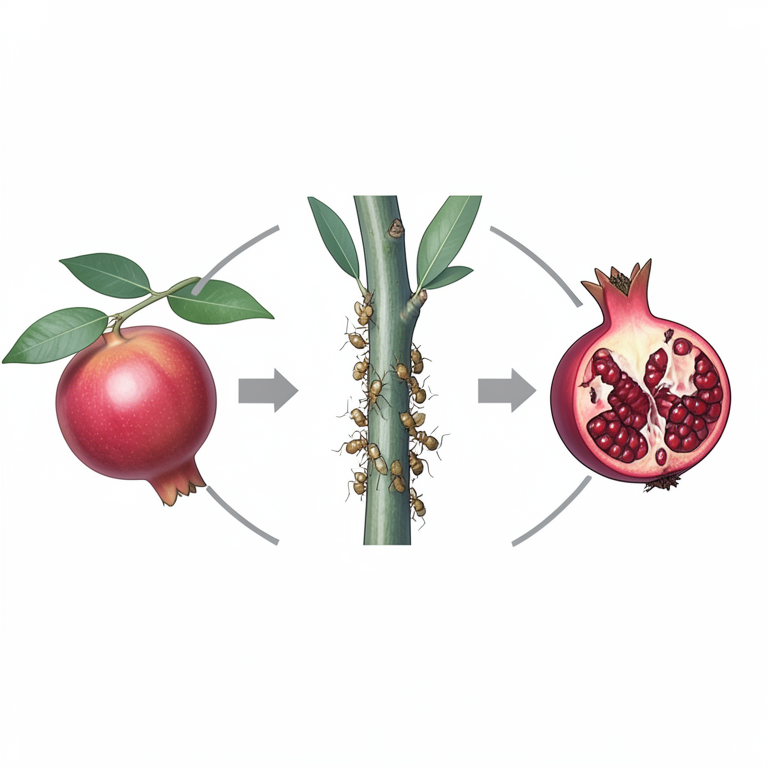
Pest Prevalence Hierarchy
AI-generated conceptual illustration (pomegranate plants and Aphis punicae aphids). It explains the idea and does not show study data.
View source evidence ↗Figures & tables
From the original paper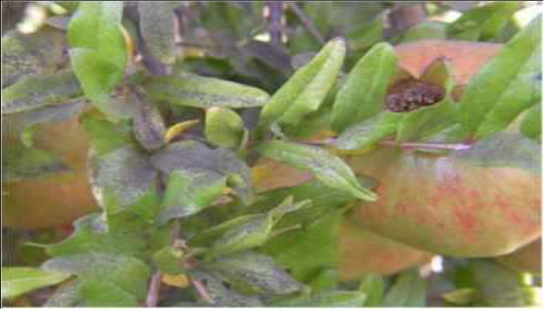 Figure 1
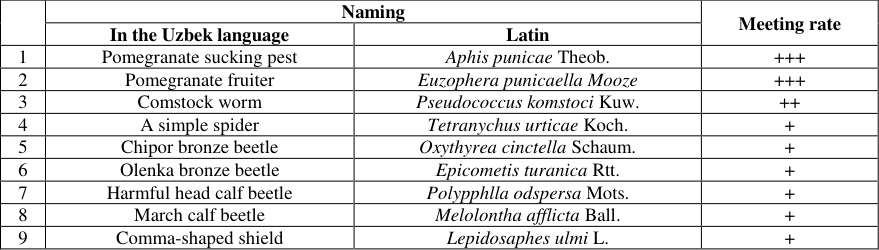 Table 1
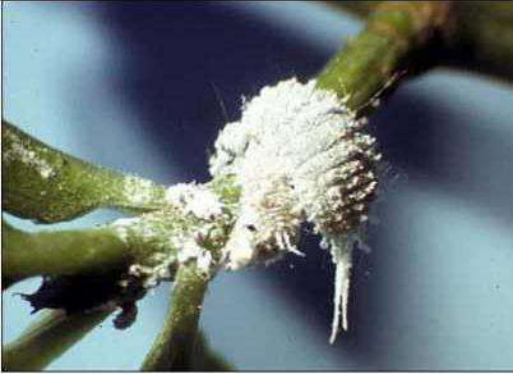 Figure 2
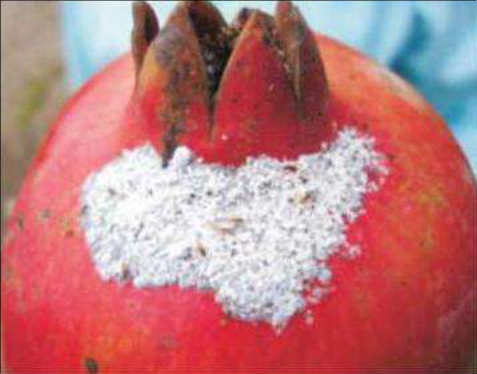 Figure 3
Introduction
Pomegranate tree and its fruit contain various pests. The main pest insects are diverse in different geographical areas. While some pests cause major problems in one area, they are harmless or non-existent in other areas. However, some pests, insects and diseases are found in most areas where pomegranate is grown.
The main pests that damage the pomegranate stem and body are Pomegranate body rodents, Serajin bark beetle, Bark silkworm, Plant lice (aphids) and others. Plant lice (aphids) are common pests that cause serious problems in pomegranate orchards. Young pomegranate leaves are very prone to aphids attack. The most important of these fruit pests are fruit rodents, pomegranate fruit, pomegranate butterfly, and leaf-eating worms.
Thrips and spider mites damage both the fruit and the tree (Bondarenko N.V. 1983) [1]. Objective: To study the biology and ecology of the main pests of pomegranate: Pomegranate sucking pest (Aphis punicae Theob), Comstock worm (Pseudococcus komstoci Kuw), Common spider (Tetranychus urticae Koch). Plant lice (aphids). Scientific name of the pest: There are various species belonging to the family (Aphididae) - plant lice are pests that are common in pomegranate gardens and cause serious damage.
It is an insect that feeds mainly on young twigs, leaves and sometimes flowers in the spring. By absorbing the sap of the tree, it weakens the trees, damages the flowers, reduces the yield and reduces its quality. (Figure 1.2). IJHFS 2022; 4(1): 34-35 Usmanov Master of the Faculty of Plant Protection, Tashkent State Agrarian University, Uzbekistan Kimsanboev Khojamurod Khamrakulovich Faculty of Plant Protection, Ph.D. Professor, Tashkent State Agrarian University, Uzbekistan Shamsi Esanbayev Biological Sciences, Associate docent, Tashkent State Agrarian University, Uzbekistan Rahmonov Ahliddin Habibulloevich Doctoral student of the Faculty of Plant Protection, Tashkent State Agrarian University, Uzbekistan Usmanov Master of the Faculty of Plant Protection, Tashkent State Agrarian University, Uzbekistan Fig 1: The formation of dry mold on the leaves and fruits of lice juice http://www.hortijournal.com Unsimon kurt (Kamstok kurti) Pseudococcus.
Scientific name of the pest: (Pseudococcus comstocki Kuw). Symptoms - nymphs and adult females feed on the juice of the leaves, flowers and fruits of the pomegranate tree, causing serious damage to them. As a result, the leaves turn yellow, fall off and the fruit softens. The leaves do not wrinkle like a virus.
Dry mold coating can form in the sap that separates the worms. Damage may result in shedding of fruit. The pest stains the fruit and changes the structure of the fruit peel (Fig. 3.4). The spider.
Scientific name of the pest: (Brevipalpuslewisi, Aceriagranati and Tetranychus punicae). Signs - glossy white-brown spots appear on the underside of leaves, and the increase of the pest gives a reddish tinge. The damaged leaves twist and slowly begin to shed. The damage starts from the fruit stalk and the brown change moves along the fruit peel causing it to crack.
Fig 2: Unsim worm on the stem of the plant Fig 3: Unsim worm on the fruit Research results: As a result of the study of pomegranate pests, pests such as Pomegranate fruit (Euzophera punicaella Mooze), Pomegranate juice (Aphis punicae Theob), Comstock worm (Pseudococcus komstoci Kuw), Common spider (Tetranychus urticae Koch) were studied. Pomegranate sap (Aphis unicae Theob) is one of the most common pests of pomegranate. Comstock worm (Pseudococcus komstoci Kuw) was found in moderate, simple spider (Tetranychus urticae Koch) in rare cases (Table 1). Table 1: Arthropods that damage pomegranates.
| — | Naming | — | Meeting rate |
|---|---|---|---|
| In the Uzbek language | Latin | ||
| 1 | Pomegranate sucking pest | Aphis punicae Theob. | +++ |
| 2 | Pomegranate fruiter | Euzophera punicaella Mooze | +++ |
| 3 | Comstock worm | Pseudococcus komstoci Kuw. | ++ |
| 4 | A simple spider | Tetranychus urticae Koch. | + |
| 5 | Chipor bronze beetle | Oxythyrea cinctella Schaum. | + |
| 6 | Olenka bronze beetle | Epicometis turanica Rtt. | + |
| 7 | Harmful head calf beetle | Polypphlla odspersa Mots. | + |
| 8 | March calf beetle | Melolontha afflicta Ball. | + |
| 9 | Comma-shaped shield | Lepidosaphes ulmi L. | + |
Table text extracted from the original PDF; superscript letters are shown inline. The original table image is below.
View original table image
Naming Meeting rate In the Uzbek language Latin 1 Pomegranate sucking pest Aphis punicae Theob. +++ 2 Pomegranate fruiter Euzophera punicaella Mooze +++ 3 Comstock worm Pseudococcus komstoci Kuw. ++ 4 A simple spider Tetranychus urticae Koch. + 5 Chipor bronze beetle Oxythyrea cinctella Schaum. + 6 Olenka bronze beetle Epicometis turanica Rtt. + 7 Harmful head calf beetle Polypphlla odspersa Mots. + 8 March calf beetle Melolontha afflicta Ball. + 9 Comma-shaped shield Lepidosaphes ulmi L. + Note: +++ - the most common and the damage is great ++ - occurs in 40-60% of trees + - rare 3. Özturk N, Ulusoy MR. Pests and natural enemies determined in pomegranate orchards in Turkey. InI International Symposium on Pomegranate and Minor Mediterranean Fruits. 2006;818:277-284. 4. More S, Nighot M.
Agrosearch: A web based search
Conclusion
The results of the study suggest that pomegranate juice (Aphis punicae Theob), Pseudococcus komstoci Kuw, and similar pests are the most harmful pomegranate pests and pomegranate juice when studied in their biology.
References
1 in the original paper- Бондаренко НВ, Поспелов СМ, Персов МП, Общая и сельскохозяйственная энтомология. -М.: Колос, 1983;416:с.89. 2. Мамирзаев Б, Дусманов С, Нурмуҳамедов Д, tool for pomegranate diseases and pests detection using image processing. InProceedings of the Second International Conference on Information and Communication Technology for Competitive Strategies 2016, 1-6. 5. Мирзаева СА. Д. Азнабакиева, Джураева.И. "червец комстока-опасный вредитель граната." современные тенденции развития науки и технологий. 2017. Таиров М. Анор зараркунандаларининг тарқалиш ареалива уларга қарши кураш //Ўзбекистон аграр фани хабарномаси. 2004;3:33-36б.