
Research article · 2022 · Full text
International Journal of Agriculture Extension and Social DevelopmentAdoption of improved wheat varieties by smallholder farmers in Bale Zone, Ethiopia
Volume 5(2) · Pages 03–07 · DOI: 10.33545/26180723.2022.v5.i2a.137 ↗
Research areasAgricultural Innovations and PracticesAgricultural Economics and Practices
Abstract
Author-writtenWheat is a strategic crop used for food security in Ethiopia. Cognizant of its importance, the Government of Ethiopia has been investing heavily in the development and dissemination of improved wheat varieties over the past 20 years. Despite such extensive intervention, farmers’ adoption of improved wheat varieties is low, suggesting the country has not fully tapped the benefits of investment made on wheat technology generation and dissemination efforts. This study used cross-sectional data collected from a sample of 394 farm households selected through multistage random sampling procedures following probability proportional to sample size technique. Both qualitative and quantitative data obtained from primary and secondary sources were used. Based on the nature of the data, binary probit model was used to identify factors affecting the farmers’ adoption decision of improved wheat varieties. The result of the study showed that from the total 394 sampled households, 45% (177) of them adopted the introduced improved wheat varieties. The probit model results showed that tropical livestock unit, frequency of advisory contacts, access to market information, farmers’ perception of improved wheat variety attributes, and membership in a cooperative significantly influenced farmers' decisions in adopting the improved wheat varieties. Therefore, policy and development interventions should focus on improving such an economic and institutional support system to achieve wider acceptance of improved wheat varieties by smallholder farmers in the study area.
Summary
Source-checkedPlain-language reading of the full paper, prepared with AI and checked against the text. Each point links to the authors' own words.
Why it matters
- Wheat is a critical crop for ensuring food security within Ethiopia. View evidence ↗
- For the last 20 years, the Ethiopian government has invested significantly in creating and distributing improved wheat varieties. View evidence ↗
- Despite government efforts, the adoption rate of these improved varieties remains low, meaning the potential benefits of the investment are not being fully realized. View evidence ↗
The question
- The study aimed to identify the primary factors that influence the decision of farmers in the Bale Zone to adopt improved wheat varieties. View evidence ↗
What they did
- The researchers collected cross-sectional data from 394 farm households using a multistage random sampling technique. View evidence ↗
- The research was conducted in the Gololcha district, located 550 km southeast of Addis Ababa. View evidence ↗
- A binary Probit model was employed to analyze the factors affecting the likelihood of farmers adopting improved wheat varieties. View evidence ↗
What they found
- Out of the 394 sampled households, 45% (177 households) had adopted the improved wheat varieties. View evidence ↗
- Increasing household land size by 1 hectare increases the likelihood of adopting improved wheat varieties by 16.7%. View evidence ↗
- Each additional year of formal education for the household head increases the likelihood of adoption by 14.3%. View evidence ↗
- An increase in the number of tropical livestock units (TLU) increases the adoption rate of improved wheat varieties by 17.7%. View evidence ↗
- Access to credit services positively influences adoption, accounting for 12.9% of the variation in adoption decisions. View evidence ↗
- Every additional day of contact with an extension worker increases the likelihood of adoption by 24.4%. View evidence ↗
- Access to market information on prices explains 16.6% of the variation in the decision to adopt improved wheat varieties. View evidence ↗
- Membership in a cooperative increases the likelihood of adopting improved wheat varieties by 22.7%. View evidence ↗
- Farmers who perceive improved wheat varieties as having higher yield potential are 25.5% more likely to adopt them. View evidence ↗
What it means
- The authors recommend that policy and development interventions focus on improving economic and institutional support systems to increase the adoption of improved wheat varieties. View evidence ↗
Visual summary
3 visualsIllustrations explain the paper; charts are replotted from the paper's own table values.
Factors Increasing Adoption Likelihood
AI-generated conceptual illustration (wheat plants and smallholder farm assets). It explains the idea and does not show study data.
View source evidence ↗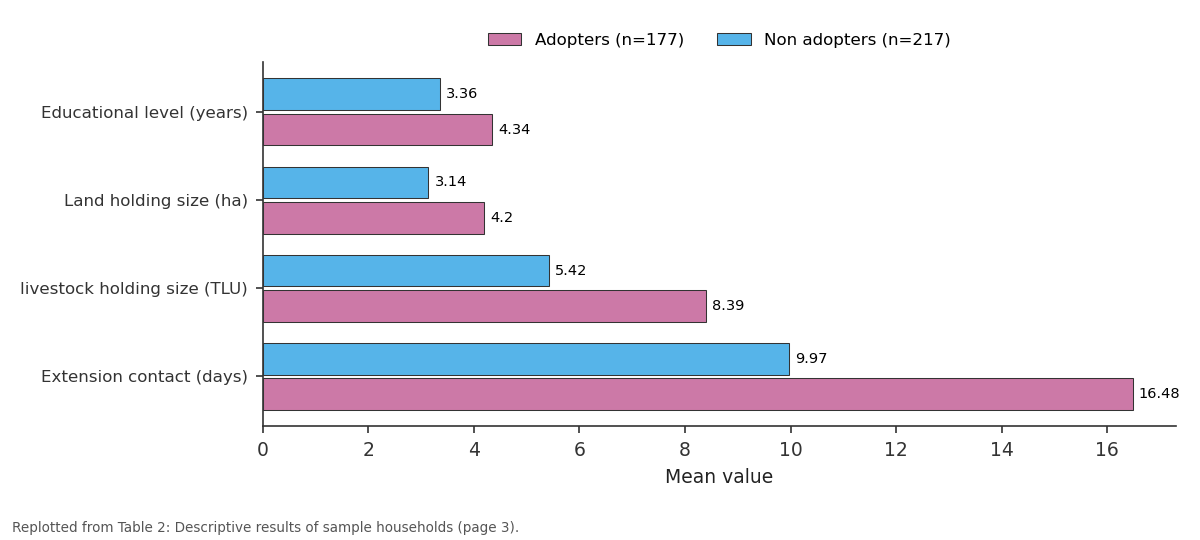
Adopters (n=177) and Non adopters (n=217): Educational level... vs Land holding size (ha) vs livestock holding size... vs Extension contact (days)
Replotted from Table 2 (page 3) of the original paper. Every bar is the paper's own table value.
View source evidence ↗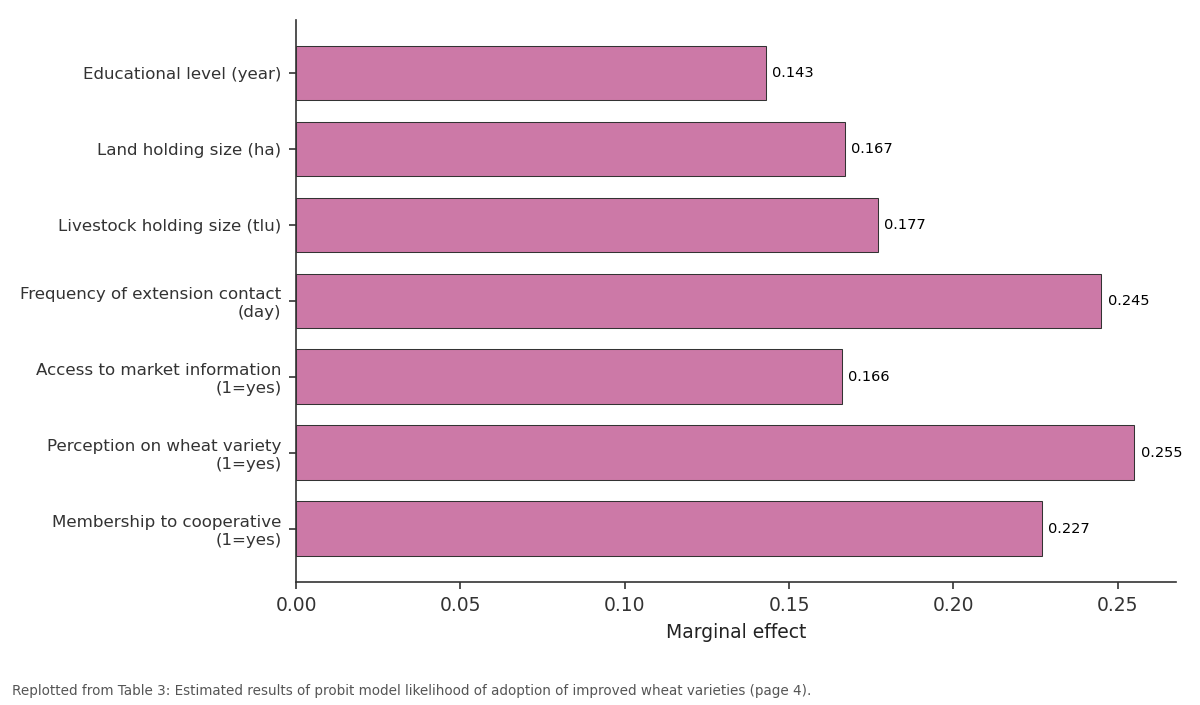
Marginal effects: Educational level (year) vs Land holding size (ha) vs Livestock holding size... vs Frequency of extension... vs Access to market...
Replotted from Table 3 (page 4) of the original paper. Every bar is the paper's own table value.
View source evidence ↗Figures & tables
From the original paper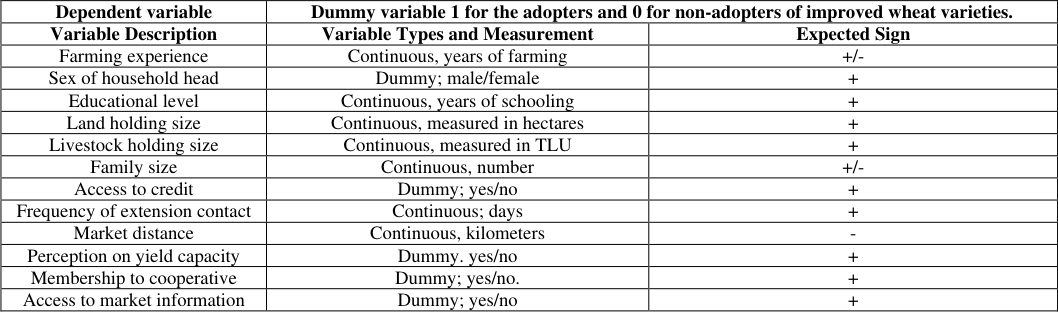 Table 1
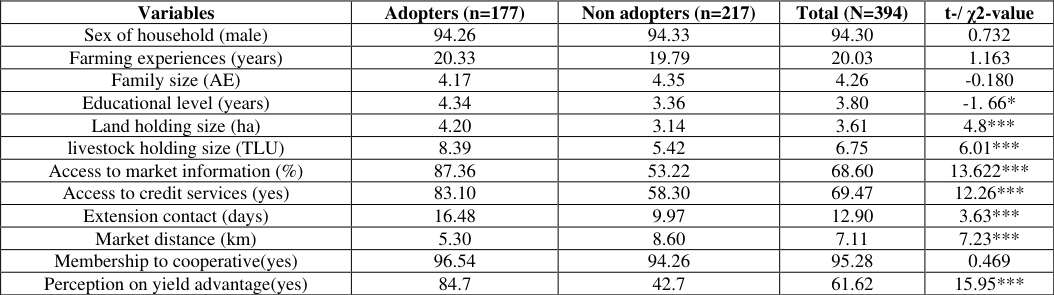 Table 2
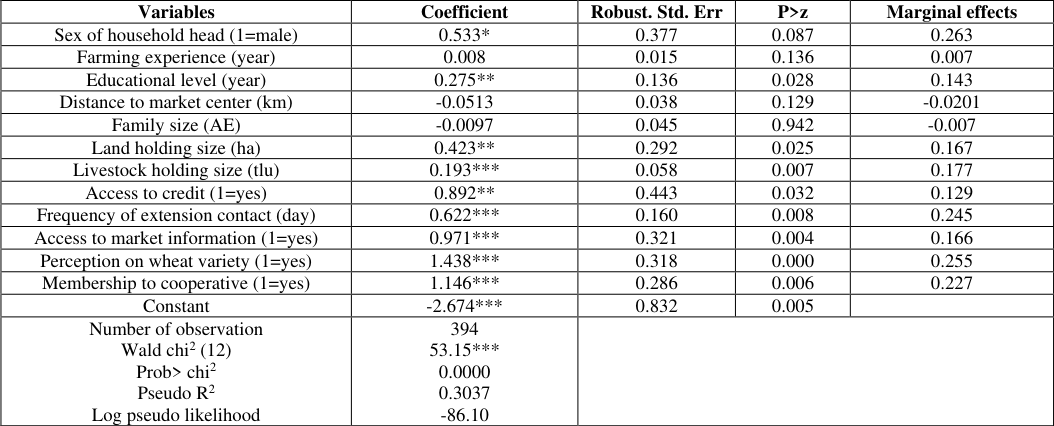 Table 3
Introduction
Wheat (Triticum aestivum L) is one of the world's leading cereal grains and serves as a staple food for more than a third of the world's population. Wheat, which makes up onefifth of the human diet, is the second most important source of calories in the diet of consumers in developing countries after rice (World Bank, 2015) [15] . Wheat is a particularly critical "stuff of life" for approximately 2.5 billion "wheat consuming" poor men, women and children who live on less than USD 2 per day. Ethiopia is the largest wheat producing country in Sub-Saharan Africa, by growing wheat on over 1.70 million hectares of land (ATA, 2017, FAOSTAT, 2018) [1,18] , which ranks it fourth in total land coverage after teff, Maize and Sorghum (CSA, 2017) [6] . To improve the production and productivity of smallholders, the Ethiopian government is doing its best by adding new technologies (improved wheat varieties) to existing technologies. Nevertheless, as expected, the introduced improved wheat varieties were not generally accepted in various parts of Ethiopia. In essence, the observed failure of farmers to adopt the improved wheat varieties and fully put it into practice could be attributed to several factors that appear to have some influence on farmers' decision to adopt the technologies, and further research on factors that hinder them is suggested (Biftu and Diriba, 2016; Hagos, 2016) [5,9] . In addition, the decision to adopt improved wheat varieties by smallholder farmers is influenced by different factors in different areas. This suggests that to identify the influence of different factors on different areas, site-and crop-specific investigations should be done. Therefore, this study was carried out to identify the main factors influencing farmers' decision to adopt improved wheat varieties in the Zone.
Research methodology Description of the study area
The study area, Gololcha district, is located 550 km southeast of the Ethiopian capital, Addis Ababa. The district's average annual temperature is 19 °C, while the district's average annual rainfall is 750 mm. The main crops grown in the district are cereals (wheat, barley, maize, teff, and other grains), legumes (beans, peas), and vegetables. Currently, all kebeles of the district produce wheat and it ranks first in terms of area coverage (41.24%) and total production (44.42%), followed by barley, maize, and teff.
Sampling procedures
A multi-stage sampling process was used to draw respondents using a combination of purposive and simple random sampling. In the first phase, the Gololocha District was specifically selected as it is one of the potential wheatproducing districts in the Bale zone. In the second stage, out of 25 major wheat-producing rural villages in the district, a total of 12 most potential wheat-producing villages were identified. In the third stage, four rural villages were randomly selected from the 12 potentially wheat-producing villages and representative sample respondents were selected at random. The sample size for the study was determined based on Yamane (1967) [16] , and is expressed as www.extensionjournal.com
Where N is the sample size for the study, N = total number of wheat producers in the district (26837), and e is the level of precision (5%). Based on the formula, the total sample of the study was 394 farmers.
Data collection
For this study, both quantitative and qualitative data were collected from primary and secondary sources. The primary data sources were wheat producers, key informants, and focus group discussion; while the secondary data were collected from the Gololcha District Agriculture Office, published and unpublished documents such as Central Statistics Agency of Ethiopia (CSA).
Data analysis
In this study, the binary Probit model was used to analyze the likelihood of smallholder farmers' decision in adopting improved wheat varieties. The probit model is specified as:
Where, Yi and Yi is latent and observed level of participation in improved wheat production respectively, β is a vector of parameters to be estimated and Xᵢ is a vector of variables (demographic, socio economic, institutional and psychological factors) that affect households' adoption status of improved wheat varieties and µ is a vector of error terms.
Variables definition, measurement and hypothesis Dependent variables
Adoption decisions in improved wheat varieties: It is dummy variable that takes value of 1 for adopter and 0 for non-adopter. Adoption of improved wheat varieties by households is the dependent variable. It refers to the model variable, which is adoption or non-adoption of improved wheat varieties.
Explanatory variables
The independent variables of the study were those which are hypothesized to have an association with farmers' decision in adoption of improved wheat varieties. The findings of past studies on adoption of improved agricultural technologies by smallholder farmers, the existing theoretical explanations and the researcher's preliminary knowledge of the farming systems of farmers in the study area were used to select explanatory variables for the hypotheses. Hence, the potential explanatory variables, which were hypothesized to influence farmers' decision in the adoption of improved wheat varieties, are presented. These include: demographic, socio-economic, institutional and psychological variables which are summarized in Table 1.
| Dependent variable | Dummy variable 1 for the adopters and 0 for non-adopters of improved wheat varieties. | — |
|---|---|---|
| Variable Description | Variable Types and Measurement | Expected Sign |
| Farming experience | Continuous, years of farming | +/- |
| Sex of household head | Dummy; male/female | + |
| Educational level | Continuous, years of schooling | + |
| Land holding size | Continuous, measured in hectares | + |
| Livestock holding size | Continuous, measured in TLU | + |
| Family size | Continuous, number | +/- |
| Access to credit | Dummy; yes/no | + |
| Frequency of extension contact | Continuous; days | + |
| Market distance | Continuous, kilometers | - |
| Perception on yield capacity | Dummy. yes/no | + |
| Membership to cooperative | Dummy; yes/no. | + |
| Access to market information | Dummy; yes/no | + |
Table text extracted from the original PDF; superscript letters are shown inline. The original table image is below.
View original table image
Results and Discussion
Results and Discussion
Descriptive results
This section presents the demographic, socioeconomic, institutional and psychological characteristics of respondents in the study area. The characteristics of sample households were summarized under each sub section by descriptive (mean and percentage) and inferential statistics (chi-square and t-test). For this study, the data were collected from both adopters 177 (45%) and non-adopters 217 (55%) of improved wheat varieties during the survey year. Out of the total respondents, 94.30% of them were male-headed households. The average farming experience of the sampled respondents was 20.03 years. The average household size of the sample farmers was 4.26 adult equivalents. The average year of formal education of the sampled respondent was 3.80 years (Table 2). In this study, the average land holding size of the respondents was found to be 3.67 ha. On average, the total sample households have about 6.91 tropical livestock unit. On average, the sampled households are at a distance of about 5.92 km from farmers' residence to the nearest market center. Among the interviewed farmers, 69.47% of them received credit. On average, they have made contact with extension agents specifically on wheat production issues 12.90 times per year and, 68.60% of them reported they had market information on wheat price from different sources. And also out of the total sample households, 65% of the sample respondents perceived that improved wheat varieties give higher yield advantage than local varieties. www.extensionjournal.com
| Variables | Adopters (n=177) | Non adopters (n=217) | Total (N=394) | t-/ χ2-value |
|---|---|---|---|---|
| Sex of household (male) | 94.26 | 94.33 | 94.30 | 0.732 |
| Farming experiences (years) | 20.33 | 19.79 | 20.03 | 1.163 |
| Family size (AE) | 4.17 | 4.35 | 4.26 | -0.180 |
| Educational level (years) | 4.34 | 3.36 | 3.80 | -1. 66* |
| Land holding size (ha) | 4.20 | 3.14 | 3.61 | 4.8*** |
| livestock holding size (TLU) | 8.39 | 5.42 | 6.75 | 6.01*** |
| Access to market information (%) | 87.36 | 53.22 | 68.60 | 13.622*** |
| Access to credit services (yes) | 83.10 | 58.30 | 69.47 | 12.26*** |
| Extension contact (days) | 16.48 | 9.97 | 12.90 | 3.63*** |
| Market distance (km) | 5.30 | 8.60 | 7.11 | 7.23*** |
| Membership to cooperative(yes) | 96.54 | 94.26 | 95.28 | 0.469 |
| Perception on yield advantage(yes) | 84.7 | 42.7 | 61.62 | 15.95*** |
Table text extracted from the original PDF; superscript letters are shown inline. The original table image is below.
View original table image
Determinants of adoption of improved wheat varieties among farmers
Before running the model, outliers were checked using a box plot diagram so that no outlier problem occurred and no data were lost due to outliers. In addition, multicollinearity test showed that the largest VIFs value is 2.21 and that of CC is 0.5871, which is below the maximum value of 10 and 0.75, respectively. The chi-square distribution was used as a measure of the overall significance of probit model estimation. The specification of the model is important for estimating the determinants of adoption of improved wheat varieties. This means that the null hypothesis that all slope coefficients are zero does not apply with a statistical error of 1%. The results of the model presented in Table 3 show that of the twelve variables used in the study eight of them influenced the likelihood of the adoption of improved wheat varieties in the study area.
| Variables | Coefficient | Robust. Std. Err | P>z | Marginal effects |
|---|---|---|---|---|
| Sex of household head (1=male) | 0.533* | 0.377 | 0.087 | 0.263 |
| Farming experience (year) | 0.008 | 0.015 | 0.136 | 0.007 |
| Educational level (year) | 0.275** | 0.136 | 0.028 | 0.143 |
| Distance to market center (km) | -0.0513 | 0.038 | 0.129 | -0.0201 |
| Family size (AE) | -0.0097 | 0.045 | 0.942 | -0.007 |
| Land holding size (ha) | 0.423** | 0.292 | 0.025 | 0.167 |
| Livestock holding size (tlu) | 0.193*** | 0.058 | 0.007 | 0.177 |
| Access to credit (1=yes) | 0.892** | 0.443 | 0.032 | 0.129 |
| Frequency of extension contact (day) | 0.622*** | 0.160 | 0.008 | 0.245 |
| Access to market information (1=yes) | 0.971*** | 0.321 | 0.004 | 0.166 |
| Perception on wheat variety (1=yes) | 1.438*** | 0.318 | 0.000 | 0.255 |
| Membership to cooperative (1=yes) | 1.146*** | 0.286 | 0.006 | 0.227 |
| Constant | -2.674*** | 0.832 | 0.005 | |
| Number of observation Wald chi2 (12) Prob> chi2 Pseudo R2 Log pseudo likelihood | 394 53.15*** 0.0000 0.3037 -86.10 |
Table text extracted from the original PDF; superscript letters are shown inline. The original table image is below.
View original table image
Land size
As expected, the estimates showed that land size had a positive influence on the probability of adoption of improved varieties at 5% significance level. With other variables constant, an increase in household land size by 1 ha would increase the likelihood of adoption of improved wheat varieties by 16.7%. The likely reason for this is that a farmer with a larger farm size harvests relatively more and therefore more money flows into the family. This result agrees with the results of Chilot and Dawit (2016) [7] .
Educational level
As expected, the result showed a positive and significant influence of educational level of the household head on the acceptance of improved wheat varieties at a significant level of 5% (Table 3). Keeping other variables constant, the likelihood of improved wheat varieties being introduced would increase by 14.3% if farmers' formal education increases by 1 year. According to this, educated households accept inputs and apply them according to the recommendation. Hagos (2016) [9] and Mengistu et al.
(2017) [13] found similar results in their studies.
Livestock size
Livestock are an important source of income, food, and traction for crop cultivation in general in Ethiopia and particularly in the study area. The model result showed a positive and significant influence of livestock on the adoption of improved wheat varieties at a significant level of 1% (Table 3). The results of the marginal effect analysis show that an increase in the unit of tropical livestock increased the adoption for improved wheat varieties by 17.7%; while the other factors remain constant. This is because farmers with relatively more livestock units use their income from the sale of livestock and their by-products to buy improved seeds and other inputs for growing wheat crops. The current study's finding is supported by Hassen et al. (2012) [11] , Berihun et al. (2014) [4] , Tolesa (2014) [17] , as well as Leake and Adam (2015) [12] .
Access to credit
As expected, access to credit showed a positive and significant influence of credit access on the adoption of improved wheat varieties by farmers at a significant level of 5% (Table 3). This variable accounts for 12.9% of the variation in the adoption of improved wheat varieties, while other factors remain constant. This may be because loans reduce a farmer's financial burden by enabling him to afford expensive improved cultural practices and technologies.
Studies by Hassen (2014) [10] and Berihun et al. (2014) [4] found similar results.
Frequency of extension contacts
As was expected, the result showed that the frequency of contacts between farmers and extension workers positively and significantly influenced the acceptance of improved wheat varieties at a significant level of 1%. If other variables are held constant, the likelihood of adopting the improved wheat varieties increases by 24.4% for every additional day a farmer has been in contact with the extender. This is because the frequency of contact with extension agents increases the likelihood of getting updated information on improved wheat varieties. This result agrees with that of Teklemariam (2014) [14] and Mengistu et al.
Access to market information
Access to market information from various sources on the prices of agricultural inputs and outputs, as expected, had positive influence on the decision of farmers to adopt improved wheat varieties at a significant level of 1% (Table 3). This variable explains a 16.6% variation in the adoption of improved wheat varieties, while other factors remain constant. www.extensionjournal.com
Perception of the production capacity
The farmers' perception of the production capacity of improved wheat varieties was positive and significantly influenced the decision to accept improved wheat varieties at 1% level of significance (Table 3). If other variables are held constant, a farmer who perceives improved wheat varieties to have higher yielding potential than the local ones would more likely increase adoption of the former varieties by 25.5%. The result of the focus group discussion also showed that farmers in the study area prefer wheat varieties which have high yield potential, tolerance to diseases, better wheat grain prices (color), and are of short duration.
Membership in cooperatives
The membership of farmers in organizations such as cooperatives, as hypothesized, positively influenced farmers' acceptance of improved wheat varieties at 1% significance level. When other variables are held constant, farmers membership in a cooperative increases the likelihood of adopting improved wheat varieties by 22.7% (Table 3). This result is in line with Aman and Tewodros (2016) [2] as well as Mengistu et al. (2017) [13] .
Conclusion
This study was initiated to investigate and fill the information gap on the factors that influence the adoption of improved wheat varieties by smallholder farmers in Gololch District. Cross-sectional data were collected from a sample of 394 farmers selected through multi-stage sampling procedures. The results of the survey showed that 45% of the head of households in the sample accepted improved wheat varieties in the 2019/20 production year. The results of the probit model showed that factors such as households' head level of education, size of land holdings, and access to credit services positively and significantly influenced the smallholder farmers' decision to adopt improved wheat varieties at 5%. Further livestock ownership, frequency of advisory contacts, access to market information, farmers' perception of improved wheat variety attributes, and membership in a cooperative have more influence on farmers' decision to adopt improved wheat varieties positively. Therefore, policy and development interventions should focus on improving these variables to achieve wider acceptance of improved wheat varieties.
References
11 in the original paper- Agricultural Transformation Agency (ATA). Transforming agriculture in Ethiopia. Annual Report of 2016/2017. Ethiopian Agricultural Transforming Agency, Addis Ababa, Ethiopia; c2017.
- Aman T, Tewodros T. Determinants of improved barley adoption intensity in Malga District of Sidama Zone, Ethiopia. International Journal of Agricultural Economics. 2016;1(3):78-83.
- Shiferaw B, Kassie M, Jaleta M, Yirga C. Adoption of improved wheat varieties and impacts on household food security in Ethiopia. Journal of Food Policy. 2014;44:272-284.
- Hailu BK, Abrha BK, Weldegiorgis KA. Adoption and impact of agricultural technologies on farm income: Evidence from southern Tigray, Northern Ethiopia. International Journals of Food and Agricultural Economics (IJFAEC). 2014;2(4):91-106.
- Biftu A, Diriba B. Pre-scaling up of bread wheat variety (Danda'a) through FRG/FREG in Bale and West Arsi zones of Oromia national regional state, Ethiopia. Scientific Journal of Crop Science. 2016;5(3):104-115.
- Gurwaan Singh, Dr. SN Pandey, Rahul Kumar, Subhash Chandra Maurya, Sunil Kumar Prajapati. Effect of weather parameters, date of sowing on performance of wheat varieties (Triticum aestivum L.). International Journal of Research in Agronomy. 2021;4(2):97-99.
- Hagos BG. Impact of Agricultural technology adoption of smallholder farmers on wheat yield: Empirical evidence from Southern Tigrai state of Ethiopia. Journal of Agricultural Extension and Rural Development. 2016;8(10):211-223. DOI: https://dx.doi.org/10.5897/JAERD2016.078.
- Hassen B. Factors affecting the adoption and intensity of use of improved forages in North East Highlands of Ethiopia. American Journal of Experimental Agriculture. 2014;4(1):12.
- Beshir H, Emana B, Kassa B, Haji J. Determinants of chemical fertilizer technology adoption in north eastern highlands of Ethiopia: The double hurdle approach. Journal of Research Economics and International Finance. 2012;1(2):39-49.
- Gebresilassie L, Bekele A. Factor's determining allocation of land for improved wheat variety by smallholder farmers of northern Ethiopia. Journal of Development and Agricultural Economics. 2015;7(3):105-112.
- Ketema M, Kebede D, Dechassa N, Feyisa Hundessa F. Determinants of Adoption of Wheat Production Technology Package by Smallholder Farmers: Evidences from Eastern Ethiopia Turkish Journal of Agriculture-Food Science and Technology. 2017;5(3):267-274.
Cited by 8
From OpenAlex, OpenCitations and reference lists read by Scinovex
- Gender disparities in the adoption of improved management practices for soybean cultivation in North East Nigeria ↗
Amadu Yaya Kamara, Lucy Sahbong Kamsang, Amina Mustapha, Alpha Y. Kamara, Adetomiwa Kolapo, Nkeki Kamai · Journal of Agriculture and Food Research · 2025
This study examined gender disparities in the adoption and intensity of improved soybean management practices among 800 farming households in Borno State, Nigeria, with equal representation of male-led and female-led households. The findings reveal that while both male and female farmers adopt improved soybean varieties, fertilizer, and herbicides, the intensity of adoption varies due to differences in socioeconomic constraints. Male…
❝ 9PDF - Review on the status of dairy production and processing in Ethiopia ↗
Demelash Kefale Tenaw, Tsegaye Metiku, Maradona Birhanu, Li Ruilan · Acta Entomology and Zoology · 2024
The livestock production subsector makes a substantial economic contribution to the country by providing a means of livelihood for farmers, creating employment opportunities, ensuring food security, providing services, maintaining social, cultural, and environmental values, and supplying money. High temperatures, frequent plant associations, limited forage production, little rainfall, high prevalence of serious illnesses and parasites, livestock and human carrying capacity, and
- Estimating Magnitude of Standard Heterosis in Mid-altitude Maize (Zea mays L.) Hybrids for Grain Yield and Yield Related Traits at Haro Sabu, West Oromia, Ethiopia
Dereje Abera · International Journal of Research in Agronomy · 2023
Heterosis is the groundwork for developing a good economically viable hybrid maize variety. Evaluation of Maize test crosses was carried out during the 2019 main cropping season at research field of Haro Sabu Agricultural Research Center West Oromia, Ethiopia. The main objective of the study was to identify direction and magnitude of standard heterosis in mid-land maize hybrids for grain yield and yield attributing agronomic traits. Seventy-two maize hybrids and three standard checks were tested using 5x15 alpha-lattice (0, 1) design with two replications. The analysis of variance exhibited a
- Genetic correlation and path coefficient studies in bread wheat (Triticum aestivum L.) under irrigated condition
Sumit Kumar Singh, Priyanka Singh, SC Gaur, HP Singh, Syed Mohd Quatadah, Kaushal Singh · International Journal of Advanced Biochemistry Research · 2025
Current research started with an objective to find out the genotypic and phenotypic relationships among yield-related characteristics in wheat (Triticum aestivum L.) by utilizing 55 wheat genotypes alongside one standard variety. Field trial was conducted at Research Farm of BRD PG College during rabi 2019-2020 Experimental material was evaluated in RBD design with 3 replications. The analysis of variance (ANOVA) indicated considerable genetic variability, suggesting a significant opportunity for the selection of superior genotypes. Path coefficient analysis revealed that traits such as days t
- Assessing the prospects and challenges of a free trade agreement between India and the European Union ↗
Radha Singh, Santosh Kumar · International Journal of Foreign Trade and International Business · 2025
This paper focuses on the opportunities and the threats of a Free Trade Agreement (FTA) between the European Union (EU) and India. The study examines the trade trends, competitiveness of the sectors and the economic effects in order to make policy choices. Purposive sampling was applied to the primary sectors using secondary data of the World Bank (2015) and the
- Extent of adoption and its limiting factors affecting improved vegetable cultivation practices by small farmers in the eastern Himalayan region
A.K. Singha, T Amrutha, Amrita Singha · International Journal of Agriculture Extension and Social Development · 2024
The study was conducted in 13 purposively selected Krishi Vigyan Kendra (KVK) districts in the Northeastern region. A total of 130 farmer respondents from both adopted and non-adopted villages were selected using proportionate random sampling. Data were collected from these respondents through personal interviews using a pre-tested structured schedule. The findings indicate that more than half of the respondents from both KVK-adopted and non-adopted villages demonstrated a medium level of adoption of improved vegetable cultivation practices. However, practices such as the recommended seed rate
- Evaluating the impact of climate change and agronomic inputs on sorghum yield a case study from Ethiopia ↗
Sisay Belete · International Journal of Pharmacognosy and Life Science · 2024
This study evaluates the dual impacts of climate change and agronomic inputs on sorghum yield in Ethiopia, a country where agriculture forms the backbone of the economy, particularly for rural populations. Sorghum (Sorghum bicolor), a drought-tolerant cereal, is widely cultivated in Ethiopia, offering crucial food security in arid and semi-arid regions. However, climate change poses a severe threat to its
- Remittances and their effect on domestic savings rates in Ethiopia ↗
Yosef Abegaze, Shiferaw Abebe · International Journal of Social Science and Education Research · 2023
This review paper examines the impact of remittances on domestic savings rates in Ethiopia, a topic of significant economic and developmental importance. Despite the increasing flow of remittances to Ethiopia, their effect on the financial behavior of households, particularly in terms of savings rates, remains underexplored. Through a comprehensive analysis of existing literature, this study aims to synthesize empirical findings,