
Research article · 2022 · Full text
International Journal of Research in AgronomyM. pudica L (Mimosaceae) herb with impressive health benefits
Volume 5(2) · Pages 130–133 · DOI: 10.33545/2618060x.2022.v5.i2b.134 ↗
Research areasPlant tissue culture and regenerationNatural Antidiabetic Agents StudiesSeed and Plant Biochemistry
Abstract
Author-writtenM. pudica L. (Mimosaceae), additionally called Do not touch me; live and die; be a modest plant; and be ashamed. Frequently utilised herb in conventional folk medicine to treat a variety of illnesses, such as alopecia, Effective against tumours, sleeplessness, and dysentery, among other things in the care of injuries and snakebites. Mimosa pudica L is a semi-prostrate, sensitive plant. thorny course plant that is typically found in lowland dry tropical and subtropical rainforests savanna, forest, thorny scrub, mid-elevation woodland, grassland, and desert in the subtropics. Mimosa pudica L., is particularly renowned for its biological pharmaceutical actions as well as cooling the bitter, caustic root's therapeutic effects on different illnesses in Ayurveda. The current evaluation emphasises the different traditional usage in addition to the pharmacological and phytochemical processes Mimosa pudica.
Summary
Source-checkedPlain-language reading of the full paper, prepared with AI and checked against the text. Each point links to the authors' own words.
Why it matters
- Medicinal plants are used globally in traditional medicine to treat various health conditions. View evidence ↗
- Mimosa pudica L. is recognized for its pharmaceutical properties and its specific use in Ayurveda for the therapeutic effects of its root. View evidence ↗
- In folk medicine, the herb is used to treat conditions including alopecia, tumors, insomnia, dysentery, injuries, and snakebites. View evidence ↗
The question
- The aim of this evaluation is to emphasize the traditional uses, pharmacological properties, and phytochemical processes of Mimosa pudica. View evidence ↗
What they did
- Phytochemical research has identified several components in the plant, including alkaloids, tannins, mimosine, terpenoids, and fatty acids. View evidence ↗
- Analysis of leaf extracts specifically revealed the presence of phenols, quinines, glycosides, and other active compounds. View evidence ↗
What they found
- An ointment containing 2% (w/w) total aqueous extract and 2% (w/w) methanolic extract showed significant wound healing activity. View evidence ↗
- In albino mice, a daily oral dose of 300 mg/kg of root extract decreased the number of litters by extending the estrous cycle and diestrous phase. View evidence ↗
- Intragastric administration of 150 mg/kg of root powder in female Rattus norvegicus disrupted the estrous cycle and significantly reduced egg count. View evidence ↗
- Ethanolic extracts at doses of 100 and 200 mg/kg demonstrated substantial diuretic action, increasing total urine volume. View evidence ↗
- A 250 mg/kg dose of leaf ethanolic extract showed antihyperglycemic effects in type-1 diabetes and lowered plasma free fatty acids. View evidence ↗
- Chloroform extracts of the leaf at 50, 100, and 200 g/ml showed antimicrobial effects against Citrobacter, Klebsiella pneumonia, and Aspergillus fumigates. View evidence ↗
- The methanolic extract of aerial portions showed modest antioxidant activity with an IC50 value of 296.92 per ml. View evidence ↗
- Ethanolic and aqueous root extracts at 150 and 250 mg/kg significantly reduced gastrointestinal motility and showed anti-diarrheal effects. View evidence ↗
- Aqueous extracts of the plant showed no clinical symptoms of acute toxicity in animal models. View evidence ↗
What it means
- The authors conclude that the entire plant possesses diverse biological and pharmacological activities, supporting its long-term use in traditional medicine. View evidence ↗
- The authors recommend that the pharmaceutical industry utilize Mimosa pudica for the development of new medications. View evidence ↗
Visual summary
1 visualsIllustrations explain the paper; they do not show study data.
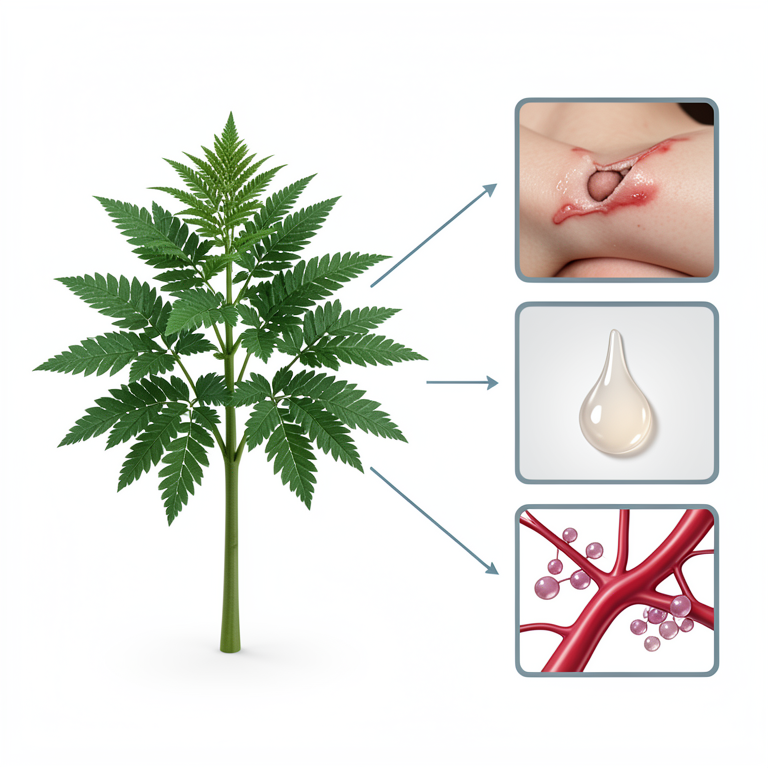
Pharmacological Profile of Mimosa pudica
AI-generated conceptual illustration (Mimosa pudica plant). It explains the idea and does not show study data.
View source evidence ↗Figures & tables
From the original paper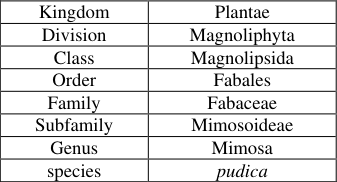 Table 1
Introduction
All around the world, medicinal plants have been utilised traditionally to cure a variety of ailments. The basic materials for medicine are derived from all parts of the plant, including the roots, stems, leaves, flowers, seeds, rhizomes, and bark. An astounding number of modern medications have been extracted from these natural sources based on their use in conventional medicine. The tiny, creeping, annual plant M. pudica L. a perennial herb with a height range of 45 to 90 cm. It has historically been used to cure a wide range of conditions, including diarrhoea, tumours, insomnia, piles, fever, and fistula. It is also effective as a birth control method and as a treatment for migraines in rural areas. Frequently used as an alexipharmic, emetic, febrifuge, diuretic, and antispasmodic are the roots and leaves. Alkaloids, tannins, mimosine (a nonprotein amino acid), flavonoid C-glycoside, terpenoids, sterols, and fatty acids were found in the plant according to phytochemical research. Two types of leaf movements are seen naturally in Mimosa pudica L: one is a very quick movement that is triggered by touch, heat, etc., and the other is a very slow, periodic movement that is regulated by a biological clock.
Common names
It is known by different names in various parts of the world & in India. English: Touch me not, Hindi: Lajwanti, Sanskrit: Varakranta, Malayalam: Thottavadi. Well-branched, upright, slender, cylindrical stems that are up to 2.5 cm in diameter are prickly, bristly, longitudinally grooved, internal surfaces that are grey, external surfaces that are light brown, and stems that have fibrous bark that can be easily separated from wood. Fruits: Dry, simple, 1-1.6 cm long, 0.4 to 0.5 cm wide lomentums with persistent sutures, indehiscent segments, and 2 to 5 seeds with a 0.3 cm long, glabrous, yellowish spreading bristle.
Phytochemistry
Mimosine, a poisonous alkaloid found in small amounts in Mimosa pudica L, is present. Leucinal and it are interchangeable. Additionally, the plant's leaves include dpinitol, an inositol derivative, mimosamine, and mimosinic acid.
The leaf extracts have been shown to contain a chemical similar to adrenaline, and the presence of crocetin dimethyl ester in the plant's extract has also been noted. The seeds include mucilage made of D-xylose and d-glucuronic acid, and the flowers contain carbs, proteins, and lipids. In addition to benzaldehyde and anise aldehyde, the essential oil also contains geraniol, furnisal, linalool, and numerous other aldehydes. The leaf extract's early phytochemical analysis revealed the presence of tannins, coumarins, flavonoids, terpenoids, alkaloids, glycosides, quinines, and phenols.
Therapeutic uses
Leaves: The leaves are bitter, tonic, and sudorific, and they can treat conjunctivitis, haemorrhoids, and fistula. Hemorrhages, scrofula, hydrocoele, treating cuts and wounds, and haemorrhages. The juice from the leaves is applied topically to sores and piles as well as utilised in dressings for sinuses, diabetes mellitus, vaginal conditions, diarrhoea, and whooping cough. It is also advised as a cure for cervical adenitis and viral hepatitis. The leaf decoction is used to treat asthma and dysentery because it has a diuretic effect. Additionally, it has bitter tonic and expectorant properties. Hydrocele, glandular swells, migraines, burst boils, and itches can all be treated quickly with leaf paste, and furuncles, abscesses, and boils can all be treated with warm leaf paste to cause them to burst and release pus. Intestinal worms and stomachaches are treated with leaf paste with honey (taken twice daily on an empty stomach for 3-4 days), and piles and fistulas are treated with leaf paste with milk. Whole plant decoction is employed as an antiasthmatic. Roots: The astringent, bitter roots are used as an antidote for diseases and poisons. When applied as a paste to fresh wounds, roots can halt the bleeding, speed up the healing process, and even prevent tooth decay. Premenstrual syndrome (PMS), haemorrhoids, diarrhoea, and irritability can all be treated with Mimosa pudica root. Seeds: The seeds have nematicidal activity against second-stage juveniles of Meloidogyne incognita Chitwood and can be used as a coffee substitute. You can apply the seed powder on wounds and sores.
Whole plants: This remedy is used to treat a variety of conditions, including dysentery, leprosy, vaginal and uterine complaints, burning sensations, leucoderma, asthma, inflammation, diabetic issues, neurological issues, fever, piles, cholera, bronchitis, coughing up jaundice, dyspepsia, syphilis, tuberculosis, fatigue, whooping cough, blood diseases, and blood purification. Rheumatoid arthritis, edoema, myalgia, scabies, and uterine tumours are all treated with it externally.
Pharmacological properties Wound-healing activity
A wound is the loss or disruption of the cellular, anatomical, or functional continuity of living tissues. The chloroform extract from Mimosa pudica leaves has significant wound healing properties, according to studies in Wistar albino rats; A 5% ointment made from extracts was created. Mimosa pudica shoot methanolic extract was discovered to contain phenolic components, demonstrating wound healing properties. Significant wound healing activity was seen in the ointment that contained 2% (w/w) of total aqueous extract and 2% (w/w) of methanolic extract.
Antifertility activity
Mimosa pudica root extract was given orally daily to Albino mice at a dose of 300 mg/kg body weight, and it was discovered that this decreased the number of litters by lengthening the estrous cycle and greatly lengthening the diestrous phase. The release of gonadotropins and the secretion of estradiol were discovered to be altered by the extract, which changed how the estrous cycle is regulated. Given intragastrically at a dose of 150 mg/kg body weight, Mimosa pudica root powder disrupted the pattern of the estrous cycle in female Rattus norvegicus, and a significant decrease in the number of eggs was also noted.
Diuretic activity
At dosages of 100 and 200 mg/kg, the ethanolic extract of Mimosa pudica reportedly exhibited substantial diuretic action and increased the overall amount of urine. At dosages of 200, 500, 1000, and 2000 mg/kg, the leaf decoction of Mimosa pudica exhibited diuretic action in dogs and rats, with a notable decrease in Cl -and Na + production without influencing K + excretion. A rise in Na + , K + , and Cl was observed at 100 mg/kg body weight in a diuretic activity study conducted on Wistar albino rats fed with 100, 200, and 400 mg/kg of an aqueous extract of Mimosa pudica leaves. The Mimosa pudica plant's ethanolic and aqueous extract was reportedly tested for diuretic efficacy using furosemide (20 mg/kg).
Immunomodulatory activity
The alcohol-based extract of several Mimosa aerial components According to reports, the pudica plant greatly improves both humoral and cell-mediated responses.
Hyperglycaemic activity
A 250 mg/kg dose of Mimosa pudica leaf ethanolic extract has been shown to have antihyperglycemic effects in type-1 diabetes and to lower plasma levels of free fatty acids; as a result, it is utilised in the treatment of other metabolic disorders. The presence of glycosides in the chloroform extract of Mimosa pudica may have contributed to the atherogenic index and protection against hyperlipidemia observed in Wistar albino rats.
Central nervous system (CNS) depressant activity
It has been demonstrated that Mimosa pudica aerial parts fed as a methanolic extract to Wistar albino rats exhibit strong antinociceptive and good CNS depressive properties.
Antimicrobial activity
Citrobacter, Klebsiella pneumonia, and Aspergillus fumigates have all been shown to be resistant to the antimicrobial effects of chloroform extract of Mimosa pudica leaf at various doses like 50, 100, and 200 g/ml. Glycosides, alkaloids, terpenoids, flavonoids, phenol, quinine, tannins, coumarin, and saponin are examples of active ingredients that may be in charge of this activity.
Anti-oxidant activity
With an IC 50 value of 296.92 per ml, the methanolic extract of Mimosa pudica's aerial portions has been demonstrated to exhibit modest antioxidant activity.
Anti-diarrhoeal activity
The anti-diarrheal and gastrointestinal motility-reducing effects of the ethanolic and aqueous extracts of Mimosa pudica roots were assessed at two doses (150 and 250 mg/kg), and the result was significant.
Toxicity studies
When examined for acute toxicity in animal models, the aqueous extract of Mimosa pudica exhibited no clinical symptoms of toxicity.
Conclusion
The entire Mimosa pudica plant exhibits a variety of biological and pharmacological actions, and it has been used in traditional medicine for centuries to treat a wide range of illnesses. Herbal treatments can be utilised to create novel medicines as well as to improve quality of life and patient compliance while reducing the negative effects of drug use. The main advantages of Mimosa pudica include its accessibility, economic viability, and wealth of valuable medical characteristics. As a result, the pharmaceutical industry can employ this plant to create new drugs.
Figures and tables from the paper
| Kingdom | Plantae |
|---|---|
| Division | Magnoliphyta |
| Class | Magnolipsida |
| Order | Fabales |
| Family | Fabaceae |
| Subfamily | Mimosoideae |
| Genus | Mimosa |
| species | pudica |
Table text extracted from the original PDF; superscript letters are shown inline. The original table image is below.
View original table image
References
35 in the original paper- Nair R, Kalariya T, Sumitra Chanda. Antibacterial activity of some selected Indian medicinal flora. Turkish Journal of biology. 2005;29(1):41-47.
- Gandhiraja N, Sriram S, Meenaa V, Kavitha Srilakshmi J, Sasikumar C, Rajeswari R. Phytochemical screening and antimicrobial activity of the plant extracts of Mimosa pudica L. against selected microbes. Ethnobotanical Leaflets. 2009;13:618-624.
- Joseph B, George J, Mohan J. Pharmacology and traditional uses of Mimosa pudica. International Journal of Pharmaceutical Sciences and Drug Research. 2013;5(2):4144.
- Arora N, Singh A. In silico pharmacokinetics and molecular docking studies of lead compounds derived from Diospyros mespiliformis. Pharmatutor-ART. 2019;7(3):31-37.
- Sandhya Madan Mohan, Bhawana Pandey, Sunita G Rao. Phytochemical analysis and uses of Mimosa pudica Linn. Chhattisgarh. IOSR Journal of Environmental Science Toxicol Food Technol. 2015;1(3):1-4.
- Genest S, Kerr C, Shah A, Rahman MM. Saif-E-Naser GM, Nigam P, et al. Comparative bioactivity of two Mimosa species. Latin American and Caribbean Bulletin of Medicinal and Aromatic Plants. 2008;7:38-43..
- Ueda M, Yamamura S. Tetrahedron. The chemistry of leafmovement in Mimosa pudica L. Tetrahedron. 1999;55(36):10937-10948. https://www.synonym.com/synonyms/ mimosa-pudica
- Chauhan Bhagirath S, Johnson Davi E. Emerging challenges and opportunities for education and research in weed science. Frontiers in Plant Science. 2017;8:15371550.
- Hafsa Ahmad, Sakshi Sehgal, Anurag Mishraand Rajiv Gupta. Mimosa pudica L. (Laajvanti): An overview. Pharmacognosy reviews. 2012;6(12):115-124.
- Declared Weeds in the NT. Natural resources, Environment and The Arts. c2008. p. 3-25 Archived from the original on 2008-02-26.
- Sanaye MM, Joglekar CS, Pagare NP. Mimosa-A brief overview. Journal of Pharmacognosy and Phytochemistry. 2015;4(2):182-187.
- Lubna Azmi, Manish Kumar Singh, Ali Kamal Akhtar. Pharmacological and biological overview on Mimosa pudica Linn. International Journal of Pharmacy & Life Sciences. 2011;2(11):1226-1234.
- Srivastava Varnika, Sharma Ashish, Alam Imran. A review on Ethnomedical and traditional uses of Mimosa pudica. International Research Journal of Pharmacy. 2012;3(2):4144.
- Gunvanti H, Vaidya Sheth UK. Ancient Science of Life. 1986;5:156.
- Chauhan Bhagirath S, Johnson Davi E. Mimosa pudica (Linn.) its medicinal value and pilot clinical use in patients with menorrhagia. Ancient Science of life. 1986;5(3):156160.
- Emery WO, Fuller HC. Detection and Estimation of Orthophenylphenol. Industrial & Engineering Chemistry Analytical Edition. 1935;7(4):248-248.
- Gandhiraja N, Sriram S, Meena V, Srilakshmi K, Sasikumar C, Rajeshwari R. Phytochemical screening and antimicrobial activity of the plant extracts of Mimosa pudica L. against selected microbes. Ethnobotanical leaflets. 2009;2009(5):618-624.
- Lakshmibai R, Amirtham D. Antimicrobial activity of mimosa pudica thorns. International Research Journal of Pharmacy. 2018;9(6):202-206.
- Kshema Johnson, Gopinathan Narasimhan, Chitra Krishnan. Mimosa pudica Linn-a shyness princess: A review of its plant movement, active constituents, uses and pharmacological activity. International Journal of Pharmaceutical Sciences and Research. 2014;5(12):51045118.
- Arshiya F Sayaji R and Venkateshwarlu G Spectrophotometric determination of drugs using 2,3Dichloro-5,6-dicyano P-Benzoquinone as analytical reagent International Journal of Chemtech Research. 2011;3(4):1769-1780.
- Kannan S, Aravinth Vijay Jesuraj S, Sam Jeeva Kumar E, Saminathan K, Suthakaran R, Ravi Kumar M, et al. Wound healing activity of Mimosa pudica Linn formulation. International Journal of PharmTech Research. 2009;1(4):1554-1558.
- Volkov AG, Adesina T, Markin VS, Jovanov E. Kinetics and mechanism of Dionaea muscipula trap closing. Plant Physiology. 2008;146(2):694-72.
- Kokane DD, More RY, Kale MB, Nehete MN, Mehendale PC, Gadgoli CH. Evaluation of wound healing activity of root of Mimosa pudica. Journal of ethnopharmacology. 2009;124(2):311-315.
- Ganguly M, Devi N, Mahanta R, Borthakur Antifertility activity of the methanolic leaf extract of Cissampelos pareira in female albino mice. Journal of ethnopharmacology. 2007;111(3):688-691.
- Lars F, Mette V, Jette Christensen, Dan Stark, Patrick Ekpe, Jerzy W. Jaroszewski: A 5-deoxyflavonol derivative in Mimosa pudica. Biochemical Systematics and Ecology 2003;31(1):103-105.
- Baghel A, Rathore DS, Gupta VE. Evaluation of diuretic activity of different extracts of Mimosa pudica Linn. Pakistan Journal of Biological Sciences. 2013;16(20):12231225.
- Wesley JJC, Nadar CSR, Chidambaranathan N. Immunomodulatory activity of the alcoholic extract of Mimosa pudica (Linn) in male Wister rats. International Journal of Pharmaceutical Innovations. 2013;3(4):41-46.
- Volkov AG, Adesina T, Jovanov E. Closing of Venus flytrap by electrical stimulation of motor cells. Plant Signaling & Behavior. 2007;2(3):139-145.
- Rajendran R, Krishnakumar E. Hypolipidemic activity of chloroform extract of Mimosa pudica leaves. Avicenna Journal of Medical Biotechnology. 2010;2(4):215.
- Sajid I, Karmaker B, Rashid Z, Islam M, Haque M. Antidiarrheal potentiality of methanolic extract of different parts of Musa sapientum fruits. European Journal of Applied Sciences. 2013;5(4):134-141.
- Tamilarasi T, Ananthi T. Phytochemical Analysis and Anti Microbial Activity of Mimosa pudica Linn. Research Journal of Chemical Sciences. 2012;2:72-74.
- Muthukumaran P, Shanmuganathan P, Malathi Meenakshi C. In vitro antioxidant evaluation of Mimosa pudica. Asian Journal of Pharmaceutical Research. 2011;1(2):44-46.
- Balakrishnan N, Suresh D, Pandian GS, Edwin E, Sheeja E. Antidiarrhoeal potential of Mimosa pudica root extracts. Indian Journal of Natural Products. 2006;22(2):21-23.
- Karthikeyan M, Deepa MK. Cefpodoxime proxetil floating microspheres: Formulation and in vitro evaluation. Iranian journal of pharmaceutical sciences. 2009;5(2):69-72.
- Salgado CG, Silv JP, Diniz JAP, Silva MB, Costa PF, Teixeira C, et al. Teixeira C, Salgado UI. Isolation of Fonsecaea pedrosoi from thorns of Mimosa pudica, a probable natural source of chromoblastomycosis. Revista do Instituto de Medicina Tropical de São Paulo. 2004;46(1):3336.