
Research article · 2022 · Full text
International Journal of Research in AgronomyRemedial merit of rhododendron (Rhododendron arboretum)
Volume 5(2) · Pages 25–28 · DOI: 10.33545/2618060x.2022.v5.i2a.107 ↗
Research areasPhytochemicals and Medicinal PlantsEthnobotanical and Medicinal Plants Studies
Abstract
Author-writtenRhododendron arboretum is a woody plant with a gaudy showcase of dazzling red blossoms has a place with Ericaceae typically develops on North Temperate Zone particularly in the sodden corrosive soil of the Himalayas, South East Asia. The plant is tracked down in the Himalayas from Jammu & Kashmir eastwards to Nagaland and generally fills in Bhutan, China, Myanmar, Nepal, Sri Lanka, Pakistan and Thailand. Usually it is utilized in gardens, estates because of its tasteful worth of alluring bloom tree plant. It assumes a significant part in Traditional solutions for various sicknesses because of its phytochemical potential. This audit center around therapeutic properties of various pieces of Rhododendron arboretum.
Summary
Source-checkedPlain-language reading of the full paper, prepared with AI and checked against the text. Each point links to the authors' own words.
Why it matters
- Rhododendron arboretum is a woody plant from the Ericaceae family, primarily found in the moist, acidic soils of the Himalayas and Southeast Asia. View evidence ↗
- The plant is significant in traditional medicine for treating various diseases due to its phytochemical properties. View evidence ↗
- Rhododendron is used to treat conditions such as diarrhea, inflammation, fever, constipation, bronchitis, and asthma, and it also has applications in the food industry. View evidence ↗
The question
- The aim of this review is to focus on the therapeutic properties of different parts of the Rhododendron arboretum plant. View evidence ↗
What they did
- The review examines the plant's chemical composition, noting high levels of secondary metabolites including alkaloids, flavonoids, glycosides, saponins, tannins, and steroids. View evidence ↗
- Acute toxicity studies cited in the review followed OECD guidelines No. 423, using oral dosages of 100, 250, and 500 mg/kg of ethanolic extract. View evidence ↗
What they found
- Ethanolic leaf extracts showed significant hepatoprotective activity in Wistar rat models, as evidenced by serum markers like SGOT, SGPT, and ALP. View evidence ↗
- A liquid methanolic extract demonstrated anti-diabetic activity by inhibiting alpha-glucosidase in a rat gastrointestinal model. View evidence ↗
- Ethyl acetate flower extracts showed significant anti-inflammatory and antinociceptive effects (p<0.01) in models of paw edema and joint pain. View evidence ↗
- An alcoholic leaf extract at a dose of 100 mg/kg exhibited a significant immunosuppressant effect compared to controls and levamisole (p<0.01). View evidence ↗
- Ethyl acetate flower extracts showed significant anti-diarrheal activity against magnesium sulfate and castor oil by reducing the weight and volume of digestive contents. View evidence ↗
- Aqueous extracts were effective against E. coli and S. aureus at 50-100 mg/ml, while methanolic extracts were effective at lower concentrations (12.5 mg/ml for E. coli and 25 mg/ml for S. aureus). View evidence ↗
- Leaf extracts demonstrated antioxidant free-radical scavenging activity with an IC50 of 0.47 in the DPPH assay. View evidence ↗
- Pretreatment with ethanolic extract (ERA) provided a significant cardioprotective effect against isoproterenol-induced myocardial ischemia in rats. View evidence ↗
What it means
- The authors conclude that there are significant opportunities to develop new medications from R. arboreum to treat various human diseases. View evidence ↗
- The authors hope this review encourages further research to increase the value of the plant, potentially benefiting the economy and commerce. View evidence ↗
Visual summary
1 visualsIllustrations explain the paper; they do not show study data.
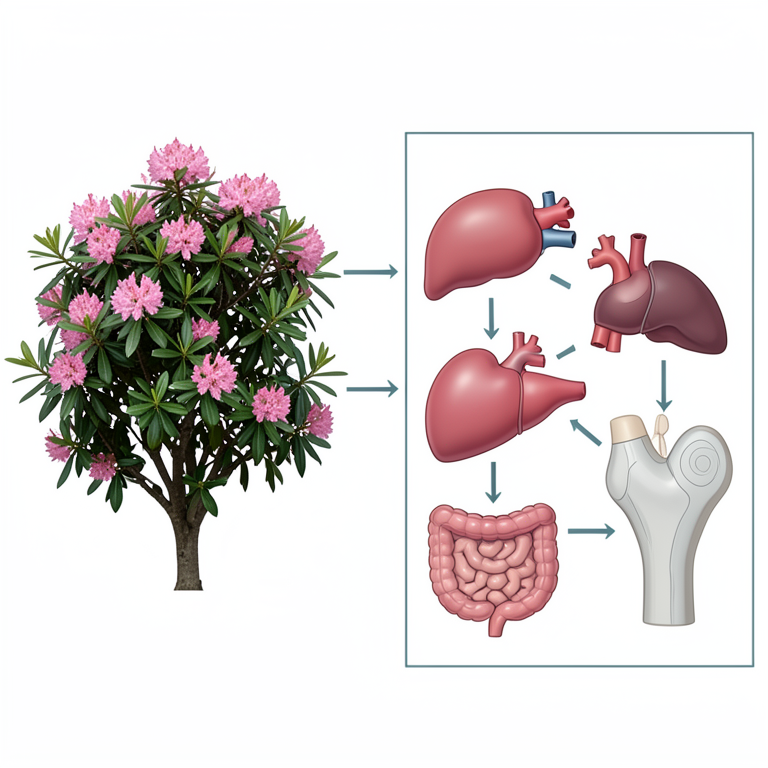
Therapeutic Spectrum of R. arboretum
AI-generated conceptual illustration (Rhododendron arboretum plant and Wistar rat organs). It explains the idea and does not show study data.
View source evidence ↗Figures & tables
From the original paper Figure 1
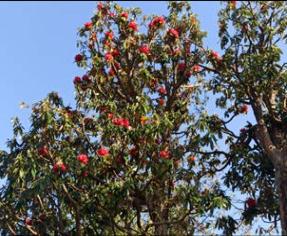 Figure 2
Introduction
Rhododendron, a most popular ornamental plant in the nurseries and as road trees and broadly developed in various regions of the planet for to its tasteful, business and restorative values. Rhododendron arboretum is regularly known as Buransh an evergreen tree growing up to 20 m tall, having harsh and pinkish earthy colored bark with elliptical lanceolate and restricted at closes leaves swarmed towards end of branches. Rhododendron is gotten from Greek word: "rhodo" signifies "rose" and "Dendron" signifies "tree". Rhododendron arboreum has a place with the family Ericaceae and are essentially occupied in the Himalayas between 1200 and 4000 meters. It has huge, globose, minimal corymbs appealing blossoms have dark red or pink tone. They have capsular, cylindric, bended, longitudinally ribbed leafy foods ellipsoid in shape. It is an occasional tree ordinarily flowering and Fruiting will happen on the long stretch of March -April and September -October. The bloom is entitled as the public blossom of Nepal and state bloom of Himachal Pradesh (India) because of the tasteful magnificence of the completely bloomed blossoms in the blooming season. This large number of spots represent over 90% of the world's regular populace of Rhododendrons. Rhododendron is having various restorative properties in the treatment of loose bowels, the runs, detoxification, irritation, fever, blockage, bronchitis and asthma and furthermore utilized as processors in food sector. The Various parts (leaves, blossoms and foundations) of the plant have been accounted for to have a few restorative properties and are utilized in the treatment of customary and current arrangement of medicines 6. This audit fundamentally centers on the restorative properties of the Rhododendron arboretum.
Compound Constituents
The plant contains huge measure of optional metabolites like alkaloids, flavonoids, glycosides, saponins, tannins, steroids and phlobatannins. The evaluated how much phytoconstituents, for example, rut in, quercetin and coumaric corrosive, -
Customary Practices
Rhododendron arboretum's nectar is fermented to make wine and is successful in loose bowels and diarrhea. Its Corolla is directed in the event of fishbone trapped in the neck. Snuff produced using the bark of the tree is fantastic cold reliever. Youthful leaves can be handled into glue and applied on the brow to reduce cerebral pains. Activity and Uses Juices of petals is great beverage for summer and heart tonic. It has calming, hostile to nociceptive movement, hepatoprotective action and against diarrhoeal action. The youthful leaves are astringent and poultice. They are made into a glue and afterward applied to the brow in the treatment of migraines. The juice of the bark is utilized in the treatment of hacks, looseness of the bowels and diarrhea. A decoction of the blossoms is utilized to really look at an inclination to upchuck, particularly in the event that there is likewise a deficiency of hunger. The juice of the blossoms is utilized in the treatment of feminine problems. The petals are eaten to help the evacuation of any creature bones that have become stuck in the throat. The petrol ether extricate diminishes the pace of heartbeat and compression in secluded heart of frog. A heavy drinker (half) concentrate of the blossoms brought down pulse in canines and pale skinned person rats.
Acute poisonousness studies
In light of harmfulness study Based on OECD rules No. 423 (OECD, 1996) three oral dosages of ethanolic concentrate of R. Arboreum 100, 250, 500 mg kg -1 were chosen utilizing intense Poisonous class method.
Restorative properties of Rhododendron plant
Flavonoids, secluded from the leaves of Rhododendron arboreum were found to have strong cell reinforcement property, the plant Rhododendron arboreum have been accounted for mitigating. There are different therapeutic properties of R. arboretum were accounted for.
The hepatoprotective movement
Hepatoprotective movement of R Arboretum ethanolic leaf removes was assessed in wistar rodent model by examine of serum marker catalyst like SGOT, SGPT, ALP, immediate and all out bilirubin, fatty substances, cholesterol and assessment of ascorbic corrosive in pee. The outcomes showed huge hepato defensive activity. The acetic acid derivation part of R. arboreum blossom remove is likewise shown proficient action against hepatic damage.
The counter diabetic movement
Hostile to diabetic action was concentrated on utilizing watery methanolic concentrate of Rhododendron arboreum by in vivo rodent gastrointestinal glucosidase technique. The concentrate was found to repress rodent gastrointestinal α-glucisidase. The fluid methanolic separate showed inhibitory exercises on glucosidase demonstrated the counter diabetic activity.
The mitigating hostile to nociceptive action
Ethyl acetic acid derivation concentrate of Rhododendron arboretum flowers was explored for its calming and against nociceptive potential in creature models by calming movement in arachidonic prompted rear paw edema (p<0.01), cotton pellet granuloma model of aggravation (p<0.01) and Freund's adjuvant-actuated paw joint pain (p<0.01 and antinociceptive action in mice by security in acidic acid induced squirming legitimized the mitigating and antinociceptive capability of Rhododendron arboreum. anti-inflammatory action of ethanolic, watery and methanolic extricates from R. arboretum blossoms were explored by delivering paw oedema utilizing different phlogistic specialists. The decline in paw volume showed greatest mitigating action of Extracts.
The immunomodulatory movement
Alcoholic leaf concentrate of R. arboreum is assessed for immunomodulatory movement and related hepatotoxicity in Swiss pale skinned person mice model. The boundaries like, humoral safe reaction, cell intervened resistant reaction and all out leukocyte counts (TLC) were evaluated in the antigenically tested mice with sheep RBC (SRBC). Liver capability tests like absolute bilirubin, SGPT and SGOT were additionally assessed. The orally controlled alcoholic concentrate of the leaves showed a huge concealment of the safe reactions, in a portion subordinate way. The concentrate at the most extreme portion (100 mg/kg) was found to have higher immunosuppressant impact in examination with control and levamisole (p<0.01. In this manner, it tends to be presumed that the alcoholic concentrate of R. arboreum is a compelling and safe immunosuppressive agent.
The anti-diarrheal action
The counter diarrheal property of ethyl acetic acid derivation concentrates of bloom of R. arboreum concentrated on creature model and the concentrate was orally managed at the centralization of 100 mg kg -1 , 200 mg kg -1 and 400 mg kg -1 body weight. The outcome showed that ethyl acetic acid derivation blossom remove has huge antidiarrheal movement against magnesium sulfate and castor oil prompted the runs by lessening both weight and volume of digestive substance essentially subsequently legitimizing its conventional use in looseness of the bowels and have extraordinary potential as a hotspot for regular wellbeing products.
The antimicrobial action
The antimicrobial action of watery and ethanolic concentrate of blossom of R. arboreum was considered against Escherichia coli, Staphylococcus aureus, Candida Albicans, Pseudomonas aeruginosa, Agrobacterium tumefaciens, Bacillus subtilis and Aspergillus Niger. The outcomes showed that watery and ethanolic blossom removes are viable against E. coli and S. aureus. Watery concentrate showed antimicrobial action at 50 mg ml -1 and 100 mg ml -1 of focus against E. coli and S. aureus, individually. Though methanolic separate showed movement against E. coli at the convergence of 12.5 mg ml -1 or more and against S. aureus at the convergence of 25 mg ml -1 or more. Be that as it may, both the concentrates didn't show inhibitory exercises against rest of the strains.
The cancer prevention agent property
The cancer prevention agent action of hydro-methanolic leaf concentrate of R. arboreum via auto-oxidation of linoleic corrosive coupled response and β carotene. DPPH measure uncovered the extremist searching movement (IC50-0.47) of leaf concentrate of R. arboreum. Heated water, cold water and ethanolic bloom concentrates of R. arboreum were read up for Antioxidant property by superoxide revolutionary searching examine, hydroxyl extremist rummaging test and lipid peroxidation measure. The half maximal successful focus (EC50) values for hydroxyl extremist rummaging examine showed cancer prevention agent property high temp water, cold water and ethanolic blossom extract.
The cardio protective action
The ethanolic concentrate of Rhododendron arboretum (ERA) against isoproterenol-actuated myocardial ischemia in rodent myocardium involving Wister rodents showed huge height in serum heart marker proteins like lactate dehydrogenase (LDH), aspartate transaminase (AST) and alanine transaminase (ALT). Pretreatment with ERA to ISO-treated rodents caused a huge cardio protective impact and Histopathological assessment likewise affirmed the cardio protective impact of Ethanolic concentrate of Rhododendron arboretum. The ethanolic concentrate of Rhododendron arboreum (ERA) leaves can forestall isoproterenol-prompted myocardial ischemia in rodent myocardium.
Conclusion
The flavonoids present in Rhododendron not just shield the cardiovascular muscles from adverse consequence of oxidants yet additionally work on heart capability and enhance ventricular renovating through hindering UTR-interceded actuation of RhoA-Rock pathways in myocardial dead tissue rats 23. Rhododendron plants have medical advantages alongside different restorative properties which were actually used by the conventional professionals and tribes. The creators have attempted to audit the restorative properties and trusting that this survey will draw in the specialists to direct research in this field for the worth expansion which might help in the upgrade of business and economy for the impending age. R arboretum is a plant with grouped compound constituents which applied numerous pharmacological impacts. There is a great opportunities for advancement of novel medications from R. Arboreum to treat various human sicknesses.
Figures and tables from the paper
References
12 in the original paper- Chamberlain DF. A Revision of Rhododendrons, II subgenus Hymenanthes, Royal Botanic Garden, Edinburgh, Scotland. 1982;39(2):1-480.
- Paul A, Khan ML, Arunachalam A, Arunachalam K. Biodiversity and conservation of Rhododendrons in Arunachal Pradesh in the indo-Burma biodiversity hotspot. Current science. 2005;89(4):623-634.
- Laloo RC, L Kharlukhi, S Jeeva, BP Mishra. Status of medicinal plants in the disturbed and the undisturbed sacred forests of Meghalaya, northeast India: Population structure and regeneration efficacy of some important species. Current Science. 2006;90:225-232.
- Swaroop A, Prakash Gupta A, Kumar Sinha A. Simultaneous determination of quercetin, rutin and coumaric acid in flowers of Rhododendron arboreum by HPTLC. Chromatographic. 2005;62(12):649652.
- Debjyoti Bhattacharyya, Sanjappa M. Rhododendron Habitats in India, Journal American Rhododendron Society. 2009;63:4.
- Sharma N, Sharma UK, Gupta AP. Simultaneous determination of epicatechin, syringicacid, quercetin-3Ogalactoside and quercetin in the leaves of Rhododendron species by using a validated HPTLC method. JF Comp and Analysis. 2010;23:214-219.
- Mohammad Nisar, Sajid Ali, Muhammad Qaisar. Preliminary Phytochemical screening of flowers, leaves, bark, stem and roots of Rhododendron arboretum, MiddleEast Journal of Scientific Research. 2011;10(4):472-476.
- Srivastava P. Rhododendron arboreum an overview. Journal of Applied Pharmaceutical Sciences. 2012;2(1);152-162.
- Manjunatha Mudagal P, Sandip Karia, Divakar Goli. Preventive effect of Rhododendron arboreum on cardiac markers, lipid peroxides and antioxidants in normal and isoproterenol-induced myocardial necrosis in rats African Journal of Pharmacy and Pharmacology. 2011;5(6):755763.
- Prakash Tigari, Snehal Dayalal Fadadu, Uday Raj Sharma, Venkata Surendra. Hepatoprotective activity of leaves of Rhododendron arboreum in CCl4 induced hepatotoxicity in rats. Journal of Medicinal Plant Research. 2008;2(11):31520.
- Neeraj Verma, Anil Singh P, Amresh G, Sahu PK, Ch. Rao V. Protective effect of ethyl acetate fraction of flowers against carbon tetrachloride induced hepatotoxicity in experimental models. Indian Journal of pharmacology. 2011 May-Jun;43(3):291-295.
- Bhandary MR, Kawabata J. Antidiabetic activity of Laligurans (Rhododendron arboreum Sm.) flower. Journal of Food Science and Technology Nepal 2008;4:61-63.
Cited by 6
From OpenAlex, OpenCitations and reference lists read by Scinovex
- Effectiveness of homoeopathy in trapezitis: A systematic review of research findings ↗
Sumi TS, Neha V Jadhavrao · International Journal of Advanced Academic Studies · 2025
Background: Trapezitis is an inflammatory condition of the trapezius muscle and its prevalence is high in recent days. It is represented by pain, stiffness, and movement restriction. This condition is due to poor posture, prolonged muscle strain, or repetitive stress. Homeopathic remedies such as Cimicifuga racemosa, Rhododendron chrysanthum, Rhustoxicodendron, Lachnanthus Tinctoria, Guaiacum officinale and many more are widely used in
- Comprehensive disquisition on the phytochemical spectrum and pharmacodynamic nuances of Tabernaemontana divaricata ↗
Sudipta Choudhury, Rajat Das, Preksha Sharma, Jyochhana Priya Mohanty, Amrita Ghosh, Bapan Banik et al. · International Journal of Pharmacognosy and Life Science · 2025
Background: Nature is a vital source of medicinal plants, offering a wealth of bioactive compounds indispensable for human health. Tabernaemontana divaricata, commonly referred to as crepe jasmine, is a tropical shrub from the Apocynaceae family, long esteemed in traditional medicine. Its pharmacological significance stems from diverse phytoconstituents such as alkaloids, flavonoids, phenolic acids, saponins, and terpenoids, extracted from various plant
- A scientific approach to the development and evaluation of anti-diabetic herbal Churna ↗
Jesvy Joby, Malavika TM · International Journal of Pharmacognosy and Clinical Research · 2025
The present study focuses on the formulation and evaluation of an antidiabetic Churna prepared using Guava leaves (Psidium guajava), Fenugreek (Trigonella foenum-graecum), Ginger (Zingiber officinale), Neem (Azadirachta indica), and Cardamom (Elettaria cardamomum). The Churna was standardized through organoleptic assessment, physicochemical analysis, micromeritic evaluation, heavy metal testing, and phytochemical screening. The formulation exhibited acceptable quality parameters, including neutral pH, low moisture
- A comprehensive review of insect pests affecting black gram (Vigna mungo L.) in India ↗
Abul Faiz · International Journal of Fauna and Biological Studies · 2024
Black gram (Vigna mungo L.) is a vital pulse crop in India, contributing significantly to the country's agricultural economy and dietary protein intake. Despite its importance, black gram cultivation is hindered by numerous insect pests that cause substantial yield losses. Keeping a record of insect pest populations in crops is important to prevent pest outbreaks and to implement remedial measures
- Screening, docking and ADME studies of the phytochemicals present in Rhododendron Arboreum Sm. against myocardial infraction through computational approaches ↗
Neema Bisht, Sandeep Bisht, Archana Negi Sah, Kanak Pandey, Sonia Pandey · CRC Press eBooks · 2024
Medicinal plant Buransh is very popular for its flower and juice from the family Ericaceae known as Rhododendron arboreum Sm. contains potential phytochemicals as quercetin, ursolic acid, Hyperine, taraxerol, betulin, lupeol and sitosterol, etc. Traditionally this plant was used to treat nasal bleeding, blood dysentery, heart problems, asthma, and diabetes, etc. The aim and objective of the current study is…
❝ 0PDF - A review on: Avartani (Helicteres isora)
Payal A Kadus, Ankita A Giramkar, Sunil A. Nirmal · International Journal of Agriculture and Nutrition · 2023
The whole plant of Helicteres isora Linn showed excellent medicinal merits from ancient time. The leaves, seeds, fruits and roots of this plant have been used in Ayurvedic medicine. It has great medicine importance. It have been recommended for the treatment of diarrhoea, dysentery, abdominal colic pain, intestinal parasites. Phytochemicals present in Avartani like gallic acid, caffeic acid, vanillin, and p-coumaric acid. Qualitative phytochemicals screening of, aqueous ethanol extract, pet Ether extract, chloroform extract, ethyl acetate extract, butanol extract of Avartani roots. Helicteres