
Research article · 2023 · Full text
International Journal of Agriculture and NutritionA review on: Avartani (Helicteres isora)
Volume 5(1) · Pages 55–58 · DOI: 10.33545/26646064.2023.v5.i1a.100 ↗
Research areasPhytochemicals and Medicinal PlantsEssential Oils and Antimicrobial ActivityEthnobotanical and Medicinal Plants Studies
Abstract
Author-writtenThe whole plant of Helicteres isora Linn showed excellent medicinal merits from ancient time. The leaves, seeds, fruits and roots of this plant have been used in Ayurvedic medicine. It has great medicine importance. It have been recommended for the treatment of diarrhoea, dysentery, abdominal colic pain, intestinal parasites. Phytochemicals present in Avartani like gallic acid, caffeic acid, vanillin, and p-coumaric acid. Qualitative phytochemicals screening of, aqueous ethanol extract, pet Ether extract, chloroform extract, ethyl acetate extract, butanol extract of Avartani roots. Helicteres isora has Pharmacological actions like anti-oxidant, anticancer, antidiabetic, hypolipidemic, antibacterial, anti-inflammatory, hepatoprotective, Brain oxidant potency, Anti-diarrheal actions.
Summary
Source-checkedPlain-language reading of the full paper, prepared with AI and checked against the text. Each point links to the authors' own words.
Why it matters
- Helicteres isora, also known as Avartani, is a plant with a long history of medicinal use in Ayurvedic medicine, utilizing its leaves, seeds, fruits, and roots. View evidence ↗
- The plant is traditionally employed to treat gastrointestinal issues such as diarrhea, dysentery, intestinal parasites, and abdominal colic pain. View evidence ↗
- Used across Asia, Iraq, and South Africa, the plant is valued for treating a wide range of conditions, including infections, cancer, diabetes, and gastrointestinal disorders. View evidence ↗
The question
- The review aims to summarize the phytochemical composition and the various pharmacological activities of Helicteres isora, including its antioxidant, anticancer, and antidiabetic properties. View evidence ↗
What they did
- A subcritical extraction method was used at 160°C and 10 bar pressure with a 1:30 sample-to-solvent ratio for 30 minutes to identify specific acids and berberine. View evidence ↗
- Anti-diabetic activity of root extracts was evaluated using glucose tolerance tests in both normal and alloxan-induced diabetic rats. View evidence ↗
What they found
- Phytochemical screening of root extracts showed varying yields, with the aqueous ethanol extract providing the highest yield at 2.26% (w/w) and the pet ether extract the lowest at 0.04% (w/w). View evidence ↗
- An aqueous extract of H. isora administered at 200 mg/kg (P.O.) demonstrated a significantly higher antioxidant effect compared to rats treated with tolbutamide. View evidence ↗
- Ethanol extracts showed moderate cytotoxic activity against several human cancer cell lines, with the highest effect seen in HeLa-B75 at 34.21±0.24%. View evidence ↗
- Treatment with H. isora bark extract reduced serum high, low, and very low-density lipoproteins in diabetic rats to levels near normal. View evidence ↗
- Ethanolic extracts of the plant exhibit significant anti-inflammatory activity by targeting the COX-2 enzyme. View evidence ↗
- Active fractions from acetone extracts of the fruits were found to cure plasmids, leading to a loss of antibiotic resistance in the affected bacterial strains. View evidence ↗
- Ethanolic root extracts provided hepatoprotective effects against liver damage induced by carbon tetrachloride in rat models. View evidence ↗
What it means
- The authors conclude that Avartani has great therapeutic potential for treating various diseases, offering a possible alternative to expensive medicines with side effects in developing countries. View evidence ↗
- The authors state a need for future work to isolate active principles and clarify the exact mechanisms of action for the plant's anticancer activity. View evidence ↗
Visual summary
1 visualsIllustrations explain the paper; they do not show study data.
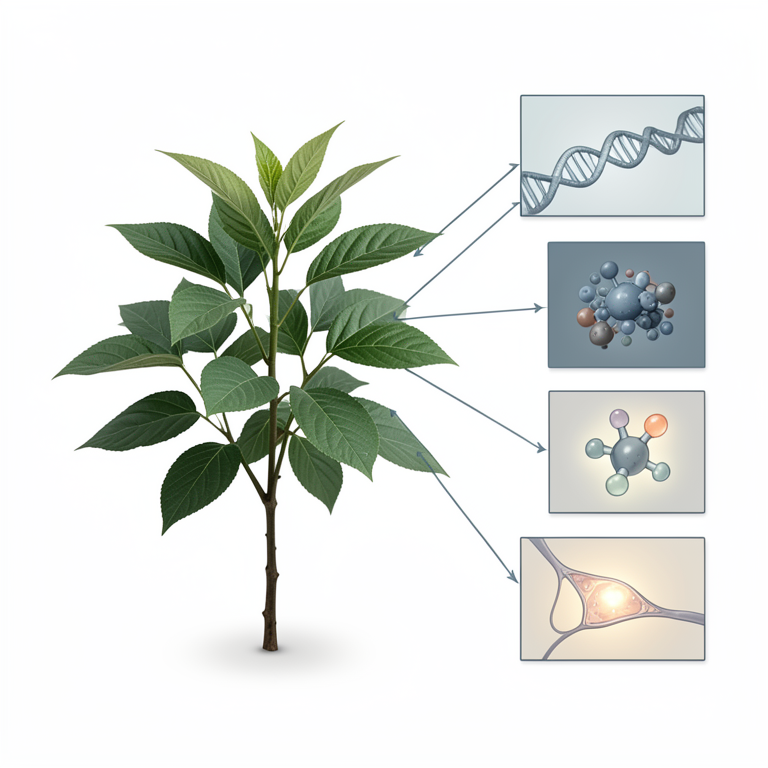
Pharmacological Spectrum of H. isora
AI-generated conceptual illustration (Helicteres isora plant). It explains the idea and does not show study data.
View source evidence ↗Figures & tables
From the original paper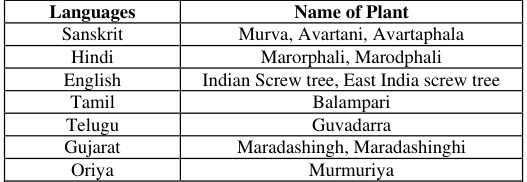 Table 1
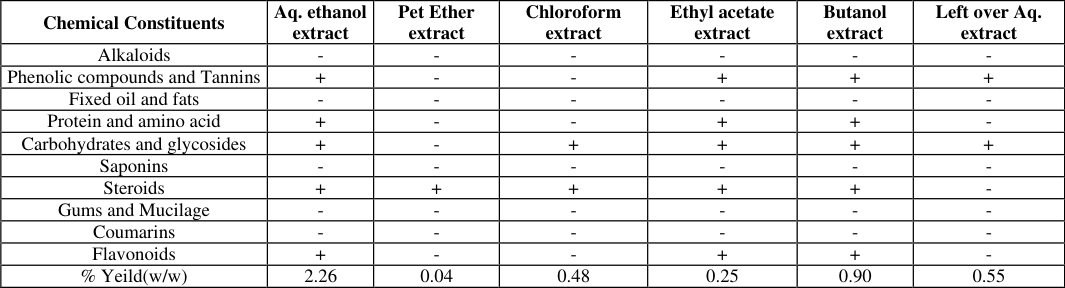 Table 2
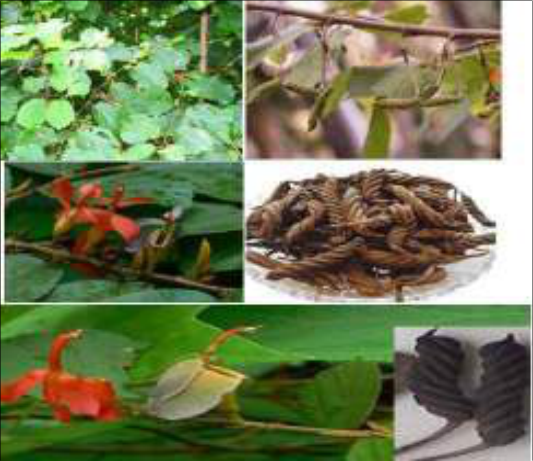 Figure 1
Introduction Basic information of Avartani (Helicteres isora)
Avartani (Helicteres isora Linn.) is a medicinal plant which is used in several diseases. Helicteres isora sometime called the Indian Screw tree, it is small tree or large shrubs found in Southern Asia and Northern Oceania. It is usually assigned the family malvaceae, but it is sometimes assigned to the family sterculeaceae. In Sanskrit Helicteres isora called Avartani and Avartaphala. East Indian Screw tree is an Ayurvedic herb used in treating diarrhoea, dysentery, abdominal colic pain, intestinal parasites, etc. It's roots, stem, bark, fruits are used for medicinal purpose. Avartani is used as a folk medicine to treat snake bite, diarrhoea and constipation of new born baby. There is a famous quote in Ayurveda "Yatra A krutihi Tatra Gunaaha Vasanti" meaning, if the part of a plant resembles some organs, it is useful in treating disorders of that particular organ. Avartani means rotating. The fruits and roots of Helicteres isora are used in traditional medicine system of Asia, Iraq and South Africa where they are created with having value in treatment of wide variety of condition including gastrointestinal disorder diabetes, cancer and infection. In 19 th century fibres from the bark where used to make rope and sacks although nowadays the tree is harvested for the fruits and roots which are used in fork medicine. This is the first study of global trade on fruits of the widely used as traditional medicine Helicteres isora Linn. It is used in Ayurveda, siddha, Unani medicinal system and local folk traditional medicine in India Pakistan, Bangladesh. The roots of this plant are used in traditional Chinese medicine in China and the fruits in Jammu products in Indonesia, Malaysia and Thailand. The fruit of Avartani are twisted. The fruits gives an imagination about intestine. Hence they are useful in treating intestinal parasite. The fruit are twisted his they are useful in twisting pain of abdomen. The red flower of this plant are pollinated mainly by sunbirds butterfly and hymenoptera. Helicteres isora is a rich source of antioxidants, carbohydrates, proteins, fibre, calcium, phosphorus, and iron. Active phytoconstituents include gallic acid, caffeic acid, vanillin, and p-coumaric acid. Helicteres isora L. is a large arborescent shrub of the family Sterculiaceae. It is used as an antigastrospasmodic, anthelmintic, antispasmodic, antipyretic, antidiarrheal, antidysenteric and as a tonic after childbirth. Stems of this plant are used as anthelmintic, colic, and aphtha, while fruits are used as colic, anticonvulsant, and abdominalgia. Traditionally, the root juice is claimed to be useful in diabetes, emphysema, and snakebite.
Helicteres isora is a rich source of antioxidants, carbohydrates, proteins, fibre, calcium, phosphorus, and iron. Active phytoconstituents include gallic acid, caffeic acid, vanillin, and p-coumaric acid. Cucurbitacin b and isocucurbitacin b have been isolated from the roots. Helicteres isora L. is a large arborescent shrub of the family Sterculiaceae.
Taxonomy
Taxonomy
Phytochemical composition:
The phytochemical studies of the plant are an important step to identify the bioactive compounds present in the medicinal plants [14] . These compounds have various use in medicinal industries to prepare novel drugs. Phytochemical screening of crude extract and chloroform extract of the plant shows the presence of carbohydrates, saponin tannin, proteins, steroids, anthraquinon glycosides, cardiac glycosides, phenolic compounds, terpenoides, alkaloid salts, and free alkaloids. The subcritical extract of the plant (prepared at 10 bar pressure, 160oc, 1:30 sample-to-solvent ratio, and 30 minutes) shows the presence of Octadecnoic acid, hexadecanoic acid, and berberine.
Pharmacological Action of Avartani (Helicteres isora) Antidiabetic activity
The bark of Helicteres isora Linn. Has been used in the indigenous System of medicine in India for the treatment of diabetes mellitus since time immemorial. The roots and bark of Helicteres isora are expectorant, demulcent and are useful in colic stabies, gastropathy, diabetes, diarrhoea and dysentery. Helicteres isora Linn. is a shrub or small tree available in forests from Bengal to Ceylon. In traditional the root juice is claimed to be useful in diabetes, empyema, and a favorite cure for snakebite. The different extracts of the roots of Helicteres isora (Family-Sterculiaceae) were tested for anti-diabetic activity, by glucose tolerance test in normal rats and alloxan induced diabetic rats.
Antioxidant activity
Kumar et al. reported the antioxidant and anticancer activity using various solvent extracts (hexane, IPA and acetone) and crude protein. Dot plot assay confirmed the presence of antioxidant activity. Helicteres isora showed strong antioxidant activity compared to hexane and iso-propyl alcohol (IPA).
Hypolepidemic activity
Hypolipidemic activities of Helicteres isora Linn. (Sterculiaceae) root extracts were investigated in alloxaninduced diabetic rats and a possible mechanism of the blood glucose lowering action was studied. The effect of bark extracts of H. isora on serum high density lipoprotein, low density lipoprotein, very low-density lipoprotein has been studied. The treatment with H. isora bark extract carried down these lipoproteins in the diabetic rats to nearly normal levels.
Antibacterial activity Shriram et al. reported organic extracts of H. isora as a new
and safe plasmid curing agent. These finding resulted in the possibility of a new type of combination between antibiotics and potential drugs effective against plasmid encoded multiple antibiotic resistance. The concentrations of the curing agents used in this study were sub inhibitory, since bacteria were already resistant to these concentrations of compound. It can be assumed that bacteria are less likely to develop any mechanism to counter the plasmid curing property of the acetone extract of H. isora.
Antiplasmid activity
Active fractions demonstrating antiplasmid activities were isolated from the acetone extracts of shade dried fruits of H. isora by bioassay. The active fraction mediated plasmid curing resulted in the subsequent loss of antibiotic resistance encoded in the plasmids as revealed by antibiotic resistance profile of cured strains. The physical loss of plasmid was also confirmed by agarose gel electrophoresis.
Brain antioxidant potency
Kumar et al. concluded that in diabetes, brain tissue was more vulnerable to oxidative stress and showed increased lipid peroxidation [17] . The above observation shows that the aqueous extract of bark of H. isora plant possesses antioxidant activity, which could exert a beneficial action against pathologic alterations caused by the presence of free radicals in streptozocin diabetes. Kumar et al. reported that the activities of cardiac antioxidant enzymes were significantly decreased in diabetic control rats. They presented significant increases in the diabetic rats treated with hemagglutination inhibition (HI). Administration of Helicteres isora to normal rats increased the antioxidant levels with no other significant differences. The effect produced by Helicteres isora was comparable with that of tolbutamide. The results show that the antioxidant effect of aqueous extract of Helicteres isora (200 mg/kg, P.O.) was significantly higher than that of in the tolbutamide treated rats.
Cardiac oxidant and antiperoxidant potency
Cardiac oxidant and antiperoxidant potency
Anticancer activity
The ethanol extract of the plant exhibit a moderate cytotoxic activity against human cancer cell lines HeLa-B75 HEP-3B (25.36±1.78%), HL-60 (30. 25±1.36%), and PN-15 (29.21 ± 0.52%). The cell proliferation assay confirms the chemopreventive activity of hexane fruit extract reducing the formation of prostaglandin E2 (PGE-2), the levels of tumor necrosis factor-alpha (TNFα), and nitric oxide (NO) in human acute monocytic leukemia (THP-1) cell lines. Varghese et al. reported that the drug has a potent action against human breast cancer. The cytotoxic activity of the drug is due to the presence of alkaloids and flavonoids. Our further plan is to isolate and evaluate these active principles and elucidate exact mechanism of action.
Anti-diarrheal activity
The fruits are demulcent and astringent and are useful in the gripping of bowels and flatulence of children. The bark is useful in dysentery and diarrhoea. The fruits are demulcent and astringent and are useful in the gripping of bowels and flatulence of children. The bark is useful in dysentery and diarrhoea.
Anti-inflammatory activity
The ethanolic extract of the plant shows remarkable antiinflammatory activity against cyclooxygenase-2(COX-2), an important enzyme produced during inflammation. The hexane fruit extract shows significant activity against the production of prostaglandin E2 (PGE-2) and tumor necrosis factor-alpha (TNF-α), whereas dichloromethane fruit extract shows a significant inhibitory activity on cyclooxygenase-2(COX-2) in Human rectum adenocarcinoma cells (RCM-1) and Human monocytic leukemia cell lin (THP-1 cells).
Hepatoprotective activity
Chitra et al. reported that ethanolic root extracts of H. isora demonstrated hepatoprotective activity against carbon tetrachloride induced liver damage in rats. The parameters studied were serum total bilirubin, total protein, alanine transaminase, aspartate transaminase and alkaline phosphatase activities. Results of biochemical studies of blood samples of CCl4 treated animals showed significant increase in the levels of serum markers and decrease in total protein level reflecting the liver injury caused by CCl4.
Conclusion
Avartani is widely used for curing various disease due to its great therapeutic potential. In the developing countries increased cost of medicine as well as their side effects has become burning public health concern.
Figures and tables from the paper
| Languages | Name of Plant |
|---|---|
| Sanskrit | Murva, Avartani, Avartaphala |
| Hindi | Marorphali, Marodphali |
| English | Indian Screw tree, East India screw tree |
| Tamil | Balampari |
| Telugu | Guvadarra |
| Gujarat | Maradashingh, Maradashinghi |
| Oriya | Murmuriya |
Table text extracted from the original PDF; superscript letters are shown inline. The original table image is below.
View original table image
| Chemical Constituents | Aq. ethanol extract | Pet Ether extract | Chloroform extract | Ethyl acetate extract | Butanol extract | Left over Aq. extract |
|---|---|---|---|---|---|---|
| Alkaloids | - | - | - | - | - | - |
| Phenolic compounds and Tannins | + | - | - | + | + | + |
| Fixed oil and fats | - | - | - | - | - | - |
| Protein and amino acid | + | - | - | + | + | - |
| Carbohydrates and glycosides | + | - | + | + | + | + |
| Saponins | - | - | - | - | - | - |
| Steroids | + | + | + | + | + | - |
| Gums and Mucilage | - | - | - | - | - | - |
| Coumarins | - | - | - | - | - | - |
| Flavonoids | + | - | - | + | + | - |
| % Yeild(w/w) | 2.26 | 0.04 | 0.48 | 0.25 | 0.90 | 0.55 |
Table text extracted from the original PDF; superscript letters are shown inline. The original table image is below.
View original table image
References
20 in the original paper- Chitra MS, Prema S. Hepatoprotective activity of Helicteres isora Linn. Against CCl [4] induced hepatic damage in rats. Hamdard Medicus. 2009;52(1):112115.
- Hinsley SR. Classification of Malvaceae: Overview. Malvaceae. Info; c2006. Retrieved. 2019-07-17.
- Atluri JB, Rao SP, Reddi CS. Pollination ecology of Helicteres isora Linn. (Sterculiaceae) (PDF). Current Science. 2000;78(6):713-718.
- Kirtikar KR, Basu BD. Indian medicinal plants. Dehradun, India: International Book Distributors. 1995;1:371-2.
- Varghese E, Narayanan SS, Gopal RV, Nair A, Chittethu AB, Anson TA. Anticancer activity of chloroform extract of Helicteres isora. The International Journal of Pharmacology and Pharmaceutical Technology. 2011;3(2):2560-2564.
- Cunningham AB, Ingram W, Brinckmann JA, Nesbitt M. Twists, turns and trade: A new look at the Indian Screw tree (Helicteres isora). Journal of Ethnopharmacology. 2018;225(3):128-135.
- Rattanamaneerusmee A, Thirapanmethee K, Nakamura Y, Bongcheewin B, Chomnawang MT. Chemopreventive and biological activities of Helicteres isora L. Fruit Extracts, Research in Pharmaceutical Sciences. 2018;13(6):484-492.
- Al Yahya MA. Phytochemical studies of the plants used in traditional medicine of Saudi Arabia. Fitoterapia. 1986;57(3):179-182.
- Khan WA, Khoker AA. Remedial merit of rhododendron Rhododendron arboretum. Int J Res Agron. 2022;5(2):25-28.
- Singh SB, Singh AK, Thakur RS. Chemical constituents of the leaves of Helicteres isora. Indian Journal of Pharmaceutical Sciences. 1984;46(4):148149.
- Kumar G, Banu GS, Murugesan AG. Effect of Helicteres isora bark extracts on heart antioxidant status and lipid peroxidation in streptozotocin diabetic rats. Journal of Applied Biomedicine. 2008;6(2):89-95.
- Shaikh R, Pund M, Dawane A, Iliyas S. Evaluation of Anticancer, Antioxidant, and Possible Antiinflammatory Properties of Selected Medicinal Plants Used in Indian Traditional Medication. Journal of Traditional and Complementary Medicine. 2014;4(4):253-257.
- Pandey S, Patel A, Singh B, Gupta RK. Morphological, anatomical and phytochemical screening of medicinal herb Boerhaavia diffusa L. International Journal of Advance and Innovative Research. 2019:6(2):96-100.
- Tambekar DH, Khante BS, Panzade BK, Dahikar S, Banginwar Y. Evaluation of phytochemical and antibacterial potential of Helicteres isora L. fruits against enteric bacterial pathogens. African Journal of Traditional, Complementary and Alternative Medicines. 2008:10,5(3):290-293.
- Mahire SP, Patel SN. Extraction of phytochemicals and study of its antimicrobial and antioxidant activity of Helicteres isora L., Clinical Phytoscience. 2020;6(1):40.
- Didar Z. Comparative in vitro Study of the biological activity and chemical composition extracts of Helicteres isora L. obtained by water and subcritical water extraction. Food Quality Safety. 2020:4(2):101106.
- Shriram V, Jahagirdar S, Latha C, Kumar V, Dhakephalkar P, Rojatkar S, et al. Antibacterial & antiplasmid activities of Helicteres isora L. Indian Journal of Medical Research. 2010;132(1):94-99.
- Kumar G, Banu GS, Murugesan AG, Pandian MR. Effect of Helicteres isora bark extracts on brain antioxidant status and lipid peroxidation in streptozotocin diabetic rats. Pharmaceutical Biology. 2007;45(10):753-759.
- Kumar TM, Christy AM, Ramya RC, Malaisamy M, Sivaraj C, Arjun P, et al. Antioxidant and anticancer activity of Helicteres isora dried fruit solvent extracts. Journal of Academia and Industrial Research. 2012;1(3):148-152.
- Kumar G, Murugesan AG. Hypolipidaemic activity of Helicteres isora L. bark extracts in streptozotocin induced diabetic rats. Journal Ethnopharmacol. 2008;116(1):161-166.
Cited by 7
From OpenAlex, OpenCitations and reference lists read by Scinovex
- Pharmacognostic and dravyaguna attributes of Avartani (Helicteres isora) in ayurvedic materia medica ↗
Sonam Sharma, Rajesh Wangchuk · Journal of Dravyaguna and Bhaishajya Vigyan · 2025
Avartani (Helicteres isora L.), traditionally known as the Indian screw tree, is a medicinal plant of considerable importance in Ayurveda and other folk systems of healing. Its spirally twisted fruit has made it easily recognizable and symbolically associated with its Sanskrit name Avartani. Classical Ayurvedic literature records its usage in gastrointestinal disorders such as diarrhea and dysentery, metabolic disorders such…
❝ 1PDF - Therapeutic insights of Avartani (Helicteres isora) in classical ayurvedic formulations: A naturopathic perspective ↗
Kavita M Rao · Journal of Ayurveda and Naturopathy · 2025
Avartani (Helicteres isora L.), commonly called the Indian screw tree, has been acknowledged in Ayurvedic texts as an important medicinal plant used in multiple formulations for gastrointestinal, metabolic, infectious, and inflammatory disorders. Classical sources describe its properties as astringent, light, and cooling, attributing to it actions such as stambhana (checking discharges) and krimighna (anthelmintic). Modern pharmacological studies confirm the presence…
❝ 0PDF - Phytochemical and ethnomedicinal significance of Helicteres isora in herbal therapeutics ↗
Prakash H. Patil · International Journal of Herbal Medicine · 2024
Helicteres isora L. (Malvaceae), commonly known as East Indian screw tree, is a widely used medicinal plant in South and Southeast Asia. Traditional systems—including Ayurveda, Siddha, Unani, and various folk traditions—employ its fruits, roots, stem bark, and leaves to manage gastrointestinal disturbances, metabolic disorders, infections, respiratory ailments, and gynecological conditions. This narrative review synthesizes botanical and ethnopharmacological knowledge with contemporary
- Pharmacognostic review and phytochemical profiling of Helicteres isora: Emerging herbal applications ↗
Sophia García · Journal of Pharmacognosy and Phytochemistry · 2024
Helicteres isora L. (family Malvaceae; syn. Sterculiaceae in older literature), commonly known as Indian screw tree or Avartani, is a widely distributed wild shrub across the Indian subcontinent and adjoining tropical Asia. The species has long been used in Ayurveda, Siddha, folk, and Unani traditions for gastrointestinal disturbances, metabolic disorders, infections, and inflammatory ailments. Over the last two decades, renewed…
❝ 0PDF - Pharmacological and clinical prospects of Helicteres isora (Avartani) as a phyto-therapeutic agent ↗
Mohd Zulkifli Bin Ismail · International Journal of Pharmaceutical and Clinical Research · 2024
Helicteres isora L. (family Malvaceae), commonly known as Avartani, is a dry-deciduous shrub distributed across the Indian subcontinent and parts of Southeast Asia. Historically recorded in Ayurvedic and folk pharmacopoeias, the plant especially its twisted fruits, root bark, and leaves has been used for intestinal disorders, pediatric constipation, hemorrhagic conditions, wounds, and metabolic complaints. Over the past two decades, experimental…
❝ 0PDF - Experimental and preclinical investigations of Helicteres isora extracts in drug discovery ↗
Bibhusal Thapa · International Journal of Pharmaceutical and Clinical Research · 2024
Helicteres isora L. (Avartani; Sterculiaceae) is a plant with significant ethnopharmacological value, traditionally used for treating a variety of ailments. Recent studies have explored its pharmacological potential in drug discovery, particularly in the areas of metabolic diseases, hepatoprotective effects, anti-inflammatory activity, antioxidant properties, and its potential for combating infections. This paper reviews the experimental and preclinical investigations of H. isora
- Biological activities and functional role of Helicteres isora in plant-based therapeutics
Eszter Kovács · International Journal of Biology Sciences · 2023
Helicteres isora, commonly known as the screw tree, is a significant medicinal plant native to South and Southeast Asia. It has been used in traditional medicine systems, particularly Ayurveda, for the treatment of a variety of ailments including diabetes, gastrointestinal disorders, skin diseases, and infections. The plant contains a variety of bioactive compounds, including flavonoids, phenolic acids, alkaloids, and cucurbitacins, contributing to its broad spectrum of therapeutic activities. The present paper aims to review the biological activities and functional role of H. isora in plant-b