
Research article · 2022 · Full text
International Journal of Biology SciencesNew record of aphanogmus clavicornis Thomson (Hymenoptera: Ceraphronidae) as a larval parasitoid of tomato leaf miner Tuta absoluta (Meyrick) in Syria
Volume 4(2) · Pages 181–185 · DOI: 10.33545/26649926.2022.v4.i2c.120 ↗
Research areasInsect behavior and control techniquesInsect-Plant Interactions and ControlInsect Pest Control Strategies
Abstract
Author-writtenTomato (Solanum lycopersicum L.) is an important edible and nutritious fruit regarded by nutritionist as a vegetable. It is an important source of vitamins and significantly contributes to economic development. However, the production of tomatoes is heavily affected by climate change, insect pests, disease and the new devastating pest of tomatoes, the tomato leaf miner, Tuta absoluta (Meyrick) (Lepidoptera: Gelechiidae). This study includes a description of Aphanogmus clavicornis Thomson, 1858 (Hymenoptera: Ceraphronoidea), a primary parasitoid of T. absoluta whose larvae feed on all parts of the tomato plant. It is the first record of T. absoluta as a host of genus Aphanogmus worldwide and a first record of A. clavicornis in both Syria and the Middle East. Description, biology and the taxonomic characters of the new species were provided. The new record of natural parasitism of T. absoluta by A. clavicornis would add knowledge on biological control of the pest and could become an additional option for the integrated pest management of those crops where T. absoluta is a key pest. This finding will be baseline for future research. It would be interesting to investigate if A. clavicornis can be produced in large scale under laboratory conditions and test its potential use as a biological control agent within integrated pest management programs.
Summary
Source-checkedPlain-language reading of the full paper, prepared with AI and checked against the text. Each point links to the authors' own words.
Why it matters
- Tomatoes are a vital source of vitamins and contribute significantly to economic development. View evidence ↗
- Tomato production is severely impacted by climate change, diseases, and the devastating tomato leaf miner, Tuta absoluta. View evidence ↗
- If left uncontrolled, Tuta absoluta can cause losses of 80-100% in tomato plantations by attacking all aerial parts of the plant. View evidence ↗
The question
- The study aims to report a new record of a ceraphronid wasp found in Syria. View evidence ↗
What they did
- Infested tomato plants were collected from a greenhouse in Al-Snowbar, Lattakia, in July 2019. View evidence ↗
- Parasitized Tuta absoluta larvae were kept in glass tubes closed with cotton to allow adult parasitoids to emerge. View evidence ↗
- The Aphanogmus species was identified using a taxonomic key and confirmed by an expert from the Natural History Museum of Denmark. View evidence ↗
- Morphological images were captured using a Nikon-Eclipse 80i Digital microscope (40X) and a Nikon E8800 camera. View evidence ↗
What they found
- The study provides the first worldwide record of Tuta absoluta as a host for the genus Aphanogmus, and the first record of Aphanogmus clavicornis in Syria and the Middle East. View evidence ↗
- The identified female A. clavicornis is 0.5 mm long with a black body and yellowish brown antennae. View evidence ↗
- The species is characterized by 11-segmented clavate and serrate antennae, a 3-segmented club, and a 7-segmented tarsus. View evidence ↗
- Morphologically, the mesosoma is nearly twice the length of the metasoma, which is approximately 1.5 times longer than the head. View evidence ↗
What it means
- The discovery of A. clavicornis as a natural parasitoid of T. absoluta provides a potential new option for integrated pest management. View evidence ↗
- Future research is needed to determine if A. clavicornis can be mass-produced in laboratories for use as a biological control agent. View evidence ↗
Visual summary
1 visualsIllustrations explain the paper; they do not show study data.
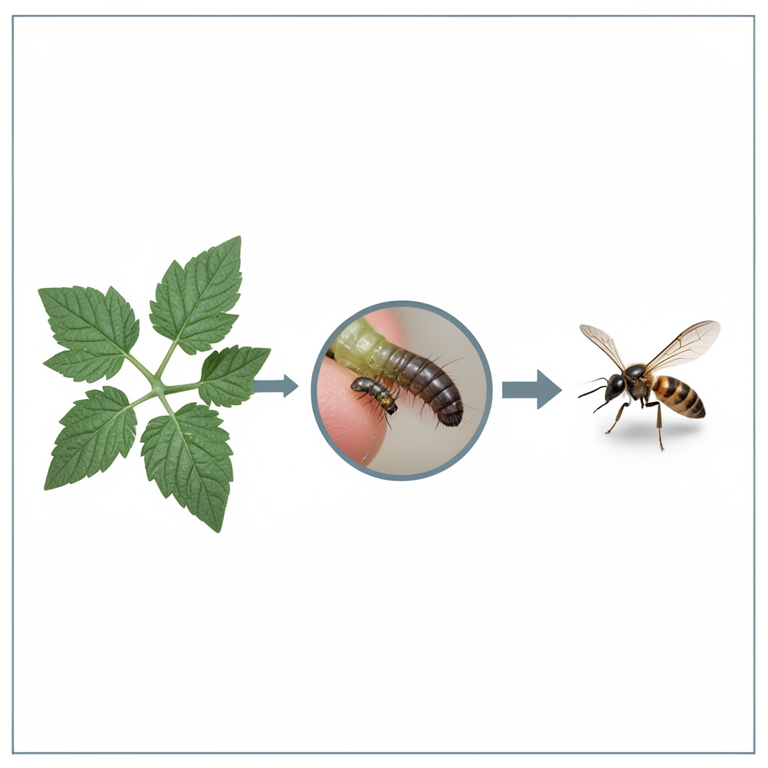
Biological Control Cycle
AI-generated conceptual illustration (tomato plants, Tuta absoluta larvae, and Aphanogmus clavicornis wasps). It explains the idea and does not show study data.
View source evidence ↗Figures & tables
From the original paper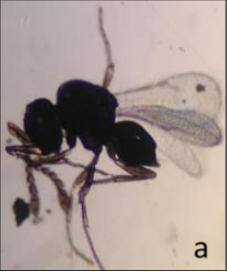 Figure 1
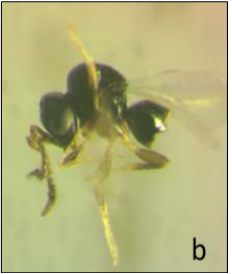 Figure 1
Introduction
Tomato (Solanum lycopersicum L.) is an important edible and nutritious fruit regarded by nutritionist as a vegetable. It is an important source of vitamins (Abdelmaksoud et al., 2020) [1] . It is widely cultivated all over the world. In Syria tomato grows both on small and commercial large scale as a cash crop by vegetable growers. Therefore, tomato production also contributes significantly to economic development and the ability to create employment. Syria was considered to be one of the top producers of tomatoes in the world after Tunisia and Protugal. However, the production of tomatoes is heavily affected by climate change such as heavy storms, drought, humidity, insect pests, disease and the new devastating pest of tomatoes, the tomato leaf miner, Tuta absoluta (Meyrick) (Lepidoptera: Gelechiidae). The superfamily Ceraphronoidea includes three families: Ceraphronidae, Megaspilidae and Stigmaphronidae (Johnson, 2004) [23] . There are 800 species described worldwide, although it is estimated that there could be 2000 species (Masner, 2006) [25] . The Ceraphronidae consists of 317 species in 15 genera world-wide mostly distributed in the Palaearctic Region (Belokobylski & Lele, 2019; Johnson, 2004) [7,23] . It is a family of small endoparasitic wasps (0.5-2 mm) with a black or brown body, forewing with narrow and linear stigma, mesoscutal median furrows, and wide base of mesosctum. The family is easily identified by having a curved stigmal vein, lacking a pterostigma in the forewing. An expanded pterostigma, occipital depression, uniramous anterior protibial spur, a comb of the spur on the pro-and mesotibial spurs, a single mesotibial spur, an undivided synsternite, and axillular setae were observed (Broad, 2009; Mikó et al., 2009) [8,26] . Normally, Ceraphronidae attacks species in the following insect orders: Diptera, Hymenoptera, Lepidoptera, Hemiptera (Homoptera), Neuroptera and Thysanoptera (Alekseev, 1987) [4] . They develop as endoparasitoids or hyperparasitoids (Gauld & Bolton, 1988) [17] . Aphanogmus contains 100 species (Johnson, 2004; Buhl et al., 2010; Evans et al., 2005) [23,9,14] . It contains ectoparasitoids (idiobiont) species (Parnell, 1963) [36] and endoparasitoids (koinobiont) species (Evans et Luhman, 1999) [14,24] . Aphanogmus species are usually parasitoids of cecidomyid flies and are sometimes reared as hyperparasitoids attacking hosts of various insect orders (Evans et al., 2005) [14] . T. absoluta is a Neotropical oligophagous pest attacking cultivated and wild plants with a high preference towards the species of Solanaceae plants especially tomato and other Solanaceous crops (Nurul Huda et al., 2020) [31] . It originated in South Ameria. It was first recorded in 2006 in Europe (Spain) (Urbaneja, 2007) [41] and then spread throughout the Mediterranean Basin, Central Europe and the Middle East (Ferracini et al., 2019) [15] . Since the time of its initial detection, the pest has caused serious damages to tomato in invaded areas, and it is currently considereccd as a key agricultural threat to tomato production in throughout the world (Ferracini at el., 2019) [15] . T. absoluta was first reported for Syria (Almatni, 2010; Ibrahim et al., 2012) [5,20] , neighboring Iraq (18 Abdul Razzak et al., 2010) [2] , Yemen (Husin, 2021), Ethiopia ( 20Reta & Berhe, 2015) [37] , Jordan (Al Antary & Al Shaalan, 2013) [3] and Sudan (22 Mohamed et al., 2012) [27] . Many procedures were carried out to control this dangerous pest since its arrival in Syria (Mofleh et al., 2014) [28] . Desneux et al. (2010) [12] reported that this pest may responsible for the losses of up to 80-100% in tomato plantations if left uncontrolled as it is attacking all aerial parts of the host (leaves, stems and fruits). T. absoluta is a difficult pest to manage because of the larval feeding habits and its ability to build up insecticide resistance (Abdelmaksoud et al. 2020) [1] . Nurul Huda et al. (2020) [31] and Husin (2021) have described the life cycle of this pest. Abdelmaksoud et al. 2020 [1] ; Husin (2017) [21] , Nurul Huda et al. (2020) [31] and Tarusikirwa et al. (2020) [39] gave a review of the problems caused by T. absoluta and its management strategies (Tarusikirwa et al., 2020) [39] . Based on our knowledge, the family Ceraphronidae of Syria and neighbouring countries is poorly studied. This paper deals with reports of a new record of ceraphronid from Syria. The description, biology and the taxonomic characters of the newly recorded species A. clavicornis were provided together with discussion on the significance of this new record as an additional option for the integrated pest management of those crops where T. absoluta is a key pest.
Materials and Methods
The samples of infested tomato plants by Tomato leaf miner T. absoluta were collected from a greenhouse at Al-Snowbar in Lattakia in July, 2019, taken to the Agricultural Research Centre in Lattakia and examined by a stereoscope. The parasitized larvae of T. absoluta were placed in glass tubes and closed with cotton until the emergence of adult parasitoids. The species Aphanogmus was identified using the key (Austin, 1984) and the identification was kindly confirmed by Prof. Peter Neerup Buhl (Natural History Museum of Denmark).
The parasitoid was placed on a slide using Hoyer's medium.
Images were taken with a stereomicroscope equipped with a computer-attached camera and Nikon-Eclipse 80i Digital microscope (40X) equipped with Camera Nikon E8800 (8,0 Megapixel 10x).
The specimen was deposited in the laboratory of Insects at the Scientific Agricultural Research Centre.
Results
This study recorded for the first time T. absoluta as a host of the genus Aphanogmus world-wide and the first record of A.
clavicornis as a larval parasitoid of T. absoluta in both Syria and the Middle East. The description, biology and the taxonomic characters of the new species were provided with discussion on the significance of this new record as additional option for the integrated pest management of those crops where T. absoluta is a key pest.
Aphanogmus clavicornis Thomson, 1858
Examined material 1♀, Syria, Lattakia province, Al-Snowbar, 35°53′12″ N, 35°28′31″ E, collected from tunnel in leaf on larva of T.
absoluta, from greenhouse planted with Tomato plants affected by T. absoluta in July, 2019.
Geographical distribution
Sweden, Denmark, Japan and Russia (Johnson, 2004; Noyes, 2020) [23,33] .
Biology
Larval parasitoid of various insects including Cybocephalidae (Coleoptera), Cecidomyiidae (Diptera), Bethylidae and Ichneumonidae (Hymenoptera) (Oatman, 1985 [34,14,19,35,18] . Host information has not been studied widely.
Taxonomic characters (diagnosis)
Female is 0.5 mm long, black body, yellowish brown antenna, darker scape and clava segments, dark brown tibia and femur, and yellow tarsal segments. Antenna clavate and serrate with 11-segmented and long hair on serrate side, larger terminal segements, pedicel is longer than flagellomeres (Fig. 1a,b), club 3-segmented, scape longer than club, tarsus 7-segmented, and presence of short tibial spur. Mesosoma is almost two times longer than metasoma. Metasoma is almost 1.5 times longer than the head with wide base of metasoma. Striae on metasoma are without mesoscutal median furrow. Forewing with marginal, submarginal and distally curving radial vein (Austin, 1984). Three groups of species are based on the characters of mesosoma and metasoma: clavicornis group: mesoscutal median furrow and metasomal basal carina absent. Tenuicornis group: mesoscutal median furrow absent, metasomal basal carina present. Fumipennis group: mesoscutal median furrow and metasomal basal carina present (Evans et al., 2005) [14] . The species belongs to the first group (clavicornis) According to the morphological straits of these three groups. Depending on the key of Aphanogmus (Szelényi, 1940) [38] , the new recorded species is A. clavicornis Thomson, 1858.
Discussion
This study recorded for the first time T. absoluta as a host of the genus Aphanogmus world-wide and the first record of A. clavicornis as a larval parasitoid of T. absoluta in both Syria and the Middle East. Many pest species, especially lepidopterans, are known to increase their abundance if conditions are favorable and inflict significant damage in agriculture and forestry (EPPO, 2009) [13] . It is well documented that parasitoids especially those belonging to Hymenoptera, are important elements of agroecosystems (Gauld & Bolton, 1988; Evans et al., 2005; Gray et al., 2013) [17,14,20] and are one of the most potent biological control agents that can be used to control the population growth of T. absoluta (Bompard et al., 2013; Mollá et al., 2010) [10,29] . Natural enemies such as parasitoids were successfully used in biological control of T. absoluta (Bompard et [10,29] revealed 13 larval-pupal parasitoid species including Elasmus phthorimaeae Ferriere (Elasmidae) and D. crassinervis occasionally parasitize T. absoluta in Spain (38 Gabarra et al., 2014) [16] . 16 [43] . Natural enemies of T. absoluta have been recorded, in South America 87 species (Ferracini et al., 2019) [15] , in North Africa, Europe and Middle East at least 50 parasitoids and predators some of which are used in IPM programmes, in western Palaearctic area, at least 70 natural enemies (Zappalà et al., 2013) [42] . Having said that there is no record of A. clavicornis attacking T. absoluta. This pest has rapidly spread throughout the Mediterranean Basin, in Europe, North Africa and the Middle East (Ferracini et al., 2019) [15] , Nappo (2013) [30] listed the countries which are affected by T. absoluta: Albania, Algeria, Argentina, Austria, Bahrain, Belgium, Bolivia, Brazil, Bulgaria, Cayman Islands, Chile, Colombia, Cyprus, Czech Republic, Denmark, Ecuador, Egypt, Estonia, Thiopia, Finland, France, Germany, Greece, Hungary, Iran, Iraq, Ireland, Israel, Italy, Jordan, Kosovo, Kuwait, Latvia, Lebanon, Libya, Lithuania, Luxembourge, Malta, Morocco, Netherlands, Palestinian Authority (West Bank), Panama, Paraguay, Peru, Poland, Portugal, Qatar, Romania, Russia, Saudi Arabia, Senegal, Slovakia, Slovenia, Spain, Sudan, Sweden, Switzerland, Syria, Tunisia, Turkey, United Kingdom, Uruguay, Venezuela and Western Sahara (NAPPO, 2013) [30] . Consequently, the wide and rapid spread of T. absoluta has fueled the urgent need for biological and ecological studies to be undertaken. It is well known that agricultural pests can reduce yield, increase costs and lead to the use of pesticides which ultimately contribute to adverse effects on public health, environmental contamination, lost of biological diversity, harm to nontarget beneficial arthropods, unsustainable costs to farmers, pesticide resistance and distruption of existing inregrated pest management. Therefore, pesticide should be used as a final option if other control strategies are insufficient and probable economic damage is expected (Urbaneja et al., 2013) [40] . The new record of natural parasitism of T. absoluta by A. clavicornis would add knowledge on biological control of the pest and could become an additional option for the integrated pest management of those crops where T. absoluta is a key pest. It will be important to investigate if A. clavicornis can be produced in large scale under laboratory conditions and test its potential use as a biological control agent within integrated pest management programs. Finally, there is an urgent need for more collaborative efforts among the researchers as well as growers to control T. absoluta in Syria and other parts of the world.
Acknowledgement
Acknowledgments: This research was supported by the General Commission for Scientific Agricultural Research (GCSAR), Damascus, Syria. The financial funding is greatly appreciated. Our special thanks are expressed to Peter Neerup Buhl (Natural History Museum of Denmark) for helping us in identification of A. clavicornis.
Figures and tables from the paper
References
34 in the original paper- Abdelmaksoud NM, Abdel-Aziz NF, Sammour EA, Agamy EA, El-Bakry AM, et al. Influence of insect traps and insecticides sequential application as a tactic for management of tomato leafminer, Tuta absoluta (Meyrick), (Lepidoptera: Gelechiidae). Bull. Natl. Res. Cent. 2020;44:123.
- Abdul Razzak AS, Al-Yasiri II, Fadhil HQ. First record of tomato borer (Tomato moth) Tuta absoluta (Meyrick) (Lepidoptera: Gelechiidae) on tomato crop in Iraq. Arab Near East Plant Prot. Newsl. 2010;51:31.
- Alekseev YN. Superfamily Ceraphronoidea (Ceraphronids). In Keys to the Insects of the European Part of the USSR, Medvedev GS, Ed., Amerind: New Delhi, India. 1987;3(2):1213-1257.
- Almatni W. Tomato leaf miner Tuta absoluta invades East Mediterranean countries. Arab Near East Plant Prot. Newsl. 2010;50:29.
- Austin AD. New species of Platygastridae (Hymenoptera) from India which parasitise pests of mango, particularly Procontarinia spp. (Diptera: Cecidomyiidae). Bull. Entomol. Res. 1984;74:549-557.
- Belokobylski SA, Lelej AS. Catalogue of the Hymenoptera of Russia. Apocrita: Parasitica, Zoological Institute RAS: Saint Petersburg, Russia. 2019;11(6):594.
- Broad G. Superfamily Ceraphronoidea (Part of Checklist of British and Irish Hymenoptera); c2009. Available online: http://www.nhm.ac.uk/resourcesrx/files/superfamily-ceraphronoidea-27753.pdf (accessed on 13 January 2021).
- Buhl PN, O'Connor JP, Ashe P. A new reared species of Aphanogmus (Hymenoptera: Ceraphronidae) from Ireland. Entomol. Mon. Mag. 2010;146:53-55.
- Bompard A, Jaworski CC, Bearez P, Desneux N. Sharing a predator: Can an invasive alien pest affect the predation on a local pest? Popul. Ecol. 2013;55:433440. Doi: 10.1007/s10144-013-0371-8.
- Cabello T, Gallego JR, Fernandez FJ, Gamez M, Vila E, Del Pino M, et al. Biological Control Strategies for the South American Tomato Moth (Lepidoptera: Gelechiidae) in Greenhouse Tomatoes. J Econ. Entomol. 2012;105:2085-2096. Doi: 10.1603/EC12221.
- Desneux N, Wajnberg E, Wyckhuys KAG, Burgio G, Arpaia S, Vasques CAN, et al. Biological invasion of European tomato crops by Tuta absoluta: Ecology geographic expansion and prospects for biological control. J Pestic. Sci. 2010;83:197-215.
- Evans GA, Dessart P, Glenn H. Two new species of Aphanogmus (Hymenoptera: Ceraphronidae) of economic importance reared from Cybocephalus nipponicus (Coleoptera: Cybocephalidae). Zootaxa. 2005;1018:47-54, Doi: 10.11646/zootaxa.1018.1.3.
- Ferracini C, Bueno VHP, Dindo ML, Ingegno BL, Luna MG, Salas Gervassio NG, et al. Natural enemies of Tuta absoluta in the Mediterranean basin, Europe and South America. Biocontrol Sci. Technol. 2019;29:578609. Doi: 10.1080/09583157.2019.1572711.
- Gabarra R, Arnó J, Lara L, Verdú MJ, Ribes A, Beitia F, et al. Native parasitoids associated with Tuta absolute in the tomato production areas of the Spanish Mediterranean Coast. Bio-Control. 2014;59:45-54. Doi: 10.1007/s10526-013-9545-8.
- Gilkeson LA, McLean JP, Dessart P. Aphanogmus fulmeki Ashmead (Hymenoptera: Ceraphronidae), a parasitoid of Aphidoletes aphidimyza Rondani (Diptera: Cecidomyiidae). Can. Entomol. 1993;125:161-162. Doi: 10.4039/Ent125161-1.
- Husin TOAB. Biological Control of Tomato Leaf Minor Tuta absoluta Using Entomopathogenic Nematodes. Doctoral Dissertation, School of Biology Faculty of Science, Agriculture and Engineering, Newcastle University, Newcastle upon Tyne, UK, 2017. Available online: http://hdl.handle.net/10443/3845 (accessed on 3 January 2021).
- Ibrahim MY, Mehrez EA, Edrees MS, Aodie BI, Almasrey AR. The first record to tomato leaf miner, Tuta absoluta (Povolny) (Lepidoptera: Gelechiidae) at Homs Governorate, Syria. Persian Gulf Crop Prot. 2012;1:5363.
- Johnson NF, Musetti L. Catalog of systematic literature of the Superfamily Ceraphronoidea (Hymenoptera). Contrib. Am. Entomol. Inst. 2004;33:1-149.
- Luhman JC, Holzenthal RW, Kjaerandsen JK. New host record of a Ceraphronid (Hymenoptera) in Trichoptera pupae. J Hymenopt. Res. 1999;8:126.
- Mikó I, Deans AR, Masner L. A new genus of Ceraphronidae (Hymenoptera, Ceraphronoidea) described using controlled vocabularies. Zoo Keys. 2009;20:127-153. Doi: 10.3897/zookeys.20.119
- Mofleh M, Abboud R, Habaq H, Hammodi O, AlQuem F, Adra L, et al. Population changes and control of Tuta absuluta Meyrick along the Syrian coast. Arab J Plant Prot. 2014;32:161-168.
- Mollá O, Alonso M, Montón H, Beitia F, Verdú MJ, González-Cabrer J, et al. Control biológico de Tuta absoluta. Catalogación de enemigos naturales y potencial de los míridos depredadores como agentes de control. Phytohemeroteca. 2010;217:42-46.
- Nurul Huda MD, Jahan T, El Taj HF, Asiry KA. A newly emerged pest of tomato (tomato leaf miner, Tuta absoluta Meyrick (Lepidoptera: Gelechiidae)): In Bangladesh. A review of its problems and management strategies. J Agric. Ecol. Res. Int. 2020;21:1-16.
- Noyes JS. Universal Chalcidoid Database. The Natural History Museum; c2020. Available online: https://www.nhm.ac.uk/discover/news/2020.html (accessed on 13 January 2021).
- Basavarajaiah MP, Raveendra Jawadagi S, Shivanad Hongal, Raghavendra Mesta K, Dadapeer Peerajade A. Genetic analysis of quantitative and qualitative traits in f2 population of cherry tomato (Solanum lycopersicum var. cerasiforme). Int. J Hortic. Food Sci. 2022;4(1):157-164. DOI: 10.33545/26631067.2022.v4.i1c.135
- Oatman ER. Aphanogmus floridanus (Hymenoptera: Ceraphronidae), a primary parasite of Feltiella acarivora (Diptera: Cecidomyiidae), a predator of spider mites on strawberry. Proc. Entomol. Soc. Wash. 1985;87:714-716.
- Polaszak A, Dessart P. Taxonomic problems in the Aphanogmus hakonensis species complex (Hymenoptera: Ceraphronidae), common hyperparasitoids in biocontrol programs against lepidopterous pests in the tropics. Bull. Entomol. Res. 1996;86:419-422. Doi: 10.1017/S0007485300035008.
- Parnell JR. Three gall midges (Diptera: Cecidomyidae) and their parasites found in the pods of broom (Sarothamnus scoparius (L.) Wimmer). Trans. R. International Journal of Biology Sciences https://www.biologyjournal.net/ Entomol. Soc. Lond. 1963;115:261-275. Doi: 10.1111/j.1365-2311.1963.tb00809.x.
- Reta AN, Berhe DH. Tomato leaf miner-Tuta absoluta (Meyrick), a devastating pest of tomatoes in the highlands of Northern Ethiopia: A call for attention and action. Res. J Agric. Environ. 2015;4:264-269.
- Szelényi G. Die palaarktische arten der gattung Aphanogmus Thoms. (Hym. Proct.). Annales HistoricoNaturales Musei Nationalis Hungarici. 1940;33:122136.
- Tarusikirwa VL, Machekano H, Mutamiswa R, Chidawanyika F, Nyamukondiwa C. Review Tuta absoluta (Meyrick) (Lepidoptera: Gelechiidae) on the "offensive" in Africa: Prospects for integrated management initiatives. Insects. 2020;11:764.
- Urbaneja A, Vercher R, Navarro V, Porcuna JL, Garcia-Marí F. La polilla del tomate, Tuta absoluta. Phytoma España. 2007;194:16-24.
- Zappalà L, Biondi A, Alma A, Al-Jboory IJ, Arnò J, Bayram A, et al. Natural enemies of the South American moth, Tuta absoluta, in Europe, North Africa and the Middle East and their potential use in pest control strategies. J Pestic. Sci. 2013;86:635-647.
- Zappalà L, Siscaro G, Biondi A, Molla O, GonzálezCabrera J, Urbaneja A. Efficacy of sulphur on Tuta absoluta and its side effects on the predator Nesidiocoris tenuis. J Appl. Entomol. 2012;136:401440.
Cited by 7
From OpenAlex, OpenCitations and reference lists read by Scinovex
- Aphanogmus feltiellophagus sp. nov. (Hymenoptera: Ceraphronidae), a parasitoid of the acarivorous gall midge, Feltiella acarisuga Vallot (Diptera: Cecidomyiidae) in Iran ↗
Mollaei Maedeh, Hussein Sadeghi Namaghi, Hossein Lotfalizadeh, Farzad Minab · Journal of Insect Biodiversity and Systematics · 2025
During a laboratory biological study of a midge, Feltiella acarisuga (Vallot, 1827) (Diptera: Cecidomyiidae), acarivorous on two-spotted spider mites, some ceraphronid specimens were reared from the midge cocoons.A detailed morphological study and comparison with previously known species revealed that the ceraphronid is a new species of Aphanogmus Thomson, 1858 (Hymenoptera: Ceraphronidae).The new species is described as A. feltiellophagus Lotfalizadeh, sp.nov.and…
❝ 2PDF - The distribution pattern and seasonal incidence of spider (Araneae: Araneidae) prevalence in the onion ecosystem of West Bengal’s red lateritic zone
Koushik Garai · International Journal of Research in Agronomy · 2024
Background: One of the best methods to reduce the usage of chemical pesticides and insect pests is biological control using spiders. Natural enemies, such as predators, parasitoids, and pathogens, play a crucial role to minimize the use of chemical pesticides and insect pest complexes in onion ecosystem. The experiment was conducted in order to know the seasonal incidence and distribution pattern of Spider in onion ecosystem at Sriniketan, West Bengal, India during rabi season 2021-22. Healthy seedlings of onion were transplated on the experimental field. To check the seasonal incidence and di
- Known unknowns at our doorstep: Description of 14 Western Palaearctic species within the newly defined Aphanogmus fumipennis species group (Hymenoptera, Ceraphronoidea, Ceraphronidae) ↗
Tobias Salden, István Mikó, Arnstein Staverløkk, Marina Moser, Cristina Vasilița, Thomas van de Kamp et al. · Journal of Hymenoptera Research · 2026
Aphanogmus fumipennis Thomson, 1858 is one of the most frequently recorded ceraphronid parasitoid wasp species, considered to have a wide geographic distribution, numerous synonyms, and a broad host spectrum. 257 specimens with a posterior mesosomal comb, a character traditionally associated with A. fumipennis , from eight Western Palaearctic countries were examined using an integrative taxonomic approach, combining morphological study with…
❝ 1PDF - To study about the seasonal incidence Jassid and Hadda beetle of Brinjal (Solanum melongena L.) ↗
Shagufta Rafat · Acta Entomology and Zoology · 2023
The Solanaceae family includes brinjal (Solanum melongena L.), often known as eggplant, aubergine, garden egg, baingan, vankai, etc. It is one of the most significant main vegetables that is widely grown in tropical and temperate regions of the world (during the summer). India is regarded as the origin and diversification center for brinjal. Individually, brinjal leaves and seeds are also…
- Host preference analysis of Phenacoccus solenopsis Tinsley (Hemiptera: Pseudococcidae) on three different host plants. ↗
Anam Zia, Masarrat Haseeb · Journal of Entomology and Zoology Studies · 2023
The cotton mealy bug Phenacoccus solenopsis Tinsley is sap sucking polyphagous pest over 154 plant species of vegetables, fruit and ornamentals including cotton in India and worldwide. Among vegetable plant species, brinjal (Solanum melongena L.), tomato (Solanum lycopersicum L.), okra (Abelmoschus esculentus) etc., are severely damaged. Present studies were carried out to investigate the impact of these three host plant
- Pathogenicity of Fusarium oxysporum f. sp. lycopersici (Sacc.) isolates in causing tomato wilt disease on two tomato (Solanum lycopersicum L) varieties
Abdulkadir HB, Ekefan EJ, Gwa Vi · International Journal of Horticulture and Food Science · 2023
Pathogenicity test of Fusarium oxysporum isolates in causing tomato wilt disease (TWD) was carried out on two tomato varieties (UC 82B and Rio-grande). During the 2015 cropping season, the experiment was conducted in a screen house at the Federal University of Agriculture, Makurdi\\\\\\\'s Teaching and Research Farm. A 2 x 11 factorial was used in the experiment, which was replicated three times using a completely randomized design (CRD). Together with an uninoculated control, the F. oxysporum isolates that were evaluated were coded as FoAs1, FoAs2, FoAg, FoNb, FoSb, FoAm, FoAk, FoOr, FoAd, an
- Ceraphronoidea ↗
Buntika Areekul Butcher · CABI eBooks · 2023
The Ceraphronoidea are rather diverse and frequently collected, but almost nothing is known of their taxonomy in S.E. Asia; there are no recent keys to either the genera or species of any genera. A key to the two families Ceraphronidae and Megaspilidae is presented. What is known of their biology is described, but this is almost entirely based on extralimital…
❝ 0