
Research article · 2022 · Full text
International Journal of Advanced Chemistry ResearchConcentration, source apportionment and ring size analysis of polycyclic Aromatic Hydrocarbons (PAHs) in water from Kolo Creek, Niger Delta, Nigeria
Volume 4(1) · Pages 36–41 · DOI: 10.33545/26646781.2022.v4.i1a.45 ↗
Research areasPetroleum Processing and Analysis
Abstract
Author-writtenWater samples were collected from Kolo Creek between the months of December to October and analyzed for the concentrations of polycyclic aromatic hydrocarbons (PAHs). The analysis for the PAHs was achieved through the use of gas chromatography-mass spectrometric analysis after extraction with dichlomethane and n-hexane solvents has been carried out. The result indicated that all the PAHs components were identified in the creek in the stations and the months. It was observed that the PAHs were more abundant in the dry months than the wet months. The values were December (11.140 mg/L) > February (9.130 mg/L) > April (4.06 mg/L) > August (2.310 mg/L) > (2.220 mg/L) > June (2.060 mg/L). Source Identification and apportionment gave both pyrogenic and petrogenic sources of PAHs contamination, although pyrogenic source was the dominant one. Ring size analysis indicated their abundance in the following order 2-3 rings (1.824±0.775 mg/L) > 4 rings (1.148±0.198 mg/L) > 5 rings (1.115±0.422 mg/L) >6 rings (0.875±0.951 mg/L). The concentrations of PAHs in Kolo Creek if allowed to continue will grow beyond threshold levels that may have detrimental consequences on man and the immediate environment in the near future. Therefore, regulatory efforts be put in place to curb such eventuality.
Summary
Source-checkedPlain-language reading of the full paper, prepared with AI and checked against the text. Each point links to the authors' own words.
Why it matters
- The discharge of contaminants and effluents into water bodies is considered one of the most critical global environmental problems today. View evidence ↗
- Polycyclic aromatic hydrocarbons (PAHs) are recognized environmental pollutants found in air, water, soil, and sediments. View evidence ↗
- PAHs are primarily produced through the partial incineration of organic carbon-based compounds from industrial or domestic sources. View evidence ↗
The question
- The study aimed to determine the concentrations of PAHs in Kolo Creek, Niger Delta, Nigeria, and to identify their sources of origin. View evidence ↗
What they did
- Triplicate water samples were collected bi-monthly from December 2018 to October 2019 at three different points, sampled at a depth of 35 cm. View evidence ↗
- PAHs were extracted from 250 cm³ of water using dichloromethane (DCM) and subsequently eluted with n-hexane. View evidence ↗
- The analysis of PAHs was performed using gas chromatography-mass spectrometry (GC-MS) with an Agilent 6890N chromatograph and a 5975 series MSD. View evidence ↗
What they found
- All sixteen USEPA priority PAHs were detected in the water of Kolo Creek. View evidence ↗
- Total PAH concentrations in the creek ranged from 2.060 mg/L to 11.140 mg/L over the study period. View evidence ↗
- PAH concentrations were higher in dry months than wet months, peaking in December (11.140 mg/L) and reaching a minimum in June (2.060 mg/L). View evidence ↗
- Source apportionment indicated a petrogenic source at station 1 (LMW/HMW ratio of 1.029) and pyrogenic sources at stations 2 and 3 (ratios of 0.263 and 0.569). View evidence ↗
- Ring size analysis showed that 2-3 ring PAHs were the most abundant (1.824±0.775 mg/L), followed by 4-ring, 5-ring, and 6-ring PAHs. View evidence ↗
What it means
- The authors conclude that high PAH levels pose a health danger and recommend efforts to stop illegal crude oil refining and spills in the area. View evidence ↗
Visual summary
3 visualsIllustrations explain the paper; charts are replotted from the paper's own table values.
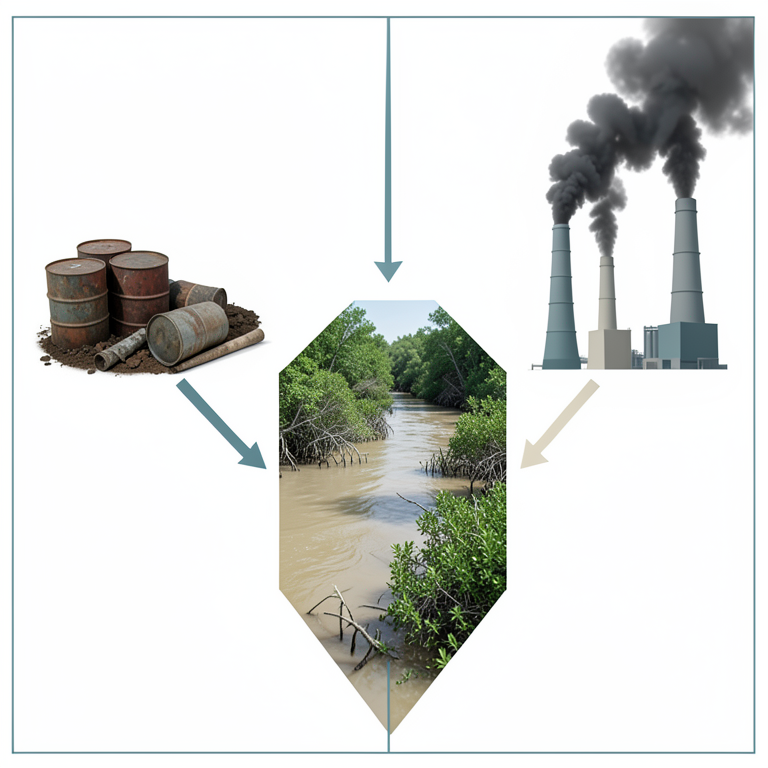
PAH Source Classification
AI-generated conceptual illustration (Kolo Creek water body in the Niger Delta). It explains the idea and does not show study data.
View source evidence ↗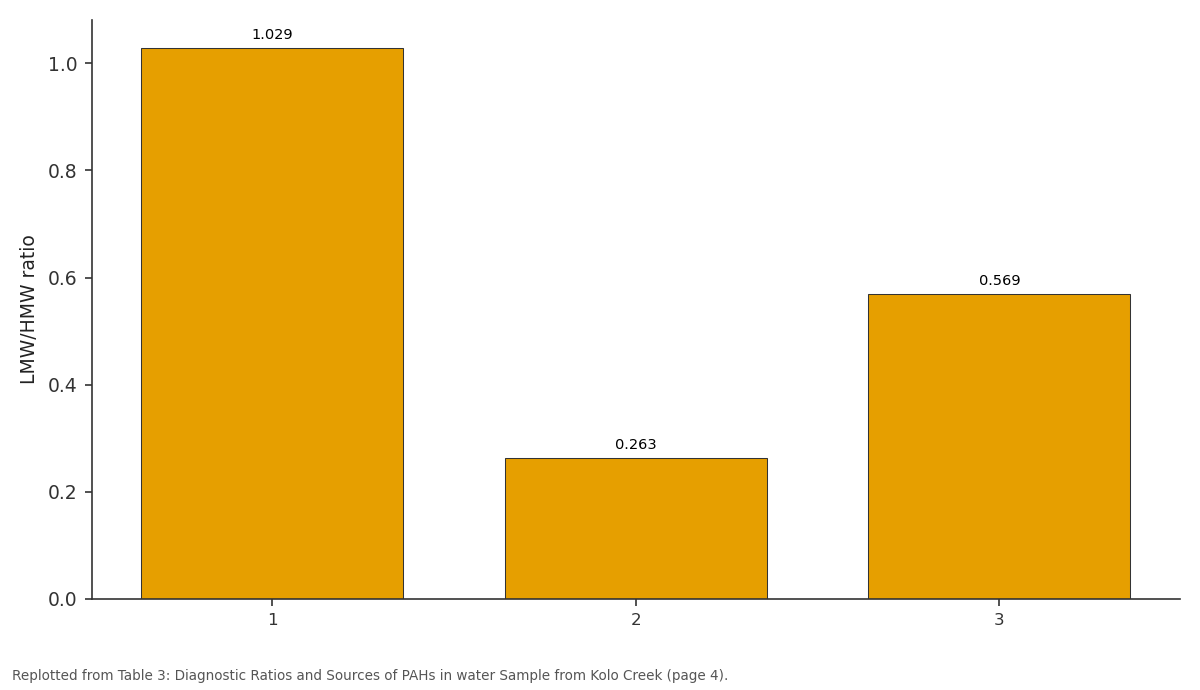
LMW/HMW: 1 vs 2 vs 3
Replotted from Table 3 (page 4) of the original paper. Every bar is the paper's own table value.
View source evidence ↗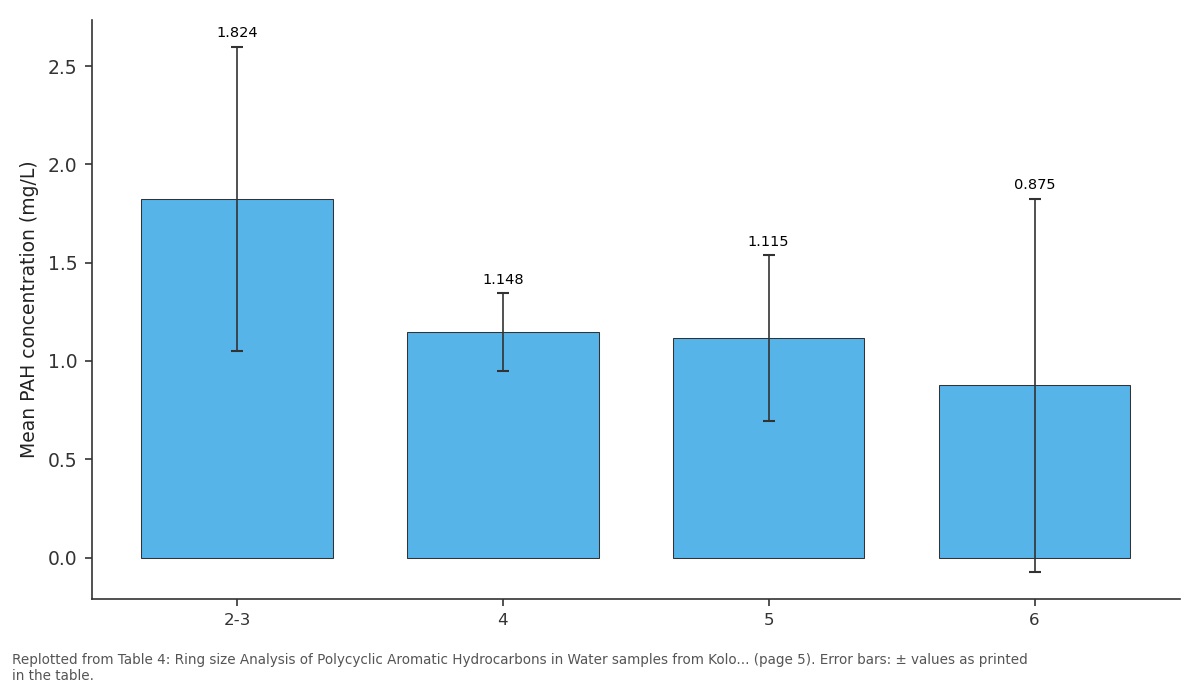
Mean±SD: 2-3 vs 4 vs 5 vs 6
Replotted from Table 4 (page 5) of the original paper. Every bar is the paper's own table value.
View source evidence ↗Figures & tables
From the original paper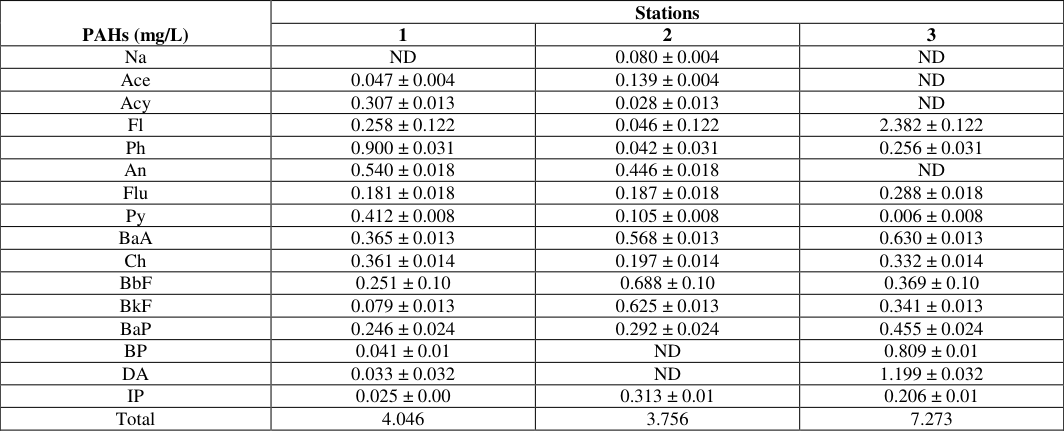 Table 1
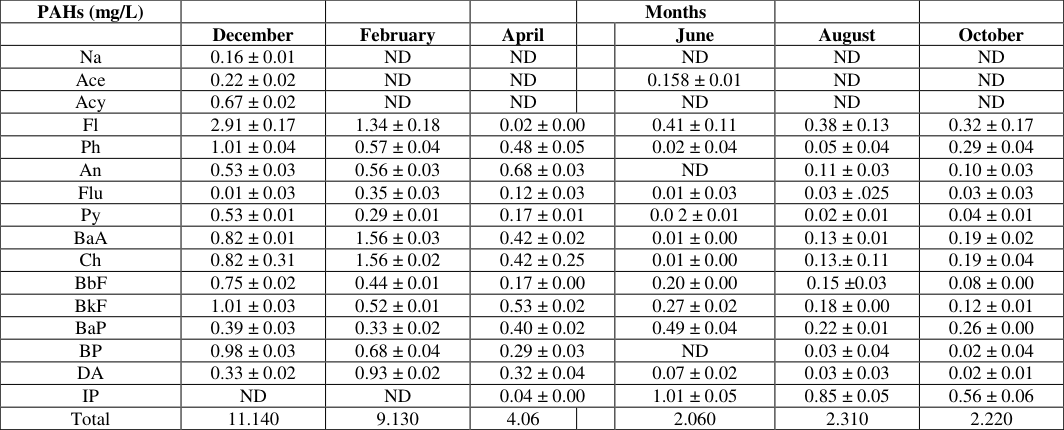 Table 2
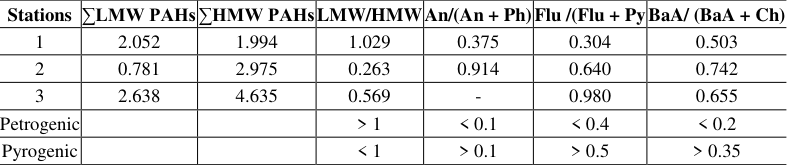 Table 3
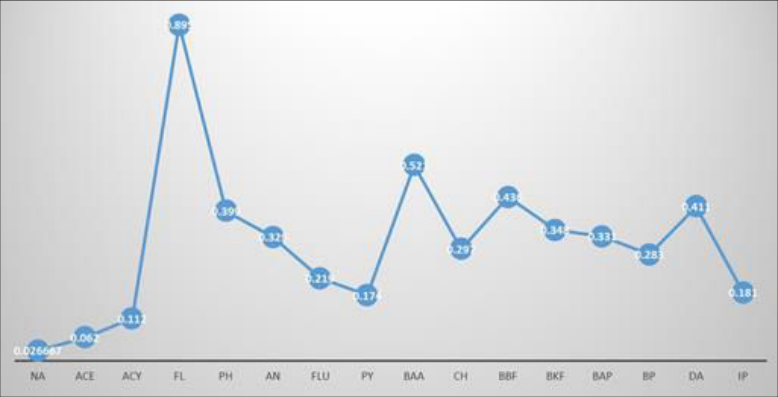 Figure 1
 Table 4
Introduction
All over the world, the issue of discharge of effluents and contaminants into water bodies is now one of the most critical environmental problems in the present age. Even though natural sources of pollution also exist in the environment, yet higher contributions of pollutants within the environment arise from human continuous invasive activities in the surroundings. The pollution of water is known to have occurred when the water body has been undesirably affected as a result of the input of enormous quantities of constituents to the water and has made it unhealthy for its intentional usage (Klein, 1966) [13] . The harmfulness of polycyclic aromatic hydrocarbons (PAHs) and their extensive dissemination has steered up further curiosity into the occurrence of these constituents in water and soil environments. PAHs are known environmental contaminants which are appreciably present in different environmental media such as soils, water, air and sediments (Harris et al., 2011) [8] . These compounds (which are confirmed pollutants) are mostly produced from partial incineration of carbon based compounds of organic origin, which were either produced from homes or industries (Mastral and Callen, 2000) [14] . The arrangements of PAHs are characterized by bonded aromatic rings. The first member of the PAHs family is naphthalene, which is composed of two fused benzene rings placed side by side. PAHs are classified into two basic categories which are high molecular weight PAHs (HMWP) and low molecular weight PAHs (LMWP) (Helfrich and Armstrong, 1986) [9] . They usually found in polluted area, especially where oil exploration and exploitation activities are present and also where constant incineration of organic bound products are ubiquitous. The stability of the PAHs is based on the ability of the π electrons in the orbitals to delocalization between the carbon atoms. They are highly hydrophobic and therefore do not readily dissolve in water (Nasr et al., 2010). Besides human activities, (PAHs) also occur naturally in the environment.
However, their rate of production is usually increased where there are incessant anthropogenic activities (Kadafa, 2012) [11] . They can be bio-magnified to appreciably high levels in the food web (Nacci et al., 2002) [2] . The leading origins of PAHs in the environs consist of wood fire, natural crude oil leakages, burning of fossil fuel, burning of coal, discharged waste from industries, workplaces and homes, used water and manure. PAHs are amongst the tenacious organic noxious waste in the water environment (Andrea et al., 2012;Dosunmu et al., 2012;Olayinka et al., 2018) [12, 5] . This work therefore was done to determine the concentrations of polycyclic aromatic hydrocarbon in Kolo Creek, and important water body in the Niger Delta, Nigeria and also sought to define the sources or origin of the polycyclic aromatic hydrocarbons
Materials and Methods Sampling Procedure
Water samples were collected from a depth of 35 cm below the surface from Kolo creek. Triplicate samples were collected at three points between December 2018 -October 2019 bi-monthly. Previously washed amber coloured bottles were rinsed with water from the point where the samples will be collected before collection of the samples were done. Samples were transported to the laboratory in an ice-pack container and stored at a temperature of 4°C in a refrigerator.
Extraction of Polycyclic Aromatic Hydrocarbons from Water Samples
The water samples were extracted for polycyclic aromatic hydrocarbons in the laboratory following standard laboratory methods. A measured volume of 250 cm3 of the untreated samples were transferred into a 500 cm3 flask and 25 cm3 of C2H4Cl2 (DCM) was further added to the flask. The contents were agitated and the pressure in the vessel freed intermittently. Thereafter the content of the flask (sample and extracting solvent) were allowed undisturbed for some time to allow the formation two phases. The phases were separated using a separatory funnel. The organic phase which contained the extract was further treated with anhydrous sodium sulphate and the extracting solvent. The final extract was allowed to evaporate freely for twelve hours at 25 oC in a fume cupboard. The top of the vessel containing the extract was covered with aluminum foil. Sample clean-up was achieved in a column of 600 × 19 mm, where the open top was tightly covered with a glass wool. Precisely, a known mass of 3 g of activated silica gel was added and along with sodium sulfate sodium sulphate and the column eluted with 15 cm3 of n-hexane. The final concentrated extract was put into a column and was eluted with 25 cm3 n-hexane as the eluent solvent. The obtained eluates were further concentrated by reducing it to 1 cm3 with the aid of with a mild flow of uncontaminated nitrogen as the carrier gas. Thereafter, the 1 cm3 extract was put into a labeled container and kept at a temperature of 4 °C until analysis was done with a gas chromatograph mass spectrometry (GC-MS).
Analysis of Sample Extract for PAHs
The Polycyclic aromatic hydrocarbons were analyzed by gas chromatography, using Agilent model 6890N chromatograph, serial No US 10530055 (Agilent Technologies Avondale, USA). The gas chromatographic equipment was connected to a selective mass detector, model 5975 series MSD, Agilent, Avondale, USA. The column used was a fused silica capillary with dimensions (30 m × 0.25 mm × 0.25 µm film thickness) to separate the PAHs. The carrier gas was He, which was operated at a flow rate of 1.2 mL/min. The injector for the sample was fixed at a temperature 250 oC and 300 oC respectively and the samples injected at a volume of 1 cm 3 in a split less approach. The mass spectrometry (MS) conditions were set as follows: ionization source: electron ionization at -70 eV: ion source temperature: 200 oC (19-22): store mass range m/z 47-400 μm. Identification of individual PAHs was based on comparison of retention time between samples and standard solutions.
Results and Discussion
Results and Discussion
Spatial and Monthly Concentrations of Polycyclic Aromatic Hydrocarbons
The spatial and monthly variations of PAHs in Kolo Creek is shown in Tables 1 and2 and Figure 1. All the different priority PAHs were detected in station 1 except naphthalene, while at station 2, it was benzo (g,h,i) perylene and dibenzo (a,h) anthracene that were not detected and in station 3, naphthalene, acenaphthene, acenaphthylene and anthracene that were not detected. The distribution of PAHs in surface water in Kolo Creek within the months of sampling showed that in December, all the PAHs investigated were detected except Indeno (1,2,3cd) pyrene), while in February, the first three PAHs (naphthalene, acenephthene and acenaphthylene) and Indeno (1,2,3-cd) pyrene) were undetected. In April, August and December, all the PAHs were detected except the first three (naphthalene, acenaphthene and acenaphthylene) and in June, only naphthalene, acenaphthylene and anthracene were undetected. Naphthalene and acenaphthylene were only detected in the month of December. Polycyclic aromatic hydrocarbon is one of the classes of tenacious and persistent pollutants. Their sources in the environment come from either natural or anthropogenic sources (Mastral and Callen, 2000) [14]. Polycyclic aromatic hydrocarbons were detected in varying degrees of concentrations in the creek and were higher in the dry season than the wet season, which disagrees with the findings of Moses et al. (2015) in Qua-Iboe River estuaries. The lower values of PAHs in the wet season when compared to the dry season is a result of dilution from flood water from rain and other adjoining water bodies.
The concentrations of PAHs observed in the present work, generally were higher than those observed in rivers of some oil producing communities in Delta State (Adeyemo and Ubiogoro, 2012), they were also higher than the observed values of total PAHs in estuaries of Qua-Iboe River (Moses et al., 2015) and the values of PAHs observed in Badagry Creek and Ologe Lagoon, Lagos, Nigeria (Aderinola et al., 2018). The high presence of PAHs and their even distribution in the creek may not be unconnected with the different uncontrolled illegal oil activities present within the areas investigated. Secondly, the nature and activities around the Kolo at the specific sample stations contributed immensely to the distributive nature of the PAHs in Kolo Creek. Besides the artisanal refiners whose effluents are discharged directly into the creek, other sources of PAHs into the creek might be connected with agricultural activities and waste discharge system of the inhabitants. This is because wastes are directly discharged into the creek (a lifestyle of the rural dwellers in the study area). Another possible reason for the presence of PAHs in these environments is the continuous gas flaring (either by the approved operators or the unapproved operators) which is a common site in the area under investigation. Flared gases when precipitated into water bodies contribute to the total PAHs burden or content of that environment (Essumang et al., 2009).
Ring Size analysis of Polycyclic Aromatic Hydrocarbons
The concentrations of the PAHs based on ring size classification is shown in Table 4. The distribution of the various ring sizes showed that in station 1, 2-3 rings (LMWH) was the most abundant species of PAHs, which was followed by the 4-ring category, then the 5-ringed members and the lowest was the 6-ringed members. In station 2, the occurrence and distribution concentrations of the different PAHs categories was in the order of 5membered rings > 4-membered rings > 2-3-membered rings > 6-membered rings. In station 3, the nature of occurrence was 2-3-membered rings > 6 membered rings > 4 membered rings > 5-membered rings. The concentrations of the lower molecular weight (2-3 rings) at higher levels than the other ring members in the present work disagrees with the observation of Kafilzadeh et al., (2011) in water samples of Kor River Iran, where the presence of the higher molecular weight PAHs (4-6 rings) where predominant over the low molecular weight PAHs. They observed that the most predominant class was the 4membered rings, which was followed by the 5 and the 6membered rings. The observation in the present work of more values of the LMWP is also at variance with the observation of Edori and Iyama (2019), in drainage discharge points into the New Calabar River, where HMWP predominated over the LMWP. The predominance of the lower molecular weight PAHs (LMWP) over the higher molecular weight PAHs probably arose from the incessant flaring of gases from the artisanal petroleum refining points (which is rampant within the area) and others from conventional flaring from nearby gas stations own by multinationals.
| Ring Size | Stations | — | — | Mean±SD |
|---|---|---|---|---|
| 1 | 2 | 3 | ||
| 2-3 | 2.052 | 0.781 | 2.638 | 1.824±0.775 |
| 4 | 1.319 | 0.870 | 1.256 | 1.148±0.198 |
| 5 | 0.576 | 1.605 | 1.165 | 1.115±0.422 |
| 6 | 0.099 | 0.313 | 2.214 | 0.875±0.951 |
Table text extracted from the original PDF; superscript letters are shown inline. The original table image is below.
View original table image
Conclusion
The concentrations of polycyclic aromatic hydrocarbons in superficial water of Kolo Creek was assessed within a period of twelve months (December -October). The results showed the presence of all the sixteen USEPA priority PAHs in the water body. The range of concentrations of the total PAHs within the period varied from 2.060 -11.140 mg/L. The concentrations of PAHs was more in the dry months when compared to the wet months. This occurrence was attributed to the nature of the creek and discharge pattern of the illegal crude refiners. The high level presence of PAHs in the water body is a signal of impending danger with regard to health implications. So, efforts should be focused on ways of tackling the menace of illegal spills and refining of crude within the area.
Figures and tables from the paper
| PAHs (mg/L) | Stations | — | — |
|---|---|---|---|
| 1 | 2 | 3 | |
| Na | ND | 0.080 ± 0.004 | ND |
| Ace | 0.047 ± 0.004 | 0.139 ± 0.004 | ND |
| Acy | 0.307 ± 0.013 | 0.028 ± 0.013 | ND |
| Fl | 0.258 ± 0.122 | 0.046 ± 0.122 | 2.382 ± 0.122 |
| Ph | 0.900 ± 0.031 | 0.042 ± 0.031 | 0.256 ± 0.031 |
| An | 0.540 ± 0.018 | 0.446 ± 0.018 | ND |
| Flu | 0.181 ± 0.018 | 0.187 ± 0.018 | 0.288 ± 0.018 |
| Py | 0.412 ± 0.008 | 0.105 ± 0.008 | 0.006 ± 0.008 |
| BaA | 0.365 ± 0.013 | 0.568 ± 0.013 | 0.630 ± 0.013 |
| Ch | 0.361 ± 0.014 | 0.197 ± 0.014 | 0.332 ± 0.014 |
| BbF | 0.251 ± 0.10 | 0.688 ± 0.10 | 0.369 ± 0.10 |
| BkF | 0.079 ± 0.013 | 0.625 ± 0.013 | 0.341 ± 0.013 |
| BaP | 0.246 ± 0.024 | 0.292 ± 0.024 | 0.455 ± 0.024 |
| BP | 0.041 ± 0.01 | ND | 0.809 ± 0.01 |
| DA | 0.033 ± 0.032 | ND | 1.199 ± 0.032 |
| IP | 0.025 ± 0.00 | 0.313 ± 0.01 | 0.206 ± 0.01 |
| Total | 4.046 | 3.756 | 7.273 |
Table text extracted from the original PDF; superscript letters are shown inline. The original table image is below.
View original table image
| PAHs (mg/L) | — | — | — | Months | — | — | — |
|---|---|---|---|---|---|---|---|
| December | February | April | June | August | October | ||
| Na | 0.16 ± 0.01 | ND | ND | ND | ND | ND | |
| Ace | 0.22 ± 0.02 | ND | ND | 0.158 ± 0.01 | ND | ND | |
| Acy | 0.67 ± 0.02 | ND | ND | ND | ND | ND | |
| Fl | 2.91 ± 0.17 | 1.34 ± 0.18 | 0.02 ± 0.00 | 0.41 ± 0.11 | 0.38 ± 0.13 | 0.32 ± 0.17 | |
| Ph | 1.01 ± 0.04 | 0.57 ± 0.04 | 0.48 ± 0.05 | 0.02 ± 0.04 | 0.05 ± 0.04 | 0.29 ± 0.04 | |
| An | 0.53 ± 0.03 | 0.56 ± 0.03 | 0.68 ± 0.03 | ND | 0.11 ± 0.03 | 0.10 ± 0.03 | |
| Flu | 0.01 ± 0.03 | 0.35 ± 0.03 | 0.12 ± 0.03 | 0.01 ± 0.03 | 0.03 ± .025 | 0.03 ± 0.03 | |
| Py | 0.53 ± 0.01 | 0.29 ± 0.01 | 0.17 ± 0.01 | 0.0 2 ± 0.01 | 0.02 ± 0.01 | 0.04 ± 0.01 | |
| BaA | 0.82 ± 0.01 | 1.56 ± 0.03 | 0.42 ± 0.02 | 0.01 ± 0.00 | 0.13 ± 0.01 | 0.19 ± 0.02 | |
| Ch | 0.82 ± 0.31 | 1.56 ± 0.02 | 0.42 ± 0.25 | 0.01 ± 0.00 | 0.13.± 0.11 | 0.19 ± 0.04 | |
| BbF | 0.75 ± 0.02 | 0.44 ± 0.01 | 0.17 ± 0.00 | 0.20 ± 0.00 | 0.15 ±0.03 | 0.08 ± 0.00 | |
| BkF | 1.01 ± 0.03 | 0.52 ± 0.01 | 0.53 ± 0.02 | 0.27 ± 0.02 | 0.18 ± 0.00 | 0.12 ± 0.01 | |
| BaP | 0.39 ± 0.03 | 0.33 ± 0.02 | 0.40 ± 0.02 | 0.49 ± 0.04 | 0.22 ± 0.01 | 0.26 ± 0.00 | |
| BP | 0.98 ± 0.03 | 0.68 ± 0.04 | 0.29 ± 0.03 | ND | 0.03 ± 0.04 | 0.02 ± 0.04 | |
| DA | 0.33 ± 0.02 | 0.93 ± 0.02 | 0.32 ± 0.04 | 0.07 ± 0.02 | 0.03 ± 0.03 | 0.02 ± 0.01 | |
| IP | ND | ND | 0.04 ± 0.00 | 1.01 ± 0.05 | 0.85 ± 0.05 | 0.56 ± 0.06 | |
| Total | 11.140 | 9.130 | 4.06 | 2.060 | 2.310 | 2.220 |
Table text extracted from the original PDF; superscript letters are shown inline. The original table image is below.
View original table image
| Stations | ∑LMW PAHs | ∑HMW PAHs | LMW/HMW | An/(An + Ph) | Flu /(Flu + Py | BaA/ (BaA + Ch) |
|---|---|---|---|---|---|---|
| 1 | 2.052 | 1.994 | 1.029 | 0.375 | 0.304 | 0.503 |
| 2 | 0.781 | 2.975 | 0.263 | 0.914 | 0.640 | 0.742 |
| 3 | 2.638 | 4.635 | 0.569 | - | 0.980 | 0.655 |
| Petrogenic | > 1 | < 0.1 | < 0.4 | < 0.2 | ||
| Pyrogenic | < 1 | > 0.1 | > 0.5 | > 0.35 |
Table text extracted from the original PDF; superscript letters are shown inline. The original table image is below.
View original table image
References
20 in the original paper- Aderinola OJ, Mekuleyi GO, Whenu OO. Total and polyaromatic hydrocarbons in water, sediment, fin and shellfishes from Badagry Creek and Ologe Lagoon, Lagos, Nigeria. Journal of Applied Science and Environmental Management,2018:22(5):675-680.
- Adeyemo OK, Ubiogoro OE. Ecotoxicological assessment for polycyclic aromatic hydrocarbon in aquatic systems of oil producing communities in Delta State, Nigeria. Journal of Fisheries Sciences.com,2012:6(1):53-62.
- Andrea SN, Gábor S, István V. Monitoring of polycyclic aromatic hydrocarbons (PAHS) in surface water of the Hungarian upper section of the Danube River. Nova Biotechnologica et Chimica,2012:11(1):27-35.
- Anyakora C, Ogbeche KA, Uyimadu J, Olayinka K, Alani RA, Alo B. Determination of polynuclear aromatic hydrocarbons in water sample of the Lagos lagoon. The Nigerian Journal of Pharmacy,2005:35:359.
- Dosunmu MI, Oyo-Ita IO, Oyo-Ita OE. Source apportionment and distribution of polycyclic aromatic hydrocarbons in Imo River sediments near Afam Power Station, S.E. Nigeria: Molecular index and multivariate approaches. Global Journal of Pure and Applied Sciences,2012:18(3-4):135-149
- Edori OS, Iyama WA. Source Identification of Polycyclic Aromatic Hydrocarbons in Water at Point of Effluent Discharge into the New Calabar River, Port Harcourt, Rivers State, Nigeria. International Journal of Environment and Climate Change,2019:9(6):343-349.
- Essumang DK, Adokoh CK, Afriyie J, Mensah E. Source assessment and analysis of polycyclic aromatic hydrocarbons (PAHs) in the Oblogo waste disposal sites and some water bodies in around the Accra Metropolis of Ghana. Journal of Water Resources and Protection,2009:1(6):456-68.
- Harris KA, Yunker MB, Dangerfield N, Ross PS. Sediment-associated aliphatic and aromatic hydrocarbons in coastal British Columbia, Canada: Concentrations, composition and associated risks to protected sea otters. Environmental Pollution,2011:159:2665-2674.
- Helfrich J, Armstrong DE. Polycyclic Aromatic Hydrocarbons in Sediments of the Southern Basin of Lake Michigan. Journal of Great Lakes Research,1986:12(3):192-199.
- Ilechukwu I, Osuji LC, Onyema MO. Source apportionment of polycyclic aromatic hydrocarbons (PAHs) in soils within hot mix asphalt (HMA) plant vicinities. Journal of Chemical Society of Nigeria,2016:41(2):10-16
- Kadafa AA. Oil Exploration and spillage in the Niger Delta of Nigeria. Civil Environmental Research,2012:2(3):38-51.
- Kafilzadeh F, Shiva AH, Malekpour R. Determination of Polycyclic Aromatic Hydrocarbons (PAHs) in Water and Sediments of the Kor River, Iran. Middle-East Journal of Scientific Research,2011:10(1):01-07.
- Klein L. River pollution 11 control. Butterworths London, 1996.
- Mastral AM, Callen MS. A Review on Polycyclic Aromatic Hydrocarbons (PAH) Emissions from Energy Generation. Environmental Science and Technology,2000:34:3051-3057.
- Moses EA, Etuk BA, Udosen ED. Levels, Distribution and Sources of Polycyclic Aromatic Hydrocarbons in Surface Water in Lower Reach of Qua Iboe River Estuary, Nigeria. American Journal of Environmental Protection,2015:4(6):334-343.
- Nacci DE, Kohan M, Pelletier M, George E. Effects of benzo[a]pyrene exposure on a fish population resistant to the toxic effects of dioxin-like compounds. Aquatic Toxicology,2002:57(4):203-215.
- Nasr IN, Arief MH, Abdel-Aleem AH, Malhat FM. Polycyclic aromatic hydrocarbons (PAHs) in aquatic environment at El Menofiya Governorate, Egypt. Journal of Applied Sciences Research,2010:6(1):13-21.
- Olayinka OO, Adewusi AA, Olujimi OO, Aladesida AA. Concentration of Polycyclic Aromatic Hydrocarbons and Estimated Human Health Risk of Water Samples Around Atlas Cove, Lagos, Nigeria. Journal of Health and Pollution,2018:8(20):1-12.
- Wang Z, Fingas M. Identification of the source(s) of unknown spilled oils. Proceedings of the International Oil Spill conference, 1999, 162.
- Zemo DA. Use of parent polycyclic aromatic hydrocarbons (PAH) proportions to attribute PAH sources in sediments: A case study from the Pacific Northwest. Environmental Forensics,2009:10(3):229239.
Cited by 8
From OpenAlex, OpenCitations and reference lists read by Scinovex
- Characterizing spatiotemporal variations of polycyclic aromatic hydrocarbons in Taihu Lake, China ↗
Aili Li, Tim aus der Beek, Jin Zhang, Cora Schmid, Christoph Schüth · Environmental Monitoring and Assessment · 2022
In this study, we analyzed the concentration distributions of 20 polycyclic aromatic hydrocarbons (PAHs) in 41 water samples which were collected from the northern part of Taihu Lake during 4 field campaigns (201511, 201606, 201702 and 201709). The concentrations were determined with GC-MS, and their spatial and seasonal distribution characteristics were interpreted. The results show that 2-ring PAHs present considerably…
❝ 7PDF - Risk Assessment and Distribution of Polycyclic Aromatic Hydrocarbons in Water and Sediments Along Ibelebiri Axis of Kolo Creek, Ogbia Local Government Area, Niger Delta Region of Nigeria ↗
Chimere Ezekwe, Chinwe Azuka Onwudiegwu, Stephen Anayo Uzoekwe · Chemistry Africa · 2025
❝ 3 - Evaluation of total hydrocarbon levels in various fish species ↗
Hassan Ali Dinar, Irma A Picauly · International Journal of Fisheries and Aquatic Studies · 2023
This study investigates the total hydrocarbon (THC) levels in different fish species, highlighting the potential risks to marine ecosystems and human health. Given the increasing pollution in aquatic environments, understanding the accumulation of hydrocarbons in fish is essential for assessing environmental impacts and food safety. The research employs advanced analytical methods to quantify THCs in various fish species, providing insights…
❝ 1PDF - Balancing meat consumption and cancer risk: Nutritional benefits and protective strategies ↗
Sandeep Ghatak · Journal of Current Research in Food Science · 2025
This review examines the complex relationship between meat consumption and cancer risk, particularly focusing on red and processed meats, which have been associated with an increased risk of certain cancers. The article delves into the potential mechanisms underlying this risk, including the formation of carcinogenic compounds such as heterocyclic amines (HCAs), polycyclic aromatic hydrocarbons (PAHs), and N-nitroso compounds (NOCs) during
- Advanced analytical techniques for the detection of PAHs in water
Lukas Toth, S. B. Smith · International Journal of Biology Sciences · 2024
Polycyclic Aromatic Hydrocarbons (PAHs) are a significant class of environmental pollutants known for their carcinogenic and mutagenic properties. Due to their prevalence in aquatic environments and potential human health risks, the detection and quantification of PAHs in water have become critical. This paper reviews advanced analytical techniques for detecting PAHs in water, focusing on recent developments and their effectiveness in addressing challenges related to sensitivity, specificity, and rapid analysis.
- Assessment of polynuclear aromatic hydrocarbons in water samples from Lagos Lagoon
Ahmad Mohammad Halawi, Rayan Ali Marafi · International Journal of Geography Geology and Environment · 2024
This study focuses on the analysis and quantification of polynuclear aromatic hydrocarbons (PAHs) in the Lagos Lagoon. Given the ecological significance of this water body and the potential health risks posed by PAHs, we employed advanced chromatographic techniques to assess their concentrations and distribution patterns. This research aims to contribute to environmental monitoring efforts and inform public health policies in the region.
- Effect of crude oil pollution on the microbiology of Coastal Wetlands in river state ↗
P. M. Chibuike, Wemedo SA, Williams JO, C. J. Ugboma, DN Ogbonna · Journal of Advances in Microbiology Research · 2023
This study was conducted to determine the effect of crude oil pollution on the microbial population of Coastal Wetlands in Rivers State. A total of 288 soil samples were collected for a period of twelve (12) month from three crude oil polluted wetlands and subjected to microbiological analyses. In the wet season, total heterotrophic bacterial count (THBC) in the wetland…
❝ 0 - Polyaromatic Hydrocarbons (PAHs) present in aqueous ethanol, dichloromethane, and n-hexane extracts of Pumpkin (Cucurbita pepo) seed ↗
Chinwe Fiona Anyanwu, Owunari Abraham Georgewill · Journal of Pharmacognosy and Phytochemistry · 2022
The study evaluated the quantity of Polyaromatic hydrocarbon (PAH) present in aqueous ethanol (Aq. EtOH), dichloromethane (DCM), and n-hexane (n-hex) extracts of pumpkin (Cucurbita pepo) seed. Aliquots of dried extracts, gotten from the ground C. pepo, were subjected to Gas Chromatography Flame-Ionization Detector (GC-FID) analysis for quantitative identification of polycyclic aromatic hydrocarbons (PAHs) present in the samples. The procedure ensured…
❝ 0PDF