
Research article · 2019 · Full text
International Journal of Advanced Chemistry ResearchProduction of locally fermented wine using watermelon fruits
Volume 1(2) · Pages 37–41 · DOI: 10.33545/26646781.2019.v1.i2a.55 ↗
Research areasAdvances in Cucurbitaceae ResearchMicrobial Metabolites in Food BiotechnologyBiochemical Analysis and Sensing Techniques
Abstract
Author-writtenWatermelon (Citrullus lanatus) is the flowering plant species of the cucurbitaceae family. It is a highly cultivated fruit worldwide with more than 1000 varieties. The nutritional profile of watermelon is full array of nutrients including carbohydrates, soluble and insoluble fibre, sodium, vitamins, minerals, fatty acids, amino acids and many more. Hence the need to investigate the suitability of watermelon juice as substrate for wine production and utilize yeast, Saccharomyces cerevissiae, to ferment the sugar present in the watermelon (fructose) to produce wine. The fruits were cut longitudinally into four parts and the seeds were removed with a sterile knife. The inner juicy part of the watermelon were removed, sliced and blended using an electric blender. The resulting slurry was filtered with a muslin cloth to obtain a clear pink liquid. Sodium metabisulphite (1%) was added on the first day of the fermentation as an antibacterial agent and to also inhibit wild yeast. 75 mLs of the starter culture and 30g of sugar was added and dissolved in water. Primary and secondary fermentation of the fruit juice lasted for 7 and 28 days respectively, during which aliquot samples analysis of pH, titratable acidity, specific gravity, alcohol content were measured using standard procedure. Specific gravity of the wine was observed to reduce drastically as the fermentation progresses. The pH of the must during the period of fermentation ranged from 3.0 to 4.96. During the fermentation period, consistent increase in alcohol content was observed with time. At the end of the 28th day of fermentation, the alcohol content was 3.2%. The titratable acidity of the wine was observed to show steady trend with time throughout the period of fermentation. The results shows that acceptable wine can be produced from watermelon using yeast (Saccharomyces cerevissiae) as the starter culture.
Summary
Source-checkedPlain-language reading of the full paper, prepared with AI and checked against the text. Each point links to the authors' own words.
Why it matters
- Watermelon is a globally cultivated fruit with a rich nutritional profile containing vitamins, minerals, and various acids. View evidence ↗
- Over 50% of a watermelon consists of readily fermentable liquid, as the juicy flesh contains 7 to 10% (w/v) sugar. View evidence ↗
- In Nigeria, watermelon fruits have a short shelf-life due to local temperature and humidity conditions. View evidence ↗
The question
- The study aimed to investigate if watermelon juice is a suitable substrate for wine production using Saccharomyces cerevisiae to ferment its fructose. View evidence ↗
What they did
- Watermelon juice was prepared by blending the inner juicy part of the fruit and filtering the slurry through a muslin cloth. View evidence ↗
- The process involved adding 1% sodium metabisulphite as an antibacterial agent, 75mL of starter culture, and 30g of sugar. View evidence ↗
- Fermentation was conducted in two stages: primary fermentation for 7 days and secondary fermentation for 28 days, with measurements of pH, acidity, specific gravity, and alcohol content. View evidence ↗
- The produced wine was aged for four weeks under refrigeration at temperatures between -2 °C and 15 °C. View evidence ↗
What they found
- During the first two days of fermentation, the wine temperature rose from 25 °C to 29 °C before declining to 28 °C by the end of the period. View evidence ↗
- The pH of the wine declined gradually from an initial 4.96 to 3.00 by the 14th day. View evidence ↗
- By the 28th day of fermentation, the acid concentration in the wine increased from an initial range of 0.55% to 1.01%. View evidence ↗
- The alcohol content of the wine reached 3.2% at the end of the 28th day of fermentation. View evidence ↗
- The color of the wine changed from pink to white during the process, which the authors indicate shows the fruit was a good substrate. View evidence ↗
What it means
- The authors conclude that watermelon is a good substrate for wine production when using Saccharomyces cerevisiae isolated from palm wine. View evidence ↗
- Fermenting watermelon into wine is recommended as a way to preserve its nutrients, vitamins, and taste. View evidence ↗
- The authors suggest future research to isolate indigenous yeasts specifically for watermelon wine and to explore alternative juice extraction methods. View evidence ↗
Visual summary
3 visualsIllustrations explain the paper; charts are replotted from the paper's own table values.
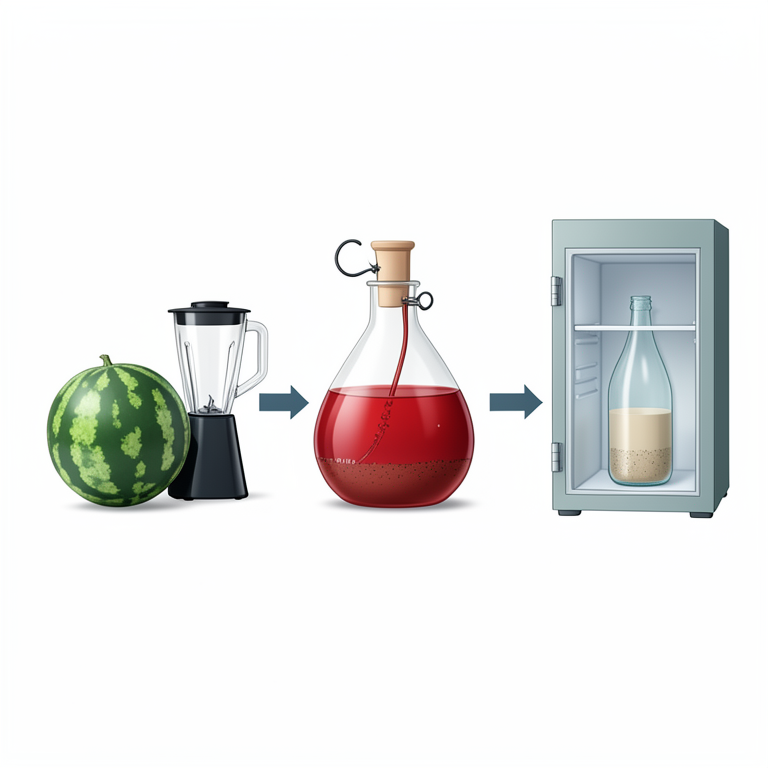
Watermelon Wine Production Workflow
AI-generated conceptual illustration (watermelon fruits and glass fermentation vessels). It explains the idea and does not show study data.
View source evidence ↗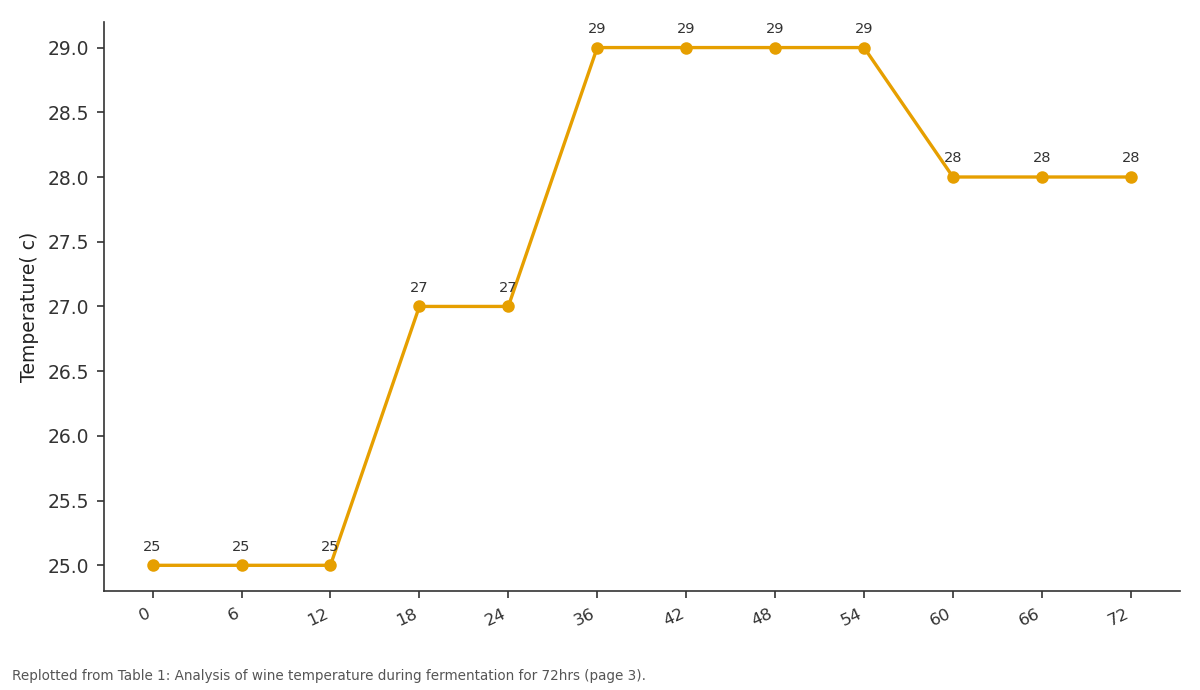
Temperature( c): 0 vs 6 vs 12 vs 18 vs 24
Replotted from Table 1 (page 3) of the original paper. Every bar is the paper's own table value.
View source evidence ↗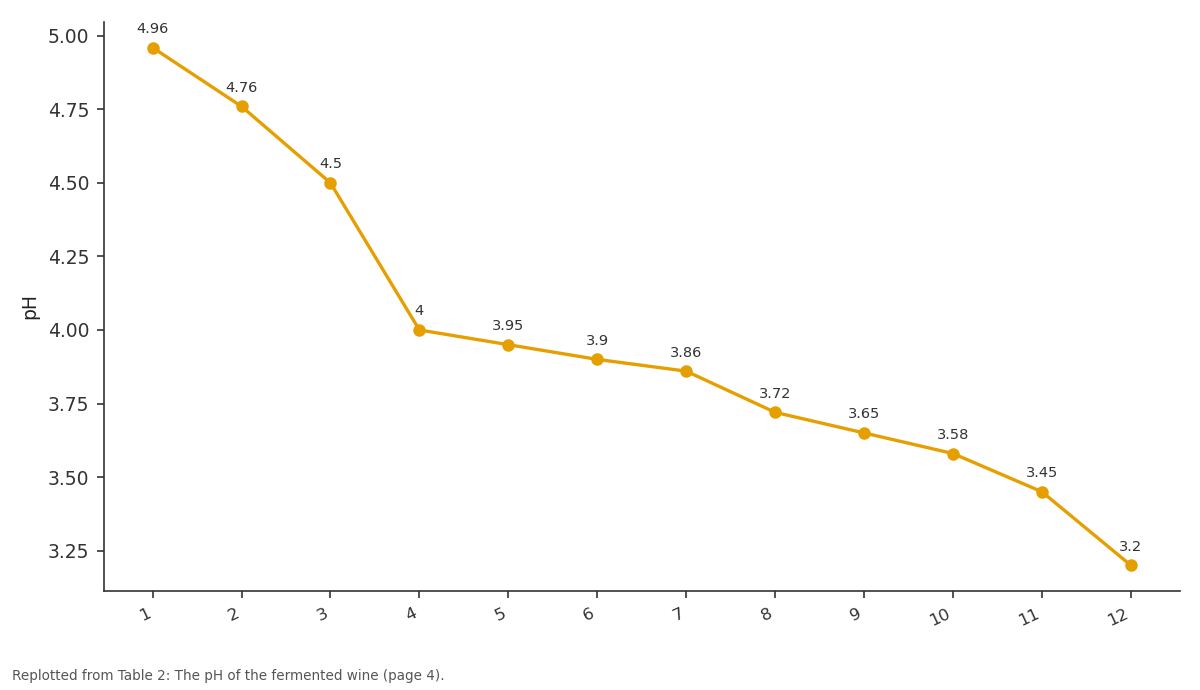
pH: 1 vs 2 vs 3 vs 4 vs 5
Replotted from Table 2 (page 4) of the original paper. Every bar is the paper's own table value.
View source evidence ↗Figures & tables
From the original paper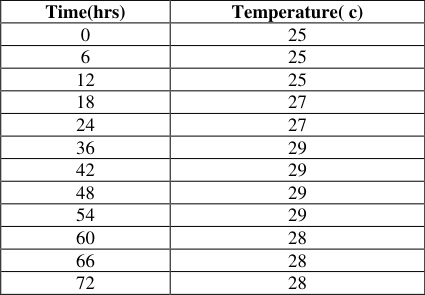 Table 1
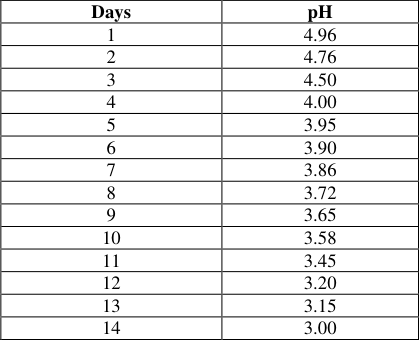 Table 2
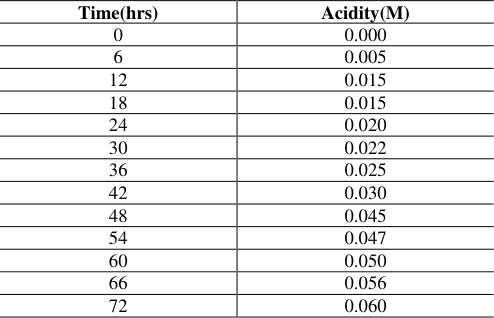 Table 3
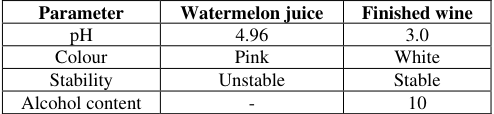 Table 4
Introduction
Watermelon (Citrullus lanatus) refers to the flowering plant species of the cucurbitaceae family. It is a highly cultivated fruit worldwide with more than 1000 varieties. Watermelon is grown in favorable climates from tropical to temperate regions worldwide for its large edible fruit, which is berry with a hard rind and no internal divisions, and is botanically called a pepo. This flowering plant produces a special type of fruit known by botanists as a pepo, which has a thick rind (exocarp) and fleshy center (Mesocarp and endocarp); pepos are derived from an inferior ovary and are characteristic of the Cucurbitaceae. The watermelon fruit, loosely considered a type of melon (although not in the genus Cucumis), has a smooth exterior rind (green, yellow, and sometimes white) and a juicy, sweet, usually red, but sometimes orange, yellow, or pink interior flesh. Dark redfleshed, black seeded varieties are the most popular on the marketplace. Yellow fleshed (champagne) melons and small mini melons also find a ready market. "Seedless" melons, although more difficult to grow, have become popular in the market.
Cultivation and Nutritional Composition
The watermelon is a tender, warm-weather annual plant. Watermelons along with muskmelons are sometimes called summer melons. They are grown in the warmest, frost-free time of the year. Watermelons are seed plants that grows best in full sun, loose, well-drained but moist-retentive soil rich in organic matter. In colder climates with short warm season. Watermelons can be grown indoors for the first 2-3 weeks before the last frost date. Then they can be transplanted into the garden 2 weeks after the last frost date or when the soil temperature has warmed up to at least 65F(18 °C). In warmer climates with long summer season, seeds can be sown directly outdoors 1 or 2 weeks after the last frost date, as long as the soil is temperature has warmed up to at least 65F(18 °C). Amend soil with aged mature seaweed, and/or compost before planting. Watermelons are heavy feeders, meaning they need soil that is fertile and has a high nutrient level. Watermelons do best in loamy, somewhat sandy, well-drained soil. They can struggle in soil that contains too much clay and doesn't drain well. Watermelons prefer a soil pH between 6.0 and 7.5(slightly acidic to neutral). Watermelons also need a lot of space of up to 20 square feet per plant. Their vines need room to sprawl, so they need to be planted in a place where they would not crowd out other crops. Watermelon (Citrullus lanatus) is rich in carotenoids some of which include lycopene, phytofluene, phytoene, betacarotene, lutein and neurospnene. Lycopene makes up the majority of the carotenoids of watermelon. Carotenoids have antioxidant activity and free scavenging property thereby help in reducing the risk of cancers, cardiovascular diseases, arteriosclerosis diabetes and arthritis and protects against macular degeneration. A watermelon is nominally 60% flesh and about 90% of the flesh is juicy which contains 7 to 10 %( w/v) sugar. Thus, over 50% of the watermelon is readily fermentable liquid. The nutritional profile of watermelon is full array of nutrients, including carbohydrates, sugar, soluble and insoluble fiber, sodium, vitamins, minerals, fatty acids, amino acids and more. A serving cup of watermelon contains 12.31mg of vitamin C, 864.88IU of vitamin A, 170.24mg of potassium and 45.60 calories.
Wine and Classification of wines
A typical wine contains ethyl alcohol, sugar, acids, higher alcohols, tannins, aldehydes, esters, amino acids, minerals, vitamins, anthocyanins, minor constituents like flavouring compounds etc. (Amerine et al., 1980) [1] . This product is probably the most ancient fermented beverage and was mentioned in the Bible and in other documents from Asian countries. Depending upon the various attributes such as cultivar, stage of ripening of fruits, chemical composition of juice, use of additives to the must, vinification techniques and ageing of wine, the alcohol and sugar content, the wines are classified as natural wines (9-14 % alcohol) and dessert and appetizer wines (15-21 % alcohol). Dry wine, sweet table wine, specialty wine, champagne, Muscat and burgundy wines are natural wines while sweet wine, cherries, vermouth and port wines are regarded as dessert and appetizer wines (Amerine and Singleton, 1972). The most famous types of wines are red and white wines, followed by rose and sparkling wines. There are other wine specialties around the world, such as the Portuguese Port Wine, a very rich flavour, often used by chefs in their signature dishes. Many types of wines can be divided into several groups, which are easy to remember. Depending upon product manufacturing all wines can be classified as grape wine, fruit wine, berry wine, vegetable wine, plant wine, raisin wine etc. Grape wine is made exclusively from grapes and during the production process prohibited from using any other materials (exception is made only for sugar and oak barrels). Fruit wines are fermented alcoholic beverages made from a variety of base ingredients other than grapes; they may also have additional flavours taken from fruits, flowers, and herbs. These types of wines are made from pear, apple, banana, papaya, mango, jackfruit juice etc. Cherry wine is produced from cherries, usually those cherries that provide sufficient acidity to wine. Plant wine is produced from juice of trees like maple, birch, melons, watermelons, and other garden plants such as rhubarb, parsnips and rose petals. Raisin wine is made from dried grapes (raisins). Multi sort wine is produced by mixing different kinds of grapes and wine materials. Depending on the time of fermentation grape varieties and colour fruit wines classified as are in red, white and pink wines.
Red wine
Red wine is made from red grapes, which are actually closer to black in colour. There are many different types of red wines. This is considered to be the most classic in the kingdom of wines, mixing the delicious red grapes with a wide range of aromas, from oak to eucalypti, chocolate or even mint hints. The juice from blackest grapes is greenish-white; the red colour comes from anthocyanin pigments present in the skin of the grape.
Pink wine
Pink wine having a light pink colour, grape skin removed immediately after the start of the fermentation process. These wines are made from a mixture of "black" and "white" grapes, using the technology of producing white wines. Classification of wines by the sugar and alcohol implies their division in dining rooms and fixtures.
White wine
White wine is not exactly white; it is often yellow, gold or straw coloured, depending on whether it includes the skin of the grape or just the juice. White wine can be made by the alcoholic fermentation of the non-coloured pulp of green or gold coloured grapes or from selected juice of red grapes, produced in Europe, and numerous other places such as Australia, California, New Zealand and South Africa and so on. It is treated so as to maintain a yellow transparent colour in the final product. White wines often taste lighter, crisper and more refreshing than a red wine and so they often gain popularity during warmer months of the year. White wines are typically served alongside white meats and fish.
Wine from tropical and subtropical fruits
Many tropical and subtropical fruits, including grapes, apples, pears, apricots, berries, peaches, cherries, oranges, mangoes, bananas and pineapples yield good amounts of juice on extraction. Upon fermentation, fruit juices can be changed into wines. However, the premium raw material for winemaking has been the grape, although attempts to process other fruit wines are being made. The technique used for the production of other fruit wines closely resembles those for the production of wines made from white and red grapes. The differences arise from two facts. It is somewhat more difficult to extract the sugar and other soluble materials from the pulp of some fruits than it is from grapes, and secondly the juices obtained from most of the fruits are lower in sugar content and higher in acids than is true for grapes (Amerine et al., 1980) [1] . As a solution to the above mentioned problems, the use of specialized equipment to thoroughly chop or disintegrate the fruits such as berries, followed by pressing to extract juice from the finely divided pulp, solves the first problem. The second problem is solved by the addition of water to dilute the excess acid and the addition of sugar to correct the sugar deficiency (Amerine et al., 1980) [1] . The most frequently used non-grape fruit sources for the production of wines include apples, pears, plums, cherries, currants, oranges and various types of berries, etc. Depending upon the various attributes such as cultivar, stage of ripening of fruits, chemical composition of the juice, use of additives, to the must, vinification techniques and ageing of wine, the alcohol and sugar content, the wines are classified as natural wines (9-14% alcohol) and dessert and appetizer wines (15-21% alcohol). Dry wine, sweet table wine, specialty wine, champagne, muscat and burgundy wines are natural wines while sweet wines, cherries, vermouth and port wines are regarded as dessert and appetizer wines (Amerine and Singleton, 1972). Hand et al., (2000) [3] ; Jackson, (2000); Ribereau-Gayon et al., (2000) [7] , discovered that winemaking involves mainly three categories of operation, viz: pre-fermentation and post-fermentation operations. In the case of wines made from grapes, pre-fermentation involves crushing the fruit and releasing juice. In case of white wine, juice is separated from the skin whereas in red wine, the skins are not separated from the juice. Clarification of juice for white wine is usually achieved by sedimentation of centrifugation. Then yeast is added to the clarified juice to initiate fermentation. In red wine making, the pulp, skins and seeds of kept together after crushing and during all part of the fermentation. This is done to extract colour and flavour. Yeast is added to mashed pulp (must) in red winemaking. Over time, it was discovered that yeasts play a central role in the fermentation of foods and beverages, mainly those with high carbohydrate content which can survive and grow under stress condition. Fermented beverages were selected in order to characterize the ingenious yeast flora (Jimoh et al., 2012) [4] . Chandraskwar et al., (2012), discovered that microorganism reported in palm wine include both yeast and bacteria, the yeast are mainly saccharomyces and Candida, a total of seventeen (17) yeasts were isolated from samples of palm wine fermented from sap, twelve of the yeast belongs to saccharomyces, four were Candida and one of endomycopsis species. Alan and snow (1990), recognize wine yeast as mainly strain of saccaromycecerevisiae which was valued principally for their exceptional ethanol tolerance and resistance to sulphur dioxide. Akilo (1992), reported that yeast is unicellular, ova, nucleated non-motile chemosynthetic microorganism, which reproduce mainly by budding. It has the ability to efficiently and rapidly ferment juice containing 20-25% sugar without producing off flavour or aroma.
Materials and Methods
Materials and Methods
Sample collection
Watermelons were obtained from Owo market. The exterior surfaces of the watermelon fruits were washed thoroughly with soapy water and rinsed with distilled water and 4% aqueous sodium metabisulphite to remove any possible contaminant. The fruit was cut longitudinally into four parts and the seeds were removed with a sterile knife. The inner juicy part of watermelon was removed, sliced and blended in an electric blender. The resulting slurry was filtered with a muslin cloth to obtain a clear pink liquid. The specific gravity of the clear extract was measured with wine hydrometer.
Fermentation of watermelon juice
Fermentation started with the development of the natural yeast on the fruit. Sodium metabisulphite (1%) was added on the first day as antibacterial agent and as inhibitors of wild yeasts. 75mL of starter culture and 30g of sugar was also added and dissolve in water. Periodically stir with a clean rod over the next 7days. The plastic containers were kept covered to prevent contamination from floating at room temperature for 4days. The pH of the juice was also adjusted to 4.96. The fermentation was carried out at room temperature (28±2 O C). Then additional sugars 1-2% were added periodically. The progress of the fermentation was followed by determining daily the following parameters pH, temperature, and total acidity and specific gravity changes to the end of the fermentation.
Proximate and Physico-Chemical Analysis of watermelon Wine
The wine produced was subjected to proximate analysis. These include; percentage alcohol which was determined using the method reported by (muchtaridi et al., 2012.). The pH, temperature, specific gravity, titratable acidity of the wine was determined using standard methods.
Physico-chemical analysis
The pH was then determined using fisher science Education pH meter (model 90526 Singapore) by inserting the pH probe into the slurry. The readings were noted from the range 0-14 of the pH meter.
Colour Test
The colour of the sample was determined by visual observation.
Percentage Alcoholic Content
The method described by Pearson (1993) was used. 50ml of produced wine with yeast strain was measured into a volumetric flask. The sample was then slowly poured into a 100ml volumetric flask. 45ml of the distillate was collected and made up to 50ml with distilled water. The specific gravity was determined using the specific gravity bottle.
Racking and Fining
After two weeks of fermentation, the wine was racked by carefully transferred into another sterilized bottle. The wine was then clarified by adding 5g of sugar.
Ageing
The wine was aged at refrigeration condition to mature at -2 °C to 15 °C for four weeks.
Racking and Bottling
The wine was racked again by transferring from one container to another to remove sodium pulp and bottled in sterilized bottles.
Pasteurization and Cooling
The matured wine was pasteurized at 68°C for 15minutes, cooled, stored and ready for consumption.
Results
Physico-chemical properties of the wine after fermentation Table 3.1 showed the variation in temperature of the wine during fermentation at interval of 6 hours until the fermentation was stopped. The temperature of wine increases within the first two days (from 25 °C to 29 °C) of fermentation and this declined (from 29 °C to 28 °C) towards the end of fermentation period. The control remained constant throughout the period of fermentation process. Table 3.2 showed the result of variation in pH of the wine during fermentation. The pH showed a gradual decline (4.96 to 4.50) up to the 72 hours of fermentation. The control remained constant throughout the period of fermentation process. The variation of the pH may be due to the concentration of the yeast and sugar and as a result of fermentation. The decrease in the pH values after fermentation could be attributed to the production of acids in the fermenting medium. Table 3.3 showed the result of variation in total titratable acidity of the wine during fermentation at interval of 6 hours. The titratable acidity showed a gradual increase (0.015 to 0.060) up to the third day of fermentation. The control remained constant throughout the period of fermentation process; this was observed to show a steady increase with time throughout the period of fermentation. At the 28th day of fermentation, acid concentration in the fruit wine was observed to increase from the initial concentration ranges of 0.55% to 1.01%.
| Time(hrs) | Acidity(M) |
|---|---|
| 0 | 0.000 |
| 6 | 0.005 |
| 12 | 0.015 |
| 18 | 0.015 |
| 24 | 0.020 |
| 30 | 0.022 |
| 36 | 0.025 |
| 42 | 0.030 |
| 48 | 0.045 |
| 54 | 0.047 |
| 60 | 0.050 |
| 66 | 0.056 |
| 72 | 0.060 |
Table text extracted from the original PDF; superscript letters are shown inline. The original table image is below.
View original table image
Discussion
The fermentation of wine is known to be complex with various ecological and biochemical processes involving yeast strains (Fleet, 2003). The fermentation for the elaboration of beverage is known to depend on the performance of the yeast to convert the sugars into alcohol and esters. Fluctuations in temperature of the must were observed during the period of fermentation. This could be as a result of biochemical changes occurring during the metabolism of the substrates by the fermenting organism.
In the present investigation, the test fermentation yeast (S. cerevisiae) was the only organism isolated from the wine and there are no other microorganisms present in it. This is an indication of good quality. This observation may be attributed to low pH values, high acidity and high alcohol contents of the wines which are known to inhibit the growth of pathogens and gives fermenting yeast a competitive advantage in natural environment as reported by Reddy and Reddy (2005) and Chilaka et al. (2010). The absence of the growth of the yeast in watermelon wine could be due to the high alcoholic content which exceeded the ethanolic tolerance level of the yeast used for fermentation. The colour of the watermelon wine was observed to change from pink to white. This is an indication that the fruit served as a good substrate for wine production in this study. The good aroma obtained in the wine could be attributed to high alcohol content. Clement-Jimenez et al. (2005). Acidity plays a vital role in determining wine quality by aiding the fermentation process and enhancing the overall characteristics and balance of the wine. Lack of acidity will mean a poor fermentation. The pH is slightly low, 3.0 and this confers stability on the wine sample and the specific gravity ranged from 0.784 to 1.020 [Nidhi et al., 2008], There exists a correlation between pH and acidity of the sample. The higher the acidity; the lower the pH of the wine.
Conclusion
It is concluded from the results of this project work that the present study which was based on the evaluation of fruit as substrates for wine production and the efficiency of isolated Saccharomyces cerevissiae from palm wine for watermelon are good substrates for wine production. The biochemical and sensory attributes of the wines were acceptable by the consumers. The study has also given an insight into the efficacy and role of S. cerevissiae from palm wine during alcoholic fermentation of watermelon fruit have short shelf-life under the prevailing temperature and humidity condition in Nigeria. Therefore, this study provides an avenue to preserve their nutrients, minerals, vitamins, aroma and taste to the consumers by fermenting them into wines.
Recommendations
Further work could be carried out to isolate and purify the indigenous yeast for watermelon wine production. Also further work could be carried out to find other methods for watermelon juice extraction for wine production. And more research can be carried to determine the type of wine that watermelon could be used to produce.
Figures and tables from the paper
| Time(hrs) | Temperature( c) |
|---|---|
| 0 | 25 |
| 6 | 25 |
| 12 | 25 |
| 18 | 27 |
| 24 | 27 |
| 36 | 29 |
| 42 | 29 |
| 48 | 29 |
| 54 | 29 |
| 60 | 28 |
| 66 | 28 |
| 72 | 28 |
Table text extracted from the original PDF; superscript letters are shown inline. The original table image is below.
View original table image
| Days | pH |
|---|---|
| 1 | 4.96 |
| 2 | 4.76 |
| 3 | 4.50 |
| 4 | 4.00 |
| 5 | 3.95 |
| 6 | 3.90 |
| 7 | 3.86 |
| 8 | 3.72 |
| 9 | 3.65 |
| 10 | 3.58 |
| 11 | 3.45 |
| 12 | 3.20 |
| 13 | 3.15 |
| 14 | 3.00 |
Table text extracted from the original PDF; superscript letters are shown inline. The original table image is below.
View original table image
| Parameter | Watermelon juice | Finished wine |
|---|---|---|
| pH | 4.96 | 3.0 |
| Colour | Pink | White |
| Stability | Unstable | Stable |
| Alcohol content | - | 10 |
Table text extracted from the original PDF; superscript letters are shown inline. The original table image is below.
View original table image
References
6 in the original paper- Chandrasekhar S, Sreevani P, Seshapani J. Pramodhahkumari International Journal of Research in Biological Sciences, Department of Microbiology, S. V. University, Tirupati, A.P, India. 2012.
- Jimoh SO, Ado SA, Ameh JB, Whong CMZ. Yeast in Locally Fermented Beverages. World Journal of Engineering and Pure and Applied Science. 2012;2(2):40.
- Muchtaridi M, Musfiroh I, Hambali NN, Indrayati W. Determination of alcohol of fermented black tape ketan based on different fermentation time using specific gravity, refractive index and CG-MS methods. Journal of Microbiology, Biotechnology and Food Sciences. 2012;2(3):933-946.
- Omoya FO, Akharaiyi FC. Studies on Qualitative and Quantitative Characterization of Alcoholic Beverages from Tropical Fruits. Research Journal of Microbiology. 2008;3:429-435.
- Ribereau-Gayon P, Dubourdieu D, Doneche B, Lonvaud. The Microbiology of Wine and Vinifications. John Wiley and Sons Ltd, Handbook of Enology. England, 2000;1:358405.
- Steger C, Lambrechts MG. The selection of yeast strains for fermentation of fruit wine. Journal of Industrial Microbiology and Biotechnology, 2010, 431-440.
Cited by 1
From OpenAlex, OpenCitations and reference lists read by Scinovex
- Recent trends in production of wine from tropical fruits ↗
Veeranjaneya Reddy Lebaka, Siddavatam S. Jyothi, Young Jung Wee, Parmjit S. Panesar · Elsevier eBooks · 2026
❝ 0