
Research article · 2020 · Full text
International Journal of Advanced Chemistry ResearchGreener and efficient synthesis of Benzodiazepines using mixed Ferrite under solvent free condition
Volume 2(2) · Pages 32–35 · DOI: 10.33545/26646781.2020.v2.i2a.25 ↗
Research areasMulticomponent Synthesis of HeterocyclesMicrowave-Assisted Synthesis and Applications
Abstract
Author-writtenThe Ferrite material Zn0.6Ni0.2Cu0.2Fe2O4 was synthesized by the sol-gel auto combustion method and characterized by its TG and DTA. The crystallographic structures were studied by XRD. Morphology and structure of the powder samples were studied by SEM and TEM. The synthesis of benzodiazepines via one-pot two-component condensation reaction of o-phenylene diamine and ketones carried by using synthesized ferrite as a recyclable catalyst. This synthetic approach eliminates the use of hazardous organic solvents with the important benefit of easy separation and reusability of the catalyst without compromising the yield or purity
Summary
Source-checkedPlain-language reading of the full paper, prepared with AI and checked against the text. Each point links to the authors' own words.
Why it matters
- Benzodiazepine derivatives are significant in pharmaceutical chemistry because they act as sedative, hypnotic, analgesic, anti-inflammatory, and anticonvulsant agents. View evidence ↗
- Existing catalysts for benzodiazepine synthesis often have drawbacks, including low yields, long reaction times, harsh conditions, and difficult workup procedures. View evidence ↗
What they did
- The catalyst Zn0.6Ni0.2Cu0.2Fe2O4 was produced using the sol-gel auto-combustion method with citric acid as fuel and various metal nitrates as starting materials. View evidence ↗
- The catalyst's structure and morphology were analyzed using X-ray powder diffraction (XRD), Scanning Electron Microscopy (SEM), and Transmission Electron Microscopy (TEM). View evidence ↗
- An external magnetic field was used to separate the catalyst from the reaction mixture, avoiding the need for filtration. View evidence ↗
What they found
- The synthesized catalyst exhibited a crystallite size of 30.3 nm, as confirmed by both XRD and TEM. View evidence ↗
- Without a catalyst, the condensation reaction of o-phenylenediamine and acetophenone showed very low conversion, at only 22%. View evidence ↗
- The optimum catalyst concentration was found to be 10 mol%; increasing the concentration to 12 mol% or 14 mol% did not further improve the product yield. View evidence ↗
- Using 10 mol% catalyst at 80°C under solvent-free conditions, the reaction completed in 15 minutes with a high yield of 89%. View evidence ↗
- The use of acetone as a ketone resulted in a product yield of 82%. View evidence ↗
- Solvent-free conditions provided the best results; while ethanol and acetonitrile showed improvement, the reaction did not proceed in water. View evidence ↗
What it means
- The authors conclude that they developed an efficient, eco-friendly method for benzodiazepine synthesis characterized by mild conditions, short reaction times, high yields, and a magnetically recoverable, reusable catalyst. View evidence ↗
Visual summary
2 visualsIllustrations explain the paper; charts are replotted from the paper's own table values.
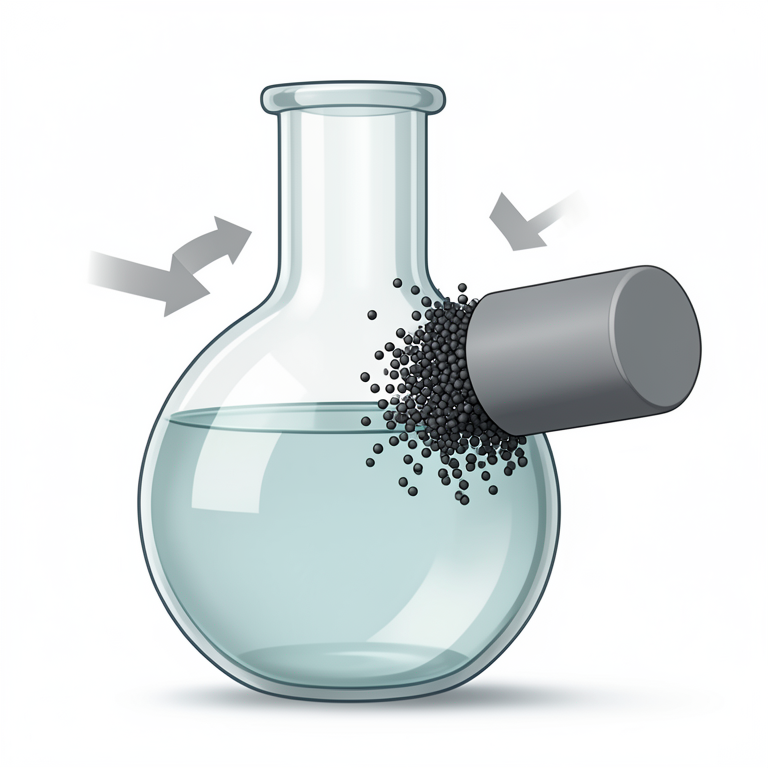
Magnetic Catalyst Recovery Process
AI-generated conceptual illustration (magnetic ferrite nanoparticles in a glass round-bottom flask). It explains the idea and does not show study data.
View source evidence ↗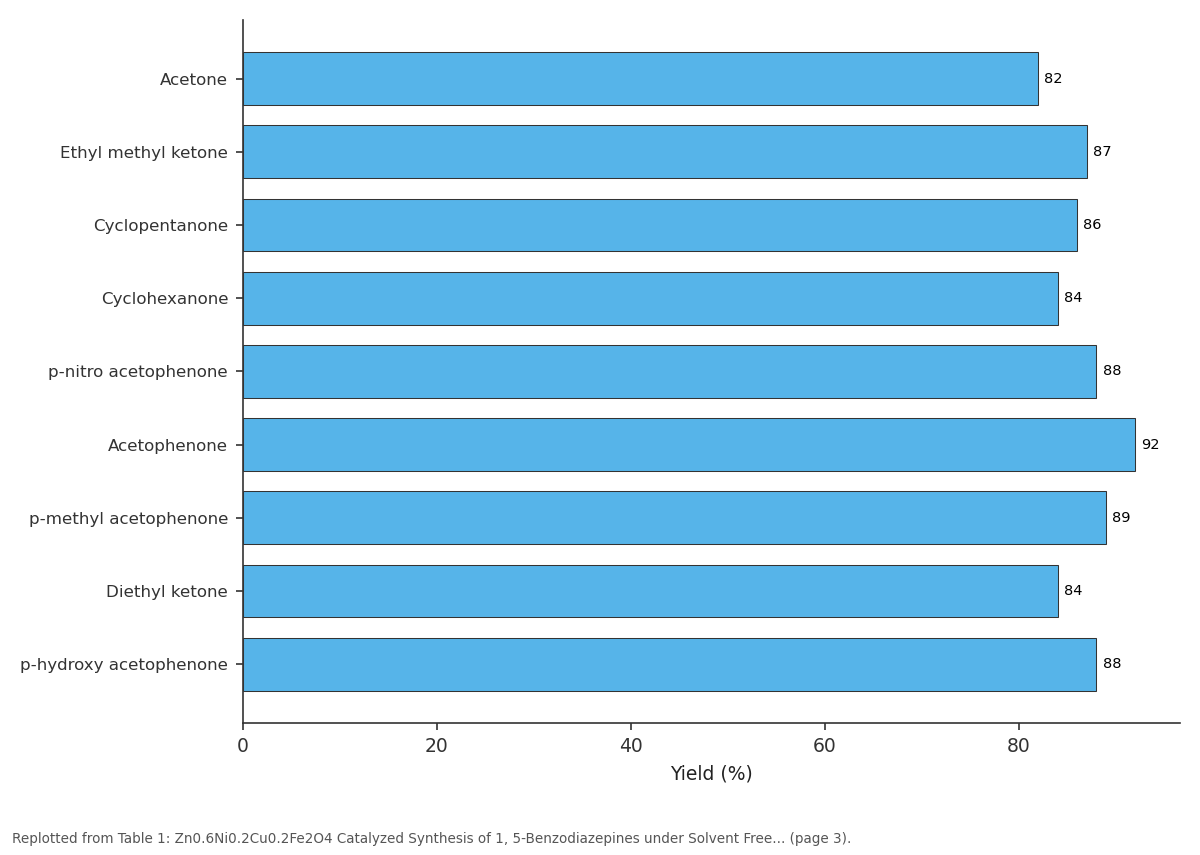
Yield (%): Acetone vs Ethyl methyl ketone vs Cyclopentanone vs Cyclohexanone vs p-nitro acetophenone
Replotted from Table 1 (page 3) of the original paper. Every bar is the paper's own table value.
View source evidence ↗Figures & tables
From the original paper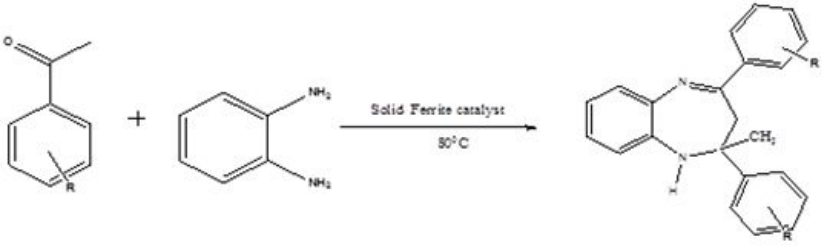 Figure 1
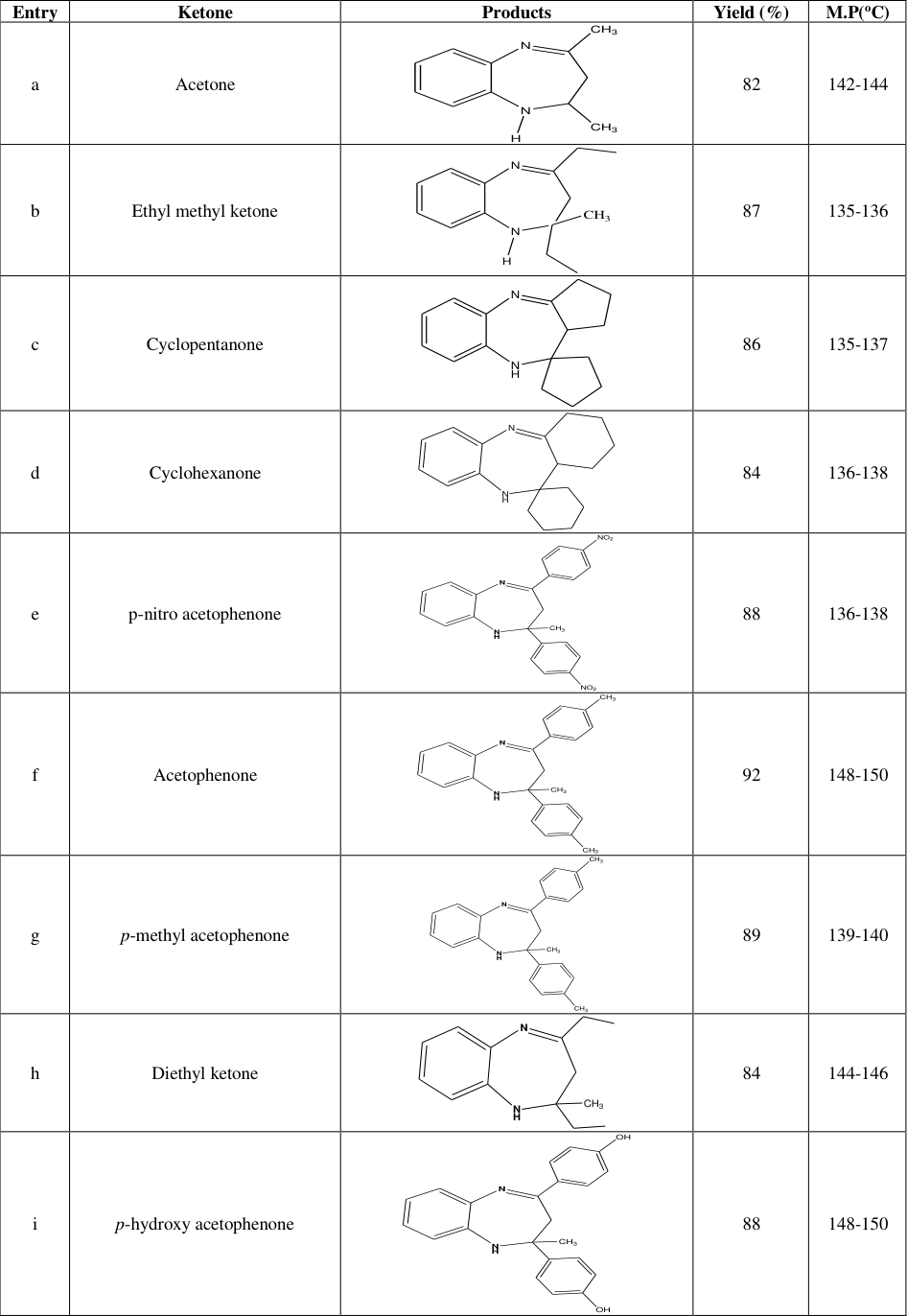 Table 1
Introduction
Recently, metal nanoparticles have received much attention in the field of organic synthesis. Metal nanoparticles are much more reactive than the bulk because of their higher surface to volume ratio recently; metal nanoparticles have received much attention in the field of organic synthesis. Metal nanoparticles are much more reactive than the bulk because of their higher surface to volume ratio [1] . Benzodiazepines derivatives are an important class of pharmacologically active compounds and their synthesis has been receiving great importance in the field of pharmaceutical chemistry owing to their application as anticonvulsant, antiinflammatory, analgesic, hypnotic, and sedative agents and to their hypnotic activity [2][3][4][5][6][7] . The derivatives of 1, 5benzodiazepines are also used as dyes for acrylic fibers in photography [8] . In addition, benzodiazepines are the useful precursors for the synthesis of other fused ring compounds such as triazolo-, oxadiazolo-, oxazino-, or furano-benzodiazepines [912] . Benzodiazepines are generally synthesized by the condensation of o-phenylenediamine with α, β-unsaturated carbonyl compounds, α-haloketones, or with ketones [13] using acidic catalysts which are critical to enhance the condensation process. Different reagents such as BF3-etherate, polyphosphoric acid, NaBH4, MgO/POCl3, Yb(OTf)3, Ga(OTf)3, lead nitrate, Lproline, acetic acid under microwave conditions, molecular iodine, and ionic liquids have also been used for the synthesis of benzodiazepines [14][15][16][17][18][19][20][21][22][23][24] . Unfortunately, many of these catalysts suffer from one or more limitations, such as long reaction times, occurrence of several side reactions, drastic reaction conditions, low yields, and tedious workup procedure. These factors stimulate the search for a better catalyst, which should offer a high activity for the synthesis of 1, 5-benzodiazepines under mild reaction conditions. In recent years much attention has been paid to the utilization of magnetic metal oxides nanoparticles as heterogeneous and easily recycled catalysts for various organic reactions. Magnetite nanoparticles have been immobilized on different catalyst supports, because of easily retrievable and reusable heterogeneous catalyst they are still have high demand. Iron oxide nanoparticles catalyst is that they can be easily separated using an external magnet, which achieves a simple separation of catalyst without filtration. In this context, we have described use of magnetic metal oxides nanoparticles as heterogeneous and easily recycled catalysts for the synthesis of 1, 5-benzodiazepine using Zn0.6Ni0.2Cu0.2Fe2O4 as catalyst through a condensation reaction between ortho phenylene diamine and ketones under solvent free condition. The effect of catalyst and the catalyst concentration on the above process has been investigated in detail.
Material and method A. Synthesis and Characterization of Catalyst
Zn0.6Ni0.2Cu0.2Fe2O4 was synthesized by the sol-gel autocombustion method from analytical reagent grade Zinc nitrate, Nickel nitrate, copper nitrate, zinc nitrate, and iron nitrate as starting material using citric acid as fuel. TG and DTA of precursor were carried on SDT Q600 V20.9 Build 20 instrument in air atmosphere. The crystallographic structure was studied by X-ray powder diffraction with by Phillips X-ray diffractometer (Model 3710). Morphology and structure of the powder sample was studied on JEOL-JSM-5600N Scanning Electron Microscope (SEM) and on Philips (model CM 200).Transmission Electron Microscope (TEM). Melting point of synthesized benzimidazole was determined in capillary tubes and is uncorrected. Column chromatography employed silica gel of 60-120mesh. XRD pattern of the Zn0.6Ni0.2Cu0.2Fe2O4 spinels ferrite confirmed the formation of cubic spinel structure of single phase ferrites without additional peaks corresponding to any other phases. The observed crystallite size is 30.3 nm also confirmed by TEM. It is observed from the SEM images that the prepared samples are amorphous and porous in nature. The particles were well distributed and slightly agglomerated. The agglomeration is the indication of high reactivity of the prepared sample with the heat treatment and it may also be come from the magneto static interaction between particles. The synthesized Zn0.6Ni0.2Cu0.2Fe2O4 was then applied as a reusable catalyst in a condensation reaction which intern will produce biologically important heterocyclic compounds such as benzodiazepine and their derivatives. The model condensation reaction between o-phenylenediamine (1mmol) and aceto phenone (2.2 mmol) in presence of Zn0.6Ni0.2Cu0.2Fe2O4 was carried out under solvent free condition (Scheme 1). The reaction was carried out in various solvents, like water, THF, acetonitrile, ethanol and toluene. Significant improvement was achieved in ethanol and acetonitrile, but the best result was observed under solvent free condition. However the reaction did not proceed in water medium which might be due to poor solubility of the starting materials.
B. Experimental
All the reagents (AR Grade) were purchased from SD Fine Chem Limited (India) and Thomas Baker (India) and were used directly without any further purification. The characterization of the products was done by comparing their physical constants with the literature values and by recording spectra. All the melting points were recorded on digital melting point apparatus and are uncorrected. IR spectra were recorded in KBr on Bruker FT-IR (Alpha-P). 1 H spectra were measured at ambient temperatures using CDCl3 as the solvent on a 400 MHz MHz BRUKER AVANCE DRX-500 instrument. Progress of reaction was monitored by TLC.
General procedure for the synthesis of benzothiazepines the catalyst Zn0.6Ni0.2Cu0.2Fe2O4 (10 mol %) was added to a mixture of o-phenylenediamine (1 mmol) and acetophenone (2.2 mmol) and heated at 70 0 C under solvent free condition. Progress of reaction, was monitored by TLC, the reaction mixture was cooled to room temperature and dissolved in 10 mL ethyl acetate. The catalyst was then separated by external magnetic field. The separated catalyst was washed with ethyl acetate and dried. Then it was used for another set of reaction under similar condition. The reaction mixture was then washed with water (3x5 mL), and dried over anhydrous Na2SO4.The reaction mass was concentrated under vacuum and the pure product was obtained by purification through column chromatography using ethyl acetate-hexane as eluent.
Result and Discussion
The catalyst Zn0.6Ni0.2Cu0.2Fe2O4 was prepared and characterized by different techniques such as XRD, SEM and TEM thus confirmed its structure. The synthesized catalyst was then applied as a reusable catalyst in a condensation reaction like heterocyclic compounds such as benzodiazepine and their derivatives. The amount of catalyst concentration for the model reaction was scanned. Firstly, the condensation reaction of ophenylenediamine (1mmol) and acetophenone (2.2 mmol) was carried out in absence of catalyst, very less conversion was observed (22%). The reaction was then studied with various mol% of the catalyst (2-16 mol %). It was found that the product yield proportionally increased with catalyst concentration. Maximum yield was obtained by using 10 mol% of the catalyst. Further increase in the catalyst concentration (12 mol% and 14 mol %), the yield of the product did not improve. So 10 mol% is the optimum catalyst concentration is this reaction. We have carried out the said condensation reaction of o-phenylenediamine and acetophenone in presence of above said catalyst (10 mol %) under solvent free condition at 80 o C (Scheme 1). The reaction went to completion within 15 min yielding a solid pale white product in high yield (89%). The structure of the compound was established by analytical and spectroscopic methods (detailed is given in table-1). Spectral discussion: The significant peak of IR at 3331 (N-H Str.), 1637 (C=N), 1590 (Ar) clearly confirms the formation of product. The presence of peaks in 1H NMR at 3.4 (brs, 1H), 3.08(d, J=13.2 Hz, 1H) and 2.92 (d, J=13.2Hz, 1H) also indicates the formation of benzodiazepine. Effect of temperature: The effect of temperature on the product yield was also studied. The reaction was carried out at room temperature but no desired product was obtained only starting materials were recovered after 1 h. with increase in the temperature, yield of the desired product Increases and maximum yield was achieved at 70 0 C. Initially the catalyst facilitated the reaction between diamine and ketones and generates intermediate. The intermediate this undergoes intramolecular cyclization followed by hydride shift to furnish the benzodiazepine [25][26] .
Reaction Schem`e
Reaction Schem`e
Conclusion
In conclusion, we have developed a new efficient and ecofriendly method for the synthesis of benzodiazepine derivatives. This method has great advantages because workout procedure is easy, short reaction time, reaction mild reaction conditions and in excellent yield, solvent free and catalyst can be separated by external magnetic yield and reused for several runs.
Figures and tables from the paper
References
27 in the original paper- Burda C, Chen X, Narayana R, Sayed MAE. Chemistry and Properties of Nanocrystal of Different Shape, Chem. Rev. 2005; 105:1025-1028.
- de Baun JR, Pallos FM, Baker DR. 5-furoyl-2, 2, 4-tri methy l-1, 4-dihydro-1H-1,5-benzo diazepine as an antiinflammatory agent,1976, US Patent. 1976; 3(978):227-230.
- de Baun JR, Pallos FM, Baker DR. 5-furoyl-2,2,4trimethyl-1,4-dihydro-1H-1,5-benzodiazepine as an antiinflammatory agent," Chemical Abstracts. 1977; 86:5498d.
- Schultz H. Benzodiazepines, Springer, Heidelberg, Germany, 1982.
- Smiley RK. Comprehensive Organic Chemistry, Pergamon, Oxford, UK, 1979.
- Landquist JK. Comprehensive Heterocyclic Chemistry, vol. 1, Pergamon, Oxford, UK, 1984.
- Randall LO, Kappel B, Pharmacological activity of some benzodiazepines and their metabolites in Benzodiazepines, S. Garattini and E. Mussini, Eds., Raven, New York, NY, USA, 1973.
- Haris RC, Straley JM. Lifting apparatus, US Patent. 1968; 1(537):757-761.
- El-Sayed AM, Abdel-Ghany H, El-Saghier AMM. A novel synthesis of pyrano(2,3-c)-, 1,3-oxazino(2,3 b)-,1, 2,4triazolo(3,4-b)-, oxazolo(2,3-b)-, furano(3,2-c)-, and 3substituted-(1, 5) benzo diazepin-2-ones, Synthetic Communications. 1999; 29(20):3561-3572
- Xu JX, Wu HT, Jin S. Cycloaddition of benzoheteroazepine II reactions and conformations of cycloadducts on 1, 5benzothiazepines and 1,5-benzodiazepines with nitrile imine and nitrile oxides, Chinese Journal of Chemistry. 1999; 17(1):84-91.
- Zhang XY, Xu JX, Jin S. Cycloaddition of benzoheteroazepine reaction of 2, 3-dihydro-lh-l, 5benzodiazepines with dichlorocarbene and stereo-structures of products, Chinese Journal of Chemistry. 1999; 17(4):404410.
- Kim K, Volkman SK, Ellman JA, Synthesis of 3-substituted 1, 4-benzodiazepin-2-ones, Journal of the Brazilian Chemical Society. 1998; 9(4):375-379.
- Reid W, Torinus E. "Uber heterocyclische Siebenringsysẗeme, X. Synthesen kondensierter 5-, 7-und 8-gliedriger Heterocyclen mit 2 Stickstoffatomen," Chemische Berichte. 1959; 92(11):2902-2916.
- Herbert JAL, Suschitzky H. yntheses of heterocyclic compounds. Part xxix. substituted 2,3-dihydro-1h-1,5benzodiazepines, Journal of the Chemical Society, 1974,29, 2657-2661,.
- Morales HR, Bulbarela A, Contreras R. New synthesis of dihydro-and tetrahydro-1, 5-benzodiazepines by reductive condensation of o-phenylenediamine and ketones in the presence of sodium borohydride, Heterocycles. 1986; 24(1):135-139.
- Jung DI, Choi TW, Kim YY. Synthesis of 1, 5benzodiazepine derivatives, Synthetic Communications. 1999; 29(11):1941-1951.
- Balakrishna MS, Kaboudin B. A simple and new method for the synthesis of 1, 5-benzodiazepine derivatives on a solid surface, Tetrahedron Letters. 2001; 42(6):1127-1129.
- Curini M, Epifano F, Marcotullio MC, Rosati O. Ytterbium triflate promoted synthesis of 1, 5-benzodiazepine derivatives, Tetrahedron Letters. 2001; 42(18):3193-3195.
- Pan XQ, Zou JP, Huang ZH, Zhang W. Ga (otf) 3-promoted condensation reactions for 1,5-benzodiazepines and 1, 5benzothiazepines, Tetrahedron Letters. 2008; 49(36):53025308.
- Kumar R, Chaudhary P, Nimesh S, Chandra R. An efficient synthesis of 1, 5-benzadiazepine derivatives catalyzed by silver nitrate, Green Chemistry. 2006; 8(6):519-521.
- Sivamurugan V, Deepa K, Palanichamy M, Murugesan V. [(l) proline] 2 Zn catalysed synthesis of 1, 5-benzodiazepine derivatives under solvent-free condition, Synthetic Communications. 2004; 34(21):3833-3846.
- Minothora P, Julia SS, Constantinos AT. An efficient method for the synthesis of 1, 5-benzodiazepine derivatives under microwave irradiation without solvent, Tetrahedron Letters, 2002; 43(9):1755-1758.
- Chen WY, Lu J. Molecular iodine catalyzed one-pot synthesis of 1, 5-benzodiazepine derivatives under solventfree conditions, Synlett. 2005; 05(8):1337-1339.
- Jarikote DV, Siddiqui SA, Rajagopal R, Thomas D, Lahoti RJ, Srinivasan KV. Room temperature ionic liquid promoted synthesis of 1, 5-benzodiazepine derivatives under ambient conditions, Tetrahedron Letters. 2003; 44(9):1835-1838.
- Wan JP, Gan SF, Wu JM, Pan Y. Catalyst free approach to benzimidazoles using air as the oxidant at room temperature Green Chem. 2009; 11(12):1633.
- Saha M, Pal AK, Nandi S. Pd (0) NPs: a novel and reusable catalyst for the synthesis of bis (heteroaryl) methanes in water, RSC Adv. 2012; 16(2):6397-6399.
- Elsayed AN, Badawy AI, Sarhan M, Abdel-Aziz A. Haemonchus longistipes Railliet & Henry, 1909 (Nematoda, Trichostrongyloidea) from dromedary, Camelus dromedarius (Artiodactyla, Camelidae). Egypt: Prevalence and comparative assessment of vulvar morphology. Int. J. Biol. Res. 2019;4(3):107-12.
Cited by 4
From OpenAlex, OpenCitations and reference lists read by Scinovex
- Nickel availability, deficiency and toxicity in soils and plants: A review ↗
Jogendra Kumar · International Journal of Applied Research · 2023
Nickel plays many important roles in the growth and development of plants. Its deficiency or toxicity symptoms can occur when it is present in too little or too much amount, respectively. Its status in soils is highly dependent on the nickel concentration of the parent rocks, but in surface soils, its content depends on soil-forming processes. Total Ni content in
- Effect of nutrients on cellulolytic and pectolytic enzyme production of Phomopsis viticola a leaf spot pathogen of grapes (vitis vinifera)
Pawar Ab · International Journal of Biology Sciences · 2021
Phomopsis viticola causes leaf spot disease to the Grapes plant is a potential pathogen of Grapes plant (Vitis Vinifera), was isolated from diseased Vitis Vinifera leaves from Nashik district and used for the present study. Pathogen was grown on the Czapek-Dox liquid medium substituting or adding different carbon, nitrogen to study cellulolytic and pectolytic enzyme production and total phenol production. The activity of enzyme was observed on the 8th day of incubation period. A grate extent of growth variation was observed on different carbon, nitrogen. Among the carbon source, maximum growth
- Synthesis of Li1.25Mn0.125Ni0.125Co0. 5O2 nano powders, via sol-gel method, as a candidate for cathode material of lithium - ion batteries and investigating the effect of gelatin amount on their physical and structural properties ↗
Awaz Bromand, Hadi Arabi, Shaban Reza Ghorbani · International Journal of Advanced Academic Studies · 2021
In this research, Li1.25Mn0.125Ni0.125Co0.5O2 Nano powders, were synthesized using sol-gel method at different temperatures, lithium nitrate, manganese nitrate, nickel nitrate, cobalt nitrate as raw materials. Thermal and thermal gravimetric of TGA/DTA, characterization of structure properties of samples prepared by X-ray diffraction (XRD), Fourier transform infrared spectroscopy (FTIR) were performed. Also, with X-ray diffraction scheme, at different temperatures, it was concluded…
❝ 0PDF - The role of green chemistry in producing spinel copper ferrite nanoparticles ↗
Constantin Abdoulaye, Hudson Onyambu · International Journal of Chemical Research and Development · 2021
The synthesis of nanomaterials has witnessed a paradigm shift with the emergence of green chemistry principles. This research paper explores the pivotal role of green chemistry in the sustainable production of spinel Copper Ferrite (CuFe2O4) nanoparticles. By employing eco-friendly methods and minimizing environmental impact, green chemistry not only revolutionizes nanoparticle synthesis but also fosters a greener and more sustainable future.