
Research article · 2021 · Full text
International Journal of Advanced Chemistry ResearchRole of chemistry in drug discovery and drug design
Volume 3(1) · Pages 16–18 · DOI: 10.33545/26646781.2021.v3.i1a.30 ↗
Research areasComputational Drug Discovery MethodsAnalytical Methods in Pharmaceuticals
Abstract
Author-writtenThe drug discovery and development process use as target of new drug. This process transform some techniques such as screening, optimization, characterization, validation, synthesis. Target based drug design is more important, long-term, successful process. Which is use as high Throughput screening (HTS). Target is synthesized by combination of chemistry. All type of chemistry use in new drug discovery such as analytical chemistry, computational chemistry, organic chemistry, inorganic chemistry, medicinal chemistry, physical chemistry, biochemistry etc. Analytical chemistry in pharmaceutical drug development providing assurance of the quality, safety and efficacy of new drug. Analytical chemistry play and important in developing a new drug. HPLC is most important Analytical process in pharmaceutical industry, other techniques are also used. It’s used as investigate polymorphism in new drug. All drugs are manufacturing under GMP i.e Good manufacturing practices. 50% Analytical chemistry used in drug discovery and development. Analytical method and instrumentation is used in the preclinical testing, toxicity testing and quality control. Commonly used as purification chemistry.
Summary
Source-checkedPlain-language reading of the full paper, prepared with AI and checked against the text. Each point links to the authors' own words.
Why it matters
- Chemistry is fundamental to understanding diseases and creating the chemical remedies, known as drugs, used to treat them. View evidence ↗
- Medicinal and pharmaceutical chemistry operate at the intersection of synthetic organic chemistry, pharmacology, and other biological sciences to design and develop bio-active drug molecules. View evidence ↗
- Analytical chemistry is critical in drug development to ensure that new medications are safe, effective, and of high quality. View evidence ↗
The question
- The paper aims to review and describe the various roles that different branches of chemistry play in the process of drug discovery and design. View evidence ↗
What they did
- The review examines the application of multiple chemical disciplines, including analytical, computational, organic, inorganic, medicinal, physical, and biochemistry, in the discovery of new drugs. View evidence ↗
- The author outlines an 11-stage drug discovery pipeline, ranging from initial target identification to final regulatory approval. View evidence ↗
What they found
- Analytical chemistry is estimated to account for 50% of the work involved in drug discovery and development. View evidence ↗
- Specific chemical elements like fluorine (F) and iodine (I) are present in essential antiviral compounds such as fialuridine used to treat HIV and AIDS. View evidence ↗
- While most drugs are organic, inorganic and organometallic compounds, such as cisplatin (platinum-based) and lithium carbonate, are also used as effective medications. View evidence ↗
- Nuclear Magnetic Resonance (NMR) and Mass spectrometry are key tools used during the discovery and optimization of lead drug molecules. View evidence ↗
- Drug design involves improving pharmacokinetic properties, which is the study of the ADME process: Absorption, Distribution, Metabolism, and Excretion. View evidence ↗
- Modern medicinal chemistry utilizes computer-aided molecule design to lower the costs associated with discovering and developing new drugs. View evidence ↗
What it means
- The author concludes that the topics covered in this review are of significant importance for the future of drug discovery and the development of new medications. View evidence ↗
- The author recommends this paper as a useful resource for new scientists and researchers conducting further studies in the field. View evidence ↗
Visual summary
1 visualsIllustrations explain the paper; they do not show study data.
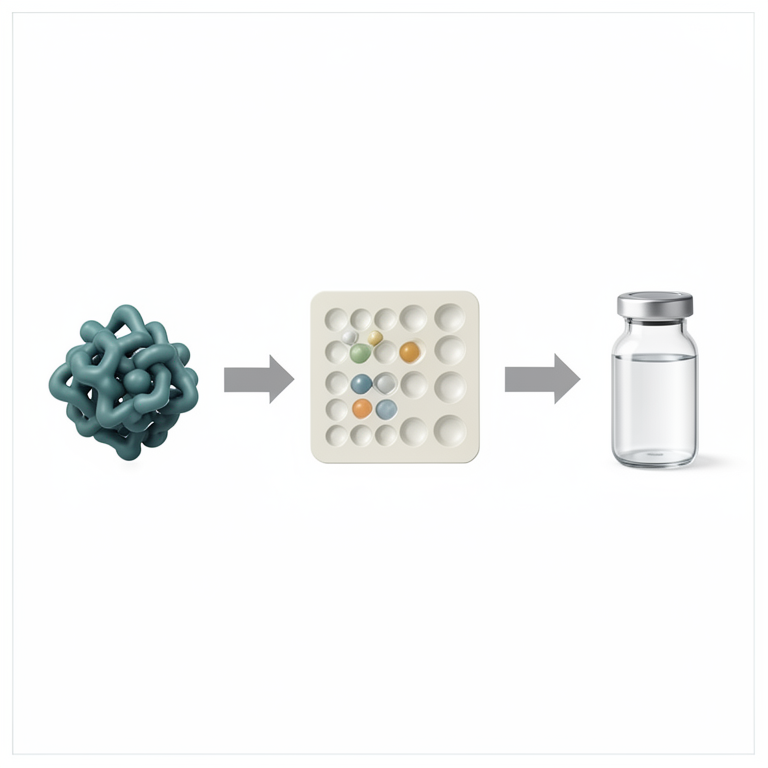
Drug Discovery Pipeline
AI-generated conceptual illustration (pharmaceutical drug molecules and laboratory equipment). It explains the idea and does not show study data.
View source evidence ↗Figures & tables
From the original paper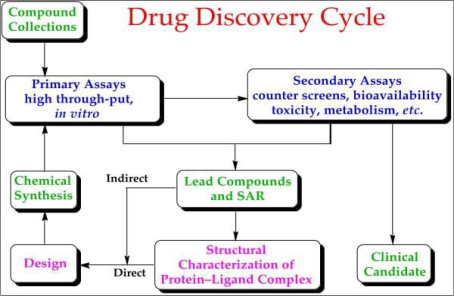 Figure 1
Introduction
Chemistry is science of the composition, structure, properties & reaction of matter, especially of atomic & molecular systems. Chemistry plays an important role in understanding disease and their remedies, i.e. Drugs. The medicines or drugs that we taken for the treatment of the various ailments are chemical, either Organic or Inorganic. However, most drugs are organic molecules. Let's take aspirin as an example. It is drug which is most popular and widely used as analgesic drug because of its structure is simple and cost is also low. Chemical name of aspirin is acetyl salicylic acid, as an organic molecule. All the drugs are chemicals, and pharmacy is mainly about the study of various aspects of the drug, including manufacture, storage, action & toxicities, manufacture & managements, chemistry still plays vital role in pharmacy education. However, the use of chemistry is become at another level. The chemistry study for pharmacy student and other are completely different but though the basics of chemistry used in both studies as a basics as well as different fundamentals study. The halogen also appear in many lifesavings drugs. The recently discovered antiviral compounds, such as fialuridine (which contain both F & I, as well as N & O) are essential for the fight against HIV and AIDS. The world's selling medicine in 1998 was omeprazole, an antiulcer drug from Astra. It prevents excess acid in stomach & allows the body to heal ulcers. It contains pyridine ring and Benz imidazole ring, two aromatic heterocycles. The drug in news in 1999 was Viagra Pfizer's cure for male impotence. In the first three months after its release in 1998, 2.9 million prescription were issued for Viagra. It contain a simple benzene ring & more complex heterocyclic system, which can divided into two aromatic heterocyclic rings. The chemistry play's important role for the understanding structure and reactivity of the drugs. Nowadays, Research and Development Department (R&D) of many laboratories are working for synthesis of new medicine/drugs. They improved their quality and values, decrease the production cost. Medicinal chemistry studies & pharmaceutical chemistry studies are disciplines at the intersection of branch of chemistry, especially synthetic organic chemistry and pharmacology and various other biological specialities where they are involved with design, chemical synthesis studies and development studies for pharmaceutical agents or bio-active molecules (drugs). Compounds used as medicine are most organic compounds such divided as atorvastatin, fluticasone, clopidoqrel etc. Inorganic & organo-metallic compounds are also useful as drugs lithium & platinum -based agents such as lithium carbonate, cisplatin as well as qaullium. This chemistry has contributed In so many life processes and to the efforts regarding to advance the quality of life as well as to the development of society from synthetic, medicinal, biopharmaceutical and industrial point of view [1, 2, 4, 5, 6, 8] . Drug discovery is the process which aims at identifying the compound useful is the curing & treating disease. In this process involves the identification of candidates, synthesis, validation, optimization, characterization, screening and assays for therapeutic efficacy [5,9,10] .
Drug Discovery
Drug Discovery
Stages of drug discovery
Stages of drug discovery
Lead compound Identification
The identification of lead is the process of identifying & creating a compound that interact with the target. The drugs are tested how it metabolized and how it affects various complete functions.
Lead Optimization
After an identification they need to be optimized for the safety & efficiency. It is process in which drug designed after initial lead compound is identified. NMR & Mass spectrometry is helpful in discovery & optimization of lead molecules.
Product Characterization
Any new drug molecules show the promising therapeutic action. Therefore molecule is characterized by its shape, size, strength, weakness, toxicity, use & biological activity.
Formulation & Development
The physicochemical property of an active pharmaceutical ingredient (API) are characterized to produce the stable, bioavailable and optimal dosage from for a specific administration route.
Preclinical Research
This stage involves the evaluation of the drugs safety and efficacy in animal species. The preclinical trial also have to acquire approval by corresponding regulatory authorities. Specially, side effects of the drugs need to be monitored and addressed in this stage.
Investigation of New
Investigation of New
New drug application
The new drug application express full story of drug & purpose to verify the drug is safe and effective for it's proposed use in the people studied.
Drug design
1. Identify structure activity relationship 2. Identify the pharmacophore 3. Improve target interaction ( Pharmacodynamics) 4. Improve pharmacokinetic property.
Identify structure activity relationship
The physiological action of molecule and it's function and chemical constituents. This observation in the basis of SAR studies. SAR includes interpretation of Drug and structure features of Drug molecule.
Identify the pharmacophore
Identify the pharmacophore
Conclusion
Regarding to this Review article I am happy to conclude that this review paper is going to be one of most important topic in future related to drug discovery and development of new drug.For new scientists and researchers this paper will be very useful for further research studies.
Figures and tables from the paper
References
10 in the original paper- Sarkar SD, Nahar L. Chemistry for pharmacy students general organic and natural product chemistry. 2 nd ed, 2007.
- Prajapati P. Role of organic, medicinal and pharmaceutical chemistry in drug design:Introduction.Journal of Nano medicine Research,2018:7(2):70-71.
- Deore AB, Dhumane JR, Wagh HV, Sonawane RB. The stages of drug Discovery and development Process. Asian journal of pharmaceutical research and development,2019:7(6):62-67.
- Game R, Konde P, Shinde A, Urhe M. Role of all type chemistry in drug Discovery and drug design: A review. World journal of pharmaceutical Research,2021:10(4):18891897.
- Cloyden J, Greeves N, Wareen S. Organic chemistry, 2 nd ed. Oxford university press, 2001.
- Thomas G. Medicinal chemistry, 2nd ed. University of Portsmouth, 2007.
- Baudrit O, Baltodono E, Jimenez L. Review of the fraction of medicines available in solid formulation (tablets). World Journal of pharmaceutical research,2016:5(8):91-107.
- Jayprabha RD, Hrushikesh VW, Rushikesh BS. The stages of drug discovery and development process. Asian journal of pharmaceutical research and development,2019:7(6):62-67.
- Prashansa A. Drug discovery and development: An Insight into pharmacovigilance. Journal of pharmacovigilance,2014:2(3):1-2.
- Ferreira LG, Andricopulo A D. Molecular docking and structure based Drug Design Molecules,2015:20:1338413421.
Cited by 5
From OpenAlex, OpenCitations and reference lists read by Scinovex
- Review on role of urea and thiourea derivatives of some heterocyclic Scaffold in drug design and medicinal chemistry ↗
K. N. Shivakumara, B. Sridhar · International Journal of Chemical Research and Development · 2021
Compounds comprising urea and thiourea are progressively more used in drug design and medicinal chemistry to facilitate key drug-target communications and fine-tune crucial drug-like properties. Urea and thiourea represent privileged structures in medicinal chemistry. Certainly, these scaffolds encompass a common structure of a array of drugs and bioactive compounds artistic with a expansive range of beneficial and pharmacological properties. Herein,
❝ 4Found by Scinovex - Bombyx mori Cocoon (Abresham): A potent Unani drug ↗
Reesha Ahmed, Mohd. Wasim Ahmed, RP Meena, Asma Sattar Khan, Shoeb Ahmed Ansari · International Journal of Unani and Integrative Medicine · 2022
Silkworm (Bombyx mori) is a highly domesticated and economically important insect which is the primary producer of silk. Apart from silk production by Bombyx mori had a lot of applications in biological and scientific research. The silk cocoon in Unani medicine is popularly known as Abresham Muqriz (muqriz mean’s cut). It is one of the most common animal origin drug…
- In silico evaluation of caffeic acid from coconut (Cocos nucifera L.) husks as a potential inhibitor of the human factor Xa ↗
Roxanne Mae G Aguinaldo, Sophia Marie J Castillo, Jaizer K Emlan, Aubrey Claire G Gomez, Angelica Bernadette C Crisostomo, Ruel Valerio de Grano · Journal of Pharmacognosy and Phytochemistry · 2022
Selectively inhibiting the FXa has a broad therapeutic window as an anticoagulant target because of its starting position of the common pathway of the coagulation cascade which effectively blocks the coagulation. This study investigated the inhibiting capabilities of caffeic acid present in C. nucifera L. husks on the FXa and explored its ADMET profile using bioinformatic predicting tools. The caffeic
- Recent regulation, challenges in regulatory requirement and approval procedure of biological in India, US and Europe ↗
Nitish Kumar · International Journal of Pharmacognosy and Pharmaceutical Research · 2023
The current constraints on Regulatory Affairs show that various nations have distinct regulatory requirements that must be met to receive approval for new pharmaceuticals via the Marketing Authorization Application (MAA). Each nation has its own regulatory body that is responsible for enforcing existing laws and formulating new ones to manage the pharmaceutical industry. The regulatory body is responsible for enforcing
- Catharanthus roseus L. (Periwinkle): An herb with impressive health benefits and pharmacological therapeutic effects
Mahesh Gawade, Manisha Zaware, Chaitanya Gaikwad, Rutik Kumbhar, Tushar Chavan · International Journal of Agriculture and Nutrition · 2022
Medicinal plants, which contain a variety of phytochemicals, have proven to be effective and safe alternatives to synthetic drugs for the treatment of infectious and chronic diseases. Catharanthus roseus L. It increases amounts of interest due to the discovery that it contains a variety of phytochemicals with a range of biological functions, including as an anti-inflammatory, anti-cancer, anti-bacterial, anti-fungal, and antidiabetic quality. Vinblastine and vincristin isolated in particular the first plants from this plant that were used as clinically effective anticancer medicines were devel