
Research article · 2022 · Full text
International Journal of Agriculture and NutritionCatharanthus roseus L. (Periwinkle): An herb with impressive health benefits and pharmacological therapeutic effects
Volume 4(2) · Pages 52–57 · DOI: 10.33545/26646064.2022.v4.i2a.81 ↗
Research areasBerberine and alkaloids researchNatural Antidiabetic Agents StudiesPlant-based Medicinal Research
Abstract
Author-writtenMedicinal plants, which contain a variety of phytochemicals, have proven to be effective and safe alternatives to synthetic drugs for the treatment of infectious and chronic diseases. Catharanthus roseus L. It increases amounts of interest due to the discovery that it contains a variety of phytochemicals with a range of biological functions, including as an anti-inflammatory, anti-cancer, anti-bacterial, anti-fungal, and antidiabetic quality. Vinblastine and vincristin isolated in particular the first plants from this plant that were used as clinically effective anticancer medicines were developed from it. Furthermore, the isolated vindoline, vindolidine, vindolicine, and vindolinine from C. roseus leaves were shown to have anti-diabetic properties. These findings imply that the plant still has the potential to be a valuable source of bioactive substances. This article provides a summary of the current health benefits as well as information on the historical and present-day uses of C. roseus in medicine. The bioactive compounds and extracts from this plant have also been investigated for their potential as pharmaceuticals.
Summary
Source-checkedPlain-language reading of the full paper, prepared with AI and checked against the text. Each point links to the authors' own words.
Why it matters
- Medicinal plants are considered safe and effective alternatives to synthetic drugs for treating chronic and infectious diseases due to their phytochemical content. View evidence ↗
- Catharanthus roseus is of significant interest because it contains phytochemicals with anti-cancer, anti-inflammatory, anti-bacterial, anti-fungal, and antidiabetic properties. View evidence ↗
The question
- The objective of this review is to highlight the chemical constituents, health benefits, and pharmacological effects of the plant on human health. View evidence ↗
What they did
- The authors conducted a summary review of the historical and current medicinal uses and health benefits of C. roseus. View evidence ↗
- The review examines the potential of bioactive compounds and plant extracts for pharmaceutical applications. View evidence ↗
What they found
- The plant contains approximately 400 alkaloids, which are identified as the compounds with the highest potential for biological activity. View evidence ↗
- The alkaloid Catharoseumine inhibits the human promyelocytic leukaemia HL-60 cell line with an IC50 of 6.28 µM. View evidence ↗
- Three dimeric indole alkaloids (140,150-didehydrocyclovinblastine, 17-deacetoxycyclovinblastine, and 17-deacetoxyvinamidine) inhibited the human breast cancer cell line MDA-MB-231 with IC50 values between 0.73 and 10.67 µM. View evidence ↗
- Treatment with C. roseus leaf juice resulted in a dose-dependent decrease in blood glucose levels in both healthy and diabetic rabbits. View evidence ↗
- Aqueous extracts from the leaf, stem, and root of C. roseus effectively inhibit acetylcholinesterase (AchE) in vitro, suggesting potential for Alzheimer's treatment. View evidence ↗
- In Wistar rats, extract doses of 200 and 500 mg/kg prevented castor oil-induced diarrhoea and the passage of charcoal powder. View evidence ↗
- An ethanol extract of C. roseus at 100 mg/kg/day in rats increased the rate of wound contraction and shortened the epithelization period compared to controls. View evidence ↗
- An ethanolic extract at 250 mg/ml showed significant anthelminthic activity against Pherithema posthuma, compared to a standard medication at 50 mg/ml which had a death time of 40.67 min. View evidence ↗
What it means
- The authors conclude that C. roseus is a highly versatile herb with value as an ornamental plant, a biotechnology model, and a source of global anticancer medications. View evidence ↗
Visual summary
1 visualsIllustrations explain the paper; they do not show study data.
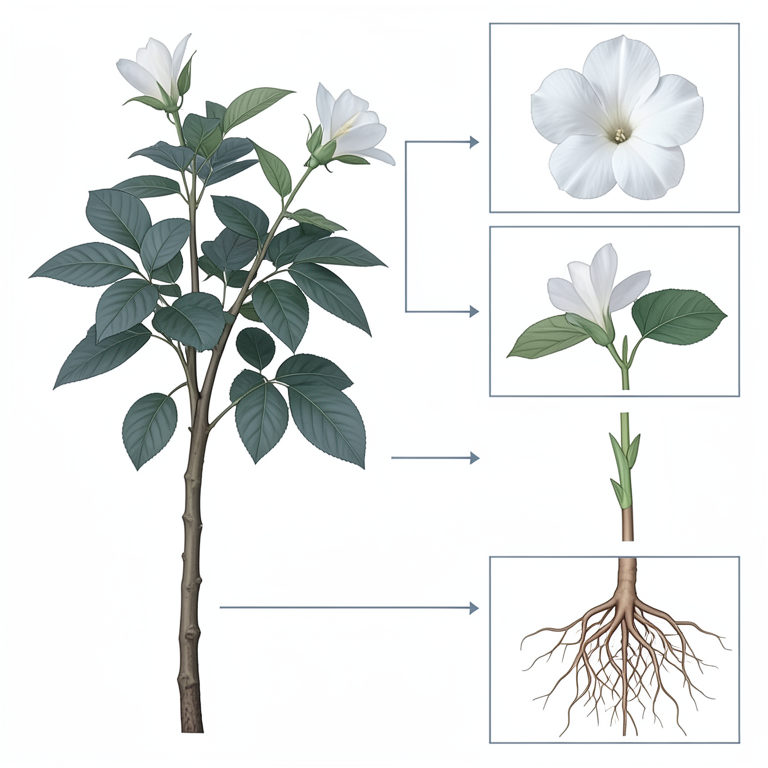
Phytochemical Distribution
AI-generated conceptual illustration (Catharanthus roseus plant). It explains the idea and does not show study data.
View source evidence ↗Figures & tables
From the original paper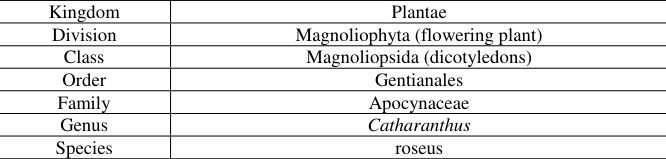 Table 1
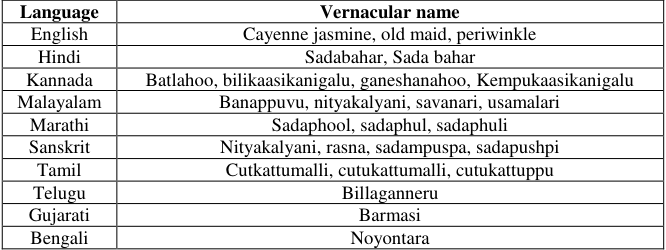 Table 2
 Table 3
Introduction
Catharanthus roseus in India commonly known as "Nayantara" or "sadabahar".Catharanthus word originated from Greek which means "pure blossom" and roseus means red [1] .
Catharanthus roseus Linn is the best herbal medicinal plant which highly contains various important phytochemical substances like flavonoids, steroids, tannins, phenolic compounds, alkaloids, carbohydrates, quinones, terpenoids, saponins and etc. [2] It belongs to the family Apocynaceae. This plant mostly found in tropical and sub-tropical southern Asian countries and spread over the hills, plains and mountains of northern and southern India. It contains more than 70 indole alkaloids which plays beneficial medicinal role in ayurveda. The national cancer council of Malaysia has a logo of periwinkle [3,4] . While using Catharanthus roseus drugs there are several side effects are also been seen like hair loss, peripheral neuropathy, constipation, hyponatremia, etc. [5] The plant contains vincristine (Vinca alkaloid) which has very important role in chemotherapy of cancer. The leaf juice of Catharanthus roseus reduced the level of blood glucose which is positive point for diabetic treatment [6] . The phytochemicals of Catharanthus roseus are classified into two groups which are primary metabolites & secondary metabolites. The primary metabolites are obtained during growth phase and secondary metabolites are obtained from primary metabolites but they not directly involved in the life process of plant. Primary metabolites present in Catharanthus roseus are purines, pyrimidines, amino acids and carbohydrates. Secondary metabolites are alkaloids, flavonoids, saponins, steroids, phenols, glycosides and etc. [7] In the clinical trials and experimental animals Catharanthus roseus has various potential pharmacological uses in modern medicines for anticancer, antidiabetic, antimicrobial, antioxidant, anti-diarrheal, anthelminthic, hypotensive, wound healing, hypolipidemic, Alzheimer disease, antiallergic jand cardioprotective effects [8] . The goal of this composition evaluation is to highlight the important chemical constituents, health advantages, and various pharmacological effects of fenugreek on mortal health.
Traditional uses
In various different countries Catharanthus roseus has been used as traditional medicine. The homed remedy of dried leaf of plant boiled with water then that extract administered orally to treat the diabetes in northern India. This plant also been used in many therapies for cancer treatment patients in Kenya. [11] people of Kancheepuram in Tamil Nādu India, prepare powder of whole plant and combined with cow's milk and administered orally to cure diabetes. [12] The dried root of Catharanthus roseus helps to prevent urogenital infections in Venda region of southern Africa. In some region of Africa roots of this plant used for treatment of gonorrhoea. People of Zimbabwe used Catharanthus roseus for stomach ache infection [13] [14] .
Part Used Disease Preparation Mode of Administration Country References
Part Used Disease Preparation Mode of Administration Country References
Whole plant, leaf Diabetes
The whole plant is powdered and mixed with cow's milk.
Oral intake
Kancheepuram district of Tamil Nadu, India [12] Leaf Diabetes mellitus The dried leaf is decocted Oral intake Northern Europe [15] Leaf of purple or white flowered varieties
Diabetes, hypertension and cancer
Eighteen leaves are boiled in a kettle of water. The cool solution is drunk daily Oral intake Cook Island [11] Whole plant Throat, stomach, oesophageal cancer
The whole plant is boiled with water Pound Oral intake. Usually taken together with Sesbania sesban whole plant Applied topically Kenya [11] Root Gonorrhoea The root is boiled for 20 min. Oral intake Limpopo Province, South Africa [13] Root Stomach Crushed roots are mixed with a cup of water Oral intake Mutirikwi area of Zimbabwe [14] Root Urogenital infections
The root is air dried, ground and decocted. Oral intake Venda region, South Africa [13] Whole plant
Diabetes, hypertension, dysentery, cancer
The whole plant is boiled with water.
Oral intake Vietnam
Oral intake Vietnam
Botanical description
Catharanthus roseus is an evergreen plant which grows about 32 to 80cm in height. The flowers are appear naturally in pale pink colour. Stems are usually green often permeate with red or purple. Leaves: leaves are oval in shaped to oblong, 3 to 10 cm long and 1 to 4 cm in width. They are arranged in opposite pair. Flowerlength of flower approx. 4 to 5 cm, white or pink with red, purple or pale yellow centre follicle 1.3-3.5x0.2-0.4cm opens to the axial side.
Microscopic and powder characteristics
Leaves is dorsiventral. The walls of the top and lower epidermal cells are sinuous, sinous, or somewhat curled. On the lower surface, there are ranunculaceous stomata. trichromes single cell unbranched, uniseriate, nonglandular, and septate [17] . The size and form of the lower epidermal cells are largely similar to those of the upper ones. The spongy arenchymatous cells are situated between the palisade cells and the lower epidermal cells. cells. It displays patches of lower epidermis with sinuous anticlinal walls and the same types of stomata, as well as portions of
International Journal of Agriculture and Nutrition https://www.agriculturejournal.net/ upper epidermis in surface view with straight anticlinal walls and anomocytic and anisocytic stomata [18] .
Chemical constituents
Numerous phytocompounds of pharmacological significance, including carbohydrates, flavonoids, tannins, saponins, glycosides, terpenes, proteins, phenols, and alkaloids, are present in Catharanthus roseus [19] . The plant includes 400 or so alkaloids, which are the chemical compounds of the plant that have the greatest potential for activity and are utilised in pharmaceutical processes, flavour and fragrance, ingredients, food additives, insecticides, and agrochemicals. These plants synthesise more than 100 monoterpenoid indole alkaloids (TIA) in various organs. Vinesine, vindeline tabersonine, vinblastine, vincristine, and actineoplastidemeric are just a few of the alkaloids found in the plant's aerial parts. In contrast, the plant's basal or root parts contain raubasin, reserpine, catharanthine, vinceine, vineamine, and ajmalicine. [20] . Alkaloids and sugars are abundant in leaves. The plant's flowers, which were high in tannins, triterpenoids, and alkaloids, are what give diabetic wounds the ability to heal. [21] Rosinidin, an anthocyanidin pigment, is present in C. roseus flowers. Many pharmacological research have found that terpenes or terpenoids indole alkaloids are potent anti-cancer, antiinflammatory, anti-bacterial, anti-protozal, and anti-malarial medicines [52] . Vinblastin is mainly used for treatment of Hodgkin's disease, lymphocytic lymphoma, histiocytic lymphoma, advanced testicular cancer, advanced breast cancer, Kaposi's sarcoma.
Table 3: Plant parts used for extraction of Alkaloids [23] Plant
| Plant part | Name of alkaloid present |
|---|---|
| flower | Catharanthine, Vindoline, Leurosine, Lochnerine, Tricin |
| stem | Leurosine, Lochnerine, Catharanthine, Vindoline |
| leaf | Catharanthine,Vindoline,Vindolidine,Vindolicine,Vindolinine,ibogaine, yohimbine, raubasine, Vinblastine, Vincristine, |
| root | Ajmalacine, Serpentine, Catharanthine,Vindoline, Leurosine, Lochnerine,Reserpine, Alstonine, Tabersonine, Horhammericine, Lochnericine, echitovenine |
Table text extracted from the original PDF; superscript letters are shown inline. The original table image is below.
View original table image
Anti-cancer property
Catharanthus roseus ' stem and leaves are the source of the anticancer alkaloids vinblastine and vincristine. [24] In an in vitro study, various concentrations of Catharanthus' methanolic crude extracts were reported to have potent anticancer effects against a wide range of cell types. [25] It has been discovered that a variety of additional indole alkaloids isolated from C. roseus has strong cytotoxic action against different cancer cell lines. Catharoseumine, a newly discovered monoterpenoid indole alkaloid, was discovered to have an inhibitory effect on the human promyelocytic leukaemia HL-60 cell line with an IC50 of 6.28 µM. [26] In addition, five previously identified compounds (vinamidine, leurosine, catharine, cycloleurosine, and leurosidine) and three newly discovered dimeric indole alkaloids, including 140,150-didehydrocyclovinblastine, 17deacetoxycyclovinblastine, and 17-deacetoxyvinamidine, all exhibited in vitro inhibition of cell viability against the human breast cancer cell line MDA-MB -231 with an IC50 range of 0.73-10.67 µM. [27] As a treatment for acute and chronic leukaemia, vinblastine sulphate has been used to treat Hodgkin's disease, lymphosarcoma, choriocarcinoma, neuroblastoma, carcinoma of the breast and lungs, as well as other organs. Using vincristine sulphate, an oxidised version of vinblastine. [28] treatment for acute leukaemia in children, lymphocytic leukaemia, Hodgkin's disease, Wilkins' tumour, neuroblastoma, and reticulum cell sarcoma that effectively stops mitosis in the metaphase [29] .
Anti-diabetic property
In many parts of the world, C. roseus has a long history of usage in the treatment of diabetes. Both healthy and diabetic rabbits' blood glucose levels were observed to decrease in a dose-dependent manner after being treated with C. roseus leaf juice. [30] The dichloromethane extract of Catharanthus leaves included all four of the alkaloids vindoline, vindolidine, vindolicine, and vindolinine. All four alkaloids significantly increased glucose absorption in pancreatic -TC6 or myoblast C2C12 cells, with vindolicine having the highest activity. Furthermore, the substances vindolidine, vindolicine, and vindolinine showed effective protein tyrosine phosphatase-1B (PTP-1B) inhibitory activity, suggesting their therapeutic potential against type 2 diabetes. [31] vindoline, vindolidine, vindolicine, and vindolinine derived from C. roseus (L.) G. Don leaves have been shown to have hypoglycemic and antidiabetic properties. According to these experts, these substances increased glucose absorption in pancreatic or Vindolicine, the substance that had the highest activity in myoblast cells, Aside from that Vindolidine, Vindolicine, and Vindolinine demonstrated a significant level of protein tyrosine inhibitory action. These substances have phosphatase-1B inhibiting action, suggesting they may be used to treat diabetes. Additionally, vindolicine had the strongest antioxidant properties in both the oxygen radical absorption capability and 1,1-diphenyl-2-picrylhydrazyl assays revealed that this substance also lessened the oxidative damage that H2O2-induced in pancreatic cells. Vindolicine may therefore be used as an antidiabetic in the future [32] .
Potential Use as Anti-Alzheimer's Disease Agents
50-60% of persons with dementia have Alzheimer's disease (AD), a neurodegenerative condition of the central nervous system. In the later stages of life, it is characterised by severe memory loss, emotional instability, and personality changes. [33] According to theories, AD primarily affects cholinergic neurons in the neocortex and hippocampus, resulting in the cholinergic. Acetylcholinesterase (AchE), an enzyme that breaks down acetylcholine in the synaptic cleft, is inhibited as part of the current effective AD treatment to raise acetylcholine (Ach) levels. [34] In an in vitro microassay, the leaf, stem, and root of C. roseus' aqueous extract were found to be highly effective at inhibiting AchE. The aqueous extract of the leaf, stem, and root of C. roseus was found to be very effective at inhibiting AchE in an in vitro micro assay. Vinpocetine when subjected to a welltolerated dose up to 60 mg/d in clinical trials of dementia and stroke proved no significant adverse events [35] .
Wound healing activity
The Catharanthus flower extract in rats showed antibacterial and wound healing properties. Rats' wound-healing activity was assessed. Rats were used to test the ethanol extract of C. roseus at 100 mg/kg/day for its ability to heal wounds. In comparison to controls, a high rate of wound contraction was seen together with a notable shortening of the epithelization period, a pronounced rise in dry weight, and a considerable increase in the hydroxyproline content of the granulation tissue. Evidence for the use of C. roseus in the management of wound healing includes wound contraction, enhanced tensile strength, and hydroxyproline content. [36] 6.5 Microbial activity A significant medicinal plant is Catharanthus roseus .plant for innovative drugs because the majority of the infections caused by bacteria are evolving opposition to many of the currently obtainable antibacterial medications. Phytes have natural resources that were useful for providing powerful chemotherapeutic drugs a wide range of activity. [37] The clinical significance of the antibacterial activity of crude extracts from various Catharanthus roseus sections against various bacterial species. Each plant part is extracted using the proper solvent, and then its antibacterial activity is tested using an agar well diffusion assay on a total of six bacterial stains. Additionally, the minimal inhibitory concentration(s) for active crude extracts were assessed. Data showed that the microorganism examined, the extraction method, the plant part utilised for extraction, the state of the plant part (fresh or dried), and the solvent used for extraction all have a significant impact on the pattern of inhibition. [38] The antimicrobial activity of the plant's leaf extracts was tested against microorganisms like Staphylococcus aureus NCIM 5021, Salmonella typhimurium NCIM 2501, and Pseudomonas aeruginosa NCIM 2036, and it was discovered that the extract could be used as a prophylactic agent in the treatment of many diseases. [39]
Anti-oxidant property
The antioxidant capacity of the two types of Catharanthus roseus L., 'rosea' (pink flowers) and 'alba' (white flowers), roots was discovered.by utilising several test methods, such as hydroxyl radical scavenging activity, the capacity to scavenge superoxide radicals, Nitric oxide radical scavenging activity and DPPH radical inhibition strategy. [40] In ORAC and DPPH experiments, the plant's vindolicine had the strongest antioxidant capacity. At concentrations of 12.5 µg/mL and 25.0 µg/mL, it also reduced H2O2-induced oxidative damage in -TC6 cells. [41] Additionally, it was shown that isolated alkaloids from C. roseus, such as vindoline, vindolidine, vindolicine, and vindolinine, have antioxidant characteristics. [42] 6.7 Hypotensive activity Significant changes were made to the hypotensive properties of an extract produced from C. roseus plant leaves. The leaf extracts (hydroalcoholic or dichloromethane-methanol) have been shown to have extraordinary antihyperglycemic and hypotensive effects in lab animals. [43] In a crossover approach, the hypotensive effects of Catharanthus roseus leaf extract were examined in rats with adrenaline-induced hypertension (AIHR) and compared to those of atenolol. Animals treated with a leaf extract from Catharanthus roseus had hypotensive effects. Atenolol also demonstrated hypotensive effects. [44]
Anti-diarrheal activity
The extracts considerably decreased the amount and weight of wet faecal pellets, and Wistar rats in the extract-treated groups had diarrhoea that was less severe than that in the control rats. Additional extract doses of 200 and 500 mg/kg prevented diarrhoea brought on by castor oil as well as prevented the gastrointestinal passage of charcoal powder. This information supports the conventional use of C. roseus for the management and treatment of diarrhoea. [45] Castor oil was used as an experimental diarrhoea-inducing agent along with the pre-treatment of the extract in order to assess the plant's ethanolic leaf extracts' antidiarrheal properties in wistar rats. ethanolic extracts' ability to prevent diarrhoea Castor oil-induced diarrhoea was inhibited by C. roseus in a dose-dependent manner. [46] 6.9 Antiulcer property The plant's vincamine and vindoline alkaloids demonstrated anti-ulcer properties. Test animals with ulcers have shown the C. roseus plant's leaves to have anti-ulcer properties. Vincamine is well known for its neuroprotective and cerebro-vasodilatory effects [47] .
10Anthelminthic activity
Chronic diseases are brought on by helminths infections in both humans and livestock. Pherithema posthuma was used as an experimental model and piperazine citrate as the standard reference in the evaluation of C. roseus's anthelminthic properties. The conventional medication at 50 mg/ml was shown to have a death time of 40.67 min, but significant anthelminthic activity was seen in the ethanolic extract at a concentration of 250 mg/ml. This study supports ethnomedical assertions that C. roseus is an anthelminthic herb. [48] It has been determined that the Catharanthus roseus extract in water, methanol, ethyl acetate, and ethanol exhibited anthelmintic action. [49] 6.11 Bio pesticidal property The biological efficacy of solvent extracts of Catharanthus roseus against gramme pod borer Helicoverpa armigera larvae was assessed. C. roseus leaf extract fractions in ethyl acetate were discovered to be an effective biopesticide. Deshmukhe et al. (2010) have reported that Catharanthus roseus has insecticidal effects. [50] 7. Conclusions Today, there is a rising global demand for natural goods and plant-based medications. Catharanthus roseus is a wonderful herb because of the variety of uses it has. It ranks highly as a popular ornamental plant in the horticultural sector and as a model plant for studies in phytopathology and biotechnology, in addition to its natural supply of anticancer chemicals for medication on the global market. Alkaloids and phenolic compounds found in C. roseus have a variety of biological effects, including anticancer, antidiabetic, antioxidant, antibacterial, and antihypertensive actions. Although many unknown chemicals have been found in this substance, many alkaloids and phenolics have been recognised. As a result, efforts should be made to continue finding and isolating novel phytochemicals within C. roseus' various structural elements. Further research is
Figures and tables from the paper
| Kingdom | Plantae |
|---|---|
| Division | Magnoliophyta (flowering plant) |
| Class | Magnoliopsida (dicotyledons) |
| Order | Gentianales |
| Family | Apocynaceae |
| Genus | Catharanthus |
| Species | roseus |
Table text extracted from the original PDF; superscript letters are shown inline. The original table image is below.
View original table image
| Language | Vernacular name |
|---|---|
| English | Cayenne jasmine, old maid, periwinkle |
| Hindi | Sadabahar, Sada bahar |
| Kannada | Batlahoo, bilikaasikanigalu, ganeshanahoo, Kempukaasikanigalu |
| Malayalam | Banappuvu, nityakalyani, savanari, usamalari |
| Marathi | Sadaphool, sadaphul, sadaphuli |
| Sanskrit | Nityakalyani, rasna, sadampuspa, sadapushpi |
| Tamil | Cutkattumalli, cutukattumalli, cutukattuppu |
| Telugu | Billaganneru |
| Gujarati | Barmasi |
| Bengali | Noyontara |
Table text extracted from the original PDF; superscript letters are shown inline. The original table image is below.
View original table image
References
45 in the original paper- Balaji DH. Therapeutic effects of vinca rosea Linn., international journal of pharmaceutical science and healthcare, 2014, pp. 59-76,.
- Kabesh S. phytochemical analysis of Catharanthus roseus plant extract and its antimicrobial activity, indian journal of pure & applied bioscience, pp. 162172, 2015.
- Erdogrul. Antibacterial activities of some plant extract used in folk medicine, pharmaceutical biology, 2002, p. 269-273.
- Bennouna CMJ. A New Microtule Inhibitor Agent, Clinical Cancer Research, 2008, p. 1652-32.
- Ah B. Antiproliterative Activity of Vietnamese Medicinal Plants, Biological Pharmaceutical Bulletin, 2002, p. 753-60.
- Parameswari P. Anti-Microbial Activity of Plant Extracts Of Catharanthus roseus, International Journal Of Pharmacy And Technology, 2015.
- Philosia AADR. Phytochemical Composition And Ovicidal Efficacy of Catharanthus roseus Leaf Extract Against The Mosquito Culex Quinquefasciatus (Diptera: Culicidae), Journal Of Entomology And Zoology Studies, 2017, p. 44-49.
- Paarakh MP. Catharanthus roseus Linn, Acta Scientific Pharmaceutical Sciences, 2019, p. 19-24.
- Nr F. The Pharmacognosy Of Periwinkles: Vinca And Catharanthus, Lloydia, 1961, p. 1025-138.
- MSPMSPNS, Aruna N. "Catharanthus roseus: Ornamental Plant Is Now Medicinal Boutique," Journal Of Drug Delivery & Therapeutics, 2015, Pp. 1-4.
- Holdsworth D. Traditional Medicinal Plants Of Rarotonga, Cook Islands Part I, Int. J Crude Drug Res., 1990, p. 209-218.
- Muthu C, Ayyanar M, Raja N, Ignacimuthu. Medicinal Plants Used By Traditional Healers In Kancheepuram District of Tamil Nadu, India. J Ethnobiol. Ethnomed, No. 2, 2006, P. 43.
- Fernandes L, Van Rensburg C, Hoosen A, Steenkamp. In vitro Activity of Medicinal Plants of The Venda Region, South Africa, Against Trichomonas Vaginalis. S. Afr. J. Epidemiol. Infect. No. 23, 2008, p. 26-28.
- Chigora P, Masocha R, Mutenheri F. The Role of Indigenous Medicinal Knowledge (Imk) In The Treatment of Ailments In Rural Zimbabwe: The Case of Mutirikwi Communal Lands. J. Sustain. Dev. Afr. No. 9, 2007, p. 26-43.
- Swanston-Flatt S, Day C, Flatt P, Gould B, Bailey C. Glycaemic Effects of Traditional Europian Plants Treatments For Diabetes. Studies In Normal and Streptozotocin Diabetic Mice, Diabetes Res., No. 10, 1989, p. 69-73.
- Vo V. Dictionary Of Vietnamese Medicinal Plants, Medical Publishing House, Ha Noi, Am. J Plant Sci. No. 4, 2012, p. 210-215.
- NN. Vinca Alkaloids Xi-Structure of Leurocristine, Journal Of The American Chemical Society, 1960, p. 1509-1510.
- Tamizhazhagan VPKS. Preliminary Screening of Phytochemical Evaluation Selected Plant Of Pisonia Alba, International Journal Of Biological Research, 2017, p. 63-66.
- Jacobs DISWH. "The Catharanthus Alkaloids: Pharmacognosy And Biotechnology," Current Medicinal Chemistry, 2004, Pp. 607-628.
- Shaikh T. Role of chemistry in drug discovery and drug design. Int. J Adv. Chem. Res. 2021;3(1):16-18. DOI: 10.33545/26646781.2021.v3.i1a.30
- An Overview of Catharanthus roseus And Medicinal Properties of Their Metabolites Against Important Diseases, European Academic Research, 2017, p. 12371247.
- Ah B. Antiproliferative Activity of Vietnamese Medicinal Plants, Biological Pharmaceutical Bulletin, 2002, p. 753-60.
- Ueda JY TBA. Antiproliferative Activity of Vietnamese Medicinal Plants, Biological Pharmaceutical Bulletin, 2002, p. 753-60.
- Wang L, He H-P, Di Y-T, Zhang Y, Hao X-J. Catharoseumine, A New Monoterpenoid Indole Alkaloid Possessing A Peroxy Bridge From Catharanthus roseus, Tetrahedron Lett. 2012, p. 15761578.
- Wang CH, Wang GC, Wang Y, Zhang. Cytotoxic Dimeric Indole Alkaloids From Catharanthus roseus, Fitoterapia, 2012, p. 765-69.
- Almagro L, Fernández-Pérez F, Pedreño M. Indole Alkaloids From Catharanthus roseus: Bioproduction And Their Effect On Human Health, Molecules. 2015;20:2973-3000.
- Aslam J, Khan S, Siddiqui Z, Fatima Z, Maqsood. Catharanthus roseus (L.) G. Don. An Important Drug: It's Applications And Production, Pharm. Glob. (Ijcp), 2010;4:1-16.
- Nammi S, Boini M, Lodagala S, Behara. The Juice Of Fresh Leaves Of Catharanthus roseus Linn Reduces Blood Glucose In Normal And Alloxan Diabetic Rabbits, Bmc Complementary Medicine And Therapies, 2003, p. 3-4.
- LCHHAAPM. Tiong SH. Antidiabetic And Antioxidant Properties Of Alkaloids From Catharanthus roseus, Molecules, No. 18, 2013, Pp. 9770-9784.
- Ghosh S, Suryawanshi S. Effect Of Vinca rosea Extracts In Treatment Of Alloxan Diabetes In Male Albino Rats, Indian J. Exp. Biol., 2001, p. 748-759.
- Yoo KY, Park SY. Terpenoids As Potential AntiAlzheimer's Disease Therapeutics, Molecules, 2012, p. 3524-3538.
- Greenblatt H, Guillou C, Guénard D, Argaman A, Botti S, Badet B, et al. The Complex of A Bivalent Derivative of Galanthamine With Torpedo International Journal of Agriculture and Nutrition https://www.agriculturejournal.net/ Acetylcholinesterase Displays Drastic Deformation Of The Active-Site Gorge: Implications For StructureBased Drug Design, J Am. Chem. Soc., 2004, p. 1540515411.
- Kumar S, Singh A, Kumar B, Singh B, Bahadur L. Simultaneous Quantitative Determination Of Bioactive Terpene Indole Alkaloids In Ethanolic Extracts of Catharanthus roseus (L.) G. Don By Ultra High Performance Liquid Chromatography-Tandem Mass Spectrometry," J. Pharm. Biomed. Anal. 2012, p. 32-41.
- Bs N. Evaluation Of Wound-Healing Potential of Catharanthus roseus Leaf Extract In Rats". Fitoterapia, 2007, p. 540-544.
- Ghosh PJPAJS. British Journal of Pharmacology and Toxicology, 2010, p. 40-44.
- Prajakta GJJP. Antimicrobial Activity Of Catharanthus roseus A Detailed Study, British Journal of Pharmacology And Toxicology, No. 1, p. 40-44, 2010.
- Alba BS, Bhutkar MA. Comparative Studies On Antioxidant Properties Of Catharanthus Rosea And Catharanthus," International Journal Of Pharmaceutical Techniques. 2011;3(3):1551-1556.
- "Screening Phytochemical Content, Antioxidant, Antimicrobial And Cytotoxic Activities Of Catharanthus roseus (L.) G. Don Stem Extract And Its Fractions," Biocatalysis And Agricultural Biotechnology, 2018;16:405-411.
- RMA, Ara N. "Comparison Of Hypotensive And Hypolipidemic Effects Of Catharanthus roseus Leaves Extract With Atenolol On Adrenaline Induced Hypertensive Rats," Pakistan Journal Of Pharmaceutical Science, 2009, p. 267-71.
- Ka H. In Vivo Anti-Diarrheal Activity of The Ethanolic Leaf Extract of Catharanthus roseus Linn. (Apocyanaceae) In Wistar Rats," African Journal of Pharmacy and Pharmacology, 2011, Pp. 1797-1800.
- NVAC, Rajput M. Chauhan. Evaluation of Antidiarrheal Activity of Aerial Parts of Vinca Major In Experimental Animals, Middle-East Journal of Scientific Research, 2011, p. 784-788.
- SV, Sain M. "Catharanthus roseus (An Anticancerous Drug Yielding Plant) -A Review Of Potential Therapeutic Properties," International Journal Of Pure And Applied Bioscience, 2013, Pp. 139-42.
- HAHS, Deshmukhe PV. Bioinsecticidal Potential of Vinca rosea Against The Tobacco Caterpillar, Spodoptera Litura (Fabricius) (Lepidoptera: Noctuidae), Recent Research Science And Technology, 2010, p. 15.
- TDWL, Jordan MA. Effects of Vinblastine, Podophyllotoxin and Nocodazole on Mitotic Spindles Implications For The Role of Microtubule Dynamics In Mitosis, J Cell Sci., 1992, p. 401-16.
- SB, Mahato SS. Advances In Triterpenoid Research, Phytochemistry, 1997, p. 1185-1236.
Cited by 6
From OpenAlex, OpenCitations and reference lists read by Scinovex
- A review on phytochemical constituents and pharmacological properties of Catharanthus roseus (L.) G. Don ↗
Parul Sharma, Nancy Singla, Ramandeep Kaur, Urvashi Bhardwaj · Journal of Medicinal Plants Studies · 2024
Ethnopharmacological relevance: Catharanthus roseus (also called Sadabahar in India), is utilized as a common traditional medicine in India, England, Thailand, Japan and Australia. It was traditionally used to treat wasp string, gonorrhoea, hypertension and menstrual cycle. Various compounds obtained from this plant are utilized for medicinal purposes. It is even commercially formulated for its anticancer properties. Aims: This review aims
- One-Pot synthesis of biologically active bimetallic Ag-Zn Nanoparticles using Madagascar periwinkle (Sadaafuli) plant extract
Nitya P Doshi, Sanket S Shirodkar · International Journal of Advanced Biochemistry Research · 2023
Nanoparticles (NPs) have been widely studied in various fields due to their unique properties and potential applications. Among the various types of nanoparticles, bimetallic nanoparticles have gained significant attention due to their enhanced catalytic activity and stability compared to monometallic nanoparticles. Various physical and chemical methods have been developed for the synthesis of bimetallic nanoparticles. However, these methods have several limitations such as the use of toxic reducing agents, high energy consumption, and the need for multiple steps. Therefore, developing a simpl
- Pharmacological Potential of Catharanthus roseus L.: A Comprehensive Review of Therapeutic Applications and Health Benefits ↗
Mariana López · International Journal of Pharmacology and Pharmaceutical Research · 2025
Catharanthus roseus L. (periwinkle) is a well-documented medicinal plant with remarkable pharmacological potential, ranging from its established anticancer alkaloids to emerging evidence for its role in managing metabolic, cardiovascular, neurological, and microbial disorders. This comprehensive review consolidates findings from preclinical, mechanistic, and translational studies to provide an integrated perspective on its therapeutic applications and health benefits. The background highlights the
- Discovery of concealed gems: Utilizing phytochemicals from unacknowledged plants for cancer treatment ↗
Roshni Ghosh, Sirshendu Chatterjee, Moumita Saha · International Journal of Herbal Medicine · 2024
Cancer is considered a fatal disease across the globe, irrespective of the economic or social condition of any country. Therefore, the search for its effective cure is one of the most crucial tasks for humankind. Even after extensive research, many patients around the world still face the adversities of this incurable malady. According to ancient and modern-day innovations, all curative…
❝ 0PDF - Comparison and evolution of antifungal activity of Catharanthus roseus linn against candida strains ↗
Amandeep Swami, Rajesh Asija, Jaipal Chandora · International Journal of Pharmacology and Clinical Research · 2024
Medicinal plants have long been recognized for their diverse therapeutic potential, offering effective alternatives for managing various infections, including fungal diseases. Herbal remedies have been integral to traditional healthcare systems worldwide, providing valuable solutions for both the prevention and treatment of infections. In the present study, the antifungal activity of Catharanthus roseus Linn. was evaluated, with a specific focus on
- A review on: Extraction of mimosine from Leucaena leucocephala tree and their phytochemical study and pharmacological activity ↗
Vivek Murani · International Journal of Chemical and Biological Sciences · 2023
Mimosine [α-amino-β-(3-hydroxy-4-oxo-1, 4- dihydropyridin-1-yl)-propanoic acid] is toxic element, that found naturally in Leucaena (Leucaena-leucocephala de Wit) tree. Leucaena leucocephala trees are commonly known as White Lead tree. It has been used for medicinal purposes because of possessing multiple pharmacological properties. Studies have shown the presence of various secondary metabolites such as alkaloid, cardiac glycosides, tannins, flavonoids, saponins, and glycosides in
❝ 0Found by Scinovex