
Research article · 2021 · Full text
International Journal of Advanced Chemistry ResearchHydrogen peroxide scavenging capacity and phytochemical analysis of Medicago sativa (Alfalfa) leaves
Volume 3(2) · Pages 34–38 · DOI: 10.33545/26646781.2021.v3.i2a.60 ↗
Research areasMoringa oleifera research and applicationsNatural Antidiabetic Agents StudiesPhytochemicals and Antioxidant Activities
Abstract
Author-writtenThis research work was carried out to evaluate the hydrogen peroxide scavenging capacity and phytochemical analysis of Medicago sativa leaves. The leaves were found to have high antioxidant activities. Medicago sativa extract caused inhibition of hydrogen peroxide which was concentration dependent. From the analysis, it was discovered that at every concentration, the methanol extract of the leaves showed better scavenging capacity than the standard used. The phytochemicals from the leaves of Medicago sativa (Linn.) were extracted with ethanol and subjected to GC/MS analysis. The chromatogram depicted five peaks indicating the presence of five compounds. 1,1-dimethoxy-2-methylpropane (59.781 %), 1,3-dimethyl Benzene (16.688 %), Ethanol, 2-(2-butoxyethoxy) acetate (2.788 %), N-(4-Methylbenzenesulfonyl)-2-methylazetidin-3-one (1.921 %). Brief analysis of the compounds reveals the rich pharmacological potential of this part of the plant and thus justify the use of the Leaves of this plant in the treatment of various diseases
Summary
Source-checkedPlain-language reading of the full paper, prepared with AI and checked against the text. Each point links to the authors' own words.
Why it matters
- Medicago sativa, commonly known as Alfalfa, is a plant from the Leguminosae family used traditionally in various countries to treat a wide range of ailments. View evidence ↗
- Oxidative stress is linked to numerous chronic diseases, including cancer, diabetes, and heart disease, affecting multiple organ systems. View evidence ↗
- Despite its long history of traditional use, many of the medicinal claims regarding Alfalfa have not been scientifically validated. View evidence ↗
The question
- The study aimed to evaluate the phytochemical composition of Medicago sativa leaves and their ability to scavenge hydrogen peroxide. View evidence ↗
What they did
- Alfalfa leaves were prepared by pounding and soaking them in ethanol and methanol for 48 hours before filtration. View evidence ↗
- Hydrogen peroxide scavenging was tested using a 40 Mm solution in phosphate buffer (pH 7.4), with absorbance measured at 560 nm. View evidence ↗
- Phytochemical analysis was performed using a GC-MS Shimadzu QP 2010 with a polymethyl silicon coated column. View evidence ↗
- Experiments were conducted in triplicate, and statistical significance was determined using one-sample t-tests and one-way ANOVA with a p-value < 0.05. View evidence ↗
What they found
- The inhibition of hydrogen peroxide by the methanol extract was concentration-dependent, with a regression coefficient (R²) of 0.8737. View evidence ↗
- At a concentration of 1 mg/ml, the methanol extract showed a scavenging percentage of 68.7%, which was higher than the standard's 67.0%. View evidence ↗
- The methanol extract demonstrated a better scavenging capacity than the ascorbic acid standard, with a lower IC50 value of 0.197 mg/ml compared to 0.211 mg/ml. View evidence ↗
What it means
- The authors conclude that Alfalfa leaves are effective antioxidants and their diverse chemical composition suggests potential for developing new biological agents. View evidence ↗
- The authors state that future work should focus on isolating active constituents using chromatographic techniques and exploring different extraction methods. View evidence ↗
Visual summary
2 visualsIllustrations explain the paper; charts are replotted from the paper's own table values.
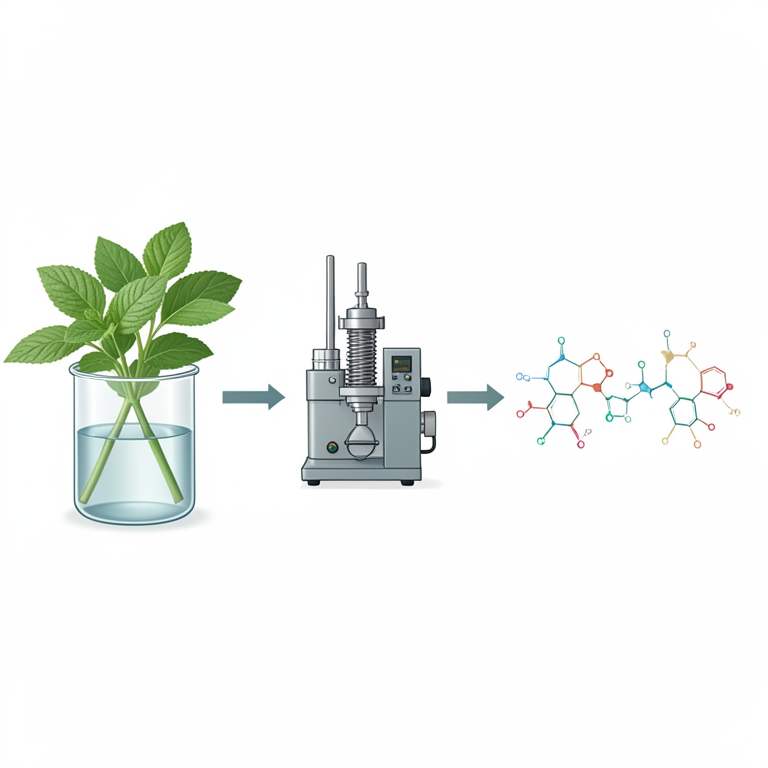
Phytochemical Analysis Workflow
AI-generated conceptual illustration (Medicago sativa (Alfalfa) leaves). It explains the idea and does not show study data.
View source evidence ↗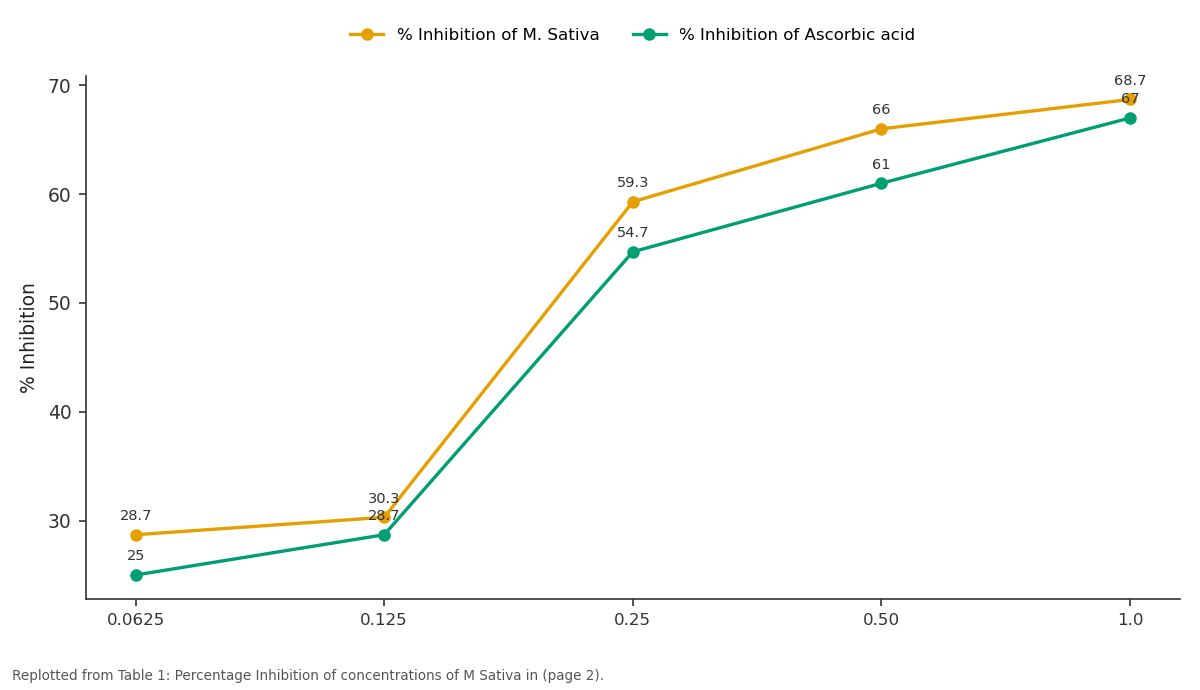
% Inhibition of M. Sativa and % Inhibition of Ascorbic acid: 0.0625 vs 0.125 vs 0.25 vs 0.50 vs 1.0
Replotted from Table 1 (page 2) of the original paper. Every bar is the paper's own table value.
View source evidence ↗Figures & tables
From the original paper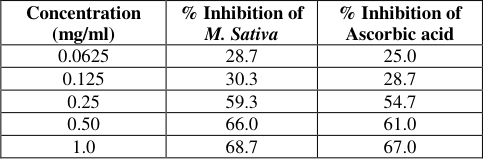 Table 1
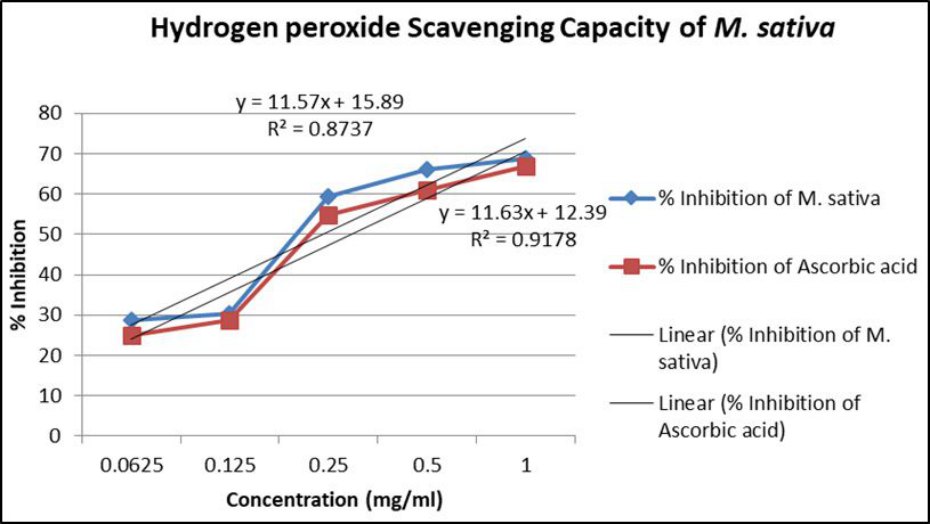 Figure 1
 Table 2
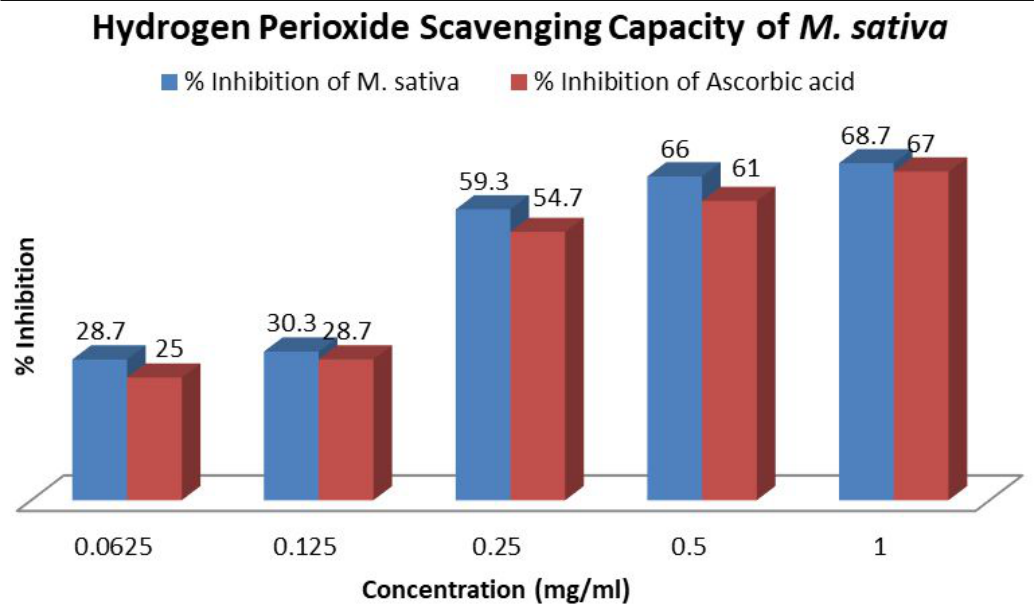 Figure 2
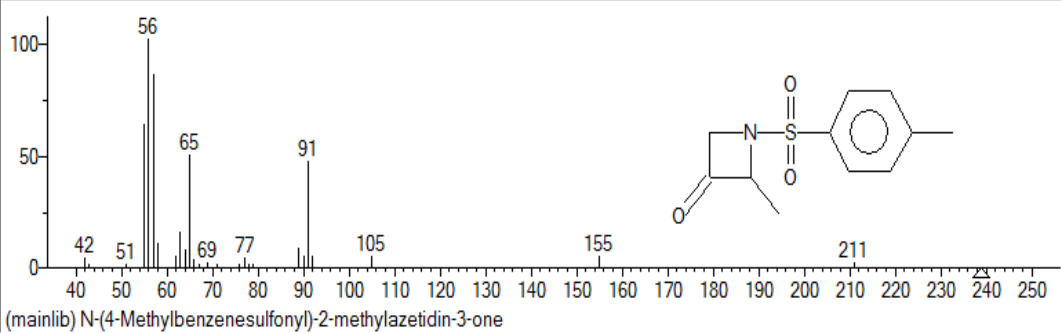 Figure 4
Introduction
Medicago sativa (Linn.) popularly known as Alfalfa is a genus of the family Leguminosae, it has long been used by Herbalists to treat variety of ailments in Turkey, China, Iraq, India and America. According to reports, Alfalfa has recorded many health benefits, it has the ability to lower cholesterol, report showed that 160 grams of Alfalfa seeds per day could decrease total blood cholesterol levels. This may be as a result of its high content of saponins, which are plant compounds known to lower cholesterol levels. It serves as an antioxidant, antiulcer, antimicrobial, hypolipidemic, antidiabetic, anti-inflammatory, anti-asthmatic and diuretic agent. It is also used in the treatment of stroke, heart disease, diabetes, cancer, and menopausal symptoms in women [1] . M. sativa is used traditionally to improve the memory and as a rejuvenator. It cures kidney pain, cough, sore muscles and problems related to central nervous system (CNS) [2] . In India, herbalists use M. sativa to treat ulcers, arthritis pain and fluid retention. Early Americans used M. sativa to treat arthritis, boils, cancer, scurvy, urinary and bowel problems. In Turkey it is used as cardiotonic and to treat scurvy and arthritis [3,1] . Alfalfa extract improves blood sugar control, it lowers blood sugar levels by increasing the release of insulin from the pancreas. Alfalfa has been reported to contain high plant compound called phytoestrogens, which are chemically similar to the hormone estrogen. Phytoestrogens have several benefits which include easing menopausal symptoms that are caused by decreased levels of estrogen. M. sativa can be used as an alternative natural carotenoid instead of the synthetic apo-ester in goldfish diets [4] . A compound isolated from M. sativa known as Medicagenic acid exhibited significant nematicidal activity against the plant-parasitic nematode Xiphinema index [1] . A study showed that M. sativa or alfalfa has the ability to reduce cell death and DNA damage caused by free radicals. It does this by both lowering the production of free radicals and improving the body's ability to fight them [6] . Antioxidants are known to reduce the number of free radicals in our system that can cause cell damage and disease. Foods protect us from free radical damage, which is responsible for many of the effects of aging on both the body and mind [1,7] . High levels of oxidative stress affect every organ and system in the body and have been linked with many diseases from Alzheimer's disease, cancer and heart disease to accelerated aging, asthma, diabetes, etc. Oxidative stress is believed to lead to the development of the most prevalent chronic diseases and disorders killing adults today, especially heart disease, cancer and diabetes. The body use antioxidants to lessen the impact of free radicals throughour diets [1] . However, Alfalfa may cause uterine stimulation or contractions. Therefore, it should be avoided during pregnancy. In spite of the long traditional use of M. sativa for treatment of various ailments, many of the claims have not been scientifically evaluated to ascertain its traditional claims.
Methodology 2.1 Extraction of Plant Materials / Preparation
The leaves of Medicago sativa were pounded with mortar and pestle, soaked in ethanol and methanol in different beakers for 48 hours and filtered. The filtrates were concentrated with rotary evaporator at 40 o C and were used for GC-MS and antioxidant analyses respectively.
Hydrogen Peroxide Scavenging Activity of Medicago sativa L.
Method of [9] was modified and used to carry out the scavenging activity of extracts of the leaves of Medicago sativa towards hydrogen peroxide radicals. Solution of hydrogen peroxide (40 Mm) was prepared in phosphate buffer pH 7.4 and its concentration was determined by using UV spectrophotometer at absorbance of 560 nm. 0.1mg/ml of the extract was added to hydrogen peroxide solution and absorbance measured at 560 nm using UV spectrophoto-meter against a blank solution containing phosphate buffer without hydrogen peroxide. The percentage of hydrogen peroxide scavenging by the extract and standard compound was calculated using the given formula: Where, = Absorbance of the extract at 560 nm = Absorbance of the blank at 560 nm The experiment was repeated in triplicate.
Calculation of IC50
The methanolic extracts of Medicago sativa at various concentrations (0.625-1mg/ml) were taken for the study and IC50 values which shows 50% inhibition was calculated using regression analysis in MS excel.
Statistical analysis
All experimental measurements were carried out in triplicate and were expressed as average of three analyses ±standard deviation. Statistical analyses were performed by one sample ttest and p-values were done by one way ANOVA. The p-value<0.05 were regarded as significant.
GC/ MS Analysis
The instrument used for the analysis of Gas chromatography was GC-MS Shimadzu QP 2010, Japan gas chromatography 5890-11 with a fused GC column (OV-101) coated with polymethyl silicon (0.25 nm x 50m). This was performed using the conditions as follows: Temperature programming from 80-200 o C held at 80 o C for 1 minute, rate 5 o C/ min and at 200 o C for 20 mins. FID temperature 300 o C, injection temperature 250 o C, carrier gas nitrogen at a flow of 1ml /min, split ratio 1:75. The column length was 30 m with a diameter of 0.25 mm and the flow rate of 50 ml/min. the elutes were automatically passed into a mass spectrometer with a dictator voltage set at 1.5 kv and sampling rate of 0.2 sec. The mass spectrum was also equipped with a computer fed mass spectra data bank. Hermle Z 233 M-Z centrifuge Germany was used. Reagents and solvents like ethanol, chloroform, diethyl ether, and hexane were all analytical grade and were procured from Merck, Germany.
The database of National Institute Standard and Technique (NIST) was used for interpretation of mass spectrum. Then the phytochemicals were identified based on the hits returned after comparing the unknown peak value and chromatogram from GC MS against the known chromatogram, peak value from the NIST Library database. Subsequently, the details about their molecular formula, molecular weight, structure were also obtained [10,11] .
Results and Discussion
Table 1 shows hydrogen peroxide scavenging activity of the methanol extract and standard. The regressions coefficient R² of 0.8737 and 0.9178 for the methanol extract and standard respectively suggest that Medicago sativa extract caused inhibition of hydrogen peroxide which was concentration dependent. At a concentration of 1mg/ml, the scavenging percentages were 68.7 and 67.0 for methanol extract and standard respectively. For both standard and extracts, P values were significant (p ˂ 0.05). The methanol extract showed better scavenging capacity than Ascorbic acid which was used as the standard. This was supported by their IC50 values, which for the extract was found to be 0.197 mg/ml compared to standard ascorbic acid 0.211 mg/ml. The presence of different phytochemicals in the plant extract of which tannins have a higher percentage could be an explanation for the higher antioxidant activity of the plant extract than the standard used in this study [12] . . Analysis of the compound showed that the compound can be used as an additive. It is used as a flavouring agent in food [13] . Compound 2 is an aromatic hydrocarbon, 1, 3-dimethyl Benzene also known as meta-xylene. The major use of meta-xylene is in the production of isophthalic acid which is used as a copolymerizing monomer to alter the properties of polyethylene terephthalate. Meta-Xylene is also used as a raw material in the manufacture of 2, 4-and 2, 6-xylidine as well as a range of smaller-volume chemicals [14] .
| Concentration (mg/ml) | % Inhibition of M. Sativa | % Inhibition of Ascorbic acid |
|---|---|---|
| 0.0625 | 28.7 | 25.0 |
| 0.125 | 30.3 | 28.7 |
| 0.25 | 59.3 | 54.7 |
| 0.50 | 66.0 | 61.0 |
| 1.0 | 68.7 | 67.0 |
Table text extracted from the original PDF; superscript letters are shown inline. The original table image is below.
View original table image
Table 1:
Table 1:
Conclusion
Free radicals are known to be the cause of many pathological conditions such as inflammation, metabolic disorders, cells ageing, atherosclerosis and carcinogenesis. Free radicals involved Reactive Oxygen Species (ROS) and Reactive Nitrogen Species (RNS). The ROS are involved in more than one hundred diseases including, malaria, acquired immunodeficiency syndrome, diabetes, anaemia and cardiovascular diseases. The leaves of Medicago sativa have been found to be good antioxidants from the result of the analysis. The presence of a wide range of chemical compounds indicates that the plant could lead the way for the development of novel agents having good biological activity. Many chemical compounds are present in the plant but isolation of active constituents by using various appropriate chromatographic techniques should be carried out. Further studies can be carried out using different extraction methods. Below are the GC/MS analysis showing the structures of the compounds with their fragmentation patterns.
Figures and tables from the paper
| SN | RT | Component | Formula | MW | % |
|---|---|---|---|---|---|
| 1 | 2.914 | Propane, 1,1-dimethoxy-2-methyl- | C6H14O2 | 118 | 59.781 |
| 2 | 3.157 | Benzene, 1,3-dimethyl- | C8H10 | 106 | 16.688 |
| 3 | 4.416 | Benzene, 1,3-dimethyl- | C8H11 | 107 | 18.822 |
| 4 | 4.877 | Ethanol, 2-(2-butoxyethoxy)-, acetate | C10H20O4 | 204 | 2.788 |
| 5 | 5.322 | N-(4-Methylbenzenesulfonyl)-2-methylazetidin-3-one | C11H13NO3S | 239 | 1.921 |
Table text extracted from the original PDF; superscript letters are shown inline. The original table image is below.
View original table image
References
10 in the original paper- SB Kundan, S Anupam. Phytochemical and pharmacological potential of Medicago sativa: A review. Journal of Pharmaceutical Biology. 2011;49:2.
- A Michael, G Francine, H Matthias. Plants traditionally used in age related brain disorders -A survey of ethanobotanical literature. J Ethnopharmacol. 2007;113:363-381.
- M Yanar, Z Ercen, AO Hunt, HM Buyukcapar. The use of alfalfa (Medicago sativa) as a natural carotenoid source in diets of goldfish Carassiusauratus. Aquaculture. 2008;284:196-200.
- H Inamul. Safety medicinal plants. Med Res. 2004;43:18.
- YS Velioglu, G Mazza, L Gao, BD Oomah. Antioxidant activity and total phenolics in selected fruits, vegetables and grain products. J. Agric Food Chem. 1998;46:41134117.
- F Shahidi, PK Janitha, PD Wanasundara. Phenolic antioxidants. Crit. Rev Food Sci. Nutr. 1992;32:67-103.
- F Ngonda. In-vitro Anti-oxidant Activity and Free Radical Potential of roots of Malawian Trichodesmazeylanicumm (Burm. F.). Asian Journal of Biomedical and Pharmaceutical Sciences. 2013;3:(20):2125.
- Z Rane, P Anish Kumar, B Anusha. Phytochemical evaluation by GC-MS and in vitro antioxidant activity of Punicagranatum fruit rind extract Journal of Chemical and Pharmaceutical Research. 2012;4(6):2869-2873
- RI Uchegbu, CN Mbadiugha, CO IBE, IO Achinihu, CE Sokwaibe. Antioxidant, Anti-inflammatory and Antibacterial Activities of the Seeds of Mucunaflagellipes. American Journal of Chemistry and Applications. 2015;2(5):114-117.
- Ryszard A. Tannins the new natural antioxidants? Eur. J. LipidSci. Technol. 2007;109:549-551
Cited by 6
From OpenAlex, OpenCitations and reference lists read by Scinovex
- Nutritional evaluation and in vitro dry matter digestibility (IVDMD) of Moringa oleifera, Medicago sativa, Chloris gayana and their combinations at different ratios
OL Alarape, PK Migwi, JO Ondiek · International Journal of Veterinary Sciences and Animal Husbandry · 2023
The major factor limiting ruminant production in the tropics is the lack of a year-round supply of quality forage and protein supplements. Therefore, the use of underutilized shrubs and trees such as Moringa oleifera is noteworthy due to its rich nutritional composition and potential as a feed resource for ruminants. This study investigated the nutritional composition of Moringa leaves, Lucerne hay, and Rhodes grass hay with their combinations at different ratios. The ingredients were grouped into seven in ratios 90:10:0, 90:5:5, 90:0:10, 0:100:0, 0:50:50, 0:0:100, and 100:0:0 of Rhodes grass
- An overview of Phytochemicals seen in plant sources ↗
S.G.P. Karthikeya Reddy, Monimala Pramanick, Suraj Singh, Poorav Desai · International Journal of Pharmacognosy and Life Science · 2023
Through this research work overview, the basic concept of Phytoconstituetnts, which are commonly seen in the plant, sources with association of other compounds and its derivatives. These bioactive compounds are found in a whole plants, leaves, flowers, vegetables, juices (Extract) with propagation of pharmacological action towards any pathological conditions. These compounds are divided into two main categories like Primary metabolites
- Development of nutrition rich food product using alfalfa sprouts powder
Saurabh Sanjay Bankar, Dipak A. Jadhav, Priyadarshani R Mohite · International Journal of Horticulture and Food Science · 2023
Alfalfa (Lucerne and Medicago sativa) is the herb and corresponding legume seeds are of family Fabaceae. It is cultivated as an important forage crop in many countries around the world. Alfalfa is used as a food material since a long period due to variety of its nutritional benefits and properties which include high protein content, vitamins, and minerals. The sprouts of alfalfa are also gaining much popularity these days because of their nutritional properties and high antioxidant content. The major drawback related to this sprout usage is the small shelf life of the sprouts. Limited studies
- Compare absorbance value of medicated glycerin prepared by Berberis vulgaris- Q and Alfalfa- Q with qualitative assessment by UV- visible spectrophotometer ↗
Sadhu Shreyansh, Chakraborthy GS, Pramanick Monimala, Bhadoria Suraj Singh, Poorav Desai, Bhatt Tejas et al. · International Journal of Pharmaceutical Sciences and Drug Analysis · 2023
Background: Through this research, work prepared homoeopathic medicated glycerol with Berberis vulgaris- Q and Alfalfa- Q in the drug and vehicle ratio (1:9) with qualitative assessment done by UV- Visible spectrophotometer. Methodology: Homoeopathic medicated glycerine was prepared by the mixing Berberis vulgaris and Alfalfa- Q in a definite proportion of drug and vehicle as (1:9) separately. The samples were divide…
❝ 0PDF - Effect of weed management practices on weeds and productivity of timely sown wheat (Triticum aestivum L.)
Rajnish, Manisha Phaugat, Minnu Sasi, Tapor Pakpu, Prerna Gupta, Priya Rawat · International Journal of Advanced Biochemistry Research · 2023
Wheat, a significant grain crop, is the second-largest crop in terms of acreage and output after rice. It is farmed on around 217 million hectares worldwide, with nearly half of it in poor nations. Wheat is a member of the Poaceae family. Weed flora in wheat crop includes Phalaris minor, Avena ludoviciana, Chenopodium album, Lathyrus aphaca, Vicia sativa, Vicia hirsute, Medicago hispida, Cichorium intybus, Asphodelus tenuifolius, and Melilotus alba. The major weed flora dominated with grassy weeds comprising Phalaris minor (29.7%) and Avena ludoviciana (40%), while the broad leaf weeds were La
- Nutritional evaluation of heat-treated and raw leaf powder of medicago sativa for freshwater fish, Cirrhinus Mrigala ↗
S. A. Vhanalakar, VA Jagtap, C. Bhagat · International Journal of Fisheries and Aquatic Studies · 2023
A 90 day feeding trial was conducted to assess the efficacy of Medicago sativa plant leaf powder as a supplementary feed ingredient for the fish Cirrhinus mrigala. Six experimental diets were formulated by replacing fishmeal from standard diet at the proportion of 30%, 40% and 50% by alfalfa leaf powder. Three of them kept as raw and remaining three subjected