
Research article · 2022 · Full text
International Journal of Advanced Chemistry ResearchMicrowave-assisted extraction and quality evaluation of pectin from sweet lemon peel
Volume 4(2) · Pages 203–206 · DOI: 10.33545/26646781.2022.v4.i2c.102 ↗
Research areasPolysaccharides and Plant Cell WallsMicrobial Metabolites in Food Biotechnology
Abstract
Author-writtenPectin, a natural polysaccharide, is commercially extracted from citrus peels and several other sources such as bananas, apples and grapes, etc. under acidic conditions. Pectin is used in beverages, confectionery and many fruit drinks. It can be used as a pharmaceutical additive and in various food preparations. Pectin is completely soluble in purified water. Different sources of pectin contain different amounts of pectin and different qualities. Pectin can be used as a thickener. Pectin is also used for its therapeutic value in cholesterol regulation, but it is widely used based on according to its binding capacity. Extraction of pectin by various methods has become a major issue, and research is still ongoing. We reviewed recent studies on pectin extraction using microwaves and enzymes to get an idea of the current status of pectin extraction.
Summary
Source-checkedPlain-language reading of the full paper, prepared with AI and checked against the text. Each point links to the authors' own words.
Why it matters
- Pectin is a natural polysaccharide typically extracted from citrus peels and other fruits like apples and grapes using acidic conditions. View evidence ↗
- Pectin has wide utility as a pharmaceutical additive and in the production of confectionery, beverages, and fruit drinks. View evidence ↗
- The high volume of citrus production, which reached 82 million tons in 2009–2010, generates a massive amount of peel waste, as juice production yields approximately 44% peels as a by-product. View evidence ↗
The question
- The authors aim to review the current status of pectin extraction, specifically focusing on the use of microwaves and enzymes to address challenges in extraction methods. View evidence ↗
What they did
- Conventional pectin extraction involves two primary steps: the acid-driven hydrolysis of proto-pectin and subsequent precipitation using ethanol. View evidence ↗
- For microwave-assisted extraction, dry powdered peels are stirred in a citric acid solution adjusted to pH 1.5 with a liquid-to-solid ratio of 1:20 (g/ml). View evidence ↗
- The microwave-assisted extraction process utilizes a frequency of 2450 MHz, with variations in power and time to optimize conditions. View evidence ↗
What they found
- Conventional acid extraction is slow, taking several hours, which can lead to the thermal degradation of pectin via beta elimination, resulting in lower quality. View evidence ↗
- Microwave-assisted extraction (MAE) is found to offer shorter processing times, lower solvent requirements, and higher extraction rates compared to conventional methods, while reducing costs. View evidence ↗
- In the context of sweet lemon peel, MAE is more efficient than traditional methods, requiring less time to extract the same quantity and quality of pectin. View evidence ↗
- Increasing the microwave power level during MAE did not have a significant impact on the yield or quality of the pectin extracted from sweet lemon peel. View evidence ↗
What it means
- The authors conclude that waste from sweet lemons serves as a viable source for high methyl ester pectin. View evidence ↗
- The authors conclude that pectin is a critical, readily available natural product with diverse applications across various industries. View evidence ↗
Visual summary
1 visualsIllustrations explain the paper; they do not show study data.
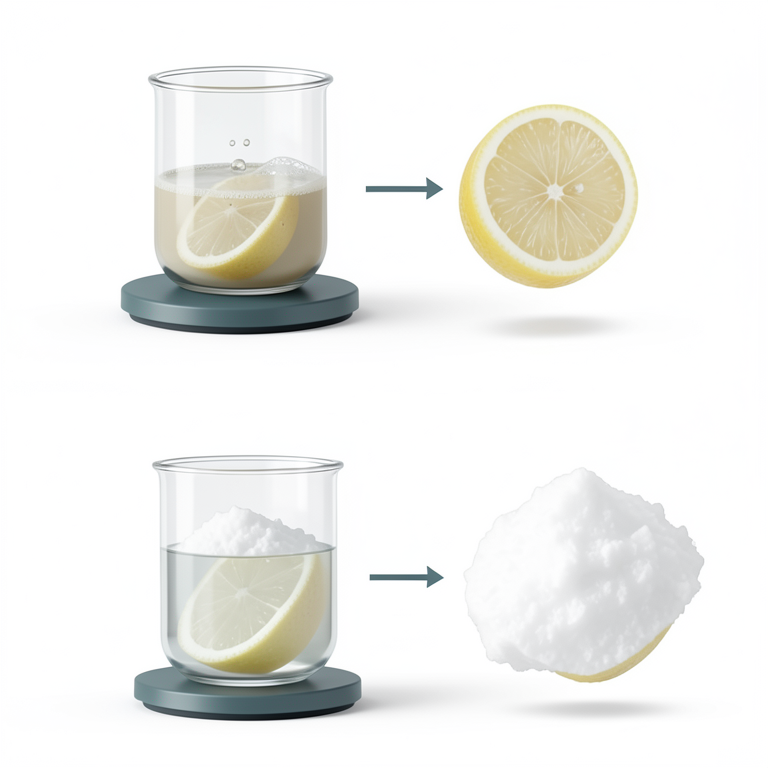
Comparison of Extraction Processes
AI-generated conceptual illustration (sweet lemon peel and pectin extract). It explains the idea and does not show study data.
View source evidence ↗Introduction
Pectin comes under the important cell wall components. Pectin is obtained by the aqueous extraction of the appropriate materials and basically from the citrus fruit peel and apple pomace etc., followed by decided precipitation using alcohol. The major functional feature of pectin is to make gel by its gelling ability in aqueous solutions in the presence certain amount of sugar and acid or calcium ions. Pectin is even more important because it has excellent water solubility and it has gel forming ability. Pectin can be used for delivering drugs via the oral route, nasal, and vaginal and it has been well accepted by many patients [25] . World citrus production has increased significantly in recent years and has reached 82 million tons in 2009-2010, of which orangescommercially the most important citrus fruit accounted for about 50 million tons (USDA, 2010) and 34% of which is used for juice production, yielding about 44% peels as a by-product, Therefore, a large amount of peel is produced every year. Citrus peel, the primary waste, is a source of pectin, molasses, and limonene and is usually dried, mixed with dried pulp, and sold as cattle feed [14] . The term pectin was first described and isolated by Henri Braconnot, in 1825 Pectin is a polysaccharide, a naturally occurring substance present in all plant tissue. Pectin exists in varying amounts in fruit cell walls and has important nutritional and technological properties.
Pectin Chemistry
In nature, around 80 percent of carboxyl groups of galacturonic acid are esterified with methanol. This ratio is reduced to varying degrees during pectin extraction. Pectin is classified as high-vs. low-methoxy pectin (short high methoxy pectin vs low methoxy pectin HM-pectin vs. LM-pectin), with more or less than half of all the galacturonic acid esterified [15] . Substituted galacturonic are characterized by the presence of saccharide appendant residues (such as D-xylose in the respective cases of xylogalacturonan and homogalacturonan) branching from a backbone of D-galacturonic acid residues. Rhamnogalacturonan pectin contains a backbone of the repeating disaccharide: 4)-α-Dgalacturonic acid-(1, 2)-α-L-rhamnose-(1. From many of the rhamnose residues, side chains of various neutral sugars branch off. The neutral sugars are mainly L-arabinose, D-galactose, and D-xylose, with the types and proportions of neutral sugars varying depending on the source of pectin [3] . The complex heteropolysaccharide known as pectin is found in the primary cell walls of dicotyledonous plants and it is extensively employed as a thickener agent, gelling, stabilizer linkages Isolated pectin has a molecular weight of typically 60,000-130,000 g/mol, varying with origin and extraction conditions [24] .
Sources and Production of Pectin
Apples, guavas, grapes, plums, Pears gooseberries, oranges, and other citrus fruits contain large amounts of pectin, while soft fruits, like cherries, grapes, and strawberries, contain small amounts of pectin. Pectin typical levels of pectin in fresh fruits and vegetables are Apples, 1-1.5%, Apricots 1%, Cherries, 0.4%, Oranges, 0.5-3.5%, Carrots 1.4%, Citrus Peels, 30%, Rose Hips, 15% [10] . Nowadays, fruit and some food by-products can be considered as raw materials to produce value-added products rich in pectin. Pectin is not only a gelling agent but also a thickener, stabilizer, and emulsifier and even it has been used as a fat replacer and health-promoting functional ingredient [29] . Therefore, pectin must be taken into account within the set of new opportunities for the development of innovative products.
Conventional Method
The conventional method consists of two main steps, hydrolysis of proto-pectin into pectin using acids and subsequently precipitation with ethanol [6] . However, acid treatment has some drawbacks, conventional pectin extraction process takes several hours. During the long healing process the thermal degradation of pectin by beta elimination to low-quality pectin. Due to that, novel methods such as Microwave-Assisted Extraction, enzymatic extraction, supercritical water extraction, and ultrasound extraction have become more popular [30] .
Acid Extraction of Pectin
Acid extraction of pectin has been extracted using chemical methods to examine the structural features and functional properties of pectin. The chemical agents used for pectin extraction are divided into four groups. They are water and buffers, calcium-ion chelators, acids, and bases. Acids are the strongest extracting agents of pectin as they facilitate the extraction of insoluble pectin that is tightly bound to the cell-matrix of the plant material and result in higher yields [28]. Pectin is generally enriched in galacturonic acid.
Various studies have shown the effects of acid extraction strength on the yield of pectin, chemical, and/or physicochemical characteristics [16]. Most commonly used acids are acetic, citric, lactic, tartaric (organic), hydrochloric, oxalic, phosphoric, and sulfuric acids [17] .
Enzyme Extraction
The plant cell wall is composed of an entangled network of various polysaccharides including pectin. Cell wall degrading enzymes with minimum pectin degrading activity are used to hydrolyze non-pectin plant cell wall components in the enzymatic extraction of pectin [25]. Enzyme extraction of pectin is environmentally safe and more efficient in terms of pectin yield. Various enzymes such as polygalacturonase, hemicellulose, protease and mixed microbial enzymes, cellulose, α-amylase, and α-amylase and neutralize, Xylase, cellulose, b-glucosidase, polygalacturonase, and pectinesterase were used in pectin extraction as enzymes can degrade pectin and modify the physicochemical properties of the pectin [31]. Sweet lemon (Musambi) contains a significant amount of water, Protein, Fat, Minerals, Fibre, Carbohydrates, Energy, Calcium, Phosphorus, Iron, Carotene, and Vitamin C'. In recent years, many ideal pectin extraction methods have been used viz. microwave-assisted extraction, pressurized solvent extraction, and supercritical fluid extraction to recuperate valuable extracts from waste materials. Among these extraction techniques, microwave-assisted extraction is widely used as a potential method alternative to the conventional one, due to its distinct heating mechanism, reasonable cost, and better performance under atmospheric conditions [7] .
Microwave-Assisted Extraction of pectin
Microwave-assisted extraction of pectin from grape fruit, Pomelo, mandarin, and Citrus fruit were performed according to the method described in [11] . Made minor changes. The dry powdered peels were poured into an aqueous solution of citric acid adjusted at pH 1.5 at a liquidsolid ratio of 1: 20 (g/ml) and thereafter stirred. Pectin extraction will be carried out as per the process given by [27]. Using the microwave working at a frequency of 2450 MHz with varying time as well as microwave power under varying microwave-assisted extraction conditions. Microwave-Assisted Extraction involves dielectric heating of plant molecules by exposure of microwaves. Bipolar rotation of water is caused place by the absorption of microwave energy, which leads to the generation of heat inside the plant tissues similarly, optimization of the extraction process of pectin from apple pomace using Microwave-Assisted Extraction, found to be the highest yield from apple pomace and also shorter extraction time when compared to conventional heating. MAE technology has a lesser processing time, low solvent requirements, and high extraction rates and also provides a good product at a lower cost. Microwave-Assisted Extraction exhibits a large handling capacity, short processing time, and high purity.
Health-Promoting Effects through pectin
Pectin and dietary fibers, in generally said, to provide diverse health benefits including delayed gastric emptying, improved of physical bowel function, reduced glucose and cholesterol absorption, and an increase in fecal mass. Pectin is not degraded by either human saliva or stomach acid and is resistant to pepsin, trypsin, and rennet [12]. Pectin is fermented primarily by beneficial microflora mainly in the large intestine (colon), generating the SCFAs acetate, propionate, and butyrate, all of which have beneficial health effects [9]. There is evidence suggests that SCFAs can affect the epigenome via metabolic regulatory receptors, potentially reducing obesity, diabetes, atherosclerosis, mucosal inflammation, carcinogenesis, and allergy [2] .
Jams, Jellies, and Preserves
Jams and jellies are the major food type with high amounts of pectin. Depending upon the requirements, additional pectin at any time during this process as needed. Pectin is an important structural component that is widely used in various fields, especially in the food industries as a gelling agent, thickener, texturizer, emulsifier, and stabilizer in some products such as jellies, and preserves and jams [20] .
Other Uses of Pectin
Pectin has proven useful in other industrial applications. They function as an emulsion stabilizer for water and oil emulsions. Films made from natural products are of increasing interest because they are biodegradable, potentially recyclable and may even be used in some in biopharmaceutical applications. Several studies have been done on pectin films. Because of its film-forming properties, pectin is useful as a sizing agent for paper and textiles. It is useful for the preparation of membranes for ultracentrifugation and electro dialysis. Similarly, previous studies have shown that calcium and other ions, in addition to LM pectin, also affect the gelation of HM pectin, but no further studies have been done in this direction. A systematic study of these observations helps understand the gelling process of pectin gels, resulting in better control of processes and products [5]
Conclusion
The traditional method is comprised of two major steps, hydrolysis of protopectin to pectin followed by ethanol precipitation. However, acid treatment have some drawbacks, traditional pectin extraction takes several hours. During the long healing process the thermal degradation of pectin by beta desorption into inferior pectin. For this reason, new methods such as Microwave-Assisted Extraction are becoming more and more common. Microwave-Assisted Extraction has a large processing capacity, short processing time, and high purity. When extracting pectin from sweet lemon peel, microwaveassisted extraction is more efficient than the traditional extraction methods. It look less time for MAEto extract the same amount and quality of pectin from sweet lemon peel. An increase in microwave power level for MAE did not significantly affect the yield and quality of pectin extracted from sweet lemon peel. Sweet lemon waste can be a good source of high methyl ester pectin. Pectin has multiple uses. Pectin helps formulate of jams, jellies confectioneries, conserves, fruit juices, and many other easily formed products. In pharmaceuticals, it mainly functions as a binder for tablets and is also used as a coating agent and stabilizer. Pectin also helps to make capsule shells. Therefore, Pectin is a very important and readily available as natural product, readily available from a variety of sources and applicable to a variety of needs.
References
29 in the original paper- Aina Barau VO, Mamman Mustapha, Zakari OA, Haruna Amina, Hauwa Abba. Extraction and Characterization of Pectin from Peels of Lemon (Citrus limon), Grape Fruit (Citrus paradisi) and Sweet Orange (Citrus sinensis). British Journal of Pharmacology and Toxicology. 2012;3:259-262.
- Bartolomaeus H, Balogh A, Yakoub M, Homann S, Markó L, Höges S. Short-chain fatty acid propionate protects from hypertensive cardiovascular damage. Circulation. 2019;139:1407-1421.
- Buchanan, Bob B, Wilhelm. Gruissem and Russell L. Jones. Biochemistry and Molecular biology of Plants Rockville, MD USA: American Society of Plant Biologists. 2000;978-0-943088-37-2.
- Debra M. Pectin structure and biosynthesis. Current Opinion in Plant Biology. 2008;11(3):266-277.
- Demidova TI. Shevernitskaya on Priority directions of development of technologies for the manufacture of pectin-containing products. Food Industry. 2010;9:1819.
- Djilas S. By-products of fruit processing as a source of phytochemicals. Chemical Industry and Chemical Engineering Quarterly. 2009;15:191-202.
- Eskilsson CS, Björklund E. Analytical-scale microwave-assisted extraction. Journal of Chromatography A. 2000;902:227-250.
- Fishman ML, Chau HK, Hoagland PD, Hotchkiss AT. Microwave-assisted extraction of lime pectin. Food Hydrocolloids. 2006;20(8):1170-1177.
- Gómez B, Gullón B, Remoroza C, Schols HA, Parajó JC, Alonso JL. Purification, characterization, and prebiotic properties of pectic oligosaccharides from orange peel wastes. J Agric Food Chem. 2014;62:97699782.
- Hosseini SS, Khodaiyan F, Yarmand MS. Optimization of microwave-assisted extraction of pectin from sour orange peel and its physicochemical properties. Carbohydrate Polymers. 2016;140:59-65.
- Hotchkiss AT, Olano-Martin E, Grace WE, Gibson GR, Rastall RA. Pectic oligosaccharides as prebiotics. In: Eggleston G, Côté GL, editors. Oligosaccharides in food and agriculture. Washington, DC: American Chemical Society, 2003. p. 54-62. 10.1021/bk-20030849.ch005.
- Kliemann E, Simas KN, Amante ER, Prudencio ES, Teofilo RF. Original article optimization of pectin acid extraction from passion fruit peel (Passiflora edulis flavicarpa) using response surface methodology. International Journal of Food Science and Technology. 2009;2:476-483.
- Li S, Li CY, Lo CT. Ho Hydroxylated poly ethoxyflavones and methylated flavonoids in sweet orange (Citrus sinensis) peel J Agric. Food Chem. 2006;54:4176-4185.
- Liang Rui-hong, Chen Jun, Liu Wei Liu, Cheng-me. Yu. Wen Extraction, characterization and spontaneous gel-forming property of pectin from creeping seeds. Carbohydrate Polymers. 2012;87(1):76-83.
- Liew SQ, Chin NL, Yus of YA Extraction and characterization of pectin from passion fruit peels. Italian Oral Surgery. 2014;2:231-236.
- Lim J. Food hydrocolloid extraction and characterization of pectin from Yuza (Citrus Junos) pomace: A comparison of conventional-chemical and combined physical e enzymatic extractions. Food Hydrocolloids. 2012;29:160-165.
- Mayi AA. Heavy metal accumulations after two years of some organic fertilizers and girdling on apple fruit. Int J Hortic Food Sci. 2020;2(1):26-30.
- Pauly, M. and Keegstra, K. Biosynthesis of the Plant Cell Wall Matrix Polysaccharide Xyloglucan. Annual Review of Plant Biology. 2014;67:235-259.
- Puri M, Sharma D, Barrow CJ. Enzyme-assisted extraction of bioactive from plants. Trends in Biotechnology. 2012;30:37-44.
- Shamkova NT. The binding ability of pectin-containing food systems. Bulletin of Higher Educational Institutions, Food Technology. 2006;5:20-22.
- Tamaki Y, Konishi T, Fukuta M, Tako M. Isolation and structural characterization of pectin from endocarp of Citrus depress mood Chemistry. 2008;107:352-361.
- Tang PY, Kek TS, Gan CZ, Hee CY, Chong CH. Yield and some chemical properties of pectin extracted from the peels of dragon fruit Hylocereus polarize(Weber) Britton. The Philippine Agricultural Sciences. 2011;94:307-311.
- Vandana Tyagi, Pramod Kumar Sharma, Rishabha Malviy. Pectin and Their Role in Food and Pharmaceutical Industry: A Review, Journal of Chronotherapy and Drug Delivery. 2015;6(3):65-77.
- Wang X, Chen QR, Lu x. pectin extracted from apple pomace and citrus peel by subcritical water. Food Hydrocolloids. 2014;38:129-137.
- Wang S, Chen F, Wu J, Wang Z, Liao X, Hu X. Optimization of pectin extraction assisted by microwave from apple pomace using response surface methodology. Journal of Food Engineering. 2007;78(2):693-700.
- Yapo BM. Food chemistry effect of extraction conditions on the yield, purity, and surface properties of sugar beet pulp pectin extracts. Food Chemistry. 2007;100:1356-1364.
- Yoo S, Lee YH, Lee H, Bae IY, Lee HG. Structural characteristics of pumpkin pectin extracted by microwave heating. Food Chemistry. 2012;77:11691173.
- Yu XC, Sun DL. Microwave and enzymatic extraction of orange peel pectin. Asian Journal of Chemistry. 2013;25:5333-5336.
- Yuliarti O, Merino LM, Kelvin KT, Goh Mawson JA, Charles SB. Effect of cellular 1.5 L on the physicochemical characterization of gold kiwifruit pectin. International Journal of Molecular Sciences. 2011;23:6407-6417.