
Research article · 2022 · Full text
International Journal of Advanced Chemistry ResearchEffect of integrated nutrient management on growth and yield of Urdbean (Vigna mungo L.) in Chhattisgarh plain
Volume 4(2) · Pages 260–265 · DOI: 10.33545/26646781.2022.v4.i2d.109 ↗
Research areasAgricultural Science and FertilizationRice Cultivation and Yield ImprovementAgronomic Practices and Intercropping Systems
Abstract
Author-writtenThe present investigation carried out to study the ‘‘Effect of integrated nutrient management on growth and yield of urdbean (Vigna mungo L.) in Chhattisgarh plain ’’ at the Instructional farm, Barrister Thakur Chhedilal College of Agriculture and Research Station, Bilaspur, Indira Gandhi Krishi Vishwavidyalaya, Raipur (Chhattisgarh) during kharif season 2021. The investigation was spread out in a randomized block design where in nine treatment combinations in three replications. The size of gross plot of the experiment was 4.0 m × 3.0 m = 12.0 m² and net plot size 3.4 m × 2.4 m = 8.16 m² sowing was done in 16 July 2021. The different treatment combinations of the investigation are T1: Control, T2: 100 % RDF, T3: 125 % RDF, T4: Rhizobium culture, T5: PSB, T6: 100 % RDF + Rhizobium culture, T7: 100 % RDF + PSB, T8: Rhizobium culture + PSB, T9: 100 % RDF + Rhizobium culture + PSB. Experimental results revealed that growth characters viz., plant height, number of functional leaf plant-1, number of primary branches plant-1, dry matter accumulation (g plant-1), number of nodules plant-1, dry weight of nodules (mg plant-1), CGR, yield contributing characters viz., number of pods plant-1, test weight, biological, seed as well as straw yield, were significantly more with treatment T9 (100 % RDF + Rhizobium culture + PSB) which was on par with the treatments T6 (100 % RDF + Rhizobium culture) and T7 (100 % RDF + PSB).
Summary
Source-checkedPlain-language reading of the full paper, prepared with AI and checked against the text. Each point links to the authors' own words.
Why it matters
- Urdbean is a well-known leguminous crop valued for its high nutritional quality, specifically its protein content. View evidence ↗
- On a dry weight basis, urdbean seeds contain 23.5% protein, 1.6% fat, and 63.4% carbohydrates. View evidence ↗
- Proper nutrient management is considered one of the most important agronomic methods for increasing the productivity of urdbean. View evidence ↗
The question
- The study aimed to investigate how integrated nutrient management affects the growth and yield of urdbean in the Chhattisgarh plain. View evidence ↗
What they did
- The experiment used a randomized block design featuring nine different treatment combinations, each with three replications. View evidence ↗
- Treatments ranged from a control (T1) to combinations of Recommended Dose of Fertilizer (RDF), Rhizobium culture, and Phosphate Solubilizing Bacteria (PSB), with T9 combining all three. View evidence ↗
- The researchers used the urdbean variety Indira urd pratham (RU 03-14). View evidence ↗
- Data were analyzed using analysis of variance (ANOVA) and tested for critical difference (CD) at a 5% significance level. View evidence ↗
What they found
- Treatment T9 (100% RDF + Rhizobium + PSB) produced the highest plant height at all stages (14.43 to 54.43 cm), performing similarly to T6 and T7 and better than the control. View evidence ↗
- The highest number of functional leaves per plant was found in T9 (ranging from 3.11 to 15.29), which was statistically similar to T6 and T7. View evidence ↗
- Dry matter accumulation was highest in T9, reaching 12.57 g per plant at harvest, significantly outperforming the control. View evidence ↗
- T9 recorded the most nodules per plant at 40 DAS (40.34) and 60 DAS (29.90), performing similarly to T6. View evidence ↗
- The maximum number of pods per plant was achieved by T9 (42.92), which was statistically on par with T6 (41.38). View evidence ↗
- The control treatment (T1) resulted in the lowest seed yield of 704 kg ha-1. View evidence ↗
- T9 also achieved the highest straw yield of 2146 kg ha-1. View evidence ↗
Visual summary
2 visualsIllustrations explain the paper; charts are replotted from the paper's own table values.
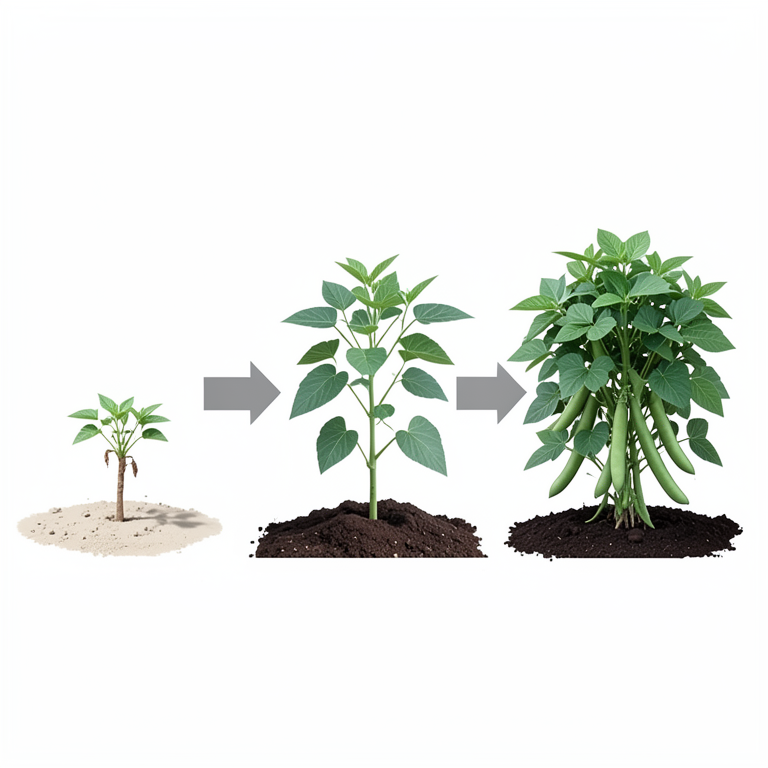
Integrated Nutrient Management Synergy
AI-generated conceptual illustration (Urdbean plants (Vigna mungo L.)). It explains the idea and does not show study data.
View source evidence ↗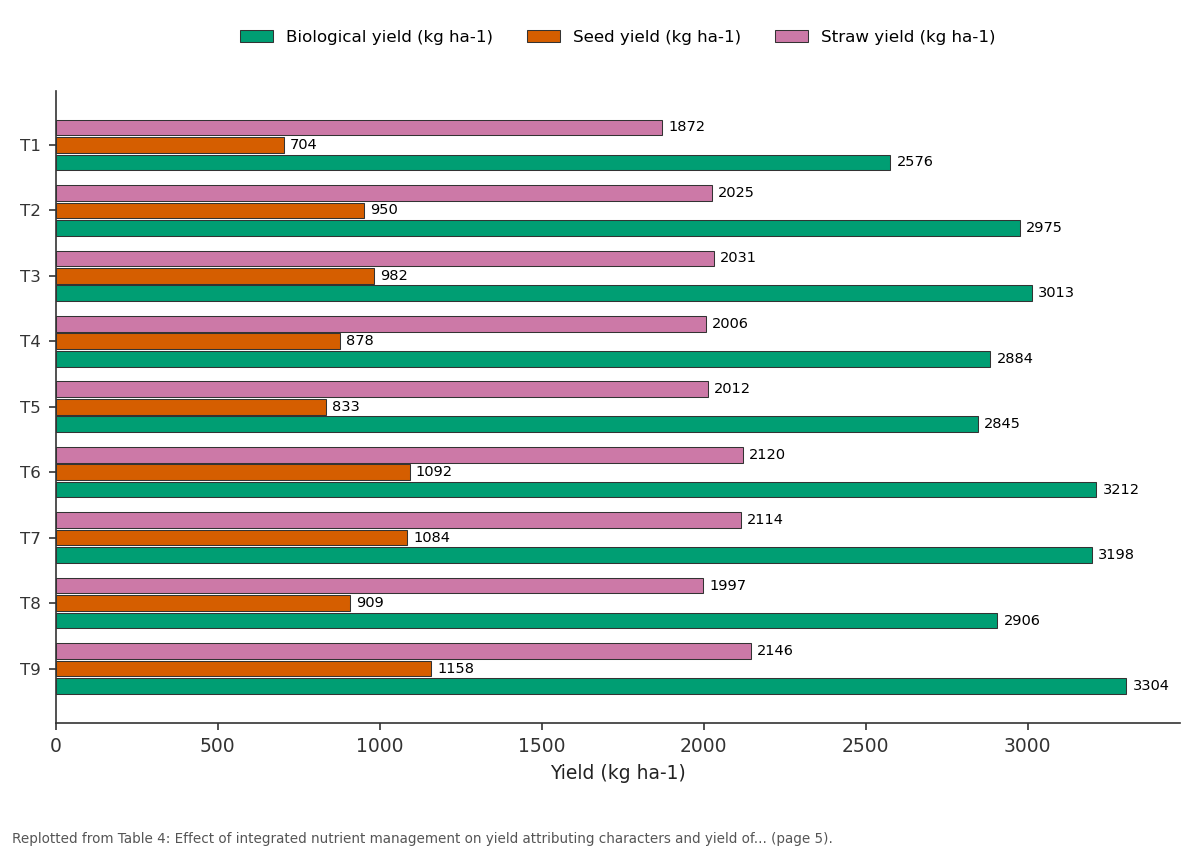
Biological yield (kg ha-1) and Seed yield (kg ha-1) and more: T1 vs T2 vs T3 vs T4 vs T5
Replotted from Table 4 (page 5) of the original paper. Every bar is the paper's own table value.
View source evidence ↗Figures & tables
From the original paper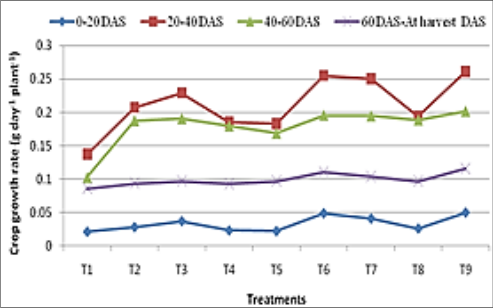 Figure 1
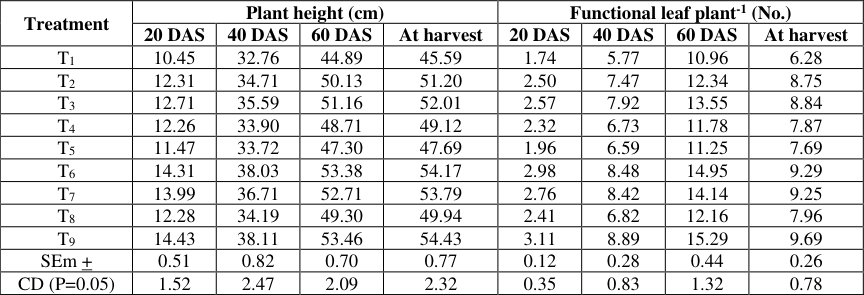 Table 1
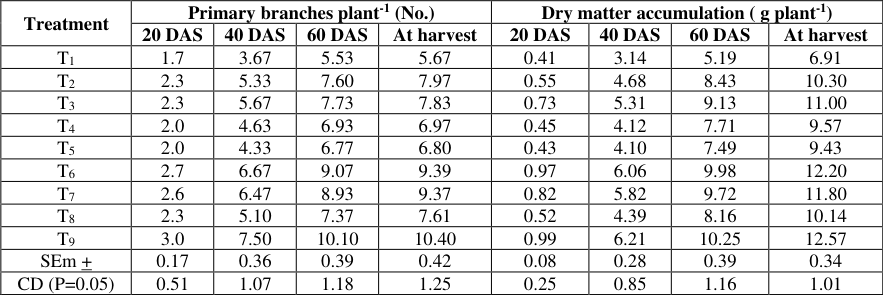 Table 2
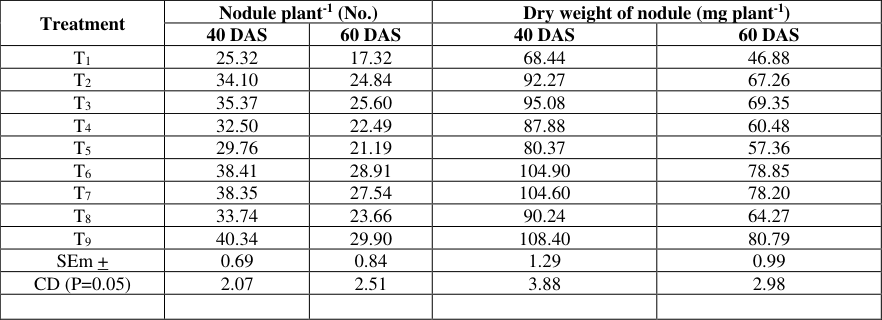 Table 3
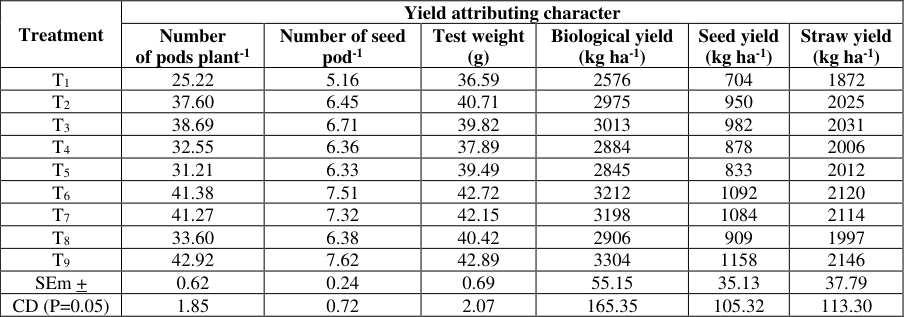 Table 4
Introduction
Urdbean (Vigna mungo L. Hepper) is an ancient and well known leguminous crop and popular because of its nutritional quality (protein). Urdbean is one of the most important cultivated pulse crops of the 'Vigna' group. It is cultivated since prehistoric period in India and considered to be originated from Vigna silvestris. Urdbean is also known as black gram. Based on seed colour and other characteristics, urdbean has been grouped under two main type's viz. var. niger (large black seeded and early maturing) and var. viridis (small greenish seeded and late maturing). Major portion of urdbean is utilized in making dal, curry, soup, sweet and snack. In South India, the most popular idli and dosa are prepared using mixed proportions of rice and urdbean. The food values of urdbean lie in its high and easily digestible protein. Urdbean seeds are known to contain high protein (23.5 %), fat (1.6 %) and carbohydrates (63.4 %) on dry weight basis. In general, Chhattisgarh's economy is mainly based on agriculture. The state comprising 28 districts, having 786 thousand hectare of area under pulses with 237 thousand metric tons of production during 2019-20. (Anonymous, 2020) [1] . The state is comprised with three agroclimatic zones, viz., Chhattisgarh plain, Bastar plateau and Northern Hill Region of Surguja. In Chhattisgarh state the major pulse growing districts are Raigarh, Surguja, Durg, Bilaspur and Rajnandgaon. Among these, Raigarh district takes first position in area of pulses (6404 hectares) and total production (4174.7 metric tones) with an average productivity of 474.63 kg ha -1 . Out of the total pulses area in urdbean is important pulse crop of Raigarh district which occupies 48.39 per cent area and 46.28 per cent production of total pulse. (Anonymous, 2020) [1] . Urdbean is mainly grown during 'kharif' season by the farmers of Chhattisgarh plains. Uncertain rainfall adversely affects the sowing time of urdbean under rainfed condition. There are number of agronomic ways to increase productivity of urdbean. Out of them proper nutrient management practices is more important (Naik et al. 2022) [17] . Nitrogen an essential element to all life, although abundant and composes nearly 80 per cent of the atmosphere, yet nitrogen is one of the major constraints that limit the growth and productivity of plant in many ecosystems. This is a result of the inability of plant to directly utilize atmospheric nitrogen to meet their biological requirement for this element.
Application of bio-fertilizer recorded the highest value of growth and yield attributes and yield of urdbean. It was observed that the plants treated with experimental biofertilizer Rhizobium showed excellent result in the morphological and bio-chemical parameters (Nalawde and Bhalerao, 2015) [18] . Inoculation of urdbean seed with biofertilizer enhances available P status of soil by solublizing bound phosphate into available forms (Singh and Yadav, 2008) [27] . Dual inoculation of Rhizobium and phosphate solubilizing bacteria (PSB) may help the plant to acquire both N and P Co-inoculation of PSB with 'Rhizobium' have been found to improve the nodulation and nitrogen fixation in urdbean (Gaur and Algawadi, 1989) [6] . Integrated nutrient management contributes to the restoration and maintenance of soil fertility and crop productivity. It may help to prevent the emergence of nutrient deficiencies other than NPK. It reduces fertiliser waste and improves the physical, chemical, and biological environment of the soil.
Materials & Methods
The The data recorded from the various observations were tabulated and then subjected to their statistical analysis by using the method of analysis of variance (ANOVA) as described by Panse and Sukhatme (1967). The treatment was tested by F shown critical difference (CD) at 5% level of significance. It was determined for each character to compare the differences among treatment means.
Results and Discussion
Results and Discussion
Plant height
Among different treatments, effect of integrated nutrient management on plant height at various growth stage of urdbean was found to be significant under study (Table 1). [21] and Goud et al. (2010) [8] .
| Treatment | Plant height (cm) | — | — | — | Functional leaf plant-1 (No.) | — | — | — |
|---|---|---|---|---|---|---|---|---|
| 20 DAS | 40 DAS | 60 DAS | At harvest | 20 DAS | 40 DAS | 60 DAS | At harvest | |
| T1 | 10.45 | 32.76 | 44.89 | 45.59 | 1.74 | 5.77 | 10.96 | 6.28 |
| T2 | 12.31 | 34.71 | 50.13 | 51.20 | 2.50 | 7.47 | 12.34 | 8.75 |
| T3 | 12.71 | 35.59 | 51.16 | 52.01 | 2.57 | 7.92 | 13.55 | 8.84 |
| T4 | 12.26 | 33.90 | 48.71 | 49.12 | 2.32 | 6.73 | 11.78 | 7.87 |
| T5 | 11.47 | 33.72 | 47.30 | 47.69 | 1.96 | 6.59 | 11.25 | 7.69 |
| T6 | 14.31 | 38.03 | 53.38 | 54.17 | 2.98 | 8.48 | 14.95 | 9.29 |
| T7 | 13.99 | 36.71 | 52.71 | 53.79 | 2.76 | 8.42 | 14.14 | 9.25 |
| T8 | 12.28 | 34.19 | 49.30 | 49.94 | 2.41 | 6.82 | 12.16 | 7.96 |
| T9 | 14.43 | 38.11 | 53.46 | 54.43 | 3.11 | 8.89 | 15.29 | 9.69 |
| SEm + | 0.51 | 0.82 | 0.70 | 0.77 | 0.12 | 0.28 | 0.44 | 0.26 |
| CD (P=0.05) | 1.52 | 2.47 | 2.09 | 2.32 | 0.35 | 0.83 | 1.32 | 0.78 |
Table text extracted from the original PDF; superscript letters are shown inline. The original table image is below.
View original table image
Functional leaf plant -1 (No.) Effect of integrated nutrient management on number of functional leaf plant -1 at various growth stage of urdbean was found to be significant under study (Table 1). The maximum number of functional leaf plant -1 at 20, 40, 60 DAS and at harvest was recorded 3.11, 8.89, 15.29 and 9.69 plant -1 in treatment T 9 (100 % RDF + Rhizobium culture + PSB) which was at par with treatment T 6 (100 % RDF + Rhizobium culture) and T 7 (100 % RDF + PSB) while minimum number of functional leaf plant -1 was recorded with treatment T 1 (control). Similar finding was also reported by Vadgave (2010) [31] .
Primary branches plant -1 (No.)
The number of primary branches plant -1 increased progressively at successive observations with advancement of crop age at various growth stages of urdbean was significantly affected by different integrated nutrient management practices under study (Table 2). The maximum number of primary branches plant -1 at 20, 40, 60 DAS and at harvest was recorded 3.00, 7.50, 10.10 and 10.40 plant -1 in treatment T 9 (100 % RDF + Rhizobium culture + PSB) which was at with treatment T 6 (100 % RDF + Rhizobium culture) and T 7 (100 % RDF + PSB) while minimum number of primary branches plant -1 was recorded with treatment T 1 (control). The result is supported by Jain and Singh (2003) [11] , Gilani and Bharose (2004) [7] and Singh et al. (2004) [25] .
| Treatment | Primary branches plant-1 (No.) | — | — | — | Dry matter accumulation ( g plant-1) | — | — | — |
|---|---|---|---|---|---|---|---|---|
| 20 DAS | 40 DAS | 60 DAS | At harvest | 20 DAS | 40 DAS | 60 DAS | At harvest | |
| T1 | 1.7 | 3.67 | 5.53 | 5.67 | 0.41 | 3.14 | 5.19 | 6.91 |
| T2 | 2.3 | 5.33 | 7.60 | 7.97 | 0.55 | 4.68 | 8.43 | 10.30 |
| T3 | 2.3 | 5.67 | 7.73 | 7.83 | 0.73 | 5.31 | 9.13 | 11.00 |
| T4 | 2.0 | 4.63 | 6.93 | 6.97 | 0.45 | 4.12 | 7.71 | 9.57 |
| T5 | 2.0 | 4.33 | 6.77 | 6.80 | 0.43 | 4.10 | 7.49 | 9.43 |
| T6 | 2.7 | 6.67 | 9.07 | 9.39 | 0.97 | 6.06 | 9.98 | 12.20 |
| T7 | 2.6 | 6.47 | 8.93 | 9.37 | 0.82 | 5.82 | 9.72 | 11.80 |
| T8 | 2.3 | 5.10 | 7.37 | 7.61 | 0.52 | 4.39 | 8.16 | 10.14 |
| T9 | 3.0 | 7.50 | 10.10 | 10.40 | 0.99 | 6.21 | 10.25 | 12.57 |
| SEm + | 0.17 | 0.36 | 0.39 | 0.42 | 0.08 | 0.28 | 0.39 | 0.34 |
| CD (P=0.05) | 0.51 | 1.07 | 1.18 | 1.25 | 0.25 | 0.85 | 1.16 | 1.01 |
Table text extracted from the original PDF; superscript letters are shown inline. The original table image is below.
View original table image
The effect of integrated nutrient management on dry matter accumulation at various growth stages of urdbean was found to be significant under study (Table 2). The highest dry matter accumulation at 20, 40, 60 DAS and at harvest was recorded 0.99, 6.21, 10.25 and 12.57 g plant -1 in treatment T 9 (100 % RDF + Rhizobium culture + PSB) which was at par with treatment T 6 (100 % RDF + Rhizobium culture) and T 7 (100 % RDF + PSB) while minimum dry matter accumulation g plant -1 was recorded with treatment T 1 (control). The findings are in accordance with those of Bhattacharya et al. (2004) [4] .
Nodule plant -1 (No.)
Effect of integrated nutrient management on number of nodules plant -1 at 40 and 60 DAS of urdbean was found to be significant under study (Table 3). [15] , Singh and Gupta (2006) [26] and Jain et al. (2006) [12] .
| Treatment | Nodule plant-1 (No.) | — | Dry weight of nodule (mg plant-1) | — |
|---|---|---|---|---|
| 40 DAS | 60 DAS | 40 DAS | 60 DAS | |
| T1 | 25.32 | 17.32 | 68.44 | 46.88 |
| T2 | 34.10 | 24.84 | 92.27 | 67.26 |
| T3 | 35.37 | 25.60 | 95.08 | 69.35 |
| T4 | 32.50 | 22.49 | 87.88 | 60.48 |
| T5 | 29.76 | 21.19 | 80.37 | 57.36 |
| T6 | 38.41 | 28.91 | 104.90 | 78.85 |
| T7 | 38.35 | 27.54 | 104.60 | 78.20 |
| T8 | 33.74 | 23.66 | 90.24 | 64.27 |
| T9 | 40.34 | 29.90 | 108.40 | 80.79 |
| SEm + | 0.69 | 0.84 | 1.29 | 0.99 |
| CD (P=0.05) | 2.07 | 2.51 | 3.88 | 2.98 |
Table text extracted from the original PDF; superscript letters are shown inline. The original table image is below.
View original table image
Effect of integrated nutrient management on dry weight of nodule plant -1 at 40 and 60 DAS of urdbean was found to be significant under study ( and T 8 (Rhizobium culture + PSB) being on par and better than treatments T 4 (Rhizobium culture) and T 5 (PSB) on both the days of observations. Bhattacharya et al. 2004 [4] also reported similar results.
Crop growth rate of urdbean increased progressively up to 40 DAS. A quantum jump in CGR has been observed during the period of 20-40 days interval. It is more likely that new and actively photo-synthesizing tissues of increasing dry matter might be responsible for the increase in CGR during this phase (20-40 DAS) and after that continuously decreased to harvest stage (Fig 1). At various interval highest crop growth rate recorded with treatment T 9 (100 % RDF + Rhizobium culture + PSB) and lower value of crop growth rate was found in treatment T 1 (control). Effect of integrated nutrient management on number of pods plant -1 of urdbean was significant under study (Table 4). All INM methods found significantly better than T 1 (control) treatment. Treatment T 9 (100% RDF + Rhizobium culture + PSB) recorded the maximum pods (42.92) plant -1 than all other treatments but it was significantly on par with T 6 (100% RDF+ Rhizobium culture) which noted 41.38 pods plant -1 . Further treatment T 7 (100% RDF+ PSB) recorded 41.27 pods plant -1 and stood in third position under study.
The result was in conformity with Neenu et al. (2014) [19] and Meena et al. (2018) [16] .
Seeds pod -1 (No.) Effect of integrated nutrient management on number of seeds pod -1 of urdbean was significant under study (Table 4). All INM methods found significantly better than T 1 treatment. Treatment T 9 (100% RDF + Rhizobium culture + PSB) recorded the highest seeds (7.62) pod -1 than all other treatments, but it was significantly at par with T 6 (100% RDF + Rhizobium culture) which showed 7.51 seeds pod -1 . Further treatment T 7 (100% RDF+ PSB) recorded 7.32 seeds pod -1 and stood in third position under study. This type of results are also recorded by Rashid et al. (2013) [20] .
Effect of integrated nutrient management on test weight of urdbean was to be significant under study (Table 4). The maximum weight (42.89 g) of 1000 seeds were found in T 9
(100% RDF + Rhizobium culture + PSB) which was at par with T 6 (100% RDF + Rhizobium culture) and T 7 (100% RDF+ PSB) while lowest test weight was (36.59 g) observed under T 1 (control). The findings are supported by Meena et al. (2002) [32] and Hakeem et al. (2008) [9] .
The biological yield of urdbean is significantly affected due to different integrated nutrient management treatments (Table 4). Treatment T 9 (100% RDF + Rhizobium culture + PSB) produced significantly the highest biological yield (3304 kg ha -1 ) as compare to all other treatments under study. Further, treatment T 6 (100% RDF + Rhizobium culture) and T 7 (100% RDF+ PSB) produced significantly at par biological yield 3212 and 3198 kg ha -1 , respectively and both stood in second order after T 9 . The treatment T 3 (125% RDF), T 2 (100% RDF), T 8 (Rhizobium culture + PSB), T 4 (Rhizobium culture) and T 5 (PSB) were also shows their superiority over T 1 treatment. The control (T 1 ) treatment recorded significantly the lowest biological yield of 2576 kg ha -1 under study. The result is supported by Jain et al. (1999) [13] , Tanwar et al. (2002) [29] , Bhat et al. (2005) [3] , Band et al. (2007) [2] and Rathore et al. (2007) [22] .
The seed yield of urdbean is significantly affected due to different integrated nutrient management treatments (Table 4). Treatment T 9 (100% RDF + Rhizobium culture + PSB) recorded significantly the highest seed yield (1158 kg ha -1 ) as compare to all other treatments under study. Further, treatment T 6 (100% RDF + Rhizobium culture) and T 7 (100% RDF+ PSB) recorded significantly at par seed yield of 1092 and 1084 kg ha -1 , respectively and both stood in second order after T 9 . The treatment T 3 (125 % RDF), T 2 (100% RDF), T 8 (Rhizobium culture + PSB), T 4 (Rhizobium culture) and T 5 (PSB) were also shows their superiority over T 1 treatment. The control (T 1 ) treatment recorded significantly the lowest seed yield of 704 kg ha -1 under study. The finding are in accordance with the findings of Rathore et al. (2010) [21] and Shete et al. (2011) [24] .
The straw yield of urdbean is significantly affected due to different integrated nutrient management treatments (Table 4). Treatment T 9 (100% RDF + Rhizobium culture + PSB) produced significantly the highest straw yield (2146 kg ha -1 ) as compare to all other treatments under study. Further, treatment T 6 (100% RDF + Rhizobium culture) and T 7 (100% RDF+ PSB) produced significantly at par straw yield 2120 and 2114 kg ha -1 , respectively and both stood in second order after T 9 . The treatment T 3 , T 2 , T 5 , T 4 and T 8 (Rhizobium culture + PSB) were also shows their superiority over T 1 treatment. The control (T 1 ) treatment recorded significantly the lowest straw yield of 1872 kg ha -1 under study. These results are in close conformity with the findings of Biswas and Patra (2007) [5] and Tomar et al. (2001) [30] .
References
31 in the original paper- Anonymous. Government of India, Ministry of Agriculture and farmers welfare, Department of Agriculture, Cooperation and farmers welfare, Directorate of Economics and Statistics, New Delhi. 2020.
- Band AM, Mendhe SN, Kolte HS, Choudhary RL, Verma R, Sharma SK. Nutrient management studies in french bean (Phaseolus vulgaris L.). Journal of Soils and Crops. 2007;17(2):367-372.
- Bhat SA, Thenua OVS, Shivakumar BG, Malik JK. Performance of summer greengram [Vigna radiata (L.)] as influenced by biofertilizers and phosphorus nutrition. Haryana Journal of Agronomy. 2005;21(2):203-205.
- Bhattacharya SS, Mandal D, Chattopadhyay GN, Majumdar K. Effect of balanced fertilizer on pulse crop production in red and lateritic soils. Better Crops. 2004;88(4):25-27.
- Biswas A, Patra AP. Study on the effect of phosphorus Vesicular Arbuscular Mycorrhizae (VAM) and Phosphate Solubilizing Bacteria (PSB) on the performance on summer greengram. In the proceeding of National symposium on legumes for ecological sustainability: emerging challenges and opportunities held during November 3-5, 2007 at Indian Institute of Pulses Research, Kanpur, c2007.
- Gaur AC, Algawadi AR. Interaction of nitrogen fixing phosphate solubilising microorganisms on crop productivity and plant-microbe interaction. Indian Science Congress Association, Bangalore. 1989;14(87):35-46.
- Gilani SN, Bharose R. Effect of bio-fertilizers on the enrichment of soil fertility with special reference to soil phosphorus status and its effect on yield of green gram (Vigna radiata L.). New Agriculturist. 2004;15(1/2):129-131.
- Goud VV, Kale HB, Patil AN.. Performance of organically grown mungbean under rainfed condition in vertisol. Journal of Food Legumes. 2010;23:218-222.
- Hakeem SA, Thomas T, Shagufta W. Effect of different levels of neem cake and biofertilizers on growth, yield attributes and nutrient uptake in black gram (Vigna mungo L.) type-9. Environment and Ecology. 2008;26(1A):369-371.
- Hanif N, Ramasamy AKA, Davidson R, Pandiyan M. Popularization of horsegram (Macrotyloma uniflorum) in Vellore District of Tamil Nadu Journal of Krishi Vigyan. 2017;6(1):148-150.
- Jain LK, Singh P. Growth and nutrient uptake of chickpea (Cicer arietinum L.) as influenced by biofertilizers and phosphorus nutrition. Crop Research Hisar. 2003;25(3):410-413.
- Jain LK, Singh P, Balyan JK. Productivity and profitability of chickpea (Cicer arietinum L.) cultivation as influenced by biofertilizers and phosphorus fertilization. Indian Journal of Dry land Agricultural Research and Development. 2006;21(1):82-84.
- Jain PC, Kushwaha PS, Dhakad US, Khan H, Trivedi SK. Response of chickpea (Cicer arietinum L.) to phosphorus and bio-fertilizer. Legume Research. 1999;22(4):241-244.
- Keshava BS, Halepyati AS, Pujari BT, Desai BK. Yield and economics of horse gram (Macrotyloma uniflorum Lam. Verdc.) as influenced by genotypes, plant International Journal of Advanced Chemistry Research https://www.chemistryjournals.net densities and phosphorus levels. Karnataka Journal of Agricultural Sciences. 2007;20:589-591.
- Khatkar R, Thomas A, Joseph AS. Effect of biofertilizers and sulphur levels on growth and yield of black gram (Vigna mungo L.). Legume Research. 2007;30(3):233-234.
- Meena DD, Thomas T, Rao PS. Effect of different levels of NPK, Rhizobium and FYM on soil properties, growth and yield of cowpea (Vigna unguiculata L.) var Pusa Barsati. International Journal of Chemical Studies. 2018;6(3):2117-2119.
- Naik RPK, Singh V, George SG, Singh SK. Effect of sulphur and spacing on growth and yield of blackgram (Vigna mungo L.). South Asian J Agric Sci. 2022;2(1):35-37.
- Nalawde AA, Bhalerao SA. Response of black gram (Vigna mungo L. Hepper) to biofertilizer. International Journal of Life Sciences. 2015;3:81-84.
- Neenu S, Ramesh K, Ramana S, Biswas AK, Rao S. Growth and yield of different varieties of chickpea (Cicer arietinum L.) as influenced by the phosphorus nutrition under rainfed conditions on vertisols. International Journal of bio-resource and stress management. 2014;5(1):053-057.
- Rashid A, Ishaque M, Hameed K, Shabbir M, Ahmad M.. Growth and yield response of three chickpea cultivars to varying NPK levels. Asian Journal of Agriculture Biology. 2013;1(3):95-99.
- Legume Research: An International Journal. 2010;33(4):274-278.
- Rathore VS, Singh JP, Soni ML, Beniwal RK. Effect of nutrient management on growth, productivity and nutrient uptake of rainfed clusterbean (Cyamopsis tetragonoloba) in arid region. Indian Journal of Agriculture Science. 2007;77(6):349-353.
- Sahu G, Shrivastava GK. To study the effect of fertilizer doses, organic manure and bio-fertilizers on energetics and economics of urdbean (Vigna mungo L.). International Journal of Chemical Science. 2019;6(3):2523-6075.
- Shete PG, Thanki JD, Baviskar VS, Bhoye KP. Yield, nutrient uptake and economics of greengram as influenced by land configuration, inorganic fertilizers and FYM levels. Green Farming. 2011;2(4):425-427.
- Singh AP, Chaturvedi S, Tripathi MK, Singh S. Growth and yield of green gram [Vigna radiata L.] as influenced by bio-fertilizer and phosphorus application. Annals of Biology. 2004;20(2):227-232.
- Singh B, Gupta BR. Effect of bio-fertilizers at different levels of phosphorus on nodulation, yield and protein content in black gram (Vigna mungo L.). Farm Science Journal. 2006;15(1):78-80.
- Singh RP, Gupta SC, Yadav AS. Effect of levels and sources of phosphorus and PSB on growth and yield of blackgram (Vigna mungo L.). Legume Research. 2008;31:139-141.
- Singh RS, Yadav MK. Effect of phosphorus and biofertilizers on growth, yield and nutrient uptake of urdbean under rainfed condition. Journal of Food Legume. 2008;21:46-48.
- Tanwar SPS, Sharma GL, Chahar MS. Effects of phosphorus and bio-fertilizers on the growth and productivity of black gram. Annals of Agriculture Research. 2002;23(3):491-493.
- Tomar A, Kumar N, Pareek RP, Chaube AK. Synergism among VAM, phosphate solubilizing bacteria and Rhizobium for symbiosis with blackgram (Vigna mungo L.) under field conditions. Pedosphere. 2001;11(4):327-332.
- Meena RP, Jat NL, Meena NL. Effect of phosphorus and bio-fertilizers (Rhizobium and PSB) on yield and yield attributes of cluster bean [Cyamopsis tetragonoloba (L.) Taub]. Annals of Agriculture Research. 2002;23(2):349-351.
Cited by 7
From OpenAlex, OpenCitations and reference lists read by Scinovex
- Response of different weed management practices on growth and yield of black gram (Vigna mungo L.) under irrigated conditions of Punjab
Navjot Singh, Mohinder Lal · International Journal of Research in Agronomy · 2023
The field experiment was carried out during the summer season of 2021-2022 to study the response of different weed management practices to the growth and yield of black gram. Cyperus sp., Phyllanthus niruri, Trianthema portulacastrum, Amaranthus viridis were the dominant weeds. It was observed that besides weed-free treatment the lowest weed count, dry weight of weeds (3.66 g m-2), weed index (2.73%) as well as highest weed control efficiency (60.06%) were found with the pre-emergence (PE) application of Pendimethalin 1 kg ha-1 followed by one hand weeding at 40 days after sowing (DAS). The ma
- Creating a cloud based database for tracking fertilization regime, storage time, and yield/quality parameters in Dracocephalum moldavica L. cultivation experiments ↗
Şeyma Arıkan, Murat Demirel, Elif Duygu Kaya · International Journal of Cloud Computing and Database Management · 2025
Cloud-based data systems have emerged as powerful tools for improving the traceability, integration, and long-term monitoring of agricultural experiments, particularly those involving multifactorial influences on crop quality. Dracocephalum moldavica L., a highly aromatic medicinal herb valued for its essential oils, polyphenols, and antioxidant potential, exhibits considerable variation in yield and quality parameters under different fertilization regimes and storage durations. Traditional
- Development of a Mobile-based expert system for rice disease diagnosis using forward chaining and Real-time data integration ↗
Samira Benali, Ahmed Boukhalfa · International Journal of Electronic Devices and Networking · 2024
Rice (Oryza sativa L.) is a staple crop feeding over half of the global population, yet its productivity is significantly threatened by diseases such as bacterial blight, blast, sheath blight, and tungro. Traditional diagnostic methods are often time-consuming, reliant on expert intervention, and inaccessible to smallholder farmers. This study aimed to develop and validate a mobile-based expert system for rice
- Exploring pest status and successive population growth of Omiodes indicata (Fabricius) in early maturing black gram ↗
Abul Faiz · Journal of Entomology and Zoology Studies · 2023
This investigation was aimed to understand the nature of damage and population growth of the insect pest Omiodes indicata (Fabricius) in black gram crop in random block design having three replications. Any food crop's yield is influenced by pest incidence in addition to soil properties. In multiple investigations, the polyphagous Omiodes indicata (Fabricius) (Lepidoptera: Pyralidae) was identified as a potential
- Soil status and performance of Nepal cardamom (Amomum subulatum Roxb.) under different land uses
Shreejan Kumar Pandey, Prashna Budhathoki, Sanu Krishna Maharjan · International Journal of Horticulture and Food Science · 2023
Soil fertility\r\nevaluation is the most fundamental decision-making tool for effective\r\nsustainable soil nutrient management of a particular area. Soil properties vary\r\nbetween land-use systems and understanding the variation in soil properties\r\nwithin land-use systems is crucial. Thus, the study was conducted from March 2022 to April 2022 in Phaktalung, Taplejung of\r\nNepal for evaluation of the soil nutrient conditions of different land use\r\nsystems in Randomized Complete Block Design. Different land use systems i.e.,\r\nNepal Cardamom orchard in khet land, Nepal Cardamom orchard i
- The response of bio-fertilizers (Rhizobium and phosphate solubilizing bacteria) and inorganic fertilizer application on yield and yield contributing attributes of black gram (Vigna mungo) under rain fed condition of Chitrakoot region
S. Govinda Rao, Uma Shankar Mishra, Pawan Sirothia · International Journal of Statistics and Applied Mathematics · 2023
A field experiment was conducted at the Nanaji agricultural research farm, faculty of agriculture, Mahatma Gandhi Chitrakoot Gramodaya Vishwavidyalaya, Chitrakoot, Satna (M.P.) to study the response of rhizobium and Phosphate solubilizing bacteria along with inorganic fertilizers on yield and yield contributing attributes of “IPU-243” variety of black gram (Vigna mungo) crop. The experiment was conducted during the kharif season of the session 2021-22 in the dryland area of Chitrakoot. The experiment was consisted of three replications along with thirteen treatments laid out in randomized bloc
- Influence of weed managing techniques on yield attributes & yield of black gram
Satish Kumar, Deepali Suryawanshi, Vijay Kumar, Vikash Singh, Bheru Lal Kumhar · International Journal of Advanced Biochemistry Research · 2023
The present investigation, titled "Effect of weed management practices on yield and yield attribution of urdbean," was conducted at the Research- Cum-Instructional Farm, Rampur Selaqui, Dehradun (U.K.) during the 2013 Kharif growing season. Three separate replications were employed in the randomized block design of the experiment. Eleven weed management strategies made up the treatment. The current study's findings showed that weed-free treatments produced the smallest levels of total weed density, total dry weight, maximum LAI, CGR, RGR, yield attributes, seed yield, Stover yield and harvest