
Research article · 2023 · Full text
International Journal of Horticulture and Food ScienceSoil status and performance of Nepal cardamom (Amomum subulatum Roxb.) under different land uses
Volume 5(1) · Pages 101–105 · DOI: 10.33545/26631067.2023.v5.i1b.168 ↗
Research areasIndigenous Knowledge Systems and Agriculture
Abstract
Author-writtenSoil fertility\r\nevaluation is the most fundamental decision-making tool for effective\r\nsustainable soil nutrient management of a particular area. Soil properties vary\r\nbetween land-use systems and understanding the variation in soil properties\r\nwithin land-use systems is crucial. Thus, the study was conducted from March 2022 to April 2022 in Phaktalung, Taplejung of\r\nNepal for evaluation of the soil nutrient conditions of different land use\r\nsystems in Randomized Complete Block Design. Different land use systems i.e.,\r\nNepal Cardamom orchard in khet land, Nepal Cardamom orchard in Bari land,\r\nNepal Cardamom orchard in Pakho land were taken as treatments. A total\r\nof 27 samples from cardamom orchard of Ramsai variety were randomly collected,\r\n9 samples each from khet land, Bari land, and Pakho land respectively at a\r\ndepth of 0-30 cm and are analyzed. Research analysis revealed that the soil\r\norganic matter, nitrogen, and potassium was found maximum in Treatment 3 (Pakho\r\nland) which is 4.12%, 0.20%, and 331.5 kg/ha respectively. Phosphorous (51.10\r\nkg/ha) was found maximum in Treatment 2 which was Bari land. Whereas cardamom\r\nyield (0.55 Mt/ha), the number of tillers (29.77) were found maximum in\r\nTreatment 1 which was khet land. While soil pH, diameter of tillers,\r\nlength of tillers, and number of inflorescences were found non-significant.\r\nSoil texture was found to be sandy loam type.
Summary
Source-checkedPlain-language reading of the full paper, prepared with AI and checked against the text. Each point links to the authors' own words.
Why it matters
- Nepal cardamom, also known as Alainchi or the 'Queen of Spices', is an ancient species of the Zingerberaceae family. View evidence ↗
- The plant serves as a significant agricultural cash crop and export commodity for Southeast Asian nations. View evidence ↗
- Evaluating soil fertility is essential for sustainable nutrient management because soil properties differ across various land-use systems. View evidence ↗
The question
- The study aimed to evaluate soil nutrient conditions across different land-use systems in Phaktalung, Taplejung, Nepal. View evidence ↗
What they did
- The researchers used a Randomized Complete Block Design (RCBD) comparing three land-use treatments: khet land (lowland leveled terraces), Bari land (upland sloping terraces), and Pakho land (sloppier forest land). View evidence ↗
- Twenty-seven soil samples from the Ramsai variety of cardamom were collected at a depth of 0-30 cm, with nine samples taken from each of the three land-use types. View evidence ↗
- The study measured quantitative data for soil pH, organic matter, nitrogen, phosphorus, and potassium, while soil texture was recorded as qualitative data. View evidence ↗
What they found
- Soil organic matter was highest in Pakho land (4.123%) and lowest in khet land (2.981%). View evidence ↗
- Total nitrogen levels were highest in Pakho land (0.2067%) and lowest in khet land (0.150%). View evidence ↗
- Available phosphorus was highest in Bari land (51.10 kg/ha) and lowest in Pakho land (36.30 kg/ha). View evidence ↗
- Available potassium was highest in Pakho land (331.5 kg/ha) and lowest in khet land (191.7 kg/ha). View evidence ↗
- The different land-use systems did not have a significant effect on soil pH. View evidence ↗
- Cardamom yield was highest in khet land (0.5578 Mt/ha) and lowest in Pakho land (0.2144 Mt/ha). View evidence ↗
What it means
- The authors concluded that land use significantly affects the soil nutrient pool (excluding pH) and cardamom performance, specifically yield and tiller number. View evidence ↗
- The authors recommend that farmers use soil test results to apply fertilizers rather than relying on general blanket recommendations. View evidence ↗
- The authors state that the status of other micronutrients needs to be assessed to fully improve cardamom orchards. View evidence ↗
Visual summary
3 visualsIllustrations explain the paper; charts are replotted from the paper's own table values.
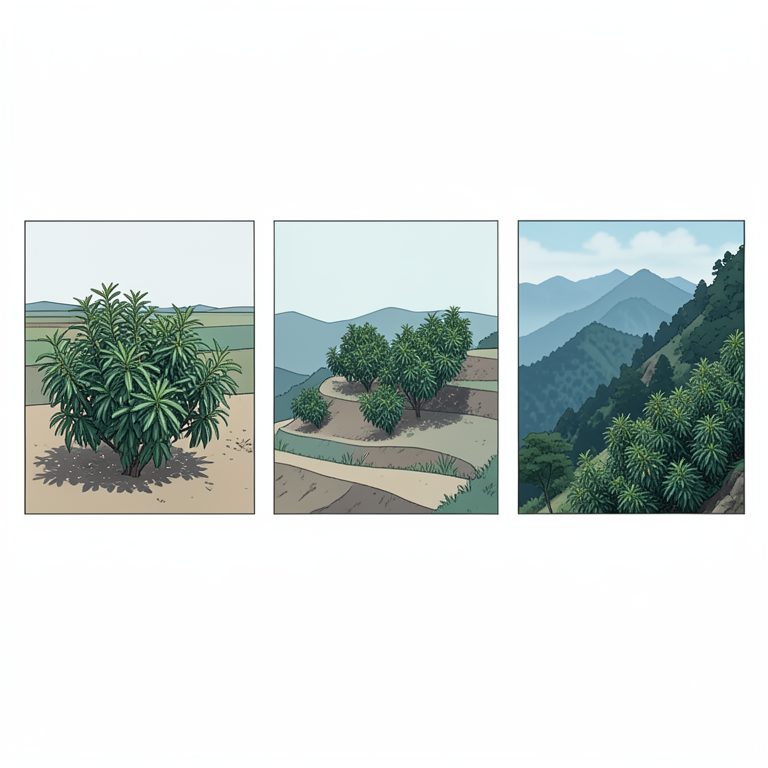
Land Use Types Comparison
AI-generated conceptual illustration (Nepal cardamom (Amomum subulatum Roxb.) plants in three different Himalayan terrain types). It explains the idea and does not show study data.
View source evidence ↗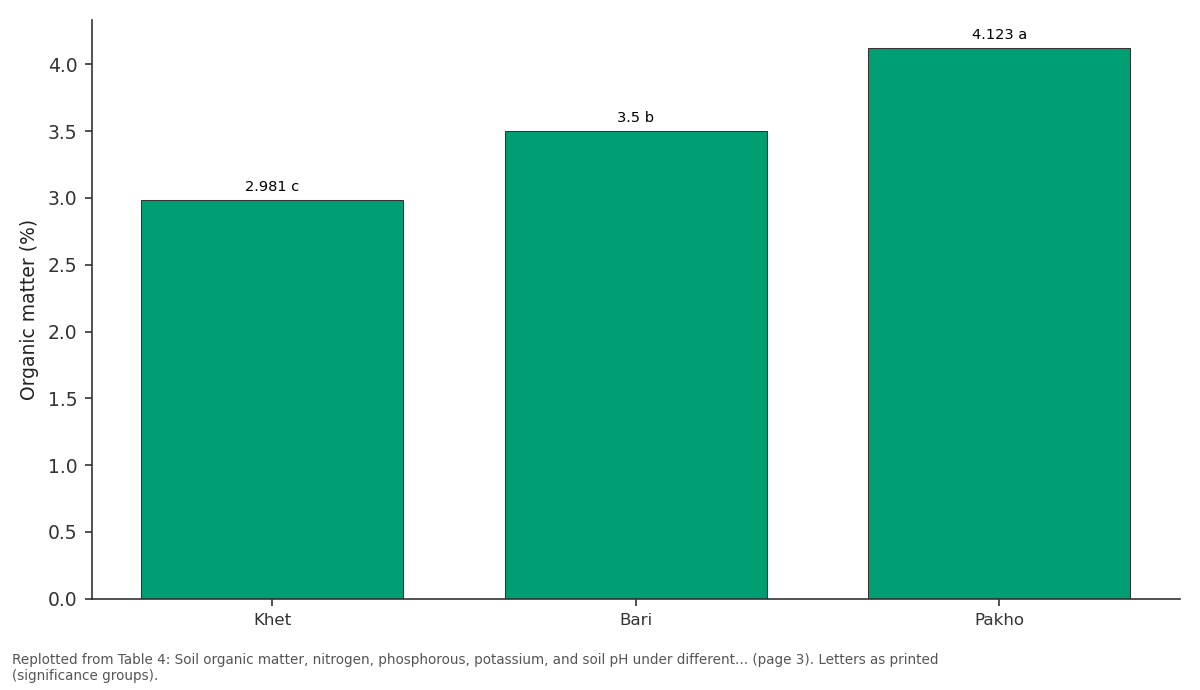
Organic matter (%): Khet vs Bari vs Pakho
Replotted from Table 4 (page 3) of the original paper. Every bar is the paper's own table value.
View source evidence ↗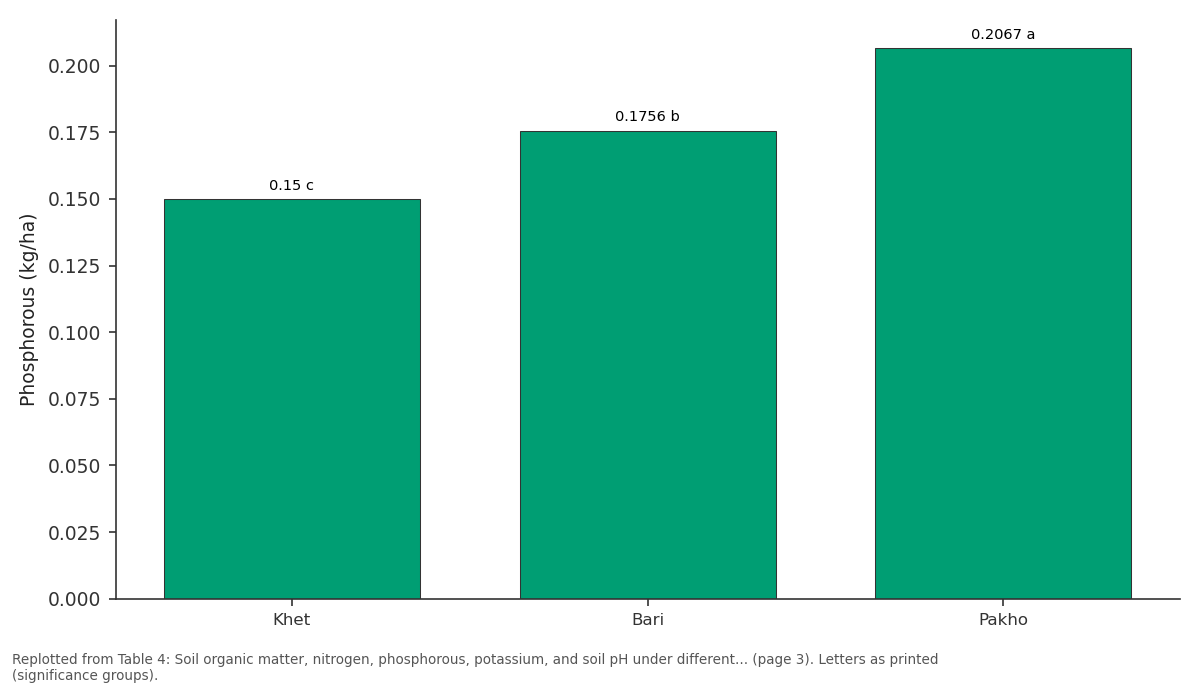
Nitrogen (%): Khet vs Bari vs Pakho
Replotted from Table 4 (page 3) of the original paper. Every bar is the paper's own table value.
View source evidence ↗Figures & tables
From the original paper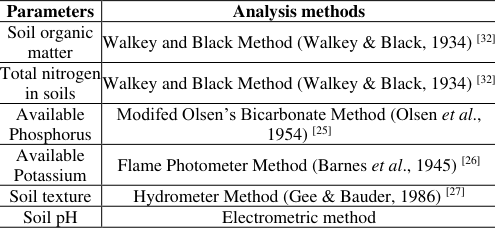 Table 1
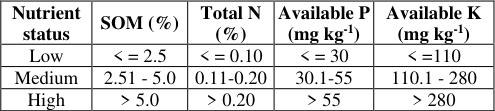 Table 2
 Table 3
 Table 4
 Table 5
 Table 6
Introduction
Nepal cardamom (Amomum subulatum Roxb.) is one of the world's ancient species belonging to family Zingerberaceae, popularly known as Alainchi in Nepali. It is also known as "Queen of Spices". It mainly grows wild in forest ecosystems and is also domesticated in the sub-Himalayan region, at altitudes ranging from 1000 to 2200 m above mean sea level. It is a perennial herb and shade-loving plant which requires well-distributed rainfall of about 3000-5000 mm/year and is generally grown in tracts (Gudade, et al., 2013; Gupta, 1983; Singh D., 1978; Subba, 1984) [6,7,20,22] . Nepal cardamom is also known as black cardamom, large cardamom, big cardamom (Shrestha, et al., 2018) [18] . This plant is 1.5 to 3.0 m tall and consists of subterranean rhizomes and several leafy aerial shoots/tillers (Bisht, Negi, Bhandari, & Sundriyal, 2011) [3] . It is a commonly cross-pollinated crop, although selffertilization can also occur. The plant has several tillers consisting of pseudo stems with leaves on the upper part and inflorescence(spike) appears on the rhizome from the point where the pseudo stem shoots up and traditional kilns are used to cure harvested capsules (Sharma E., Sharma, Singh, & Sharma, 2000) [16] . In recent years, Nepal cardamom has been a major agricultural cash crop and export commodity of Southeast Asian countries (Sharma, Sharma, & Sharma, 2009) [17] . It is mostly grown in the eastern hills of Nepal namely Panchthar, Taplejung, Tehrathum, Sankhuwasabha, and Bhojpur (Pun, 2019). The dried fruits of Nepal cardamom are widely used in foods, beverages, perfumes, and medicines which is a high-value, low-volume spice crop (Singh & Pothula, 2013) [19] . Nepal cardamom can be grown in the sandy loam soil, slightly acidic in nature with gentle sloping land of about 5-8 0 providing highly suitable conditions (Baniya, Böehme, & Baniya, 2009) [2] . According to Dutta & Dutta (1997) [4] , soil health is an important parameter to promote the healthy and vigorous growth of the plants.
Soil properties are greatly impacted by different land use and management practices and for determining production constraints related to soil nutrients, it is essential to have knowledge of variation in soil properties within farmland use (Spurgeon, Keith, Schmidt, Lammertsma, & Faber, 2013) [21] . It is estimated that 60% soil of Nepal have low organic matter (OM), 23% have low phosphorous (P), 18% have low potassium (K), and 67% of the soils are acidic (Mandal, 2016) [11] . Soil fertility is the sum of physical, chemical, and biological factors that affect soil structure, porosity, availability of macro and micronutrients, and the activity of biological organisms which influence crop growth and impose limitations on crop yield (Rowell, 2014) [15] . Soil fertility plays important role for making soil alive, thus for sustainable soil management and crop production. Evaluation of soil fertility is now becoming a routine work. Among various techniques for soil fertility evaluation, soil testing is an indispensable tool in soil fertility management for sustained soil productivity (Havlin, Tisdale, Nelson, & Beaton, 2010) [1] .
Materials and Methods
Materials and Methods
Site description:
The experiment was carried out in Phaktalung Rural Municipality of Province 1 representing the high hills of Nepal from March 2022 to April 2022 the important area under Cardamom Zone of Taplejung district. Khet lands are lowland leveled terraces. Bari lands are upland sloping terraces and Pakho land are forest land which is sloppier than Bari and normal cultivation of major crops is not possible due to its topography.
Treatment details
The experiment was conducted in Randomized Complete Block Design (RCBD) with 3 treatments namely. Treatment 1: Orchard in khet land, Treatment 2: Orchard in Bari land, Treatment 3: Orchard in Pakho land were taken as treatments. From each treatment, 9 composite samples of soil (as replications) were obtained. Nine Sampling plots (each with 400 square m.) at random locations for each treatment were selected from selected locations. Altogether, there were 27 sampling plots (1 treatment=9 sampling plots).
Soil Sample collection:
Soil samples were collected from each treatment following Simple Random Sampling Technique. Firstly, plots were subdivided and then samples were taken through lottery method of Simple Random Sampling. Soil at a depth of 30 cm below the surface was collected by making 'V' shape cut. The starting point was selected randomly. Samples were taken from each land uses with Zigzag method. Soil samples were collected from nine replicated sites of each land uses type within the study area. Altogether 27 samples were collected randomly for analysis of different soil parameters. Various instruments were used in order to collect soil samples in the field and to measure the physio-chemical properties of soil in the laboratory. Spades were used in accordance with the type of land for the collection of soil samples. Similarly, soil-packing polythene was used to place the soil samples.
Laboratory analysis:
Different chemicals and lab equipment were used in lab during qualitative as well as quantitative data evaluation of soil. The collected soil samples were analysed at Regional Soil Laboratory, Jhumka, Sunsari. All soil physio-chemical data including pH, Soil Organic Matter, Nitrogen, Phosphorus and Potassium were quantitative data whereas soil texture was qualitative. The different soil parameters that were tested as well as methods that were adopted during laboratory analyse are shown on Table 1. [32] Total nitrogen in soils Walkey and Black Method (Walkey & Black, 1934) [32] Available Phosphorus Modifed Olsen's Bicarbonate Method (Olsen et al., 1954) [25] Available Potassium Flame Photometer Method (Barnes et al., 1945) [26] Soil texture Hydrometer Method (Gee & Bauder, 1986) [27] Soil pH Electrometric method
Soil rating
Soil organic matter (SOM%), total N (%), available P (%), and available K (%) were rated according to the rating chart provided by Regional Soil Laboratory, Jhumka, Sunsari (Table 2) and the soil pH was rated by the rating chart provided by Khatri-Chhetri (1991) [33] (Table 3) Table 3: Rating chart for soil reaction according to Khatri-Chhetri (1991) [33] Soil pH value Soil reaction rating < 6 Acidic 6.0-7.5 Neutral > 7. 5 Alkaline 2.6 Parameters recorded 2.6.1 Data collection and analysis 2.6.1.2 Number of tillers: Three cardamom bushes were selected randomly and the number of tillers present in each bush were counted during soil sample collection time.
| Soil pH value | Soil reaction rating |
|---|---|
| < 6 | Acidic |
| 6.0-7.5 | Neutral |
| > 7.5 | Alkaline |
Table text extracted from the original PDF; superscript letters are shown inline. The original table image is below.
View original table image
Number of inflorescences:
One cardamom bush was selected randomly. Then five tillers from selected bush were selected randomly and a number of inflorescences present in each tiller were counted during soil sample collection time.
Pseudo stem height:
Five cardamom bushes were selected randomly. One tillers from each bush was selected randomly then pseudo stem height of each tiller was measured with the help of measuring tape during soil sample collection time.
Pseudo stem diameter:
Five cardamom bush were selected randomly. One tiller from each bush was selected randomly, then pseudo stem diameter of each tiller was measured with the help of digital Vernier calliper during soil sample collection time. Measurement of pseudo stem height and diameter were taken from same plant. The information on Production was obtained from the survey and was correlated with the result of soil parameters obtained from lab analysis. The data were analyzed using Duncan's Multiple Range Test (DMRT) at 5% level of significance for the separation of means using the package Agricola. The collected data were entered into MS Excel version 2019 and were analyzed using R Studio version 3.5.1.
Results and Discussion
Results and Discussion
Soil Organic Matter
Analysis of variance revealed that the soil organic matter of the cardamom field was significantly different (Table 4).
| Treatments | Organic matter (%) | Nitrogen (%) | Phosphorous (kg/ha) | Potassium (kg/ha) | pH |
|---|---|---|---|---|---|
| Khet | 2.981c | 0.1500c | 42.07b | 191.7c | 5.244 |
| Bari | 3.500b | 0.1756b | 51.10a | 282.9b | 5.378 |
| Pakho | 4.123a | 0.2067a | 36.30c | 331.5a | 5.211 |
| LSD (=0.05) | 0.4382 | 0.021 | 4.547 | 41.28 | 0.1978 |
| CV (%) | 12.4 | 11.7 | 10.5 | 15.4 | 3.7 |
| Significance | *** | *** | *** | *** | ns |
| S.Em (±) | 0.1462 | 0.007 | 1.517 | 13.77 | 0.0660 |
| Grand mean | 3.535 | 0.18 | 43.16 | 268.7 | 5.278 |
Table text extracted from the original PDF; superscript letters are shown inline. The original table image is below.
View original table image
The highest amount of soil OM was found in Pakho land (4.123%) and the lowest amount of soil organic matter was found in khet land (2.981%) where the soil organic matter of Bari land (3.500%) was between the above two. This result agrees with that of Ghimire, Bhatta, Pokhrel, Kafle, & Paudel (2018) [28] who reported that the forest soil had the highest SOC, followed by Bari and khet. Continuous cultivation with minimum addition of SOM in sandy textured soil causes lower SOC content in Khet and Bari soil (Paudel & Thapa, 2001) [12] . The results were also obtained similar to Kharal, Khanal, & Panday (2018) [29] who reported that the highest amount of soil organic matter was found in Pakho land followed by Bari and khet land. Tillage improves the aeration of soil which speeds up the decomposition of OM as a result of microbial action and often increases erosion (Funderburg, 2016) [5] . Hence, the Pakho land showed higher soil OM due to high OM accumulation and no-tillage disturbance as compared to Bari and khet land.
Soil Nitrogen
The results of the study indicated that the effect of different land uses on soil nitrogen was highly significant. The total nitrogen was highest in Pakho land (0.2067%) whereas the lowest N percentage was reported in khet land (0.150%), whereas the total nitrogen percentage in Bari land (0.175%) was reported in between two. The results were obtained similar to Kharal, Khanal, & Panday (2018) [29] who reported that the highest soil N was observed from forest land and the lowest was observed in the lowland (khet) and upland (Bari) consist nitrogen in-between. There was a positive correlation (r=0.998) between SOM and N levels indicating that the highest nitrogen level was in Pakho land. Similar findings were put forward by Charan, et al. (2013) [30] . They found that the amount of nitrogen increases with increases in SOM because soil requires nitrogen to decompose the organisms into organic matter. Low soil OM and tillage might be the reason for lower N contents in Bari land and khet land as soil tillering increases the susceptibility to erosion (Funderburg, 2016) [5] .
Available Phosphorous
The results of the study indicated that the effect of different land uses on available phosphorous was highly significant. The available phosphorous was found highest in Bari land (51.10 kg/ha) followed by khet land (42.07 kg/ha). The lowest available phosphorous was reported in Pakho land (36.30 kg/ha). The results were obtained similar to Kharal, Khanal, & Panday (2018) [29] who reported that the available phosphorous was found highest in upland (Bari) and lowest in Pakho land where lowland (khet) consist available phosphorous in-between. In cultivated soil availability of phosphorous strongly depends on soil pH (Lindsay, 1979) [10] . Hence, low P in Pakho land might be due to low pH.
Available Potassium
The results of the study indicated that the effect of different land uses on available potassium was highly significant. The available potassium was found highest in Pakho land (331.5 kg/ha) followed by Bari land (282.9 kg/ha). The lowest available potassium was reported in khet land (191.7 kg/ha).
The results were obtained similar to Kharal, Khanal, & Panday (2018) [29] who reported that the forest land had a higher K level and lowland (khet) had the lowest K level whereas upland (Bari) consisted of a potassium level inbetween. Due to higher leaching loss and more K harvest from soils, there is a low level of K in low land (khet). Under irrigated conditions, K is subjected to considerable leaching loss (Harter, 2007) [8] .
Soil pH
The results of the study indicated that there was no significant effect of different land uses on soil pH. The soil pH was found highest in Bari land (5.378) followed by khet land (5.244). The lowest soil pH was found in Pakho land (5.211). The results were obtained similar to Kharal, Khanal, & Panday (2018) [29] who reported that the Soil pH was found lowest in forest land and highest in upland (Bari) where pH of lowland (Khet) lies in-between. According to the rating chart adopted from (Khatri-Chhetri, 1991) [33] , soil reaction was found acidic in all three land uses in cardamom field of tapering. The lower soil pH in forest (Pakho) land might be due to its higher slope (Yeshaneh, 2015) [23] and might also be due to high OM content (Harter, 2007) [8] .
Low pH in all land uses may be due to higher rainfall in the eastern part of Nepal.
Soil Texture
The soil texture observed during the soil physical property analysis was found to be sandy loam type (Table 5). The results of the study indicated that the effect of different land uses on Cardamom performance (Yield) was highly significant. The yield was found highest in khet land (0.5578 Mt per ha) followed by Bari land (0.3756 Mt per ha). The yield was found lowest in Pakho land (0.2144 Mt per ha). Although the nutrient was found higher in Pakho land yield was found higher in khet land. Highest yield of cardamom on khet land might be due to higher rates of nutrient cycling on low land areas, where organic matter decomposes more rapidly, releasing essential nutrients for plant uptake & also, it can be due to more direct sunlight compared to upland and forested regions, which can promote higher rates of photosynthesis and biomass production. However, other factors such as irrigation facility, soil moisture resignation, depth of soil, root zone, and other nutrients, etc. also need to be considered in the nutrient balance. According to Rollon (2021) [31] high number of tillers produce more yields and a higher number of tillers were found in khet land.
| Treatments | Clay (%) | Sand (%) | Silt (%) | Textural class |
|---|---|---|---|---|
| Khet | 2.244444444 | 60.64444444 | 37.11111111 | SL |
| Bari | 2.911111111 | 63.08888889 | 34 | SL |
| Pakho | 2.022222222 | 72.2 | 25.77777778 | LS |
Table text extracted from the original PDF; superscript letters are shown inline. The original table image is below.
View original table image
Number of Tillers
The results of the study indicated that the effect of different land uses on Cardamom performance (Number of tillers) was highly significant. The Number of tillers were found highest in khet land (29.77) followed by Bari land (24.91). The number of tillers were found lowest in Pakho land (22.28). In cardamom tillage is not common as it is a perennial crop. Higher effective tillers in no-tillage land might be due to favourable growing conditions and higher carbon accumulation in soil (Rahman, Biswas, Maniruzzaman, Choudhury, & Ahmed, 2017) [14] .
Diameter
The results of the study indicated that there was no significant effect of different land uses on diameter of tillers. The diameter was found highest in Bari land (19.58 mm) followed by Pakho land (19.44 mm). The diameter of tillers was found lowest in khet land (19.10 mm).
Length of Tillers
The results of the study indicated that there was no significant effect of different land uses on length of tillers. The length of tillers was found highest in khet land (213.0) followed by Bari land (209.6). The length of tillers was found lowest in Pakho land (207.0).
Number of Inflorescences
The results of the study indicated that there was no significant effect of different land uses on number of inflorescences. The number of inflorescences was found highest in Bari land (3.022) followed by Pakho land (2.978). The number of inflorescences was found lowest in khet land (2.967).
Conclusion
The result of the present findings concluded that the different land uses of cardamom orchard had a considerable effect on soil nutrient pool except for soil pH and also had effect on cardamom performance i.e., Yield and Number of tillers. Soil organic matter, nitrogen, and potassium were found higher in Pakho land, phosphorous was found higher in Bari land. Yield, Number of tillers and length of tillers were found higher in khet land, diameter and number of inflorescences were found higher in Bari land. In the study area, significant association was found between the soil organic matter and nitrogen content. From the study, it can be concluded that for enhancing efficacy of cardamom production, timely test of the soil nutrient status of the cardamom orchards and application of the fertilizers based on the soil test results should be conducted by farmers rather than based on blanket recommendations. Nutrients status of other micronutrients should also be assessed for the overall improvement of cardamom orchards.
Figures and tables from the paper
| Treatments | Yield (mt/ha) | Number of tillers | Diameter (mm) | Lengths of tillers(cm) | Number of inflorescences |
|---|---|---|---|---|---|
| Khet | 0.5578a | 29.77a | 19.10 | 213.0 | 2.967 |
| Bari | 0.3756b | 24.91b | 19.58 | 209.6 | 3.022 |
| Pakho | 0.2144c | 22.28c | 19.44 | 207.0 | 2.978 |
| LSD (=0.05) | 0.0842 | 0.855 | 2.211 | 14.74 | 0.5041 |
| CV (%) | 22 | 3.3 | 11.4 | 7.0 | 16.9 |
| Significance | *** | *** | ns | ns | ns |
| S.Em (±) | 0.0281 | 0.285 | 0.737 | 4.92 | 0.1681 |
| Grand mean | 0.383 | 25.65 | 19.37 | 209.9 | 2.989 |
Table text extracted from the original PDF; superscript letters are shown inline. The original table image is below.
View original table image
References
19 in the original paper- Baniya N, Böehme MH, Baniya S. Physical land suitability assessment for the large cardamom Amomum subulatum Roxb. Cultivation in hills of Kathmandu Valley. Chinese Journal of Population Resources and Environment. 2009;7(4):59-63.
- Bisht V, Negi J, Bhandari A, Sundriyal R. Amomum subulatum Roxb: Traditional, phytochemical and biological activities overview. African Journal of Agricultural Research. 2011;6(24):5386-5390.
- Gudade B, Chhetri P, Deka T, Gupta U, Vijayan A, et al. Large cardamom (Amomum subulatum Roxb): A spice crop with multiple uses. Indian Journal of Arecanut, Spices and Medicinal Plants. 2013;15(4):15-17.
- Dhakal SR, Mandal RA, Mathema AB. Soil nutrients and carbon increment dynamics in broadleaf and chirpiness forests of community forests Bhaktapur, Nepal. International Journal of Geography, Geology and Environment. 2021;3(2):35-46.
- Paudel GS, Thapa GB. Changing farmers' land management practices in the hills of Nepal. Environmental Management. 2001;28:789-803.
- Pun AB. A Review on Different Factors of Large Cardamom Decline in Nepal. Asian Journal of Research in Crop Science; c2019. p. 1-6. DOI: 10.9734/AJRCS/2018/46732
- Rahman M, Biswas J, Maniruzzaman M, Choudhury A, Ahmed F. Effect of tillage practices and rice straw management on soil environment and carbon dioxide emission. The Agriculturists. 2017;15(1):127-142.
- Sharma E, Sharma R, Singh K, Sharma G. Large Cardamom Farming in the Sikkim Himalaya. Mountain Research and Development. 2000;20(2):108-111.
- Sharma G, Sharma R, Sharma E. Traditional knowledge systems in large cardamom farming: biophysical and management diversity in Indian mountainous regions. Indian Journal of Traditional Knowledge (IJTK). 2009;8(1):17-22.
- Singh AI, Pothula AK. Postharvest processing of large cardamom in the eastern Himalayas. Mountain Research and Development. 2013;33(4):453-462.
- Spurgeon DJ, Keith AM, Schmidt O, Lammertsma DR, Faber JH. Land-use and land-management change: relationships with earthworm and fungi communities and soil structural properties. BMC Ecology. 2013;13:1-13.
- Yeshaneh GT. Effect of slope position on soil physicochemical properties with different management practices in small-holder cultivated farms of Abuhoy Gara Catchment, Gidan District, North Wollo. African Journal of Environment Protection. 2015;3(5):174-179.
- Chandravanshi MD, Patel JR, Kasyap S. Effect of integrated nutrient management on growth and yield of Urdbean (Vigna mungo L.) in Chhattisgarh plain. International Journal of Advanced Chemistry Research. 2022;4(2):260-265. DOI: 10.33545/26646781.2022.v4.i2d.109
- Barnes RB, Richardson D, Berry JW, Hood RL. Flame photometry is a rapid analytical procedure. Industrial & Engineering Chemistry Analytical Edition. 1945;17(10):605-11.
- Gee GW, Bauder JW. Particle-size analysis. Methods of soil analysis: Part 1 Physical and mineralogical methods. 1986;5:383-411.
- Ghimire P, Bhatta B, Pokhrel B, Kafle G, Paudel P. Soil organic carbon stocks under different land uses in Chure region of Makawanpur district, Nepal. SAARC Journal of Agriculture. 2018;16(2):13-23.
- Kharal S, Khanal BR, Panday D. Assessment of soil fertility under different land-use systems in Dhading District of Nepal. Soil Systems. 2018;2(4):57.
- Charan G, Bharti VK, Jadhav SE, Kumar S, Acharya S, Kumar P, et al. Altitudinal variations in soil physicochemical properties at cold desert high altitude. Journal of Soil Science and Plant Nutrition. 2013;13(2):267-77.
- Suwa R, Rollon R, Sharma S, Yoshikai M, Albano GM, Ono K, et al. Mangrove biomass estimation using canopy height and wood density in the Southeast and East Asian regions. Estuarine, Coastal, and Shelf Science. 2021;248:106937.