
Research article · 2022 · Full text
International Journal of Agriculture and NutritionExtension's role in improving livestock production: information needs, institutions and opportunities
Volume 4(2) · Pages 43–51 · DOI: 10.33545/26646064.2022.v4.i2a.80 ↗
Research areasRangeland Management and Livestock Ecology
Abstract
Author-writtenThis research looked into In Nigeria, livestock production intelligence is often prioritized by centralized extension services. National agricultural extension services are primarily designed to spread knowledge on crop production, whereas livestock institutions and sectors are driven by veterinarians who are concerned about animal health. In many developing nations, however, the possibility of raising livestock production through the supply of knowledge is growing. The context of such growth is described in this paper, as well as some of the differences between livestock extension services and institutions. Livestock production is a major part of any country's economy and is essential for guaranteeing food and nutritional security. For centuries, livestock has been known to supply man's animal nutritional needs, as well as give numerous additional benefits to farmers and the national economy. Nigeria's population is rapidly increasing quicker than the increase of animal protein in a population of nearly of 402 million people by 2050, there will be a million people. Interactions between livestock and the surroundings in developing countries can be both positive and negative. On the one hand, herbivore composted manure can be a valuable resource. In more industrial operations, and where there are huge densities of animals, it is a nutrient for micro crops, but in more industrial systems, or where there are large concentrations of animals, it is a dietary staple for large-scale crops. They have the potential to contaminate waterways. On the other hand, ruminant systems in developing countries can be considered relatively inefficient use of resources. Because most of these production systems have large yield variability, boosting the effectiveness of the process is critical. Through appropriate development strategies, the cattle industry presents a tremendous opportunity for research and innovation can contribute to the development of more long-term solutions Future progress in this field must be based on existing institutions while also aiming to respond flexibly and fairly to the needs of livestock farmers.
Summary
Source-checkedPlain-language reading of the full paper, prepared with AI and checked against the text. Each point links to the authors' own words.
Why it matters
- Livestock production is critical for national economies and is essential for ensuring food and nutritional security. View evidence ↗
- Agriculture is a core part of Nigeria's economy, contributing 24% of the GDP in 2008, with animal output accounting for approximately 10% of agricultural GDP in 2006. View evidence ↗
- In Nigeria, extension services are traditionally split, with national services focusing on crops and livestock services being driven by veterinarians focused on animal health. View evidence ↗
The question
- The study aims to examine constraints in poultry production in Nigeria and propose solutions to increase production and reduce food insecurity. View evidence ↗
What they did
- The authors use a descriptive review approach to analyze the growth context of livestock production and the differences between existing extension services and institutions. View evidence ↗
What they found
- Nigeria has 34.5 million goats, 22.1 million sheep, and 13.9 million cattle, with the northern region hosting 90% of cattle and 70% of sheep and goats. View evidence ↗
- Animal diseases cause significant economic losses, with brucellosis alone costing the Nigerian economy USD 3.2 million annually for sheep and goats in Borno and Yobe states. View evidence ↗
- Poor management is evidenced by slaughterhouse data from Ibadan (1990-1994), where 2.4% to 6.3% of slaughtered calves were found to be pregnant. View evidence ↗
- Post-mortem investigations in Lagos (2004-2007) showed that 1.91% of slaughtered cattle had disease lesions, posing public health concerns. View evidence ↗
- Evidence from Osun state indicates a strong positive correlation between a farmer's education level and their farm's productivity. View evidence ↗
- Many rural livestock producers lack access to competent veterinary services or find them too expensive, leading some to rely on unqualified practitioners. View evidence ↗
What it means
- The authors conclude that the structure of livestock extension should not be arbitrary but must be based on the specific information needs of farmers and available resources. View evidence ↗
- The authors recommend adopting ICT for remote monitoring and data collection to improve the efficiency of livestock management and research. View evidence ↗
Visual summary
1 visualsIllustrations explain the paper; they do not show study data.
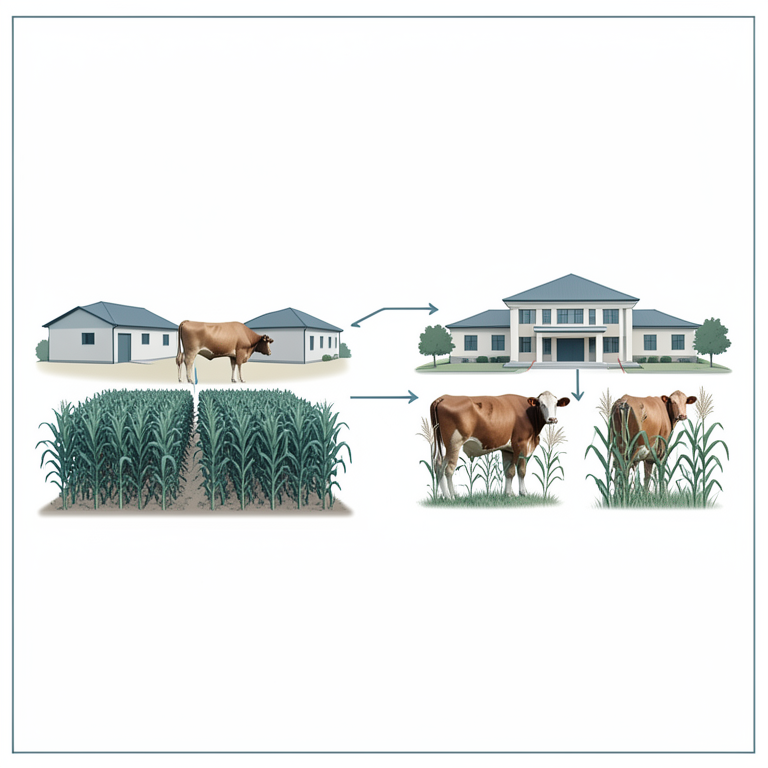
Proposed Integration of Extension Services
AI-generated conceptual illustration (Nigerian livestock farmers with cattle and crop fields). It explains the idea and does not show study data.
View source evidence ↗Introduction
The demand for livestock production information is increasing, both in terms of producer demands and in terms of the overall development potential for enhancing productivity through the transmission of information. Three interconnected causes are at work: intensification and crop-livestock integration, notably in Nigeria; growing commercialization of livestock production, especially in peri-urban regions; and the gradual elimination of animal disease as a productivity restriction (Oyewole & Sennuga, 2020) [43] . The significance of this work is that it provides a balanced picture of livestock production's functions in Nigeria. This type of data is required to examine the major concerns in the frequently illinformed or generalized discussion of livestock's current and future functions. Only by fully comprehending the complexities of these duties will we be able to develop stronger longterm remedies for such a sector (Ojo, et al., 2021) [37] . Although the Nigerian economy is heavily reliant on the oil sector, agriculture remains the country's core. In 2008, agriculture accounted for 24% of Nigeria's gross domestic product (GDP) (NBS, 2010) [35] . Agriculture, which employs more than 70% of rural labor and is the second-largest export earner after crude oil, is a vital contributor to wealth development and poverty reduction (Ude, & Salau, 2017) [47] . Crops, livestock, fisheries, and forestry are the four sub-sectors of Nigeria's agricultural sector (Rekwot et al., 2015) [44] . Crops account for roughly 85 percent of agricultural GDP, animal output for about 10%, fisheries, and forestry for about 4% and 1%, respectively, in 2006. (Rekwot et al., 2015) [44] .
In recent years, the crop and livestock sub-sectors have maintained their market share, while the fisheries have expanded and forestry has shrunk (Nigeria Vision 2020, 2009). The livestock business is Nigeria's primary source of animal protein. The cattle sub-contribution sector to GDP has dropped over time, from 5.61 percent in 1960 to around 2.64 percent in 2010 (CBN, 2015). Livestock contributions to agriculture have remained constant between 1999 and 2010. (CBN, 2015). Livestock production is a key component of the agricultural economy in developing countries, and it is a tool for socio-economic development, increased income, and improved rural life quality in Nigeria (Ude, & Salau, 2017) [47] . Poultry production outnumbers all other livestock production methods. Poultry production outnumbers all other forms of livestock in Nigeria, therefore it's not surprising that it's found all throughout the country (Makun, 2018) [51] . Poultry production has evolved from a backyard hobby to a commercially focused industry. It stands out because of its high turnover rate and quick returns on investment in livestock enterprises (Adeyemo & Onikoyi, 2015) [3] . Nigeria produced 2 billion eggs and 12,000 tons of chicken meat in 2004, with estimated bird meat consumption per capita of 1.3 kilograms (Okaiyeto and Adamu, 2016). Poultry, which is Nigeria's second-largest source of protein after ruminants, accounts for over a quarter of the country's meat production (Makun, 2018) [51] . The poultry industry has experienced a quicker expansion in terms of consumption and trade volume than many other agricultural livestock industries. Chickens (local chickens, broilers, and layers), turkeys, geese, ducks, guinea fowls, and pigeons are among the several species used in poultry production (Fadiji & Sennuga, 2020) [25] . Despite the fast-growing trade and importance of chicken production in Nigeria, there are still difficulties. This study aims to examine the constraints of poultry production in Nigeria and propose solutions to address these issues in order to boost production, enhance animal protein supply and consumption, and lower food insecurity rates. According to the figures below, chickens are the most populated, common, and widespread livestock reared in Nigeria, yet Nigeria has the lowest rate of meat and egg consumption, at.8.1 and 3.5kg, respectively (Adeyemo & Onikoyi, 2015) [3] . Ruminants, which include sheep, goats, and cattle, are among the livestock that makes up Nigeria's farm animals. Ruminants are mostly reared by farm families in the country's agricultural system. There are 34.5 million goats, 22.1 million sheep, and 13.9 million cattle in Nigeria. However, the northern section of the country has a higher concentration of these animals than the southern region. Specifically, the northern portion of the country is home to 90% of the country's cattle population and 70% of the country's sheep and goat populations (Lai-Solarin et al., 2021) [30] . The ecological state of the region, which is characterized by low rainfall duration, lighter sandy soils, and a longer dry season, is most likely to have influenced the concentration of Nigeria's cattle base in the northern region. This assertion is based on the fact that ruminants prefer drier tropics or semi-arid regions. Despite this, certain breeds of sheep and goats, particularly the West African Dwarf (WAD) species, are uniquely adapted to the country's southern (humid) region and are commonly reared by rural households in the region (Wahab, 2015). Although no breed of cow is unique to Nigeria's southern humid region, the availability of cattle in the region is mostly owing to the settlement of Hausa/Fulani pastoralists, who are the country's principal cattle rearers (Sennuga et al., 2021) Sedentary farmers are boosting their livestock production in wide parts of Nigeria, and historical divisions between farmers and pastoralists are dissolving. As a result of urban expansion and emerging businesses brought via urbanization, land under cultivation has increased at the expense of grazing areas. Animal traction has allowed farmers to produce larger fields per farmer in some locations, but it has also raised the demand for grain and grazing. Farmers have boosted their livestock holdings as a form of drought insurance and investment for cash farming revenues. Pastoralists have increasingly settled and begun to cultivate the land, either as a result of poverty or a determination to gain land use rights ahead of the competition (Ebisike et al., 2021) [23] . Despite the fact that these mechanisms are exceedingly complex, the implications for extension are obvious: large quantities of cattle in Nigeria are being reared by individuals who have no previous experience with livestock production or are employed for non-traditional reasons within fast-changing production systems.
Peri-urban livestock production
Many developing nations are experiencing fast urbanization, which comes at a great cost to animal productivity due to the neglect of animal farming as a result of mass rural-urban migration in search of better living conditions (Loutan, 2016). Request for livestock products is on the rise despite the fact that people are existing longer (Devendra, 2017) [21] . A study has been published. Proven that between 1961 and 2001, meat consumption in the country increased dramatically. Developing countries have become more urbanized and industrialized as a result of urbanization and industry (Fraser 2018) [26] . This urbanization is usually associated with higher income (Van der Zijpp 2019) [48] , which increases individuals' purchasing power, resulting in higher demands for better quality food that includes a good amount of animal protein, as opposed to traditional rural food that contains less animal protein and more carbohydrate and fats. Urbanization also results in space limits as a result of overpopulation caused by population increases in cities (Alirol et al. 2016, Lancet 2016) [10] . As the focus moves too fast industrialization, As a result, there will be fewer opportunities for animal production. To meet the animal protein needs of a city with a population of more than 12 million people, Nigerian cities like Lagos consume a lot of meat, which is mostly imported from northern parts of the country like Borno state, which accounts for about a quarter of all ruminant livestock population in the country (Braimoh and Onishi 2017) [18] . The upcoming metamorphosis of cattle will primarily serve to meet the expanding urban population's demand for animal-based sustenance. Between 2017 and 2050, metropolitan regions will account for 89 percent of expected population growth, compared to 11 percent in rural areas, and average per capita consumption of animal source foods in urban areas is higher than in rural ones. As a result, animal farms and value chains in peri-urban and metropolitan regions are projected to change more quickly and abruptly than elsewhere in the country, heightening the potential of detrimental impacts of livestock farming (Egboduku et al., 2021) [24] .
Extension focused on crop and veterinary care
Notwithstanding its growing significance, policymakers and researchers alike overlook cattle production extension. In many developing nations, the importance of cattle to household welfare, fertility maintenance, and output is still undervalued. However, because livestock production extension is cut off from both farm healthcare systems, it faces a process in the system obstacle (Oduwole et al., 2022) [36] . Cropping has shaped information for farmers, which is still strongly based on cropping's seasonal character. Such a method is less useful for livestock production because of the longer time scale and lack of synchronization of various animals and herds. Livestock services, as well as the ministries or departments responsible for them, are mostly handled by veterinarians and focus on animal health issues Specific animal treatment, precautionary safety, and livestock products health screening are examples of these services (Oyetola et al., 2022) [42] . The majority of animal production operations take place in rural or isolated places where competent veterinary services are unavailable, and those that are available find the high cost of veterinary services prohibitive. As a result, people turn to readily available quacks that cause havoc in the livestock sector by prescribing fraudulent medications and incorrect prescriptions for diseases. Substandard and other low-quality medications and vaccinations are readily available on the market and can be purchased and used by almost anyone (Babalobi, 2015; Olugasa et al. 2017) [14] . The government should support veterinary services to farmers in order to establish a viable and good livestock production system in the country. While many area-based or sub-sectoral special projects focus on livestock production concerns and are led by livestock producers, few countries can afford their own livestock production extension services. In official circles, livestock production has frequently occupied a liminal position, sandwiched between two well-defined sectors with accompanying Special interests, which were occasionally disregarded by both, swung back and forth across them (Indahgiju et al., 2022) [28] .
Who manages extension?
Extension services can be provided by NGOs, cooperatives, universities or research organizations, and the private sector, in addition to national or regional governments. The agricultural cooperative scenario in India, which has 8 million members and spans community basic groups to a national organization, offers some extension. With remarkable success, basic groups offer education on both commercial management and technical elements of dairy products, such as the use of green fodder and concentrate (Olorunniyi et al., 2022) [39] .
Roles of government
Most of the time, the government's unsuccessful policies are detrimental to the advancement of the animal sector. In an attempt to support domestic companies, politicians may prohibit the importation of commodities that are not widely available in the country without giving suitable alternatives. The paucity of soya beans (Glycine max) and groundnut (Arachis hypogaea) cake in the country, for example, has resulted in a feed deficit and skyrocketing high costs (Babatunde, & Qaim, 2019) [15] . Since the 1970s (McKay, 2016) [34] , the government has attempted to implement lending schemes and policies mostly through banks, although these have frequently failed due to a variety of problems touching on proper implementation (Jabbar et al. 2018) [29] . There aren't enough good loans for maximum animal productivity, and there aren't enough access roads to support the smooth movement of animal goods from farm to fork. The poultry industry sometimes experiences an egg glut, and the government can help by mopping up eggs to prevent an egg glut, as it does in some developed economies such as the United States and the United Kingdom, where such eggs can be given to schools as part of the school food program. However, such government incentives are rare in Nigeria, and individual farmers are left to suffer losses through no fault of their own. Farmers and animal industry workers in the industrialized world have access to modern technology such as telecommunications and affordable internet. This aids in dealing with farm issues, such as calling a veterinarian to come to the farm in an emergency or advertising their animal goods online to reach a global market. Science and technology are critical to national growth in every way, and they must be used for it (Moughan, & Hendriks, 2016). With the recent proposal to buy ten million hand phones for farmers to increase their output and communication capabilities with the world beyond their farms (Moughan, & Hendriks, 2016), the Nigerian government appears to be moving in this direction. Because most farmers are lowincome earners, they cannot afford contemporary modes of transportation and must rely on ancient techniques or inefficient and disorganized public transportation to move animals for slaughter and human consumption. Transportation is also critical for connecting rural and urban communities (Abenga et al., 2022) [1] . Another crucial area in which the government has failed is security. Animal producers, particularly poultry farmers, have lost a lot of money in recent years due to the inability to market their products due to the possibility of terrorist strikes in the country. Insecurity in the country is detrimental to the development of animal agriculture and other industries, as well as a threat to the national economy that must not be overlooked since it has the ability to bring the entire economy down. In such instances, the government can assist farmers by offering alternate markets for their products, such as purchasing eggs and using them in school food programs in areas of the country not affected by the conflict (Ajayi & Sennuga, 2022) [7] . In Nigeria, rural livestock farmers, particularly pastoralists, control more than 90% of the ruminant livestock. Despite the fact that animals play a significant economic role in Nigeria's economy, a weak stock management system has severely hampered livestock development (Adeyongo et al. 2022) [4] . Given the importance of livestock in rural livelihoods, employment generation, farm traction, and transportation, it is critical that the livestock sector receives considerable attention for the country's productive and sustainable development. In this regard, the livestock research institutes, which include the National Animal Production Research Institute (NAPRI), the National Veterinary Research Institute (NVRI), and the Nigerian Institute for Trypanosomiasis Research (NITR), must be strengthened in terms of qualified and adequate research personnel and equipment in order to conduct high-quality research on livestock-related issues. In essence, livestock research institutes must assure correct and current characterization of ruminant breeds in Nigeria, as well as create reliable estimates of ruminant breeds and populations in the country. In essence, livestock research institutes must assure adequate and up-to-date characterization of ruminant breeds that are susceptible to pests and diseases in livestock, as well as the deadly effects of disease-causing agents on the animals (Alfa et al., 2022) [9] . To do this, livestock development research should go beyond the standard field visits to animal sheds for physical livestock condition monitoring and data collecting. The country must take use of new information and communication technology (ICT) equipment that allow for remote and continuous monitoring of livestock conditions as well as data collection on animals without having to physically visit the animals' sheds. Data and information on farm animals' health, productivity, feeding regime, and feed conversion may be easily tracked with this system. Similarly, for effective management and transformative development of the livestock sector, documentation of specific livestock pedigree, characterization of farm animal breeds, and simulation of the animals' traits and production performance might be improved. In addition, the country's cattle sector requires the development of better grazing systems and management practices (Yatoo, 2017) [50] . A concerted effort is needed to shift the ruminant marketing structure away from direct beef or live animal marketing and toward the investigation of the stock potential for milk and milk products, as well as meat and meat products.
Roles of universities of agriculture
The Department is working hard to realize this vision, with notable achievements in the areas of feed evaluation for poultry and swine, effects of gene/nutrition/environment interactions on reproduction in farm animals, application of in vitro gas production in evaluating the feeding value of our forages for ruminants, value addition of animal products, and application of fungal biotechnology for improving the nutritive value of high fiber feedstuffs. Our training program includes both classroom and hands-on training. Students are represented on the Departmental Farm Committee and actively participate in farm and laboratory practical. Our postgraduate program is well-designed to ensure that our graduating students have enough equipment. Through her Poultry Research Group (PRG) and Dairy Research Group, the Department is doing active collaborative research and partnerships with private farms, the Poultry Association of Nigeria (PAN), and the International Farm Comparison Network (IFCN) (DRG). The Department expects to achieve considerable progress in research in areas including livestock production and environmental sustainability, the influence of climate change on livestock production, and organic agriculture in the next years (Anas et al., 2022) [12] . The arrangement made it easier to study the animal creature in order to gain a comprehensive understanding of its science. It researches nutrition, genetics, and improvement, as well as management, product marketing, and animal welfare. It also makes it easier to research animal feeds, pastures, grasses, and food crops in terms of their use and animal and poultry productivity under current environmental circumstances. The Agricultural Biochemistry and Nutrition course is designed to provide students with a firm foundation in the science of nutrition in order to prepare them for future studies in agricultural production and human nutrition. As a result, the courses cover the fundamentals of nutrition and feed evaluation. Animal husbandry studies cover the science and art of producing effective animals through careful breeding and selection, good feeding and management, sound sanitation and health precautions, adequate shelter, and the use of processing and marketing techniques (Ibitayo, 2015) [53] . The Department of Animal Science conducts research on a variety of domestic and exotic animal species, including beef and dairy cattle, sheep, goats, pigs, poultry, and rabbits, all of which may be found at the University's Teaching Research Farm. The Department is actively conducting research to discover solutions to the difficulties that the Nigerian cattle industry is facing. In the department, postgraduate and other research professionals have access to facilities. Studies on the effects of genotypes and environments on animal performance in terms of productivity, factors affecting calves' growth rate and yield in dairy cattle, measurement of productivity, carrying capacity, digestibility, and utilization of pasture grass and forages by grazing cattle, sheep, and oats, and assessment of the chemical constituents and nutritive values of Nigerian feeds and feeding stuff are all ongoing research projects. Other current study areas in the Department include improving the nutritional value of agro-industrial byproducts using basic biotechnological methods, the effect of environment/nutrient interaction on reproductive performance in swine and rabbits, and the value addition of beef products and eggs (Ajayi & Sennuga, 2022) [7] . New technologies, emphasis, and the problem with cattle production have evolved in recent decades. New means must be discovered to allow for the acceptance of these new technologies, to embrace new emphases, and provide solutions to new difficulties. As a result of these considerations, and in accordance with her vision and mission, the Department of Animal Science revised its curricula and research focus in order to provide five distinct programs, which were approved by the University of Ibadan Senate in 2014. Undergraduate and postgraduate students have graduated from these programs in the Department. They are as follows: Animal Breeding and Genetics Agricultural Biochemistry and Nutrition Animal Physiology, Reproduction, and Bioclimatology Animal Products and Processing Animal Production and Management.
Individual or group focus
When joint action is required or when free-rider issues in cost-recovery programs must be addressed, group approaches are preferred. On the other hand, as livestock production intensifies and gets complex, data demands will become increasingly individual.
Information vs. information-with-inputs
Extensions can provide either raw data or data related to resource inputs. Businesses engaging in product sales or advertising off-take may be interested in the latter. It's also been used by NGOs to give users a stake in the information system and promote agriculture dissemination in more remote areas. Some NGO programs involve the provision of animals for novel forms of livestock activity, such as sheep fattening by women, often on significantly subsidized terms.
Cost recovery
Because it's impossible to keep nonpayers access to obtaining data, it's tough to recuperate costs in "pure" extension. There are also ethical and environmental concerns regarding merging animal production and conservation themes, as well as charging poor mixed farmers (and pastoralists) for extension (as with improved conservation and use of manure). Cost recovery can occur when an organization communicates information gained from the marketing of a resource or when it may levy a charge on a marketed product. Developing specific management plans, such as for affluent peri-urban and intensive livestock producers, is another approach to recoup costs (Alfa et al., 2022) [9] . Animal feeds must be nutritious in order for animals to reach their full potential and output. Animal feeds are hard to come by, and even when they are, they are out of reach for the typical farmer. Farmers must purchase feed at a price that allows them to not only break even but also generate a reasonable profit because they are in the business of raising animals for profit. Perhaps the ruminant livestock business is not as affected as the poultry industry, which is more intensive in nature and requires a regular supply of feeds for maximum productivity, whereas cattle can still be fed on meadows and fodder or permitted to scavenge for food (Verma, 2018) [45] . Due to the high cost of feed, numerous research possibilities for alternate ways of providing animal feeds, such as the use of activated sludges, have been pursued to mitigate the effects of feed cost (Vriens et al. 2019) [49] . Many livestock and poultry farmers make their own feed for their animals, but they confront difficulties obtaining raw materials for compounding the feed, which might be expensive or scarce.
Participation
"Participatory" or "farmer-led" extensions have recently received a lot of attention. Since farmer involvement is essential, the benefits of conceptual frameworks ought not to be ignored: navigate to a stream of skills and knowledge, ahead for interpreting study results into outreach communications, as well as the organization's ability to persist as notifications come and go, as discussed further below. Also, certain advising services supplied by nongovernmental organizations (NGOs) are based on predispositions with insufficient technical grounds. Most farmers have a low level of knowledge, if not illiteracy, which makes it difficult for them to use contemporary animal production practices where conventional methods have failed or yielded lower profits. According to a study conducted in the state of Osun, education has a strong and favorable link with average production (Agboola, 2015) [5] . This suggests that the higher a farmer's educational level is, the more productive their farm is. As a result, farms run by educated entrepreneurs will outperform those run by illiterates. Having more graduates encouraged into animal production to boost the sector will be a good idea for the development of the sector. These graduates will introduce contemporary animal production methods that will ensure the country's food security as well as the development of animal production.
Improving livestock production extension
Because governments are unlikely to construct additional institutions or support additional services to enable agricultural development in the current climate of austerity, this increasing requirement will have to be fulfilled by updating organizations and services. Across much of Nigeria, this will necessitate national crop-based extension systems. In all circumstances, however, a collaborative evaluation of manufacturers' knowledge needs is essential before deciding on institutional forms. The government will continue to play a role in extension services, especially for poorer producers and in sectors with high societal benefits, including land quality productivity and water maintenance. It will be hard to overcome expenses from impoverished agricultural producers, but retrieving expenses from more rich manufacturers (like early postnatal abundant form or farm owners) could open up government funds to assist weaker growers (Alfa et al., 2022) [9] .
Expansion of animals in crop-based societies
At the national level, interactions among extension service organizations and animal agencies or sectors are inherently complex. Animal farming is really a highly technical comment section with distinct structures and an adequately interconnected sub-sector with other crop and animal output to be included in extension services. Two aspects of the approach are decentralization of all expansions and unification of farming and animal knowledge transfer under community agencies in accordance with local demands and conditions. The majority of approaches for integrating livestock into country development systems will necessitate crop-specialist workers being cross-trained in animal agriculture and conversely. Reduced collaborative requires evaluation methods are becoming more popular, and they can help identify essential requirements. In contrast to crops, livestock extension must account for large differences in husbandry techniques and relative resource endowments among households, even inside tiny places. In the African case of information restrictions controlling agricultural integration, the point at which it becomes worthwhile to invest labor in fodder cultivation, hay barn construction, and manure pit construction will arrive at very different times for different homes, even within one locality. In the same manner, households will use new opportunities for commercialized animal production in a variety of ways. Collaborative gap analysis, sensitivity to cross variance, and the flexibility to meet technology needs as they occur, rather than according to a calendar, are three linked but different imperatives for expanding cattle growth. To meet these expectations, the animal farming modification should benefit through 'farm owner extended' schemes, albeit public sector transformation is likely to be required. Extension calendars can be produced at lower levels and handled more freely, and extension workers can be encouraged to present options rather than predetermined messages, as part of a participatory needs assessment method. Any changes, though, will demand continued investment. They will also necessitate stronger research-extension ties.
Here, livestock research may face distinct challenges such as: compartmentalization and separation from departments responsible for extension links And underdeveloped approaches for adaptive research, particularly participatory on-farm research.
In Burkina Faso, for example, connections between central livestock research and extension are controlled by a "horizontal program" in manufacturing systems study, which is actually reduced. At the regional level, seventeen adaptable research centers are overseen, although none of them conduct livestock research.
Production extension within animal health service
Other than information tied exclusively to material inputs such as medications, vaccinations, or sperm, there are still instances of livestock medical services successfully communicating productivity data to combined agricultural producers. Disease prevention through vaccine campaigns, mortality and morbidity reduction, and meat cleanliness have all remained top concerns. This is understandable given the importance of human health, the fact that diseases generate tangible losses, and the fact that remedies are available. Furthermore, animal health workers' work schedules are not favorable to regular mass extension: most animal health services are concentrated in district clinics where farmers can bring their animals, or on individual animal call-outs. Communication skills are unlikely to be taught to vets and parapets. Their professional incentive systems are usually based on tangible goals such as the number are not conducive to the dissemination of 'clear' information about animals that have been treated/vaccinated or given drugs, and are not helpful towards the transmission of 'clean' data about animals that have been treated/vaccinated or given medications (Babalobi, 2015) [14] . As a result, livestock health services have yet to realize their full promise as vehicles for widespread expansion to mixedcrop-livestock farmers. There is a case to be made for animal health and fertility camps organized by livestock health agencies, such as those in India, to disseminate knowledge to widely dispersed farmers. There's also a case to be made for supplementing animal health care with a separate livestock extension service, which might operate out of the same clinics and hospitals but be staffed differently (Indahgiju et al., 2022) [28] . Para veterinary projects, many of them, which are often run by nongovernmental organizations (NGOs), have a proven history with nomadic herders all over the globe, providing productivity data to a certain extent. Animal health personnel from the government are increasingly involved in reaching out to more specialized livestock farmers in peri-urban and rural locations. There are growing pressures to charge for this guidance or to turn it on to the private sector.
Expansion of output through expertise
Distinct from agricultural production and veterinary medicine, the independent transmission of livestock production information has traditionally occurred through donation initiatives, as just a sideline work of academic institutions, and through non-governmental organizations (NGOs). Such programs have a lot of similarities: they're accessible to collaborative gap analysis and technological development, and they usually communicate extended messages through cutting-edge media. Instead of only giving information, they may engage with the complete livestock production cycle on a commodities basis, providing financing, material inputs, and selling alternatives. Some sponsor programs contain specialized research components, rather than relying on traditional study ties, and both sponsor initiatives and Nonprofits can efficiently network information among themselves (Van der Zijpp, 2019) [48] . On either side, donors, as well as Nonprofit projects, usually have high levels of funding and covert subsidies. They're also more likely to function in favorable target locations, and they might only apply to a small number of farmers. These circumstances can result in high adoption rates but limited institutional durability and replicability. Their role will most likely be one of the following: catalytic in that they test interventions and techniques that can then be extended to national services in less intensive forms; or They are time-bound in the sense that, when used in conjunction with spontaneous diffusion mechanisms, they can successfully propagate a single innovation.
Conclusions
The writing of this essay was driven by the growing ability in Nigeria for enhancing livestock output through the offering of outreach on manufacturing practices. However, main stakeholder groups (crop-based development and livestock medical services) have pushed livestock extension to the sidelines, and livestock farmers' needs are not well understood. Crop production needs and livestock medical problems are less difficult to assess and address than animal agriculture needs. Livestock farmers are often dispersed and have a diverse set of requirements (even within a particular community). It is now clear what kinds of reforms and changes will be required to adequately integrate varied livestock production messaging into crop-based extension initiatives. Many of these changes are required for such services to operate with impoverished farmers effectively in the first place. Animal health services may be able to handle more information if specific improvements, most notably in professional reward systems, are applied. The administrative setting for animal farming expansion can indeed be chosen arbitrarily; it must be based on the nature of farmers' information needs and available resources.
Recommendation
In Nigeria, rural livestock farmers, particularly pastoralists, control more than 90% of the ruminant livestock. Despite the fact that animals play a significant economic role in Nigeria's economy, a weak stock management system has severely hampered livestock development. Given the importance of livestock in rural livelihoods, employment generation, farm traction, and transportation, it is critical that the livestock sector receives considerable attention for the country's productive and sustainable development. In this regard, the livestock research institutes, which include the National Animal Production Research Institute (NAPRI), the National Veterinary Research Institute (NVRI), and the Nigerian Institute for Trypanosomiasis Research (NITR), must be strengthened in terms of qualified and adequate research personnel and equipment in order to conduct high-quality research on livestock-related issues. In essence, livestock research institutes must assure correct and current characterization of ruminant breeds in Nigeria, as well as create reliable estimates of ruminant breeds and populations in the country. In essence, livestock research institutes must assure adequate and up-to-date characterization of ruminant breeds that are susceptible to pests and diseases in livestock, as well as the deadly effects of disease-causing agents on the animals.
To do this, livestock development research should go beyond the standard field visits to animal sheds for physical livestock condition monitoring and data collecting. The country must take use of new information and communication technology (ICT) equipment that allow for remote and continuous monitoring of livestock conditions as well as data collection on animals without having to physically visit the animals' sheds. Data and information on farm animals' health, productivity, feeding regime, and feed conversion may be easily tracked with this system. Similarly, for effective management and transformative development of the livestock sector, documentation of specific livestock pedigree, characterization of farm animal breeds, and simulation of the animals' traits and production performance might be improved. In addition, the country's cattle sector requires the development of better grazing systems and management practices. A concerted effort is needed to shift the ruminant marketing structure away from direct beef or live animal marketing and toward the investigation of the stock potential for milk and milk products, as well as meat and meat products.
References
52 in the original paper- Abenga JK, Alabuja FO, Bako H, Ajayi AH, Sennuga SO. Barriers to Effective Extension Agents and Smallholder Farmer Communication in Gwagwalada Area Council, Abuja, Nigeria, Agricultural Extension Journal. 2022;6(3):101-108
- Adangara UM, Sennuga SO, Ezinne EM, Barnabas TM, Alabuja FO. Effect of Information Sources on Farmers' adoption of Sawah Eco-Technology in Rice Production in Kwali Area Council -FCT, Nigeria, Acta Scientific Agriculture. 2022;6(7):03-09. DOI: 10.31080/ASAG.2022.06.1153
- Adeyemo AA, Onikoyi MP. Prospects and Challenges of Large-Scale Commercial poultry production in Nigeria: Agricultural journal. 2015;(7):388-393.
- Adeyongo IL, Chibuike F, Sennuga SO, Alabuja FO. Adoption of Agricultural Innovations among Rice Farmers in Federal Capital Territory, Nigeria. International Journal of Agriculture Extension and Social Development. 2022;10(6):12-19
- Agboola MO, Balcilar M. Impact of Food Security on Urban Poverty: A Case Study of Lagos State, Nigeria. Procardia-Social and Behavioural Sciences. 2015;62:1225-1229.
- Aina ABJ. Goat (Capra hircus): A misunderstood animal. 40 th Inaugural Lecture, Federal University of Agriculture, Abeokuta, 2017.
- Ajayi AH, Sennuga SO. Perceived Factors Affecting Herders-Farmers' Communal Conflict in Plateau State, Nigeria, International Journal of Agricultural Extension and Rural Development Studies. 2022;9(2):32-46.
- Akinbami JFK, Salami AT, Siyanbola WO. An integrated strategy for sustainable forest energy environment interactions in Nigeria: Journal of Environmental Management. 2017;69(2):115-128.
- Alfa MK, Sennuga SO, Barnabas TM, Alabuja FO, Ebhohon A. Effects of Information and Communication Technology on Youths Participation in Sesame Seed Production in Kwali Area Council, Abuja, Nigeria, Journal of Media & Management. 2022;1694(04):1-6.
- Alirol E, Getaz L, Stroll B, Chappuis F, Loutan L. Urbanization and Infectious diseases in a globalized World: The Lancet infectious diseases. 2016;11(2):131141.
- Aluko KJ, Sennuga SO, Ezinne ME. Exploring Smallholder Farmers' Perception on the Uptake of Agricultural Innovations in Kuje Area Council, Abuja International Journal of Agricultural Economics. 2021;6(6):315-323. DOI: 10.11648/j.ijae.20210606.19
- Anas HA, Sennuga SO, Barnabas TM, Alabuja FO, Okpala EF. Smallholder Women's Perceptions on the Barriers to Promoting and Processing Local Rice in Gwagwalada Area Council, Abuja, Nigeria, International Journal of Current Research & Academic Review. 2022;10(6):27-36.
- Anyanwu RC, Jukes DJ. Food system and food control in Nigeria: Food policy. 2015;16(2):112-126.
- Babalobi OO. Professional Issues for the Nigerian Veterinarian in the Twenty First Century: Nigerian Veterinary Journal. 2015;26(2):1-7.
- Babatunde RO, Qaim M. Impact of off farm income on food security and nutrition in Nigeria: Food policy. 2019;35(4):303-311.
- Bamaiyi PH. Factors Militating against the control of Helminthosis in Livestock in developing countries. Veterinary World. 2015;5(1):42-47.
- Boland MJ, Rae AN, Vereijken JM, Meuiwissen MPM, Fischer ARH, Van Boekel MAJS, et al. The future Supply of animal-derived protein for human consumption: Trends in Food Science & Technology. 2016;29(1):62-73.
- Braimoh AK, Onishi T. Spatial determinants of urban land use change in Lagos, Nigeria. Land Use Policy. 2017;24(2):502-515.
- Brisibe F, Nawathe DR, Bot CJ. Sheep and goat brucellosis in Borno and Yobe States of arid northeastern Nigeria: Small Ruminant Research. 2016;20(1):83-88.
- Central Bank of Nigeria. Central Bank of Nigeria. Annual Report Statement of Account Statistical Bulletin, 2015.
- Devendra C. Perspectives on animal production systems in Asia. Livestock Science. 2017;106(1):1-18.
- Dipeolu MA. Healthy meat for wealth. 36 th Inaugural Lecture, Federal University of Agriculture, Abeokuta, 2015.
- Ebisike C, Sennuga SO, Tuedon OA, Maimunatu KH. Exploring the Use of Information and Communication Technologies (ICTs) among Village Extension Agents in Federal Capital Territory, Nigeria. Journal of Research in Science and Technology. 2021;2(8):78-84.
- Egboduku CO, Sennuga SO, Okpala EF. Factors influencing the interest of youths towards career in agriculture: A case study of Bwari Area Council, Abuja, Nigeria, International Journal of Advance Agricultural Research. 2021;9:61-6. doi.org/10.33500/ ijaar.2021.09.006
- Fadiji TO, Sennuga SO. Influence of Characteristics and Perception on Usage of Information and Communication Technologies (ICTs) by Selected Extension Agents in Northern Nigeria, Global Journal of Agricultural Research. 2020;8(2):45-57.
- Fraser D. Toward a global perspective on farm animal welfare. Applied Animal Behavior Science. 2018;113(4):330-339.
- Temesgen Begna. Impact of drought stress on crop production and its management options. Int. J Res. Agron. 2021;4(2):66-74.
- Indahgiju WD, Sennuga SO, Bako H, Maisule SA. Exploring the Utilization of Cowpea Storage Mechanisms for Post-Harvest Loss Avoidance in Kuje Area Council, Abuja, Nigeria. International Journal of Agricultural Research Pesticides and Biofertilizers. 2022;3(5):1-6 42.
- Jabbar M, Ehui S, Von Kaufmann R. Supply and Demand for Livestock Credit in Sub-Saharan Africa: Lessons for Designing New Credit Schemes. World Development. 2018;30(6):1029-1042.
- Lai-Solarin WI, Adeoye WA, Sennuga SO. Technology Adoption Capabilities of Small Farm Dairy Cattle Holders in Gwagwalada, Abuja: Effects of Asymmetric Information and Extension Approaches, International Journal of Agricultural Economics. 2021;6(6):315-323.
- MacRae J, O'Reilly L, Morgan P. Desirable characteristics of animal product from a human health perspective. Livestock Production Science. 2015;94(12):95-103.
- Majiyagbe K, Lamorde AG. Nationally Coordinated Research Programme on Livestock Diseases: Sub sectorial goals, Performance and Medium-term research plans. Tropical Veterinarian. 2017;15:75-83.
- Bassim Haleem Kshash, Hayat Kadhum Oda. Challenges facing extension agents in Iraq. Int. J Agric. Extension Social Dev. 2021;4(1):58-65.
- McKay A. Growth and Poverty Reduction in Africa in the Last Two Decades: Evidence from an AERC Growth and Poverty Project and Beyond. Journal of African Economies. 2016;22(1):49-76.
- National Bereau of Statistic. Gross Domestic Product for Nigeria (Expenditure & income) NBS, Plot 762, Independence Avenue, Central Business District, Abuja, 2010.
- Oduwole AE, Sennuga SO, Bako H, Wilberforce AG. (). Impact of Intensive Agricultural Training on Productivity of Smallholder Farmers: A Case Study of International Skill Acquisition Centre, Nasarawa State, Nigeria. International Journal of Latest Research in Agriculture & Veterinary Sciences. 2022;04(01):18-24, 40.
- Ojo IH, Sennuga SO, Kagbu JH, Omokore DF. Assessment of Women Farmers' Sources of Information on Adoption of Improve Cassava International Journal of Agriculture and Nutrition https://www.agriculturejournal.net/ Production Technology in Mopamuro Local Government Area, Kogi State, Nigeria. Journal of Agricultural Economics, Extension & Social Sciences. 2021;4(1):78-85.
- Okeiyeto PO, Adamu AM. Export Potential of Livestock Product. A Paper presented at the 3-day National Workshop on Repositioning Nigeria Agriculture for Export: Prospects and Challenges. Organized by ARMTI and NPASH. Ilorin, October 5-7, 2016.
- Olorunniyi AA, Ezinne ME, Osiboye OO, Sennuga SO. Effect of social media in Enhancing Agricultural Extension among Farmers in Gwagwalada Area Council, Abuja. Journal of Research in Science and Technology. 2022;3(4):24-32.
- Olusaga BO, Emikpe BO, Oluwayelu DO, Cadmus SIB, Ayinmode AB, Oluwole OE. Field Evaluation of Immunogenicity of Five Commercial Vaccines Against Newcastle Disease in Poultry Farms in Ibadan, Nigeria. Nigerian Veterinary Journal. 2017;33(2):475-482.
- Mengistu Meresa. The role of agricultural extension service on agricultural development: The case of Walayta Sodo Zuria District, Ethiopia. Int. J Agric. Extension Social Dev. 2020;3(1):07-13.
- Oyetola IA, Sennuga SO, Bako H, Wilberforce AG. Exploring the Adoption of Fish Production Using Concrete Tank in The Municipal Area Council, Abuja. South Asian Research Journal of Agriculture and Fisheries. 2022;4(2):40-46. DOI: 10.36346/sarjaf. 2022.v04i02.004 6
- Oyewole SO, Sennuga SO. Factors Influencing Sustainable Agricultural Practices among Smallholder Farmers in Ogun State of Nigeria, Asian Journal of Advances in Agricultural Research. 2020;14(1):17-24.
- Rekwot GZ, Ahmed S, Dawang NC. Technical efficiency of poultry egg production in Kaduna State, Nigeria. Proceedings of the 20 th Annual Science Association of Nigeria, University of Ibadan, Oyo State, 2015, 324-329.
- Sachan N, Singh VP, Verma AK. In Vitro Meat: The Start of New Era in Meat Production. International Journal of Livestock Research. 2018;2(1):38-51.
- Sennuga SO, Baines RN, Conway JS, Naylor RK. Effect of Smallholders Socio-Economic Characteristics on Farming Households' Food Security in Northern Nigeria, International Journal of Economics and Sustainable Development. 2020;11(4):140-150.
- Ude F, Salau A. Rural development planning and labor requirements in Nigeria: a case study of small-scale irrigation projects. Applied Geography. 2017;7:333342.
- Van der Zijpp AJ. Animal food production: the perspective of human consumption, production, trade and disease control. Livestock Production Science. 2019;59(2-3):199-206.
- Vriens L, Nihoul R, Verachtert H. Activated sludge as an animal feed: Biological wastes. 2019;27(3):161-207.
- Yatoo MI, Kumar P, Dimri U, Sharma MC. Effects of Climate Change on Animal Health and Diseases: International Journal of Livestock Research. 2017;2(3):15-24.
- Makun H. Diary production systems in Nigeria: Presentation delivered at the technical meeting of Africa Sustainable Livestock 2050, 2018.
- Ibitayo OO. Towards effective urban transportation system in Lagos, Nigeria: Commuters' opinions and experiences. Transport Policy. 2015;24:141-147.
Cited by 12
From OpenAlex, OpenCitations and reference lists read by Scinovex
- Enhancing indigenous livestock production towards improving livelihoods among small-scale farmers in KwaZulu-Natal Province, South Africa ↗
Yanga Nontu, Nkosingimele Ndwandwe, Bonguyise Mzwandile Dumisa, Zole Nqobile Msane, Sibusisiwe Nonkosi Dlamini · Frontiers in Sustainable Food Systems · 2025
Income security is a global concern threatening the livelihood of farmers. To ensure that the livelihoods of farmers are maintained, small-scale indigenous livestock farming serves as a solution to this issue. To investigate the income contribution of producing indigenous livestock towards small-scale farming households in uMhlathuze Municipality, this study was conducted. It randomly collected primary data from 60 small-scale indigenous…
❝ 6PDF - Gender-based approaches for improving milk safety, value addition, and marketing among smallholder livestock farmers ↗
Judith Irene Nagasha, Michael Ocaido, Elisabeth Lindahl Rajala, Assem Abu Hatab, Linley Chiwona‐Karltun · Frontiers in Sustainable Food Systems · 2024
In the context of Uganda, this study delves into gender-based strategies aimed at enhancing women’s engagement in milk safety, value addition, and marketing within smallholder livestock farming. The objectives were two-fold: first, to document the current practices of women in milk safety, value addition, and marketing channels; second, to examine the constraints, opportunities, and strategies related to the production of…
❝ 5PDF - Climate change and agricultural productivity: An in-depth review of impacts, adaptation strategies, and policy implications ↗
Matala Bhupathi Rayalu · South Asian Journal of Agricultural Sciences · 2024
Climate change represents one of the most significant challenges facing global agriculture in the 21st century, with far-reaching impacts on agricultural productivity, food security, and rural livelihoods. This comprehensive review explores the multifaceted effects of climate change on agriculture, detailing how rising temperatures, shifting precipitation patterns, and increased frequency of extreme weather events influence crop and livestock production. The review
- Kerosene-contaminated feed: insights on haematology and organ histopathology of broiler chickens ↗
F. S. Orjiakor, Luke Chukwudi Ali, Paulinus Ikenna Umeugokwe, Ndubuisi Samuel Machebe · Ukrainian Journal of Veterinary and Agricultural Sciences · 2025
The study involved feeding kerosene-contaminated feed to 132 Ross strain day-old broiler chickens and assessing their hematology and organ histology. The birds were divided into four treatments, each with three replicates and 11 birds per replication in a completely randomized experiment design. The chickens were fed a kerosene-contaminated diet per kg of feed at 0 ml, 3 ml, 6 ml,…
❝ 1PDF - Genetic basis of Abigar and Sheko cattle breed adaptations in the tsetse infested lowlands of Ethiopia: A review ↗
Abera Fekata Dinkissa · International Journal of Bioscience and Biochemistry · 2023
The objective of this review paper was to assess the genetic foundation of the Abigar and Sheko cattle breeds and their adaptations in the tsetse-infected lowlands of Ethiopia. Sheko cattle are more resistant to biting fly attacks and maintain their body condition, unlike Zebu cattle, making them less likely to get the disease. The sheko breed is prized for its
❝ 1Found by Scinovex - Study on socio personal, psychological and economic profile of farm women on value addition of milk
Aditya Kumari, Pranav Kumar, Khushboo Panwar, Mohit Sharma · International Journal of Advanced Biochemistry Research · 2026
The present study was conducted on 100 farm women to assess the impact of training on milk value addition. Recognizing the importance of value addition in enhancing the socio-economic status, decision-making abilities, and entrepreneurial skills of farm women, a series of training programmes were organized by the Division of Livestock Products Technology, Faculty of Veterinary Sciences and Animal Husbandry, SKUAST-Jammu. These programmes were implemented across various blocks of the Jammu district under a DST (Government of India) funded project. The findings revealed that the majority of trai
- Prevalence and Associated Risk Factors of Bovine Fasciolosis in Injibara Town, North Western Ethiopia ↗
Gashaw Molla, Habtamu Addis, Melaku Yismaw · Veterinary and Animal Science · 2026
Fasciolosis is a snail-borne parasitic disease caused by genus Fasciola liver flukes that leads to high morbidity and moderate to high mortality in cattle. A cross-sectional study was conducted from February to may 2026 to determine the prevalence and associated risk factors of bovine fasciolosis in Injibara town. A total of 384 cattle faecal samples were collected using simple random…
❝ 0PDF - Improving livestock production through extension: Analysing the role of institutions and information dissemination ↗
L. Andersen, M. Nielsen · International Journal of Research in Management · 2024
The role of extension services in improving livestock production is paramount for enhancing agricultural productivity and fostering rural development. This paper examines the multifaceted role of extension services in the dissemination of knowledge and the pivotal role of institutions in facilitating effective information transfer. Through a comprehensive analysis of the involvement of various stakeholders, such as government agencies, private organizations,
- Abundances of ectoparasites of sheep in and around Gindeberet district, west Shoa zone, Ethiopia
Dessalew Habte, Tilahun Tadesse · International Journal of Biology Sciences · 2023
A cross sectional study was carried out in Gindeberet district in Western Shoa Zone of Oromia regional state from June 2021 to October 2021. Sheep are the most important farm animals in our country, especial dominant livestock, providing skin and wool, and cash income in addition to food subsistence value obtained from livestock production. However, due to the abundances of ectoparasites, there is loss of skin value, income and wool due to poor management problem. The purpose of this study was to identify major ectoparasites of sheep and to determine their prevalence in the study area and to a
- Review on effect of antimicrobial residual on human health ↗
Debeb Dessie · International Journal of Clinical Biology and Biochemistry · 2023
Human beings can get protein-rich foods from animal as by product (milk, meat, and eggs), to fulfill their nutritional requirements, and the quality and nature of this animal origin food may be directly or indirectly associated with the health human that consumed this animal origin food. “Veterinary drug” means any substance or mixture of substances that are essential for treatment
- An analytical study on the impact of animal husbandry on economic upliftment of Munger and Samastipur districts ↗
Dr. Govind Kumar · International Journal of Financial Management and Economics · 2023
Livestock has played an indispensable role in the Indian economy. Animal husbandry is culturally and economically integrated into the society. Livestock is a source of protein, livelihood and draught power. Diverse enterprises like Apiculture, Sericulture, and Pisciculture have been reared traditionally for many years. Indigenous stock has higher resistant to diseases and can better adapt to climate change. They act…
❝ 0PDF - Review on current epidemiological status and public health importance of bovine tuberculosis in Ethiopia ↗
Yeshiwas Tarekegn · Zoological and Entomological Letters · 2023
The review conducted in these papers revealed the prevalence estimate of B. tuberculosis in Ethiopia was determined to be 5.8%. Bovine tuberculosis (BTB) is a known endemic illness of cattle in Ethiopia. The prevalence of intensive dairy production systems was higher (3.1-68%) than that of large livestock production systems (3.4-6.2%) and slaughterhouses (3.5-32%) in different regions of the nation. In