
Research article · 2020 · Full text
International Journal of Agriculture and Food ScienceComparative evaluation of Dioscorea bulbifera genotypes grown in Western Himalayas
Volume 2(2) · Pages 20–24 · DOI: 10.33545/2664844x.2020.v2.i2a.38 ↗
Research areasPotato Plant Research
Abstract
Author-writtenDioscorea bulbifera (aerial yam) is a valuable species of Western Himalayan region used for food and in traditional medicine. Assessment of the genetic variability of a plant species can contribute significantly to the crop conservation and improvement. Tubers of Dioscorea bulbifera were randomly collected from 6 different agro-ecological zones of Uttarakhand State for the study. Qualitative and quantitative morphological traits, and yield parameters were assessed to evaluate genetic diversity in Dioscorea bulbifera genotypes from different agro-ecological regions. Desirable agronomic traits such as bulbil yield, higher number of bulbils per plant, greater bulbil weight, higher number of branches on the main stem were used for selection of superior genotype. Genotype DG5 was the most productive with bulbil yield of 2213 g/plant. The least productive genotype was DG1 with bulbil yield of 291 g/plant. Varietal diversity was observed in Dioscorea bulbifera cultivated at different locations in the Western Himalaya.
Summary
Source-checkedPlain-language reading of the full paper, prepared with AI and checked against the text. Each point links to the authors' own words.
Why it matters
- Dioscorea bulbifera, also known as aerial yam, is a plant species in the Western Himalayan region that is used for both food and traditional medicine. View evidence ↗
- Yams are an important global tuber crop providing essential nutrients including starch, proteins, lipids, vitamins, and minerals. View evidence ↗
- In India, the tubers of this species are used to treat various conditions such as ulcers, inflammation, and dysentery, and are valued for their diuretic and antihelmintic properties. View evidence ↗
The question
- The study aimed to evaluate the genetic variability of Dioscorea bulbifera grown across different agro-ecological zones in the Western Himalayan region. View evidence ↗
What they did
- Planting materials were collected from six randomly selected villages in diverse agro-ecological zones of Uttarakhand, India: Auli, Bageshwar, Champawat, Dharchula, Munsiyari, and Pithoragarh. View evidence ↗
- The field experiment used a Random Block Design with 25 replicates for each of the six evaluated genotypes. View evidence ↗
- Researchers assessed qualitative traits including the color, roughness, and twining direction of stems; leaf color, shape, and vein color; and the shape, skin color, and texture of bulbils. View evidence ↗
- Quantitative measurements were taken for stem diameter, number of branches and leaves, leaf dimensions, and bulbil diameter and thickness. View evidence ↗
What they found
- Genotype DG4 had the highest number of branches per plant (11.20 ± 2.93), while DG1 had the lowest (7.30 ± 4.24). View evidence ↗
- Genotype DG4 exhibited the largest stem diameter among all genotypes at 3.02 ± 0.67 cm. View evidence ↗
- At 80 days after plantation, genotype DG1 had a significantly higher initial plant height (341.4 ± 11.0 cm) compared to other genotypes. View evidence ↗
- By 110 days, genotypes DG4 (562.0 ± 12.7 cm), DG5 (568.8 ± 12.7 cm), and DG6 (578.0 ± 12.7 cm) were significantly taller than DG1 (392.0 ± 12.7 cm) and other genotypes. View evidence ↗
- Fruit production per plant was significantly higher in DG4 (57.0 ± 1.5), DG5 (56.1 ± 1.5), and DG6 (57.4 ± 1.5) compared to DG1 (9.9 ± 1.5). View evidence ↗
- Genotype DG3 produced the heaviest fruits (70.9 ± 1.9 g), followed by DG2 (54.2 ± 1.9 g) and DG5 (42.5 ± 1.9 g). View evidence ↗
- Genotype DG5 was the most productive with a bulbil yield of 2212.8 ± 88.5 g/plant, while DG1 was the least productive at 290.6 ± 88.5 g/plant. View evidence ↗
What it means
- The authors conclude that there is wide diversity among the genotypes, and those with high yield parameters should be selected for conservation and use in food and medicine. View evidence ↗
Visual summary
3 visualsIllustrations explain the paper; charts are replotted from the paper's own table values.
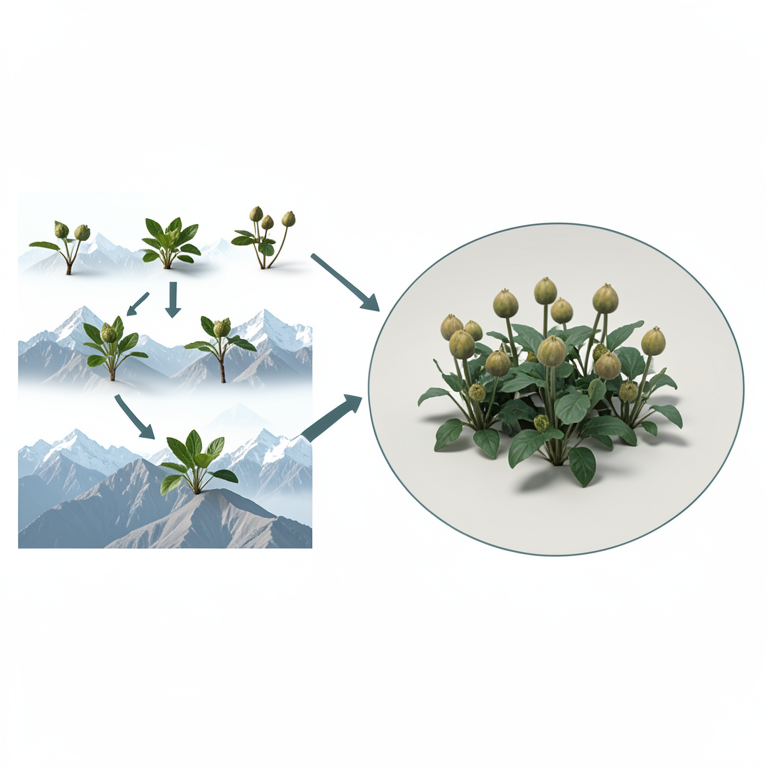
Study Scope Map
AI-generated conceptual illustration (Dioscorea bulbifera (Air potato) plants in the Western Himalayan landscape). It explains the idea and does not show study data.
View source evidence ↗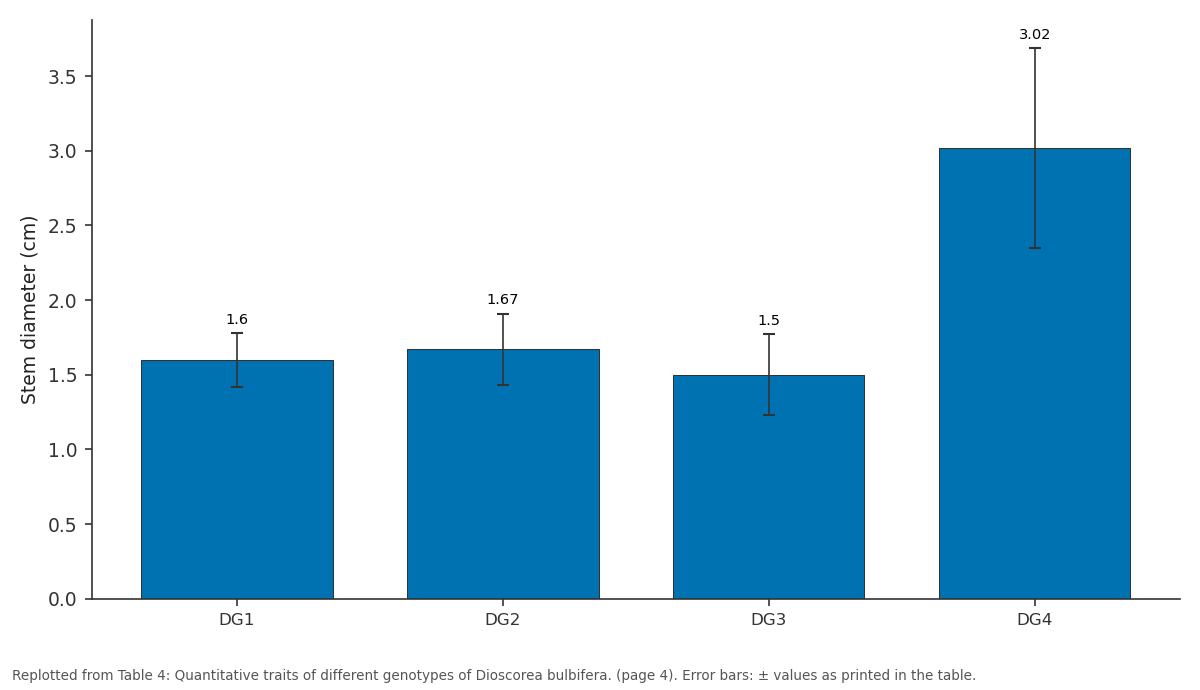
Stem diameter (cm): DG1 vs DG2 vs DG3 vs DG4
Replotted from Table 4 (page 4) of the original paper. Every bar is the paper's own table value.
View source evidence ↗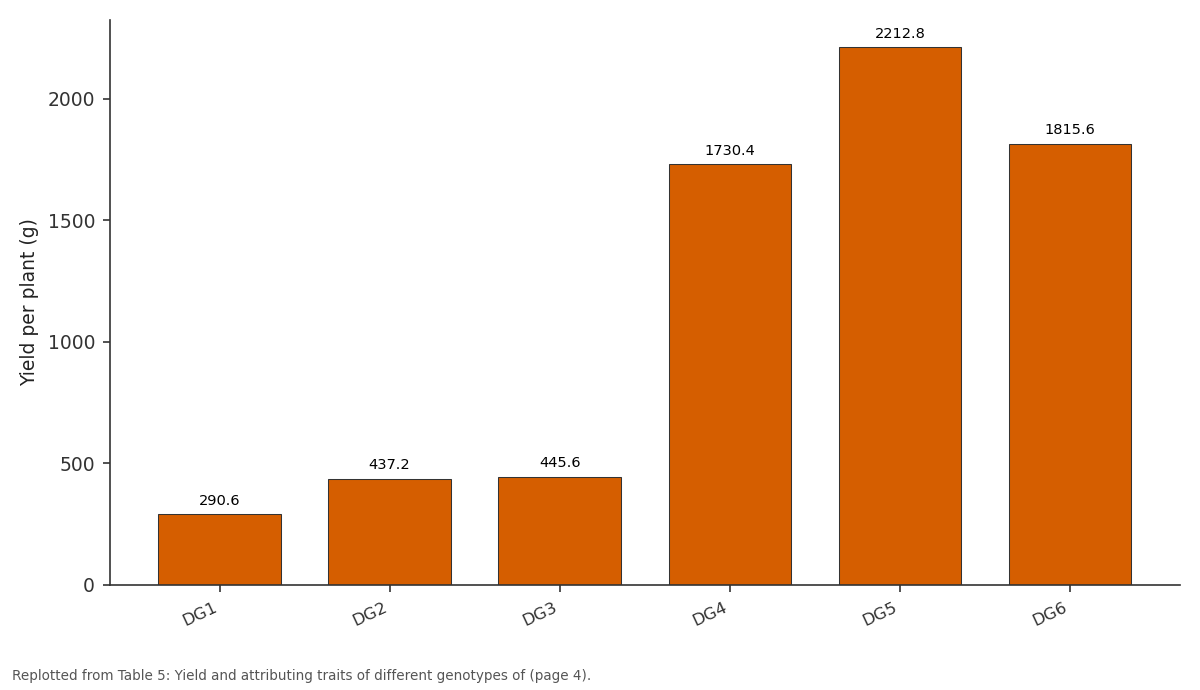
Yield per plant (g): DG1 vs DG2 vs DG3 vs DG4 vs DG5
Replotted from Table 5 (page 4) of the original paper. Every bar is the paper's own table value.
View source evidence ↗Figures & tables
From the original paper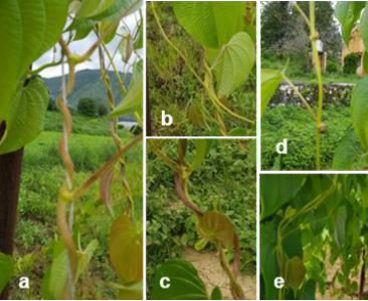 Figure 1
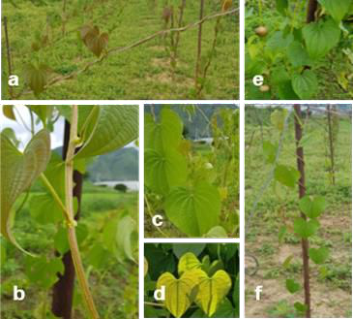 Figure 2
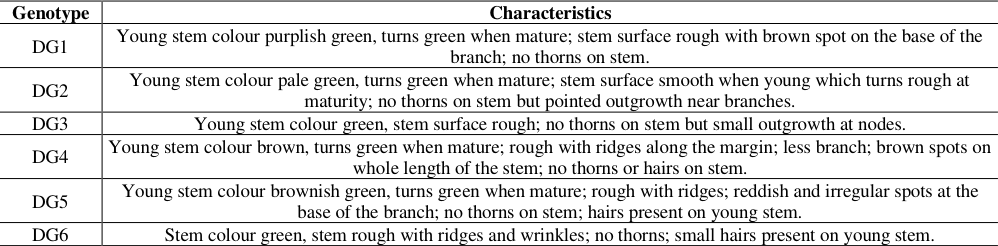 Table 1
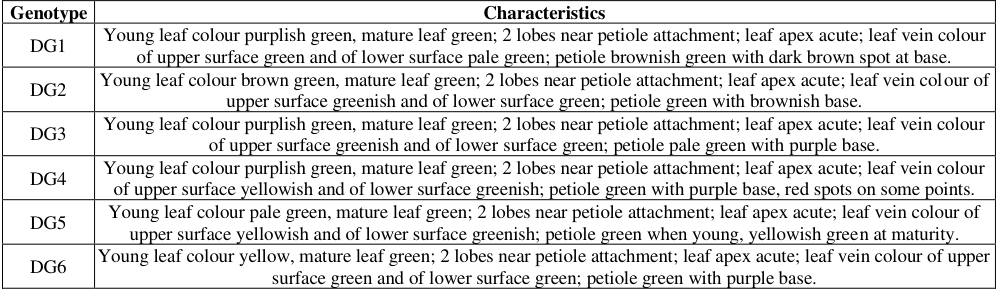 Table 2
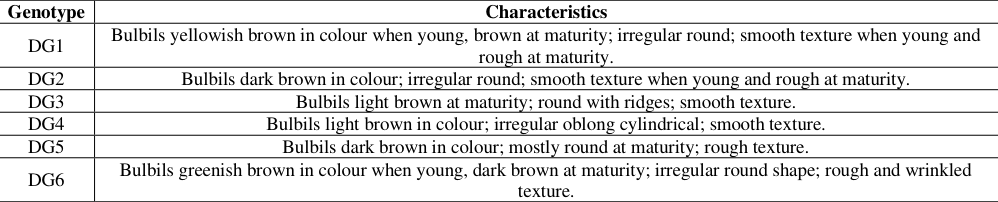 Table 3
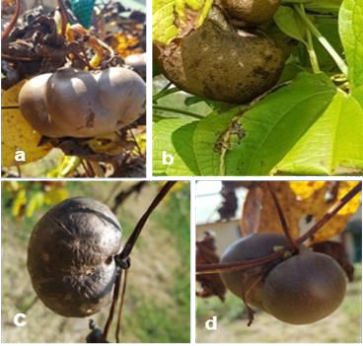 Figure 3
 Table 4
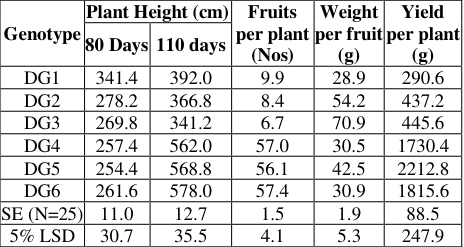 Table 5
Introduction
The Western Himalayan region in India is rich in plant biodiversity and the tribal communities are dependent on local flora for their food and medicine. A number of wild and native vegetable crops have excellent medicinal and nutritional properties. Roots and tubers are cultivated and consumed widely in rural areas and contribute significantly for food security and traditional medicine. Dioscorea bulbifera L. is a crop of significant food and medicinal value cultivated in the Western Himalayas [1] . Dioscorea bulbifera belongs to the family Dioscoreaceae and is also known as aerial yam or air potato. It is characterized by edible aerial bulbils which develop at the base of the leaf petioles [2,3] . It is a glabrous, non-spiny, annual climber plant species originating from Asia and Africa [4,5] . Yams (Dioscorea spp.) are one of the world's most important tuber with high food and economic potential [6] . Nutritionally, yam tubers contain mainly starch and serve as the staple carbohydrate source for millions of people [7] . Other essential dietary nutrients in Dioscorea species are proteins, lipids, vitamins, and minerals [8] . It is consumed in different forms like boiled, pounded, fried or roasted [9] . Yam is a major source of energy in the diet of most people in the tropics. Dietary calories, more than 200 per capita daily is contributed by yam to more than 150 million people in West Africa [10] . It is consumed as food by about 300 million people throughout the world [11] . Different parts of aerial yam plant have profound therapeutic potential and are used in traditional and modern medicine [12,13] . It is used in traditional Indian, African and Chinese medicine for the treatment of sore throat [14] . In India, tubers are used for treatment of piles, dysentery, inflammation and ulcers. Tubers of Dioscorea bulbifera possess diuretic and antihelmintic properties [15] . They are also used for healing of wounds, cuts and boils [16] . Stems and leaves of Dioscorea bulbifera are used for treatment of conjunctivitis, diarrhoea and dysentery [17] . Crushed bulbils and tubers are mixed with palm oil and used for relieving rheumatic pain [18] . Dioscorea bulbifera with wide spectrum of benefits requires conservation of useful plant genetic resource germplasm. Characterization and evaluation of available germplasm is required to assess genetic variability for its improvement and conservation. The objective of this study was to evaluate genetic variability in Dioscorea bulbifera cultivated in diverse agroecological Western Himalayan region.
Materials and Methods
Materials and Methods
Collection of Plant Material
Planting material consisted of the bulbils of Dioscorea bulbifera collected from different locations of the Western Himalayan regions to obtain exhaustive genotypes. Six villages located in diverse agro-ecological zones in Uttarakhand state of India were randomly selected for collection of planting material. The collection sites were Auli (30.53°N, 79.57°E), Bageshwar (29.84°N, 79.77°E), Champawat (29.33°N, 80.10°E), Dharchula (29 °50 ׳ 54 ״ N, 80°32 ׳ 34.8 ״ E), Munsiyari (30.07°N, 80.24°E) and Pithoragarh (30 o 00′N, 80°20′E). The elevations are 2800 m for Auli, 1004 m for Bageshwar, 1615 m for Champawat, 915 m for Dharchula, 2200 m for Munsiyari and 1627 m for Pithoragarh above sea level. Tubers of varying sizes were selected for each genotype by simple randomization from a bulk of freshly harvested tubers. Approximately, 100 tubers were collected from each genotype for the field experiments.
Field Experiment
The study was conducted during 2019 and 2020 in the experimental field of DIBER Field Station, Pithoragarh, India. The experimental site is located at 30°00′N latitude and 80°20′E
Evaluation of Qualitative and Quantitative Traits
The qualitative and quantitative traits of different genotypes of Dioscorea bulbifera were assessed. The qualitative traits for stem consisted of colour of the young stem, colour of mature stem, roughness, thorniness and the twining direction. In leaves, the colour of the young leaf, colour of the adult leaf, leaf type and shape, leaf lobes, leaf vein colour of upper surface, leaf vein colour of lower surface and colour of mature petioles were recorded. The shape, skin colour and surface texture were recorded for bulbils of different genotypes. Observations for quantitative traits for stem, leaves and bulbils were based on the average measurement of various phenotypic characters in each individual plant. The number of branches per plant on main stem, the diameter of stem, number of leaves per meter length of the plant, length of the leaves, width of the leaves, average diameter of bulbil and the average thickness of bulbil from the selected plants were measured.
Statistical Analysis
Field experiment was laid out in Random Block Design with 25 replicates for each of the six evaluated Dioscorea genotypes. The data on morphological traits and yield and, yield attributing traits were analyzed for Analysis of Variance (ANOVA) using Crop Stat program developed by IRRI, Philippines. The mean values were compared for statistical significance using Duncan's New Multiple Range Test (DNMRT) at P ≤ 0.05.
Results and Discussion
Performances of six Dioscorea genotypes collected from different locations were evaluated for morphological and, yield and yield attributing traits under field conditions during the months of March to October in 2019-2020 at DIBER Field Station Pithoragarh, Uttarakhand, India. The morphological characteristics of young stem and mature stem of different genotypes of Dioscorea bulbifera is presented in Table 1.
| Genotype | Characteristics |
|---|---|
| DG1 | Young stem colour purplish green, turns green when mature; stem surface rough with brown spot on the base of the branch; no thorns on stem. |
| DG2 | Young stem colour pale green, turns green when mature; stem surface smooth when young which turns rough at maturity; no thorns on stem but pointed outgrowth near branches. |
| DG3 | Young stem colour green, stem surface rough; no thorns on stem but small outgrowth at nodes. |
| DG4 | Young stem colour brown, turns green when mature; rough with ridges along the margin; less branch; brown spots on whole length of the stem; no thorns or hairs on stem. |
| DG5 | Young stem colour brownish green, turns green when mature; rough with ridges; reddish and irregular spots at the base of the branch; no thorns on stem; hairs present on young stem. |
| DG6 | Stem colour green, stem rough with ridges and wrinkles; no thorns; small hairs present on young stem. |
Table text extracted from the original PDF; superscript letters are shown inline. The original table image is below.
View original table image
Colour of the young stem was purplish green in DG1; pale green in DG2; green in DG3, DG6; brownish green in DG5 and brown in DG4 (Figure 1). However, the stem colour at maturity was green in all the genotypes Thorns were not observed on the stems of all the 6 genotypes. However, pointed and small outgrowths were observed in Dioscorea bulbifera genotypes DG2 and DG3. Clockwise twining direction was observed in all the genotypes. Morphological characteristics of the leaves of different genotypes are presented in Table 2. Simple, large, elongate, alternate, embossed, ovate and broad leaves with smooth margin were observed in all the genotypes with variation in the colour of the young leaf. Colour of the young leaf was purplish green in genotype DG1, DG3, DG4; brown green in DG2; pale green in DG5 and yellow in DG6 (Figure 2). Variable lobe shapes in the leaves of different genotypes were recorded. The 2 lobes are Round oval in shape near petiole attachment in DG1, DG4, DG5 and DG6. However, the 2 lobes are round in shape in DG2 and DG3. Leaf apex is acute in all the genotypes. Petiole is brownish green with dark brown spot at base in DG1, green with brownish base in DG2, pale green with purple base in DG3, green with purple base and red spots on some points in DG4, green when young and yellowish green at maturity in DG5 and green with purple base in DG6. Shape, colour and texture of bulbils of different genotypes of Dioscorea bulbifera were recorded (Table 3). Bulbils were irregular round shape with rough texture in genotypes DG1, DG2 and DG5. Light brown skin colour and smooth texture of bulbils was observed in DG3, DG4. Bulbils in DG6 were characterized by rough and wrinkled texture (Figure 3). Flesh colour of the bulbils is yellow in genotypes DG1, DG2, DG3, DG4 and creamish in genotypes DG5, DG6. Genotypic differences for the morphological traits were evaluated. Dioscorea genotypes showed differences for the various studied morphological traits (Table 4). Number of branches per plant on the main stem was higher in the genotype DG4 (11.20 + 2.93) than the rest of the genotypes. The genotype DG1 produced the least number of branches per plant (7.30 + 4.24) than the rest of the genotypes.
| Traits | DG1 | DG2 | DG3 | DG4 | DG5 | DG6 |
|---|---|---|---|---|---|---|
| Number of branches per plant on main stem | 7.30±4.24 | 8.90±3.51 | 8.30±4.86 | 11.20±2.93 | 9.90±4.18 | 9.80±3.49 |
| Stem diameter (cm) | 1.60±0.18 | 1.67±0.24 | 1.50±0.27 | 3.02±0.67 | 1.77±0.20 | 1.57±0.27 |
| Number of leaves per metre length of plant | 12.60±2.56 | 12.20±2.52 | 13.20±2.23 | 15.10±2.47 | 12.60±2.58 | 12.90±2.43 |
| Leaf length (cm) | 12.80±0.75 | 11.60±1.02 | 14.40±2.42 | 16.95±1.50 | 14.10±2.02 | 19.55±1.67 |
| Leaf width (cm) | 11.20±0.98 | 11.00±0.89 | 12.40±1.85 | 15.60 ± 2.03 | 12.55±2.04 | 18.00±1.75 |
| Average diameter of bubil (cm) | 5.75±0.78 | 5.01±0.91 | 5.87±0.99 | 5.98±0.55 | 5.02±0.93 | 6.05±0.68 |
| Average thickness of bulbil (cm) | 12.67±1.48 | 15.73±2.87 | 14.18±1.56 | 17.98±4.23 | 18.45±3.11 | 19.00±2.14 |
Table text extracted from the original PDF; superscript letters are shown inline. The original table image is below.
View original table image
| Genotype | Characteristics |
|---|---|
| DG1 | Bulbils yellowish brown in colour when young, brown at maturity; irregular round; smooth texture when young and rough at maturity. |
| DG2 | Bulbils dark brown in colour; irregular round; smooth texture when young and rough at maturity. |
| DG3 | Bulbils light brown at maturity; round with ridges; smooth texture. |
| DG4 | Bulbils light brown in colour; irregular oblong cylindrical; smooth texture. |
| DG5 | Bulbils dark brown in colour; mostly round at maturity; rough texture. |
| DG6 | Bulbils greenish brown in colour when young, dark brown at maturity; irregular round shape; rough and wrinkled texture. |
Table text extracted from the original PDF; superscript letters are shown inline. The original table image is below.
View original table image
Genotype Characteristics
Genotype Characteristics
DG1
Young stem colour purplish green, turns green when mature; stem surface rough with brown spot on the base of the branch; no thorns on stem.
DG2
Young stem colour pale green, turns green when mature; stem surface smooth when young which turns rough at maturity; no thorns on stem but pointed outgrowth near branches.
DG3
Young stem colour green, stem surface rough; no thorns on stem but small outgrowth at nodes.
DG4
Young stem colour brown, turns green when mature; rough with ridges along the margin; less branch; brown spots on whole length of the stem; no thorns or hairs on stem.
DG5
Young stem colour brownish green, turns green when mature; rough with ridges; reddish and irregular spots at the base of the branch; no thorns on stem; hairs present on young stem. DG6
Stem colour green, stem rough with ridges and wrinkles; no thorns; small hairs present on young stem.
Table 2:
Qualitative morphological traits of the leaves of different genotypes of Dioscorea bulbifera.
Genotype Characteristics
Genotype Characteristics
DG1
Young leaf colour purplish green, mature leaf green; 2 lobes near petiole attachment; leaf apex acute; leaf vein colour of upper surface green and of lower surface pale green; petiole brownish green with dark brown spot at base.
DG2
Young leaf colour brown green, mature leaf green; 2 lobes near petiole attachment; leaf apex acute; leaf vein colour of upper surface greenish and of lower surface green; petiole green with brownish base.
DG3
Young leaf colour purplish green, mature leaf green; 2 lobes near petiole attachment; leaf apex acute; leaf vein colour of upper surface greenish and of lower surface green; petiole pale green with purple base.
DG4
Young leaf colour purplish green, mature leaf green; 2 lobes near petiole attachment; leaf apex acute; leaf vein colour of upper surface yellowish and of lower surface greenish; petiole green with purple base, red spots on some points.
DG5
Young leaf colour pale green, mature leaf green; 2 lobes near petiole attachment; leaf apex acute; leaf vein colour of upper surface yellowish and of lower surface greenish; petiole green when young, yellowish green at maturity.
DG6
Young leaf colour yellow, mature leaf green; 2 lobes near petiole attachment; leaf apex acute; leaf vein colour of upper surface green and of lower surface green; petiole green with purple base.
Table 3: Morphological traits of the bulbils of different genotypes of Dioscorea bulbifera.
Genotype Characteristics
Genotype Characteristics
DG1
Bulbils yellowish brown in colour when young, brown at maturity; irregular round; smooth texture when young and rough at maturity. DG2 Bulbils dark brown in colour; irregular round; smooth texture when young and rough at maturity.
DG3
Bulbils light brown at maturity; round with ridges; smooth texture. DG4 Bulbils light brown in colour; irregular oblong cylindrical; smooth texture. DG5 Bulbils dark brown in colour; mostly round at maturity; rough texture.
DG6
Bulbils greenish brown in colour when young, dark brown at maturity; irregular round shape; rough and wrinkled texture.
The genotype DG4 also had the greater stem diameter (3.02 + 0.67 cm) than the rest of the genotypes. The genotype DG4 produced more leaves per metre length of the plant (15.10 +2.47) indicating denser vegetation than the rest of the genotypes. The higher leaf density in the genotype DG4 was also associated with the greater leaf length (16.95 + 1.50 cm) than the rest of the genotypes except the genotype DG6 (19.55 + 1.67 cm). The leaf width was higher in the genotype DG6 (18.00 + 1.75) and DG4 (15.60 + 2.03 cm) than the rest of the genotypes.
The average diameter of bulbil was also higher in the DG 6 (6.05 + 0.68 cm) and DG4 (5.98 + 0.55 cm) than the rest of the genotypes. The average thickness of the bulbil was higher in the genotype DG6 (19.00 + 2.14 cm) followed by DG5 (18.45 + 3.11 cm) and DG4 (17.98 + 4.23 cm) than the rest of the genotypes. Genotypic differences for yield and attributing traits was observed (Table 5). Assessment of genetic diversity in a plant species is vital for breeding and development of superior cultivars. The present study assessed the variations in Dioscorea bulbifera genotypes from different locations in Western Himalayan region. Large variations were observed for qualitative traits, quantitative traits and the yield components. This significant variability among the six Dioscorea bulbifera genotypes is observed due to the sources of genotypes from different agro-ecological locations.
| Genotype | Plant Height (cm) | — | Fruits per plant (Nos) | Weight per fruit (g) | Yield per plant (g) |
|---|---|---|---|---|---|
| 80 Days | 110 days | ||||
| DG1 | 341.4 | 392.0 | 9.9 | 28.9 | 290.6 |
| DG2 | 278.2 | 366.8 | 8.4 | 54.2 | 437.2 |
| DG3 | 269.8 | 341.2 | 6.7 | 70.9 | 445.6 |
| DG4 | 257.4 | 562.0 | 57.0 | 30.5 | 1730.4 |
| DG5 | 254.4 | 568.8 | 56.1 | 42.5 | 2212.8 |
| DG6 | 261.6 | 578.0 | 57.4 | 30.9 | 1815.6 |
| SE (N=25) | 11.0 | 12.7 | 1.5 | 1.9 | 88.5 |
| 5% LSD | 30.7 | 35.5 | 4.1 | 5.3 | 247.9 |
Table text extracted from the original PDF; superscript letters are shown inline. The original table image is below.
View original table image
Existence of important genetic variation among D. bulbifera accessions from different locations and agro-ecological sites has been reported [19] . Morphological and genetic variability has also been observed for other Dioscorea species [20,21] . Variability observed in Dioscorea species may be attributed to mutations and natural selection in different agro-ecological zones with distinct environmental conditions.
Conclusions
Genetic diversity in Dioscorea bulbifera using morphological approaches and field evaluation was studied. The study suggests wide diversity among Dioscorea bulbifera genotypes grown at different agro-ecological sites in Western Himalaya. Desirable genotypes with high yield parameters can be selected for conservation, and effective utilization for food and medicine.
Acknowledgement
AcknowledgementsThe authors are grateful to the Director, Defence Institute of Bio-Energy Research, Haldwani for the support.
References
21 in the original paper- Singh A, Rana S, Singh R. Wild and cultivated vegetables of the Indian Himalaya and their use as vegetables and in traditional medicine. International Journal of Vegetable Science. 2020; 26(4):385-407.
- Croxton MD, Andreu MA, Williams DA, Overholt WA, Smith JA. Geographic origins and genetic diversity of airpotato (Dioscorea bulbifera) in Florida. Invasive Plant Science and Management. 2011; 4:22-30.
- Silva DM, Siqueira MVBM, Carrasco NF, Mantello CC, Nascimento WF, Veasey EA. Genetic diversity among air yam (Dioscorea bulbifera) varieties based on single sequence repeat markers. Genetics and Molecular Research. 2016; 15:15027929.
- Lebot V. Tropical root and tuber crops: Cassava, sweet potato, yams and aroids. Crop Production Science in Horticulture No. CABI Publishing, UK. 2009; 7:413.
- Govaerts R, Wilkin P, Saunders RMK. World checklist of Dioscoreales -Yams and their allies. The Board of Trustees of the Royal Botanic Gardens, Kew, London, 2007, 1-65.
- Ikiriza H, Ogwang PE, Peter EL, Hedmon O, Tolo CU, Abubaker M et al. Dioscorea bulbifera, a highly threatened African medicinal plant -A review. Cogent Biology. 2019; 5:1631561.
- Mignouna HD, Dansi A, Zok S. Morphological and isozymic diversity of the cultivated yams (Dioscorea cayenensis / Dioscorea rotundata complex) of Cameroon. Genetic Resources and Crop Evolution. 2002; 49:21-29.
- FAO. FAOSTAT Database. Food and Agriculture Organization, Rome, Italy, 2010. Available online at URL: www.fao.org
- Lawal OO, Agiang MA, Eteng MU. Proximate and antinutrient composition of white Guinea yam (Dioscorea rotundata) diets consumed in Ibarapa, South West region of Nigeria. Journal of Natural Product and Plant Resources. 2012; 2(2):256-260.
- Babaleye T. Raising the status of the yam, a major food crop in West Africa. ANB-BIA Suppl Issue. 2003; 463:1-3.
- Ettien DJB, Koné B, Kouadio KKH, Kouadio NE, YaoKouamé A, Girardin O. Mineral fertilization of ferralsols for yam production in Guinean Savanna zone of West Africa: The case of traditional varieties of yam on dystric ferralsols Centre Côte d'Ivoire. Journal of Applied Biosciences. 2009; 23:1394-1402.
- Narula A, Kumar S, Bansal KC, Srivastava PS. In vitro micropropagation, differentiation of aerial bulbils and tubers and diosgenin content in Dioscorea bulbifera. Planta Medica. 2003; 69:778-779.
- Ghosh S, Ahire M, Patil S, Jabgunde A, Dusane MB, Joshi BN et al. Antidiabetic activity of Gnidia glauca and Dioscorea bulbifera: Potent amylase and glucosidase inhibitors. Evidence-Based Complementary and Alternative Medicine. 2012; 929051:10.
- Sharma LN, Bastakoti R. Ethnobotany of Dioscorea L. with emphasis on food value in chepang communities in Dhading district, central Nepal. Botanica Orientalis-Journal of Plant Science. 2009; 6:12-17.
- Adeniran AA, Sonibare MA. In vitro potential anthelmintic activity of bulbils of Dioscorea bulbifera L. on earthworms and liverflukes. Journal of Pharmacognosy and Phytotherapy. 2013; 5:196-203.
- Ezeabara CA, Anona RO. Comparative analyses of phytochemical and nutritional compositions of four species of Dioscorea. Acta Scientific Nutritional Health. 2018; 2(7):90-94.
- Williams C. Medicinal plants in Australia. An antipodean apothecary. Rosenberg Publishing Science, New South Wales, Australia. 2013; 4:552.
- Sahu SC, Dhal NK, Mohanty RC. Potential medicinal plants used by the tribal of Deogarh district, Orissa, India. Studies on Ethno-Medicine. 2010; 4:53-61.
- Tewodros M, Getachew W. Agronomical evaluation of aerial yam (Dioscorea bulbifera) accessions collected from South and Southwest Ethiopia. Greener Journal of Agricultural Sciences. 2013; 3:693-704.
- Bressan EA, Thiago BN, Maria IZ, Ronaldo JR, Veasey AE. Morphological variation and isozyme diversity in Dioscorea alata L. land races from Vale do Ribeira, Brazil. Scientia Agricola. 2011; 68:494-502.
- Adeigbe OO, Ilori CO, Adewale BD. Phenotypic diversity and ploidy level of some Dioscorea dumetorum genotypes. IOSR Journal of Agriculture and Veterinary Science. 2015; 8:47-52.
Cited by 3
From OpenAlex, OpenCitations and reference lists read by Scinovex
- Phytochemical profiling and antioxidant activity of Dioscorea bulbifera genotypes ↗
Wisynu Wardhani, Paramita Listyasari · International Journal of Molecular Biology and Biochemistry · 2022
This study aims to analyse the phytochemical composition and assess the antioxidant activity of various genotypes of Dioscorea bulbifera (air potato). Through qualitative and quantitative analysis, significant variations in phytochemical constituents among the genotypes were identified, and their corresponding antioxidant activities were evaluated using standard assays. The findings reveal genotype-specific differences in phytochemical profiles and antioxidant capacities, highlighting the potential
- Breeding and biotechnological approaches for improving Dioscorea bulbifera in the Western Himalayas ↗
Patrayu Pavasant, Jutarat Prathep · International Journal of Clinical Biology and Biochemistry · 2022
In the Western Himalayas, Dioscorea bulbifera, commonly known as the air potato, plays a significant role in traditional diets and medicine. Despite its potential, the species faces challenges such as genetic erosion, low yield, and susceptibility to diseases, which hinder its broader utilization. This study explores breeding and biotechnological approaches to address these issues, aiming to enhance the agronomic and
- Taxonomy, distribution and uses of air potato ↗
Archana Kushwaha, Tulika Mishra · International Journal of Herbal Medicine · 2021
Air potato also called Dioscorea bulbifera is a staple food for various tribal group. It is a monocot, herbaceous, tuber-yielding climber plant belong to the family Dioscoreaceae. Dioscorea bulbifera is explored for their valuable properties throughout the world. The tubers and bulbils are edible as it has starch, low fat, fibers and minerals which provide it nutritional value. Secondary metabolites