
Research article · 2023 · Full text
International Journal of Veterinary Sciences and Animal HusbandryEffect of group feeding and individual feeding on the post thaw semen quality in breeding Buck
Volume 8(2) · Pages 84–87 · DOI: 10.22271/veterinary.2023.v8.i2b.495 ↗
Research areasGenetic and phenotypic traits in livestockMeat and Animal Product QualityEffects of Environmental Stressors on Livestock
Abstract
Author-writtenA study was conducted to evaluate the effect of group feeding and individual feeing on post thaw semen quality in breeding bucks. A total of 16 health breeding buck maintained at goat frozen semen station DUVASU, Mathura were selected for the experiment. After the initial evaluation of semen quality, the bucks were divided into 2 group. In group 1 bucks were kept in together in a shed while in group II every buck was kept in separate pan and feed individually for 90 days. Thereafter semen was collected from each individual buck from both the groups and semen collected from buck of each group was pooled together to reduce the individual variation. The pooled semen was cryopreserved and later analysed. The result exhibited a significantly (p ≤ 0.01) higher values for viability, mitochondrial potential, motility and path velocity and kinematic character in group II compared to group I. The values for viable ROS +ve spermatozoa and those with damaged acrosome were significantly (p ≤ 0.01) higher in group I. The result of study indicate that the breeding bucks maintained at semen station for frozen semen production should be kept and feed in individual pan.
Summary
Source-checkedPlain-language reading of the full paper, prepared with AI and checked against the text. Each point links to the authors' own words.
Why it matters
- Goat husbandry is a vital part of the Indian agricultural system, serving as a primary resource for small, marginal, and landless farmers. View evidence ↗
- Male goats are essential for genetic improvement because a single buck can breed multiple females annually. View evidence ↗
- Artificial insemination using cryopreserved semen is a useful method for spreading superior genetic material. View evidence ↗
The question
- The study aimed to determine how group feeding versus individual pan feeding affects the quality of semen after thawing in breeding bucks. View evidence ↗
What they did
- The experiment used 16 healthy bucks of similar weight and age, split into two groups of 8 animals each. View evidence ↗
- Group I bucks were housed and fed together in a common manger, while Group II bucks were kept and fed in individual pans. View evidence ↗
- The bucks were maintained under their respective feeding designs for a duration of 90 days. View evidence ↗
- To reduce individual variation, semen collected from bucks within the same group was pooled together. View evidence ↗
- Semen quality was measured using a flow cytometer for viability, mitochondrial activity, ROS levels, and acrosomal damage, and CASA for motility and kinematic parameters. View evidence ↗
What they found
- Bucks fed individually (Group II) showed significantly higher (p≤ 0.01) percentages of viable spermatozoa and mitochondrial activity compared to group-fed bucks. View evidence ↗
- Group-fed bucks (Group I) had a significantly higher (p≤ 0.01) percentage of viable spermatozoa with damaged acrosomes. View evidence ↗
- Individual feeding (Group II) resulted in significantly lower (p≤ 0.01) ROS+ve spermatozoa and significantly higher (p≤ 0.01) total and progressive motility. View evidence ↗
- The curvilinear velocity (VCL) was significantly higher in the individual feeding group (118.38 ±4.06 µm/sec) compared to the group feeding group (93.63 ±4.58 µm/sec). View evidence ↗
- Linearity (LIN) was significantly higher in the individual feeding group (32.50 ±1.13%) than in the group feeding group (27.13 ±1.08%). View evidence ↗
- Individual feeding led to significantly better (p≤ 0.01) motility, path velocity, and kinematic characteristics, likely due to better ROS regulation in the seminal fluid. View evidence ↗
What it means
- The authors conclude that breeding bucks at semen stations should be kept in individual pan systems to improve post-thaw semen quality and production. View evidence ↗
Visual summary
1 visualsIllustrations explain the paper; they do not show study data.
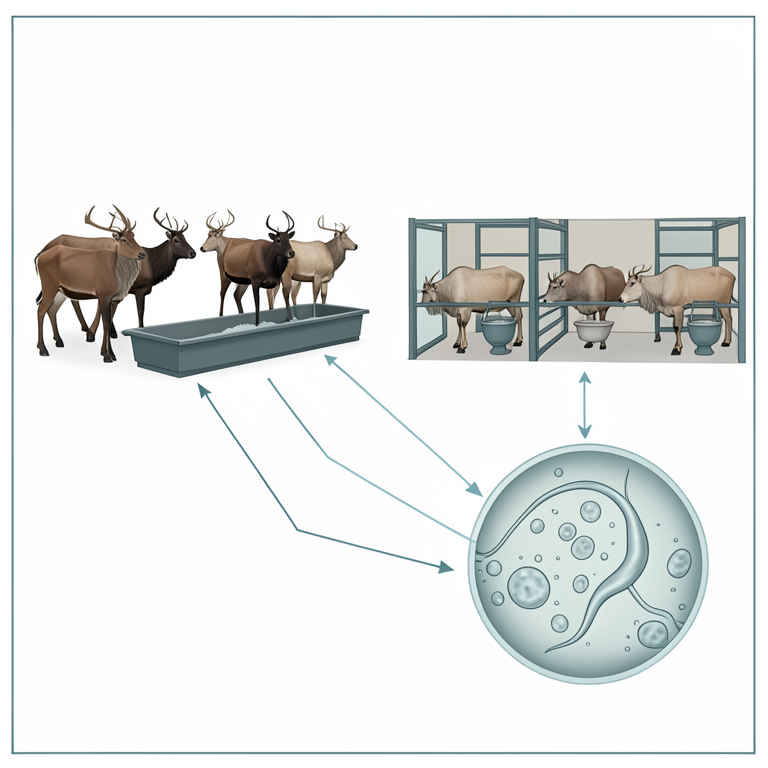
Feeding System Comparison
AI-generated conceptual illustration (breeding bucks (male goats)). It explains the idea and does not show study data.
View source evidence ↗Figures & tables
From the original paper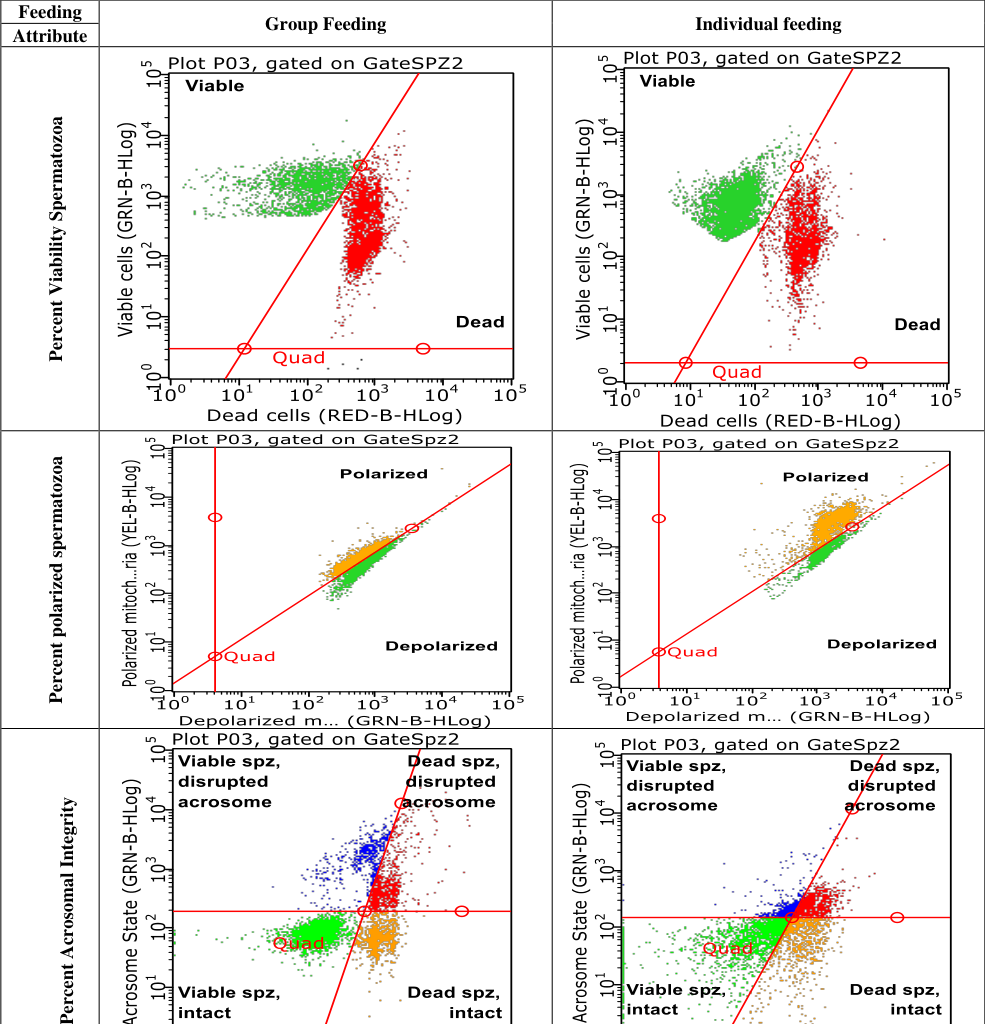 Table 1
 Table 1
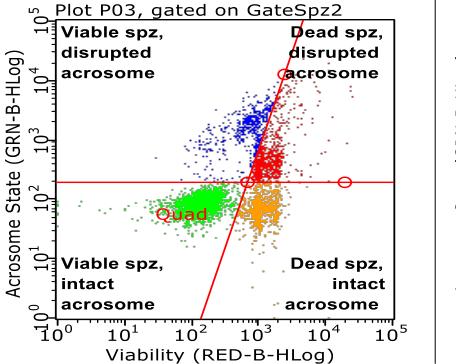 Figure 1
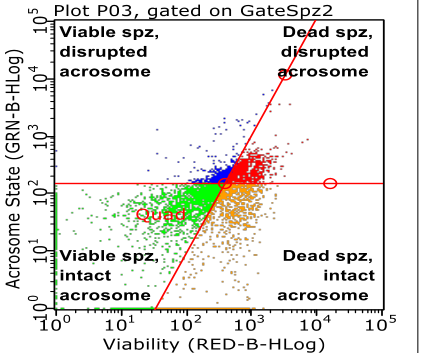 Figure 1
Introduction
Goat husbandry plays an important role in Indian agrarian system. Considered to be "poor man cow" the animal is mainly reared by small, marginal and landless farmers in country (Raja et al., 2018) [1] . Goat is being considered as subsidiary income source for majority of farmers in India and requires scientific intervention. Negative selection has been a predominant feature of goat husbandry in India. Despite having second highest population of goat in world the per capita production of animal is still low in India. According to 20 th censes 2019 [2] more than 61.26% of the total goat population fall under category of non-descript. When compared to female goat, the male population has shown negative growth -14.65% over the previous census. Male is important for genetic upgradation, as it breeds multiple females in year (McFarlane et al., 2018) [3] . With only a small proportion of buck in graded category, conservation and upgradation of their genetic pool is urgently required for better health and productivity. Looking into the importance of male in breed improvement programme, Indian government has recently introduced artificial insemination (AI) in goats. This technique that utilizes cryopreserved semen dose for insemination is very useful in dissemination of superior germplasm (Singh and Balhara, 2016) [4] . Being new to system, skilled human resource and established semen production station are major challenge associate with transfer of this technology. In context to goat semen production at semen station, small volume of semen ejaculate and limited capacity to maintain breeding buck at semen station are the major challenges (Longobardi et al., 2020) [5] . To optimize the production of FSD in accordance with need, the judicious use of various component at semen station is essentially required. Researches have been conducted to improve the health and production of large animal through supplementation of mineral supplement, diet formulation and other feeding strategies.
But no work has been conducted to evaluate the managemental parameter that can affect the reproductive performance of small ruminants especially the breeding buck. Traditionally, the breeding buck were kept in group, but with the establishment of frozen semen production station with limited buck holding capacity, maintaining semen quality elite buck is major prerequisite for the successful production of FSD. Feeding has an important role in maintain reproductive health of animal. Since no major work has been conducted in this field of research, the present study was designed to evaluate the effect of group feeding and individual pan feeding on the post thaw semen quality of breeding bucks maintained at semen station.
Materials and Methods
Materials and Methods
Experimental design
The study was conducted at Goat frozen semen station, Veterinary University (DUVASU), Mathura. 16 healthy bucks of similar age and weight were selected for the experiment. The animals were divided in two groups with 8 animal each viz. group 1 and group 2. The animal in the group I were housed together in the shed and allowed to feed together in common manger while the animal in group 2 were kept in the individual pans and feed individually. The animals were given the feed that included hay, concentrate mixture and green as per NRC recommendation. The animals were feed as per the experimental design for a period of 90 days. After 90 days of feeding, the semen was collected from each buck and twice a week. A total of 8 ejaculate were collected from each buck using artificial vagina. The collected semen of individual buck within the group were pooled to minimize individual variation. The fresh ejaculated semen was initially evaluated and later diluted with tris-glycerol-egg yolk based semen extender to reach the final concentration of 400 x 10 6 spermatozoa/ml. Diluted semen was equilibrated for 4 hours at 4 ℃ and cryopreserved using semen programmable freezer. For semen evaluation the semen sample were thawed in thawing unit maintained at 37 ℃ and different seminal attributes were evaluated. The viability, mitochondrial activity, sperm ROS+ve and degree of acrosomal damage were evaluate through flow cytometer while the motility parameters that include path velocity and sperm kinematic character were evaluated through CASA as per the protocol prescribed in kit.
Data analysis
Data recorded for various seminal attributes were analysed using Microsoft Excel and SPSS version 22. Paired T-test was used to compare the results of different seminal attributes recorded during the experiment.
Result and Discussion
During the study, effect of two feeding practices viz. group feeding and individual feeding was evaluated on the post thaw semen quality in Barbari buck. The values recorded for the viability, mitochondrial activity and percent viable spermatozoa with damaged acrosome evaluated through flowcytometry have been presented in Figure 1. A significantly (p≤ 0.01) higher values for percent viable spermatozoa, polarized mitochondrial membrane indicative of mitochondrial activity was observed in group II while the values recorded for the percent viable spermatozoa with damaged acrosome were significantly (p≤ 0.01) higher in group I during the experiment. The post thaw response of the spermatozoa dependents upon the sperm health and its capacity to withstand the cryoinjuries during the process of semen cryopreservation (Khan et al., 2021) [6] . Production of health sperm with strong plasma membrane depends upon the health of animal (Ferramosca and Zara, 2022; Wysokińska and Szablicka, 2021) [7, [8] . An animal offered a complete balanced diet with all essential mineral and nutrient maintains sound reproductive health responsible for production of semen with healthy spermatozoa (Keshri et al., 2022; Schenk, 2018) [9,10] . The animal diet also affects the quantality of antioxidant in the seminal plasma that regulates the ROS level in ejaculated and frozen thaw semen responsible for protecting the sperm against cryoinjuries. Different research has shown the importance of mineral supplementation on health (Singh et al., 2019) [11] and reproductive performance of breeding animals (Molefe and Mwanza, 2020) [12] . During the experiment the animal maintained individually in the pan feeding were free to feed on the balanced ration offered to them while in the group feeding with common manger the animal might not have taken up the balance diet in accordance with the requirement of breeding buck. The conflict and struggle in the group may be another reason for lower semen quality compared to the individual feeding. The values for the percent viable sperm affected with ROS, total motility and proportion of progressive motile spermatozoa have been presented in Graph 1. A significantly (p≤ 0.01) lower values of ROS+ve spermatozoa and significantly (p≤ 0.01) higher values of total motile spermatozoa and those exhibiting progressive motion was recorded in group II. The ROS production depend upon the health of spermatozoa. Spermatozoa with weak and disrupted plasma membrane produce more ROS under stress (Aitken, 2017) [13] . The diet regulates the secretory activity of accessory sex gland thus maintains the antioxidative level of seminal plasma that have a protective role in ROS regulation (Qamar et al., 2023) [14] . The diet offered individually to the buck in pans might have offered the better availability of micro and macro nutrient in required proportion to maintain the reproductive health, thus regulating ROS level in post thaw semen leading to lower value for ROS+ve spermatozoa in group II. The values for path velocity and kinematic character of cryopreserved semen have been presented in Table 1. A significantly (p≤ 0.01) higher values of motility, path velocity and kinematic character in group II may be attributed to better capacity of seminal fluid to regulate ROS in post thaw semen. ROS cause the removal of cholesterol and phospholipids from plasma membrane of spermatozoa affecting the semi-permeable nature, energy transport system and energy transfer process in spermatozoa altering the motility parameter (Aggrawal et al., 2014) [15] . The group II with better capacity to with stand the ROS damage exhibited better values.
Conclusion
So, it may be concluded that the breeding buck maintained at semen station for semen collection should be reared in the individual pan system to achieve better post thaw semen quality and improved production.
Acknowledgement
The authors are thankful to Vice Chancellor, DUVASU and Dean, College of Veterinary Science and Animal Husbandry for providing funds and facilities to peruse this research work.
References
14 in the original paper- Raja TM, Prabu A, Pandian SS, Thirunavukkaras P. Factors Influencing the Constraints Perceived by the Small-Scale Backyard Goat Farmers. International Journal of Livestock Research. 2018;8(12):175-181.
- McFarlane S, Manseau M, Flasko A, Horn RL, Arnason N, Neufeld L, et al. Genetic influences on male and female variance in reproductive success and implications for the recovery of severely endangered mountain caribou. Global Ecology and Conservation. 2018;16: e00451.
- Singh I, Balhara AK. New approaches in buffalo artificial insemination programs with special reference to India. Theriogenology. 2016;86(1):194-199.
- Longobardi V, Zullo G, Cotticelli A, Salzano A, Albero G, Navas L, et al. Crocin Improves the Quality of Cryopreserved Goat Semen in Different Breeds. Animals (Basel). 2020;10(6):1101. DOI: 10.3390/ani10061101.
- Khan IM, Cao Z, Liu H, Khan A, Rahman SU, Khan MZ, et al. Impact of Cryopreservation on Spermatozoa Freeze-Thawed Traits and Relevance OMICS to Assess Sperm Cryo-Tolerance in Farm Animals. Frontrier in Veterinary Science. 2021;8:609180. DOI:10.3389/fvets.2021.609180.
- Ferramosca A, Zara V. Diet and Male Fertility: The Impact of Nutrients and Antioxidants on Sperm Energetic Metabolism. International Journal of Molecular Science. 2022;23(5):2542. DOI: 10.3390/ijms23052542.
- Wysokińska A, Szablicka D. Integrity of Sperm Cell Membrane in the Semen of Crossbred and Purebred Boars during Storage at 17 °C: Heterosis Effects. Animals. 2021;11(12):3373-3391.
- Keshri A, Roy D, Kumar V, Kumar M, Kushwaha R, Vaswani S. Impact of different source chromium sources on physiological response, blood biochemicals and endocrine status of heat stress in dairy calves. Biological Rhythm Research. 2022;53(1):58-69.
- Schenk JL. Review: Principles of maximizing bull semen production at genetic centers. Animal. 2018;12(1):142147.
- Singh A, Kumar M, Kumar V, Roy D, Kushwaha R, Vaswani S, et al. Effect of Nickle supplementation on antioxidant status, immune characteristics and energy and lipid metabolism in growing cattle. Biological Trace Element Research. 2019;190(1):65-75.
- Molefe K, Mwanza M. Effects of mineral supplementation on reproductive performance of pregnant cross-breed Bonsmara cows: An experimental study. Reproduction in Domestic Animal. 2020;55(3):301-308.
- Aitken RJ. Reactive oxygen species as mediators of sperm capacitation and pathological damage. Molecular Reproduction and Development. 2017;84:39-52.
- Qamar AY, Naveed MI, Raza S, Fang X, Roy PK, S, et al. Role of antioxidants in fertility preservation of sperm -A narrative review. Animal Bioscience. 2023;36(3):385-403.
- Agarwal A, Virk G, Ong C, du Plessis SS. Effect of oxidative stress on male reproduction. The World Journal of Men's Health. 2014;32(1):1-17.