
Research article · 2022 · Full text
International Journal of Biology SciencesIdentification of morphometric and intensity of marine leech Zeylanicobdella infestation on cantang grouper from Brondong district, Lamongan and Mandangin Island, Madura
Volume 4(2) · Pages 99–103 · DOI: 10.33545/26649926.2022.v4.i2b.83 ↗
Research areasAquatic life and conservationIdentification and Quantification in Food
Abstract
Author-writtenCantang grouper (Epinephelus fuscoguttatus lanceolatus) is the result of hybridization between female tiger grouper and male grouper fish which is widely cultivated because it has fast growth, easy to breed, and lower cannibalism. Cultivation of cantang grouper can be carried out in semi-intensive ponds and floating net cages (FNC) which have the potential for grouper nursery and rearing activities. One of the problems in the cultivation of cantang grouper is the presence of disease attacks caused by marine leeches Zeylanicobdella with a prevalence of up to 100% in grouper culture in floating net cages. This study aims to determine differences in species and intensity of marine leech Zeylanicobdella infestation in cantang grouper (Epinephelus fuscoguttatus lanceolatus) from semi-intensive ponds in Brondong District, Lamongan and floating net cages (FNC) on Mandangin Island, Madura. The method used in this research is a survey and sampling is done by purposive sampling method. Cantang groupers measuring 15-20 cm from semi-intensive ponds and 20-25 cm from floating net cages each were taken as many as 35 individuals. Identification of Zeylanicobdella marine leeches using a binocular microscope and making sketches of ectoparasites with the help of a binocular microscope equipped with a lucida camera. Marine leech species found to infest the cantang grouper (Epinephelus fuscoguttatus lanceolatus) is Zeylanicobdella arugamensis which was found on the body surface, fins, gills, and eyes. The results of statistical analysis using the Mann-Whitney U test showed that there was no significant difference (p > 0,05) between species and intensity of Zeylanicobdella arugamensis in cantang grouper reared in semi-intensive ponds and floating net cages. The intensity of marine leeches Zeylanicobdella arugamensis in semi-intensive ponds was in the medium category (14,74 individuals/head) and in floating net cages was in the medium category (27,74 individuals/head). The highest intensity of infestation marine leeches Zeylanicobdella arugamensis in floating net cages of 27,74 individuals/head. There was no significant difference in the intensity of Zeylanicobdella arugamensis marine leech infestation in cantang grouper both from semi-intensive ponds and floating net cages (FNC) which were included in the medium category.
Summary
Source-checkedPlain-language reading of the full paper, prepared with AI and checked against the text. Each point links to the authors' own words.
Why it matters
- Cantang grouper is a hybrid fish widely cultivated due to its fast growth, ease of breeding, and reduced cannibalism. View evidence ↗
- A significant problem in cantang grouper farming is infestation by Zeylanicobdella marine leeches, which can reach a prevalence of 100% in floating net cages. View evidence ↗
- Poor cultivation practices, including water quality fluctuations and organic matter buildup, can lead to fish diseases caused by pathogens like parasites. View evidence ↗
The question
- The study aimed to identify the species and compare the intensity of Zeylanicobdella marine leech infestation in cantang grouper from semi-intensive ponds and floating net cages. View evidence ↗
What they did
- The researchers used purposive sampling to collect 35 fish from each location: 15-20 cm fish from semi-intensive ponds and 20-25 cm fish from floating net cages. View evidence ↗
- Leeches were identified by measuring body parts and observing morphological characteristics, which were then compared to established identification keys. View evidence ↗
- Morphometric identification focused on four key measurements: body length, body width, oral sucker diameter, and caudal sucker diameter. View evidence ↗
- The Mann-Whitney U test was used to statistically analyze differences in species and infestation intensity between the two rearing systems. View evidence ↗
What they found
- The species Zeylanicobdella arugamensis was found infesting the body surface, fins, gills, and eyes of the cantang grouper in both environments. View evidence ↗
- Statistical analysis revealed no significant difference (p > 0.05) in the intensity of infestation between fish in semi-intensive ponds and those in floating net cages. View evidence ↗
- Leeches found in floating net cages were larger in body length, width, and sucker diameters compared to those in semi-intensive ponds. View evidence ↗
- Morphometric data showed leeches in ponds ranged from 4.12-6.95 mm in length, while those in cages were larger, ranging from 5.23-8.95 mm. View evidence ↗
What it means
- The authors concluded that the species of marine leech infesting the grouper was the same across both the semi-intensive ponds and floating net cages. View evidence ↗
- The authors concluded that there was no significant difference in the intensity of infestation between the two rearing systems. View evidence ↗
Visual summary
2 visualsIllustrations explain the paper; charts are replotted from the paper's own table values.
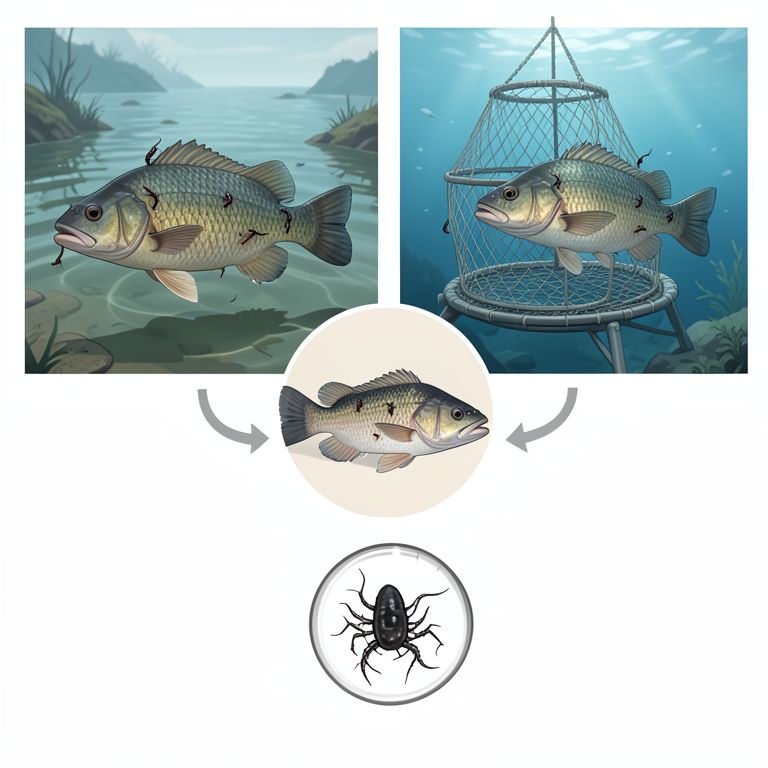
Study Design Overview
AI-generated conceptual illustration (Cantang grouper fish and Zeylanicobdella marine leeches). It explains the idea and does not show study data.
View source evidence ↗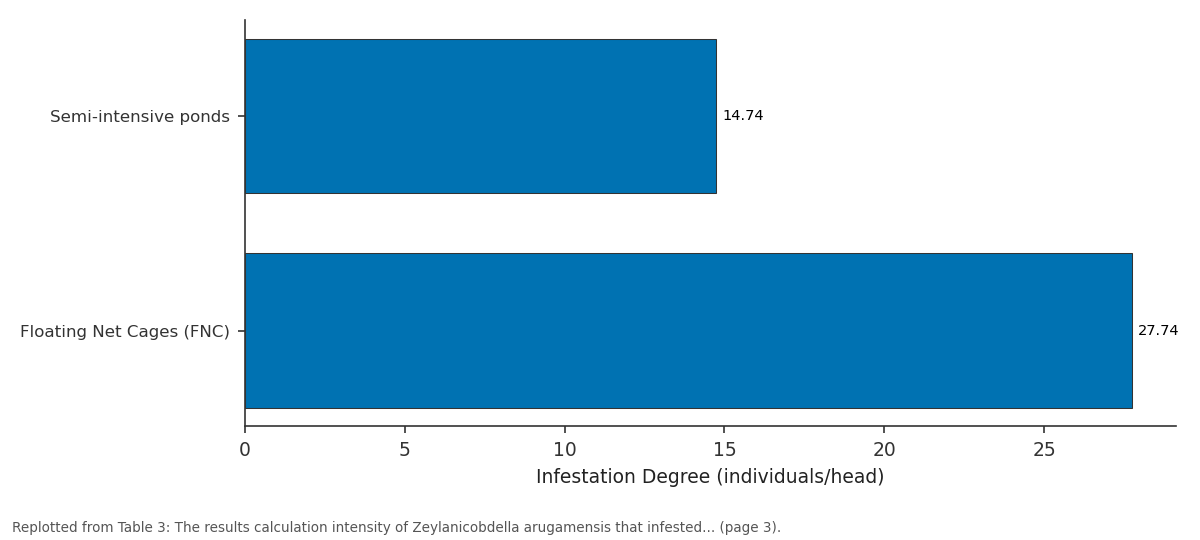
Infestation Degree (individuals/head): Semi-intensive ponds vs Floating Net Cages (FNC)
Replotted from Table 3 (page 3) of the original paper. Every bar is the paper's own table value.
View source evidence ↗Figures & tables
From the original paper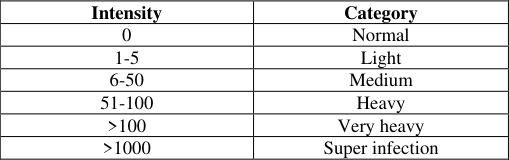 Table 1
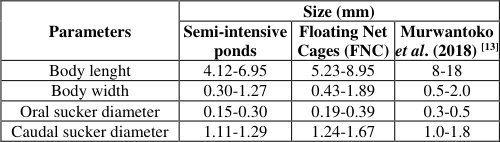 Table 2
 Table 3
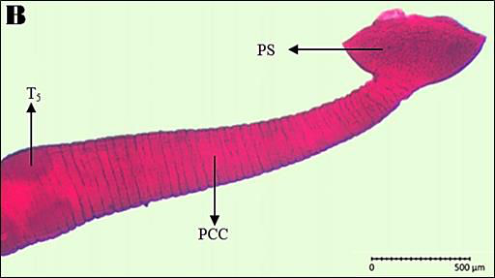 Figure 1
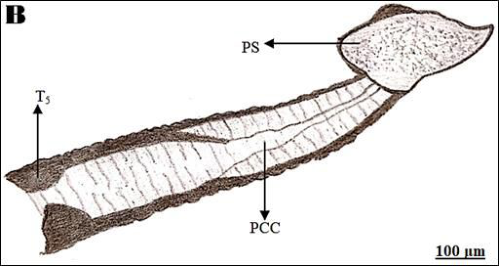 Figure 2
 Table 4
Introduction
Grouper is one of the fishery commodities that have opportunities both in the domestic and international markets, besides that the selling value is also quite high (Paruntu, 2015) [15] . One type of grouper that is in demand for cultivation is the cantang grouper (Epinephelus fuscoguttatus lanceolatus) which is the result of hybridization between the female tiger grouper (Epinephelus fuscoguttatus) and the male kertang grouper (Epinephelus lanceolatus). Along with the development of grouper cultivation, both those reared in semiintensive ponds with a soil base in Brondong District, Lamongan Regency and floating net cages (FNC) on Mandangin Island, Madura, causing various problems in aquaculture activities. According to WWF (2015) [20] , poor cultivation processes, such as drastic changes in water quality parameters, accumulation of organic matter from leftover feed, and unpredictable weather factors can cause disease in fish, one of which is caused by infection with pathogens such as parasites, bacteria and viruses. One of the types of diseases that often attack grouper cultivation is caused by parasitic attacks. Parasites are organisms that use other organisms of different types for shelter and to get food (Diani et al., 2004) [4] . One type of ectoparasite that attacks the cultivation of cantang grouper is the marine leech infestation of Zeylanicobdella which is a parasite of the phylum Annelida and sub class Hirudinea (Zafran et al., 2019) [21] . The morphometric identification of ectoparasites is useful for knowing the structure and morphology of a parasite which is included in the morphometric characteristics (body length, body width, organ diameter) so that it can be used to determine the genus or species of the parasite (Nurrochmah et al., 2016) [14] . There were two previously reported Zeylanicobdella species, namely Zeylanicobdella arugamensis De Silva, 1963 [3] and Zeylanicobdella stellata Moore, 1958. The species Zeylanicobdella arugamensis was first discovered in grouper culture as a major host in the Philippines and has been observed attacking a number of brackish water and marine fish in Sri Lanka, the Malaya Peninsula in Singapore, and India (Cruz-Lacierda, 2000) [2] . Zeylanicobdella stellata was first discovered in the toby fish (Tetraodontidae) from South Africa (Utevsky, 2007) [18] . Intensity is the average number of parasites that infest each fish (Mahasri et al., 2019) [10] . Factors that can affect the level of parasite infestation in aquatic biota are genetics which plays an important role in the composition of the components of the fish immune system, unbalanced feed nutrition, type and age of fish, aquatic environment, and fish activity or movement (Hardi, 2015) [6] .
Methodology
This research was carried out in October 2020-January 2021. Sampling of cantang grouper was carried out in semiintensive ponds in Brondong District, Lamongan as the first location and floating net cages (FNC) on Mandangin Island, Madura as the second location. Inspection, coloring, and identification of Zeylanicobdella marine leeches were carried out at the Anatomy and Aquaculture Laboratory and Microbiology Laboratory, Faculty of Fisheries and Marine, Airlangga University. The sample of cantang grouper used is 15-20 cm in size from Brondong District, Lamongan and 20-25 cm in size from floating net cages on Mandangin Island, Madura by using purposive sampling method. Each sampling location of cantang grouper fish was taken as many as 35 tails. The main parameters in this study were the type and intensity of the Zeylanicobdella marine leech. The supporting parameters in this research are water quality which includes (salinity, temperature, DO, pH, ammonia, nitrite and nitrate).
Zeylanicobdella Marine Leech Examination
Examination of Zeylanicobdella marine leeches is carried out by taking or removing Zeylanicobdella attached to the body surface of the sample fish and counting the number of Zeylanicobdella infesting in each fish, then put and stored in a sample pot containing 5% glycerin alcohol for the purposes of the coloring process and identification of marine leeches Zeylanicobdella more. Zeylanicobdella marine leech staining was carried out using the Semichen-Acetic Carmine method (Kuhlmann, 2006) [8] . Zeylanicobdella marine leech staining using the Semichen-Acetic Carmine method, namely by Zeylanicobdella which has been stored in 5% glycerin alcohol and then put in 70% alcohol for 5 minutes, then fixed between two glass objects and tied at both ends with thread (raffia). The object glass and the Zeylanicobdella sample were put into the Carmine solution and soaked for ± 8 hours depending on the thickness of the cuticle of the sample, then the Zeylanicobdella sample could be removed from the object glass fixation. The next step is to transfer the Zeylanicobdella sample in an acidic alcohol solution for 2 minutes, then transfer it to an alkaline alcohol solution for 2 minutes. Then, dehydration was carried out in stages with 70% alcohol for 5 minutes, 85% alcohol for 5 minutes, and 95% alcohol for 5 minutes. Furthermore, mounting in Hung's I solution for 20 minutes. Zeylanicobdella samples from Hung's I solution were taken and placed on a clean object glass and dripped with sufficient Hung's II solution on the specimen, then covered with a cover glass. The results of the staining can already be used as preparations for Zeylanicobdella marine leeches whose body parts will be observed using a binocular microscope equipped with a Lucida camera with 40x and 100x magnifications.
Identification of Zeylanicobdella Marine Leeches
Observations were made under a binocular microscope with a magnification of 40x and 100x, then the Zeylanicobdella marine leech specimen was depicted using a binocular microscope equipped with a Lucida camera with a magnification of 40x and 100x. The identification of Zeylanicobdella marine leeches was carried out by observing morphological characteristics and morphometric measurements of body parts then compared with identification keys from books or journals. The body parts used as the key to morphometric identification of Zeylanicobdella marine leeches are by measuring body length, body width, diameter of the oral sucker and diameter of the caudal sucker (Murwantoko et al., 2018) [13] . The identification key in this study was based on Chandra (1991) [1] .
Calculation of Zeylanicobdella Marine Leech Intensity
Intensity is the average number of individual parasites per infested fish. Calculation of the intensity in this study using a formula based on Mamani et al. (2004) [11] and the determination of parasite intensity categories based on Williams and Williams (1996) [19] are presented in Table 1. Very heavy >1000 Super infection Source: Williams and Williams (1996) [19] .
| Intensity | Category |
|---|---|
| 0 | Normal |
| 1-5 | Light |
| 6-50 | Medium |
| 51-100 | Heavy |
| >100 | Very heavy |
| >1000 | Super infection |
Table text extracted from the original PDF; superscript letters are shown inline. The original table image is below.
View original table image
Intensity (individual/tail) = Number of parasites found
Intensity (individual/tail) = Number of parasites found
Number of fish infested
Number of fish infested
Results
The results of the identification of marine leeches in cantang grouper (Epinephelus fuscoguttatus lanceolatus) from 35 samples from semi-intensive ponds in Brondong District, Lamongan and 35 samples from floating net cages on Mandangin Island, Madura based on the identification key according to Chandra (1991) [1] found species of marine leeches, namely Zeylanicobdella arugamensis in both maintenance systems. Based on the results of morphometric measurements of 70 samples of ectoparasite Zeylanicobdella arugamensis that infested cantang grouper in semi-intensive [13] can be seen in Table 2. The morphology of Zeylanicobdella arugamensis after staining with Semichen-Acetic Carmine which was observed using a binocular microscope can be seen in Figure 1. Marine leech Zeylanicobdella arugamensis drawn using a binocular microscope equipped with a lucida camera can be seen in Figure 2. The determination of the intensity Zeylanicobdella arugamensis marine leech in this study was based on the number of Zeylanicobdella arugamensis infesting cantang grouper divided by the number of fish infested in each rearing system and then categorized according to the references from Williams and Williams (1996) [19] . Based on the results of statistical analysis using the Mann-Whitney U test, it showed that there was no significant difference (p > 0.05) between the intensity of Zeylanicobdella arugamensis in cantang grouper reared in semi-intensive ponds and floating net cages. The results calculation intensity of Zeylanicobdella arugamensis in cantang grouper fish raised in different maintenance systems can be seen in Table 3. Measurement of water quality at each cultivation location aims to determine the condition of the waters in the cantang grouper rearing system. Measurement of the quality of aquaculture water was carried out before sampling cantang grouper at each location, namely semi-intensive ponds and floating net cages (FNC). Water quality parameters measured included temperature, DO (dissolved oxygen), pH, salinity, ammonia, nitrite and nitrate. Water quality as supporting data in this study is a very important factor in the cultivation of cantang grouper. Data on the results of water can be seen in Table 4. [13] Zeylanicobdella arugamensis adult stadia species that infest cantang grouper have a body length of 8-18 mm, a body width of 0.5-2.0 mm, an anterior diameter of the sucker 0.3-0.5 mm, and a posterior diameter of sucker 1.0-1.8. The difference in the size of Zeylanicobdella arugamensis in the two rearing media was due to the different rearing environment and sampling locations that could affect the body and organ size of the marine leech. According to Kua et al. (2010) [7] stated that the adult stage Zeylanicobdella arugamensis has a body length ranging from 4.5-14 mm. In addition, based on Ravi and Yahaya (2017) [16] found the sea leech Zeylanicobdella arugamensis on Jerejak Island, Penang, Malaysia with a body length of 20-25 mm, body width 0.6-2.3 mm, anterior sucker diameter 0.3-0.5 mm and the diameter of the posterior sucker is 1.6-1.8 mm. This shows that Zeylanicobdella arugamensis has a wide range of body and organ sizes.
| Location | Temperature (oC) | DO (mg/L) | pH | Salinity (ppt) | Ammonia (mg/L) | Nitrite (mg/L) | Nitrate (mg/L) |
|---|---|---|---|---|---|---|---|
| Semi-intensive ponds | 28 | 4 | 8 | 35 | 0.5 | 0.25 | 10 |
| Floating Net Cages (FNC) | 30-31 | 6-7 | 7-8 | 34 | 3 | 0.5 | 25 |
| BSN (2014) | 28-32 | ≥ 4 | 7.5-8.5 | 24-33 | ≤ 0.01 | ≤ 1 | ≤ 1.5 |
Table text extracted from the original PDF; superscript letters are shown inline. The original table image is below.
View original table image
| Parameters | Size (mm) | — | — |
|---|---|---|---|
| Semi-intensive ponds | Floating Net Cages (FNC) | Murwantoko et al. (2018) [13] | |
| Body lenght | 4.12-6.95 | 5.23-8.95 | 8-18 |
| Body width | 0.30-1.27 | 0.43-1.89 | 0.5-2.0 |
| Oral sucker diameter | 0.15-0.30 | 0.19-0.39 | 0.3-0.5 |
| Caudal sucker diameter | 1.11-1.29 | 1.24-1.67 | 1.0-1.8 |
Table text extracted from the original PDF; superscript letters are shown inline. The original table image is below.
View original table image
Based on the results of Zeylanicobdella arugamensis morphometric measurements, it can be seen that the size of Zeylanicobdella arugamensis in floating net cages has body length, body width, anterior sucker diameter, and posterior sucker diameter which are larger than in semi-intensive ponds. This is because the environmental conditions of cultivation in floating net cages are more supportive of Zeylanicobdella arugamensis habitat in the development of its life cycle. Kua et al. (2010) [7] explained that calm water conditions are known to have an impact on the longer life cycle of Zeylanicobdella arugamensis in experiencing growth.
Based on the morphology in its classification, Zeylanicobdella arugamensis is included in the phylum Annelida because its body is cylindrical in shape which is arranged lengthwise like a pile of rings (Chandra, 1991) [1] . Zeylanicobdella arugamensis belongs to the class Clitellata because in the anterior part of this ectoparasite worm there is a Cupuliform oral sucker and on the posterior it is larger than the anterior (De Silva, 1963 in Chandra, 1991) [3,1] . Zeylanicobdella arugamensis is usually called a marine leech which belongs to the subclass Hirudinea because it has two suckers consisting of an oral sucker on the anterior and a caudal sucker on the posterior. Zeylanicobdella arugamensis belongs to the order Rhynchobdellida and the family Piscicolidae because this species does not have jaws but has a sucking tool to take nutrients from the host called a Proboscis. This marine leech is included in the genus Zeylanicobdella because it has fourteen or more annuli and has a cylindrical body shape and a pair of eye spots on the lower third of the anterior sucker so that this ectoparasite worm species belongs to the Zeylanicobdella arugamensis species (Chandra, 1991) [1] . The two locations of cantang grouper cultivation, namely semi-intensive ponds and floating net cages, did not find any differences in the species of Zeylanicobdella arugamensis, this was because at the two cultivation locations the main media for Zeylanicobdella arugamensis was the source of water from sea or brackish water which had sufficient salinity value tall. Based on Mahardika et al. (2020) [9] explained that marine leeches and their cocoons can live and hatch in saltwater to brackish water (5-30 ppt). In addition, according to Zafran et al. (2020) [22] Zeylanicobdella arugamensis marine leeches are always present and infest grouper throughout the year, especially grouper cultured in hatcheries and ponds that use sea water directly and grouper cultured in floating net cages (FNC). The intensity of Zeylanicobdella arugamensis in both rearing systems was in the medium category. Factors supporting Zeylanicobdella infestation include the turbidity of the incoming water is too high, but it is also influenced by salinity and environmental conditions of the waters. This species, both egg and adult stages, is capable of hatching and living in saltwater to brackish water with a salinity of 5-30 ppt (Mahasri et al., 2019) [10] . Parasite infestation is related to the greater the size or weight of the host, the higher the parasite infestation to the host. This is because the length of maintenance of the host in a waters results in the longer the time the host has for contact with the parasite (Riko et al., 2012) [17] . The intensity of Zeylanicobdella arugamensis at the two locations of cantang grouper cultivation did not show any difference, this was because semi-intensive ponds and floating net cages could be used by marine leeches as a medium for attaching their eggs. According to Kua et al.
(2010) [7] Zeylanicobdella arugamensis eggs which have a sticky, slimy ring layer on the surface of the egg serves to stick to the substrate. Zafran et al. (2019) [21] added that Hirudinea eggs can attach to various solid objects in the pond environment and marine cages, for example (pond walls and nets) and can hatch at any time. In addition, the quality of cultivated water can also affect the life cycle of Zeylanicobdella arugamensis, one of which is the salinity factor. According to Kua et al. (2010) [7] explained that Zeylanicobdella arugamensis can reproduce optimally at 30 ppt salinity and at salinity below 30 ppt it can still reproduce but more slowly.
Based on the results of Fadlullah's research (2020) explains that high and low salinity can affect the life cycle of Zeylanicobdella arugamensis. Cantang grouper reared in ponds with a salinity of 33-40 ppt were infested with Zeylanicobdella arugamensis in the rare to moderately high category. Zeylanicobdella arugamensis is a marine leech that has high physiological plasticity so that it easily adapts to extreme environmental changes by forming air bubbles on the dorsoventral part of its body. This is a factor that Zeylanicobdella arugamensis can survive in a wide salinity range.
Conclusion
There was no difference in the species of marine leech Zeylanicobdella arugamensis infesting cantang grouper (Epinephelus fuscoguttatus lanceolatus) from semi-intensive ponds in Brondong District, Lamongan and floating net cages (FNC) on Mandangin Island, Madura. There was no difference in the intensity of the Zeylanicobdella arugamensis marine leech infesting cantang grouper (Epinephelus fuscoguttatus lanceolatus) from semi-intensive ponds in Brondong District, Lamongan and floating net cages (FNC) on Mandangin Island, Madura.
References
15 in the original paper- Chandra M. A Check-list of Leeches of India. Record of the Zoological Survey of India. 1991;80:265-290.
- Cruz-Lacierda ER, Toledo JD, Tan-Fermin JD, Burreson EM. Marine Leech (Zeylanicobdella arugamensis) Infestation in Cultured Orange-Spotted Grouper, Epinephelus coioides. Aquaculture. 2000;185:191-196.
- De Silva PHDH. Zeylanicobdella arugamensis Gen. Nov. and sp. Nov. from Arugam Kalapu, Eastern Province, Ceylon. Spolia Zeylanicobdella. 1963;30:4753.
- Diani S, Sunyoto P, Danakusumah E. Infestation Degree of Ectoparasite Hirudinea Piscicola sp. in Tiger Grouper Epinephelus fuscoguttatus (Forsskal, 1775) and Sunu Grouper Plectropomus maculatus (Bloch, 1790). Indonesian Journal of Aquatic and Fishery Sciences. 2004;11(1):1-4.
- Mahardika K, Mastuti I, Zafran. Response of Marine Leeches (Zeylanicobdella arugamensis) to High Salinity in vitro and in vivo. Journal of Fisheries and Marine Science. 2020;2(1):16-22.
- Mahasri G, Wulansari PD, Imani IH. Intensity of Ectoparasite Worms Grouper Cromileptes altivelis in Floating Net Cages in Situbondo Waters, East Java. Tropical Marine Journal. 2019;22(2):135-140.
- Mamani M, Hamel C, Van Damme PA. Ectoparasites (Crustacea: Branchiura) of Pseudoplatystoma fasciatum (Surubi) and P. tigrinum (Chunchuna) in Bolivian White-Water Floodhoplains. Ecologfa en Bolifia. 2004;39(2):9-20.
- Moore JP. The Leeches (Hirudinea) in the Collection of the Natal Museum. Annals of the Natal Museum. 1958;14(2):303-340.
- Murwantoko, Negoro SLC, Isnansetyo A, Zafran. Identification of Marine Leech and Assessment of its Prevalence and Intensity on Cultured Hybrid Grouper (Epinephelus sp.). Biodiversitas. 2018;19(5):17981804.
- Paruntu CP. Cultivation of Grouper (Epinephelus tauvina Forsskal, 1775) and Baronang Fish (Siganus canaliculatus Park, 1797) in Floating Net Cages with Polyculture System. Journal of Aquaculture. 2015;3(1):1-10.
- Ravi R, Yahaya ZS. Zeylanicobdella arugamensis, the Marine Leech Cultured Crimson Snapper (Lutjanus erythropterus), Jerejak Island, Penang, Malaysia. Asian Pacific Journal Tropical Biomedicine. 2017;7(5):473477.
- Riko YA, Rosidah, Herawati T. Intensity and Prevalence of Ectoparasites in Milkfish (Chanos chanos) in Floating Net Cages (FNC) in Cirata Reservoir, Cianjur Regency, West Java. Journal of Fisheries and Marine Affairs. 2012;3(4):231-241.
- Utevsky AY. A New Genus and Species of Marine Fish Leech (Annelida: Hirudinea: Piscicolidae) from South Africa. African Invertebrates. 2007;48(2):41-46.
- Zafran, Rozaa D, Mahardika K. Prevalence of Ectoparasites in Cultured Fish in Floating Net Cages in Teluk Kaping, Buleleng, Bali. Journal of Fisheries and Marine Research. 2019;3(1):32-40.
- Zafran, Mahardika K, Retri DP, Martini NND. Effectiveness Test of Ginger Extract (Zingiber officinale) against Hirudinea Marine Leeches (Zeylanicobdella arugamensis). Journal of Fisheries and Marine Science. 2020;2(1):8-15.
Cited by 1
From OpenAlex, OpenCitations and reference lists read by Scinovex
- The Effectiveness Of Citric Acid As An Anti-Ectoparasite Of Marine Leech (Zeylanicobdella arugamensis) Through Soaking ↗
Nike Mustika Sari, Gede Iwan Setiabudi, Indah Mastuti, Ketut Mahardika · Advances in Tropical Biodiversity and Environmental Sciences · 2023
Zeylanicobdella arugamensis infection causes health problems for cultured grouper. This study aims to determine the effectiveness of citric acid soaking as an anti Z. arugamensis ectoparasite. A total of ±120 Z. arugamensis were isolated from sick hybrid grouper (Epinephelus fuscoguttatus x E. lanceolatus) placed in Petri dishes (6 Petri dishes). Citric acid solution with 0, 50, 100, 150, 250, and…
❝ 1PDF