
Research article · 2023 · Full text
International Journal of Veterinary Sciences and Animal HusbandryCamel milk as an integrated food and its physical and chemical properties with therapeutic characteristics
Volume 8(1) · Pages 90–96 · DOI: 10.22271/veterinary.2023.v8.i1b.474 ↗
Research areasAnimal Diversity and Health StudiesSelenium in Biological SystemsProtein Hydrolysis and Bioactive Peptides
Abstract
Author-writtenA staple food in many regions of the world, especially in the arid and semi-arid regions, is camel's milk. Health-promoting ingredients found in camel's milk include lactoferrin, zinc, lactoactive peptides, and mono- and polyunsaturated fatty acids. Some significant human ailments, such as asthma, gastrointestinal issues, jaundice, tuberculosis, and asthma, may be treated with the use of these drugs. Compared to cow's milk, camel's milk has a more varied composition. In camels, nutrition, breed, age, and lactation stage have a greater impact on milk composition. The ratio of components in camel's milk varies greatly depending on the region and season. Along with having a large number of soluble proteins, camel's whey protein contains native proteases such chymotrypsin A and cathepsin D. These whey proteins have distinctive qualities, such as the technical, physiological, chemical, physical, and biological traits that are advantageous in the food application, in addition to their high nutritional value. Camel's milk proteins are hydrolyzed to create bioactive peptides, which have an impact on the body's primary organ systems and give them physiological activities. The angiotensin-I-converting enzyme (ACE) inhibitory peptides, antidiabetic, antibacterial, antioxidant, and anticholesterol properties of camel milk.
Summary
Source-checkedPlain-language reading of the full paper, prepared with AI and checked against the text. Each point links to the authors' own words.
Why it matters
- Camel milk serves as a primary food source for populations living in arid and semi-arid regions of the world. View evidence ↗
- The milk contains several health-promoting components, including zinc, lactoferrin, lactoactive peptides, and various unsaturated fatty acids. View evidence ↗
The question
- The objective of this systemic review is to establish camel milk as a complete human food and explore its utility in treating various diseases. View evidence ↗
What they did
- The authors conducted a systemic review of existing literature to analyze the properties and benefits of camel milk. View evidence ↗
What they found
- The protein content in camel milk is reported to range from 2.30% to 3.95%. View evidence ↗
- Camel milk contains 40% fewer saturated fatty acids compared to cow's milk. View evidence ↗
- The iron content in camel milk is approximately ten times higher than that found in cow's milk. View evidence ↗
- Camel milk contains high concentrations of insulin, ranging from 52 to 59 U/L. View evidence ↗
- Camel milk is more acidic than cow milk, with a pH range of 6.2-6.5 compared to 6.5-6.7 for cow milk. View evidence ↗
- Camel milk does not contain beta-lactoglobulin, which contributes to its utility in treating food allergies. View evidence ↗
- At 20 °C, camel milk has a lower viscosity (1.72 mPas) than cow milk (2.04 mPas). View evidence ↗
Visual summary
1 visualsIllustrations explain the paper; charts are replotted from the paper's own table values.
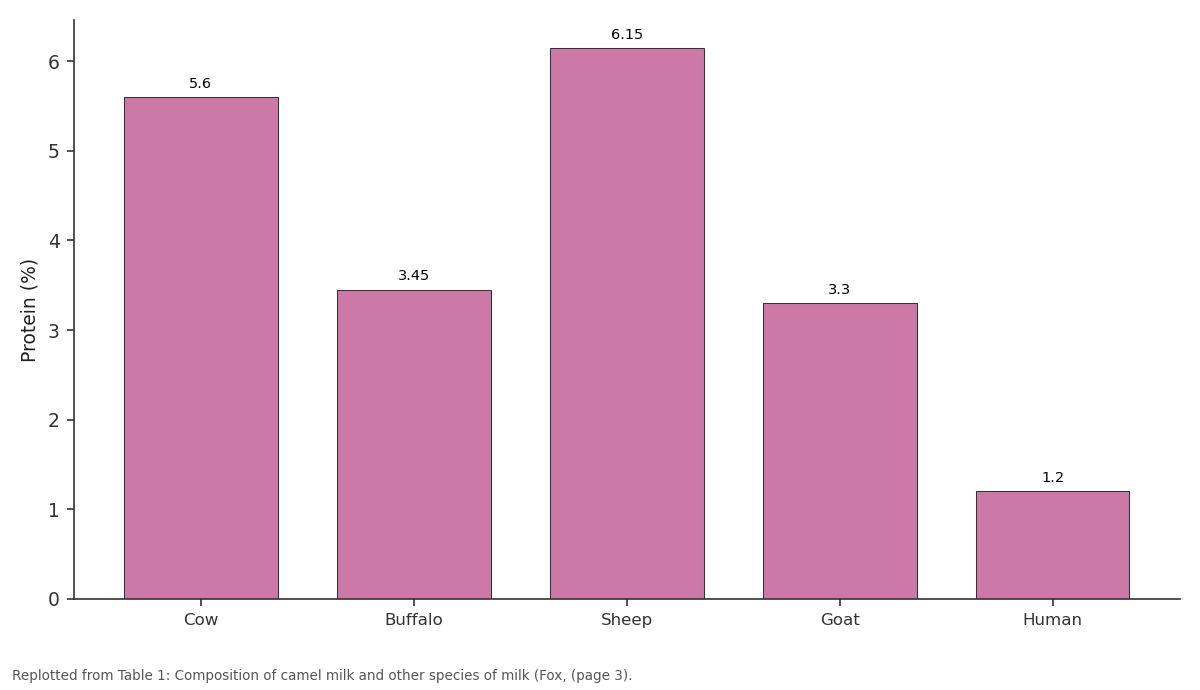
Protein (%): Cow vs Buffalo vs Sheep vs Goat vs Human
Replotted from Table 1 (page 3) of the original paper. Every bar is the paper's own table value.
View source evidence ↗Figures & tables
From the original paper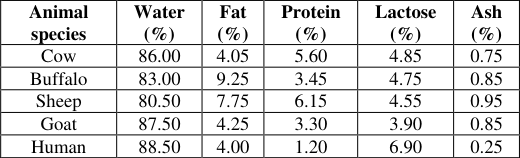 Table 1
Introduction
The family Camelidae of the order Artiodactyl includes camels, which are characterized as pseudo-rumen chorionic mammals with double digits and lined feet (Franklin, 2011) [28] . The Arabian or dromedary one-humped camel and the Bactrian two-humped camel (Camelus bactrianus) (Camelus dromedarius) respectively, are the two varieties of camels (El-Agamy et al., 1992) [18] . Many people heavily rely on camels for their way of life, particularly those in the dry areas of the Middle East and Arabian Peninsula. Camels have the ability to adapt to many environmental situations. They are used for transportation, recreation, and as sources of meat and milk, boosting the economy and ensuring that people have access to food (Swelum et al., 2020) [64] . According to the most recent data from According to the Food and Agriculture Organization (FAO), there are around 29 million camels worldwide. With over 95% of them being dromedary (one humped) camels (Sikkema et al., 2019) [60] . The time a camel spends nursing can range from 9 to 18 months. The amount of milk produced is influenced by a variety of variables, including breed, animal health, lactation stage, and living conditions (Swelum et al., 2020) [64] . Even though camel udders are similar to cow udders in structure, camel milk yield is smaller and more unstable than cow milk yield. However, improved nutrition, water, and veterinary practices may raise camel milk yield (Park & Haenlein, 2013) [53] . Milk is a crucial food for kids. Middle Eastern, Asian, and African societies have used camel milk as a therapeutic beverage for millennia (Nikkha, 2014) [52] . Due to rising demand, camel milk products are well-liked worldwide and frequently seen in pharmacies (El-Agamy, 2006) [68] . The nutrients in camel milk are sufficient to keep a human alive all day. Camel milk is frequently given to infants who are malnourished in many nations. Camel milk contains a lot of vitamins, minerals, and immunoglobin (Shabo et al., 2005) [58] . Camel milk, also known as the "white gold of the desert," resembles human milk the most of any milk (Kumar et al., 2015) [43] .
It also differs from other ruminant milk in that it has higher protective proteins such as Immunoglobulins, lysozyme, lactoperoxidase, and lactoferrin, lower levels of cholesterol, sugar, minerals and vitamin C. (Jilo, 2016) [33] . Customers value camel milk for its therapeutic qualities. According to legend, it has anti-infectious, anti-cancer, and anti-diabetic properties. It is recognized as a product that provides energy for recovering patients. Camel milk is used in some countries as an addition to chemotherapy for some types of tumors, including those of the digestive tract. It also aids in the treatment of infectious diseases like tuberculosis in humans. Patients with diabetes now require less insulin, and their glycemic levels are more evenly distributed. According to Kurtu (2004) [44] , the Somali people believe that camel milk has a curative effect for at least 13 different disorders, including hyperacidity, hypertension, pneumonia, respiratory diseases, as well as being an aphrodisiac. High levels of insulin, up to 52 to 59 U/L, are present in camel milk, along with a protein that performs similar activities to human insulin (Abdalla, 2015) [2] . According to reports, camel milk has minimal levels of casein and little to no lactoglobulin, both of which might make lactose intolerant people react negatively (Konuspayeva et al., 2009) [40] . Nevertheless, it contains an anti-tumor protein with insulin-like capabilities that is protective and used to treat a variety of illnesses like diabetes, autism, and diarrhea (Gul et al., 2015) [30] . Further, camel milk has been shown to have a very robust immune system (Abdel Galil et al., 2016) [3] , treat peptic ulcers, and have anti-malignant, anti-platelet, and anti-thrombotic capabilities (Musaad et al., 2013) [48] . In more recent investigations, it was shown that camel's milk has distinct anti-oxidative, anti-bacterial, antiviral, antifungal, antihepatitis, treatment for para-tuberculosis, hypoglycemic activity, anticancer, anti-aging, treatment for autoimmune illnesses, cosmetic, and detergent properties (Simeneh, 2015) [69] . This systemic review's objective is to identify camel milk as a complete food for humans and to show how it can be utilized to treat a variety of illnesses.
Literature review 1. Camel's milk
The taste of camel milk varies depending on the feed and the availability of drinking water for the camels. Camel milk is white and opaque, with a mildly salty flavor. When the milk is slightly churned, a layer of froth or butter forms, and due to the scent of the camel's milk, many people were unable to taste it (Sisay and Awoke, 2015) [61] . Compared to cow's milk, which has a pH range of 6.5-6.7, camel's milk has a pH range of 6.2-6.5. (El-Hatmi et al., 2015) [22] . It contains very little fat, 96% triglycerides, and about 30 mg of cholesterol per 100 grams of dry matter (Ereifej et al., 2011) [24] . (Salwa & Lina, 2010). Compared to cow's milk, it has less short chain fatty acids in its fat (Ereifej et al., 2011) [24] . Additionally, the fat globules are smaller on average than those seen in milk from cows, buffalo, and goats (Khalesi et al., 2017) [37][38] . Due to the high digestibility of camel's milk (Meena et al., 2014). It can be problematic in technological applications (Khalesi et al., 2017) [37][38] . Camel's milk is a good source of vitamins B1, B 2 and C. (Ereifej et al., 2011) [24] . In desert regions where access to green crops is scarce, vitamin C which is three to five times more than in cow's milk, is crucial for diet (Kamal & Karoui, 2017) [34] . Researchers have found that camel's milk possesses anti-diabetic, antibacterial and hepatitis-hosting properties (Agrawal et al., 2009) [8] . Due to its unique inhibitory structures, such as lactoferrins, lysozyme, thiocyanate, hydrogen peroxide framework, immunoglobulins, and free greasy acids. It resists contamination with bacteria to varying degrees (ELFakharany et al., 2012) [21] . Camel milk has an opaque white color, a typical odor, and a salty flavor. Due to the fats being finely homogenized throughout the milk, the hues are opaque white. Long-chain poly unsaturated fatty acids (PUFA) make up the majority of the milk fat (Abu-Lehiya, 1987) [5] . The proportion of proteins varies between 2.30% and 3.95%. However there is no allergic lactoglobulin present, and the casein is different and "fresh." Because of vitamin C in camel milk has strong antioxidant properties during the early stages of lactation. The breast tissue exhibits higher levels of synthetic activity which decreases as lactation progresses. Its relatively low pH is likely a result of the significant amount of ascorbic acid present (vitamin C). The milk is stabilized by the low pH caused by the vitamin C content and can be kept for a comparatively longer time. (Farah, 2011) [25] .
Advantages of camel milk
There is no question that all varieties of milk from cows, goats, camels, horses, or other animals are good for human health and provide the body with nutrients like proteins, fats, minerals, and vitamins in addition to water. This differentiation is based on science rather than individual human preferences or tastes. The advantages of camel milk and goat milk over the widely consumed cow milk around the world make them superior. 1. As for camel milk, it contains 90% water from the components of camel milk compared to cow's milk. 2. The second thing is low cholesterol content of camel milk as it contains 40% less amount of saturated fatty acids and it contains healthy and light types of unsaturated fatty acids, cholesterol, fat, obesity, and cancer. 3. Camel milk contains the most vitamin C and a group of B vitamins, compared to other types of animal milk. 4. Among the minerals, camel milk contains higher amounts of iron, calcium, potassium and selenium, compared to cow's milk. Specifically amount of iron in camel milk is about ten times that in cow's milk. 5. Camel milk is less likely to cause allergies that some suffer from as a result of eating cow's milk proteins. Due to its light content, camel milk is less likely to cause cases of (lactose intolerance) which in some people lead to flatulence increased intestinal gas and indigestion compared to cow's milk. The amount of casein proteins is lower in camel milk compared to cow's milk which makes it easier to digest and easier on the stomach to form milk curd.
Camel milk production
Due to the camel's inconsistent frequency of milking, it is difficult to assess the camel's daily milk output in climatic conditions. The amount of milk produced and its composition are influenced by the presence of calves, the method of milking (hand or machine), animal health, heat stress, reproductive status (estrus, gestation), lactation stage, breed, age, season of calving, feeding, management conditions (milking frequency), parity, and water accessibility (Farah, 2011, Alhadrami and Faye, 2022 and El-Agamy, 2017) [25,10,19] . Heat stress caused a decrease in milk production (Al-Jassim and Sejian, 2015) [12] . Between 8 and 18 months of lactation, various camels produced between 1000 and 12000 L of milk, varying between geographic regions (Africa vs. Asia) (Nagy and Juhasz, 2016) [50] . For instance, under ideal
circumstances, the milk production of female Maghrebi camels increased up to 6-12 L/day (Ayadi et al., 2009) [13] , leading to the establishment of a dairy camel farm in Dubai.
For the 390 days of the camels' (Neggas) lactation season in Tunisia, the mean daily and overall milk production of onehumped camels was 6.0 0.12 kg and 3314 98.5 kg respectively (Nagy et al., 2013) [51] . (Bekele et al., 2002) [70] report that the average daily milk production of camels in eastern Ethiopia ranged from 224 to 567 days and was 1422 74 kg on average. According to other research, one-humped camels in Pakistan's Punjab area were able to produce up to 30 kg of milk per day after calving for more than a 10-month period (Alhadrami and Faye, 2016) [11] . Al-Majahim camels (Saudian ancestry) may generate up to 18 L of milk per day using Saudi Arabia's intensive farming techniques (Alhadrami and Faye, 2016) [11] . On the other hand, during the lactation period, it has been calculated that the milk output of Somali camels was an average of 10 L per day during the rainy season (Alhadrami and Faye, 2016) [11] . In accordance with a study by Nagy and Juhasz (Nagy and Juhasz, 2016) [50] , camel milk production peaked immediately after parturition (8.9 0.04 kg) and subsequently decreased until it reached 50% of its maximum since the 16th month postpartum (4.3 0.06 kg).The greatest milk yield of camels was discovered by Abdalla et al. (2015) [2] between the fifth and sixth parities, which is later than that of dairy cows whose maximum milk yield is typically noted at the third parity.
In general, two herdsmen milk both udder halves at the same time, although Before the camels are milked, the calf is allowed to nurse until the milk starts to flow (Farah, 2011, Seifu, 2009) [25] . It is challenging, if not impossible, to milk the dam without this stimulus. If milking is not induced, the dam dries up if the calf dies.
Physical properties of camel milk
Camel milk is opaque white, which may be because it contains less -carotene (Patel et al., 2016; Vincenzetti et al., 2012) [54,65] . ( [11,62,49] . Additionally, camel milk has a sweet, astringent flavor that can occasionally be salty ( [11,63,65] . Acidity levels of camel's milk range from 6.2 to 6.5 (Farah, 2011, Swelum, et al., 2021) [25,63] , and its density values range from 1.026 to 1.035 (Farah, 2011) [25] , with an average value of about 1.029. Generally, the palatability and favor of camel milk depend on the type of fodder and drinking water availability to compared to cow milk (Patel, et [54,63,42,65] . The camel milk has a lower density and pH. (Farah, 2011) [25] . Camel milk has a higher content of vitamin C than cattle milk, which may be the reason for the milk's acidic pH. (El-Hatmi et al., 2015) [22] . Camel's milk sour extremely slowly, thus it can be kept longer without refrigeration (Farah, 2011) [25] . Camel milk has a viscosity of 1.72 mPas at 20 °C, while content cows milk has a viscosity of 2.04 mPas at the same temperature and dry matter (Kherouatou, et al., 2003). One-humped camel milk has a freezing point that ranges from 0.57 to 0.61 degrees Celsius (Muthukumaran, et al., 2022) [49] . One-humped camel milk has a lower freezing point (0. [46,16,68] . The maximum observed buffering capacity for skim camel milk was at pH 4.95, while cow skim milk displayed a higher buffering capacity at pH 5.65 (Mehta, et al., 2015) [46] compared to cow milk. The camel milk has an energy content per liter of 665 k cal (Kumar, et al., 2016) [42] . camel milk's has an electrical conductivity was 6.08 milliohms and its stated acidity was 0.144% lactic acid (Vincenzetti, et al.,2022) [65] .
Chmicael milk of Camel
Camel milk is often a whitish liquid with a salts-like scent and flavor. It mostly depends on the type of nutrients and plants available in grazing meadows (Khalesi et al., 2017; Abbas et al., 2014) [37][38]1] . Additionally, because milk's homogenized fats White in color, camel milk differs in flavor depending on the type of feed or plant found in the pastures and drinking water (Kumar et al., 2015) [43] . Furthermore, the pH of camel milk ranged from 6.2 to 6.5 and its thickness varied from 1.026 to 1.035. They both fall short of cow milk, and skim milk has its best buffering potential at a pH of 4.95. (Gul, et al., 2015) [30] . There are several Camel milk is often a whitish liquid with a salts-like scent and flavor. It mostly depends on the type of nutrients and plants available in grazing meadows (Khalesi et al., 2017; Abbas et al., 2014) [37][38]1] . Additionally, because milk's homogenized fats White in color, camel milk differs in flavor depending on the type of feed or plant found in the pastures and drinking water (Kumar et al., 2015) [43] . Furthermore, the pH of camel milk ranged from 6.2 to 6.5 and its thickness varied from 1.026 to 1.035. They both fall short of cow milk, and skim milk has its best buffering potential at a pH of 4.95. (Gul et al., 2015) [30] . There are many factors that affect the quality of camel milk, including feeding conditions, physiological stages, physiological and seasonal variations, camel intrinsic characteristics, and health issues (Konuspayeva et al., 2009) [40] . As shown in table 1, camel milk typically contains the following components: ash 0.79%, water 87%, lactose 4.4%, fat 3.5%, and protein 3.4%. (Al-Haj and Al-Kanhal, 2010) [9] . The factors that affect camel milk quality include feeding conditions, physiological stages, physiological and seasonal variations, camel intrinsic characteristics, and camel health (Konuspayeva et al., 2009) [40] . As shown in table 1, camel milk typically contains the following components: ash 0.79%, water 87%, lactose 4.4%, fat 3.5%, and protein 3.4%. (Al-Haj and Al-Kanhal, 2010) [9] .
Health benefits of Camel's milk
Milk is the most crucial source of nourishment for newborn mammals. Milk contains biologically active elements and chemicals that are essential for a healthy immune system and growth. Camel's milk offers a variety of healthy nutritional and medicinal qualities, including antibacterial, anticancer, antioxidant, hypotensive, and anti-diabetic (Ayoub et al., 2018) [14] . Because it contains natural bioactive components, camel's milk has historically been used to cure conditions like tuberculosis, asthma, dropsy, and jaundice (Abdelgadir et al., 1998) [4] . Additionally, camel's milk is one of the substitute sources for human consumption because it is more easily digestible and has higher nutritional value than cow's milk (Salami et al., 2009) [56] . The probiotic bacteria can manufacture these beneficial components from milk proteins during the fermentation process (Devendra et al., 2016) [17] . Additional uses for camel's milk include the treatment of digestive issues. Due to its high content of anti-inflammatory proteins, polyunsaturated fatty acids, and vitamins that speed up carbohydrate metabolism. It has a positive impact on stomach and intestinal illnesses. Hepatitis C and B viruses can be inhibited and their multiplication in cells prevented by the lactoferrin and IgG found in camel's milk. When human IgG cannot detect the presence of the virus. The IgG can recognize hepatitis C viral peptides in quantities. Additionally, The camel's milk can treat hepatitis B because it boosts the immune system and prevents the virus' DNA from replicating of camel's milk which has a therapeutic impact on drugresistant tuberculosis due to the amount of antibacterial components in it. Therefore, symptoms like a cough, shortness of breath and fever may be relieved by camel's milk (Devendra et al., 2016) [17] . Due to the tiny size of the immunoglobulins and the presence of insulin and insulin-like compounds, camel's milk can be utilized to treat both type 1 and type 2 diabetes (Devendra et al., 2016) [17] . There are 52 units of insulin per liter in camel milk, which is a high concentration (Ayoub et al., 2018) [14] . Additionally, these substances have an impact on the liver and pancreas, improving insulin output and lowering the amount of insulin needed. Additionally to its use in the treatment of diabetes, camel's milk lowers blood sugar, lessens insulin resistance, and enhances lipid profiles (Ayoub et al., 2018) [14] . Salami and colleagues (Merin, et al., 2001) [47] investigated the antiaging properties of camel milk and proposed that once camel milk is drank and digested, peptides are created that begin to function as natural antioxidants and ACE inhibitors. The high quantities of vitamin C in camel milk maintain collagen, making it beneficial for anti-aging. Camel milk contains vitamin C which has antioxidant and tissue-protective properties. An important water soluble vitamin that supports the immune system is vitamin C. Vitamin C is required by the body for the synthesis of collagen, a protein that helps with the development of cells and blood vessels and provides skin its firmness and strength, according to Natural Standard Research. By boosting collagen production, collagen is found in the skin, joints, and cartilage. Vitamin C improves the resilience and structural support of skin, which aids in skin restoration. The vitamin C has lowers the pace of free radical damage which results in wrinkles and dry skin (Shabo, et al., 2005) [58] . Furthermore, Lactoferrin is a protein that chelates iron, is present in higher concentrations in camel milk. This protein heals arthritic patients' joints by removing free iron from their joints (Muthukumaran, et al., 2022) [49] .
Therapeutic uses of camel's milk 6.1 Camel milk as a therapy for autoimmune disease
It has been widely observed over the years that drinking camel milk can either regulate or even cure autoimmune illnesses. Camel milk's ability to effectively control autoimmune disorders is based on the qualities listed below. a) According to Hoelzer et al. (1998) [32] and El-Agamy (2000) [20] , Compared to humans, camels have a stronger immune system, and small immunoglobulins can travel from camel milk into human blood. Drinking milk will help fight autoimmune illnesses by repairing the immune systems rather than depression because camel milk contains immunoglobulins at all times during breastfeeding. b) According to Hamers (1998) [31] , camel immunoglobulins are tiny enough to penetrate into milk, where they can be used to treat autoimmune illnesses. c) The extraordinary camel immune system, which is unique from that of all other mammals, was described by Riechmann and Muyldermans in 1999 [55] . Human antibodies fall into 5 categories: IgG, IgM, IgA, IgD, and IgE. The simplest antibodies, including IgG, IgD, and IgE are monomers which are "Y" -shaped macromolecules. IgA is a dimer and IgM is a pentamer. Two identical heavy chains make up each of the four glycoprotein chains. and two identical light chains make up a monomer. Because they are macromolecules, immunoglobulins have a hard time interacting with and penetrating antigens. However, camel immunoglobulins are small and do not contain any short chains, making them effective against antigen.
Camel milk as a therapy for Milk allergies
Children with severe food allergies improved quickly with camel milk, according to Shabo et al. (2005) [58] . Because camel milk has the following qualities, its proteins are essential for avoiding and treating food allergies. a) Beta-lactoglobulin is absent from camel milk. b) Different beta-caseins are present in camel milk. c) Another important aspect is that immunoglobulins in camel milk are the same as those in mother's milk reducing allergic reactions in youngsters and enhancing their ability to react to food in the future.
Camel's milk and diarrhea
According to a study, fermented camel's milk has higher levels of salt and potassium, which helped to lessen rat diarrhea and ameliorate the condition's symptoms in people with autism and Crohn's disease (Zibaee, 2015) [67] . Bioactive peptides found in camel's milk include immunoglobulin, peptidoglycan, lysozyme, lactoferrin, and lactoperoxidase (El-Agamy et al., 1992; Kappeler, 1998) [18,35] . [7,9,45] . Camel's milk is useful in managing diabetes, according to research on humans and animals. In India, where camel breeders drink a lot of camel's milk, the prevalence of diabetes is zero percent, as opposed to 5.5% in other civilizations (Agrawal et al., 2011) [7] . Patients with type one diabetes who utilize camel's milk had reduced daily insulin requirements of 30-35% because it contains insulin, insulin-like proteins, immunoglobulins and trace components with antiinflammatory characteristics. with low blood sugar levels and albumin protein in their urine (Shori, [59,7,23,29] . Agarwal et al. (2011) [7] reported that in India this study comparing young people with diabetes who received standard care to those who additionally drank camel milk found that the latter group had significantly lower blood sugar and HbA1C values. Significantly less insulin was injected as a result. Because camel milk has the following qualities. a) Camel milk contains a regulatory, immunomodulatory, and activity similar to that of insulin in cells (Breitling, 2002) [15] . b) 150 U/ml of insulin is found in significant concentrations in camel milk (Zagorski et al., 1998) [66] . c) Although insulin is present in cow, goat, and human milk, it is broken down in the stomach's acidic environment.Camel milk does not experience this since it does not react to acid and does not produce coagulum (Abu-Lehiya, 1987) [8] .
Camel milk as a therapy for diabetes
Other benefits of camel milk: The benefits of camel milk abound, and we also mention Camel milk has anti-aging properties: Camel milk is a great source of numerous nutrients that are good for the body, including hydroxyl acid, which fights wrinkles and other indications of age in the skin.
References
55 in the original paper- Abbas S, Imran R, Nazir A. Effect of camel milk supplementation on blood parameters and liver function of hepatitis patients. American Journal of Ethnomedicine. 2014;1(3):129-146.
- Abdalla EB, Ashmawy AEHA, Farouk MH. Milk production potential in Maghrebi she-camels. Small Ruminant Research. 2015;123(1):129-135. https://doi.org/10.1016/j.smallrumres.2014.11.004
- Abdel Galil M, Gader A, Alhaider AA. The unique medicinal properties of camel products: A review of the scientific evidence. Journal of Taibah University Medical Sciences. 2016;11(2):98-103.
- Abdelgadir WS, Ahmed TK, Dirar HA. The traditional fermented milk products of the Sudan. International Journal of Food Microbiology. 1998;44(1-2):1-13.
- Abu-Lehia IH. Composition of camel milk. Milchwissenschaft. 1987;42(6):368-371.
- Abu-Lehia IH. Physical and chemical characteristics of camel milkfat and its fractions. Food and Chemical Toxicology. 1989;34(4):261-271. https://doi.org/10.1016/0308-8146(89)90103-9
- Agrawal RP, Jain S, Shah S, Chopra A, Agarwal V. Effect of camel milk on glycemic control and insulin requirement in patients with Type 1 diabetes: 2-years randomized controlled trial. European Journal of Clinical Nutrition. 2011;65(9):1048.
- Agrawal RP, Dogra R, Mohta N, Tiwari R, Singhal S, Sultania S, et al. Beneficial effect of camel's milk in diabetic nephropathy. Acta Biomedica. 2009;80(2):131134.
- Al-Haj OA, Al Kanhal HA. Compositional, technological and nutritional aspects of dromedary camel milk. International Dairy Journal. 2010;20(12):811-821. https://doi.org/10.1016/j.idairyj.2010.04.003
- Al-Jassim R, Sejian V. Climate change and camel production: Impact and contribution. Journal of Camelid Science. 2015;8:1-17.
- Ayadi M, Hammadi M, Khorchani T. Effects of milking interval and cisternal udder evaluation in Tunisian Maghrebi dairy dromedaries (Camelus dromedarius L.). Journal of Dairy Science. 2009;92(4):1452-1459. https://doi.org/10.3168/jds.2008-1447
- Ayoub MA, Palakkott AR, Ashraf A, Iratni R. The molecular basis of the antidiabetic properties of Camel's milk. Diabetes Research and Clinical Practice. 2018;146:305-312.
- Breitling L. Insulin and antidiabetic activity of camel milk. Journal of Camel Practice and Research. 2002;9(1):43-45.
- Devendra K, Verma KA, Chatli MK, Singh R, Kumar P, Mehta N, et al. Camel's milk: alternative milk for human consumption and its health benefits. Nutrition & Food Science. 2016;46(2):217-227.
- El-Agamy EI, Ruppanner R, Ismail A. Antibacterial and antiviral activity of camel milk protective proteins. Journal of Dairy Research. 1992;59(2):169-175. https://doi.org/10.1017/s0022029900030417
- El-Agamy EI. The challenge of cow milk protein allergy. Small Ruminant Research. 2017;68(1-2):64-72.
- EL-Fakharany EM, Abedelbaky N, Haroun BM, Sánchez L, Redwan NA, Redwan EM, et al. Anti-infectivity of camel polyclonal antibodies against hepatitis C virus in Huh7.5 hepatoma. Journal of Virology. 2012;9(1):1-9.
- El-Hatmi H, Jrad Z, Salhi I, et al. Comparison of composition and whey protein fractions of human, camel, donkey, goat and cow milk. Mljekarstvo. 2015;65(3):159167. https://doi.org/10.15567/mljekarstvo.2015.0302
- El-Sayed MK, Al-Shoeibi ZY, El-Ghany AAA, Atef ZA. Effects of camels milk as a vehicle for insulin on glycaemic control and lipid profile in Type1 diabetics. American Journal of Biochemistry and Biotechnology. 2011;7(4):179-189. https://doi.org/10.3844/ajbbsp.2011.179.189
- Ereifej KI, Alu'datt MH, AlKhalidy HA, Alli I, Rababah T. Comparison and characterization of fat and protein composition for camel's milk from eight Jordanian locations. Food Chemistry. 2011;127(1):282-289.
- Fox PF, Milk In: Roginski H, Fuquary JW, PF. Fox, editors. Encyclopedia of dairy sciences. New York, NY: Academic Press. 2003;3:458-466.
- Franklin WL. Family Camelidae (Camels). In: Wilson DE, Mittermeier RA, editors. Handbook of the mammals of the World. Hoofed mammals. Barcelona (Spain): Lynx Edicions. 2011;2:206-246.
- Gader AGMA, Alhaider AA. The unique medicinal properties of camel products: A review of the scientific evidence. Journal of Taibah University Medical Sciences. 2016;11(2):98-103.
- Gul W, Farooq N, Anees D, Khan U, Rehan F. Camel Milk: A Boon to Mankind. International Journal of Research in BioSciences. (IJRSB). 2015;3(11):23-29.
- Hoelzer W, Muyldermans S, Wernery U. A note on camel IgG antibodies. Journal of Camel Practice and Research. 1998;5:187-188. https://doi.org/10.1002/9780470999738.ch12
- Kamal M, Karoui R. Monitoring of mild heat treatment of camel's milk by front-face fluorescence spectroscopy. LWT. Journal of Food Science and Technology. 2017;79:586-593.
- Kaskous S. Importance of camel's milk for human health. Emir. Journal of the Science of Food and Agriculture. (EJFA). 2016;28(3):158-163. https://doi.org/10.9755/ejfa.2015-05-296.
- Khalesi M, Salami M, Moslehishad M, et al. Biomolecular content of camel milk: A traditional superfood towards future healthcare industry. Trends in Food Science and Technology. 2017;62(1):49-58. https://doi.org/10.1016/j.tifs.2017.02.004
- Khalesi M, Salami M, Moslehishad M, Winterburn J, Moosavi-Movahedi AA. Biomolecular content of camel's milk: A traditional superfood towards future healthcare industry. Trends in Food Science and Technology. 2017;62(1):49-58.
- Kherouatou N, Nasri M, Attia H. A study of the dromedary milk casein micelle and its changes during acidification. Brazilian Journal of Food Technology. 2003;6:237-244. https://doi.org/10.1051/lait:2000141.
- Konuspayeva G, Faye B, Loiseau G. The composition of camel milk: a meta-analysis of the literature data. Journal of Food Composition and Analysis. 2009;22(2):95-101.
- Kumar D, Verma AK, Chatli MK. Camel milk: Alternative milk for human consumption and its health benefits. Nutrition & Food Science. 2016;46(2):217-227. https://doi.org/10.1108/nfs-07-2015-0085
- Kumar YK, Rakesh K, Lakshmi P, Jitendra S. Composition and medicinal properties of camel milk: A Review. Asian Journal of Dairy and Food Research. 2015;34(2):83-91.
- Kurtu MY. An assessment of the productivity for meat and carcass yield of camels (Camelus dromedaries) and the consumption of camel meat in the eastern region of Ethiopia. Tropical Animal Health and Production. 2004;36:65-76.
- Malik A, Al-Senaidy A, Skrzypczak-Jankun E, Jankun J. A study of the anti-diabetic agents of camel milk. International Journal of Molecular Medicine. 2012;30(3):585-592.
- Merin U, Bernstein S, Bloch-Damti A, et al. A comparative study of milk serum proteins in camel (Camelus dromedarius) and bovine colostrum. Livestock Production Science. 2001;67(3):297-301. https://doi.org/10.1016/s0301-6226(00)00198-6
- Muthukumaran MS, Mudgil P, Baba WN, et al. A comprehensive review on health benefits, nutritional composition and processed products of camel milk. Food Reviews International; c2022. https://doi.org/10.1080/87559129.2021.2008953
- Nagy P, Thomas S, Marko O. Milk production, raw milk quality and fertility of dromedary camels (Camelus dromedarius) under intensive management. Acta Veterinaria Hungarica. 2013;61(1):71-84. https://doi.org/10.1556/avet.2012.051
- Nikkhah A. Milk of Camel: Science Edification Urgencies. World Journal of Veterinary Science. 2014;2(1):6-10.
- Patel AS, Patel SJ, Patel NR. Importance of camel milk - An alternative dairy food. Journal of Livestock Science. 2016;7(1):19-25.
- Riechmann L, Muyldermans S. Single-domain antibodies: comparison of camel VH and camelised human V.H. domains. Journal of Immunological Methods. 1999;231(1-2):25-38.
- Salami M, Yousefi R, Ehsani MR, Razavi SH, Chobert JM, Haertlé T, et al. Enzymatic digestion and antioxidant activity of the native and molten globule states of camel a-lactalbumin: Possible significance for use in infant formula. International Dairy Journal. 2009;19(9):518523.
- Salwa MQ, Lina AF. Antigenotoxic and anticytotoxic effect of camel milk in mice treated with cisplatin. Saudi Journal of Biological Sciences. 2010;17(2):159-166.
- Shabo Y, Barzel R, Margoulis M, Yagil R. Camel milk for food allergies in children, I sr Journal of the National Medical Association. 2005;7(12):796-798.
- Shori AB. Camel milk as a potential therapy for controlling diabetes and its complications: A review of in vivo studies. Journal of Food and Drug Analysis. 2015;23(4):609-618.
- Sikkema RS, Farag EABA, Islam M, Atta M, Reusken CBEM, Al-Hajri MM, et al. Global status of Middle East respiratory syndrome coronavirus in dromedary camels: A systematic review. Epidemiology and Infection. 2019;147:e84.
- Sisay F, Awoke K. Review on production, quality and use of camel milk in Ethiopia. Journal of Fisheries & Livestock Production. 2015;3(145):2.
- Smits MG, Huppertz T, Alting AC. Composition, constituents and properties of dutch camel milk. Journal of Camel Practice and Research. 2011;18(1):1-6.
- Swelum AA, El-Saadony MT, Abdo M. Nutritional, antimicrobial and medicinal properties of camel's milk: A review. Saudi Journal of Biological Sciences. 2021;28(5):3126-3136. https://doi.org/10.1016/j.sjbs.2021.02.057
- Swelum AA, Saadeldin IM, Abdelnour SA, Ba-Awadh H, Abd El-Hack ME, Sheiha AM, et al. Relationship between concentrations of macro and trace elements in serum and follicular, oviductal, and uterine fluids of the dromedary camel (Camelus dromedarius). Tropical Animal Health and Production. 2020;52:1315-1324.
- Vincenzetti S, Cammertoni N, Rapaccetti R. Nutraceutical and functional properties of camelids' milk. Beverages. 2022;8(1):12. https://doi.org/10.3390/beverages8010012
- Zagorski O, Maman A, Yaffe A, Meisles A, Van Creveld C, Yagil R, et al. Insulin in milk: A comparative study. International Journal of Animal Science. 1998;13:241244.
- Zibaee S, Hosseini SM, Yousefi M, Taghipour A, Kiani MA, Noras MR, et al. Nutritional and therapeutic characteristics of camel milk in children: A systematic review. Electron Physician. 2015;7(7):1523e8.
- El-Agamy EI. Camel milk. Handbook of milk of nonbovine mammals; 2006. p. 297-344.
- Bekele T, Zeleke M, Baars RM. Milk production performance of the one humped camel (Camelus dromedarius) under pastoral management in semi-arid eastern Ethiopia. Livestock production science. 2002;76(1-2):37-44.
Cited by 8
From OpenAlex, OpenCitations and reference lists read by Scinovex
- A critical review on diabetes mellitus type 1 and type 2 management approaches: from lifestyle modification to current and novel targets and therapeutic agents ↗
Bantayehu Addis Tegegne, Adane Adugna, Aderaw Yenet, Wubetu Yihunie Belay, Yared Yibeltal, Abebe Dagne et al. · Frontiers in Endocrinology · 2024
Diabetes mellitus (DM) has emerged as an international health epidemic due to its rapid rise in prevalence. Consequently, scientists and or researchers will continue to find novel, safe, effective, and affordable anti-diabetic medications. The goal of this review is to provide a thorough overview of the role that lifestyle changes play in managing diabetes, as well as the standard medications…
❝ 61PDF - Probiotic dairy dessert from camel milk – A review ↗
Kianoush Khosravi‐Darani, Mahshid Jahadi, Abhishek Dutt Tripathi, Alisha Nandan, Veena Paul, Adrija Chakraborty et al. · Indian Journal of Dairy Science · 2023
A staple food in many regions of the world, especially in the arid and semi-arid regions, is camel’s milk. Health-promoting ingredients found in camel’s milk include lactoferrin, zinc, lactoactive peptides, and mono- and polyunsaturated fatty acids. Some significant human ailments, such as TB, asthma, gastrointestinal disorders, and jaundice, may be treated with the use of these drugs. Compared to cow’s…
❝ 4PDF - Assessment of Physiological/Toxicological Effects of Camel Milk and Urine on Wistar Rats: A Study on Weight Gain, Haematological, Biochemical, and Histopathological Changes ↗
Abdulfatai Aremu, Hakeemat Moyosore Oderinde, Ganiu Jimoh Akorede, Aishat Omobolanle Olatunji, Afisu Basiru, Akeem Olayiwola Ahmed · UMYU Scientifica · 2024
This experiment was steered to observe the safety evaluation of camel milk and its urine on the physiological indices of experimental rats. Four groups of twenty Wistar rats each were formed: Group 1 (Control), 2 milk (2 ml/100 g), 3 (2 ml/100 g), and 4 (milk/urine combination). The result showed that all treatment groups experienced a significantly decreased body weight…
❝ 1PDF - Physicochemical Characteristics and Microbiological Quality of Camel Milk in Tunisian Arid Lands: A Comparison with Goat and Sheep Milk ↗
Z. Qabeel Amal, Imen Fguiri, Manel Ziadi, Samira Arroum, Mohamed Dbara, Mohamed Hammadi et al. · Journal of Camel Practice and Research · 2024
The aim of this study was to compare the physicochemical parameters and the microbiological quality of milk samples of 3 different species in Tunisian arid lands viz. camel, goat and sheep. The results for milk characteristics showed significant differences among the 3 species. Camel milk was the the richest in total proteins (38,6 ± 0.07 g/l), the highest ash content…
❝ 1 - Mineral composition and lactoferrin content of camel milk from arid pastoral herds: Implications for nutritional supplementation and antimicrobial potential ↗
Abdulaziz Al-Harbi · Journal of Current Research in Food Science · 2026
What defines the nutritional superiority of camel milk across different pastoral regions? This research examined mineral composition and lactoferrin concentration in raw camel milk collected from three arid pastoral herds across Saudi Arabia (Al-Ahsa, Riyadh, and Tabuk) between March and September 2024. A total of 96 milk samples were analyzed using inductively coupled plasma optical emission spectrometry for mineral profiling
- Fatty acid profile and thermal stability of camel milk fat globules under varying storage conditions: A physicochemical assessment for dairy product formulation
Peter Ochieng · International Journal of Agriculture and Food Science · 2026
Roughly 67% of camel milk fat exists as small globules below 3 µm in diameter, a feature that influences both digestibility and processing behavior. This research characterized the fatty acid composition and thermal stability of camel milk fat globules under four storage temperatures (4, 25, 37, and 45 °C) over 28 days. Milk was collected from 15 lactating dromedaries in Isiolo County, Kenya, between April and August 2024. Gas chromatography-mass spectrometry identified palmitic acid (28.7%) and oleic acid (25.3%) as dominant fatty acids, with linoleic acid contributing 8.6%. Fat globule integ
- Kulfi Unwrapped: Innovations in India’s Classic Frozen Dessert
Arjun Arun Kadam, Kaustubh Kadam, Akanksha D Chavan, Shrikrishna B Narale, A. T. Lokhande · International Journal of Agriculture and Food Science · 2025
Numerous international communities and research entities have demonstrated considerable interest in the development of an enhanced kulfi formulation, enriched with elevated levels of nutrients and bioactive compounds. Experimental trials were conducted incorporating peach pulp, banana pulp, pistachio powder, probiotic strains, and mango-flavored camel milk powder to improve the color, flavor profile, and therapeutic properties of kulfi. Various formulations were evaluated, including banana pulp at concentrations of 5%, 10%, and 15%; pistachio powder at 2%; mango pulp at 10%, 15%, and 20%; prob
- In-vivo studies featuring antidiabetic studies using millet-fortified functional snack bars as the delivery vehicle ↗
Soumya Singh, Komal Chauhan · International Journal of Pharmacognosy and Clinical Research · 2023
Diabetes mellitus is a world level problem, with India being the diabetes capital of the world. It has many associated complications such as kidney failure, heart attack, limb amputations etc. In such circumstances, turning towards functional foods can prove to be a very intelligent cure since it can help us avoid all the allopathic complications and side effects. In this