
Research article · 2022 · Full text
International Journal of Veterinary Sciences and Animal HusbandryEvaluation of improved Brachiaria (syn. Urochloa) grass cultivars for adaptation and nutritive values
Volume 7(5) · Pages 49–53 · DOI: 10.22271/veterinary.2022.v7.i5a.444 ↗
Research areasHorticultural and Viticultural Research
Abstract
Author-writtenThis study was undertaken in three experiments. The first experiment conducted to study adaptation and the nutritive value for the three varieties (Brachiaria decumbence cv. Basilisk, B. brizantha cvs. Xaraes, & B. brizantha cvs. Piatã) compared with Rhodes grass (Fine cut) and local Brachiaria, B. botuliform cv. Local, to evaluate DM. CP. CF. NDF.EE. Ash Moreover, Lignin contents. While the other two experiments are conducted for analysis of fresh and silage samples. For the fresh a sample was collected for shed drying in the Animal Nutrition Laboratory for a period of 28 days to establish a complete drying. As well, different sample was collected for fermentation as silage in the animal nutrition laboratory for 28 days, then shed dried, the samples were, then grinded, each well labeled and packed to avoid moisture transfer. The samples were taken to Central Animal Research Station at Kuku for the subsequent chemical analysis of the varieties under investigation. The present result revealed that when comparing the fresh samples and silage samples, there was a significant difference in chemical composition in (DM. CP., CF., EE, Ash and lignin). While there was no significant difference in NDF among the treatments.On the other hand, B. brizantha cvs. Xaraes, Piatã revealed a higher crude fiber on a fresh basis and medium lignin content among the treatments when made as silage.The DM showed significant differences in all treatments, local Brachiaria has a higher level of DM, CF, Ash and Lignin contents than other treatments. CP significantly showed a low-level content as silage and a high level of lignin.This study concluded that local Brachiaria has a high level of CP on a fresh basis followed by Rhodes grass and lower CP as silage. Rhodes grass and Brachiaria Decumbence showed a higher crude protein level and low lignin contents than all other grasses under investigation, being in silage form. Because of high crude protein (11.79%) and lower Lignin content were recommended as the best forage grass followed by Brachiaria basilisk and Brachiaria Xaraes to be used as animal feed silage during the dry season.
Summary
Source-checkedPlain-language reading of the full paper, prepared with AI and checked against the text. Each point links to the authors' own words.
Why it matters
- Livestock are essential to Sudanese agriculture, providing food, income, and support for crop production. View evidence ↗
- Livestock productivity in Sudan is limited primarily by the poor quality and seasonal scarcity of available feed. View evidence ↗
- Brachiaria grasses are advantageous because they adapt well to drought and low-fertility soils while providing environmental benefits like carbon sequestration. View evidence ↗
The question
- The study aimed to evaluate the adaptation and nutritional value of three improved Brachiaria cultivars (Basilisk, Piatã, and Xaraes) as hay and silage in Khartoum, Sudan. View evidence ↗
What they did
- The researchers used a randomized complete block design with four replications to compare three improved Brachiaria cultivars against local Brachiaria botuliform and Rhodes grass. View evidence ↗
- Fresh samples (2 kg) were shade-dried for 28 days for hay analysis, and separate fresh biomass (5 kg) was ensilaged for 28 days. View evidence ↗
- Chemical analysis included measuring crude protein via micro-Kjeldahl, ash via muffle furnace at 600°C, and NDF and lignin using the Ankom method. View evidence ↗
What they found
- B. brizantha cv. Piatã had the highest plant population density at 38.00 plants/m², compared to 14.00 plants/m² for the Rhodes grass control. View evidence ↗
- The three improved Brachiaria cultivars produced significantly more dry biomass than the two local control forages. View evidence ↗
- Dry matter (DM) content was significantly higher in silage samples compared to fresh hay for all five forage types tested. View evidence ↗
- There were no significant differences in neutral detergent fiber (NDF) among the treatments in either fresh or silage forms. View evidence ↗
What it means
- The authors conclude that the three improved Brachiaria cultivars are well-adapted to Sudan's drought-prone tropical climate and are recommended for the Savannah grassland ecosystem. View evidence ↗
Visual summary
1 visualsIllustrations explain the paper; they do not show study data.
Experimental Comparison Layout
AI-generated conceptual illustration (Brachiaria grass cultivars). It explains the idea and does not show study data.
View source evidence ↗Figures & tables
From the original paper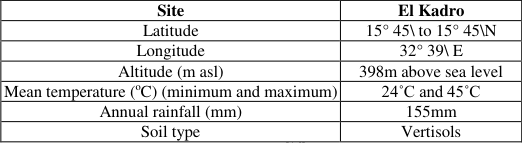 Table 1
 Table 2
 Table 3
 Table 4
 Table 5
Introduction
Livestock in Sudan are an integral component of agriculture that contribute directly or indirectly to the populace by providing food, value-added products, fuel and transport, enhancing crop production and generating incomes, livelihood, and livestock provide food products like milt, meat. In addition, livestock also diversify production and income, provide year-round employment and reduce risk. Livestock play an important role in crop production. Approximately 80% of livestock in Sudan is raised under grassland-based animal production systems (GL) which are pastoral nomadic and semi-nomadic agro pastoralism sub-systems with average population of cattle, sheep, goats and camels as: 30376, 40210, 31227, and4809 (000 heads) in 2015 and31489, 40896, 32032 and4895 (000 heads) in 2019 respectively Livestock had consistently provided more than 60% of the estimated value added to the agricultural sector in the years 2007-2010. Nonetheless, in the thirteen years' period since 1997, livestock and livestock products had on average provided 27% of the value of Sudan's agricultural exports (Igad, 2013). Major livestock production system in Sudan include pastoral (Nomadic) agro-pastoral (semi-nomadic), transhumant, semitranshumant and animal production around the Nile systems. Grasslands in which grasses predominate still provide the basic feed requirements for growth and development of livestock particularly ruminants, their maintenance and the production of their product's needs. In some grazing lands, legumes and herbaceous species contribute to overall available feedstuff. Crop residues are of vast importance in many regions in Sudan, being as an alternative source for feed availability specially in dry season feeding for livestock. A majority of these grasslands are located in regions characterized by erratic rainfall patterns and varying periods of extreme drought and often soils of poor fertility. Seasonal distribution of rainfall and soil conditions impose a direct influence on the amount and quality of forage available during the year and indirectly affect animal performance. In many regions of the world, a major problem associated with the development of livestock industries is the supply of feeds. In Sudan, the major constraints of livestock production is attributed to low productivity associated with low quality and seasonal availability of feed, poor health, and breeds of low genetic potentials. Poor natural pasture, an availability of crop residue, and limited use of improved fodder enhanced the situation for low animal productively The challenges before animal researchers are multifold for achieving equilibrium between livestock numbers, production and productivity and scarce feed and fodder and other resources to satisfy the requirements of the populace across the globe. In Sudan, improved fodder played a significant role in livestock sector transformation, such as Rhode's grass, Sudan grass in terms of meat and milk production. Importance of forage of African origin like Brachiaria in livestock intensification has now gained a significant interest role in improving productivity in animal production sectors. Interest on Brachiaria research was spurred by the exceptional performance of livestock production on Bracharia pasture in South America. In Brazil, an estimated acreage of 99 million hectares in Brazil alone (Jank et al., 2014), supporting a highly vibrant beef industry. In East Africa, Brachiaria has also played a significant role in transformation in milk production. Climate Smart Brachiaria Grasses for Improving Livestock Production in East Africa -Kenya Experience of Brachiaria in increasing milk productivity, was clearly demonstrated by the work of Muinga, R. W., Njunie, M. N, et al. (2015) [8] , which revealed that, Milk yield increased by 15-40% in cows fed Brachiaria grasses compared to local feeds which were varied mixtures of Napier grass, maize stover and natural pastures. Brachiaria, has many agricultural benefits including, high biomass production, nutritive to livestock, improved livestock productivity (both milk and meat) Grasses in the genus Brachiaria have advantage over those in other genera including adaptation to drought and low fertility soils, ability to sequester carbon; increase nitrogen use efficiency through biological nitrification inhibition (BNI) and arrest greenhouse gas emissions (Mureithi, J. G. and Djikeng, A. (2015) [9] . Brachiaria grass is an important tropical forage of African origin with desirable attributes of agricultural and environmental significance. Brachiaria has been extensively cultivated as a pasture across the tropics except in its endemic provenance of Africa. In 2013, a collaborative research program was initiated in Kenya and Rwanda with the aim of improving the availability of quality livestock feeds adapted to drought and low fertility soils using Brachiaria. Poor feed options of low nutritional quality are among the major factors contributing to the low livestock productivity in Sudan. The exploration and wider scale cultivation of high yielding and nutritious forage is the most pragmatic option for sustainable increase in livestock productivity in the country. In this study three Bracharia grass cultivars Brachiaria decumbens cv. Basilisk, Brachiaria brizantha cvs. Piatã and B. brizantha cvs. Xaraes were introduced and evaluated for adaptation and nutritive values as dried fodder (hay) and silage forms at the Research Farm, University of Bahri, Khartoum, Sudan.
Material and Methods
Material and Methods
Study site
The study was conducted University of Bahri, College of Animal Production Research and Training Farm in Khartoum, Sudan. It was situated at the east north of the Khartoum North State at the Khartoum Bahri Locality. It occupies the northern part of the locality in between 15° 45\ to 15° 45\N latitudes, 32° 35\ to 32° 39\ E longitudes (Mohammed, 2005). The altitude changes from 398m above sea level (a.s.l.); (Sulafa and Mohammed 2010,). The area is almost flat, slightly undulated bounded by the River Nile and Elsilaid Agricultural Project to the west and east respectively. The area illustrates a typical agro-ecological profile of the windward side of Bahri Locality with nil or low precipitation with considerable annual fluctuations in the magnitude, intensity, and distribution of rainfall, a short rainy season from July to September with moderate temperatures and high humid. Mean annual rainfall is 155mm in the study area. Rain mainly falls from May to October. The mean daily minimum and maximum temperatures are 24˚C and 45˚C, respectively. The soil-type in the site is gardud soil (loamy-clay soil) with poor fertility. The parent materials of the clay soils which cover almost this entire area belong to two broad groups: Aridisols and Vertisols (Osman, 1970, Mohammed, 2005) in addition to Paludal sediments from rivers belonging to the Nile system (gradational clay plain) (Blokhus,). The most important soil types for farming in the study area are dominated by relatively expanding clays and Aridisols (Mohammed, 2005). The soils are classified as Aridisols and Vertisols by WRB soil classification (FAO, 2006) [2] . These soils are calcareous; strongly alkali and saline-sodic, moderately to poorly welldrained, but generally contain very low organic matter as well as nitrogen (Mohammed, 2005). Source: Sulafa and Mohammed 2010 [16] . (5 m X 4 m). The space between replication was 1 m and plant to plant spacing of 50 cm.
Experimental set-up
Experimental set-up
Land preparation and intercultural operation
The land was ploughed and harrowed twice to a fine tilth. All the perennial grasses were removed from the experimental site.at the onset of rainy season, the seeds were drilled along the furrows (0.5-1 cm deep), using hand hoe and cover lightly with soil. Hand hoe was used to remove the weeds from the plots.
Research data collection
Plant height and Plant Population Count within a 1m x 1m frame, was performed at 4 weeks' interval during establishment phase, pests and diseases incidences were also put into consideration throughout the experimental period.
At maturity, all five forage cultivars/species under the experiment were harvested at 5 cm above the ground. 2 kg of fresh samples from each cultivar was weighed and dried in shade for 28 days in the Animal Nutrition Laboratory of University of Bahri. Whereas a fresh biomass weight of 5 kg was also weighed from the same cultivars under investigation was ensilaged for a period of 28 days in the same Laboratory. Then after 28 days, silages were removed out and stretched on papers on the Lab. Pinches for another 2 weeks to complete drying. Following the drying, the samples were grinded to a fine and powder form, each well labeled and packed to avoid moisture transfer. The herbage was ground to pass through a 1-mm screen in a Willey mill (Udy Corporation, Fort Collin, CO). Analysis was conducted for crude protein (CP), fibre, and lignin. The samples then were taken to Central Animal Research Station at Kuku for the subsequent chemical analysis. Ash was determined by heating the samples at 600 o C for 2 hours in a muffle furnace. Crude protein was determined using micro-Kjeldahl according to the method of the Association of Official Analytical Chemist (AOAC 2000) [1] . The neutral detergent fibre (NDF) and acid detergent lignin (ADL) were determined using the Ankom method of Van Soest et al. (1991).
Statistical Analysis
The DM%, CP%, CF%, NDF%%, EE% and Ash % subjected to two-ways analysis of variance (ANOVA), of the randomized complete block design using the General Linear Model procedure of Statix 8.0 U. S. A. version 2004. Differences between treatments means separated using the least significant difference (LSD).
Results & Discussion
The agronomical characteristics, including Plant count/m The approximate chemical analysis on a fresh basis has shown significant difference among the forages tested for different forage quality parameters (P ≤ 0.04; Table 3). All three improved Brachiaria grass cultivars had significantly higher dry biomass production than two local check used in this study.
| Forages | DM % | CP % | CF % | NDF % | EE % | Ash % |
|---|---|---|---|---|---|---|
| Brachiaria brizantha cv. Piata | 91.567b | 9.360 d | 34.033ab | 64.453 | 1.310a | 7.977 b |
| Brachiaria brizantha cv. Xaraes | 91.467b | 8.097 c | 32.467a | 59.967 | 2.073c | 7.280 a |
| Brachiaria decumbens cv. Basilisk | 92.433b | 7.397 b | 33.083a | 61.830 | 2.303c | 10.000d |
| Brachiaria botuliform cv. Local | 86.153a | 10.187e | 37.400b | 65.367 | 1.537b | 8.877 c |
| Chloris gayana cv. Fine Cut | 86.697a | 6.683 a | 45.517 c | 59.467 | 0.973a | 8.887 c |
| Pr. > F (Model) | 0.041 | <0.0001 | 0.000 | 0.058 | 0.002 | <0.0001 |
| Significant | Yes | Yes | Yes | No | Yes | Yes |
Table text extracted from the original PDF; superscript letters are shown inline. The original table image is below.
View original table image
Nutrient Detergent Fiber
On the other, the NDF between treatments showed no significant differences among the treatments in both for fresh and silage form for all samples (64.453, 68.607) Tables1(1&2). These results in line with the findings of Heuze et al. (2016) [5] who found that the NDF 66%, the same range which was found.
Lignin
On the other hand, the lignin results revealed a significant difference in silage form between the treatments, that local
Acknowledgement
Acknowledgement is extended to professor Sita Ghimire of The Biosciences eastern and central Africa, International Livestock Research
Figures and tables from the paper
| Site | El Kadro |
|---|---|
| Latitude | 15° 45\ to 15° 45\N |
| Longitude | 32° 39\ E |
| Altitude (m asl) | 398m above sea level |
| Mean temperature (oC) (minimum and maximum) | 24˚C and 45˚C |
| Annual rainfall (mm) | 155mm |
| Soil type | Vertisols |
Table text extracted from the original PDF; superscript letters are shown inline. The original table image is below.
View original table image
| Species | B. brizantha cv. Basilisk | B. brizantha cv. Xaraes | B. brizantha cv. Piatã | Brachiaria baculiform (Um giir) Control 2 | Rodes grass (Finecut) Control 1 |
|---|---|---|---|---|---|
| Plant count/m2 | 33.00 | 27.00 | 38.00 | 25.00 | 14.00 |
| Plant Height (cm) | 20.00 | 53.00 | 25.25 | 18.50 | 9.00 |
| Pest infection | Non | Non | Non | Non | Non |
| Other notes | Non | Non | Non | Non | Non |
Table text extracted from the original PDF; superscript letters are shown inline. The original table image is below.
View original table image
| Sample | Color | Smell | PH |
|---|---|---|---|
| B. brizantha cv. Basilisk | Dark brown | Bad | 8 |
| B. brizantha cv. Xaraes | Brown | Adour | 7.85 |
| B. brizantha cv. Piatã | Brown & light brown | Adour/aroma | 8.03 |
| Brachiaria baculiform (Um giir) Control 2 | Brown | Adour | 7.8 |
| Rodes grass (Finecut) Control 1 | Brown &dark brown | Bad | 7.93 |
Table text extracted from the original PDF; superscript letters are shown inline. The original table image is below.
View original table image
| Forages | DM % | CP % | CF % | NDF % | EE % | Ash % | Lignin |
|---|---|---|---|---|---|---|---|
| Brachiaria brizantha cv. Piata | 92.433 ab | 6.467 b | 45.783 b | 68.607 b | 1.550 b | 9.300 bc | 13.090 d |
| Brachiaria brizantha cv. Xaraes | 94.467 b | 7.357 c | 42.600 b | 66.167 ab | 0.873 a | 8.503 b | 11.273 c |
| Brachiaria decumbens cv. Basilisk | 94.567 b | 11.067 d | 37.700 a | 61.850 a | 2.290 c | 7.227 a | 10.350 b |
| Brachiaria botuliform cv. Local | 90.820 a | 11.787 d | 36.000 a | 67.950 b | 2.103 c | 6.543 a | 7.307 a |
| Chloris gayana cv. Fine Cut | 94.567 b | 3.483 a | 54.367 c | 75.617 c | 1.940 bc | 10.067 c | 13.647 e |
| Pr. > F (Model) | 0.045 | <0.0001 | <0.0001 | 0.005 | 0.001 | 0.000 | <0.0001 |
| Significant | Yes | Yes | Yes | Yes | Yes | Yes | Yes |
Table text extracted from the original PDF; superscript letters are shown inline. The original table image is below.
View original table image
References
11 in the original paper- Goering HK, Van Soest PJ. Forage fibre analysis. U.S.D.A. Agricultural Handbook, No. 1970;70:1-20.
- Ghimire S, Njarui D, Mutimura M, Cardoso J, Jonhson L, Gichangi E, et al. Climate smart Brachiaria for improving livestock production in East Africa: Emerging opportunities. In: Vijay D. et al. (Eds) Sustainable use of grasslands resources for forage production, biodiversity and environmental protection. Proceedings -23rd International Grassland Congress. Published by Range Management Society of India. Jhansi -284003-India, 2015, 361-370
- Heuzé VG. Tran, Sauvant, D., and Lebas, F. 2016. Bread grass (Brachiaria brizantha). Feedipedia, a programme by INRA, CIRAD, AFZ and FAO. http://www.feedipedia.org/node/490 accessed on August 21; c2016.
- Jaetzold R, Schmidt H, Hornetz B, Shisanya C. Farm Management Handbook of Kenya: Natural Conditions and Farm Management Information. 2nd edition Part C East Kenya Subpart C2 Coast Province: Ministry of Agriculture, Kenya. 2006;2:236.
- Kabirizi J, Muyekho FN, Aemiro K, Musangi R, Nijimbere A, Mutimura M, et al. Enhancing adoption of Napier and alternative fodders tolerant varieties to stunt and smut for increased feed availability in smallholder dairy systems in East and Central Africa Region. Wandera et al., (Eds) 2016. East African Agricultural Productivity Project [EAAPP]: Technology Generation Report 2016. Kenya Agricultural and Livestock Research Organization [KALRO], Nairobi, Kenya; c2016.
- Muinga RW, Bimbuzi S, Mambo LC. Nutrient composition of locally available feedstuffs in coastal lowlands Kenya. In: Proceedings of the 6th Biennial KARI Conference. 8-13 November 1998, Kenya Agricultural Research Institute. Nairobi, Kenya, 1998, 287-293.
- Mureithi JG, Njunie MN, Muinga RW, Ali R, Thorpe W, Mwatate CD. Adoption of planted forages by smallholder dairy farmers in coastal lowland Kenya. Tropical Grasslands. 1998;32:221-229.
- Njarui DMG, Gichangi EM, Gatheru M, Nyambati EM, Ondiko CN, Njunie MN, ET AL. A comparative analysis of livestock farming in smallholder mixed crop-livestock systems in Kenya: 2. Feed utilization, availability and mitigation strategies to feed scarcity. Livestock Research for Rural Development. 2016; 28 Article #67. Retrieved July 1, 2016, from http://www.lrrd.org/lrrd28/4/njar28067.html
- Nguku SA. An evaluation of Brachiaria grass cultivars productivity in semi-arid Kenya. MSc thesis. South Eastern Kenya University, 2015, 113.
- Okalebo JR, Gathua KW, Woomer PL. Laboratory methods of soil and plant analysis: A working manual, Second Edition, Nairobi, Kenya, 2002, 128.
- Reynolds L, Mureithi JG, Mullins GR, Thorpe W. Feed resource availability and milk production on smallholder dairy farms in the sub-humid coastal region of Kenya. In: Animal Production in Developing countries. Proceedings of the meeting held 2-4 Sept. 1991, at Ashford, U.K. British Society of Animal Production, Penicuik, Scotland, U.K, 1993, 158-159.