
Research article · 2022 · Full text
International Journal of Advanced Biochemistry ResearchProduction of herbal toothpaste using Moringa root essential oil extract
Volume 6(2) · Pages 49–51 · DOI: 10.33545/26174693.2022.v6.i2a.134 ↗
Research areasMoringa oleifera research and applicationsEssential Oils and Antimicrobial ActivityDiverse Scientific Research Studies
Abstract
Author-writtenIn this study, antimicrobial toothpaste (dentifrice), which can compete with existing toothpaste, was produced using Moringa oleifera root essential oil extract. The oil extract 2 ml per 100 g obtained, gave peppermint flavor and was volatile. The phytochemical screening revealed a high concentration of flavonoid, a bioactive agent with antimicrobial activity in nature. 0.5 ml of the concentrate essential oil extract was used to produce 120 gm of a novel dentifrice. The antimicrobial activities of the novel herbal toothpaste were assessed against Streptococcus mutans, Lactobacillus, Staphylococcus aureus, and Candida albicans which are microorganisms involved in tooth plaque, using Oral-B (pro-health), commercial toothpaste as a positive control. The antimicrobial potential of the novel toothpaste was evaluated by the muller Hinton agar well diffusion method against the selected bacteria. The novel toothpaste showed higher inhibitory activity against Streptococcus mutans (31 mm), Lactobacillus (33 mm), Staphylococcus aureus (16 mm), and Candida albicans (16 mm) while, the Oral-B positive control toothpaste showed inhibition against the bacteria; Streptococcus mutans (22 mm), Lactobacillus (28 mm), Staphylococcus aureus (12 mm) and Candida albicans (15 mm) respectively. From the result, it was shown that the Moringa root herbal toothpaste has high antimicrobial potential than Oral-B herbal toothpaste against tooth plaque. It can be recommended that further studies on sensory analysis of food and dentifrice products containing Moringa root essential oil be carried out to evaluate its acceptability and shelf life.
Summary
Source-checkedPlain-language reading of the full paper, prepared with AI and checked against the text. Each point links to the authors' own words.
Why it matters
- Common oral and dental health issues include periodontitis, gingivitis, and tooth decay, which affect people globally across various age groups. View evidence ↗
- Microorganisms like Lactobacillus and Streptococcus mutans contribute to dental diseases by fermenting sucrose into lactic acid, which causes enamel demineralization and plaque formation. View evidence ↗
The question
- The study aimed to produce an antimicrobial toothpaste using Moringa oleifera root essential oil extract that could compete with existing commercial products. View evidence ↗
- The research sought to determine how to formulate a herbal toothpaste using Moringa root essential oil to combat microorganisms associated with dental plaque. View evidence ↗
What they did
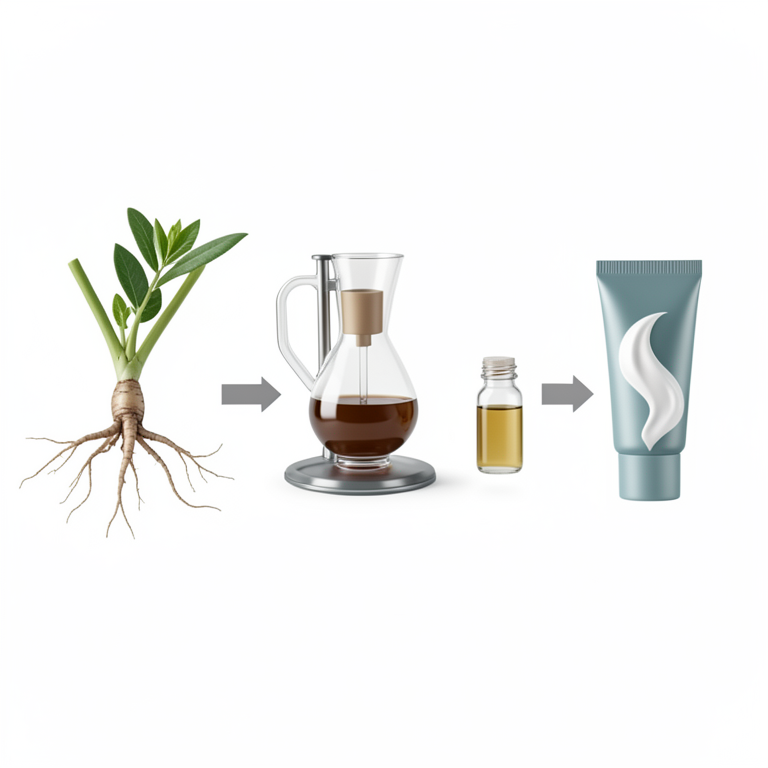
- Moringa root oil was obtained by extracting 50 g of powdered root with 300 ml of 95% ethanol via Soxhlet extraction, then concentrating it to 2 ml of oil at 65 °C. View evidence ↗
- Antimicrobial activity was tested using the agar diffusion assay on Mueller-Hinton agar, utilizing 7 mm diameter wells. View evidence ↗
- The toothpaste was tested against four plaque-related microorganisms: Candida albicans, Staphylococcus aureus, Lactobacillus, and Streptococcus mutans. View evidence ↗
What they found
- The novel toothpaste was white, smooth, and homogeneous with a pH of 8.00 and 50% moisture, compared to the blue Oral-B control which had a pH of 7.70 and 55% moisture. View evidence ↗
- The Moringa toothpaste showed higher zones of inhibition than Oral-B for all tested strains: Streptococcus mutans (31 mm vs 22 mm), Lactobacillus (33 mm vs 28 mm), Staphylococcus aureus (16 mm vs 12 mm), and Candida albicans (16 mm vs 15 mm). View evidence ↗
- The extracted Moringa root oil was volatile and possessed a peppermint flavor. View evidence ↗
What it means
- The authors concluded that Moringa oleifera root essential oil is an effective agent for inhibiting plaque-causing microorganisms and is suitable for medicinal toothpaste formulation. View evidence ↗
- The authors recommend further research into the shelf life and sensory acceptability of Moringa root essential oil in dentifrice products. View evidence ↗
Visual summary
3 visualsIllustrations explain the paper; charts are replotted from the paper's own table values.
Production Workflow
AI-generated conceptual illustration (Moringa oleifera root and toothpaste). It explains the idea and does not show study data.
View source evidence ↗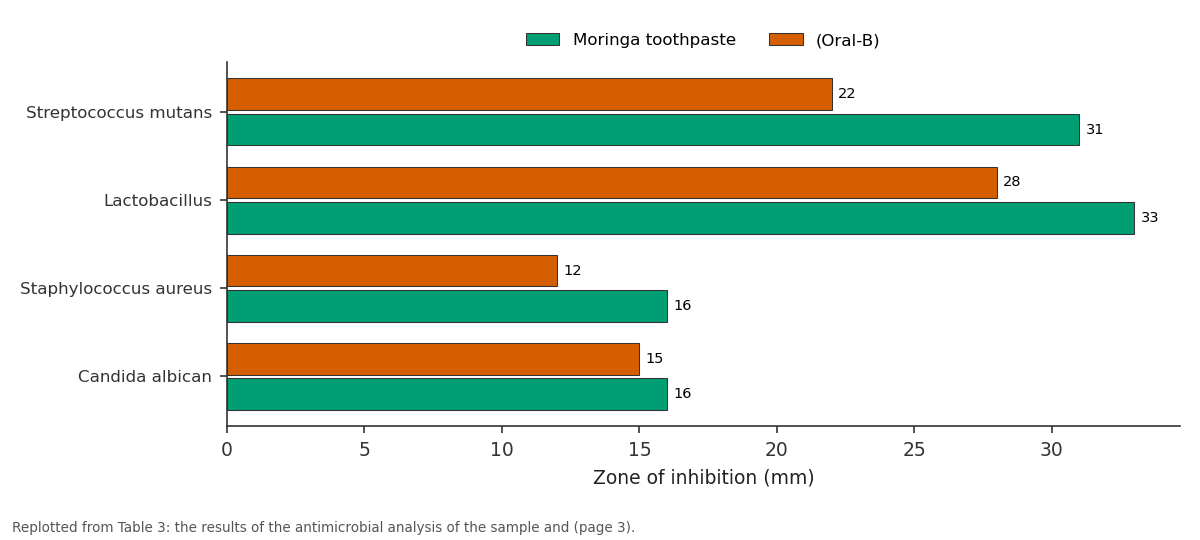
Moringa toothpaste and (Oral-B): Streptococcus mutans vs Lactobacillus vs Staphylococcus aureus vs Candida albican
Replotted from Table 3 (page 3) of the original paper. Every bar is the paper's own table value.
View source evidence ↗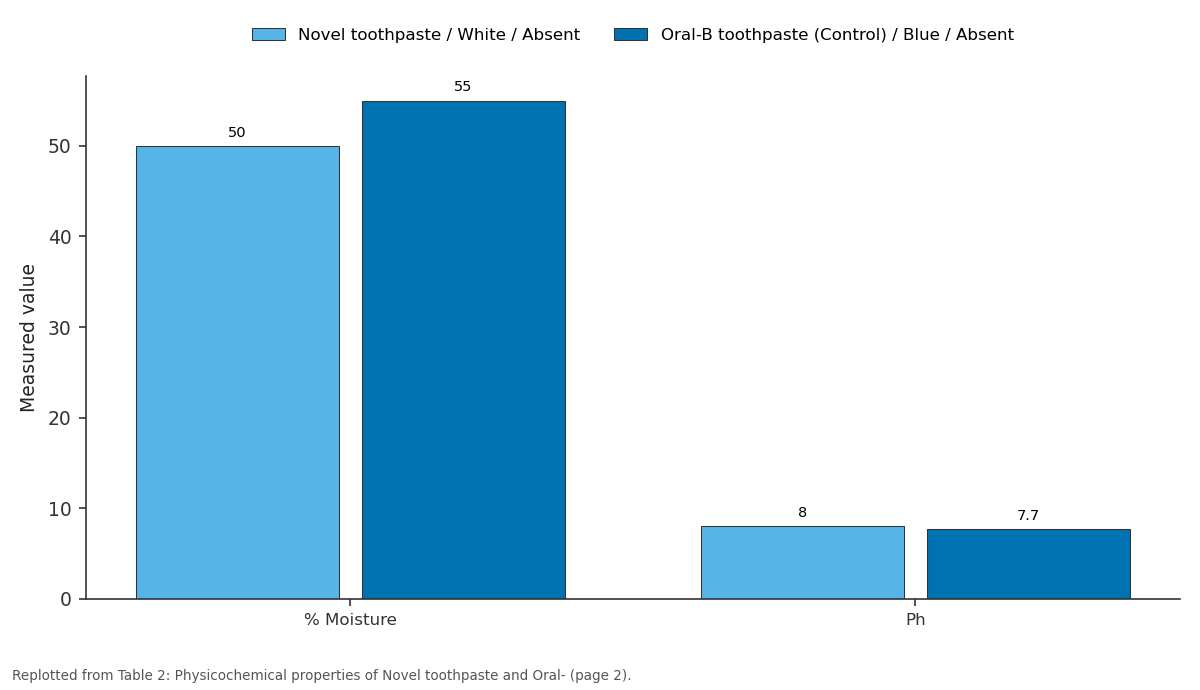
Novel toothpaste / White / Absent and Oral-B toothpaste (Control) / Blue / Absent: % Moisture vs Ph
Replotted from Table 2 (page 2) of the original paper. Every bar is the paper's own table value.
View source evidence ↗Figures & tables
From the original paper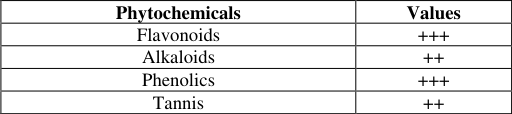 Table 1
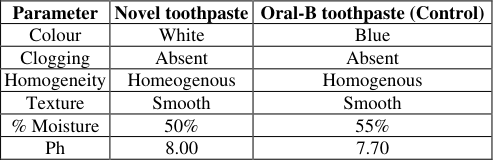 Table 2
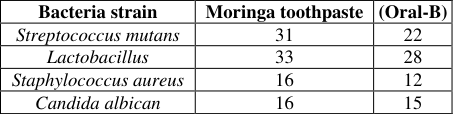 Table 3
Introduction
Oral and dental health is an essential part of general health and is one of the public health hazards (Bhattacharya et al, 2003) [7] . Tooth decay, gingivitis, and periodontitis are the most common oral and dental health diseases which can be seen frequently in different age groups and different parts of the world, (Akltar and Bhakuni, 2004) [1] . In the development of dental health diseases, various microorganisms, such as Streptococcus mutans (SM), and Lactobacillus have significant effects. These microorganisms play a key role in the fermentation of sucrose resulting in lactic acid production which leads to demineralization of the enamel and dental plaque (Khare, 2007) [10] . Other microbes such as Staphylococcus aureus, Streptococcus mitis, and Candida albicans have been implicated in dental diseases (Hamada and Slade, 2010) [9] . Many dentifrices have been produced over the years, some focusing on marketing strategies to sell products such as offering whitening capabilities, (Maripandi et al., 2011) [11] . The most essential dentifrices recommended by dentists are toothpaste used in conjunction with a toothbrush to help remove food debris and dental plaque. These bacteria elaborate various compounds (H 2 S, NH 3 , amines, toxins, enzymes, and antigens) which elicit an inflammatory response that is though protective but also responsible for the loss of periodontal tissues, pocket formations, and loosening and loss of teeth. This continues until late, when abscesses may occur. Bleeding gums and bad breath may occur (Hamada and Slade, 2010) [9] . The advent of modern technology brought in many brands of synthetic kinds of toothpaste with chemically based antimicrobial agents such as Chlorhexidine, triclosan, and fluoride compounds (Maripandi et al., 2011) [11] . Fluoridated toothpaste apart from not being recommended for children below 6 years of age, causes pigment of teeth and weakening of enamel, while Chlorhexidine, (Chlorophenylbiguanide), causes pigmentation of dental, mouth, and tongue surroundings with an altered sense of taste, irritation and oral dryness, scaling of gingival and negative systemic effects in ingestion (Ghelichli, 2014) [8] . Herbal medicine has been considered an alternative formulation to chemically based orthodox formulations in every aspect of pharmaceutical products and dentifrices, with no exceptions. Although some literature has reported the antibacterial activities of Moringa oleifera, there are not many research studies on the use of Moringa plant extract in the formulation of dentifrices. Moringa oleifera (M. Oleifera), belongs to the family, Moringaceae and order, brassicales. It is popularly known as drumstick or horse radish in English. The seeds, fruits, leaves, and immature pods of this tree are used as highly nutritive vegetables in Nigeria (Answer et al, 2005) [3] . The root part is highly medicinal, and the extract has antimicrobial activities enough to subdue harmful microorganisms. It contains bioactive substances that affect living organisms, tissues, and cells (Barreto, et al, 2007) [6] . The root part contains essential oil and active substances enough to keep the mouth fresh if compounded in dentifrices. The essential oil is made of phytochemicals most of which are volatile substances that gave a peppermint smell. (National Center for Complementary and Integrative Health, 2016) which was indigenous to Europe and the Middle East before it became common in other regions such as North America and Asia. Peppermint extract is commonly used in cooking as a dietary supplement, in herbal or alternative medicine, as a pest repellent, and as a flavor in cleaning products, cosmetics, mouthwash, chewing gum, and candies. It is used as an antiseptic, anti-viral, and stimulant (Tanu et al., 2016) [17] , hence essential oil is effective as an antimicrobial agent. Moderate levels can be safely mixed into food items or applied topically or inhaled using aromatherapy (Santus, 2020) [16] and as such used as a remedy for a toothache (Worwood, 1991) [18] . In this regard, this research is aimed to provide information on how to formulate herbal toothpaste using Moringa root essential oil extract against the microorganism implicated in dental plaque.
Materials and Methods Collection/Preparation of Materials
Fresh Moringa roots were harvested from the plant growing in the botanical garden of Science Laboratory Technology, located at the permanent site of the Federal Polytechnic Oko. The harvested roots were washed and Sun-dried. One hundred grams of the dried root was ground to powdered mesh using a manually operated grinder and kept in a bottle container tightly closed.
Extraction
The oil was extracted by the Soxhlet extraction method, (Azhari, et al., 2018) [5] . 50 g of powdered sample of Moringa root was extracted using 300 ml of 95% ethanol by a soxhlet extractor. The extract was concentrated to 2 ml dark brown viscous oil, using a rotary evaporator at 65 °C. Phytochemical Analysis 0.5 ml of the extract was used for qualitative phytochemical screening by the method described by AOAC (2005) [4] . Bioactive agents screened for were flavonoids, alkaloids, phenolics, and tannins.
Formulation of Novel Toothpaste
Formulation of Moringa root extract-based toothpaste. All ingredients were weighed and turned into a stainless mixer as follows: 0.5 ml Moringa root extract 50 g calcium carbonate (Abrasive) 20 g sodium lauryl sulphate (Detergent) 0.1 g methyl cellulose (Binder/hardener) 1 g glycerine (Sweetener) 50 g water (Dispersion medium) These materials were added slowly into the dispersion medium and mixed until a paste consistency was formed.
Comparative Sensitivity Tests
The pH of the novel toothpaste and that of Oral-B toothpaste were measured using a pH meter.
Antimicrobial Sensitivity Test Microorganism selection
Four (4) bacteria strains identified in tooth plaque were obtained from the microbiology laboratory of science laboratory technology federal poly Oko namely Streptococcus mutans (SM), Lactobacillus, Streptococcus aureus, and Candida albicans. The antimicrobial sensitivity test for novel toothpaste was carried out by the agar diffusion assay as described by Jorgenson et al., (2007). Briefly, bacteria strains were grown in Mueller-Hinton agar and broth. The strains were incubated at 36 o C for 18h and were diluted to a final concentration. 106 cfu/ml. Each bacteria suspension was spread over the surface of Mueller Hinton agar, containing 3 wells of 7 mm diameter and filled with 0.25, 0.50, 0.75, and 1.00 ml of extract made by Serial dilute of the concentrate dissolved in the medium and incubated at 36 °C for 20 h. An Oral -B toothpaste was used as a positive control.
Results
The total yield of Moringa Novel Toothpaste was 120 gm. The result of the confirmatory phytochemical analysis of the extract was presented in table 1. From the result, Novel Dentifrice showed higher inhibitory activity on microorganisms causing teeth plaque, than Oral-B. Zones of inhibitions on streptococcus, and Lactobacillus by the Novel toothpaste were higher than that of Oral-B commercial toothpaste.
| Phytochemicals | Values |
|---|---|
| Flavonoids | +++ |
| Alkaloids | ++ |
| Phenolics | +++ |
| Tannis | ++ |
Table text extracted from the original PDF; superscript letters are shown inline. The original table image is below.
View original table image
Discussion
In the result, 50 g of Moringa root extract yielded 2 ml of essential oil, which is in line with earlier work by Azhari et al., (2018) [5] , who reported a total Soxhlet extraction result of 1.5+0.12 ml. The phytochemical screening result showed the presence of flavonoids, alkaloids, phenolics, and tannins which can be effective on the microorganisms implicated in the tooth plaque (National Center for Complementary and Integrated Health (NCCIH, 2016) [12] . Dentifrices including toothpowder and paste are agents along with a toothbrush to clean and keep natural teeth healthy. (Zero, 2011) [19] . The antimicrobial sensitivity test showed that Moringa formulated toothpaste has higher efficacy than the control toothpaste considering its inhibition of Streptococcus mutans (31 mm) and Lactobacillus 33 mm compared to Oral-B with (22 mm) and (28 mm) respectively. This may be a result of high concentrations of flavonoid and phenolic groups in the plant extract. (Amaechi, and Loveren, 2013) [2] . The result showed that the essential oil of Moringa oleifera root back had antibacterial, activity against all the bacteria Strains tested and implicated in the teeth plaque. (Hamada and Slade 2010) [9] , who reported similar activity on microorganisms of tooth plaque by herbal toothpaste. This result is in fair correlation with the studies in which essential oil has antibacterial activity against gram-positive and gram-negative bacteria as reported by Hamada and Slade (2010) [9] . The plant extract has advantages over chemical agents since it is organic and harmless to the body.
Conclusion
The result revealed that Moringa oleifera root back contained essential oil extract capable of inhibiting microorganisms implicated in dental plaque and as such can be a good source of active agent in the formulation of medicinal toothpaste.
Figures and tables from the paper
| Parameter | Novel toothpaste | Oral-B toothpaste (Control) |
|---|---|---|
| Colour | White | Blue |
| Clogging | Absent | Absent |
| Homogeneity | Homeogenous | Homogenous |
| Texture | Smooth | Smooth |
| % Moisture | 50% | 55% |
| Ph | 8.00 | 7.70 |
Table text extracted from the original PDF; superscript letters are shown inline. The original table image is below.
View original table image
| Bacteria strain | Moringa toothpaste | (Oral-B) |
|---|---|---|
| Streptococcus mutans | 31 | 22 |
| Lactobacillus | 33 | 28 |
| Staphylococcus aureus | 16 | 12 |
| Candida albican | 16 | 15 |
Table text extracted from the original PDF; superscript letters are shown inline. The original table image is below.
View original table image
References
13 in the original paper- Akhtar MS, Bhakuni V. Streptococcus pneumoniae hyaluronate lyase; An overview. Current Science. 2004;86:285-295.
- Amaechi BT, Van Loveren C. Fluorides and nonfluoride remineralization systems. Toothpastes. 2013;23:15-26.
- Answer A, Goddy F, Akerele R. Physico-chemical and Antioxidant properties of Moringa flower and bark oil. Pakistan Journal of Nutrition. 2005;10:409-414.
- Azhari S, Zakaria Salih A, Rabab ME, Mulchtar, Ali Ali O. Extraction and Characterization of Peppermint (Mentha piperita) Essential Oil and its Assessment as Antioxidant and Antibacterial. Gezira Journal of engineering and applied Sciences. 2018;13(1).
- Barreto I, Vijayan MN, Dessai S. Analyzing of Major Active Luteolin in Cyanthillium cinereum; International Journal of Bioscience, Biochemistry, and Bioinformatics. 2007;3(4):20-23.
- Bhattacharya S, Virani S, Zavro M, Hass GJ. Inhibition of Streptococcus mutans and other oral Streptococci by (Humulus lupulus L.) constituents. Economic Botany. 2003;57:118-125.
- Ghelichli M. Formulation of new herbal Salvadora toothpaste with anti-decay wound healing and caring tooth and periodontal disease. Bulletin of Environment, Pharmacology and Life Sciences. 2014;3(11):115-122.
- Hamada S, Slade HD. Biology, the immunogenicity of Streptococcus mutans; Microbiology review. 2010;44(2):331-384.
- Maripandi A, Kumar TA, Al-Salamah AA. Prevalence of dental caries bacterial pathogens and evaluation of inhibitory concentration effect on different kinds of toothpaste against Streptococcus spp. African Journal of Microbiology Research. 2011;5(14):1778-1783.
- Peppermint Oil. Synopsis of information. United State Bureau of foreign and Domestic Commerce; c1949. Retrieved 4th February 2020.
- Mapp CP. Peppermint oil: evaluating efficacy on nausea in patients receiving chemotherapy in the ambulatory setting. Number 2/April 2020. 2020;24(2):160-4. www.gogle.com Retrieved 4 th February, 2020.
- Tanu B, Harpreet K. Benefits of essential oil. Journal of Chemical and Pharm Research. 2016;8(6):143-149.
- Zero DT. Oral health research institute, Indiana chivsity of dentistry. Indianapolis USA. 2011;55(1)29-46.
Cited by 9
From OpenAlex, OpenCitations and reference lists read by Scinovex
- Moringa oleifera: A Review of the Pharmacology, Chemical Constituents, and Application for Dental Health ↗
Meiny Faudah Amin, Taufiq Ariwibowo, Salsabila Aqila Putri, Dikdik Kurnia · Pharmaceuticals · 2024
Moringa oleifera L., commonly known as Kelor in Indonesia and miracle tree in English, has a rich history of utilization for medicinal, nutritional, and water treatment purposes dating back to ancient times. The plant is renowned for its abundance of vitamins, minerals, and various chemical constituents, making it a valuable resource. Among its notable pharmacological properties are its effectiveness as…
❝ 38PDF - Preparation and evaluation of herbal tooth paste ↗
Vivek Soni, Neha Mishra, Nivedita Chatterjee · International Journal of Pharmaceutical Research and Development · 2025
Herbal tooth paste was made up of numerous ingredients including Bael Leaves, Neem, Honey, Bay Leaf Extract and Moringa Powder that can be found in a variety of places in the environment. Standardization and evaluation of crude drugs and their formulations are the benefits of the new approaches for focusing on these areas. A highly secure and useful herbal product
- Anti-inflammatory effect and inhibition of Streptococcus mutans using a Moringa oleifera based mouthwash ↗
Cecilia Hernández Morales, S. Flores, Prima Luna, Olga Lima Tavares Machado, Diego A. Escobar, Brenda E Mora Alva et al. · International Journal of Applied Dental Sciences · 2025
Introduction: Gingivitis is an infectious inflammatory process that can occur due to oral biofilm problems. Promotion and prevention programs are based on the motivation that can be generated in individuals and populations about making changes in hygiene habits with the aim of reducing the concentration of pathogenic microorganisms such as S. mutans, which is responsible for bacterial aggregation and congregation
- Preparation and evaluation of herbal tooth paste ↗
Vivek Soni, Neha Mishra, Nivedita Chatterjee · International Journal of Pharmaceutical Research and Development · 2025
Herbal tooth paste was made up of numerous ingredients including Bael Leaves, Neem, Honey, Bay Leaf Extract and Moringa Powder that can be found in a variety of places in the environment. Standardization and evaluation of crude drugs and their formulations are the benefits of the new approaches for focusing on these areas. A highly secure and useful herbal product
❝ 0Found by Scinovex - Formulation & development of transdermal patches by using moringa oleifera leaf extract ↗
Charitra Kumar Mishra, Nivedita Chatterjee · International Journal of Advanced Academic Studies · 2025
Transdermal drug delivery systems (TDDS) offer a promising alternative to conventional drug administration routes, providing controlled release, improved bioavailability, and reduced side effects. This study focuses on the development and evaluation of a Transdermal patch formulated using Moringa oleifera leaf extract, known for its rich phytochemical content and diverse therapeutic properties, including antioxidant, anti-inflammatory, and antimicrobial activities. The extract was
- 458459Chapter 13 Medicinal and aromatic plants used in cosmetics ↗
Emina Boškailo, Alema Dedić, Hurija Džudžević-Čančar, Amra Alispahić, Kasapović Dejana · De Gruyter eBooks · 2025
In order to promote sustainability and environmentally friendly practices, the chapter delves into medicinal and aromatic plant (MAP) extracts, their phytochemical, and their integration with novel technology aimed to promote applicability in cosmetic formulations. Huge progress is being made in replacing harnessing solvent with green substitutions, and increasing extraction process efficiency by manipulating parameters. Consequently, MAP extracts have complexed chemical…
❝ 0 - Efficacy of homoeopathic preparation calcarea phosphorica 6C in augmenting the calcium and phosphorus content in Moringa oleifera leaves-an experimental study ↗
MI Sharadhi, Sharath Mandicha · International Journal of Homoeopathic Sciences · 2025
Agrohomoeopathy applies the principles of Homoeopathy to plant health management, aiming to stimulate physiological processes, improve nutrient uptake, and promote sustainable agriculture. Moringa oleifera, known as the “Miracle Tree,” is valued for its rich nutritional profile, particularly calcium and phosphorus, which are crucial for plant metabolism and human nutrition. Calcarea phosphorica 6C, a classical Homoeopathic tissue remedy, is associated with
- Oral Health Benefits of Moringa oleifera ↗
Sunil Kumar Prajapati, Omji Porwal, Raghunandan Meena, Rajeshwar Kamal Kant Arya, Ram Chand Dhakar, Kapil Kumar · Asian Journal of Dental and Health Sciences · 2025
Allopathic medicines are used to treat or manage dental infections, inflammation, and pain. But due to the adverse effects associated with these allopathic medicines, Herbal Medicine should be considered as an alternative therapy for the management of oral health and treating dental Pain. Oral diseases persist as a significant health problem all over the world. Various microorganisms have been identified…
❝ 0PDF - Molecular diagnosis and phytochemical analysis of alcoholic extracts of Moringa oleifera leaves by GC-MS
Shrook Gany Yassin, Mohammed Fakhri AL-Khafaji, Suhad Khalid AL-Sgheer · International Journal of Biology Sciences · 2024
A phytochemical study of Moringa oleifera leaves was carried out using gas chromatography mass spectrometry to determine the phytochemical components by GCMS analysis present in the alcoholic extract of Moringa plant. It was 2.035 ppm for Ethanol, 2-(2-hydroxyethoxy)-, 1-nitrate and the lowest peak area was 3.012 ppm for Sulfurous acid, bis(1-methylethyl) ester. Phytochemicals produced by plants can act as alternatives to antibiotics and anti-ulcers and antivirals for many infectious agents or act as nutritional agents for non-communicable diseases. They can also act as antioxidants and flavor