
Research article · 2021 · Full text
International Journal of Advanced Biochemistry ResearchComparative study on effect of aluminium phosphide on some nutrients and anti-nutritional factors in Arachis hypogaea
Volume 5(2) · Pages 18–23 · DOI: 10.33545/26174693.2021.v5.i2a.70 ↗
Research areasPhytase and its ApplicationsCassava research and cyanidePlant Micronutrient Interactions and Effects
Abstract
Author-writtenThe nutrients and anti-nutrients of freshly harvested Arachis hypogaea aluminium phosphide preserved (APP) non-aluminium phosphide preserved (NAPP) were investigated. The study aimed at determining the effect of aluminium phosphide on nutrients and anti-nutrients levels of legumes using A. hypogaea as a case study. The proximate composition, minerals profile and anti-nutrients were estimated using standard analytical methods. The proximate compositions showed that NAPP is significantly (p
Summary
Source-checkedPlain-language reading of the full paper, prepared with AI and checked against the text. Each point links to the authors' own words.
Why it matters
- Legumes are critical for human nutrition, particularly in developing countries, because they provide a low-cost source of protein and slowly digestible carbohydrates. View evidence ↗
- The consumption of legumes is limited by anti-nutritional factors that degrade their overall nutritive value. View evidence ↗
- To prevent significant post-harvest losses caused by pest infestation in legumes, farmers often use chemical insect control measures. View evidence ↗
The question
- The researchers aimed to determine how the preservative aluminium phosphide affects the levels of nutrients and anti-nutrients in Arachis hypogaea (peanut). View evidence ↗
What they did
- African peanut (Arachis hypogaea) samples were collected from farms located in Keffi, Nigeria. View evidence ↗
- The study compared freshly harvested peanuts preserved with aluminium phosphide (APP) against those not preserved with it (NAPP). View evidence ↗
- Standard analytical methods were used to estimate the mineral profile, anti-nutrients, and proximate composition of the samples. View evidence ↗
- Data were analyzed using descriptive statistics in Microsoft Excel 2013, with statistical significance set at p < 0.05. View evidence ↗
What they found
- Aluminium phosphide significantly decreased the concentrations of iron, potassium, magnesium, zinc, calcium, and manganese compared to unpreserved samples. View evidence ↗
- Cyanide levels remained infinitesimal and showed no significant difference between preserved and unpreserved samples. View evidence ↗
- The use of aluminium phosphide resulted in a significant increase in several anti-nutrients, including phytic acid, oxalate, tannin, saponins, and alkaloids. View evidence ↗
What it means
- The authors concluded that aluminium phosphide has a negative impact on the nutritional profile of peanuts. View evidence ↗
- The authors state that this artificial preservative is harmful to living organisms due to the potential for metabolic acidosis, respiratory distress, and shock upon excess accumulation. View evidence ↗
- The authors recommend that the effects of aluminium phosphide be further investigated through in vivo studies. View evidence ↗
Visual summary
3 visualsIllustrations explain the paper; charts are replotted from the paper's own table values.
Nutritional Shift Comparison
AI-generated conceptual illustration (Arachis hypogaea (peanut seeds)). It explains the idea and does not show study data.
View source evidence ↗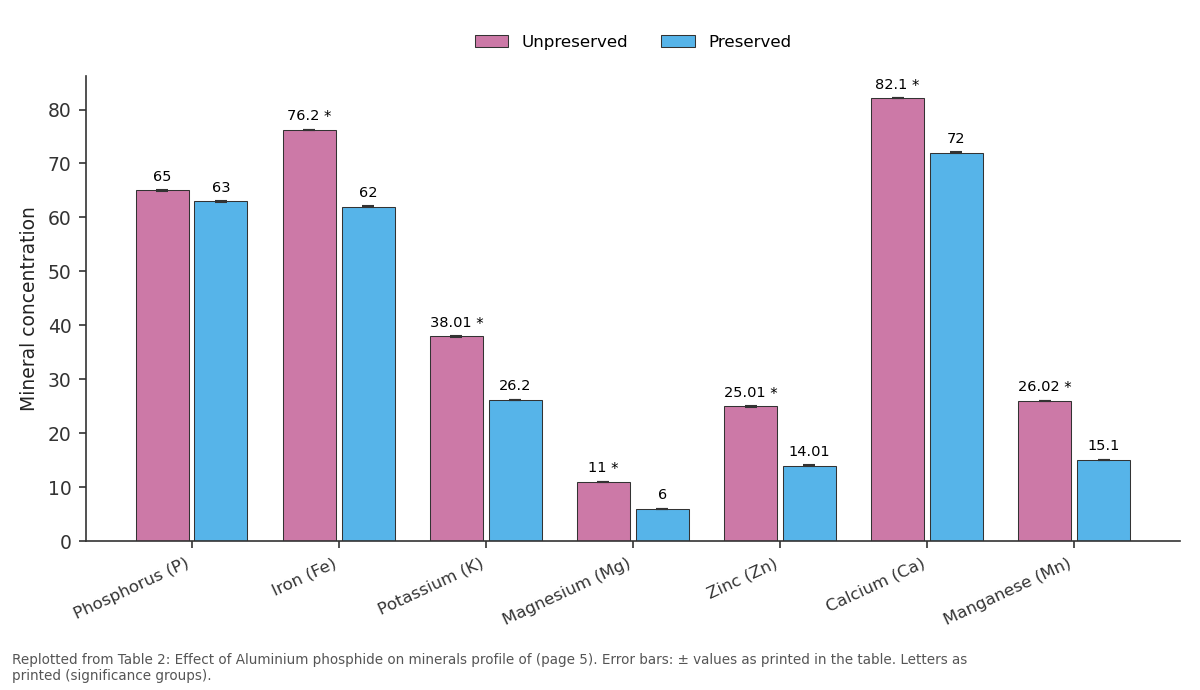
Unpreserved and Preserved: Phosphorus (P) vs Iron (Fe) vs Potassium (K) vs Magnesium (Mg) vs Zinc (Zn)
Replotted from Table 2 (page 5) of the original paper. Every bar is the paper's own table value.
View source evidence ↗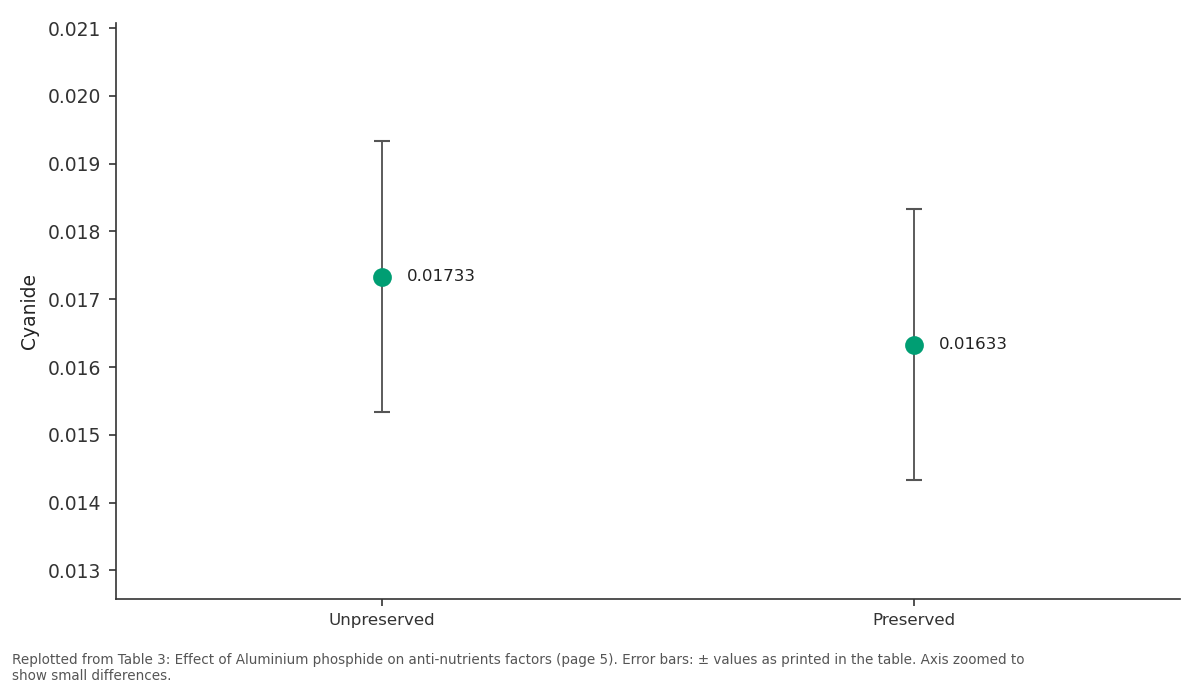
Cyanide: Unpreserved vs Preserved
Replotted from Table 3 (page 5) of the original paper. Every bar is the paper's own table value.
View source evidence ↗Figures & tables
From the original paper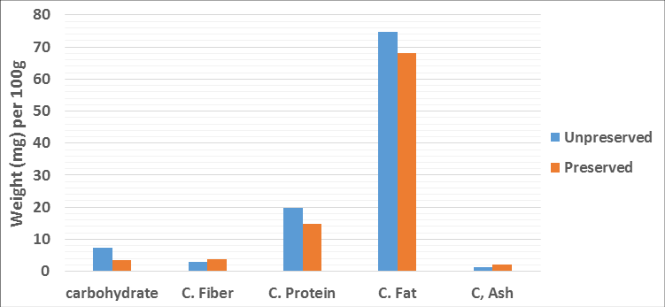 Figure 1
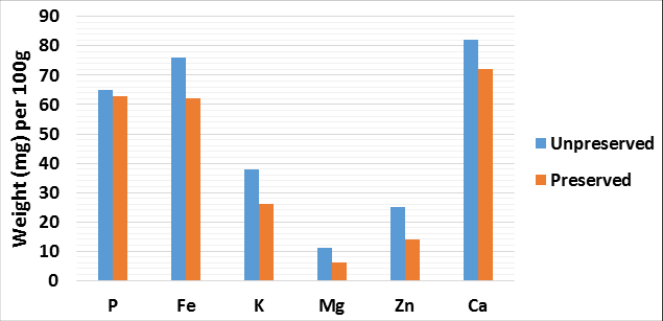 Figure 2
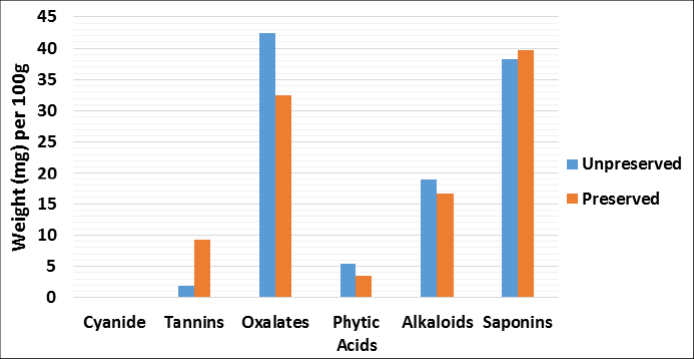 Figure 3
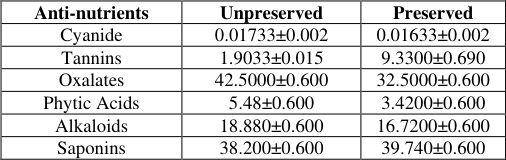 Table 3
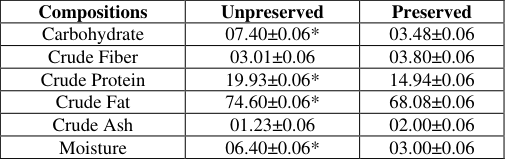 Table 1
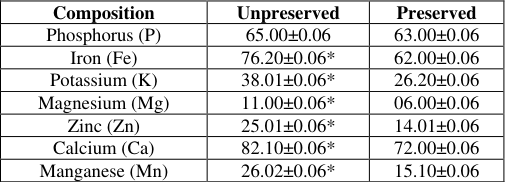 Table 2
Introduction
Legumes occupy an important place in human nutrition and are considered as poor man's meat, especially by those who are in developing countries. This is due to the reason that legumes are a good source of protein and slowly digestible carbohydrates [1] . They are very important in human and animal nutrition. Ideally, the basic protein requirement is met by consuming proteins of plant and animal origin. Above all these facts, legumes contain more protein than any other plant proteins. They also have a unique property of maintaining and restoring soil fertility. Legumes are a rich source of nutrients such as protein, starch, minerals and vitamins and also have important health protective compounds (phenolics, inositol phosphates and antioxidants) [2] . This advantageous composition of legume seeds, not only makes them a meat replacer for vegetarians but also as a component of rational nourishment. They serve as a low-cost protein to meet the needs of a large section of the people. However, several anti-nutritional factors present in legume seeds are a major limiting factor for the increased consumption of legumes, whose presence degrades the nutritive value of legumes. This may even lead to health problems which could eventually become fatal to humans and animals if taken in larger amount. In spite of the increasing interest concerning cultivation of pulses, the growth in area and production of seeds, and their application is relatively small (Kozlowska et al., 1998) [19] . Legumes contain a wide variety of anti-nutritional factors, such as raffinose family oligosaccharides (RFO's), neurotoxin, proteinaceous compounds, lectins, goitrogenic factor, [21,26,10] . Food processing methods including soaking (Frias et al., 2000; Vidal-Valverde et al., 2002) [12,34] germination, decortications, fermentations, cooking and addition of enzymes have been suggested to reduce the concentration of anti-nutritional factors in pulses which greatly influence their nutritive values. Cowpeas are highly susceptible to pest infestation, and this leads to huge post-harvest losses, lower food quality and poor food safety. To mitigate these losses, the majority of farmers and grain merchants employ various insect control measures, including the use of chemicals not minding the consequences of their actions. The use of chemicals for crop preservation has called the attention of individuals, government agencies and organisations to food quality and safety in the country. Food preservation is used since ancient times. Food preservatives become an essential thing nowadays, this plays an important role in food transportation. Preservatives are the substances, which are used to prevent food spoilage from microorganisms. This will preserve the food for a long duration from the spoilage (Norkulova, 2016) [23] . Food is an essential thing for human survival. [20,19,24,25,27] . An example of increasing a process would be to inspire fermentation of dairy products with microbes that convert lactose to lactic acid; an example of preventing a process would be stopping the browning on the surface of freshly cut Red Delicious apples using lemon juice or other acidulated water. Propyl and Methyl have been used as an anti-microbial preservatives in foods, drugs and cosmetics for over 50 years (Ahmed et [6,15,30,9,1,16] . Presence of anti-nutritional factors which are generated by normal metabolism of species in natural foodstuffs and act to reduce nutrient intake, digestion, absorption and utilization and produces many other adverse effects. Studies are needed, that will provide ample solutions on the effect of preservative (Aluminium phosphide) in A. hypogaea also known as peanut. The study aimed at determining the effect of Aluminium phosphide on nutrients and anti-nutrients levels of legumes of A. hypogaea as a case study. To determine the effect of aluminium phosphide on antinutritional factors, some mineral profiles and proximate analysis of A. hypogaea. The results of this study would provide insight on to whether or not a preservative that is basically for storage is used to see its effect in anti-nutrient, whether the preservative reduces or increases the toxic antinutrient or altered the proximate composition or the mineral profile.
Materials and Methods
Materials and Methods
Sample Collection and Study Area
The study was carried out in the Biochemistry and Molecular Department of Nasarawa State University, Keffi.
Sample Collection and Preparation
The African peanut (Arachis hypogaea) seed samples were collected from farms in Keffi, Nigeria. The foreign particles in the sample were removed by hand picking. The peanut was then pounded, blended and pulverized into fine powder. The fine powder was used for the analysis.
Analysis of Samples 2.3.1 Determination of Proximate analysis
Moisture Content: Determination of moisture content was carried by the method of (AOAC 930. 15, 2000 and ISO 6496. 1999). Dry matter was determined gravimetrically as the residue remaining after drying at 103 °C in a ventilated oven.
Ash Content: Ash content was determined by gravimetric method according to (AOAC 942.05, 2000) using this equation:
Where, W 1 = weight of empty dish (g), W 2 = weight of the dish and sample (g), and W 3 = weight of dish and residue after incineration (g).
Crude Protein: Crude protein was determined using Macro Kjeldahl Method (AOAC 990.03, 2000) using this formula: Percentage nitrogen (%N) = (Vs-V b ) x M (HCl) x 1 x 14.007/ (W x 10)
Where, Vs = ml HCl needed to titrate sample, V b = ml HCl needed for the blank test M (HCl) = molarity of HCl, 1 = the acid factor, 14.0076 = molecular weight of N, 10 = conversion from mg/g to %, W = weight of the sample (g) and % protein = N×F where F is a factor equal to 6.25.
Crude Lipid: The crude lipid was determined using petroleum ether extract (AOAC 920. Where, C = carbohydrates, P = protein, F = fat, A = Ash, W = water, Fi = fiber
Determination of Mineral composition
The mineral analysis was determined in accordance with the method described by (ISO, 1998; A.O.A.C., 2000) [36] . The absorbance of calcium, phosphorus, zinc, potassium, manganese, and magnesium was measured in the solution at 578 nm and 430 nm respectively, using a spectrophotometer against the blank.
Determination of Anti-nutritional factors
Phytate Content: Phytate content was determined using the method described by Haugh and Lantzsch (1993) [35] .
Absorbance was read at 519 nm against a blank (distilled water) in a spectrophotometer (Atomic Absorption spectrophotometer -AAS Model SP9) using Saponin Content: Saponin level was done by the double solvent extraction gravimetric method (Harborne, 1973) [13] updated 2018 in Toxicology Laboratory N.V.R.I. Vom, Jos Plateau state, Nigeria using
Where, W = weight of sample used, W 1 = weight of empty evaporating dish, W 2 = weight of dish + saponin extract
Alkaloids Level: Alkaloids level was determined by the alkaline precipitation gravimetric method (Harborne, 1973) [13] was used. The weight of alkaloid was determined and expressed as a percentage of the sample
Where, W 1 = weight of empty filter paper W 2 = weight of filter paper + alkaloid precipitate
Statistical Analysis
Descriptive statistics were used to analyse data obtained from test procedures and the mean values were compared using Microsoft Excel 2013 with a significant difference at the 5 % level of confidence (p<0.05).
Results
Proximate analysis of the studied sample is shown in the figure below. Results obtained showed a significant difference (p<0.005) in all the nutrients between the unpreserved and preserved samples except for crude fiber (03.01±0.06, 03.80±0.06) and ash (01.23±0.06, 02.00±0.06) respectively. Meanwhile, the levels of crude fat are much higher than other nutrients. Analysis of the mineral profile in the sample is revealed in the chart below. Results obtained showed a significant difference (p<0.005) in all the minerals between the unpreserved and preserved samples except for phosphorus (65.00±0.06, 63.00±0.06) respectively. The unpreserved samples maintained higher levels of minerals than the preserved ones.
Discussion
The proximate analysis of A. hypogaea seeds has been studied which showed a significant decrease (p>0.05) in fat, which makes it a suitable source of nutrient that can improve the energy density of man and animals. This is due to the fact that Aluminium phosphide has an effect on fat. The protein in groundnut seeds contributes to the growth and repair of worn-out tissues, will also improve the nutrition of humans and animals. Therefore, Aluminium decreases the nutritional content of protein. There was no significant (p>0.05) difference in the ash content which is relatively low, since the ash contains the minerals which can be estimated from it by atomic absorption spectrophotometry, it can be a good source of nutrients for consumers this shows that Aluminium phosphide does not have any effect on both samples. The crude fibre is not high enough, but can aid digestibility in humans. Aluminium phosphide shows no effect on crude fiber. The carbohydrate content decreases due to the effect of Aluminium phosphide, makes it not suitable for nutrient. Aluminium phosphide decreases the moisture content thereby making it low, this makes the shelf-life to be long and contributes to the stability of A. hypogaea and prevent rancidity of the oil. The mineral content of the peanut showed no significant (p>0.05) difference in phosphorus content which is due to the fact that Aluminium phosphide does not have any effect on both the preserved and preserved. There was a significant (p>0.05) decrease on the preserved sample on iron, potassium, magnesium, zinc, calcium and manganese. This is due to the fact that Aluminium phosphide forms a complex with these ions and thereby reduces bioavailability. Sun-dried groundnut is a good source of magnesium and iron while the roasted groundnut is a good source of potassium, calcium, zinc and phosphorus. The availability of calcium, magnesium, phosphorus is a good indication that the groundnut is so rich in the minerals for bone formation. Calcium is very essential in blood clothing, muscles contraction and in certain enzymes in metabolic processes. The results of the anti-nutrient contents showed that there was no significant (p>0.05) difference in the cyanide concentration of the Aluminium phosphide on preserved and unpreserved peanuts. The present result suggests that the cyanide content in A. hypogaea is within the permissible level of 200 mg/kg (Richard & Thompson, 1997) [29] . This is probably due to no remarkable difference in the degradation of cyanide (HCN) in the two samples, indicating that preservative might have no effect on cyanide accumulation in the sample. This point to the fact that Aluminium phosphide does not affect cyanide concentration in peanuts. Cyanide when ingested at low concentration is converted to thiocyanide in the body which is less harmful and can be detoxified by the body while accumulation binds to ions in the cytochrome and stops electron transport as a result of oxidative phosphorylation and ATP production is stopped, intracellular oxygen utilization ceases, cell is then forced to use anaerobic metabolism which could lead to lactic acid production and metabolism acidosis. There was a significant (p>0.05) increase in tannins concentration of the preserved but a decrease in unpreserved. This has clearly shown that the release of phosphine gas from Aluminium phosphide (ALP) decreases the tannins content. The analyzed result suggests that oxalate content in all the samples is lower than the permissible level of 250 mg/100 g which cannot induce toxicity in man, but a high level of it above the permissible level can because oxalate is consumed in high amounts so it binds to minerals, vitamins and other nutrient thereby reducing the bioavailability of these nutrient in the body resulting into nutritional problems for example oxalate binds to calcium forming crystals which result to kidney stones. Similarly, the concentration of phytate in both samples is also below tolerance levels of 600-800 mg/100 g but a high amount may result in nutritional problems, such as rickets, and goiter, which is a result of calcium and iodine deficiency respectively. Excessive intake of saponins results in high toxicity due to its haemolytic property, in which it ruptures erythrocytes and releases haemoglobin. It reduces nutrient utilization and conversion efficiency as in ruminant (Cheeke, 1989; Sen et al., 1998) [7] . A high level of alkaloids exerts toxicity and adverse effects on humans, especially in physiological and neurological activities.
Conclusion
The study has demonstrated that artificial preservative also known as Aluminium phosphide (APP) has resulted in a significant (p<0.05) increase in anti-nutrient such as phytic acid, oxalate, tannin, Saponins and alkaloids in leguminous grain (peanut) but no significant increase or decrease in cyanide activity. These results clearly indicate that artificial preservative which is used for storage purposes against insects, microbes and so on is harmful to living organisms as an excess accumulation can lead to metabolic acidosis, respiratory distress syndrome and shock, and there is no specific or effective antidote.
Figures and tables from the paper
| Anti-nutrients | Unpreserved | Preserved |
|---|---|---|
| Cyanide | 0.01733±0.002 | 0.01633±0.002 |
| Tannins | 1.9033±0.015 | 9.3300±0.690 |
| Oxalates | 42.5000±0.600 | 32.5000±0.600 |
| Phytic Acids | 5.48±0.600 | 3.4200±0.600 |
| Alkaloids | 18.880±0.600 | 16.7200±0.600 |
| Saponins | 38.200±0.600 | 39.740±0.600 |
Table text extracted from the original PDF; superscript letters are shown inline. The original table image is below.
View original table image
| Compositions | Unpreserved | Preserved |
|---|---|---|
| Carbohydrate | 07.40±0.06* | 03.48±0.06 |
| Crude Fiber | 03.01±0.06 | 03.80±0.06 |
| Crude Protein | 19.93±0.06* | 14.94±0.06 |
| Crude Fat | 74.60±0.06* | 68.08±0.06 |
| Crude Ash | 01.23±0.06 | 02.00±0.06 |
| Moisture | 06.40±0.06* | 03.00±0.06 |
Table text extracted from the original PDF; superscript letters are shown inline. The original table image is below.
View original table image
| Composition | Unpreserved | Preserved |
|---|---|---|
| Phosphorus (P) | 65.00±0.06 | 63.00±0.06 |
| Iron (Fe) | 76.20±0.06* | 62.00±0.06 |
| Potassium (K) | 38.01±0.06* | 26.20±0.06 |
| Magnesium (Mg) | 11.00±0.06* | 06.00±0.06 |
| Zinc (Zn) | 25.01±0.06* | 14.01±0.06 |
| Calcium (Ca) | 82.10±0.06* | 72.00±0.06 |
| Manganese (Mn) | 26.02±0.06* | 15.10±0.06 |
Table text extracted from the original PDF; superscript letters are shown inline. The original table image is below.
View original table image
References
30 in the original paper- Ahmed N, Chauhan H, Babita A, et al. Review on Development of Wine and Vermouth from the Blends of Different Fruits. Journal Food Processing Technology. 2017;8(646):646.
- Ahmed SS, Tayeb BA, Ameen AM, et al. Isolation and Detection of Listeria monocytogenes in Minced Meat, Frozen Chicken and Cheese in Duhok Province, Kurdistan Region by using RT-PCR. Journal of Food and Industrial Microbiology. 2016;2:109.
- Amal SB, Salihin BA, Sien, Hoen SL. Sensory Evaluation of Allium sativum -Cheddar Cheese in the Presence and Absence of Fish Collagen during Ripening and Refrigerated Storage. Journal of Food and Industrial Microbiology. 2016;2:115.
- Anisa AM, Anju B, Vikas A, et al. Preparation and Evaluation of Peach-Soy Fruit Toffees. J Food Ind. Microbiol. 2016;2(2):1-5.
- Bernardi NZ, Blanco KC, Monti R et al. Optimization of Cyclodextrin Glycosyltransferase Production from Sorghum. Journal of Food and Industrial Microbiology. 2015;1(102):2.
- Bhalla TC, Devi A, Angmo K, et al. β-Galactosidase from Lactobacillus brevis PLA28: Purification, Characterization and Synthesis of Galactooligosaccharides. Journal of Food and Industrial Microbiology. 2015;1(104):5-3.
- Chugh B, Singh G, Kumbhar BK. Optimization of Ingredients for Development of Low-Fat Biscuits Using Response Surface Methodology. J Food Ind. Microbiol. 2016;2(110):2.
- Darwish AZ, Darwish SM, Ismail MA. Utilization of Fermented Yeast Rice by the Fungus Monascus ruber AUMC 4066 as Food Coloring Agents. Journal of Food Processing Technology. 2017;8(1):645.
- Enneking D. The nutrive value of grass pea (Lathyrus sativus L.) and allied species, their toxicity to animals International Journal of Advanced Biochemistry Research http://www.biochemjournal.com an role of malnutrition in neurolathy-rism. Food and Chemical Toxicology. 2011;49:694-709.
- Frias J, Vidal-Valverde C, Sotomayor C, Dıaz-Pollan C, Urbano G. Influence of processing on available carbohydrate content and Antinutritional factors of chickpeas. European Food Research Technology. 2000;210:340-345.
- Imlak M, Randhawa MA, Hassan A, et al. Post-harvest Shelf Life Extension and Nutritional Profile of Thompson Seedless Table Grapes Under Calcium Chloride and Modified Atmospheric Storage. J Food Process Technol. 2017;8(1):648.
- Kataoka Y, Miyakawa Y, Ochi H, et al. Bactericidal and Sporicidal Activities against Pathogenic Bacteria of Direct Flow Electrolyzed Water. J Food Ind Microbiol. 2015;1(1):105.
- Khan I, Ahmad S. Influence of Life Style, Nutrition and Obesity on Immune Response: A Global Issue. J Food Process Technol. 2017;8(1):647.
- Khan U, Afzaal M, Arshad MS. Non-destructive Analysis of Food Adulteration and Legitimacy by FTIR Technology. J Food Ind Microbiol. 2015;1(1):103.
- Kumar A. Role of Microbes in Food and Industrial Microbiology. J Food Ind Microbiol. 2016;2(2):101.
- Lourdes E, Alejandra P, Gustavo AF, et al. Characterization of Microbiota Isolated from Traditional Honduran Cheese-Lactic Acid Bacteria from Honduran Cheese. Journal of Food Industrial Microbiology. 2016;2(2):117.
- Maia FMM, Olivera JTA, Matos MRT, Moreira RA, Vasconcelos IM. Proximate composition, amino acid content and hemagglutinating and trypsin-inhibiting activities of some Brazilian Vinga unguiculata (L.) Walp cultivars. Journal of the Science of Food and Agriculture. 2000;80:453-458.
- Nazni P, Karuna TD. Development and Quality Evaluation of Barnyard Millet Bran Incorporated Rusk and Muffin. J Food Ind. Microbiol. 2016;2(116):2.
- Norkulova K, Iskandarov Z, Safarov J, et al. Research Dryer for Drying Agricultural Products. J Food Ind Microbiol. 2016;2(2):111.
- Obajuluwa AF, Olayinka BO, Adeshina GO, et al. Antimicrobial Susceptibility Pattern of Staphylococcus aureus Isolates from Orthopaedic Patients in Abuth, Zaria. J Food Ind Microbiol. 2016;2(1):106.
- Osakue OP, Igene JO, Ebabhamiegbebho PA, Evivie SE. Proximate Analysis and Microbial Quality of Ready-To-Eat (RTE) Fried Chicken Parts. J Food Ind Microbiol. 2016;2(1):107.
- Preet K, Punia D. Proximate composition, phytic acid, polyphenols and digestibility (in vitro) of four brown cowpea varieties. International Journal of Food Sciences and Nutrition. 2000 Jan;51(3):189-193.
- Rajani CSR, Chaudhary A, Swarna A, et al. Identification and Virulence of Enterobacter Sakazakii. J Food Ind. Microbiol. 2016;2(108):1-4.
- Reena G, Pooja K, Nitish S. Statistical Optimization of Production Conditions of Alkaline Pectin Lyase from Bacillus cereus using Response Surface Methodology. J Food Ind. Microbiol. 2016;2:113.
- Rufina CC, Hoffman CL, Opara LU, et al. Polycyclic Aromatic Hydrocarbons (PAHs) and Organochlorinated Pesticides (OCPs) in Yellowtail (Seriola lalandi) from three Spatially Distinct Locations along the Coast of South Africa: Levels, Sources and Fish Size Effect. J Food Process Technol. 2016;8(1):644.
- Sen S, Makkar HP, Becker K. Alfalfa saponins and their implication in animal nutrition. Journal of Agricultural and Food Chemistry. 1998;46(1):131-140.
- Tarkhasi A. Effect of Edible Coating Containing Pomegranate Peel Extract on Quality and Shelf Life of Silver Carp (Hypophthalmichthys molitrix) Fillet during Refrigerated Storage. J Food Ind. Microbiol. 2016;2(2):112.
- Trivedi MK, Branton A, Trivedi D, et al. Physicochemical and Spectroscopic Characterization of Biofield Treated Butylated Hydroxytoluene. J Food Ind. Microbiol. 2015;1(1):101.
- Vidal-Valverde C, Sierra I, Frias J, Prodanov M, Sotomayor C, Hedley CL, et al. Nutritional evaluation of lentil flours obtained after short-time soaking processes. Eur. Food Res. Technol. 2002;215:138-144.
- Haugh W, Lantzsch HJ. Sensitive method for determination of phytate in cereals and cereal product. Plant Foods for Human Nutrition. 1993;44:261-266.