
Research article · 2021 · Full text
International Journal of Agriculture and Food ScienceRadiocaesium contamination in samples of black blueberry jams and comparison between organic and non-organic products
Volume 3(2) · Pages 16–22 · DOI: 10.33545/2664844x.2021.v3.i2a.52 ↗
Research areasRadiation Effects and DosimetryRadioactive contamination and transfer
Abstract
Author-writtenStill more than 30 years after the Chernobyl accident, foodstuff based on black blueberries (Vaccinium myrtillus) with relevant 137Cs activity concentrations are still found in the European Union market. Moreover, recently, mass media reported that food products based on black blueberries produced in UE were rejected by Asian markets because the 137Cs activity concentration was greater than 100 Bq kg-1. It is known that Ukraine, Belarus and Russia are great exporters of black blueberries: there is a strong suspicion that the berries are collected also from the most radio-contaminated areas of these countries and introduced in UE markets. For this reason, about 40 samples of jams, marmalades, stewed fruits and other food preparations based on black blueberries were analysed by high resolution gamma spectrometry with high purity germanium detectors to measure 137Cs and 134Cs activity concentration. All the food preparations of the study have been collected in supermarkets and in local stores of northern Italy. 134Cs, as expected following its half-life, was less than minimum detectable activity in all samples. 137Cs activity concentration was widely variable among samples: the minimum, mean and maximum concentration were 1, 54 and 162 Bq kg-1, respectively. The activity concentrations found in these products were corrected for the radioactive decay and reported to the same date. The activity concentration in fruits was calculated from fruit percentage content reported on the product label. In fruits used for marmalades, jams and stewed fruits, 137Cs activity concentration up to 230 Bq kg-1 was found. In a sample of blueberries in syrup, 137Cs activity concentration in blueberries was 450 Bq kg-1. The results found in organic jams and in non-organic jams were compared using parametric and non-parametric tests to find possible differences between the two groups.
Summary
Source-checkedPlain-language reading of the full paper, prepared with AI and checked against the text. Each point links to the authors' own words.
Why it matters
- More than 30 years after the Chernobyl accident, black blueberry products containing significant levels of radiocaesium-137 (137Cs) are still appearing in the European Union market. View evidence ↗
- There is a suspicion that blueberries exported from Ukraine, Belarus, and Russia to the EU may be harvested from highly radio-contaminated regions. View evidence ↗
- The root system of black blueberries allows them to absorb mineral salts and radionuclides from the organic soil layer, which can lead to high concentrations of 137Cs. View evidence ↗
The question
- The study aimed to measure the activity concentrations of 137Cs and 134Cs in approximately 40 samples of black blueberry-based food preparations. View evidence ↗
- The researchers sought to determine if there were significant differences in radiocaesium levels between organic and non-organic blueberry jams. View evidence ↗
What they did
- The food samples were collected from local stores and supermarkets in northern Italy. View evidence ↗
- The samples were analyzed using high-resolution gamma spectrometry with a high-purity germanium (HPGe) detector. View evidence ↗
- To determine the concentration in the berries themselves, the researchers used the fruit percentage listed on the product labels. View evidence ↗
- The dataset was split into 19 organic jam samples and 17 non-organic jam samples for comparison. View evidence ↗
What they found
- Radiocaesium-134 (134Cs) was not detected in any of the samples, which is consistent with its radioactive half-life. View evidence ↗
- Among 36 blueberry jam samples, the mean 137Cs activity concentration was 54 ± 50 Bq kg-1, with a maximum of 162 Bq kg-1. View evidence ↗
- The calculated 137Cs concentration in the berries reached up to 230 Bq kg-1 for jams and marmalades, and 450 Bq kg-1 in one sample of blueberries in syrup. View evidence ↗
- Organic fruits appeared to form two distinct groups: one with a mean concentration of 21±20 Bq kg-1 and another with 137±10 Bq kg-1. View evidence ↗
What it means
- The authors conclude that it is possible that blueberries with 137Cs concentrations exceeding 600 Bq kg-1 are still being traded in the EU market. View evidence ↗
- The authors recommend continued monitoring of 137Cs in berries to protect public health and advance scientific understanding. View evidence ↗
- The authors note that the statistical tests used have low power for multimodal distributions, meaning the results for fruit content should be interpreted with caution. View evidence ↗
Visual summary
2 visualsIllustrations explain the paper; charts are replotted from the paper's own table values.
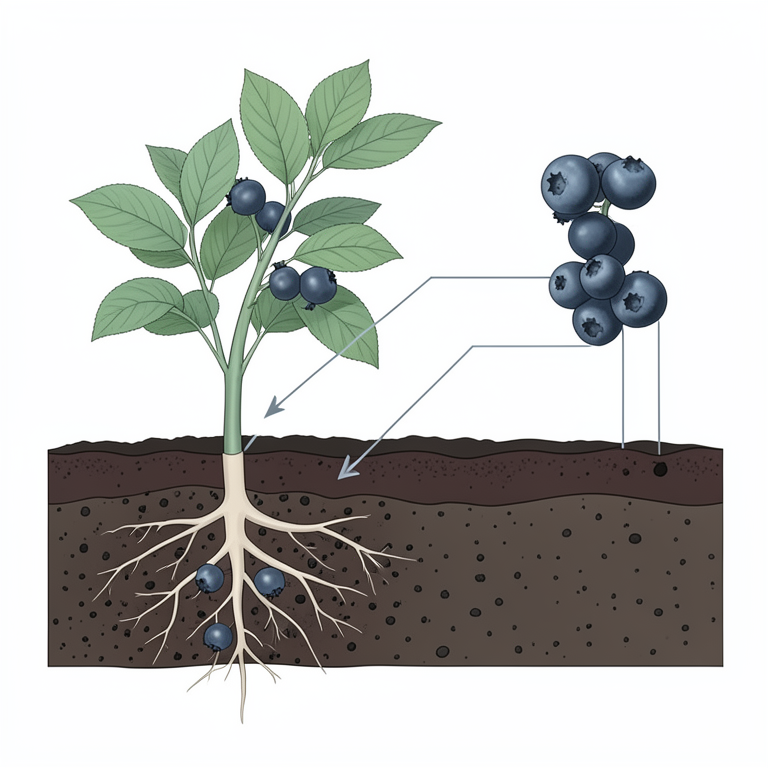
Blueberry Nutrient and Radionuclide Absorption
AI-generated conceptual illustration (Black blueberry plants in organic soil). It explains the idea and does not show study data.
View source evidence ↗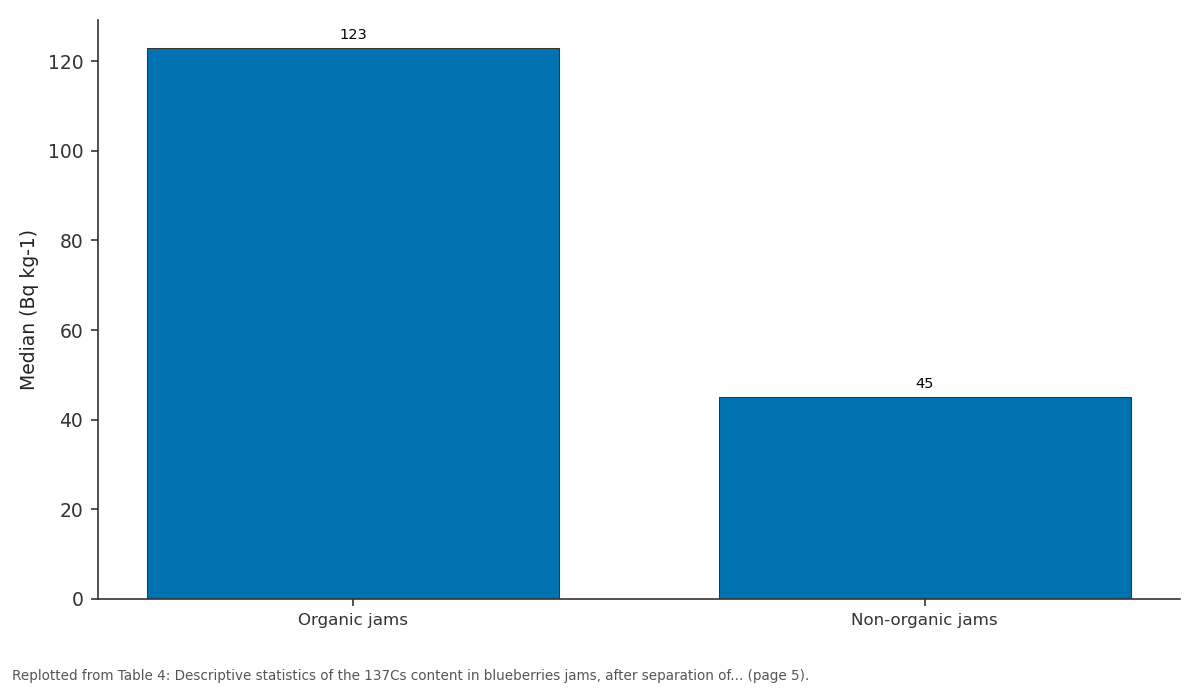
Median (Bq kg-1): Organic jams vs Non-organic jams
Replotted from Table 4 (page 5) of the original paper. Every bar is the paper's own table value.
View source evidence ↗Figures & tables
From the original paper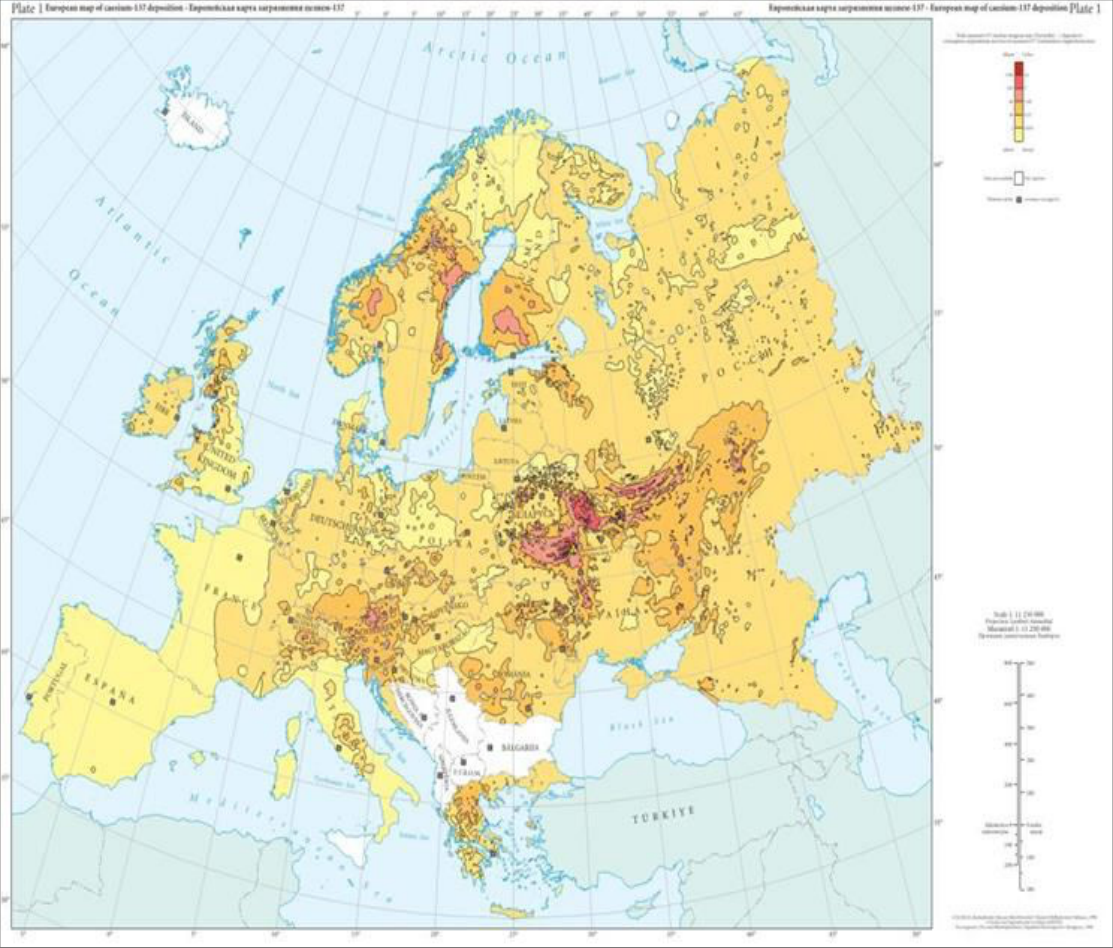 Figure 1
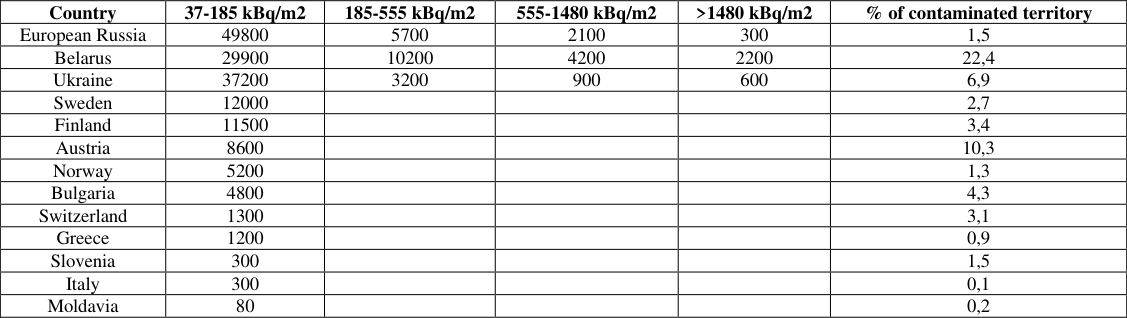 Table 1
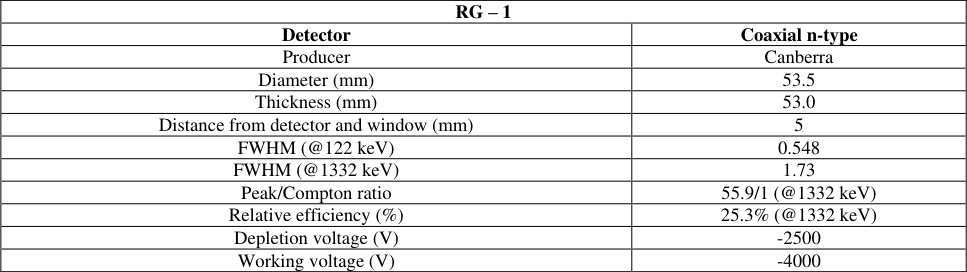 Table 2
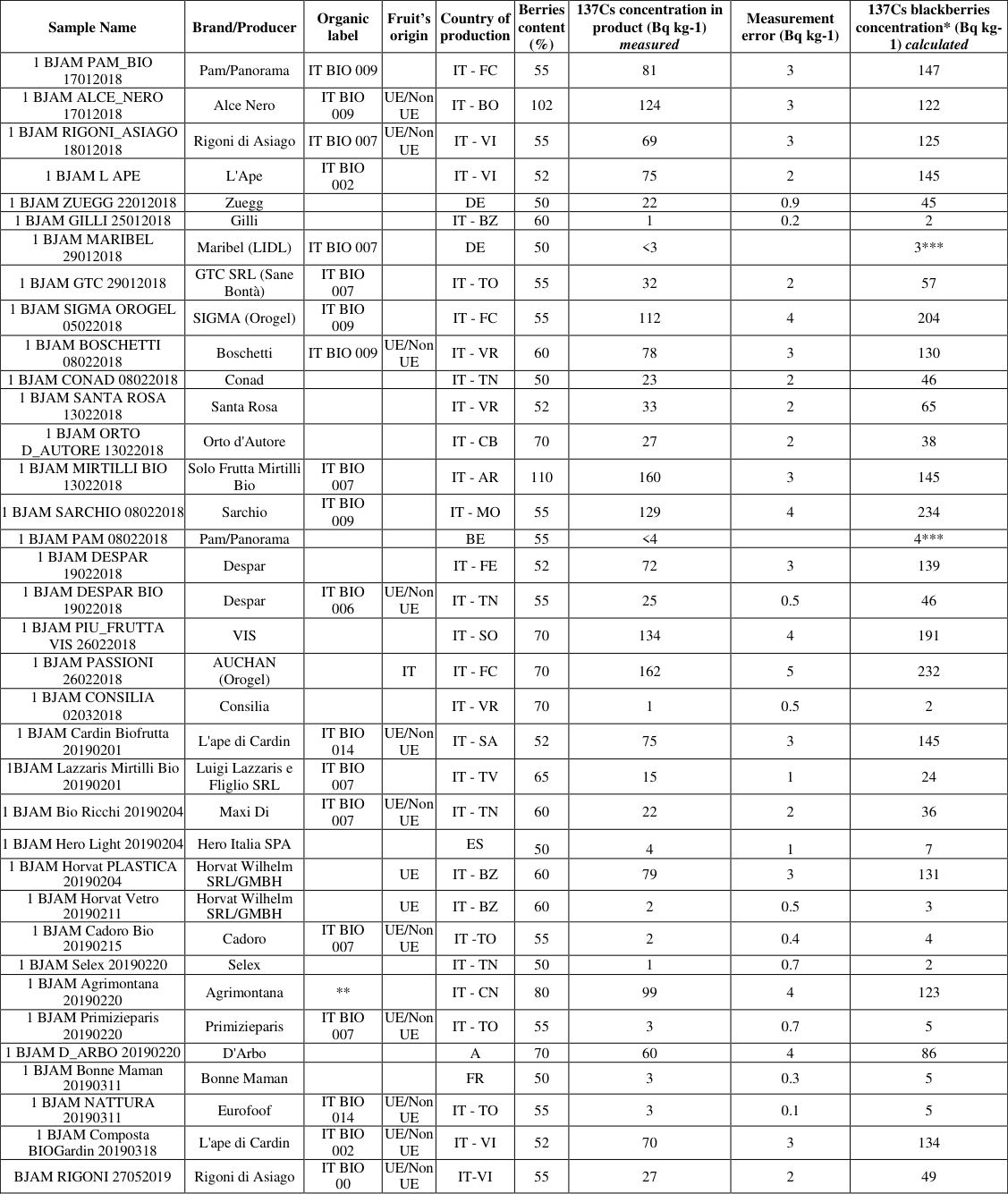 Table 3
 Table 4
 Table 5
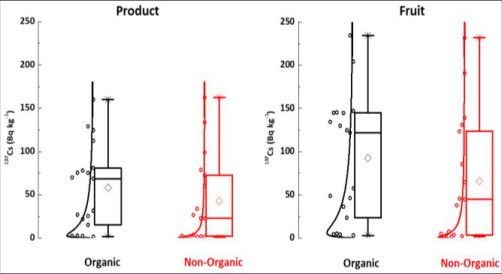 Figure 2
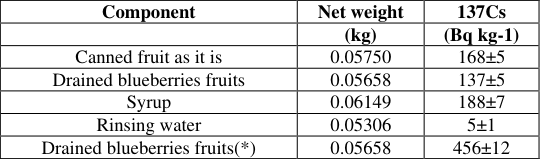 Table 6
 Table 7
Introduction
It is well known that after the Chernobyl Nuclear Power Plant (NPP) accident, large areas of many European countries were significantly contaminated by radioactive fallout. In particular, besides Ukraine and Belarus (countries closer to the accident site), also wide areas of the Russian Federation, Scandinavia, Bulgaria, Austria and some spots in the Alps were affected by the deposition of radioactive material (De Cort et al. 1998; G. Steinhauser et al. 2014; The Chernobyl forum, 2006) [7,12,14] (table 1 and figure 1). The most highly contaminated area around Chernobyl, with 137Cs soil contamination higher than 185 kBq m-2, is about 30 000 km2 wide: the affected territories are mainly rural (agricultural and wide forests). In natural and semi-natural ecosystems, as forests and wooded areas, a persistent recycling of radiocaesium is observed. In fact, wooded areas hold back radionuclides from atmospheric fallout and recycle them in a continuous cyclic exchange between upper soil layers, bacteria, microfauna, microflora and vegetation. Moreover, some mountain areas with high rainfall mean rate (e.g. in the Alps) had high wet deposition of the Chernobyl fallout (Battiston et al., 1988) [1] .
| Country | 37-185 kBq/m2 | 185-555 kBq/m2 | 555-1480 kBq/m2 | >1480 kBq/m2 | % of contaminated territory |
|---|---|---|---|---|---|
| European Russia | 49800 | 5700 | 2100 | 300 | 1,5 |
| Belarus | 29900 | 10200 | 4200 | 2200 | 22,4 |
| Ukraine | 37200 | 3200 | 900 | 600 | 6,9 |
| Sweden | 12000 | 2,7 | |||
| Finland | 11500 | 3,4 | |||
| Austria | 8600 | 10,3 | |||
| Norway | 5200 | 1,3 | |||
| Bulgaria | 4800 | 4,3 | |||
| Switzerland | 1300 | 3,1 | |||
| Greece | 1200 | 0,9 | |||
| Slovenia | 300 | 1,5 | |||
| Italy | 300 | 0,1 | |||
| Moldavia | 80 | 0,2 |
Table text extracted from the original PDF; superscript letters are shown inline. The original table image is below.
View original table image
Hence, although 137Cs contamination decreased in many agricultural products, it is still currently present in spontaneous mushrooms, in berries and in wild animals' meat because of the persistent contamination of forest ecosystems. In recent years, the consumption of blueberries is continuously growing, also because berries are considered rich in nutraceutical substances. The black blueberry plant (Vaccinium myrtillus) belongs to the ericaceous family and is characterized by a root system called "rhizome". The rhizome grows up horizontally in the first, organic layer of the soil, with a few centimetres thickness and extending in distance also for some meters. It is made up of "endotrophic mycorrhiza" that have a high mobilization capability and high capability of absorption of mineral salts from the soil, similarly to many species of mushrooms. This property is common to all ericaceous plants and may sometimes give rise to high 137Cs concentration values (Ehlken S., Kirchner G., 2002) [8] . In Italy, the black blueberry plant grows spontaneously in the Alps and in part of the Apennines, in acid and loose soils; the fruits are usually collected by hand. Moreover, in Italy blackberry International Journal of Agriculture and Food Science cultivation is almost completely family-run, for domestic consumption: industrial cultivation of blackberry is almost absent; they are indeed present in northern Europe, where the climate is more favourable. The blackberries used by the Italian food industries are imported; they come mainly from northern Europe and from ex URSS Federation countries. Eastern Europe countries are increasingly investing in the production and export of berries, mainly intended to European Union market. Therefore, it makes sense that berries with high radiocaesium concentration could had been harvested from local rural population and from the most contaminated areas of Belarus, Ukraine and western Russia (The Harvests of Chernobyl, 2016) [15] . Following the accident of Chernobyl NPP, controls on agricultural goods for human consumption produced in third countries respect to European Union are regulated by Regulations and Recommendations of the European Union. As it is known, the CE regulation n. 733/2008 (CE, 2008) [5] establishes the following upper limits for the sum of the activity concentrations of 134Cs and 137Cs, at 370 Bq kg-1 for dairy products and for baby food, and at 600 Bq kg-1 for meat, milk, honey, spontaneous mushrooms, blackberries. However, CE Regulation N. 1048/2009 (CE, 2009) [6] , that modifies the previous regulation, establishes that controls will end on 2020, March 31st. From 2013 to 2017 the authors analysed samples of black blueberries at customs of the Trieste harbour coming from loads imported from Ukraine: in one sample 137Cs was found up to 350 Bq kg-1 (Calabrese M. et al, 2018) [4] . For this reason, the authors from 2013 to 2019 collected and analysed jams, marmalades, stewed fruits and other foodstuffs based on blue blackberry. They were analysed throw high resolution gamma spectrometry for the determination of 137Cs activity concentration. In this paper we are reporting and discussing results for foodstuff bought in supermarkets in 2017, 2018, 2019, mostly jams and stewed fruits. [7] (Steinhauser et al, 2014) [12]
Material studied
The jars of jams and other foodstuffs based on blackberry were bought in supermarkets and local stores in Veneto and Friuli Venezia Giulia regions, northeast Italy. Unfortunately, on product label the geographical origin of the fruits is not reported.
All the results of 137Cs activity concentration were corrected for radioactive decay recalculated at the date of 2019, January 1st.
Methods and technique
Sample preparations and analysis were done in the CNR-ICMATE laboratories of the Italian National Research Council.
From the original container of foodstuff, about 50 ml were sampled, weighted and put in a plastic jar measurement geometry of 50 ml volume without any other sample pre-treatment. Before the extraction of enough subsample for the measurement geometry, each marmalade was thoroughly mixed to ensure sample homogeneity. Then, the plastic jar was put on the top of the entrance window of the detector and analysed through high resolution gamma spectrometry using an high purity germanium detector (HPGe) with Berillium entrance window. The detector's characteristics are reported in table 2. The detector is installed inside a lead well, internally coated with a copper and cadmium sheets to achieve a very low environmental background. The software Genie2000® (Canberra TNE) was used for spectral acquisition and quantitative spectral analysis. Nuclide library used is Nucleide Lara LNHB (2018). The efficiency calibration for the measurement geometrical configuration (jar 50 ml) was calculated with multi-gamma certified standard solutions (QCY48 e QCYB40 by Amersham) in the same geometrical configuration as the measurements. The results were corrected for "matrix effect" considering the different density and composition of the samples with respect to the standard solution used for efficiency calibration. The efficiency of the measurement system is periodically checked through inter-calibration tests promoted by National Physics Laboratory (Teddington, UK). Acquisition times for the analysis of 137Cs were variable from one sample to another and were manually chosen with the aim to achieve a statistical counting uncertainty (1 Standard Deviation SD) in the 137Cs photopeak at 661,7 keV of less than 5%. The Limits of Detection (LOD) were estimated at 95% confidence level.
| RG – 1 | — |
|---|---|
| Detector | Coaxial n-type |
| Producer | Canberra |
| Diameter (mm) | 53.5 |
| Thickness (mm) | 53.0 |
| Distance from detector and window (mm) | 5 |
| FWHM (@122 keV) | 0.548 |
| FWHM (@1332 keV) | 1.73 |
| Peak/Compton ratio | 55.9/1 (@1332 keV) |
| Relative efficiency (%) | 25.3% (@1332 keV) |
| Depletion voltage (V) | -2500 |
| Working voltage (V) | -4000 |
Table text extracted from the original PDF; superscript letters are shown inline. The original table image is below.
View original table image
Results
Results
Jams, marmalades and stewed fruits
Measurements results and activity concentrations of 137Cs in blackberries are reported in table 3. As predictable, 134Cs was not detected in any sample (always under the detection limits of 1 Bq kg-1). We can reasonably argue that 137Cs present in the samples is attributable mostly to the Chernobyl fallout.
| Sample Name | Brand/Producer | Organic label | Fruit’s origin | Country of production | Berries content (%) | 137Cs concentration in product (Bq kg-1) measured | Measurement error (Bq kg-1) | 137Cs blackberries concentration* (Bq kg- 1) calculated |
|---|---|---|---|---|---|---|---|---|
| 1 BJAM PAM BIO _ 17012018 | Pam/Panorama | IT BIO 009 | IT - FC | 55 | 81 | 3 | 147 | |
| 1 BJAM ALCE NERO _ 17012018 | Alce Nero | IT BIO 009 | UE/Non UE | IT - BO | 102 | 124 | 3 | 122 |
| 1 BJAM RIGONI ASIAGO _ 18012018 | Rigoni di Asiago | IT BIO 007 | UE/Non UE | IT - VI | 55 | 69 | 3 | 125 |
| 1 BJAM L APE | L'Ape | IT BIO 002 | IT - VI | 52 | 75 | 2 | 145 | |
| 1 BJAM ZUEGG 22012018 | Zuegg | DE | 50 | 22 | 0.9 | 45 | ||
| 1 BJAM GILLI 25012018 | Gilli | IT - BZ | 60 | 1 | 0.2 | 2 | ||
| 1 BJAM MARIBEL 29012018 | Maribel (LIDL) | IT BIO 007 | DE | 50 | <3 | 3*** | ||
| 1 BJAM GTC 29012018 | GTC SRL (Sane Bontà) | IT BIO 007 | IT - TO | 55 | 32 | 2 | 57 | |
| 1 BJAM SIGMA OROGEL 05022018 | SIGMA (Orogel) | IT BIO 009 | IT - FC | 55 | 112 | 4 | 204 | |
| 1 BJAM BOSCHETTI 08022018 | Boschetti | IT BIO 009 | UE/Non UE | IT - VR | 60 | 78 | 3 | 130 |
| 1 BJAM CONAD 08022018 | Conad | IT - TN | 50 | 23 | 2 | 46 | ||
| 1 BJAM SANTA ROSA 13022018 | Santa Rosa | IT - VR | 52 | 33 | 2 | 65 | ||
| 1 BJAM ORTO D AUTORE 13022018 _ | Orto d'Autore | IT - CB | 70 | 27 | 2 | 38 | ||
| 1 BJAM MIRTILLI BIO 13022018 | Solo Frutta Mirtilli Bio | IT BIO 007 | IT - AR | 110 | 160 | 3 | 145 | |
| 1 BJAM SARCHIO 08022018 | Sarchio | IT BIO 009 | IT - MO | 55 | 129 | 4 | 234 | |
| 1 BJAM PAM 08022018 | Pam/Panorama | BE | 55 | <4 | 4*** | |||
| 1 BJAM DESPAR 19022018 | Despar | IT - FE | 52 | 72 | 3 | 139 | ||
| 1 BJAM DESPAR BIO 19022018 | Despar | IT BIO 006 | UE/Non UE | IT - TN | 55 | 25 | 0.5 | 46 |
| 1 BJAM PIU FRUTTA _ VIS 26022018 | VIS | IT - SO | 70 | 134 | 4 | 191 | ||
| 1 BJAM PASSIONI 26022018 | AUCHAN (Orogel) | IT | IT - FC | 70 | 162 | 5 | 232 | |
| 1 BJAM CONSILIA 02032018 | Consilia | IT - VR | 70 | 1 | 0.5 | 2 | ||
| 1 BJAM Cardin Biofrutta 20190201 | L'ape di Cardin | IT BIO 014 | UE/Non UE | IT - SA | 52 | 75 | 3 | 145 |
| 1BJAM Lazzaris Mirtilli Bio 20190201 | Luigi Lazzaris e Fliglio SRL | IT BIO 007 | IT - TV | 65 | 15 | 1 | 24 | |
| 1 BJAM Bio Ricchi 20190204 | Maxi Di | IT BIO 007 | UE/Non UE | IT - TN | 60 | 22 | 2 | 36 |
| 1 BJAM Hero Light 20190204 | Hero Italia SPA | ES | 50 | 4 | 1 | 7 | ||
| 1 BJAM Horvat PLASTICA 20190204 | Horvat Wilhelm SRL/GMBH | UE | IT - BZ | 60 | 79 | 3 | 131 | |
| 1 BJAM Horvat Vetro 20190211 | Horvat Wilhelm SRL/GMBH | UE | IT - BZ | 60 | 2 | 0.5 | 3 | |
| 1 BJAM Cadoro Bio 20190215 | Cadoro | IT BIO 007 | UE/Non UE | IT -TO | 55 | 2 | 0.4 | 4 |
| 1 BJAM Selex 20190220 | Selex | IT - TN | 50 | 1 | 0.7 | 2 | ||
| 1 BJAM Agrimontana 20190220 | Agrimontana | ** | IT - CN | 80 | 99 | 4 | 123 | |
| 1 BJAM Primizieparis 20190220 | Primizieparis | IT BIO 007 | UE/Non UE | IT - TO | 55 | 3 | 0.7 | 5 |
| 1 BJAM D ARBO 20190220 _ | D'Arbo | A | 70 | 60 | 4 | 86 | ||
| 1 BJAM Bonne Maman 20190311 | Bonne Maman | FR | 50 | 3 | 0.3 | 5 | ||
| 1 BJAM NATTURA 20190311 | Eurofoof | IT BIO 014 | UE/Non UE | IT - TO | 55 | 3 | 0.1 | 5 |
| 1 BJAM Composta BIOGardin 20190318 | L'ape di Cardin | IT BIO 002 | UE/Non UE | IT - VI | 52 | 70 | 3 | 134 |
| BJAM RIGONI 27052019 | Rigoni di Asiago | IT BIO 00 | UE/Non UE | IT-VI | 55 | 27 | 2 | 49 |
Table text extracted from the original PDF; superscript letters are shown inline. The original table image is below.
View original table image
In fact 137Cs soil inventory due to weapon tests in the atmosphere is meanly about 2 kBq m-2 (De Cort et al, 1998) [7] .
For what concerns Fukushima accident, it is expected that in Europe the contribution to total 137Cs might be not relevant (Steinhauser et al., 2014, Behrens et al., 2012) [12,2] . The mean 137Cs activity concentration of 36 samples of blueberry jam bought in supermarkets and local stores was 54 ± 50 (1 SD) Bq kg-1 and the maximum activity recorded was 162 Bq kg-1.
Percentage content of fruits declared on product label for all products (organic and non-organic) was in the range 50%÷60%, except two products declaring respectively a fruit content of 102% and 110%. The mean fruits content for organic and nonorganic products is very similar (64% and 60%, respectively). The 137Cs content in blackberries was calculated starting from the fruit content declared on the label (Table 3, column 9) resulting a mean and maximum 137Cs activity in the fruits of 85 ± 72 (1 SD) and 234 Bq kg-1, respectively (Table 4). The whole jam/marmalade dataset was divided in two subsamples: one of "organic" jams (19 samples), the other one of "non organic" jams i.e. jams without any information about fruits [3] .
| All jams | — | Organic jams | Non-organic jams |
|---|---|---|---|
| Number of samples | 36 | 19 | 17 |
| 137Cs Mean activity concentration (Bq kg-1) | 85 | 98 | 70 |
| Standard deviation (Bq kg-1) | 72 | 71 | 74 |
| Minimum value (Bq kg-1) | <2 | <2 | <2 |
| Maximum value (Bq kg-1) | 234 | 234 | 232 |
| Median (Bq kg-1) | 48 | 123 | 45 |
| Curtosys | 0.7 | 0.18 | 0.95 |
Table text extracted from the original PDF; superscript letters are shown inline. The original table image is below.
View original table image
As can be noted in table 5, both parametric and non-parametric statistical tests suggest to not reject H0, leading to the conclusion that organic and non-organic products and fruits come from similar distributions (equal means and equal medians). However, for organic fruits the picture of two distinct distributions seems plausible: one subsample set with activity concentration ≤ 50 Bq kg-1 (n=8) with a mean activity concentration (±1SD) of 21±20 Bq kg-1 and the other one (n=8) with a mean activity concentration (±1SD) of 137±10 Bq kg-1. Due to the large relative number (42%) of blackberries in the cluster centred at 137 Bq kg-1 and their low variability in 137Cs content (~7%) it seems reasonable to assume that the berries of such cluster comes from the same area (or from areas with similar 137Cs content in soil). It is worth noting that both the statistical tests used here have low power when dealing with multimodal distributions. This means that the test result for 137Cs content in fruits must be considered cautiously. Other foodstuff Also a canned fruit sample "Frutta Sciroppata" VIS (IT-SO)
| — | 137Cs content in products | 137Cs content in fruits |
|---|---|---|
| Two-sample t-test | 0.35 | 0.28 |
| Wilcoxon rank sum test | 0.20 | 0.15 |
Table text extracted from the original PDF; superscript letters are shown inline. The original table image is below.
View original table image
bought in supermarket was analysed. The good is made of blackberry fruits in sugar syrup. For the good as it is (fruits submerged in syrup), the activity concentration measured was 168±5 Bq kg-1. Since this is a quite high 137Cs concentration, on the reasonable hypothesis that radiocaesium was initially contained in the berries and not in the sugar syrup, an attempt was made to calculate the initial activity concentration in the berries. At first, the berries were manually separated from the syrup. An amount of the canned berries was then drained off and repeatedly rinsed in milliQ water, with the aim to remove possibly all the syrup from the berries. The 137Cs activity concentration for the washed berries, for the syrup and for the rinsing water were measured and results are reported in table 6. From these data and from the weight of the analysed samples, the initial activity concentration of 137Cs in the berries (A*) was re-calculated assuming that 137Cs were initially present only in the berry using equation 1:
| Component | Net weight | 137Cs |
|---|---|---|
| (kg) | (Bq kg-1) | |
| Canned fruit as it is | 0.05750 | 168±5 |
| Drained blueberries fruits | 0.05658 | 137±5 |
| Syrup | 0.06149 | 188±7 |
| Rinsing water | 0.05306 | 5±1 |
| Drained blueberries fruits(*) | 0.05658 | 456±12 |
Table text extracted from the original PDF; superscript letters are shown inline. The original table image is below.
View original table image
Where Ab and mb are the 137Cs activity concentration and mass of rinsed berries, respectively, and as and ms are the activity and the mass of the syrup analysed separately. For completeness, also the washing water was collected and analysed: the activity concentration was 5÷1 Bq kg-1. The results are reported in table 6. The value obtained from this trial is obviously only semiquantitative, as it was not possible to collect and analyse all washing water and separation of syrup and berries was not 100% efficient.
Discussion
The results of the activity concentration of 137Cs in blackberry jams found by the authors are higher than those reported in recent literature (Missik et al, 2006; Pourcelot et al, 2003) [10,11] . Letho et al (2013) [9] reports 137Cs activity concentration in berries of black blueberry (V. Myrtillus) in southern Finland 1180±23 Bq kg-1 dry weight (d.w.), in areas with medium Chernobyl's fallout (about 20 kBq m-2); considering a mean water content of 90%, it equals approximately to 120 Bq kg-1 respect to fresh weight. For the black blueberry, soil to berry transfer factors, calculated as the ratio of fruits concentration to soil inventory (Bq kg-1 dry weight)/ (Bq m-2 in the first 20 cm of soil layer) are in the range 0.05÷0.07 (table 7); however, due to the numerosity of chemical and biological processes involved, the wide variability of these data is well known. Since 34 years from the Chernobyl accident, the authors wonder which is the growing area of black blueberries with 137Cs activity concentrations in the range 200÷500 Bq kg-1. However, in the products' label, the fruits' geographical origin is never reported. Considering a mean activity concentration in black blueberries of about 100 Bq kg-1 (fresh weight) (the same level of the samples analysed in this paper), and considering a range of soil to berry transfer factors of 0.005÷0.008 m2 kg-1 (fresh weight), we can argue an estimate of 137Cs soil inventory of about 12.5÷20 kBq m-2.As can be seen from the map in figure 1, areas with levels of contamination between 10 and 40 kBq m-2 are very wide: these areas are found in Italy, in Scandinavia, in central Europe and in Russia. Following our hypothesis, it is reasonable to expect that on EU market black blueberries with activity concentration higher than 100 Bq kg-1 are in circulation and traded. Moreover, considering the data reported in table 1, it is reasonable to assume that many lots of berries over 600 Bq kg-1 (maximum reference level for import in UE) could also be traded on the EU market. [16] V. myrtillus 0.008 fresh weight Letho et al (2013) [9] V. myrtillus 0.07* fresh weight Wirth et al. (1994) [17] V. myrtillus 0.062 fresh weight Letho et al. (2013) [9] V. myrtillus 0.052 fresh weight Letho et al. (2013) [9] Conclusions Following the Chernobyl accident, 137Cs activity concentrations measured in food preparations based on black blueberries are to date still relevant. This is explicable observing the soil contamination spatial extension in Europe and in Russia. On the basis of the results submitted in this paper and of the maps cited above, the authors believe possible that on the EU market, fruits with 137Cs activity concentration higher than 600 Bq kg-1 are still introduced and in circulation.
| Species | Transfer factors (m2/kg) | — | Reference |
|---|---|---|---|
| V. myrtillus | 0.0065±0.0044 | fresh weight | Shutov et al. (1996) [13] |
| V. myrtillus | 0.006 | fresh weight | Ylipieti et al. (2007) [16] |
| V. myrtillus | 0.008 | fresh weight | Letho et al (2013) [9] |
| V. myrtillus | 0.07* | fresh weight | Wirth et al. (1994) [17] |
| V. myrtillus | 0.062 | fresh weight | Letho et al. (2013) [9] |
| V. myrtillus | 0.052 | fresh weight | Letho et al. (2013) [9] |
Table text extracted from the original PDF; superscript letters are shown inline. The original table image is below.
View original table image
The analysis of food preparations with organic label showed mean 137Cs activity concentrations of the same level or a little higher than those without any organic certification. On the other hand, organic labels do not comprise any radioactivity analysis, neither in raw material, nor in food products.
From the results shown in this paper, the extension of the contamination in Europe and in Russia, the wide variability of transfer factors, it is important that the monitoring of 137Cs content in berries will continue, both with the aim to protect the population's health, and to improve scientific knowledge.
Acknowledgement
AcknowledgmentsThe authors thanks Dr. Aldo Cianchi for assistance in conducting this study and expert suggestions.
Figures and tables from the paper
References
16 in the original paper- Battiston GA, Degetto S, Gerbasi R, Sbrignadello G, Tositti L. "Fallout distribution in Padua and Northeast Italy after the chernobyl nuclear reactor accident" Journal of Environmental Radioactivity,1988:8(2):183-191.
- Behrens Erik et al. "Model simulations on the long-term dispersal of 137Cs released into the Pacific Ocean off Fukushima." Environmental Research Letters,2012:7(3):034004.
- Bridge PD, Sawilowsky SS. "Increasing physicians' awareness of the impact of statistics on research outcomes: comparative power of the t-test and Wilcoxon rank-sum test in small samples applied research." Journal of clinical epidemiology,1999:52(3):229-235.
- Calabrese M, Calabretti A, Cantaluppi C, Ceccotto F, Zannoni D. "Radiocesium contamination in samples of blueberries jams collected in stores of NE Italy (20132017)." Applied Physics Research, 2018, 10(5).
- CE. Regolamento (CE) N. 733/2008 del Consiglio del 15 luglio 2008 relativo alle condizioni d'importazione di prodotti agricoli originari da paesi terzi a seguito dell'incidente verificatosi nella centrale nucleare di Chernobyl. Gazzetta Ufficiale dell'Unione Europea L201, del 30, 2008, 1-7.
- CE. Regolamento (CE) N. 1048/2009 del Consiglio del 23 ottobre 2009 che modifica il regolamento (CE) n. 733/2008 relativo alle condizioni d'importazione di prodotti agricoli originari da paesi terzi a seguito dell'incidente verificatosi nella centrale nucleare di Chernobyl. Gazzetta Ufficiale dell'Unione Europea L290 del 6 novembre 2009, 4.
- De Cort M, Dubois G, Fridman SD, Germenchuk MG, Izrael YA et al. Atlas of cesium deposition on Europe after the Chernobyl accident. EUR Report Nr. 16733 BrusselsLuxemburg: Office for the Official Publications of the European Communities; ECSC-EEC-EAEC, 1998.
- Ehlken S, Kirchner G. "Environmental processes affecting plant root uptake of radioactive trace elements and variability of transfer factor data: a review." Journal of Environmental Radioactivity,2002:58:97-112.
- Letho J et al. "137Cs, 239,240Pu and 241Am in boreal forest soil and their transfer into wild mushrooms and berries" Journal of environmental radioactivity,2013:116:124-132.
- Missik J, Puskeiler L, Miklas P. "Penetration of 137Cs into the human body after consumption of naturally collected or commercially sold bilberries." Third Conference of Radiobiology, UVM Kosice, 2006, 221-226.
- Pourcelot L, Renaud P, Louvat D, Gurriaran R, Richon P. "Influence of hot spots on cesium-137 contamination on an alpine food chain and doses associated with it." ERS,2003:2:112-120.
- Steinhauser G et al. "Comparison of the Chernobyl and Fukushima nuclear accidents: a review of the environmental impacts" Science of the total environment,2014:470471:800-817.
- Shutov VN et al. "The role of mushrooms and berries in the formation of internal exposure doses to the population of Russia after the Chernobyl accident." Radiation Protection Dosimetry,1996:67(1):55-64.
- The Chernobyl forum. Chernobyl's Legacy: Health, Environmental and Socio-Economic Impacts and Recommendations to the Governments of Belarus, the Russian Federation and Ukraine The Chernobyl forum: 2003-2005 secondo revised edition Printed by the IAEA in Austria, 2006. IAEA/PI/A.87 Rev.2 / 06-09181 15. The harvests of Chernobyl, 2016. [https://aeon.co/essays/ukraine-s-berry-pickers-are-reapinga-radioactive-bounty].
- Ylipieti J, Solatie D. "Radiocesium in wild berries and natural herbs in Northern Finland." In: Proceedings of the International Conference on Environmental Radioactivity. Vienna Austria, 2007, 23-27.
- Wirth E et al. "Transfer equations for cesium-137 for coniferous forest understorey plant species." Science of the total environment,1994:157:16.