
Research article · 2020 · Full text
International Journal of Veterinary Sciences and Animal HusbandryPrevalence of protozoan parasites in some freshwater fishes of Dangana Lake Lapai, Niger State Nigeria
Volume 5(2) · Pages 13–16
Research areasFish Biology and Ecology StudiesAnimal Diversity and Health StudiesAquatic Ecosystems and Biodiversity
Abstract
Author-writtenPrevalence of protozoan parasites in some freshwater fishes of Dangana Lake Lapai were studied. A total of 184 fish from four (4) species were examined for ecto-parasites in the lake which were Clarias gariepinus (55), Tilapia zilli (51), Oreochromis nilocticus (41), and Leptocypris nilocticus (37). The parts of the fish that were examined are gills, skin, and fins. In all, 5 different protozoan parasites were isolated from the fish samples examined. The overall prevalence of protozoan parasites in sampled fishes was 84.76%. The percentage incidence revealed that Clarias gariepinus recorded 23.36%, Tilapia zilli, 22.28%, Oreochromis nilocticus, 20.10%, and Leptocypris nilocticus and 19.02% incidence. Five (5) species of protozoan parasites were encountered namely Ichthyobodo sp Gyrodactylus sp. Trichodina sp Caprina sp. and Microsporideans sp. The study revealed high protozoan prevalence from the study area.
Summary
Source-checkedPlain-language reading of the full paper, prepared with AI and checked against the text. Each point links to the authors' own words.
Why it matters
- Fish serve as a critical and affordable source of animal protein, lipids, and vitamins for many people and communities. View evidence ↗
- Protozoan parasites are significant threats to fish health because they can cause extensive damage to the skin and gill epithelium. View evidence ↗
- In Nigeria, protozoan parasites cause economic losses by making fish unmarketable and potentially transmitting diseases to humans who consume them. View evidence ↗
The question
- The study aimed to investigate the presence of protozoan parasites in fish from Dangana Lake and the potential health implications for consumers. View evidence ↗
What they did
- The research was conducted at Dangana Lake in Lapai, Niger State, Nigeria. View evidence ↗
- Fish were collected using cast nets and gill nets over a 10-month period from February to November 2014. View evidence ↗
- The study examined 184 fish across four species: Clarias gariepinus (55), Tilapia zilli (51), Oreochromis nilocticus (41), and Leptocypris nilocticus (37). View evidence ↗
- Ectoparasites were identified using a hand lens and light microscopy of scrapings taken from the fish's gills, skin, and fins. View evidence ↗
What they found
- The overall prevalence of protozoan parasites among the sampled fish was 84.76%. View evidence ↗
- The 84.76% prevalence rate in Dangana Lake was higher than rates reported in the Warri River (32.9%), Great Kwa River (3.33%), and natural waters of Owerri (70%). View evidence ↗
- The percentage incidence of parasites varied by species: Clarias gariepinus (23.36%), Tilapia zilli (22.28%), Oreochromis nilocticus (20.10%), and Leptocypris nilocticus (19.02%). View evidence ↗
- Five species of protozoan parasites were identified: Ichthyobodo sp., Gyrodactylus sp., Trichodina sp., Caprina sp., and Microsporideans sp. View evidence ↗
- Trichodina sp. and Gyrodactylus sp. were the most widespread, found on the gills, skin, and fins of all sampled fish species. View evidence ↗
- Caprina sp. was found exclusively in Clarias gariepinus. View evidence ↗
What it means
- The authors recommend that fish farmers work to eliminate environmental conditions that promote parasite infestation. View evidence ↗
- The authors conclude that fish parasites are economically significant because they reduce the quality of fish meat. View evidence ↗
Visual summary
2 visualsIllustrations explain the paper; charts are replotted from the paper's own table values.
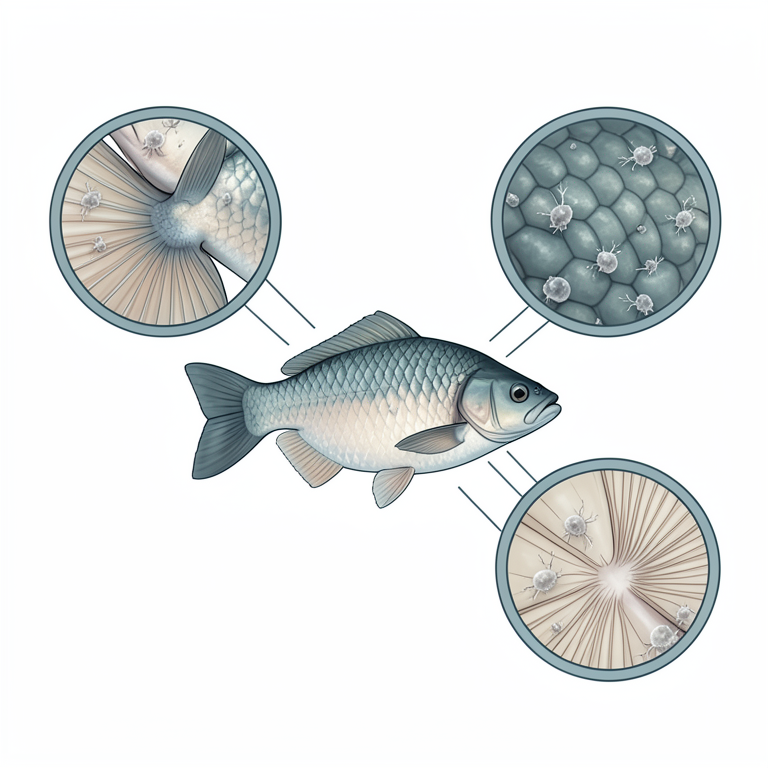
Fish Parasite Sampling Sites
AI-generated conceptual illustration (Freshwater fish (Tilapia species)). It explains the idea and does not show study data.
View source evidence ↗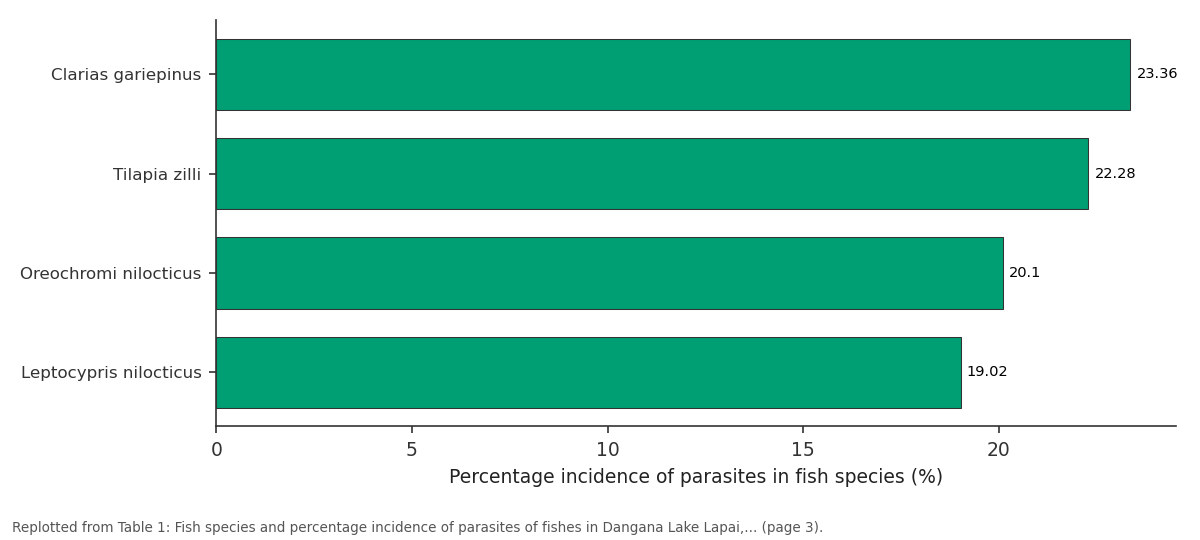
Percentage incidence of parasites in fish...: Clarias gariepinus vs Tilapia zilli vs Oreochromi nilocticus vs Leptocypris nilocticus
Replotted from Table 1 (page 3) of the original paper. Every bar is the paper's own table value.
View source evidence ↗Figures & tables
From the original paper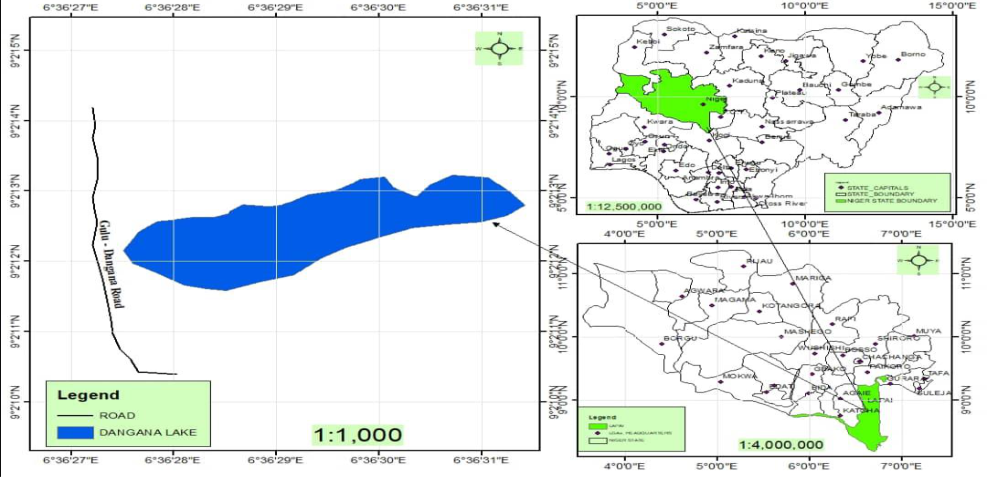 Figure 1
 Table 1
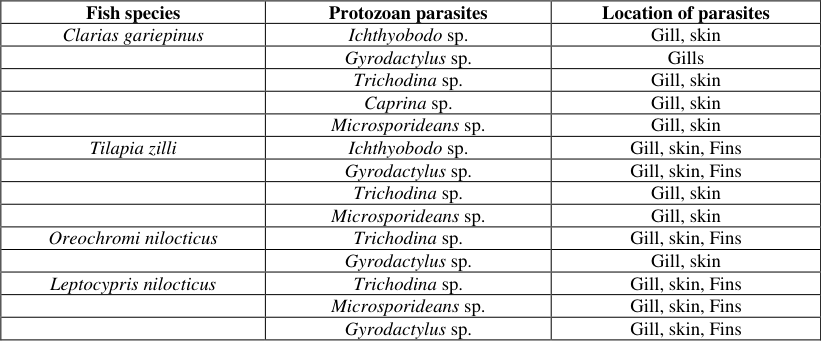 Table 2
Introduction
Fish are rich source of protein and contains lipids, mineral oils, and vitamins. They have remarkable impact on the lives of many individual and communities, as a major source of relatively cheap and affordable animal protein [1,2] . The ever-increasing cost of beef leaves fishes as the most feasible option in resolving protein shortage. Another product of fish aside fish meal is fish oil which contains omega-3-essential fatty acid necessary for the proper functioning of the brain, heart and immune system [1,3] Fishes interact with various level of food chain and influence the structure of their habitat, as they are usually restricted to particular mode of life related to their food source and reproductive requirement [2] . Globally there has been tremendous increase in the development of fish farming and culture attributable to the increased need for affordable animal protein especially in the tropics [4] . Fishing is one of the main reasons communities settles around water bodies [5] As these communities settles around the water bodies, they are known to participate in changing the ecology of the water [5] . Parasites are capable of causing harm to fish host notwithstanding the species, either through injury to the tissues or organs in the process of burrowing or consuming food or the removal of digested food in the gut of the fish as well as the secretion of proteolysis enzymes [6] . Among fish parasites protozoans, occupy a very important sector as one of the hazardous threats to fish health. These parasites attack the fish, causing massive destruction of skin and gill epithelium. Even moderate infection of these organisms on small fish may prove a fatal disease, since the infection may cause the fish to stop feeding [4] . Protozoan parasites cause serious losses in fishponds in Nigeria and their lesions render the fish unmarketable. Fish carrying protozoan parasites are capable of passing on the infective disease to man after its consumption [4,6] . The role of freshwater fish in transmitting parasites had been known for a long time. Fish parasites and disease remain one of the problems confronting the fishery biologist, as fish may serve as a parentenic intermediate or definitive host of parasites that are harmful to man and animal [7] . Many fishes have being found to harbour plenty of protozoan, helminthes, nematodes and bacteria which are either ecto or endoparasites. These parasite are known to affect fish health, growth and survival. The effect of parasites on fish include nutrient devaluation, alteration of biology and behaviour, lowering of immune capability, induction to blindness, morbidity, mortality growth, fecundity reduction and mechanical injuries depending on the parasite species and the load [8] . Parasites are capable of causing harm to fish host notwithstanding the species, either through injury to the tissues or organs in the process of burrowing or consuming food or the removal of digested food in the gut of the fish as well as the secretion of proteolysis enzymes [6] . Protozoan parasites cause serious losses in fishponds in Nigeria and their lesions render the fish unmarketable. Fish carrying protozoan parasites are capable of passing on the infective disease to man after its consumption [6] . This study investigated the presence of protozoan parasites of fishes from Dangana Lake and possible health implications to fish consumers.
Materials and Methods
Materials and Methods
Description of Study Area.
The study was carried out at Dangana lake, Lapai, Niger state, Nigeria. This lake is located within longitude 6°36'29.6′E and latitude 9°02′12.02N with elevation of 159m above the sea level. The vegetation of the area reflects that of Savannah zone, the vegetation are mixed, prominent ones include Malaina (Gmeilana arborea) Locust beans (Parkia biglobosa) Neem (Azadirachta indica) and other sparsely native trees and grasses. The climate presents two distinct seasons, a rainy season between April and October, and a dry season (November-March) completely devoid of rain.
Fish Collection, Identification and sample Examination.
Fish samples were obtained using gill net and cast net during the sampling period of 10months, February to November 2014 with the assistance of hired fishermen in the lake. The fishes collected were identified with the aid of keys [9,10] The fish samples were examine for ectoparasites using hand lens. Thereafter scraping from fins, skins, and gills were done with the use of swab stick, this was smeared on clean glass slide and examined under light microscope for external parasites in the Department of Biology Laboratory. Each sample where examined independently according to the method described by Ekanem et al. (2011). Identification of parasite was carried out with the aid of keys [11,12] .
Data analysis
Data were analysed using simple descriptive statistical tool was used to analyse the data with aid of Microsoft excel 2010
Results and discussions
From table1 a total 184 fish from four (4) species were examined in the lake which were Clarias gariepinus (55), Tilapia zilli (51), Oreochromis nilocticus (41), and Leptocypris nilocticus (37) respectively. Out of the 55 fishes sampled for Clarias gariepinus 43 were infected and Tilllapia zilli recorded 41 infected fishes. Similarly out of the 41 fishes examined for Oreochromis nilocticus, 37 fishes were infected and Leptocypris nilocticus recorded 35 infected fishes from Dangana lake. The overall prevalence of protozoan parasites (84.76%). The percentage incidence revealed that Clarias gariepinus recorded 23.36%, Tilapia zilli, 22.28%, Oreochromis nilocticus, 20.10%, and Leptocypris nilocticus and 19.02% incidence respectively. The overall prevalence of protozoan parasites (84.76%) was high compared to 32.9% recorded for fish in Warri River [3] , 3.33% in Great Kwa River [1] and 70% in natural waters of Owerri [13] . This variation in rate of parasitism could be attributed to biotic and abiotic condition of the environment where the study was carried out [14] . Also unfavourable condition may affect fish physiology thereby favoring parasitic infection and invasion [3] , pollution of the fish environment may also contributes to parasitizing of fish significantly [15] . Parasite of fish can either be external or internal. Parasitic infections often give an indication of the quality of water, since parasites generally increase in abundance and diversity in more polluted waters [6,16] . Parasites are capable of causing harm to the fish host notwithstanding the species, either through injury to the tissues or organs in the process of burrowing or consuming food or the removal of digested food in the gut of the fish as well as the secretion of proteolytic enzymes. Fish parasites result in economic losses not only mortality, but also from treatment expenses, growth reduction during and after outbreak of disease and this militate against expansion of aquaculture [4,6] . [1,4,17,18] . Excessive mucus secretion, epithelial proliferation and chemical erosion of fish association with the pathology of protozoan parasites [19] . The gills of many fishes has been infested by different protozoan parasites, and the sieving ability of the gill rakers may help to trap some organisms, and this could be attributed to the presence of the protozoan parasites [20,21] .
| Fish specie | Number of fish examined | Number of fish infested | Percentage incidence of parasites in fish species (%) |
|---|---|---|---|
| Clarias gariepinus | 55 | 43 | 23.36% |
| Tilapia zilli | 51 | 41 | 22.28% |
| Oreochromi nilocticus | 41 | 37 | 20.10% |
| Leptocypris nilocticus | 37 | 35 | 19.02% |
| Total | 184 | 156 | 84.76% |
Table text extracted from the original PDF; superscript letters are shown inline. The original table image is below.
View original table image
Conclusion
Fish parasites are of economic importance because they lower the quality of the fish meat. It is therefore important that fish farmers should endeavor eliminate environmental factors and conditions that would favor increase in parasites infestation on fish as observed in this study. Parasite affect fish health, growth and survival, some parasites causes much dangerous and serious disease to the host fish. The effect of parasites on fish include nutrient devaluation, alteration of biology and behaviour, lowering of immune capability, induction to blindness, morbidity, mortality growth, fecundity reduction and mechanical injuries depending on the parasite species and the load.
Figures and tables from the paper
| Fish species | Protozoan parasites | Location of parasites |
|---|---|---|
| Clarias gariepinus | Ichthyobodo sp. | Gill, skin |
| Gyrodactylus sp. | Gills | |
| Trichodina sp. | Gill, skin | |
| Caprina sp. | Gill, skin | |
| Microsporideans sp. | Gill, skin | |
| Tilapia zilli | Ichthyobodo sp. | Gill, skin, Fins |
| Gyrodactylus sp. | Gill, skin, Fins | |
| Trichodina sp. | Gill, skin | |
| Microsporideans sp. | Gill, skin | |
| Oreochromi nilocticus | Trichodina sp. | Gill, skin, Fins |
| Gyrodactylus sp. | Gill, skin | |
| Leptocypris nilocticus | Trichodina sp. | Gill, skin, Fins |
| Microsporideans sp. | Gill, skin, Fins | |
| Gyrodactylus sp. | Gill, skin, Fins |
Table text extracted from the original PDF; superscript letters are shown inline. The original table image is below.
View original table image
References
21 in the original paper- Ekanem AP, Eyo VO, Sampson AF. Parasite of landed fish from Great Kwa River, Calabar. Cross River Nigeria International Journal of Fisheries and Aquaculture. 2011; 3(12): 225-230.
- Ashade OO, Osinoye OM, Kumoye EA. Isolation, identification and prevalence of parasites in Oreochromis nilocticus from three selected River system. Journal of Fisheries and Aquatic Science. 2013; 8(1):115-121.
- Eyo JE, Ejere VC, Aguzie OI, Ivoke N, Ekeh FN, Ezenwaji NE et al. Parasitofauna Of Five Freshwater Fishes In A Nigerian Freshwater Ecosystem. Croatian Journal of Fisheries. 2014; 72:1-16.
- Ogbu UM, Okorafor UP, Unigwe CR, Odah SI. Prevalence of Common Protozoan Parasites of African Catfish, Clarias Gariepinus (Burchell,1822) From Three Selected Fish Ponds In Ibadan North Local Government Area, Oyo State, Nigeria IOSR Journal of Agriculture and Veterinary Science. 2019; 13(12):26-30.
- Adamu KM, Zhigun II, Iloba IK, Babadoko AM, Ikomi RB. Prevalence of Bacteria Isolates in Water and Some Biota of Lapai-Agaie Dam, Nigeria. Science World Journal 2018; 13(4):75-80.
- Omeji S, Solomon SG, Idoga ES. A Comparative Study of the Common Protozoan Parasites of Clarias gariepinus from the Wild and Cultured Environments in Benue State, Nigeria. Journal of Parasitology Research. 2011.
- Ravinchandran S, Balasubramanin T, Kannupandi T. Incidence of parasitic isopods on fish Sphyraena obtusata. Research Journal of Parasitology. 2007; 2(1):45-50.
- El-Asely AM, Abd El-Gawad EA, Soror EI, Amin AA, Shaheen AA. Studies on Some Parasitic Diseases in Oreochromis niloticus Fish Hatchery with Emphasis to Life Stages. J Adv. Vet. Res. 2015; 5(3):99-108.
- Idodo-Umeh G. Freshwater fishes of Nigeria. (Taxonomy, Ecological notes, Diet and utilization.) Idodo-Umeh publishers. Benin City, Nigeria, 2003, 232.
- Olaosebikan BD, Raji A. Field Guide to Nigerian freshwater Fishes. Second edition, Federal College of Fresh Water Fisheries Technology. New Bussa Nigeria, 2004.
- Robert RJ. Fish Pathology, Bailliere TindalBooks. London, 1978, 318.
- Poulder BD, Curtis EW, Yanong PER. Common Freshwater Fish Parasites Pictorial Guide. Edis IFAS Extension, University of Florida, 2005. http://edis.ifas.ufl.edu/
- Nnadi EI. A study of parasitic infections of Clarias gariepinus in natural waters of Owerri, Imo state, Nigeria. International Journal of Agric. and Rural Development. 2012; 15(2):976-981.
- Thompson LC, Larsen R. Fish habitat in freshwater stream. Farm Water Quality Planning FWQP, Reference Sheet 10.3, Publication 8112. University of California, California, 2004.
- Kelly DW, Poulin R, Tompkins DM, Townsend CR. Synergistic effects of glyphosate formulation and parasite infections and survival. Journal of Applied Ecology. 2010; 47:498-504.
- Poulin R. Toxic pollution and parasitism in freshwater fish, Parasitology Today. 1992; 8(2):58-61.
- Emere MC, Egbe NEL. Protozoan parasites of Synodontis clarias a fresh water fish in river Kaduna, BEST Journal. 2006; 3(3):58-64.
- Mohamed SMG, Nadia BM, Eman MMM, Emad EEL. Prevalence of some ectoparasitic diseases in African catfish (Clarias gariepinus) at Kafr El-Sheikh governorate. International Journal of Fisheries and Aquatic Studies 2017; 5(3):576-583.
- Paperna I. Parasites infections and disease of fishes in Africa. CIFA Technical paper no. 31 food and agriculture organization, Rome, 1996.
- Hines RS, Spira DT. Ichthyophthiriasis in the mirror carp Cyprinus carpio (L). I. Course of infection, Journal of Fish Biology. 1973; 5(3):385-392.
- Chakroff M. Fresh Water Pond Culture and Management. Peace Corps Volunteer in Technical Assistance, Vita publication Manual Series, 1976, 36.
Cited by 4
From OpenAlex, OpenCitations and reference lists read by Scinovex
- Parasitic Diseases of Fish ↗
International Journal of Veterinary Science · 2021
❝ 146PDF - Physicochemical Water Quality Influence on the Parasite Biodiversity in Juvenile Tilapia (Oreochromis spp.) Farmed at Valle Del Mezquital in the Central-Eastern Socioeconomic Region of Mexico ↗
Víctor Johan Acosta-Pérez, Vicente Vega-Sánchez, Tomás-Eduardo Fernández-Martínez, Andrea Paloma Zepeda-Velázquez, Nydia Edith Reyes Rodríguez, Jesús‐Benjamín Ponce‐Noguez et al. · Pathogens · 2022
Aquaculture parasite biodiversity dependents on multiple environmental characteristics, including water quality. The analysis of this relationship aims to support improvements in the production management of tilapia. For this purpose, a total of 100 juvenile fishes (Oreochromis spp.) and 30 water samples were collected at Valle del Mezquital in the Central-Eastern socioeconomical region of Mexico. A study of parasite biodiversity was…
❝ 11PDF - Branchial Chamber and Gastrointestinal Tracts Parasites of Fish Species in Benue and Niger Rivers, North Central, Nigeria ↗
Agatha Eleojo Onoja-Abutu, Martin Abdubala Okpanachi, Luay M. Alkazmi, Clement Ameh Yaro, Gaber El‐Saber Batiha · International Journal of Zoology · 2021
Freshwater fish species are posing health challenges by either serving as host of parasites that are harmful to man and animals. This study was conducted to determine the parasitic profile of the branchial and gastrointestinal tracts of freshwater fish species from Niger and Benue rivers at Lokoja. These fish species are Tilapia zillii, Oreochromis niloticus, Clarias species, Synodontis schall, and…
❝ 7PDF - Artisanal fishing technology employed by fishermen in Kwahu-North district, Ghana
Seth Agyemang, Alexander Yao Segbefia, Aho Sampson Yao · International Journal of Geography Geology and Environment · 2021
Fishing forms a major economic activity and source of livelihood among communities dotted along the Volta Lake in Ghana. It is undertaken on a small scale, artisanal basis, leading to low returns and inability to break out of the poverty trap. The research examines the artisanal fishing and livelihoods along the Volta Lake in the Kwahu-North District. The study also examined livelihood activities of the key people involved in artisanal fishing and how their positions along the fish production value-chain affected their well being. Both qualitative and quantitative analytical procedures were us