
Research article · 2021 · Full text
International Journal of Geography Geology and EnvironmentArtisanal fishing technology employed by fishermen in Kwahu-North district, Ghana
Volume 3(2) · Pages 16–24
Research areasNatural Resources and Economic Development
Abstract
Author-writtenFishing forms a major economic activity and source of livelihood among communities dotted along the Volta Lake in Ghana. It is undertaken on a small scale, artisanal basis, leading to low returns and inability to break out of the poverty trap. The research examines the artisanal fishing and livelihoods along the Volta Lake in the Kwahu-North District. The study also examined livelihood activities of the key people involved in artisanal fishing and how their positions along the fish production value-chain affected their well being. Both qualitative and quantitative analytical procedures were used. A combination of stratified random sampling and purposive sampling techniques were used to select a total of 194 respondents from four communities in the district. Methods of data collection included questionnaires, focused group discussions, and direct observation. Difficulty in acquiring hired labour accounted for the use of child labour. Smoking was the most common mode of processing fish. Institutions like VRA, MoF, FD, VBRP and the Government should also play a major role through financial and technical assistance in improving livelihood conditions of the fishers. This will ensure sustainability of the fishing industry.
Summary
Source-checkedPlain-language reading of the full paper, prepared with AI and checked against the text. Each point links to the authors' own words.
Why it matters
- Fishing is a primary economic activity and source of livelihood for communities located along Ghana's Volta Lake. View evidence ↗
- Because fishing in this region is conducted on a small-scale, artisanal basis, it often results in low financial returns and traps fishers in poverty. View evidence ↗
- Annual fish yields and catches in Ghana have been declining over time, which threatens the livelihoods of those dependent on the industry. View evidence ↗
The question
- The study aimed to investigate whether the fishing technologies used by fishermen in the Kwahu North district are appropriate. View evidence ↗
- The general objective was to examine the socio-economic impacts of artisanal fishing on rural livelihoods within the Kwahu North District. View evidence ↗
What they did
- The research focused on four specific communities: Ekye-Amanfrom, Brumben, Amankwa-Krom, and New-Kyease. View evidence ↗
- Quantitative data was analyzed using SPSS Version 16.0 through descriptive techniques like frequency distributions and cross-tabulations. View evidence ↗
What they found
- Field observations revealed that gill nets are the most frequently used fishing technology in the study area. View evidence ↗
- Gill nets are generally safe for the environment, but they become unsustainable when small mesh sizes are used to catch immature fish. View evidence ↗
- The use of bamboo tubes is detrimental to fish stocks because immature fish die and unhatched eggs are wasted during harvest. View evidence ↗
- The 'nifa' (surrounding net with fish traps) method often involves the use of chemicals to drive fish, which can lead to fish deaths. View evidence ↗
- The 'Atidza' method, which uses heaped tree branches, causes environmental degradation by destroying local vegetation. View evidence ↗
- Beach seines are considered harmful because they destroy fish breeding grounds and other fishing gear, leading to conflicts among fishermen. View evidence ↗
- The 'canoe-top net' is a sustainable and safe method because it allows for the careful sorting of fish during harvest. View evidence ↗
What it means
- The authors conclude that improving the living conditions of fishers requires a combination of institutional/governmental support and a change in the fishers' own attitudes. View evidence ↗
- The authors identify bamboo tubes, 'Atidza', beach seines, and certain gill net/trap combinations as threats to the long-term sustainability of the industry. View evidence ↗
Visual summary
1 visualsIllustrations explain the paper; they do not show study data.
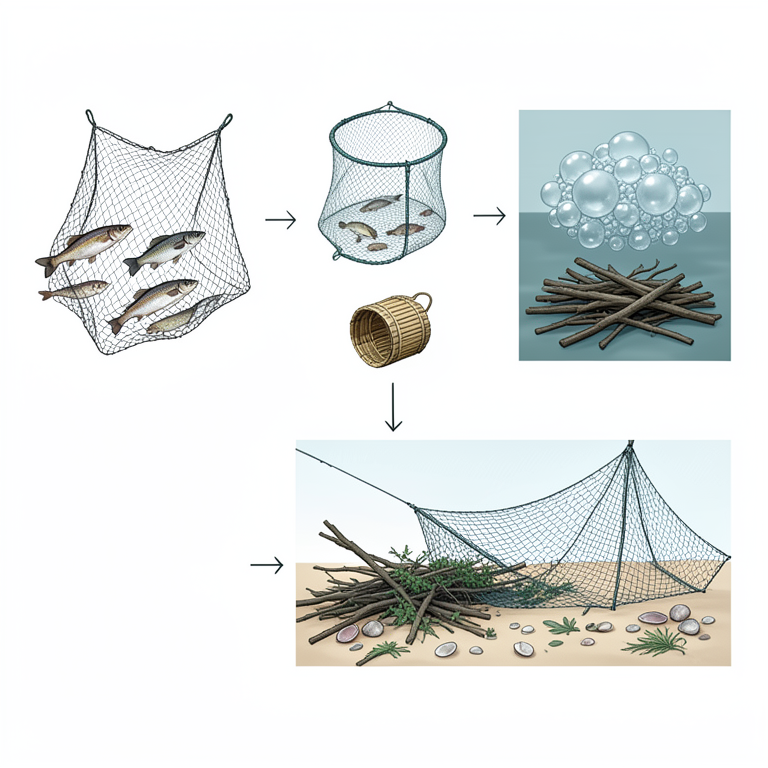
Sustainability Spectrum of Fishing Gear
AI-generated conceptual illustration (Artisanal fishing gear in Ghana). It explains the idea and does not show study data.
View source evidence ↗Figures & tables
From the original paper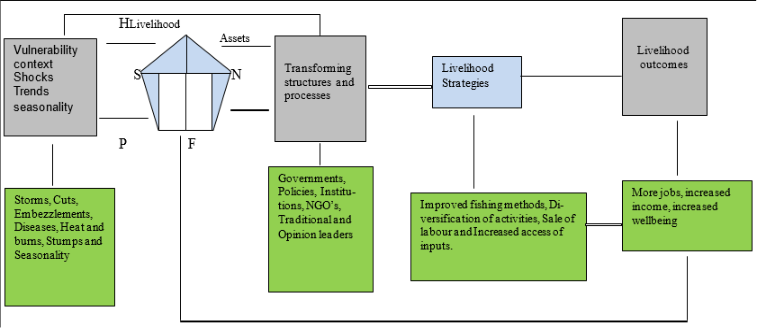 Figure 2
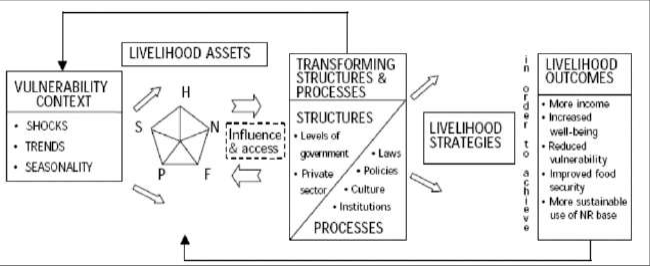 Figure 1
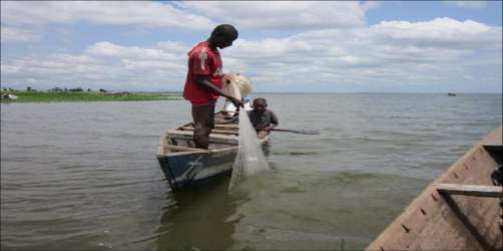 Figure 6
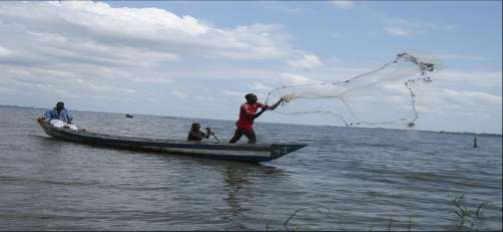 Figure 5
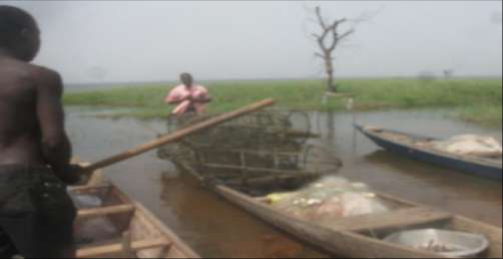 Figure 4
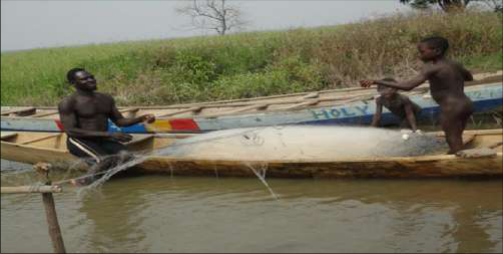 Figure 3
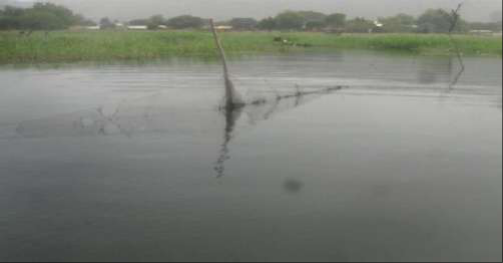 Figure 11
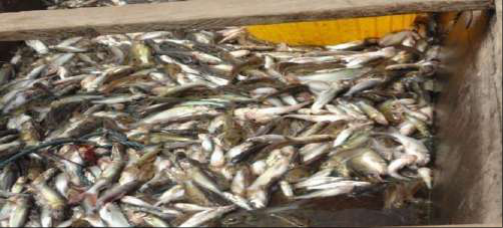 Figure 10
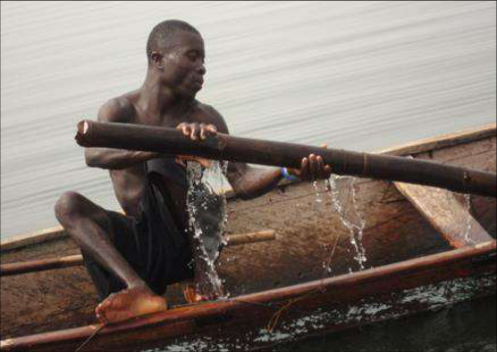 Figure 9
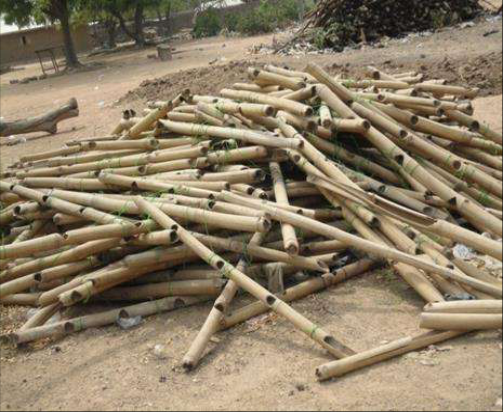 Figure 8
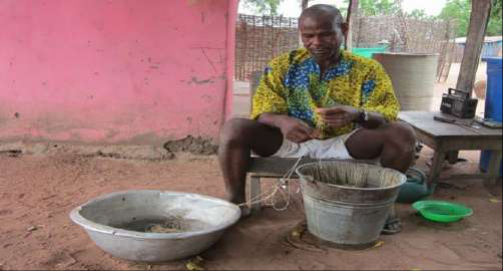 Figure 7
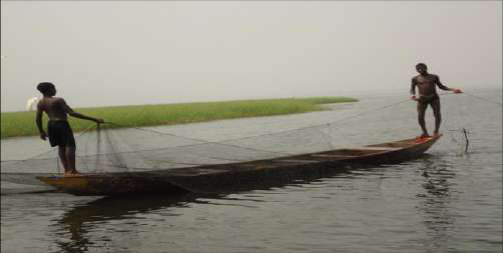 Figure 14
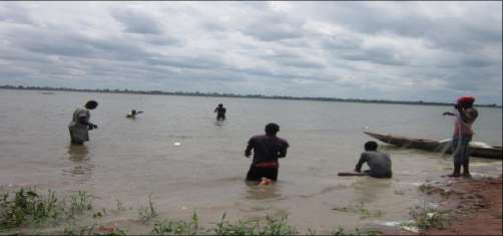 Figure 13
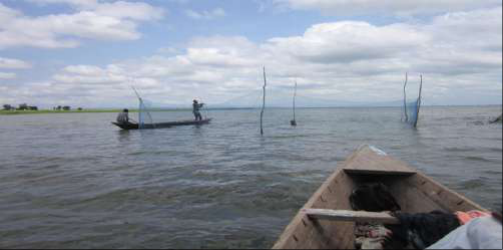 Figure 12
Introduction
The world's fisheries occupy an important niche in the global eco-system, economy and human diets. According to the Food and Agriculture Organisation (FAO, 2009) [13] , total world fisheries production reached a new high of 143.6 million tonnes in 2006. About 110.4 million tonnes of this resource was used for human consumption, with the remaining going to other uses such as livestock feed and fishmeal for aquaculture (FAO, 2009) [13] . Artisanal fisheries have long been a very important economic sector in West Africa. Smallscale fisheries are typically of traditional, artisanal and/or subsistence character. According to Mathew, S. (2001) [18] , fishing activities have been passed on from generation to generation and fishing is carried out for livelihood and food security purposes (Mathew, S. 2001 cited in International Journal of Development and Sustainability, 2012) [18,15] . In some coastal communities, up to 60% of their animal protein intake comes from fish. Where distribution systems are efficient, inland communities can also obtain smoked dried fish that can be stored for up to three months. Since most of these rural communities do not have facilities for chilling or freezing foods, this makes smoked fish much more important than beef (Jallow, 2009) [16] . The African industrial fishing sector has always been weak and this is reflected in the limited contribution of the sector to Gross Domestic Product (GDP) in most countries. In Namibia and Mauritania, fisheries contribute more than 6 percent of GDP, in Sierra Leone 11 percent and in Ghana 4.5 percent (Jallow, 2009) [16] . The fisheries sector contributes significantly to national economic development objectives relating to food security, employment, poverty reduction and foreign exchange earnings. The sector is significant for its division of labour based on gender. Men are involved in fish harvesting, undertaking the main fishing activities in the artisanal, while women are the key players in on-shore post-harvest activities; fish processing, storage and trade activities. Many women are also engaged in the growing frozen fish distribution trade as well as marketing fish within and outside the country. As fish stock gets depleted and catches dwindle all operators at all levels of the fish value-chain are affected (Seini et al., 2002) [21] . Following from the above, fish has always had far-reaching implications for food security in Ghana.
Fish supplies naturally augment food availability; ensuring good nutritional outcomes particularly of the poor and rural populations; and, the vast number of people engaged in the fishing industry earn income that improve upon their access to food (Seini et al., 2002) [21] . In the Kwahu-North district in Ghana, migrant settlers on the Obosum and Afram rivers depend on fishing as their main economic activity which provides them with employment, income and protein. An examination of artisanal fishing in the Kwahu North district with a focus on fishing technology employed by the fishermen is the subject matter of this research.
Statement of the problem
The contributions of artisanal fishing to employment creation, food security and livelihoods in rural communities have been acknowledged in the literature (FAO, 1996, Jallow, 2009) [12,16] . However, global and local statistics and estimates point to the fact that, annual fish yields and catches in Ghana have been on a decline for some time now. But, how reduced fish harvests affect the livelihoods of fishers has received little research attention. Artisanal fishing involves different players who perform different roles in fish capture, processing and marketing. These activities serve as a fulcrum around which the livelihoods of families are built. However, how individual players along the fish production value-chain cope with reduced catches and rising cost of inputs for processing as well as transportation difficulties in reaching marketing centres are little understood. To understand how these factors affect livelihood security and the range of coping mechanisms that fishers adopt, there is the need to investigate the dynamics of artisanal fishing through the application of Porter's (1985) [20] Value-Chain Analysis. In the Kwahu North District, social and economic infrastructure and services in fishing communities seem not to be of the standard and quality that can support higher levels of welfare for the fisher folks and more importantly, for the younger generation of children and the youth. This is because, the communities are scattered with most of them poorly linked with roads. Others are located on islands and can only be reached by boats. The scattered and remote nature of the settlements makes them difficult to be reached by government interventions. There is, therefore, the need to find out the stock and quality of educational and health facilities and services in order to determine what level of welfare they may need. In the wake of low catches, fishermen may resort to ingenious ways of catching more fish, some of which may be detrimental to the long-term sustainability of the fishing industry. It is, therefore, important to find out issues of over fishing, pressure on fish stocks and competition for territorial areas which may result in conflicts. Besides unacceptable fishing methods and conflicts, fishers' ability to mobilize sufficient financial resources to support their businesses need to be closely examined as this information is largely unavailable on the situation in the Kwahu-North District.
Even though some information exists on the effects of tree stumps in the Volta Lake and how they affect navigation, the damage that these tree stumps cause to fishers' nets and how this affects their businesses have also received little research attention. It is important to know how much fishers spend on net repairs and how that affects their net earnings. Finally, the fishing technology employed may have implications for the long-term sustainability and annual profitability and viability of the fishing enterprise. These issues need to be carefully studied as they affect livelihood outcomes. It is against this background that, the study set out to investigate appropriateness of fishing technology employed by the fishermen in the Kwahu North district.
Research Objectives
The general objective of the research is to investigate socioeconomic effects of artisanal fishing on rural livelihoods in Kwahu North District. Specifically, the study seeks to investigate appropriateness of artisanal fishing employed by the fishermen in the Kwahu North district.
Literature Review Artisanal fishing
According to FAO (2000) [14] , fishery can be defined as the exploitation of living aquatic resources held in some form of common or open access property regime. Although, the current study is not concerned about all living aquatic resources but fish, this definition is useful because it focused on open access fisheries where restriction cannot be exercised. However, Arlinhaus et al. (2002) [3] defined inland fishery as "fishing activities in natural or "seminatural", limonitic ecosystems, such as rivers, lakes, gravel pits, other aquatic organisms therein". Allan et al. (2005) [2] defined inland fisheries as the capture of wild stocks of primarily freshwater fish, including migratory species that move between freshwater and oceans. Inland fishery is a unit or an entity that is engaged in exploiting and harvesting of freshwater fish. Typically, inland fishery is the combination of fish and fishers in a region and the conservation, management and development of fish and water resources (Allan et al., 2005) [2] . The term, 'artisanal' in fisheries context is derived from the term "artisan" and according to Oxford Genie Advanced Dictionary (2003), it refers to "a person who does skilled work, making things with the hand". Subsistence fishers catch fish for bringing food on the table and also for trade. An extensive definition of 'artisanal fishing' is provided by Demuynck, (1994) [8] : 'Artisanal fishing is a dynamic activity that range from sedentary to migrant fishers or communities, from part time to full time fishing activity, from subsistence to non-differentiated or highly differentiated and specialized fishing', (Demuynck, 1994) [8] . According to Mathew, S. (2001) [18] , 'artisanal fishing', particularly applies to coastal or island and inland ethnic groups using traditional techniques such as rod and tackle, arrows and harpoons, throw nets, drag nets and traditional boats. Artisanal fishing is often, but not always, less intensive and less stressful on fish populations than modern industrial fishing techniques (Mathew, S. 2001) [18] .
Rural livelihood concepts and artisanal fishing
The definition of a livelihood as a means of securing a living summarises a reality which comes into focus as being complex as its parts are found and named, and its structure unraveled. Livelihood is a process that underpins the way people derive their incomes. According to Ellis (1999) [11] , livelihood comprises…… 'the activities, the assets, and the access that jointly determine the living gained by individuals or household'. The livelihood concept is a realistic recognition of the range of activities that individuals and households engage in to ensure their survivals and improve their well being. The definition of a livelihood can be at different hierarchical levels. The most commonly used level descriptively is the household, usually the human group which shares the same hearth for cooking. In adopting this level here, it is important to recognise an individual or intra-household level, in which the well being and access of some household members, and especially women and children, may be inferior to that of others, especially men; and also the broader levels of the extended family, the social group, and the community (Swift, 1989) [23] . In relation to artisanal fishing and rural livelihood, various strategies are adopted by rural households in artisanal fishing to support their livelihood. These strategies range from low human (labour) investment combined with low capital investment, to a highly intensive labour activity and/or highly capital-based activity. Between these two extremes, a continuum of combinations exist which provide opportunities to thousands of people to include fishing activity as part of the overall range of activities they undertake to sustain their livelihoods in rural areas.
Technologies for fish capture Fish and fishery play an important role in the lives of most Ghanaians. It provides employment to an important proportion of the work force either as full time employment or as a part time activity. Various fishing inputs, such as hooks, netting materials, ropes, floats and lead as well as outboard motors are used to harvest fish.
The nexus between artisanal fishing as a rural livelihood activity and well being
Various strategies are adopted by rural households in artisanal fishing to support their livelihoods. These strategies range from low human (labour) involvement, to a highly intensive labour activity and from low capital investment to highly capital based activity. Between these two extremes, a continuum of combination exist which provide opportunities to thousands of people to include fishing activity as part of the overall range of activities they undertake to sustain their livelihoods. The combination of low human involvement and low capital investment corresponds to the strategy of opportunistic fishing, especially for subsistence purposes. This involves cheap and simple fishing gear (baited fishing lines) and it is frequently carried out by 'non leading' members of the household (children or elders, or sometimes adult women) in addition to other domestic activities. In West African villages on the coast or in the vicinity of rivers, opportunistic fishing, with other activities such as farming, household or agricultural commitments occupying the rest of the day is very common (Horemas and Jallow 1997, Williams and Awoyomi, 1998) [15,24] . Further, seasonal (or part-time) fishing is usually characterized by a slightly higher labour and financial involvement. It is also operated by different members of the household, part-time fishers and young or mature males who get involved in fishing activities as part of a wider, multiactivity livelihood portfolio. These artisanal fishers use relatively cheap and simple gears (e.g. traps, gillnets, hook and lines) although some use sophisticated gear or techniques (Ahmad et al. 1998) [1] . The third categories of fishermen are full-time fishers as a result of absence of other opportunities. They are wage based fishermen working all year round on artisanal vessels (Ahmad et al. 1998) [1] . Nevertheless, the categories of fishers and the degree of human and financial investment does not necessarily 'explain' by itself the level of success or failure of the household and the extent to which involvement in fishing activities contribute to household well-being. According to the Volta Lake Frame Survey completed in 1999 by the Directorate of Fishers (DoF), there were over 1,200 villages along the lake, over 24,000 planked canoes and over 70,000 fishermen engaged in the Lake Volta Fishery. It is also reported that 20,000 fish processors and traders also depend on the lake for their livelihood. The gears used are cast and gill nets, hook and line and traps. The species exploited are mainly Cichlids (38.1%), Chrysichthyes spp (34.4%) and Synodontis (11.4%) (MoFA, 2004) [19] . In summary, the contributions of fishing activities to the livelihoods of rural poor and non-poor households may take remarkably diverse forms and may involve a variety of different strategies.
Conceptual Framework
This study adopts the Sustainable Livelihood Approach (SLA) as its conceptual framework. This is because of the failure of other approaches like Economic Valuation Technique (EVT) to identify factors which influence or affect people's access to these resources. According to Sen's (1981) [22] conclusion, which was initially framed in the context of famine (Sen, 1981) [22] , the wider domain of empirical studies have clearly demonstrated that poor people in rural areas are usually those who lack access to the natural resources like fishing. Further, Fisheries Enhancement Programmes (FEP) initiated in the 1990's in Bangladesh, though successful, failed because the poorest who could not invest in adequate fishing gears and fishing licenses were totally excluded or only benefited from a very limited portion of the increased fish production (Capistrano, Ahmed and Hossain, 1994) [6] . However, the Sustainable Livelihood Approach (SLA) offers a useful framework to answer different questions. It provides a methodology that looks at positive and negative impacts of a particular form of fishing development upon the livelihood of the poor (Jamieson et al. 2004) [17] . Sustainable Livelihood Approach is a way to improve understanding of the livelihoods of poor people. It draws on the main factors that affect poor people's livelihoods and the relationship between these factors. It can be used in planning new development activities and in assessing the contribution that existing activities have made to sustainable livelihoods. SLA is a holistic and people-centred approach that attempts to capture and provide a means of understanding people's livelihoods and in particular the factors and processes which affect these livelihoods (DFID, 2000) [10] . The framework as presented consists of five components; 1. The vulnerability context of the environment in which the communities under consideration operate: 2. The livelihood assets of these communities; 3. The policies, institutions and processes which affect their access to livelihood assets; 4. The livelihood strategies which the communities adopt and 5. The outcomes they achieve or which they aspire. An important aspect of the SLA is its use in helping to understand the role of institutions (e.g. rules and norms) which appear to be so important in shaping the mechanisms which affect people's access to the resources. The UK Department for International Development (DFID) [7] ,
United Nations Development Programme (UNDP), Oxfam and CARE, adopting their own related understandings of SL and employing SL approaches to facilitate and help rural development in practice (Carney et al., 1999; DFID, 1999) [7, 9] . Comparing various agencies' livelihoods work, the approaches employed appear to have much in common although there may be some different operational emphases. Among these approaches, the pentagram-based module (Figure 1.) developed by DFID (1999) [9] is most prominent, and this framework is believed by some to have captured well, the essential concept of 'livelihood' (Baumgartner & Högger, 2004) [5] .
Fig 1:
The DFID Sustainable Livelihoods Framework (Source: DFID, 1999: 11) [7] The DFID based framework (Fig. 2) reinforces a peoplecentred approach, based around five features; key features: 1. (Asset): Livelihood assets consist of Natural, Physical, Human, and Financial forms of capital (DFID, 1999) [7] . Assets are fundamental to the poor. 2. Transforming structures and procsses: In the framework, structures are hardware which involves public and private sectors. Process is made up of policy, laws, culture and institutions, and is more like software (DFID, 1999) [7] . Transforming structures and processes play important roles in shaping livelihood assects and outcomes in SL systerm. 3. Vulnerability context: Vulnerability is a key concept related to livelihood sustainability. It includes shocks, trends and seasonality (DFID, 1999) [7] . It can adversely affect the poor's assects and choice of livelihoods although not all vulnerabilities are negatives. 4. Outcomes: Livelihood outcomes are successes and objectives that livelihood strategies achieve. Outcomes are always the pathway to assessing livelihood sustainability, and the scale of analysis of paramount importance (Scoones, 1998). 5. Strategies: Livelihood strategies are the activities employed to generate the means of household survival.
According to Ashley and Carney (1999) [4] , Livelihood approaches should be people centred, responsive and participatory, multi-level, conducted in partnership and be sustainable (Ashley and Carney, 1999) [4] . The SL framework therefore places people at the centre of a web of inter-related influences that affect how these people create a livelihood for themselves and their households. Closest to the people at the centre of the framework are resources and livelihood assets that they have access to and use. These can include natural resources, technologies, their skills, knowledge and capacity, their health, access to education, sources of credit, or their networks of social support.
In applying livelihood approaches to fishing industry, fishers are seen as the main actors who use human capital, social capital, financial capital, natural capital, physical capital and political situations to explore opportunities. The Sustainable Livelihood Approach (SLA) which embraces the different dimensions of conditions in fishing communities, such as low levels of educations, inadequate public services, low living conditions, lack of assets and skills, including vulnerability, social networks, institutions which are management systems and more importantly interactions that exist between the fisher groups.
H = Human capital, N = Natural capital, F = Financial capital, S = Social capital, P = Physical capital Source: Adapted from DFID (1999) [7] . The natural resource is the lake and the rivers which are exploited by the fishermen from which they derive their Livelihood. The fishers can exploit the natural resource by using their social capital which involves networks, membership of groups, trust and access to wider institutions upon which they derive their income. The social resource depends on the network among the fishermen, fish processors and fishmongers. Further, human capital is needed to fully exploit the natural resource. This represents the skills, knowledge and ability to work, physical capability and good health that together enable people to pursue different livelihood strategies and their livelihood objectives. At the household level, human capital is a factor of the amount and quality of labour available; this varies according to household sizes, skill levels, leadership potential, health status and ability to leverage labour of other household members particularly women (DFID, 1999) [7] . Also, the fishers depend on physical capital in the form of basic infrastructure which involves transport, energy and communication to achieve their goals. The fish processors and the fishmongers depend on the transport system to carry out their activities. The fishers also depend on the financial capital in the form of credit, loans, savings and remittances to undertake their work. The fishers, however, are vulnerable and are at risk to shocks, trends and seasonality. The vulnerability context affects livelihood assets which involves human capital, social capital, natural capital, physical capital and financial capital. Linked to the vulnerability context below in the framework are storms, cuts, embezzlements, diseases, heats and burns, stumps and seasonality. Further, closely linked to the livelihood assets in the framework are the structures and processes which can be transformed. Below the structures and processes which can enhance effective work and livelihood of the fishers are governments, institutions, NGO'S, traditional and opinion leaders. They need to implement policies to regulate and enhance activities of the fishers. In addition, connected to the structures and processes are livelihood strategies that the fishers adopt. These strategies results in improved fishing methods, diversification of activities, and sale of labour and increased access of inputs. The livelihood strategies which the communities adopt and the outcomes they achieve or which they aspire, results in more jobs, increased income and increased wellbeing of fishers and are closely linked to the livelihood assets in the framework. In summary, the value of such a frame-work is to encourage analysts to take a broader and systematic view of the factors that affect people's livelihoods. Whether these are shocks and adverse trends, poorly functioning institutions and policies or a lack of assets, and to investigate the relationship between them it does not take a sectorial view, but tries to recognise the contributions made by all the sectors to building up the stocks of assets upon which people draw to sustain their livelihoods. It is important, however, to keep in mind that, this SLA is and remains a conceptual framework and not an assessment technique.
Research approach and methods
Data for the study was obtained from both primary and secondary sources. The primary data was obtained first hand from the field principally from a sampled group of fishermen, fish processors and fishmongers whilst the secondary data was obtained through review of relevant documents such as books, journals, district assembly profiles and internet sources on issues relating to artisanal fishing activities. The data consisted of both qualitative and quantitative types and were used to investigate the work and livelihood activities of the key people involved in the artisanal fishing and how their positions along the fish production value-chain affects their well being.
Due to the scattered nature of the settlements, it was considered more feasible to locate a cluster of communities for closer analysis. For instance, the 2000 Population and Housing Census shows that, the population in Kwahu-North District is scattered in 544 towns, villages and hamlets spread over a total land area of 5040 sq km. With regard to this, four communities were selected for the study, namely Ekye-Amanfrom, Brumben, Amankwa-Krom and New-Kyease. The total population of the four communities where the sample was drawn was 8, 784. The sampling techniques used included stratified sampling and purposive sampling.
The stratified method was used to select respondents from each community. A total sample of 200 was drawn out of 8, 784 with 50 respondents selected from each community. These included 25 fishermen, 15 fish processors and 10 fishmongers or traders. These ratios generally reflect the proportions in which the fisher groups occur in the study area.
The researchers selected the same number of respondents from the study communities due to the cosmopolitan nature of some of the communities, though the communities have differences in their population size. Purposive sampling was used to select 4 opinion leaders who were head of fishermen, 4 traditional authorities and 4 Assembly Members for further understanding of artisanal fishing and livelihoods activities in the study area. In each of the communities, one opinion leader, traditional authority and assembly member was selected.
The main data collection instrument used was formal interview using a structured questionnaire. This is the method in which a set of questions was administered to respondents where the researcher fills in the responses.
Respondents with formal education also filled in their responses where necessary. This was supplemented by indepth interviews where the interviewer questions the respondents for detailed information. This method ensured consistency and validity of the responses in view of the low literacy levels in the study area.
The information that was sought from each of the groups, related to their various areas of operation as fishing, fish processing and fish mongering. These included specific activities and methods of operation like the type or types of gear used, main fishing hours and hours spent during fishing time, number of people in each canoe, time for preparing the nets, distance mostly covered from shore, sources of income, health status; living conditions, problems encountered and ways of improving the fishing industry. Among the processors, information sought includes; specific activities, processing materials, methods used in processing, labour used in processing and ways of marketing processed fish. The information sought from the mongers included marketing activities, modes of financing fishermen and fish processors, types of labour, hazards and constraints facing the mongers. The formal interviews were supplemented by Focused Group Discussion and observation. In this study, both qualitative and quantitative analytical procedures were used. The quantitative data was analysed and presented through descriptive techniques such as frequency distributions, cross-tabulations, pie-charts and bar-graphs. This was done after the field data was edited for consistency of responses, re-coded and fed into the computer and analysed with the aid of Statistical Package for the Social Sciences (SPSS) Version 16.0. The qualitative data was analysed through examination of main themes, trends, differences and similarities in the responses and presented through a written account to better explain the proportions that the quantitative analysis provided.
Discussion
Discussion
Appropriateness of fishing technology adopted by respondents in the study area
The objective seeks to describe the fishing technology employed by the fishermen in the study area. These technologies are the skills and methods used in hunting for fish. The commonly used technologies by the fishermen are discussed below:
Gill net
Gill nets are nets which are set perpendicular to the shore and Lake Bed. They can be set in both shallow and deep areas and across bays where they are stretched between tree stumps in the water and the floating plants. Observation in the study area showed that gill net is the most commonly used fishing technology. This is because it is applicable during major fishing or raining season (when the lake is increasing in volume) and the lean season (when the volume of the water decreases). Gill nets are prepared with corks and lead. The lead sinks the nets whilst the corks float it. The fish get entangled as they come across the net and try to pass through it. It is a very safe fishing technology employed by the fishermen except when the mesh size is too small and the immature fish are caught. This normally takes place during the breeding periods of the fish and marks the beginning of the lean season. The fishermen therefore resort to the use of gill net with small mesh sizes to make a living. This affects the long term viability and sustainability of the fishing industry and reduces fish catch per head. Shown in Figure 3 below are school-going children arranging gill net on canoe with their father.
Source: Field Observation, January 2012
Bamboo Tubes and Traps
These are bamboo sticks cut into pieces of about a metre long. Smaller holes are created on the sides which serve as a passage and hiding places for the fish. The fish get trapped after entering through the passage. They are used for a particular species of chrysichthys (Cat fish). The fishermen said that, bamboo tubes are used because gill nets cannot be used to catch this particular species of chrysichthys. Observation from the field showed that, discarded bamboo tubes litter the environment especially along the shore and the river bed. The fish, however, spawn in the tubes and when harvested into canoes the immature ones die and the unhatched eggs also go waste and this affect the viability and sustainability of the fish stock. This might reduce catch per head and affect income levels of the fishermen. This fishing technology is shown in Figure 8
Gill net with fish traps
Gill net and fish traps 'nifa' are also known as surrounding nets and pot traps. It is a surrounding net because, they are set in a semi-circle form with both ends attached to the mainland. It therefore serves as a barrier to the fish from escaping to the deeper waters during the day after feeding in shallow waters `at night. This is because the nets are tied to specially prepared sticks which raise the net above the water level. Fish traps are set along these specially prepared sticks and it serves as an opening to the fish. This surrounding net or 'nifa' mostly attract the usage of chemicals with the intention of forcing the fish to the deeper waters. Discussion with the fishermen showed that this sometimes lead to fish death and it takes a longer time before such areas becomes fully replenished to attract fish to where they were used. This fishing method is a source of conflict between communities since fishers try to prevent others from using such nets around their territorial areas. This fishing technology is shown in Figure 10 'Atidza' method of 'Atidza' is a fish aggregating device made of tree branches and bushes. These branches are heaped in the water for about two weeks to a month before harvesting with a specially prepared type of net. The heaped branches serve as a hiding and breeding ground for the fish. Though it is very economical and does not need any huge capital investment, it is labour intensive. Discussion with the fishermen showed that, it contributes to environmental degradation since it leads to the destruction of the vegetation in areas where they are highly practised. It also destroys other fishing gears like gill net when they are cast on them reducing the lifespan of the fishing inputs which serve as additional cost to fishermen. Like surrounding nets with fish traps, the 'Atidza' technology also generates conflicts between communities since the fishermen try to prevent others from using such fishing methods closer to their communities. This is shown in Figure 11
Beach seines (Adranyi)
This is an active gear undertaken by five or more fishermen depending on its size. This type of net is cast from one end of the shore to the other in a semi-circle form. The enclosed fish are therefore dragged to the shore. This fishing method is one of the bad fishing methods because the immature fish end up being harvested and discarded. Beach seines breeds conflicts among fishermen because, it is very destructive to other fishing technologies such as gill nets. It also destroys the breeding and feeding grounds of the fish and affects long-term viability and sustainability of the inland fishing industry. It is against this that, it cannot be used continuously in a particular area Source: Field Observation, July 2012
Purse Seine
It is a specially prepared type of gill net with the length of about forty-fifty metres. This type of purse seine is literally called 'canoe-top net' and it is hauled by two people. When set, it has both ends tied to stumps and it looks like the shape of a canoe. One side of the net is weighed down with stones tied on ropes to the river bed whilst the other side is floated with corks. It is then raised by the two fishermen who stand at both ends of the canoe at every twenty-thirty minutes with the trapped fish. It is a very safe fishing method because the fish is carefully sorted during the process of harvesting. This technology therefore promotes viability and sustainability of the artisanal fishing industry and enhances the well-being of the fishers.
Source: Field Observation, January 2012
Conclusions
To conclude, the research showed that, fishing activity is important in the lives of the major players in the district.
The study further described the various fishing technologies.
The study revealed that, fishing technologies as gill net, fish trap, cast net, hook and line and purse seine are very safe fishing method if the appropriate mesh size nets are used. However, if the mesh size nets used are too small, it leads to the harvesting of immature fish which affect the viability and sustainability of the fishing industry. Other fishing technologies as bamboo tubes, gill net and fish trap, 'Atidza' and beach seines poses a threat to the viability and sustainability of the fishing industry. Governmental and institutional support and attitudinal change of the fishers will help improve the living conditions of the fishers.
Acknowledgement
AcknowledgmentsOur deepest appreciation and thanks goes to the ALMIGHTY GOD for giving us protection throughout this work. Without HIM, this study would not have been possible. We acknowledge the contribution of Mr. Hilarious Akoena and Mr. William Botsoe of the Kwahu North District Assembly for their assistance during the secondary data collection. We also owe a great debt of gratitude to the lecturers at the Department of Geography and Rural Developmennt, Kwame Nkrumah University of Science and Technology (KNUST) for their suggestions that helped put the work into shape. Our appreciation also goes to our respondents for their time and patience during the data collection process.
Figures and tables from the paper
References
25 in the original paper- Ahmad I, Bland SR, Price CR, Kershaw R. Open water stocking inBangladesh: experiences from the third fisheries project. In Petr T. (Ed), Inland fishery enhancements: FAO Fisheries Technical Paper 374, Rome: Food and Agriculture Organisation and UK Department for International Development 1998, 337350.
- Allan JD, Abell R, Hogan Z, Revenga C, BW, Welcomme RL et al. Overfishing of inland waters. Bio Science 2005;55:1041-1051.
- Arlinghaus RT, Menhner IG. Cowx. Reconciling traditional inland fisheries management and sustainability in industrialized countries, with emphasis on Europe. Fish and Fisheries 2002;3:316-361.
- Ashley C, Carney D. Sustainable Livelihood Lessons from early experience. London: Department for international Development 1999.
- Thousand Oaks, Calif.: Sage Publications 2004.
- Capistrano AD, Ahmed M, Hossain M. Ecological, economic and common property issues in Bangladesh's open water and floodplain fisheries. Third Biennial Meeting of the International Society for Ecological Economics, San Jose, Costa Rica, 24-28 October 1994.
- Carney D. (ed) Sustainable Rural Livelihoods DFID. London 1999.
- Demuynck K. The Participatory Rapid Appraisal on Perceptions and Practices of Fisher folk on Fishery Resource Management in an Artisanal Fishing Community in Cameroon. FAO Technical Report, No. 60. Cotonou: FAO 1994.
- DFID Sustainable livelihoods guidance sheets, London: Department for International Development (DFID) 1999.
- DFID Commissions and funds Livelihoods connect, a website serving as a learning platform for SLA 2000.
- Ellis F. Rural livelihood diversity in developing countries: evidence and policy implications. Overseas Development Institute Natural Resource Perspectives, No.40: Overseas Development institute 1999.
- FAO. Precautionary approach to capture fisheries and species introductions. FAO Technical Guidelines for Responsible Fisheries. No. 2. Rome, FAO 1996.
- FAO. Media Centre. The State of world fishing and Aquaculture.http://www.fao.org/news/story/0/item/102 70/icode/en/, 2009.
- FAO. Poverty in coastal fishing communities. Advisory Committee on Fishery Research Third Session 5-8 December. Rome: Food and Agriculture Organization 2000. http://www.fao.org/DOCREP/MEETING/003X8905E. html.
- Horemans B, Jallow A. Current state and perspectives of marine fisheries resources co-management in West Africa. In Normann et al. International Journal of Development and Sustainability Online ISSN: 21688662 -www.isdsnet.com/ijds 1997-1998, 1(3). December 2012 (In Press) ISDS
- Jallow A. Fishing for Alternatives 2009.
- Jamieson W, Goodwin H, Edmunds C. Contribution of tourism to poverty alleviation pro-poor tourism and the Challenge of measuring impacts, Retrieved October 20, 2004-2012.
- Mathew S. Small-Scale Fisheries Perspectives on an Ecosystem-based Approach to Fisheries Management, Paper presented at the Reykjavik Conference on Responsible Fisheries in the Marine Ecosystem, Reykjavik, Iceland 2001.
- Ministry of Food and Agriculture Fisheries in Ghana. MoFA /Directorate of Fisheries Publication. AccraGhana 2004.
- Porter M. Competitive Advantage: Creating and Sustaining Superior Performance. New York: The Free Press 1985.
- Seini AW, Nyanteng VK, Ahene AA. Policy Dynamics, Trends in Domestic Fish Security in Ghana 2002.
- Sen A. Poverty and Famines: an Essay on Entitlement and Famines Clarendon Press., Oxford 1981.
- Swift. Why are rural people vulnerable to famine? IDS Bulletin 1989, 20(2).
- Williams SB, Awoyomi B. Fish as a Prime Mover in the Economic Life of Women in a Fishing Community. In: Eide A, Vassdal P. (eds.): Proceedings of the 9 International Conference of the International Institute of Fisheries Economics and Trade. Tromsø, Norway 1998. 25. Mohammed Yakubu Manbe, Adamu Kabir
- Mohammed, Ismail Abdulfatai, Umar Muaz, Kanki Hussaini. Prevalence of protozoan parasites in some freshwater fishes of Dangana Lake Lapai, Niger State Nigeria. Int J Vet Sci Anim Husbandry 2020;5(2):1316.