
Research article · 2021 · Full text
International Journal of Advanced Biochemistry ResearchStudy of significance of Serum Cystatin-C and Vascular Endothelial Growth Factor as an early marker of diabetic nephropathy in type 2 diabetes patients
Volume 5(1) · Pages 09–11 · DOI: 10.33545/26174693.2021.v5.i1a.57 ↗
Research areasChronic Kidney Disease and DiabetesRenal and Vascular Pathologies
Abstract
Author-writtenAim: To determine the usefulness of serum cystatin-C along with vascular endothelial growth factor (VEGF) as an early marker of diabetic nephropathy. Method: The study includes diabetic patients visiting the Medicine OPD and was divided into groups according to duration of diabetes. Group 1 with diabetes between 5-10 years, group 2 with diabetes between 10-15 years, group 3 with diabetes more than 15 years and control group. Results: Serum cystatin-C and VEGF level raised significantly in group 2 patients (10-15 years duration) and increases further with the progression of disease. Conclusion: Both cystatin-C and vascular endothelial growth factor can be useful marker of early diabetic nephropathy in patients with type 2 diabetes.
Summary
Source-checkedPlain-language reading of the full paper, prepared with AI and checked against the text. Each point links to the authors' own words.
Why it matters
- Diabetic nephropathy is a primary microvascular complication of diabetes and the world's leading cause of end-stage renal disease, resulting in high mortality and morbidity. View evidence ↗
- Creatinine is commonly used to monitor kidney function, but it lacks specificity because levels are influenced by factors like age, sex, diet, and muscle mass. View evidence ↗
- Albuminuria is also limited as a marker because some patients lose glomerular filtration rate (GFR) without a corresponding change in albuminuria, necessitating new screening biomarkers. View evidence ↗
The question
- The study aimed to evaluate whether serum cystatin-C and vascular endothelial growth factor (VEGF) levels could serve as markers for the early detection of diabetic nephropathy. View evidence ↗
What they did
- Diabetic participants were included if they were aged 30 to 70 years, had a diabetes history of more than 5 years, and an HbA1c level greater than 8%. View evidence ↗
- Serum levels of Cystatin-C and VEGF were measured using the ELISA method. View evidence ↗
- Data analysis was performed using one-way ANOVA with a Post-Hoc Bonferroni test, with significance set at p ≤ 0.05. View evidence ↗
What they found
- Both Cystatin-C and VEGF concentrations were significantly higher in patients with a diabetic history of more than 10 years (Group 2) and continued to increase as the disease progressed. View evidence ↗
What it means
- The authors conclude that because serum Cystatin-C and VEGF levels rise significantly in patients with 10 or more years of diabetes, they can be used to predict early-stage diabetic nephropathy. View evidence ↗
Visual summary
3 visualsIllustrations explain the paper; charts are replotted from the paper's own table values.
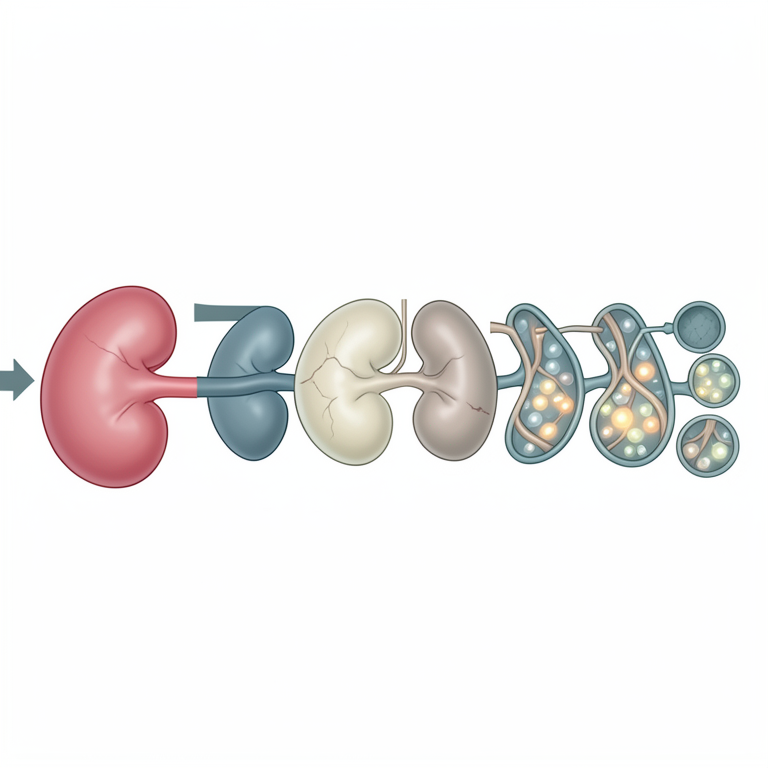
Marker Progression with Diabetes Duration
AI-generated conceptual illustration (human kidneys and blood vessels). It explains the idea and does not show study data.
View source evidence ↗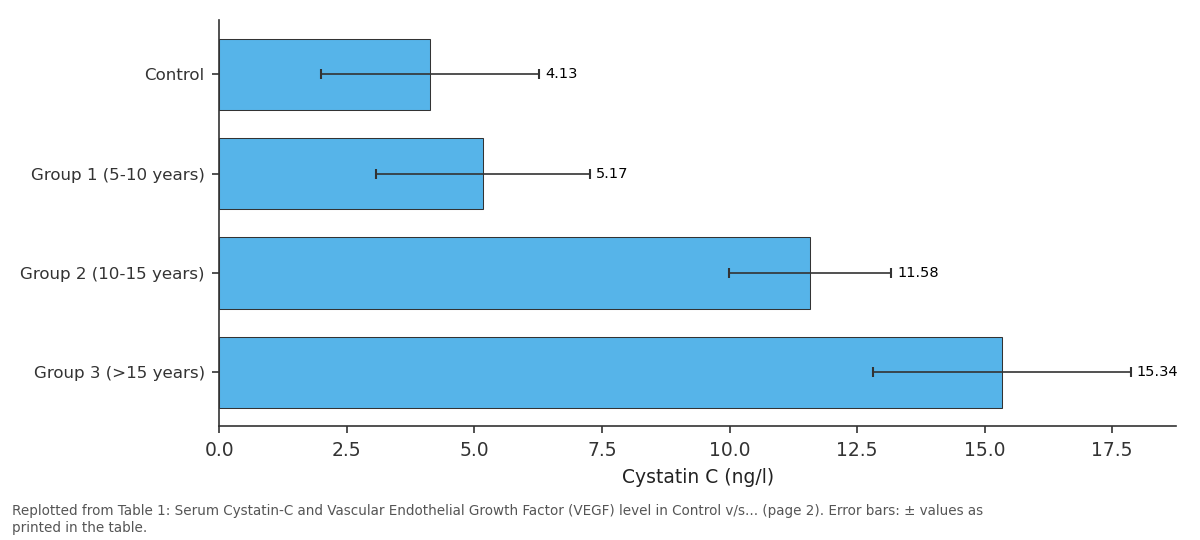
Cystatin C (ng/l): Control vs Group 1 (5-10 years) vs Group 2 (10-15 years) vs Group 3 (>15 years)
Replotted from Table 1 (page 2) of the original paper. Every bar is the paper's own table value.
View source evidence ↗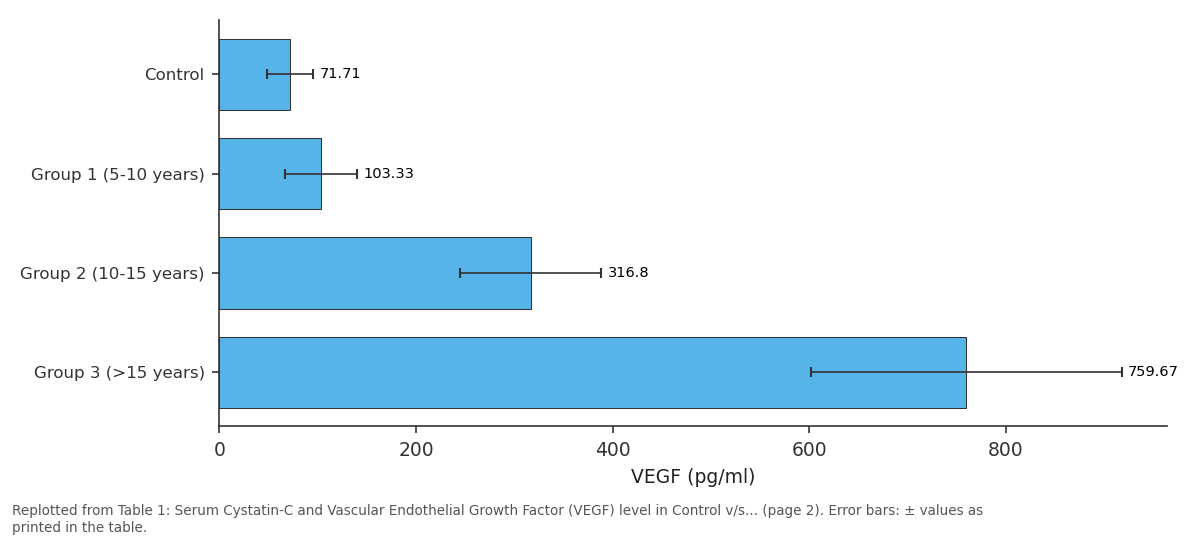
VEGF (pg/ml): Control vs Group 1 (5-10 years) vs Group 2 (10-15 years) vs Group 3 (>15 years)
Replotted from Table 1 (page 2) of the original paper. Every bar is the paper's own table value.
View source evidence ↗Figures & tables
From the original paper Table 1
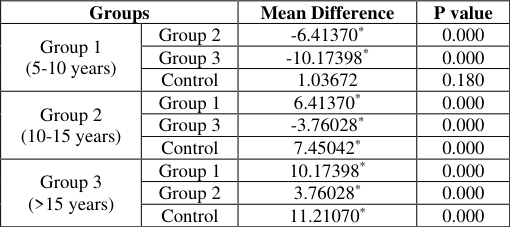 Table 2
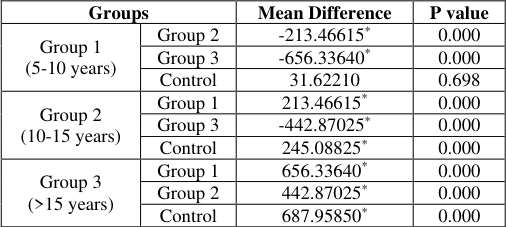 Table 3
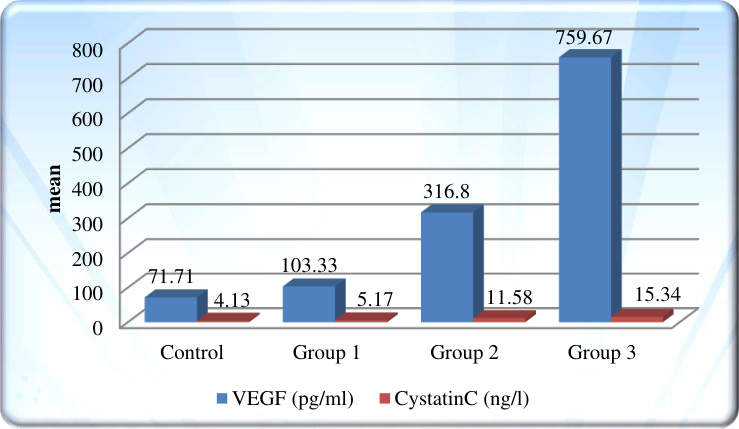 Figure 1
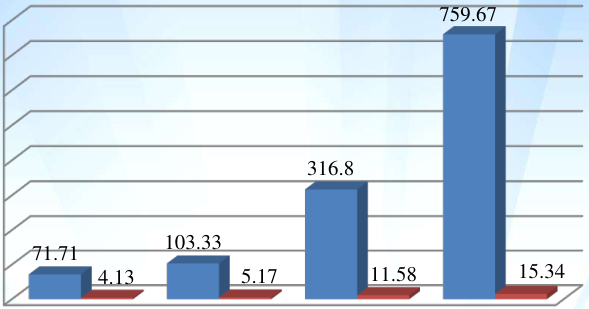 Figure 1
Introduction
Diabetic nephropathy is the major microvascular complication of diabetes and the leading cause of end-stage renal disease globally, causing high morbidity and mortality in patients with diabetes [1] . In the United States, diabetic nephropathy is the most common cause of chronic renal failure and accounts for 43.9% of patients enrolled in long-term dialysis programs [2] . Diabetic patients will be reached to advance and irreversible nephropathy if not treated early and adequately [3] . Cystatin-C is a low molecular weight protein (13.36 KD) produced by all nucleated cells and exhibits a stable production rate. Due to its small size and basic pH (~9.0) it is freely filtered by glomerulus. Cystatin-C does not return to the bloodstream nor secreted by renal tubules, so it is suggested to be closer to the "ideal" endogenous marker [4] . Vascular endothelial growth factor is a multifunctional glycoprotein with a variety of effects on angiogenesis, endothelial cell proliferation and differentiation, vascular permeability and endothelial dependent vasodilation. Hyperglycemia increases VEGF expression acts to cause endothelial injury in diabetes. VEGF stimulates the formation of α3 chain of collagen, which is an important component of the glomerular basement membrane and increased formation of collagen leads to the thickening of glomerular membrane [5] . Creatinine is the most widely used biomarker of kidney function but non-specific as its levels can vary with age, sex, muscle mass, diet and tubular creatinine secretion [6] . There are also limitations in using albuminuria as a marker of diabetic nephropathy as many patients experience GFR loss without deterioration in albuminuria [7] suggesting a search for new biomarkers for screening of diabetic nephropathy. The overall aim of the study was to evaluate serum cystatin-C and vascular endothelial growth factor (VEGF) levels in control and diabetic groups in order to assess markers for early detection of diabetic nephropathy.
Ethical approval and Informed consent
The Protocol was approved by the institutional Ethics committee. Informed written consent was obtained from all study subjects.
Statistical Analysis
The data was analyzed using SPSS version 20 (SPSS Inc., Chicago, Illinois, USA). Descriptive statistics included in the computation of percentages, means and standard deviations were calculated. The statistical tests applied for the analysis were one-way ANOVA with Post-Hoc Bonferroni test. The confidence interval and p-value were set at 95% and ≤ 0.05 respectively.
Results
Table 1 shows serum cystatin-C and VEGF concentration in control and diabetic groups. Both serum cystatin-C and VEGF concentrations were higher in diabetic subjects as compared to controls (Figure 1).
| Character | — | Control | Group 1 (5-10 years) | Group 2 (10-15 years) | Group 3 (>15 years) |
|---|---|---|---|---|---|
| Cases | 40 | 40 | 40 | 40 | |
| Cystatin C (ng/l) | Mean±SD | 4.13±2.14 | 5.17±2.09 | 11.58±1.59 | 15.34±2.52 |
| VEGF (pg/ml) | Mean±SD | 71.71±23.56 | 103.33±36.54 | 316.80±71.86 | 759.67±158.18 |
Table text extracted from the original PDF; superscript letters are shown inline. The original table image is below.
View original table image
Discussion
Our study result shows that diabetic individuals were found to have higher concentrations of serum cystatin-C as compared to control subjects and the level raised significantly in patients specifically with a history of more than 10 years. Our result was in agreement with another study conducted by Rao et al. [8] indicating that levels of cystatin-C are related to subclinical renal damage and can be an earlier measurable marker of renal involvement in type 2 diabetes. Cystatin-C is produced by a housekeeping gene in all nucleated cells and is freely filtered by the glomerulus without stearic restrictions, and does not appear to be secreted by the renal tubules [8] . Subsequently, it is reabsorbed and almost completely catabolized in the proximal renal tubule and is not affected by age, gender, body mass or any inflammatory condition [9] . If kidney function and GFR decline, the blood levels of Cystatin-C rise. VEGF concentration was also observed higher in group 2 patients with a diabetic history of more than 10 years and further increases with the progression of the disease. A similar result was reported by Shao et al. [11] that VEGF in patients with diabetic kidney disease (DKD) was significantly higher than in control subjects. Vascular endothelial growth factors can affect the filtration of large molecular weight proteins through the glomerular filtration barrier by promoting endothelial cell proliferation and increasing vascular permeability. In type 2 diabetes mellitus subjects, both plasma and urinary VEGF level was higher in normal buminuric patients and gradually increased along with the diabetic nephropathy stages, suggesting it be an effective biomarker for early diagnosis of diabetic nephropathy [12] . Tavafi M [13] also observed an increased rate of VEGF in diabetic nephropathy.
Conclusion
Diabetic nephropathy is one of the leading causes of endstage renal disease and the gap between the onset and clinical diagnosis of diabetic nephropathy causes premature mortality. Hence, early detection is necessary to treat patients for their prognosis and better survival. Our study results suggested that as both serum cystatin-C and VEGF raised significantly in diabetic patients specifically having a history of 10 years or more so they can be used to predict diabetic nephropathy in early stages.
Figures and tables from the paper
| Groups | — | Mean Difference | P value |
|---|---|---|---|
| Group 1 (5-10 years) | Group 2 | -6.41370* | 0.000 |
| Group 3 | -10.17398* | 0.000 | |
| Control | 1.03672 | 0.180 | |
| Group 2 (10-15 years) | Group 1 | 6.41370* | 0.000 |
| Group 3 | -3.76028* | 0.000 | |
| Control | 7.45042* | 0.000 | |
| Group 3 (>15 years) | Group 1 | 10.17398* | 0.000 |
| Group 2 | 3.76028* | 0.000 | |
| Control | 11.21070* | 0.000 |
Table text extracted from the original PDF; superscript letters are shown inline. The original table image is below.
View original table image
| Groups | — | Mean Difference | P value |
|---|---|---|---|
| Group 1 (5-10 years) | Group 2 | -213.46615* | 0.000 |
| Group 3 | -656.33640* | 0.000 | |
| Control | 31.62210 | 0.698 | |
| Group 2 (10-15 years) | Group 1 | 213.46615* | 0.000 |
| Group 3 | -442.87025* | 0.000 | |
| Control | 245.08825* | 0.000 | |
| Group 3 (>15 years) | Group 1 | 656.33640* | 0.000 |
| Group 2 | 442.87025* | 0.000 | |
| Control | 687.95850* | 0.000 |
Table text extracted from the original PDF; superscript letters are shown inline. The original table image is below.
View original table image
References
11 in the original paper- Giunti S, Barit D, Cooper ME. Mechanisms of diabetic nephropathy: Role of hypertension. Hypertension. 2006;48(4):519-26.
- Collins AJ, Foley RN, Chavers B, et al. US renal data system 2011 annual data report. Am J Kidney Dis. 2012;59(1):A7.
- Wen CP, Cheng TY, Tsai MK, Chang YC, Chan HT, Tsai SP, et al. All-cause mortality attributable to chronic kidney disease: A prospective cohort study based on 462 293 adults in Taiwan. Lancet. 2008;371(9631):2173-82.
- Way KJ, Katai N, King GL. Protein kinase C and the development of diabetic vascular complications. Diabet Med. 2001;18(12):945-59.
- King AJ, Levey AS. Dietary protein and renal function. J Am Soc Nephrol. 1993;3(11):1723-37.
- Perkins BA, Ficociello LH, Roshan B, Warram JH, Krolewski AS. In patients with type 1 diabetes and new-onset microalbuminuria the development of advanced chronic kidney disease may not require progression to proteinuria. Kidney Int. 2010;77(1):5764.
- Rao GSN, Abayambigai J, Sruti E, Sowmiya K. Early prediction of nephropathy and cardiovascular diseases in Indian patients with type 2 diabetes mellitus. Int J Med Sci Public Heal. 2014;3:1523-527.
- Westhuyzen J, Cystatin C. A promising marker and predictor of impaired renal function. Ann Clin Lab Sci. 2006;36(4):387-94.
- Javanmardi M, Azadi NA, Amini S, Abdi M. Diagnostic value of cystatin C for diagnosis of early renal damages in type 2 diabetic mellitus patients: The first experience in Iran. J Res Med Sci. 2015;20(6):571576.
- Nong S, Ke L, Zhang X, Huang X, Man Y, Wang S, et al. Mechanism underlying up-regulation of ICAM-1 and VCAM-1 expressions induced by high glucose in endothelial cells. Chinese J Cardiovasc Med. 2010;15(3):219-22.
- Tavafi M. Complexity of diabetic nephropathy pathogenesis and design of investigations. J Renal Inj Prev. 2013;2(2):59-62.
Cited by 7
From OpenAlex, OpenCitations and reference lists read by Scinovex
- Comparative evaluation of the treatment of induced ulcer and diabetes with yoghurt and drugs in rats
Momoh AO, Bada AA, Olayiwola AL · International Journal of Horticulture and Food Science · 2022
Stomach ulcer is a break in the lining of the stomach, mostly the first part of the small intestine and occasionally the lower oesophagus. With a gastric ulcer the pain may worsen with eating. Diabetes on the other hand is a group of metabolic disorders in which there are high blood sugar levels over a prolonged period. The effects of yogurt on ulcer induced and diabetes induced in rats was evaluated. The induction of ulcer was done using acetic acid, while diabetes was done using Streptozotocin following standard procedures. The rats were fed with the yogurt (Rev up unsweetened yoghurt) for t
- Assessment of phytochemicals and antioxidant activity of custard apple fruit pulp (Annona squamosa Linn.) ↗
Md Abdus Samad, Mithila Farzana, Md. Alomgir Hossain, Md. Abdur Rahman, Asaduzzaman Asad · International Journal of Molecular Biology and Biochemistry · 2023
Annona squamosa Linn. (Custard apple) has been used drastically in India traditional remedy for treatment of dysentery, cardiac problems, fainting, worm infections, constipation, hemorrhage, dysuria, fever. This study assessed the phytochemicals present in the fruit pulp of A. squamosa. The phytochemical was extracted one by one with distilled water and 96% ethanol. A wide variety of pharmacologically energetic compounds such
- Study of the activity of the adropin hormone and some biochemical variables in patients with diabetic nephropathy in Kirkuk city
Wassan Hamed Khalaf Al-Qaisi, Noori Mohammed Aziz, Ammar Saadaldeen Mohammed, Yasir Khalid Khaleel · International Journal of Advanced Chemistry Research · 2023
The study aimed to show the relation between the level of the Adropin hormone and diabetic nephropathy patients, in addition to measuring the lipid profile, as well as the level of uric acid, creatinine, and urea. Diabetic nephropathy (DN) is the main risk parameter for a diversity of adverse prognosis results because it directly affects the cardiovascular system, particularly in diabetic nephropathy patients, and so far it has been shown that natural products have a significant impact on preventing the growth of DN. Adropin hormone is a peptide discovered in 2008 by Kumar et al which involves
- Study of the reliability of serum vascular endothelial growth factor and its soluble receptor as markers of diabetic nephropathy in type 2 diabetes patients ↗
Sumaya B. Abdulrahman, Eman Saadi Saleh, Sabah M. Saeedi · International Journal of Health Sciences · 2022
The levels of circulating angiogenic and anti-angiogenic factors, namely vascular endothelial growth factor–A (VEGF-A) and soluble vascular endothelial growth factor receptor-1 (sVEGFR-1), have been linked to the development of renal dysfunction due to the proliferation of microvasculature within the kidneys of type 2 diabetic (T2DM) patients. The study aims to scrutinize serum levels of VEGF and sVEGFR-1 in a sample…
❝ 0PDF - The effects of mangrove plant leaves (Acanthus ilicifolius) collected in can Gio district on white mice (Mus musculus var. albino) with diabetes ↗
Long Le, Ngoc-Anh Nguyen, Ly-Thai-Uyen Thi, Thi-Tan-Luong Nguyen · Journal of Entomology and Zoology Studies · 2022
This study was conducted to evaluate the hypoglycemic potential of mangrove plant leaves (Acanthus ilicifolius) fluid in white mice with diabetes mellitus with doses of mangrove leaves fluid of 100 mg/kg, 200 mg/kg, 300 mg/kg, 400 mg/kg corresponding to EX1, EX2, EX3, EX4, CT2. Diabetic mice had study results after 7 days. In EX1, EX2 and EX3 there was a…
❝ 0PDF - The effect of dialysis on the psychological state of hospital entrance in the renal centers ↗
Hassan Khalid, Khalid Hassan Abdalruda · International Journal of Clinical Biology and Biochemistry · 2022
The end stage renal disease is a worldwide problem that effect on many population in different countries and ends with either transplantation or hemodialysis. Patients pass in the dialysis according to the stage of renal disease and varied from one to three times a week and from one year to more than five years (Crook, 2012). Aim: To predict the
- Study of dyslipidemia in blood serum and sweat fluid of men with diabetic nephropathy in Mosul city ↗
Shaymaa ABD Alrazak A Altony, Eman Adel Hadi · International Journal of Chemical and Biological Sciences · 2022
The objective of this study was the determine Creatinine, eGFR, Total cholesterol (TC), Triglycerides (TG), High Density lipoproteins-cholesterol (HDL-C), low Density lipoproteins-cholesterol (LDL-C), Very Low-Density lipoproteins-cholesterol (VLDL-C) and Atherogenic Index (AI) in Serum Blood and Sweat fluid. The results showed increased in Creatinine, Total cholesterol, Triglycerides, very low-Density lipoproteins-cholesterol and Atherogenic Index in Serum and Sweat fluid. Also, increased in