
Research article · 2021 · Full text
International Journal of Agriculture and NutritionComparative quality evaluation of nigerian local oha dish produced with the selected spices; Dawadawa (Parkia biglobosa), UDA (Xylopia aethiopica), Uziza (Piper guineense) and Ehuru (Monodora myristica)
Volume 3(1) · Pages 19–24 · DOI: 10.33545/26646064.2021.v3.i1a.41 ↗
Research areasAfrican Botany and Ecology StudiesAgriculture and Rural Development Research
Abstract
Author-writtenFour selected local spices; parkia biglobosa (Dawadawa), piper guineense (Uziza), Xylopiaaethiopica (Uda) and Monodora myristica (Ehuru) gotten in their dry state from Eke ukwu market Owerri in Owerri municipal L.G.A of Imo State, Nigeria were used in flavouring the local oha soup and evaluated organoleptically using twenty (20) member panelists. Also the nutrient content, anti-nutrient and other chemical components of these spices were analysed. Results showed that there were no significant difference (p>0.05) on the organoleptic attribute of the spiced soup, apart from the overall acceptability which ranged between 6.35 and 7.90 for dawadawa (Parkia biglobosa) and Uziza (piper guineense) respectively. Panelists liked the oha soup flavoured with dawadawa (6.35) uda (6.50) ehuru (6.65) but very much like Uziza (7.90). The nutrients and antinutrient content of theses spices showed high crude protein (7.35 to 26.53%), crude fat (11.40 to 19.10%), crude fiber (0.34 to 4.80%) and carbohydrate (36.05 to 66.43%) respectively. Local spices were predominant, in minerals; calcium (161.41 to 286.07mg/100g) potassium (41.54 to 314.08 mg/100g) manganese (2.62 to 9.43 mg/100g), zinc (2.81 to 6.41 mg/100g), but low in phosphorus (182.11 to 257.05 mg/100g). However, vitamin C value ranged from (0.97 to 1.83 mg/100g), the antinutrients present were also low in phytic acids (1.11 to 10.95%), saponins (0.10 to 0.14%), flavonoids (0.002 to 0.31%), tannins (0.001 to 0.002%) and Alkaloids (1.34 to 2.12%) respectively. Hence this study showed that these spices are nutritionally qualitative and with low anti nutrient content.
Summary
Source-checkedPlain-language reading of the full paper, prepared with AI and checked against the text. Each point links to the authors' own words.
Why it matters
- Spices are natural food additives derived from various plant parts used in small quantities to preserve food or enhance its color and flavor. View evidence ↗
- Indigenous spices are recognized for their role in maintaining the human body and improving overall health. View evidence ↗
- Despite their benefits, indigenous spices are underutilized due to a lack of public awareness. View evidence ↗
The question
- The study aimed to analyze the nutrient and anti-nutrient content of four local spices (Dawadawa, Uziza, Uda, and Ehuru) and evaluate the sensory quality of oha soup flavored with them. View evidence ↗
What they did
- The spices used in the study were procured in their dry state from the Eke Ukwu market in Owerri, Nigeria. View evidence ↗
- Oha soup was prepared in five batches: four flavored with one tablespoon of each powdered spice and one unspiced control sample. View evidence ↗
- Sensory characteristics including taste, flavor, aroma, and general acceptability were evaluated by 20 semi-trained panelists using a 9-point hedonic scale. View evidence ↗
What they found
- Dawadawa (Parkia biglobosa) had significantly higher protein (26.53±0.02%), fat (19.10±0.01%), and moisture (9.40±0.02%) than the other spices. View evidence ↗
- Uziza (Piper guineense) contained the highest carbohydrate content at 66.43±0.08%, while Dawadawa had the lowest at 36.05±0.04%. View evidence ↗
- Uziza (Piper guineense) had the highest levels of calcium (286.07±0.03 mg/100g), potassium (314.08±0.04 mg/100g), and zinc (6.41±0.03 mg/100g), while Ehuru (Monodora myristica) had the lowest. View evidence ↗
- Uda (Xylopia aethiopica) had the highest phytic acid (10.95±0.09%), saponin (0.14±0.01%), and flavonoids (0.31±0.01%), whereas Dawadawa had the lowest levels of these anti-nutrients. View evidence ↗
- Among the spiced soups, Uziza was the most preferred with an overall acceptability score of 7.90, compared to Dawadawa (6.35), Uda (6.50), and Ehuru (6.65). View evidence ↗
What it means
- The authors conclude that these four local spices are nutritionally rich and safe for consumption due to their low anti-nutrient content. View evidence ↗
- The authors recommend using these spices as a means to diversify local soup diets. View evidence ↗
Visual summary
1 visualsIllustrations explain the paper; they do not show study data.
Study Workflow
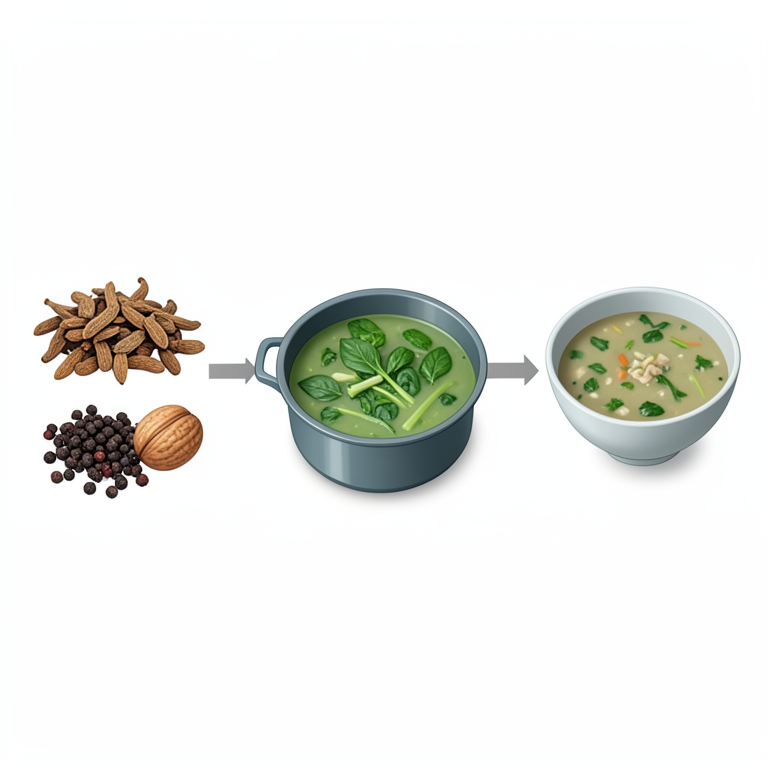
AI-generated conceptual illustration (Nigerian Oha soup and four local spices (Parkia biglobosa, Xylopia aethiopica, Piper guineense, and Monodora myristica)). It explains the idea and does not show study data.
View source evidence ↗Figures & tables
From the original paper Table 1
 Table 2
 Table 3
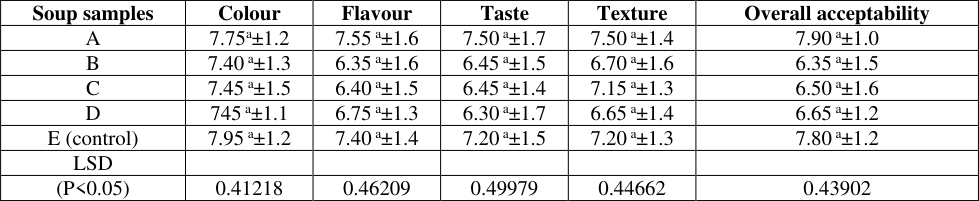 Table 4
Introduction
In Nigeria, a high proportion of the rural and urban population resort to natural food ingredients, particularly because of their availability. Spices are a large group of such natural ingredients, and include dried seeds, fruits, roots, rhizomes, barks, leaves, flowers and any other vegetable substances used in a very small quantity as food additives to colour flavour or preserve food (Birt, 2006) [5] . Spices are generally defined as dried seed, fruit, root, bark, or vegetable substances primarily used for flavoring, colouring or preserving food (Parry, 2000) [22] . The story of spices and other flavouring's materials is one of the most interesting chapters in the history of vegetable products (Obadoni and Ochuko, 2002) [17] . The cravings for spices have been one of the great factors in human progress and have done much to change the course of history and geography and to promote international relations (Akindahunsi and Salawu, 2005) [2] . Plants used as spices normally have strong pungent and aromatic smells that make dishes very delectable. They are not limited by what part of plant they are but rather by what they do and how they are used. According to Nwachukwu et al., (2010) [15] 'Uziza' is suitable for treating infertility in women and low sperm count in men. Good nutrient from eating a healthy diet is the foundation of all natural health healing therapies. Cooking with spices is a quick way to add diversity to your diet (Martinez-Tome, 2001) [13] . Poor awareness to this in the society has lead to poor utilization of indigenous spices. In biblical poem song of Solomon, the male speaker compares his beloved to many forms of spices. With modernization and development of patent medicines, the use of natural spice decrease in popularity (Broadhurt et al., 2002). Studies have shown that indigenous spices are contributory factors to health improvement and maintenance of the human body (Ninfali et al., 2007). According to Achinewhu (2005), indigenous spices are used to prepare pepper soups which are consumed during cold season. Also used in preparation of soups for nursing mothers as they aid lactation and contribute to a baby's rapid growth (Roger, 2002).
Spices may be in several forms; such as fresh, whole dried and pre-ground dried, each have a distinctly unique aroma and flavour.Ehuru, dawadawa and Uda are among the Nigerian several indigenous spices resources among others (Adelaja et al., 2008).
Materials and Method Sample Collection
Spices were all purchased from Eke Ukwu Owerri, in Owerri Municipal L.G.A of Imo State Nigeria. All the test samples were identified by the appropriate authorities and were procured in their dry state and analysis performed at the central service laboratory of Imo State polytechnic Umuagwo Imo State of Nigeria. The facilities or apparatus used for the preparation of samples were obtained from food laboratory of Nutrition and Dietetics Imo State University, Owerri.
Sample Preparation
Preparation of the spices (Dawadawa, Uda, Ehuru and Uziza) Five hundred grams (500g) of the selected sample seeds were thoroughly cleaned and manually peeled with kitchen knife. The
International Journal of Agriculture and Nutrition
samples were subjected to drying process using oven-drying at 70% to obtain moisture ranges between 10-12% then milled into powder separately using manual grinding machine. The powder was sieved with a 0.45mm sieve aperture and the fine powder from each sample was packaged in a polyethylene bag for further analysis.
Preparation of Oha soup flavoured with spices
Five hundred (500g) of Oha leave was properly washed and divided into five (5) equal parts, then labeled accordingly as part A to D each part was flavoured with a table spoon of each powdery form of spices (Dawadawa, Uda, Uziza and Ehuru) respectively. The control sample was prepared without any spice addition.
Procedure
1. In a cleaned pot, the properly washed stock and dried fish and meat was steamed for 25mins. 2. Water was added, stirred and allowed to boil for 2minutes 3. Red oil was added and allowed to cook 4. Add offor, stirred and allowed to cook 5. Add one table spoon of each spice to the divided portions and cook for a minute, 6. The properly washed and shredded oha leave was added, stirred and cook for 2 minutes. 7. The soup was served with garri (Eba) Proximate Analysis 1. The standard method of the AOAC (2000) [4] was used for the analysis of proximate composition
Mineral Profile
The method described by Onwuka, (2005) [21] was followed in the determination of mineral content of the spice samples. 0.5g of the dried grounded samples was weighed into a pre-acid rinced digest tube. 10cm 3 of 6m HCL was added and heated to dryness in a water bath. The residue was dissolved in a mixture of 10cm 3 of 6m HNO 3 acid, warmed on a water bath and filtered using a whatman filter paper into a 100cm 3 calibrated flasks. The filter pepper was washed with distilled water and the filtrate diluted with the distilled water and made up to the 100cm 3 mark. The digest was for the determination of potassium, calcium, magnesium by the flame photometry method. The heavy metals such as zinc and phosphorus.
Determination of antinutrients
The method of AOAC (2000) [4] was used for the determination of flavonoid, tannin and phytate. Alkaloid was determined using the alkaline precipitation method as described by AOAC (2000) [4] . While saponin was determined by the spectrophotometric method as described by AOAC (2000) [4] .
Sensory evaluation of spices
The method of 9-points hedonic scale in scoring test was described by (Mellgaard et al., 2007) was used in evaluating the sensory characteristics of the products such as taste, flavour, aroma, and general acceptability were also determined by a team of (20) twenty semi-trained panelists. Samples presentation was randomized and presented to each panelist at the same time using the containers that are the same. The sensory booth was lightened which support visual judgment of the panelists on the side of colour attribute of the products. The panelists were asked to score the coded samples based on a 9 points hedonic scale as 9 = extremely like and 1 = extremely dislike
Statistical analysis
All data obtained were statistically analysed with simple descriptive mean, standard deviation and analysis of variance (ANOVA), Duncan's multiple test also was used in separating the means and Pearson's correlation and the samples attributes determined using SPSS 20.0 software.
Results
Results
Proximate compositions of the spices
Table 1 showed the proximate content of the spices. Pakia Biglobosa had a significantly (p<0.05) higher moisture, protein and fat contents than all other samples analysed, 9.40±0.02%, 26.53±0.02% and 19.10±0.01% while monodora myristica and piper guineense had the least, 7.09±0.02%, 7.35±0.02% and 1140±0.2%. Monodora myristica had a significantly (p<0.05) higher total ash content 9.20 a ±0.02 compared to 4.13±0.02 which was the least for parkia Biglobosa. Parkia Biglobosa had a significantly (p<0.05) higher crude fiber content 4.8±0.04 while Xylopia aethiopica had the least 0.34±0.02. Nitrogen free extract (carbohydrate) content of piper Guineense 66.43±0.08 was significantly higher compared to 36.05±0.04 for parkia biglobosa as the least. The minerals and vitamin c composition of the selected spices Table 2 showed the mineral and vitamin C contents of the selected spices. The result showed varied quantity of the parameters examined and the variation was significant (p<0.05). calcium, potassium, zinc, manganese, and phosphorus were discovered from the powderized spices with piper guineense being the highest in calcium, potassium and zinc for 286.07±0.03, 314.08±0.04 and 6.41±0.03mg/100g sample and monodora myristica the least 161.41±0.3mg/100g, 41.54±0.06 and 2.81±0.09mg/100. Xylopia aethiopica had the high manganese content 9.43±0.03mg/100 while piper guineense had the least 2.62±0.04. Phosphorus content of monodora myristica is the highest 257.05±0.6mg/100g compared to parka biglobosa which is the lowest 182.1±0.02 mg/100m. All the samples had vitamin C content with piper guineense being the highest 1.83±0.04mg/100g and parkia biglobosa the least 0.97±0.02mg/100g. Anti-nutrient content of the selected spices Table 3 below, shows the antinutrient contents of the spices used. The results revealed that phytic acids, saponins, flavonoids, Tannins and Alkaloids were detected on the spice samples at varied quantity. The observation from the result indicated that there was significantly difference (p<0.05) on the level of the antinutrients discovered. Xylopia aethiopica was found to be rich in phytic acid, saponin and flavonoids content 10.95±0.09%, 0.14±0.01% and 0.31±0.01 compared to parkia biglobosa which had the least content 1.11±0.02, 0.10±0.004 and 0.002±0.001%. Piper guineense had the highest in Tannin and alkaloid 0.02±0.02% and 2.12±0.02% while xylopa aethiopica had the least content of tannin 0.001±0.001% and monodora myristica the least of alkaloid content 1.34±0.06%. 4 showed the mean sensory scores of oha soup flavored with four different local spices. The statistical analysis showed that significant difference, (p<0.05) was discovered on the oganoleptic attributes of the flavoured soup with exception of overall acceptability. The mean scores of the sensory properties among the samples varied. The colour mean scores ranged between 7.40 sample B and 7.95 sample E (control sample). The flavour mean scores also ranged from 6.35 sample B to 7.55 sample A. Taste values in the other hand ranged between 6.30 sample D and 7.50 sample A. the texture mean scores ranged from 6.65 sample D to 7.50 sample A while the overall acceptability mean scores ranged 6.35 and 7.90.The statistical analysis showed significant difference (p<0.05) in samples A and samples C, but no significant difference (p>0.05) in sample A and samples B as well as samples B, sample C and D respectively.
| Powderized spices samples | Phytic acid % | Saponin % | Flavonoids % | Tannin % | Alkaloid % |
|---|---|---|---|---|---|
| piper guineense | 4.41b±0.03. | 0.12b±0.02 | 0.04c±0.003 | 0.02a±0.02 | 2.12a±0.02 |
| Xylopia aethiopica | 10.95a±0.09 | 0.14a±0.001 | 0.31a±0.01 | 0.001d±0.01 | 1.94b±0.03 |
| Monodora myristica | 2.25c±0.03 | 0.11c±0.01 | 0.23b±0.003 | 0.004c±0.004 | 1.34d±0.06 |
| Parkia biglobosa | 1.11d±0.02 | 0.10d±0.004 | 0.002d±0.001 | 0.005 b±0.005 | 1.52c±0.04 |
| LSD (p<0.05) | 0.0646 | 0.00250 | 0.00426 | 0.01120 | 0.04528 |
Table text extracted from the original PDF; superscript letters are shown inline. The original table image is below.
View original table image
| Powderized spices samples | Calcium my/100g | Potassium my/100g | Manganese my/100g | Zinc my/100g | Phosphorus my/100g | Vitamin C my/100g |
|---|---|---|---|---|---|---|
| piper guineense | 286.07a±0.03. | 314.08a±0.04 | 2.62d±0.04 | 6.41 a±0.03 | 208.21 c±0.02 | 1.83a±0.04 |
| Xylopia aethiopica | 176.13 c±0.02 | 235.10 b±0.02 | 9.43a±0.03 | 2.99c±0.02 | 231.43b±0.02 | 1.25c±0.04 |
| Monodora myristica | 161.41d±0.03 | 41.54 d±0.06 | 4.24c±0.05 | 2.81d±0.09 | 257.05 a±0.06 | 1.67b±0.01 |
| Parkia biglobosa | 197.15 b±0.09 | 217.04 c±0.07 | 4.96b±0.06 | 3.82 b±0.03 | 182.11 d±0.02 | 0.97d±0.02 |
| LSD (p<0.05) | 0.05420 | 0.05557 | 0.05232 | 0.05123 | 0.03905 | 0.03500 |
Table text extracted from the original PDF; superscript letters are shown inline. The original table image is below.
View original table image
| Samples | Moisture % | Protein % | Fat % | Ash % | Crude fiber % | Nitrogen free extract (NFE)% |
|---|---|---|---|---|---|---|
| Powderized Uziza | 8.76c±0.05. | 7.35d±0.02 | 11.40d±0.02 | 5.53c±0.02 | 0.52c±0.01 | 66.43a±0.08 |
| Powderized Uda | 9.14b±0.03 | 8.15c±0.03 | 11.92c±0.01 | 8.42b±0.02 | 0.34d±0.02 | 62.02b±0.04 |
| Powderized Ehuru | 7.09d±0.02 | 10.24b±0.02 | 15.03b±0.01 | 9.20 a±0.02 | 0.65b±0.01 | 55.79c±0.05 |
| Powderized Dawadawa | 9.40 a±0.02 | 26.53 a±0.02 | 19.10 a±0.01 | 4.13d±0.02 | 4.80 a±0.04 | 36.05d±0.04 |
| LSD (p<0.05) | 0.03500 | 0.02669 | 0.02318 | 0.02500 | 0.02291 | 0.05937 |
Table text extracted from the original PDF; superscript letters are shown inline. The original table image is below.
View original table image
Discussion
Discussion
Proximate composition of the powdered Spices
In table 4.2 the result showed that the spices are rich in nutrients. The moisture content of the sample ranged 7.09±0.02% to 9.40±0.02. The low moisture content of the spices agrees with Agomuo (2011) [1] stating that spice can be stored for a long period without deterioration in quality due to low moisture content. Consumers are also seeking for food with natural preservative for healthy life style according to the Raw Materials Research Development Council (RMRDC), (2013). The protein and fat content of parkia biglobosa (Dawadawa) 26.53±0.02 and 19.10±0.01 is significantly (p<0.05) higher compared to 7.35±0.02 and 11.40±0.02 for Piper guineense (Uziza) respectively. Fats insulate and protect body organs and also transport fat soluble vitamins. Fats add flavour and taste to meals parkia biglobosaseed has been referred as a good source of fat for rural dwellers (Okpako, 2012) [19] . Regular use of plant rich in protein makes a valuable addition to a diet (Wardlaw and Kassel, 2002) [29] . Ash content of monodora myristica (Ehuru ) 9.20±0.2% is significantly (p<0.05) higher comparedto 4.13±0.02% and 5.53±0.02% for parkia biglobosa (Dawadawa) and Piper guineense(Uziza)respectively which is an indication that the spices are rich in minerals (Ukegbu et al., 2011) [27] . Crude fiber content is equally higher (0.34±0.02%) for Xylopia aethiopica(Uda)as theleast and parkia biglobosa (Dawadawa) having a significantly (p<0.05) higher content of 4.80±0.04% compared to the others. Dietary fibers are structural parts of plants and thus are found in plant derived foods. They aid in the digestive system by easing elimination. Spices are often referred to as food accessories for adjuncts because of their unique ability to stimulate appetite and increase the flow of gastric secretions, thus aiding digestion (Dalziel, 2009) [6] . Soluble fiber in fenugreek seeds slows carbohydrate absorption and boost insulin activity (Hannan, 2002) [8] . Nitrogen free extract ranged between 36.05± 0.04 to 66.43±0.08% with Piper guineense(Uziza) having a significantly (p<0.05) higher content of 66.43±0.08% compared to the others. High carbohydrate, low fat diet aids control of hypertension and prevent obesity (Ukegbu et al., 2011) [27] . Ekeanyanwu et al., (2010) opined the high protein and carbohydrate content of Uziza spice indicates that uziza could be a rich source of energy in diet. Whereas the low content of carbohydrate of Parkia biglobosa(Dawadawa) could be of importance, Karou (2011) [11] , stated that Parkia biglobosawas one of the highest cited plants used for treating hypertension.
| Soup samples | Colour | Flavour | Taste | Texture | Overall acceptability |
|---|---|---|---|---|---|
| A | 7.75a±1.2 | 7.55 a±1.6 | 7.50 a±1.7 | 7.50 a±1.4 | 7.90 a±1.0 |
| B | 7.40 a±1.3 | 6.35 a±1.6 | 6.45 a±1.5 | 6.70 a±1.6 | 6.35 a±1.5 |
| C | 7.45 a±1.5 | 6.40 a±1.5 | 6.45 a±1.4 | 7.15 a±1.3 | 6.50 a±1.6 |
| D | 745 a±1.1 | 6.75 a±1.3 | 6.30 a±1.7 | 6.65 a±1.4 | 6.65 a±1.2 |
| E (control) | 7.95 a±1.2 | 7.40 a±1.4 | 7.20 a±1.5 | 7.20 a±1.3 | 7.80 a±1.2 |
| LSD | |||||
| (P<0.05) | 0.41218 | 0.46209 | 0.49979 | 0.44662 | 0.43902 |
Table text extracted from the original PDF; superscript letters are shown inline. The original table image is below.
View original table image
Minerals and vitamin C composition of the selected spices
In Table 2, it shows that these spices are rich in minerals and vitamin C. Calcium seems to be high in all the samples with Piper guineense(Uziza) 286.07±0.03mg/100g having a significantly (p<0.05) higher concentration compared to 161.41±0.03mg/100g for Monodora myristica(Ehuru). Potassium content was also high in all the spices ranging from 41.54±0.06 mg/100g to 314.08±0.04. The value of 314.08±0.06mg/100g potassium for Piper guineense (Uziza) is significantly (p<0.05) higher compared to 41.54±0.06mg/100g for Monodora myristica(Ehuru). Concentration of manganese in the spices is between 2.62 a ±0.04mg/100g forPiper guineense(Uziza) to 9.43±0.03mg/100g for Xylopia aethiopica(Uda), Piper guineense(Uziza) contain significantly (p<0.05) high concentration of manganese. The zinc content of the spices ranging from2.81±0.09mg/100g for Monodora myristica (Ehuru) to 6.41±0.03mg/100g for Piper guineense (Uziza). The value for Piper guineense(Uziza) was significantly (p<0.05) higher compared to that of Monodora myristica(Ehuru) value. Phosphate content was also high in all the spices ranging between 182.11± 0.02mg/100g to 255.05±0.06mg/100g for Parkia biglobosa (Dawadawa) and Monodora myristica (Ehuru).in which phosphate content for Monodora myristicais significantly (p<0.05) higher compared to phosphate content for Parkia biglobosa (Dawadawa). However, minerals are absolutely necessary for most metabolic processes. Traditionally, some minerals believed to have contract the womb to its normal size after birth, useful in cleaning the uteral lining after child birth (Rimbach et al., 2010) [26] . Again some minerals in spices are involve in energy metabolism, contributes to the structure of the bones, keeping the heart beat steady, interacts with platelets in blood clothing which agree with Inyang (2003) [9] that the spice Xylopia aethiopica(Uda) are widely used to prepare pepper soup for nursing mothers to accelerate blood flow leading to the elimination of blood clots from her blood system. Rimbach et al., (2010) [26] opined that the prevention of cancer and cardiovascular diseases has been associated with the ingestion of these spices because they are rich in antioxidants. The spices are rich in vitamin C, Piper guineense (Uziza) had a significantly (p<0.05) higher vitamin C content 1.83 a ± 0.04mg/100g compared to the evaluated spices. Wright, (2000) stated that vitamin C has antiinfective properties, promotes wound healing may boost the immune system and may help ward off infections. Spice is good for eyesight and may help to prevent the growth of cataracts (India times, 2012). The Nigerian food condiments are known to supply the needed minerals which are very important for human health and they are the most affordable source of minerals to African (Akwaowu et al., 2000) [3] . Natural compounds have attracted considerable attention as preventive therapeutic agents against cancer (Nobili, 2009) [16] .
Anti-Nutrient Composition of the Spices
In Table 3, the anti-nutrient contents of the selected spices such as; phytic acids, saponins, flavonoids, Tannins and alkaloids were presented. Xylopia aethiopica(Uda) contains 10.95±0.09 of phytic acid, which seems to be on the high side. The other spices contain between 1.11±0.02 to 4.414±0.03% which is probably on the low side. Saponins, flavonoids and Alkaloids occurred in the range of 0.10±0.00% to 0.14±0.001%, 0.002±0.001% to 0.31±0.00% to 1.34±0.06% to 2.12±0.02% respectively for Piper guineense (Uziza) Xylopia aethiopica (Uda) and Monodora myristica (Ehuru) to Piper guineense (Uziza). Tannin content is low in all samples between 0.001±0.001% to 0.02±0.02 for Xylopia aethiopica (Uda) and Piper guineense (Uziza). The low concentrations of the anti-nutrients make the spices safe for consumption. In accordance to Okaka and Okaka (2001), antinutrients are required in low concentration to effect biochemical changes; hence the spices may be effective as ethnomedicine. These spices contain low toxic levels of anti nutrients making it possible for the minerals to be easily absorbed without any interference.
Sensory evaluation of oha soup flavoured with selected local spices
In Table 4, the result showed the organoleptic properties of oha soup flovoured with the selected local spices such as Parkia biglobosa (Dawadawa), Xylopia aethiopica(Uda), Piper guineense (Uziza) and Monodora myristica (Ehuru) respectively showed no significant difference (p>0.05) on the oragnoleptic attributes of the soup except the overall acceptability where significant difference (p<0.05) was discovered in sample A and sample C. However, the mean scores of the sensory attributes ranged between 7.40 and 7.95 for Piper guineense (Uziza) and control (no spice) soup sample as for colour. Flavour was scored between 6.35 and 7.55 for Parkia biglobosa (Dawadawa)and Piper guineense(Uziza). The taste mean score also ranged from 6.30 for Monodora myristica (Ehuru) to 7.50 for Piper guineense (Uziza) respectively. The texture mean score ranged between 6.65 for Monodora myristica (Ehuru) and 7.50 Piper guineense(Uziza) while the overall acceptability scores is between 6.35 and 7.90 where the significant difference (p<0.05) was discovered, and this could be as result of individual differences in the level of acceptance towards cognizance in all the attributes of the prepared spiced soup with local spices. First impression of any food is usually visual and a major part of our willingness to accept a food depends on its appearance, food flavours arises from a subtle interaction of taste and aroma which imparts a pleasing or displeasing sensory experience to a judge. Colour, flavour and texture plays a vital role in food acceptability. Though spices prove secondary effects, "the primary functions of spices are to flavour food, provide aroma, texture and colour (Ravindran et al., 2002) [24] . In agreement with Raphavan (2000), spices can meet consumers demand for "natural" colouring.
Meanwhile the study indicates that the use of spice seeds in flavouring soups enhances the organoleptic qualities in the dish as Klin Kabari (2011) [12] opined " piperguineense, locally called 'Uziza', the seed is used in West African cuisine where it imparts 'heat' and spicy, pungent aroma to classic West African "soup".
As per these spices flavour still, Okoh (2013) [20] opined that these properties compared flavourably with those of streptomycin making it a potential source of compounds used in the management of bacterial infection.
Conclusion
Spices are basically used to flavour food, to provide aroma, texture and colour. The evaluation of the nutritional significance as well as health potentials of these four (4) local spices through nutrient analysis showed that they are rich in nutrients, minerals and vitamin C. However, these spices are low in antinutrient which makes the spice safe for consumption. Again, cooking with these spices is another way to diversify our local soup diets.
References
28 in the original paper- Agomuo EN, Onyeike EN, Anosike EO. The proximate composition and fatty acid profile of monodora myristica (Ehuru) and Tetrapleura tetraptera (uhiokirihio) international science Research Journal,2011:3:85-87.
- Akindahunsi A, Salawu SO. Phytochemical screening and nutrient-antinutrient composition of selected tropical greenleafy vegetables Afr. J. Biotechnol,2005:4:497-501.
- Akwaowo EU, Bassey Ndon BA, Etuk EU. Minerals and antinutrients in fluted pumpkin (Telfaira occidentalis Hook). Food chemistry,2000:70:235-240.
- AOAC. Official method of Analysis of the Association of Analylical Chemists 17 th ed., AOAC international, gaithers burg M.D, 2000.
- Birt DA. Phytochemicals and cancer prevention from epidemiology to mechanism of action. Journal of the American Dietetic association,2006:106:20-24.
- Dalziel JM. The Useful plants of West tropical African Crown agents for oversea govt. and administration London, 2009, p223-224.
- Ekeanyanwu CR, Oge IG, Nwachukwu UP. Biochemical characteristics of African nutmeg. Agricultural Journal,2005:5(5):303-308.
- Hannan JM. Soluble dietary fiber fraction of Trigonella fornumgracum (fenugreek) seed improves glucose homeostasis in animal models of type 1 and 2 diabetes by delaying carbohydrate digestion and absorption and enhancing insulin action Br. J. Nutr,2002:97:514-21.
- Inyang E. Ethnobetany: Conventional and traditional uses of plants vol. a the verdict press, Akwa-Ibom State, 2003.
- India times. India chronicles. Com uses and health benefits of curry leaf retrieved August 21, 2014, 2012.
- Karou S, Tchacondo T, Abdoul-Rahaman S, Anani K. Ethnobotanical study of medicinal plants used in the hypertension in the central region of Togo pharmbiol, 49(12), 1286-1297. Retrieved Nov. 13, 2013, from the pub med database, 2011.
- Klinkabari DB, Barimalaa IS, Achinewhu SC. "Effect of extracts from 3 indigenous spices on the chemical stability of smoke-dried catfich (clarias lezera) during storage" African Journal of Food Agriculture, nutrition and development,2011:11(6):5-9.
- Martinez-Tome M, Jimenez AM, Ruggieri. Antioxidant properties of Mediterranean spice compared with common food additives,2001:64 (9):1412-9.
- Mellgaurd M, Gail VC, Thomas BC. Sensory evaluation techniques. 3 rd ed. Boca Raton, fla: CRC Press, LLC New York, 1999, p82-88.
- Nwachukwu CU, Ume NC, Obasi MN, Nzequihe GU, Onyirioha C. The qualitative uses of some medicinal plants in Ikeduru L.G.A. of Imo State, Nigeria, New York Science Journal,2010:11(3):132.
- Nobili S, Bausil ME, Capaccioli S. Natural compounds for cancer treatment and prevention vol. 59, Issue 6, pp. 365-378 10.1016/; pharmacological research 2009.
- Obadoni BO, Ochuko O. Phytochemical studies and comparative efficacy of the crude extracts of some homeostatic plants in Edo and Delta State of Nigeria. Global J. pure Appl. Sci,2002:8(2):203-208.
- Okaka JC, Okaka ANO. Food composition, spoilage and shelf-life extension. Ociarco academic publishers, Enugu, Nigeria, 2001, p54-57, 61-66.
- Okpako EC, Ntui VO, Ugo EA, Urua IS, Ogbu U. Regeneration of parkia biglobosa benth: An important tree species of Africa journal of microbiology and biotechnology research,2012:2(1):169-177.
- Okoh A, Adegboye M, Oni M, Aioye E, Akinpelu D. Preliminary Phyto-chemical screening and anti-bacteria properties of crude stem bark extracts and fractions of parkia biglobosa (Jacq) molecules,2013:18(7):8459-8499.
- Onwuka GI. Food analysis and instrumentation theory and practice Naphthal prints Lagos, 2005.
- Parry JW. Spices morphology, histology chemistry vol.11 food trade press ltd London, 2000.
- Raghavan S. Hand book of spices seasonings and flavourings, 2000.
- Ravindran PN, Johnny AK, Nirmal B. Spices in our daily life satabadi samaranika publications India, 2002, p77-96.
- Raw Materials Research and Development Council (RMRDC), (2013) Studies on some Nigerian indigenous spices for domestic/export markets. RMRDC publicatiobn series 0.24.
- Ukegbu FO, Iweala EJ, Kanu I. Chemical and antinutritional content of some Nigerian spices. International journal of nutrition and metabolism,2011:3(6):72-76. ISSN 2141-2340 Academic Journal.
- Wardlaw GM, Kessef MW. Perspectives in nutrition, 5 th ed. Mc. Graw Hill, New York, 2002, 162-452.
- Wright K. Healing foods geddes and grosset, Scotland, 2002, p8-31.
Cited by 3
From OpenAlex, OpenCitations and reference lists read by Scinovex
- Phytochemical investigation and antisickling properties of a Poly-herbal formula on the HBSS Red Blood Cells ↗
Akakpo-Akue Joel, KPLÉ Kangah Tatiana Mireille, Kra Adou Koffi Mattieu, KONAN Gbe Kouakou N’Dri Ange, KOUASSI Konan Armand Marcelin, Ouattara Sitapha et al. · Journal of Pharmacognosy and Phytochemistry · 2023
The aim of this study was to evaluate the sickle-formation inhibition of a recipe of three plants: Zanthoxylum leprieurii, Xylopia aethiopica and Harungara madagascariensis. The 70% hydroethanolic extract (EZHm) and the decoctate (DZHm) were used to determine the chemical groups by colorimetric and precipitation reactions. These extracts were also used to evaluate the antisickling properties by Emmel's method, following the
- The role of Ehuru (Monodora myristica) in flavor enhancement and food preservation in West African cuisine
KY Hattingh · International Journal of Horticulture and Food Science · 2024
Ehuru (Monodora myristica), commonly known as African nutmeg, is a spice widely used in West African cuisine. This review explores the role of Ehuru in flavor enhancement and food preservation. It examines the spice\\\\\\\'s chemical composition, culinary applications, and traditional uses in food preservation, supported by scientific studies. The article highlights the importance of Ehuru in West African culinary traditions and its potential benefits.
- Evaluation of phytochemical, antioxidant and antibacterial activity of Parkia biglobosa STEM bark extract ↗
Umar M Umar, Lukman Muhammad Yunusa, Ibrahim T. Babalola · International Journal of Pharmacognosy and Pharmaceutical Sciences · 2021
The powdered bark of Parkia biglobosa (Jacq.) Br. ex G. Don., is used by the indigenous traditional medicine men of Yobe State to treat bleeding from cuts and wounds, burns, ulcers, and also in the treatment of abnormal menstrual bleeding. Three crude extracts were prepared from the stem bark of Parkia biglobosa by successive cold extraction with n-Hexane, ethyl acetate