
Research article · 2021 · Full text
International Journal of Agriculture and Food ScienceDevelopment of pomegranate based fortified ice cream
Volume 3(1) · Pages 05–09 · DOI: 10.33545/2664844x.2021.v3.i1a.43 ↗
Research areasPomegranate: compositions and health benefits
Abstract
Author-writtenPomegranate (Punica granatum L.) is an important fruit which is highly valued for its health benefits. Pomegranate is rich source of sugars, vitamins, minerals, phenolic components and bioactive compounds, which proved benefits in combating various high risk diseases. Therefore, pomegranate could be good source of functional nutrients and can be used as natural additives or substituted material for production of many foods like ice cream. Ice cream is a delicious and nutritious frozen confectionary dairy product, made from milk and cream combined with flavouring agents and sweeteners. The nutritious components of ice cream depend on the type of ice cream as well as ingredients that are used in preparation of ice cream. Therefore, the primary aim of current study is to fortify ice cream with pomegranate juice at different concentration level and evaluate its biochemical and sensory effects.
Summary
Source-checkedPlain-language reading of the full paper, prepared with AI and checked against the text. Each point links to the authors' own words.
Why it matters
- Pomegranate is a highly valued fruit rich in vitamins, minerals, and bioactive compounds that help combat high-risk diseases. View evidence ↗
- Commercial ice creams are typically deficient in natural colors and antioxidants such as phenolics and vitamin C. View evidence ↗
- Adding pomegranate juice to ice cream can improve its nutritional value, taste, and provide a natural color. View evidence ↗
The question
- The study aims to evaluate the biochemical and sensory effects of fortifying ice cream with varying concentrations of pomegranate juice. View evidence ↗
What they did
- The researchers tested four formulations: a control (no juice) and three samples (A, B, and C) containing 25g, 50g, and 75g of pomegranate juice, respectively. View evidence ↗
- Pomegranate juice was clarified using 0.5% bentonite for 4 hours and then pasteurized at 82°C for 15 minutes. View evidence ↗
- Sensory quality was assessed by a panel of 10 judges using a 9-point Hedonic scale. View evidence ↗
What they found
- Antioxidant capacity increased with higher juice concentrations, rising from 9.98 mg/100 g AAE in Sample A to 43.68 mg/100 g AAE in Sample C. View evidence ↗
- Anthocyanin content increased as juice concentration rose, with Sample C reaching 5.510 mg/100 ml compared to 0.484 mg/100 ml in the control. View evidence ↗
- Total sugar content increased with the addition of pomegranate juice, ranging from 14.60% in Sample A to 23.60% in Sample C. View evidence ↗
- The production cost per liter increased with juice fortification, rising from Rs. 75.00 for the control to Rs. 99.00 for Sample C. View evidence ↗
What it means
- The authors conclude that adding pomegranate juice improves the functional and sensory properties of ice cream, specifically increasing phenolic and antioxidant content. View evidence ↗
- The study recommends pomegranate fruit as a suitable natural additive or substitute for various food products, including ice cream. View evidence ↗
Visual summary
3 visualsIllustrations explain the paper; charts are replotted from the paper's own table values.
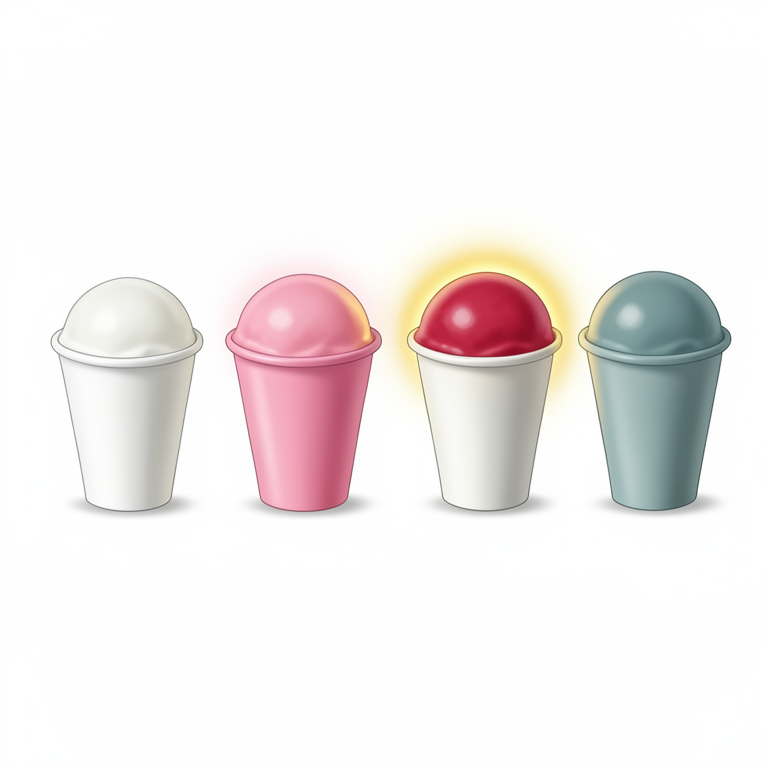
Fortification Levels vs. Acceptability
AI-generated conceptual illustration (pomegranate-fortified ice cream in cups). It explains the idea and does not show study data.
View source evidence ↗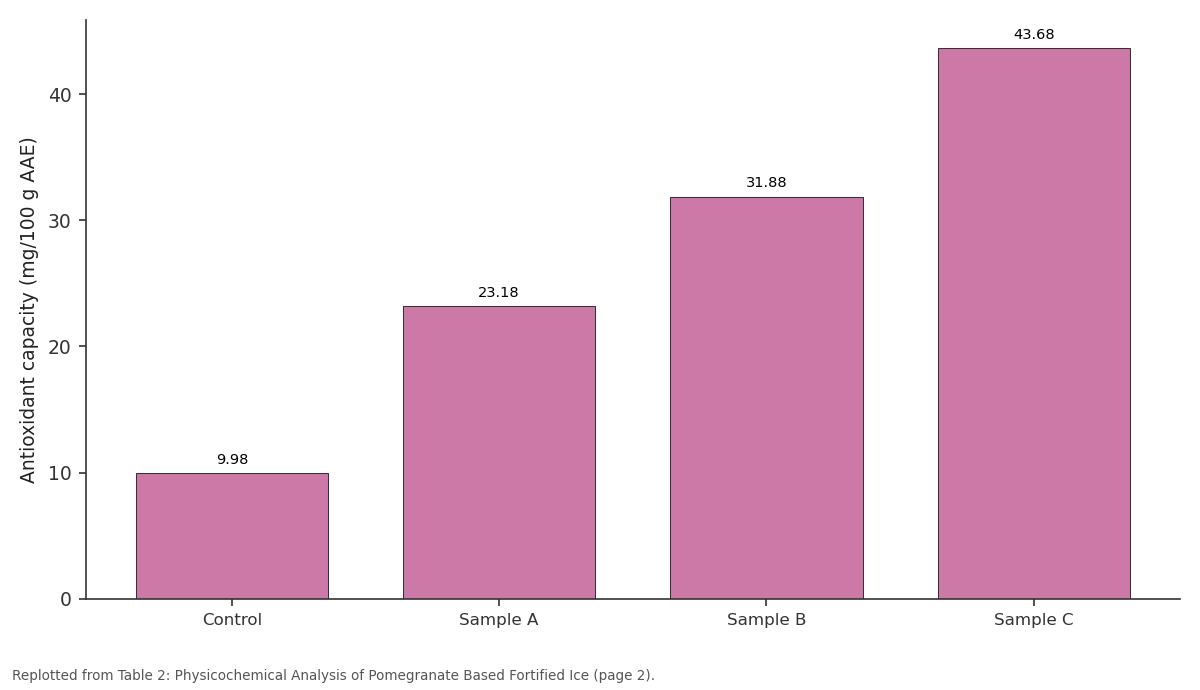
Antioxidant capacity (mg/100 g AAE): Control vs Sample A vs Sample B vs Sample C
Replotted from Table 2 (page 2) of the original paper. Every bar is the paper's own table value.
View source evidence ↗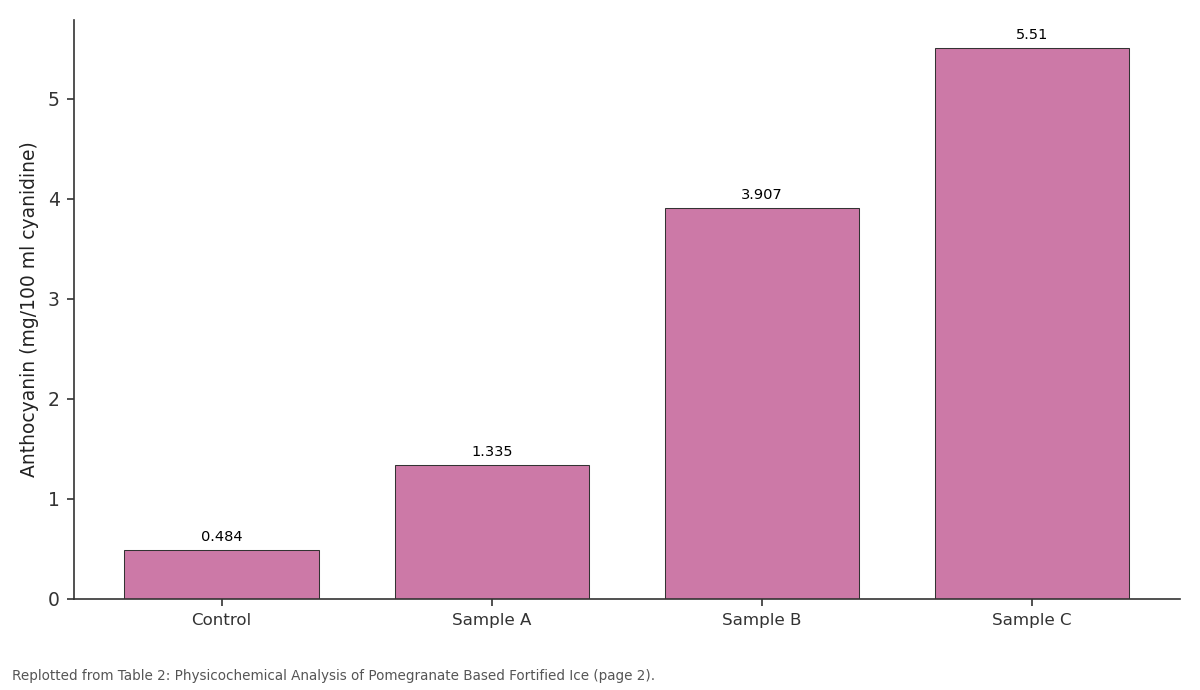
Anthocyanin (mg/100 ml cyanidine): Control vs Sample A vs Sample B vs Sample C
Replotted from Table 2 (page 2) of the original paper. Every bar is the paper's own table value.
View source evidence ↗Figures & tables
From the original paper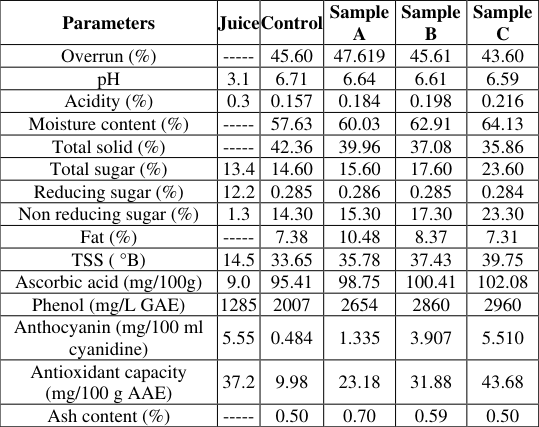 Table 2
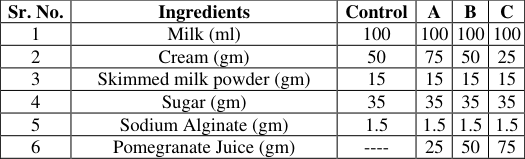 Table 1
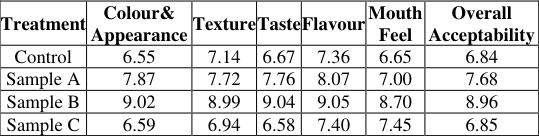 Table 3
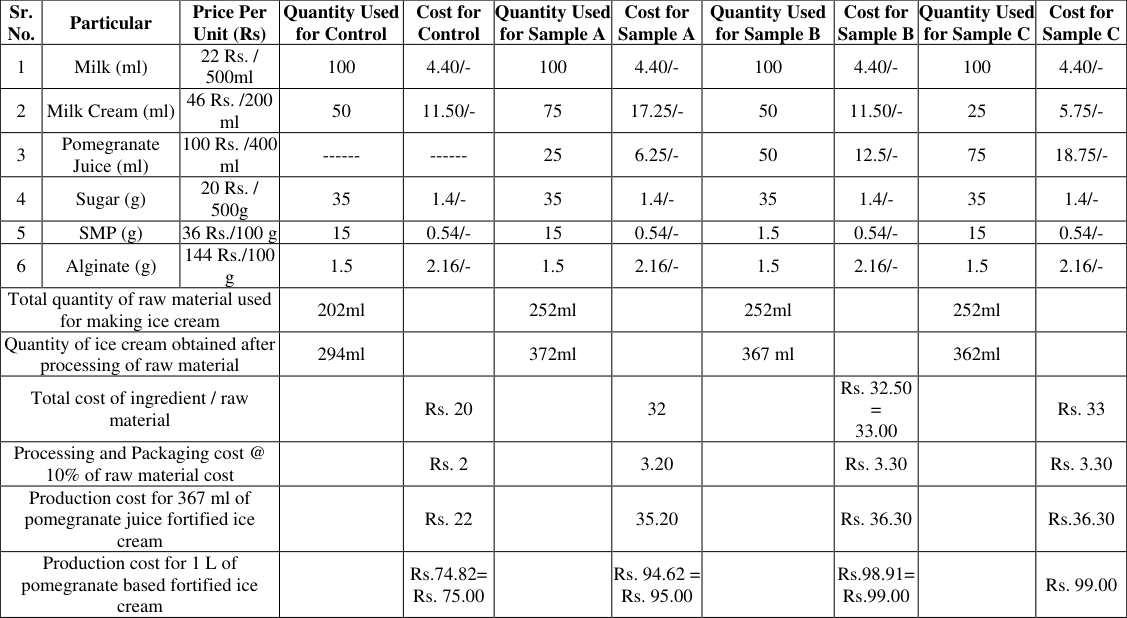 Table 4
Introduction
Pomegranate (Punica granatum L.) is important horticultural crop of India. The Maharashtra is the largest producer of pomegranate followed by Karnataka, Gujarat, Andhra Pradesh, and Rajasthan. The processing of pomegranate in to value added products will provide sustained demand of fruits in market and thus will improve the profit of pomegranate producers. The edible part (arils) of the pomegranate fruit consists of 40% arils and 10% seeds. The arils are comprised of approximately 80% juice and 20% seed. The juice of arils contain 85% water, 10% total sugars (glucose, sucrose, and fructose) and 1.5% pectin, organic acids (citric, malic, tartaric, succinic, fumaric, ascorbic acid), fatty acids (i.e. conjugated linoleic acid, linoleic acid, punicic acid and eleostearic acid), and amino acids (i.e. proline, valin, and methionine), and bioactive compounds (phenolics and flavonoids) (Bayizit et al., 2012) [4] . Pomegranate is excellent source of vitamin C. Pomegranate juice represents one of the foods recently promoted for its health benefits since a glass of pomegranate juice contains about 40% of the Recommended Daily Allowance (RDA) of Vitamin C (Singh & Singh, 2004).Vitamin C helps the body develop resistance against infectious agents by boosting immunity. Pomegranate is good source of fiber, potassium, thiamin, folate, manganese and copper. Many of the phytochemicals in pomegranate act as antioxidants. Antioxidants neutralize free radicals to prevent cell damage. Fruits not only improve the sensory quality of the product but also improve its nutritive value which varies with the type of fruit used. Therefore, incorporation of fruits, which is also accepted by regulation in India, such as mango, pineapple, strawberry, orange, etc. in the form of juices, pulp or pieces is a common practice.(C.M. Yadav et al., 2010) [17] . Ice-cream is a delicious and nutritious frozen desert made from dairy products such as milk and cream combined with flavoring and sweeteners such as sugar. In some cases, artificial flavorings and colorings are added instead of natural ingredients. It is considered to be a junk food that children love to eat. Mostly they eat this kind of food which is high in sugar and fats, the less they like fresh and natural foods like fruits and vegetables. Ice cream is a very popular frozen confectionary dairy product consumed in India and other countries as well. Ice cream industry has developed a variety of ice creams, for mitigating some of the health concerns. The changes of texture and flavor profile of such ice cream can provide the satisfaction to the consumers (Patel and Amin 2015) [11] . The nutrient component of the ice cream depends on the type of ice cream as well as the ingredients that are used in the preparation of icecream. On an average, the ice cream contains three times more fat and slightly more protein than the milk. It is a rich source of calcium, phosphorous and other minerals important for bodybuilding (Patel and Amin 2015) [11] . Ice-cream is rich in carbohydrates, proteins, fats, and some micronutrients, such as vitamin A, D, E, calcium and minerals. However the Ice-cream currently available commercially is generally poor in natural antioxidants like vitamin C, colors and phenolic. There is a strong drive these days focusing on health and there is a definite consumer trend towards the purchase of healthier products. However in our current era of nutritional excess, the focus of enrichment has shifted from the pursuit of optimal health and dietary intake. Ice cream is an important desert food consumed especially by children and other age groups. Ice-cream could be made more nutritious, health beneficial and tastier by adding pomegranate juice. It will provide attractive natural colour and will improve nutrition. Keeping above points in mind the research has been planned to fortify the ice cream with pomegranate juice and evaluate the use of pomegranate juice at different concentration level in ice cream.
Extraction and Clarification of Fruit Juice
The freshly/ cold stored pomegranates were further processed for extraction of juice (being used for ice cream fortification) using the method suggested by Ismail et al., (2014) [8] . The fruits were washed with tap water to remove the dust and wiped completely dry, the fruits were cut in two halves and the juice was immediately extracted using a hand operated juice extractor/ mechanical press. The extracted juice was filtered through two to three layers of muslin cloth. The juice was immediately stored at 4⁰C until further use. The filtered pomegranate juice was further clarified using a commercially available fining agent bentonite according to Priyanka P. et al., (2014). Firstly, the juice was filtered through muslin cloth. To this juice bentonite at 0.5% of juice was added and juice was held for 4 hrs. Then the treated juice was filtered through muslin cloth. This juice was pasteurized at 82°C for 15 min. to get clarified juice.
Physico-chemical Analysis of Fruit Juice
Clarified pomegranate juice were analyzed for its chemical quality, pH, acidity, total sugar, reducing sugar, non-reducing sugar, fat, total soluble solids, ascorbic acid, phenol, anthocyanin, antioxidant capacity by standard methods.
Preparation of Pomegranate based Fortified Ice cream
The standardization of ice-cream with Pomegranate (Punicagranatum L.) was carried out according to the method described by Samahy et al., (2009) [15] . Fresh cow's milk (3.5% fat), Skim milk powder, sodium alginate, fresh cream (25% fat) and sugar were procured from the local market. Different compositions on trial basis were worked out to standardize the pomegranate based fortified ice-cream composition as shown in Table 1. The required amounts of skim milk powder were mixed with sodium alginate and sugar, and then added slowly to the liquid ingredients (milk and cream) at 45°C under vigorous agitation. The basic mixes were pasteurized at 80°C for 10 minutes in a water bath and then cooled to 4°C in ice bath. The required amounts of pomegranate juice, which already pasteurized before, were blended with the cooled basic mixes in a blender for 2 minutes. After that, all mixes were aged for 24 hours at 4°C before frozen in an ice cream machine (Kitchenif 222, India). The produced ice cream was packaged in cups (100cc) and placed in a freezing cabinet at -18°C for 24 hours at least before evaluation.
| Sr. No. | Ingredients | Control | A | B | C |
|---|---|---|---|---|---|
| 1 | Milk (ml) | 100 | 100 | 100 | 100 |
| 2 | Cream (gm) | 50 | 75 | 50 | 25 |
| 3 | Skimmed milk powder (gm) | 15 | 15 | 15 | 15 |
| 4 | Sugar (gm) | 35 | 35 | 35 | 35 |
| 5 | Sodium Alginate (gm) | 1.5 | 1.5 | 1.5 | 1.5 |
| 6 | Pomegranate Juice (gm) | ---- | 25 | 50 | 75 |
Table text extracted from the original PDF; superscript letters are shown inline. The original table image is below.
View original table image
Physico -chemical Evaluation of Pomegranate based Fortified Ice cream
The pomegranate based fortified ice cream was analysed for overrun, pH, acidity, moisture contents, total solid, total sugar, reducing sugar, non-reducing sugar, fat, total soluble solids, ascorbic acid, phenol, anthocyanin, antioxidant capacity, ash contents according to the methods described by Abdullah et al., (2003) [1] , A. O.A.C (1990), Khater Z. K. (2002), Ranganna (1995) and Hashim and Shamsi (2016) [7] and AOAC (922.06).
Sensory Analysis
The pomegranate based ice cream was evaluated for its sensory quality by a panel of 10 judges using 9 points Hedonic scale as described by Pawar et al., (2010). The chilled ice cream was garnished with fresh pomegranate arils while serving to the panel.
Cost Analysis
The cost of development of pomegranate based fortified ice cream was worked out by the method described by Priyanka et al., (2013) [14] and Yadav et al., (2010) [17] considering the prevailing market prices of all the ingredients used and processing cost of the product.
Result and Discussion
Three blends of pomegranate based ice cream (A, B, and C) and of ice cream without pomegranate juice (plain ice cream) as a control were tried in the ice cream formulation.
Physicochemical Evaluation of Juice and Pomegranate based Fortified Ice cream
The physicochemical analysis of pomegranate based ice cream are shown in table 2. The overrun value of pomegranate based ice-cream (A, B, and C) ranged from 43.60 -47.61 percent, while an overrun value of control ice cream is 45.60%, this indicates that Sample A is superior among others with highest value 47.61 which may be due to increased concentration of cream because increased overrun raises the creaminess of ice cream, the similar results were reported by Hashim and Shamsi (2016) [7] . The pH of control ice cream is 6.71 which is slightly higher compared to pH of pomegranate based ice cream samples ranged from 6.59-6.64.Pomegranate based ice cream (Sample C) with high concentration of juice (75ml) has lower pH (6.59) compared to control and other pomegranate based ice cream (Sample A and B). Increasing pomegranate juice concentration decreases pH, the similar results were reported by Cam et al., (2013) [5] and Hashim and Shamsi (2016) [7] . Progressive increase in the titrable acidity is found in the pomegranate based ice cream ranged from 0.18 -0.21%, as compared to control 0.15%, this is may be due to increase in concentration of pomegranate juice, these result correlates with the previous reports of Pandiyan et al., (2012) and Hashim and Shamsi (2016) [7] . The moisture contents of pomegranate based ice cream ranged from 60.03 -64.13%, which are higher than control ice cream (57.63%) this indicates that increased concentration of pomegranate juice raises the moisture content of ice cream. These results are similar to the results reported by Abdullah et al., (2003) [1] . Maximum total solids have ranged from 35.86 -42.36%, including a control sample which indicates that, increase in pomegranate juice decreases total solid, the results are in agreement with Amiri et al., (2014) [2] . The increasing pattern of sugar content was observed ranged from 14.60 -23.60%, including control ice cream, which may be due to increasing concentration of pomegranate juice. Increasing the sugar content of ice cream causes a smooth texture, because it lowers the freezing point, the amount of unfrozen material is increased, increased viscosity and free water contents declined. The fat content of pomegranate based ice cream including control ice cream ranged from 7.31 -10.48%, Sample A has a high fat content among others this may be due to rise in cream content increases fat percentage, in present study slight differences are found compared to reports of Abdullah et al., (2003) [1] .The increasing pattern of TSS (°B) of the ice cream samples was observed as 35. [4] .
| Parameters | Juice | Control | Sample A | Sample B | Sample C |
|---|---|---|---|---|---|
| Overrun (%) | ----- | 45.60 | 47.619 | 45.61 | 43.60 |
| pH | 3.1 | 6.71 | 6.64 | 6.61 | 6.59 |
| Acidity (%) | 0.3 | 0.157 | 0.184 | 0.198 | 0.216 |
| Moisture content (%) | ----- | 57.63 | 60.03 | 62.91 | 64.13 |
| Total solid (%) | ----- | 42.36 | 39.96 | 37.08 | 35.86 |
| Total sugar (%) | 13.4 | 14.60 | 15.60 | 17.60 | 23.60 |
| Reducing sugar (%) | 12.2 | 0.285 | 0.286 | 0.285 | 0.284 |
| Non reducing sugar (%) | 1.3 | 14.30 | 15.30 | 17.30 | 23.30 |
| Fat (%) | ----- | 7.38 | 10.48 | 8.37 | 7.31 |
| TSS ( °B) | 14.5 | 33.65 | 35.78 | 37.43 | 39.75 |
| Ascorbic acid (mg/100g) | 9.0 | 95.41 | 98.75 | 100.41 | 102.08 |
| Phenol (mg/L GAE) | 1285 | 2007 | 2654 | 2860 | 2960 |
| Anthocyanin (mg/100 ml cyanidine) | 5.55 | 0.484 | 1.335 | 3.907 | 5.510 |
| Antioxidant capacity (mg/100 g AAE) | 37.2 | 9.98 | 23.18 | 31.88 | 43.68 |
| Ash content (%) | ----- | 0.50 | 0.70 | 0.59 | 0.50 |
Table text extracted from the original PDF; superscript letters are shown inline. The original table image is below.
View original table image
Sensory Analysis
Sensory attributes of the pomegranate based fortified ice cream prepared from different combinations of blends (A, B and C) along with control ice cream are represented in table 3 as below,
| Treatment | Colour& Appearance | Texture | Taste | Flavour | Mouth Feel | Overall Acceptability |
|---|---|---|---|---|---|---|
| Control | 6.55 | 7.14 | 6.67 | 7.36 | 6.65 | 6.84 |
| Sample A | 7.87 | 7.72 | 7.76 | 8.07 | 7.00 | 7.68 |
| Sample B | 9.02 | 8.99 | 9.04 | 9.05 | 8.70 | 8.96 |
| Sample C | 6.59 | 6.94 | 6.58 | 7.40 | 7.45 | 6.85 |
Table text extracted from the original PDF; superscript letters are shown inline. The original table image is below.
View original table image
Taste
The average score for the taste differed much by the addition of different level of concentration of pomegranate juice of developed pomegranate based fortified ice cream samples as the score varied from 9.04 -6.58. The best taste was observed in case of Sample B ice-cream samples valued at 9.04, followed by Sample A (7.76) and Control (6.67) rated in between like very much to like extremely and Sample C (6.58) rated in between like slightly to like moderately.
Flavour
It was observed that flavour score was highest in Sample B(9.05) for pomegranate based fortified ice cream followed by Sample A (8.07) ranged in between like a very much to like extremely, Control (7.36) and Sample C (7.40) rated equally in between like moderately to like very much.
Mouth feel
The observed score for mouth fee ranged from 6.65 -8.70, the highest score was observed for Sample B (8.70) followed by sample C (7.45), Sample A (7.00) and control (6.65).
Overall Acceptability
The mean score for overall acceptability for treatment Control, Sample A, Sample B and Sample C was 6.84, 7.68, 8.96 and 6.85, respectively. It was observed that much variations were found in overall acceptability score and ranged 6.85 (Sample C) to 8.96 (Sample B). Sample B received top score (8.96) for overall acceptability followed by Sample A (7.68) rated in between like very much to like extremely and Control (6.84).
Cost Analysis
The record of the cost of development of most acceptable pomegranate based fortified ice cream (Sample B) is presented in table The cost of development of 1 ltr. Ice cream without pomegranate juice control was Rs. 75.00 which increased to Rs. 95.00, Rs. 98.91=Rs.99.00, and Rs. 99.00 for combinations, sample A, B and C respectively. When pomegranate concentration increased there was also increase in cost of ice cream. Ice cream prepared with incorporation of pomegranate juice at rate of 50 ml (Sample B) was with all desired characters with cost of production Rs. Rs.98.91=Rs.99.00/lit.
Conclusions
The primary aim of this investigation was to evaluate the use of pomegranate juice at different concentration level in ice cream. Three blends of pomegranate based ice cream (A, B, and C) and of ice cream without pomegranate juice (plain ice cream) as control were tried in the ice cream formulation. The present study shows potential value of pomegranate fruit as a natural source of energy and nutritive components. The physico chemical and sensory analysis indicated that incorporation of pomegranate juice improved the sensory and functional properties of ice cream including antioxidant, phenolic content. Pomegranate fruit may be a suitable source of natural additive or substituted material for production of many foods like ice cream.
Figures and tables from the paper
| Sr. No. | Particular | Price Per Unit (Rs) | Quantity Used for Control | Cost for Control | Quantity Used for Sample A | Cost for Sample A | Quantity Used for Sample B | Cost for Sample B | Quantity Used for Sample C | Cost for Sample C |
|---|---|---|---|---|---|---|---|---|---|---|
| 1 | Milk (ml) | 22 Rs. / 500ml | 100 | 4.40/- | 100 | 4.40/- | 100 | 4.40/- | 100 | 4.40/- |
| 2 | Milk Cream (ml) | 46 Rs. /200 ml | 50 | 11.50/- | 75 | 17.25/- | 50 | 11.50/- | 25 | 5.75/- |
| 3 | Pomegranate Juice (ml) | 100 Rs. /400 ml | ------ | ------ | 25 | 6.25/- | 50 | 12.5/- | 75 | 18.75/- |
| 4 | Sugar (g) | 20 Rs. / 500g | 35 | 1.4/- | 35 | 1.4/- | 35 | 1.4/- | 35 | 1.4/- |
| 5 | SMP (g) | 36 Rs./100 g | 15 | 0.54/- | 15 | 0.54/- | 1.5 | 0.54/- | 15 | 0.54/- |
| 6 | Alginate (g) | 144 Rs./100 g | 1.5 | 2.16/- | 1.5 | 2.16/- | 1.5 | 2.16/- | 1.5 | 2.16/- |
| Total quantity of raw material used for making ice cream | 202ml | 252ml | 252ml | 252ml | ||||||
| Quantity of ice cream obtained after processing of raw material | 294ml | 372ml | 367 ml | 362ml | ||||||
| Total cost of ingredient / raw material | Rs. 20 | 32 | Rs. 32.50 = 33.00 | Rs. 33 | ||||||
| Processing and Packaging cost @ 10% of raw material cost | Rs. 2 | 3.20 | Rs. 3.30 | Rs. 3.30 | ||||||
| Production cost for 367 ml of pomegranate juice fortified ice cream | Rs. 22 | 35.20 | Rs. 36.30 | Rs.36.30 | ||||||
| Production cost for 1 L of pomegranate based fortified ice cream | Rs.74.82= Rs. 75.00 | Rs. 94.62 = Rs. 95.00 | Rs.98.91= Rs.99.00 | Rs. 99.00 |
Table text extracted from the original PDF; superscript letters are shown inline. The original table image is below.
View original table image
References
17 in the original paper- Abdullah M, Rehman S, Zubair H, Saeed HM, Kousar S. Effect of skim milk in soymilk blend on the quality of ice cream. Pakistan Journal of Nutrition. 2003; 2(5):305-311.
- Amiri SH, Nateghi L, Berenji S. Effect of date syrup as a substitute for Sugar on physicochemical and sensory properties of ice cream. International Journal of Biosciences. 2014; 5(7):80-88.
- AOAC. Official Methods of Analysis of AOAC International. 15th Edn. AOAC International, Arlington, Virginia, USA, 1990.
- Bayizit AA, Ozcan T, Ersan LY. The therapeutic Potential of Pomegranate and Products for Prevention of Cancer. Bisla G, Archana, Verma P, Sharma S. Development of ice creams from Soybean milk and Watermelon seeds milk and evaluation of their acceptability and Nourishing potential. Advances in Applied Science Research. 2012; 3(1):371-376.
- Cam M, Erdogan F, Aslan D, Dinc M. Enrichment of functional properties of ice-cream with Pomegranate byproducts. Article in Journal of Food Science. 2013; 78 (10):1543-1550.
- Fazli FA, Ahmad SB, Misran M. Effect of Vegetable Milks on the Physical and Rheological Properties of Ice Cream. Food Science and Technology Research. 2014; 20(5):987996.
- Hashim IB, Shamsi SK. Physiochemical and sensory properties of icecream Sweetened with date syrup. Article in Journal of MOJ Food Processing and Technology. 2016; 2(3):1-4.
- Ismail FA, Somia H, Nehal R, Zaki SA. The PhysicoChemical Properties of Pomegranate Juice (Punica granatum L.). Extracted From Two Egyptian Varieties. World Journal of Dairy & Food Sciences. 2014; 9(1):29-35.
- Jhansi D, Sucharita KV. Formulation and Standardization of Value Added Ice with Tomato. Indian Journal of applied Research. 2013; 3(8):322-323.
- Lokhande AT, Matkar AB, Mandakmale SD. Goat Milk Ice Ceram: A Value Added Milk Product for Livelihood. Intrnatonal Journal of Fundamental and Applied Life Sciences. 2011; 1(2):170-172.
- Patel HH, Amin B. Formulation and standardization of different milk icecream Fortified with pink guava pulp. International Journal of Dairy Science. 2015; 10(5):219-227.
- Pandiyan C, Villi R, Kumaresan G, Rajarajanand G, Elango A. Effect of incorporation of whey protein concentrates on quality of ice cream. Tamilnadu Journal of Veternary and Animal Sciences. 2016; 8(4):189-193.
- Pawar SL, Karanjkar LM, Paul SP. Sensory evaluation of low fat custard apple ice-cream. Article in Journal of Dairying Foods and H.S. 2010; 30(1):32-34.
- Priyanka P, Sayed HM, Joshi AA, Jadhav BA, Chilkawar PM. Studies on Effect of Different Extraction Methods on the Quality of Pomegranate Juice and Preparation of Spiced Pomegranate Juice. International Journal of Food Science, Nutrition and Dietetics. 2013; 2(5):51-55.
- Samahy SK, Youssef KM, Ayoub TE. Producing ice cream with concentrated cactus pear pulp. Journal. PACD. 2009; 11:1-12.
- Umelo MC, Uzoukwu AE, Odimegwu EN, Agunwah IM, Njoku NE, Alagbaoso SO. Proximate physic-chemical and sensory evaluation of ice cream from blends of cow milk and Tigernut (Cyperusesculentus) milk. International Journal of Scientific Research and Innovative Technology. 2014; 1(4):63-76.
- Yadav C M, Karanjkar LM, Poul SP. Effect of assimilation of custard apple pulp on chemical quality and cost of icecream. Article in Journal of Dairying. Foods and H.S. 2010; 29(2):86-91.