
Research article · 2021 · Full text
International Journal of Horticulture and Food ScienceReview of the pre and post harvest handling methods of apple fruit (Malus domestic)
Volume 3(1) · Pages 17–21 · DOI: 10.33545/26631067.2021.v3.i1a.55 ↗
Research areasPostharvest Quality and Shelf Life ManagementPlant Physiology and Cultivation StudiesBotanical Research and Applications
Abstract
Author-writtenApple (Malus domestica) is a tree and its pomaceous fruit, of species Mauls domestic a Borkhin the rose family Rosaceae, is one of the most widely cultivated tree fruits. The main objective of this review is to review postharvest handling of apple fruit with the following Specific objectives: to review pre-harvest factors that affect postharvest quality of apple fruit and review postharvest factors that affect quality of apple fruits. The factor that causes postharvest losses of apple fruits are harvesting, storage, packaging, transportation and marketing and some other pre -harvest factor that affect the postharvest quality of apple are cultivars, cultivation practices, fertilizer, irrigation, environmental factors(temperature, relative humidity and atmosphere condition,) and soil type. Postharvest losses of apple can occur due to improper harvesting, transportation, packaging, storage, processing/sorting, grading and marketing. The major causes of postharvest losses of apple are physiological disorder (caused due to freezing, high temperature, mechanical damage and pathological disorder. Management of temperature and relative humidity are the most effective tool for maintaining quality and extending the shelf life of apple fruit after harvest. It can conclude that, all horticultural crops are very perishable because of their high content of water, soft in texture due to this there is high amount of postharvest loss. To overcome such problem the only option is that properly postharvest handling should conduct at any stage of postharvest chain to reduce losses and maintain quality.
Summary
Source-checkedPlain-language reading of the full paper, prepared with AI and checked against the text. Each point links to the authors' own words.
Why it matters
- Apples (Malus domestica) are among the most widely grown tree fruits globally. View evidence ↗
- China is the world's top apple producer, accounting for approximately 41% of global production. View evidence ↗
- Horticultural crops like apples are highly perishable due to their soft texture and high water content, leading to significant postharvest losses. View evidence ↗
The question
- The review aims to examine both pre-harvest and post-harvest factors that influence the quality of apple fruits. View evidence ↗
What they did
- The review categorizes apple quality losses into two primary classes: mechanical damage and physiological damage (which includes storage disorders and diseases). View evidence ↗
- The analysis considers pre-harvest factors (such as cultivars, irrigation, and soil) and post-harvest factors (such as packaging and transportation) as drivers of quality loss. View evidence ↗
What they found
- Postharvest quantity losses vary by region, ranging from 5-25% in developed countries to 20-50% in developing countries. View evidence ↗
- Apples harvested at optimal maturity can be stored for over 12 months using advanced storage techniques. View evidence ↗
- Pressure infiltration of CaCl2 (2 minutes at 69 kPa) is more effective at increasing calcium concentration in fruit than vacuum infiltration (33 kPa) or dipping. View evidence ↗
- Ethylene-treated apples stored for 28 days in 1% oxygen at 14°C remained firm and green, ripening only after being moved to 21°C in air. View evidence ↗
What it means
- The authors conclude that reducing quality loss requires the proper management of both pre-harvest production factors and post-harvest handling. View evidence ↗
- The authors recommend educating farmers, laborers, and merchants on the science of apple handling to significantly reduce postharvest losses. View evidence ↗
Visual summary
1 visualsIllustrations explain the paper; they do not show study data.
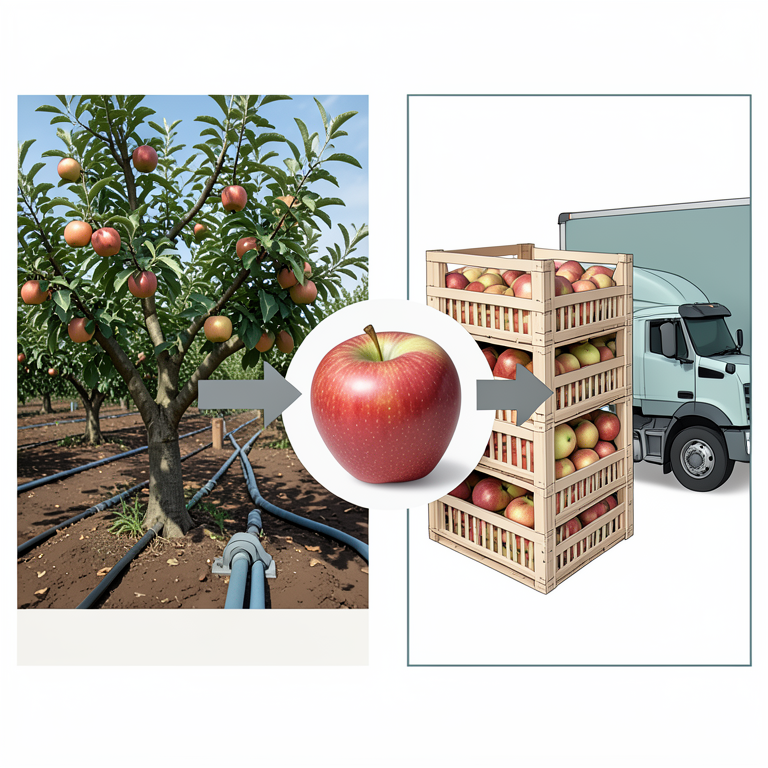
Integrated Quality Management
AI-generated conceptual illustration (Apple fruit (Malus domestica)). It explains the idea and does not show study data.
View source evidence ↗Introduction
Apple (Malus domestica) is a temperate climate fruit tree native to many parts of Europe and Asia. The leading apple growing country is China, producing about 41 per cent of the world's apples, followed by the United States (Ferenc, 2008) [8] . The complexity of different seasons in tropics has great impact on their production process and this need to be well understood and possible management aspects applied. Although apple, pear and plum are among important crops used for food security and income generation in other African countries, they were not well recognized fruits in Ethiopia (Ferenc, 2008) [8] . They are highly valued fruits adapted to temperate climate; however, they can grow in tropical highlands where temperate climate prevails. Among the temperate fruit grown at Chena, apple is widely cultivated while pear and plum received very low attention. In Ethiopia, apple was first brought to Chinch by Missionaries (Kale-Hiwot Church) about 60 year however, it was recently that the crop is viewed as valuable and its production has received attention to transforming the lives of many farmers in Chinch and the trend is expanding to the neighboring districts as well as to other parts of the country. Following the expansion of its production in Chinch and other areas, there is a growing demand for apple in central and local markets in Ethiopia. The country has also a potential to export apple, if production and quality is further improved. Hence, in Ethiopia great potential exists for temperate fruits to contribute to economic development and poverty alleviation by improving the living standard of the poor farmers in addition to the environmental sustainability aspects (Tewoflos and Vigand, 1995) [36] Packaging is an important aspect in the food processing industry as it serves the important functions of containing the food, protecting against chemical and physical damage while providing information on product features, nutritional status and ingredient information (Aninet et al., 2010). Various packaging materials such as high-density polyethylene (HDPE), polypropylene (PP), metal cans and glass are commonly used for packaging of fruit juices (Marsh and Bugusu, 2007) [28] . In order to facilitate preservation, it is technological practice to package juices in these materials. Although, metal cans are expensive and require sophisticated machinery for container closure.
Objectives
To review Pre and postharvest handling of apple fruit To review pre-harvest factors that affect postharvest quality of apple fruit and To review postharvest factors that affect quality of apple fruits 2. Literature review 2.1. Major cause of postharvest loss quality of Apple fruit Losses in fruit quality (such as loss in consumer acceptance or nutritional value) and quantity usual happen in the period between harvest and consumption. The loss quantity ranges between 5 and 25% in the developed countries and between 20 and 50% in the developing countries (Kader, 2005) [18] . An essential purpose of post-harvest physiology research is to reduce these losses. This objective can never be realized without a good understanding of the biological, environmental and practical factors causing these losses, and without the use of developed technology delaying fruit senescence processes and maintaining quality at an acceptable level (Hofman, 1998). Losses can be categorized the basis of cause into two classes: Mechanical damage and physiological damage (storage disorders) (insect and pathogen diseases) (Ferguson et al., 1999) [10] .
Mechanical damage to apples
Mechanical damage is unattractive to fresh market consumers and increases the incidence of Fruit diseases during storage. It is caused by compression, impacts and vibration forces during One or more of post-harvest handling steps such as picking, loading, transportation, packing, sorting, storage and marketing. Compression forces can be exerted by the pickers, other apples, holders and consumers. Impact forces are exerted by mechanical handling systems, while in storage. Mechanical harvesting methods are employed to speed up harvest and field handling operations (Thompson, 2003) The economic cost of mechanical damage to apples in Belgium has also been estimated. The Percentage of degraded apples identified during sorting, in which bruised apples were a major part, was15 and 8% in 2000 and 2001,respectively.On the Belgian market the auction price for degraded apples (industrial apples, apples not suitable for fresh market) is1/3 of the normal price. A reduction of only10% in degraded apples could have led to an income increase for the growers of 892,000n 2001 (VanZeebroeck et al., 2003) [39] . Furthermore, some (smaller) bruise damage cannot be detected during grading and damage but can become visible later, leading to the presence of bruised apples in the supermarkets and stores and further losses. Fruit sensitivity depends on several factors such as cultivar, turgour, maturity size, harvesting date, storage method, cultural practices, and post-harvest treatments. Fruits that are packaged in loose, rough, and dirty package containers with at in bottom are more easily bruised (Grajkowski et al., 2004) [12] .
Physiological disorders
Physiological disorders appear before, during and after storage, due to metabolic defects, which are caused by unsuitable environmental and nutritional conditions (Lafer and Brugner, 2002) [23] . Macronutrient and micronutrient deficiencies and accumulation of toxins result in many alterations in the coloration, shape and size of the fruit (Kays, 1999). They decrease fruit storage potential, competitive ability in the market and eating quality.
Postharvest Quality Assessment
Once the fruit is placed in storage, all subsequent processes and treatments must be optimized in order to retain apple quality. Pre-harvest factors that have already influenced fruit quality cannot be changed during storage (Woolf and Ferguson, 2000). After harvest, apples follow a climacteric ripening process, where ethylene is produced and selfregulates the ripening process in which the fruit respires sugar to CO2 while its flesh softens and loses water. All postharvest treatments are aimed at reducing the rate of respiration and water loss, thereby retaining the fruit in an acceptable stage of maturity for consumption (Woolf and Ferguson, 2000). For some apple varieties, cold storage alone can delay ripening by approximately three months (Thompson 2010). If fruit are stored in CA conditions, the rate of respiration is lower than in cold store alone, therefore fruit can be maintained for up to 8 months and still meet consume expectations ( Thompson, 2010). Through the development of airtight storage rooms and detection of anoxia by electronic sensors, DCA storage has been established in many fruit growing areas (Veltman et al., 2003). Some commodities that are harvested at the optimal maturity may now be stored for over 12 months, ensuring a year-round supply of regional fruit for consumers (Streif et al., 2010). The content of titratable acidity is also routinely determined as a quality parameter based on the fact that acidity has a significant influence on the taste of the fruit (De Long et al., 1999). Other parameters that indicate the climacteric ripening process of apples are CO2 and ethylene emissions. CO2 provides an indication of the respiration rate, and is determined by incubating fruit in sealed jars of a known volume for a known time period, sampling the headspace and injecting the gas sample into a GC (Tahir et al ., 2009).
Post-Harvest treatment
Post-harvest heating has been used to control some diseases and maintain fruit quality during storage (Ferguson et al., 2000; Paull and Chen, 2000) [9,29] . Heated apples become firmer, have better flavor (higher acid ratio) and show better resistance to superficial scald than unheated (Klein and Lurie, 1992) [16] . Postharvest dipping, vacuum infiltration, and pressure infiltration of Ca solutions have been used with varying degrees of success to maintain fruit quality (Sam's and Conway, 1984; Scott and Wills, 1979; Scott et al., 1985) Vacuum or pressure infiltration of CaCl2 solutions was superior to dips for control of bitter pit in Australia and New Zealand (Scott and Wills, 2003). Experimentally, pressure infiltration with solutions of CaCl2 for 2 minutes at 69 kPa can increase the Ca concentration of fruit more effectively than vacuum infiltration at 33 kPa or dipping for 2 minutes (Conway and Sam's, 1983). Most research on pressure-infiltration of high concentrations of Ca in apple fruit has been conducted on small lots of fruit in a laboratory environment, where sanitation and fruit treatment were strictly controlled. In commercial situations, where larger amounts of fruit are to be treated, conditions are less optimal. Therefore, a pilot test was conducted over a three year period in Pennsylvania to determine the feasibility of infiltration of apples at harvest with CaCl2 on a commercial basis (Conway et al., 1994).
Cultivars
There are more than 7,500 known cultivars of apples. Cultivars vary in their yield and the ultimate size of the tree, even when grown on the same root stock. Different cultivars are available for temperate and subtropical climates. Commercially popular apple cultivars are soft but crisp. Other desired qualities in modern commercial apple breeding are a colorful skin, absence of resetting, ease of shipping, lengthy storage ability, high yields, disease resistance, common apple shape, and developed flavor. Modern apples are generally sweeter than older cultivars, as popular tastes in apples have varied over time. Most North Americans and Europeans favor sweet, sub-acid apples, but tart apples have a strong minority following. Extremely sweet apples with barely any acid flavor are popular in Asia and especially Indian Subcontinent. Old cultivars are often oddly shaped, resented, and have a variety of textures and colors. Some find them to have a better flavor than modern cultivars, but they may have other problems which make them commercially unviable from low yield, disease susceptibility, poor tolerance for storage or transport, or just being the 'wrong' size. In the United Kingdom, old cultivars such as 'Cox's Orange Pippin' and 'Egremont Russet' are still commercially important even though by modern standards they are low yielding and susceptible to disease (Kays, 1999).
Light
The effects of light and the duration of periods of light and darkness on fungal sporulation in culture have been studied (Leach, 55-57), so that their importance is now appreciated. Light may also influence spore germination, penetration, and infection type, as well as the release and viability of spores. Low light intensity reduces the level of club root attack in apple except where the soil is heavily contaminated by Plasmodiophor brassicae (Colhoun, 1991) [6] .
Postharvest Handling of Apple Fruit 2.2.1 Cold storage
The majority of apples must be consumed within a relatively short time after harvesting; otherwise there will be high rotting losses due to the biological properties of the fruit. Apples, which consist of living tissues, are submitted to continuous post-harvest processes, resulting in senescence and death (Kader, 1999) [14] . Since inhibition of these processes is not possible, decreasing the rate of them is an important task. Thus, the objective of storage is to prolong the life of the fruit tissues by slowing down the metabolic processes within the fruit that influence its age. Such metabolic processes include in particular respiration intensity and internal ethylene production (Paull, 1999) [30] . Both these processes are correlated with low temperature (Westwood, 1993) [41] . High storage temperature or low relative humidity or both reduce storage potential, decrease apple quality and enhance disorders (Robinson et al.,2001)
Packaging and Storage 2.3.1 Controlled atmospheric storage
Controlled atmosphere (CA) storage is a technique for maintaining the process quality in an environment that differs from air with respect to the proportion of O 2 and CO 2 (Abdullah et al., 1990) [42] . Wills et al. (1998) [42] describe CA storage as the precise control of oxygen and carbon dioxide concentrating usually with a decrease in oxygen and increase in the carbon dioxide to extend the produce storage life. The respiration rate of fresh produce is slowed down with a decrease in oxygen of fresh produce. It has previously been reported by Salunkhe and Desai (1984) [33] as cited by Ahmad et al. (2006) that controlled atmosphere with high CO 2 inhibits the breakdown of peptic substances, retains fruit texture and remains firmer for a longer period. In current research this effect was most dominant at reduced O 2 levels but effect of low O 2 cannot be separated from the effect of increased CO 2 CA storage condition inhibits ethylene production and retards the rate of banana ripening (Quazi and Freebrain, 2000). However, care has to be taken because low oxygen can cause fermentation/anaerobic respiration. Therefore, it is necessary to formulate different combinations to delay ripening of banana fruit, while allowing them to subsequently ripen to good quality. Prange et al. (2000) reported that pretreated apple (ethylene treated) stored for 28 days in 1% oxygen at 14°C remained green and firm until the end of storage, but started to ripen almost immediately after these were placed at 21°C in air without addition of ethylene treatment. Acedo and Bautista (1993) [1] reported that fruit can be successfully stored under low oxygen conditions without raising the carbon dioxide in the atmosphere. According to the study of Ahmad et al. (2006) unripe fruit did not synthesize significant amount of ethylene at 18°C unless the oxygen level was above 7.5 to 8.0. Storage in reduced oxygen and increased carbon dioxide reduced the respiratory activity and slowed down the ripening processes. Generally, the application of controlled atmosphere storage has a considerable significance in the proper shipment, storage and ripening of apple as a result, respiration rate of the produce slowed down as a consequence processes associated with ripening were slowed (Thompson, 2001) [37] .
Modified atmospheric storage
Due to the complexities involved with produce, that is, varying respiration rates which are product and temperature dependent, different optimal storage temperatures for each commodity, water absorption, by-products, and so on, many considerations are involved in choosing an acceptable packaging technology. One of the areas of research that has shown promise, and had success, is that of modified atmosphere packaging (MAP). This technique involves either actively or passively controlling or modifying the atmosphere surrounding the product within a package made of various types and/ or combinations of films (Farber et al, 2003). A modified atmosphere can be defined as one that is created by altering the normal composition of air (78% nitrogen, 21% oxygen, 0.03% carbon dioxide and traces of noble gases) to provide an optimum atmosphere for increasing the storage length and quality of food/produce. This can be achieved by using controlled atmosphere storage (CAS) and/or active or passive MAP. Under controlled atmospheric conditions, the atmosphere is modified from that of the ambient atmosphere, and these conditions are maintained throughout storage. MAP uses the same principles as CAS; however, it is used on smaller quantities of produce and the atmosphere is only initially modified. Active modification occurs by the displacement of gases in the package, which are then replaced by a desired mixture of gases, while passive modification occurs when the product is packaged using a selected film type, and a desired atmosphere develops naturally as a consequence of the products' respiration and the diffusion of gases through the film (Farber et al., 2003).
Packinghouse operation
After washing fruits and vegetables, disinfectant agents are added to the soaking tank to avoid propagation of diseases among consecutive batches of produce. In a soaking tank, a typical solution for citrus fruit includes a mixture of various chemicals at specific concentration, pH, and temperature, as well as detergents and water softeners. Sodium-orthophenyl-phenate (SOPP) is an effective citrus disinfectant, but requires precise control of conditions in the tank. Concentrations must be kept between 0.05 and 0.15%, with pH at 11.8 and temperature in the range of 43-48 °C. Recommended soaking time is 3-5 minutes. Deviation from these recommendations may have disastrous effects on the produce, since the solution will be ineffective if the temperature or concentration is too low.
Transportation
Road transport by trucks is the most popular mode of transport due to easy approach from orchards to the market. It is the methods of applied should ensure possibly low level of damage to apples, both during transport and in the course of loading-unloading operations. Additionally, changes in metabolic processes Postharvest operations Follow a complex route from the fruitree to the supermarket (Lewis et al., 2008) [24] , and comprises of various stages and processes, including harvesting, packing, sorting, storage and transport such as ethylene production, relative electrical conductivity, respiration, and transpiration usually lead to a mass loss, senescence and spoilage as well as loss of nutritional value (Hanna, 2011)
Atmospheric Humidity
Nearly all infections of above-ground parts of plants are affected by moisture. Sporgermination usually requires a moisture film on the plant surface, but powdery mildews are application of controlled atmosphere storage (CAS) in combination with appropriate temperature control, has been a common practice for maintaining fresh produce (Hussein et al., 2015) [13] . The effectiveness of CAS in Maintaining fruit quality could be achieved through the regulation of humidity, in addition to air (oxygen and carbon) concentrations. Hence, changes in other Attributes such as physic mechanical properties of fruit during storage in CAS could also rely on the fore mentioned conditions. Prange et al. (2000) studied the Effect of low-humidity CAS(4.5%CO2+2.5%O2) on compress an exception in that although their conidia germinate well at high air humidity (Manners and Hussain, 2003) they become nonviable if left for even very short periods in water. When a requirement for leaf wetness exists its duration may be vital. A film of water or water droplets must persist on apple leaves foratleast3-8hr, depending on the temperature, substantial infection by Phytophthora infestans is to occur (Lapwood, 2000).
Conclusion
Postharvest quality management of apple starts from the field and continues until it reaches the final consumer. The postharvest quality status of the apple in part depends on some pre-harvest practices carried out during production. The quality of any apple after harvest cannot be improved by the use of any postharvest treatment method or handling practices but can only be maintained. Understanding and managing the various roles that pre harvest factors like fertilize application, cultivars, cultivation practices, maturity stage, and irrigation can play in the quality of fruits at harvest is very important in order to produce high quality of fruit at harvest. Applies subjected to rapid quality loss after harvest. Using best postharvest handling practices or factors such as optimum temperature, relative humidity, and moisture, the use of postharvest application and the best physical handling procedures to maintain the quality after harvest is also critical. It can be concluded that the quality of apple after harvest depends on not only the postharvest factors alone but also some pre harvest factors during production and, until both factors are managed properly, quality loss will be reduce and maintains the quality of fruits.
Recommendations
There are various ways of addressing the problem of produce loss in developing countries the most important of which is improving the skills and knowledge of the stakeholders with respect to the postharvest handling of apple fruits. All stakeholders should be made aware of the best practices relevant to postharvest handling practices or factors such as optimum temperature, relative humidity and moisture, the use of postharvest application treatment is most important. In the future emphasize should be given in order to preserved the apple fruit after harvesting for long time.
The education of all farmers, laborers and merchants with respect to the basic science and suitable handling of various apple fruits at all postharvest stages could significantly reduce losses currently experienced in the postharvest chain. This education could be delivered by governments, nongovernment organizations, farmer groups and others organization. Training for both farmer staff focal on disease control, improve marketing system could help to improves production and productivity of rural farmer apple fruit.
References
43 in the original paper- Acedo, Bautista. The oxygen and carbon dioxide requirement of apple with relation to storage, 1993.
- Ahmed. Apples storage with high CO controlled atmosphere and effects on texture substance and firmness. Sam's, 2006.
- Aninet. Importance of packaging application and its process in the industry 2012.
- Bruzsewitz GH, McCollum TG, Zhang X. Impact bruise resistance of apple. Amer. Soc. Agric. Eng. 1991;34:962-965
- CE. Preharvest factors affecting postharvest texture. Postharvest boil. Technol 1999;15:249-254
- Colhoun. the light and soil requirement of apple and their effects 1991.
- Conway WS, Sams CE, Tobias RB. Reduction in storage decay in apples by postharvest calcium infiltration. Acta plant 1993;326:115-121.
- Ferenc. levels of country producing apple in the world 2008.
- Ferguson B, Ben-Yehoshua S, Mitcham EJ, McDonald RE, Lurie S. Postharvest heat treatments: introduction and workshop summary. Postharvest Biol. Technol 2000;21:1-6.
- Ferguson I, Volz R, Woolf A. Preharvest factors affecting physiological disorders of fruit. Postharvest Biol. Technol. 1999;15:255-262.
- Franseli, Casera, Wicke. Factor for retaining apple quality high term storage and maturity 1996.
- Grajkowski J, Ochmian I, Chelpinski P, Mikiciuk G. bEvaluation of susceptibility to mechanical damage in several cultivars of apple trees. Folia Universities Agriculturae Stetinensis, Agriculture 2004;93:113-117.
- Hussein Z, Caleb OJ, Opara UL. Perforation-mediated modified atmosphere Packaging off reshand minimally processed produce-are view. Food Packag Shelf 2015;6:7-20.
- Kader AA. Fruit maturity, ripening, and quality relationships. Acta Hort 1999;485:203-207.
- Kader AA. Quality parameters of fresh-cut fruit and vegetable products. In: Lamikanra, O. (ed.), Fresh-cut Fruit and Vegetables: Science, Technology and Market. CRC Press, Boca Raton, USA 2002, 11-20.
- Klein JD, Lurie S. Heat treatments for improved postharvest quality of horticultural fruit. Hort Technol 1992;2:316-320.
- Kader AA. Physiology of CA Treated Produce. Acta Hort 2003;600:349-354.
- Kader AA. Increasing food availability by reducing postharvest losses of fresh produce. Acta Hort 2005;682:2169-2175.
- Kay's SJ. Preharvest factors affecting appearance. Postharvest Biol. Technol 1999;15:233-247.
- Kays. The environmental and commercial characteristic of some apple cultivars 1986.
- Klein JD, Lurie S. Prestorage heat treatments as a means of improving post storage quality of apples. J Amer. Soc. Hort. Sci. 1989 ;115:265-269.
- Klein JD, Conway WS, Whitaker BD, Sams CE. Botrytis cinerea Decay in apple is inhibited by postharvest heat and calcium treatments. J Amer. Soc. Hort. Sci. 1997;122:91-94.
- Lafer G, Brugner A. The effect of nutrient content on quality and storage losses of 'Brae burn' apples. Acta Hort 2002;594:517-520.
- Lewis R, Yoxall A, Marshall MB, Canty LA. Characterizing pressure and bruising in apple fruit. Wear 2008;264:37-46.
- Lidster PD, Tung MA. Effect of fruit temperature at time of impact damage and subsequent storage temperature & duration on the development of surface disorders in sweet cherries. Can. J Horit Sci. 1980;66:555-559.
- Liu. Ethylens treatment of Apple and their influence on storage 1976.
- Maeda. and griffin 1985 effectiveness of mater materials as packaging of apple fruit 1986
- Marsh, Budusu. material for packaging their role. In apple production 2007.
- Paull RE, Chen NJ. Heat treatment & fruit ripening. Postharvest Biol. Technol. 2000;21:21-37.
- Paull RE. Effect of temperature and relative humidity on fresh commodity quality. Postharvest Biol. Technol. 1999;15:263-277.
- Quazi, Freebrain. Increased carbon dioxide controlled Atmosphere on Rate of ripening of banana 1971.
- Robinso, Paul et al., 1999, measurement of storage temperature and relative humidity in apple product 1975.
- Salunkhe, Desai. and Ahmed, 2006. Apples storage with high CO 2 controlled atmosphere and effects on texture substance and firmness 1984.
- Sam's CE. Preharvest factors affecting postharvest texture. Postharvest boil. Technol 1999;15:249-254.
- Schoorl D, Holt JE. The effect of storage time and temperature on the bruising of Jonathan, Delicious and Granny Smith apples. J Text. Stud. 1977;8:409-416.
- Tewflos, Andvigand. potential of climatic (environmental) condition in Ethiopia 1995.
- Thompson. Respiration rate of controlled atmosphere and ripening of fruits 2001.
- Topping AJ, Luton MT. Cultivar differences in the bruising of English apples. J Amer. Soc. Mhorit Science 1986;61:9-13.
- Van Zeebroeck M, Tijskens E, Van Liedekerke P, Deli V, DBaerdemaeker J, Ramon H. Determination of the dynamical behavior of biological materials during impact using apendulum device 2003.
- Watkins CB, Erkan M, Nock JF. Iungerman KA. Beaudry RM, Moran RE. Harvest date effects on maturity, quality, and storage disorders of 'Honeycrisp' apples. Hort Science 2005;40:164-169.
- Westwood MN. Temperate-zone pomology, physiology and culture, 3d.ed. Timber press, Oregon, 1993, 523.
- Wills, Abdullah et al. controlled atmospheric storage of apple 1998, 1990.
- Zhang W. Apple impact bruise analysis. Ph.D. Dissertation. Biological Systems Engineering Dept., College of Engineering & Architecture, Washington State University, Pullman, WA, 1994.
Cited by 4
From OpenAlex, OpenCitations and reference lists read by Scinovex
- An exploration of what freshness in fruit means to consumers ↗
Sara R. Jaeger, Lucía Antúnez, Gastón Ares · Food Research International · 2023
❝ 62 - Development of nutrition rich mixed fruit leather from Apple and Papaya: A review ↗
Kenjum Riram, Prasanta Singh Maibam, Khushi Kumari, Perumalla Srikanth · BIO Web of Conferences · 2024
Apple and papaya are renowned for its nutritional properties, being a rich source of vitamin C, fiber, antioxidants, vitamin K and E and minerals. Post Harvest loss would be very high, to address this issue in the present review developing of fruit leather with different fruits such as apple and papaya. Processing apple and papaya into alternative products become essential…
❝ 10PDF - Influence of orchards fertilization management and post-harvest storage time on Malus domestica cv. ‘Gala’ fruit volatiles and quality parameters ↗
Ana Cristina Figueiredo, Anabela Bernardes da Silva, Cláudia S. Tavares, Mafalda Pastaneira, Juliana Melo, Carolina Ferro Rodrigues et al. · Journal of Food Composition and Analysis · 2024
❝ 5PDF - Comparative Evaluation of LDPE and Functionalized PLA/Starch Bi-Layer Films with Modified Lignin Nanoparticles and Grapefruit Flavedo Extracts for Extending Green Grape Shelf Life ↗
Makdud Islam, Akhouri Sanjay Kumar Sinha, Kamlesh Prasad · Journal of Packaging Technology and Research · 2026
❝ 1