
Research article · 2021 · Full text
International Journal of Veterinary Sciences and Animal HusbandryStudy the presence of Escherichia coli in broiler chicken meat as potential public health threat
Volume 6(1) · Pages 43–46 · DOI: 10.22271/veterinary.2021.v6.i1a.325 ↗
Research areasIdentification and Quantification in FoodSalmonella and Campylobacter epidemiologyBacteriophages and microbial interactions
Abstract
Author-writtenEscherichia coli is an important pollution indicator and its pathogenic strains is a serious public health concern. A study was conducted to investigate the presence of E. coli in Jalalabad city’s raw broiler meat retail shops and markets and its antimicrobial sensitivity pattern to common antibiotics. Total number (n = 130) of samples were studied, out of which 34.6 % (45/130) were found contaminated with E. coli. The prevalence of pathogenic strain O157 was 3.8% (5/130). In the antibiogram study, 88.9 % (40/45) isolates showed resistance to ampicillin and tetracycline. The resistance against kanamycin were 20% (9/45), whereas 24.5% (11/45) against streptomycin. Several E. coli isolates were found resistant to multiple antibiotics. One E. coli isolate showed resistance to seven antibiotics (ampicillin, tetracycline, sulfamethoxazole/trimethoprim, gentamicin, chloramphenicol, nalidixic acid and kanamycin) out of nine antibiotics used in the study. The antibiotic resistance of E. coli to common commercial antibiotic is a potential threat to food safety and public health of Jalalabad city in Nangarhar province. That is why, Preventing food contamination and human infection from E. coli requires control measures at all stages of the food production continuum: from agricultural production, to processing, manufacturing, transporting, storing, and preparation of foods in both commercial establishments and the domestic environment.
Summary
Source-checkedPlain-language reading of the full paper, prepared with AI and checked against the text. Each point links to the authors' own words.
Why it matters
- Food-borne diseases resulting from contaminated food are a major concern for public health. View evidence ↗
- The Escherichia coli O157:H7 strain is especially concerning because it can cause severe illness in humans. View evidence ↗
- The overuse of antimicrobial agents in humans and farming is contributing to the development of antibiotic-resistant bacterial strains. View evidence ↗
The question
- The study aimed to analyze the presence of E. coli and the pathogenic O157 strain in retail broiler chicken meat from shops and markets. View evidence ↗
- The researchers also sought to investigate the resistance patterns of these isolates against commonly used antibiotics. View evidence ↗
What they did
- The study collected 130 broiler meat samples from various open markets and supermarkets in Jalalabad. View evidence ↗
- Samples of 25 g of meat were homogenized in 225 ml of Tryptic Soy Broth and incubated at 37 °C for 16-24 hours. View evidence ↗
- A latex agglutination kit was used to confirm the presence of the pathogenic O157 strain among the E. coli isolates. View evidence ↗
- Antimicrobial susceptibility was determined for all E. coli isolates using a disk diffusion assay. View evidence ↗
What they found
- Of the 130 samples analyzed, 34.6% (45/130) were contaminated with E. coli. View evidence ↗
- The pathogenic E. coli O157 strain was found in 3.8% (5/130) of all investigated samples. View evidence ↗
- The highest antibiotic resistance was observed for ampicillin and tetracycline, both at 88.9% (40/45) of the isolates. View evidence ↗
- Resistance to ciprofloxacin was 66.6% (30/45), while resistance to streptomycin was 24.5% (11/45). View evidence ↗
- Other resistance rates included gentamicin (42.2%), chloramphenicol (37.7%), sulfamethoxazole/trimethoprim (31.1%), nalidixic acid (28.8%), and kanamycin (20%). View evidence ↗
- One E. coli isolate exhibited multi-drug resistance to seven of the nine antibiotics tested. View evidence ↗
What it means
- The authors concluded that most commonly used antibiotics are ineffective against E. coli isolated from poultry meat. View evidence ↗
- The authors recommend developing new, natural antibiotics with novel modes of action to treat multi-drug resistant bacteria. View evidence ↗
Visual summary
1 visualsIllustrations explain the paper; they do not show study data.
Contamination Flow
AI-generated conceptual illustration (broiler chicken meat and Escherichia coli bacteria). It explains the idea and does not show study data.
View source evidence ↗Figures & tables
From the original paper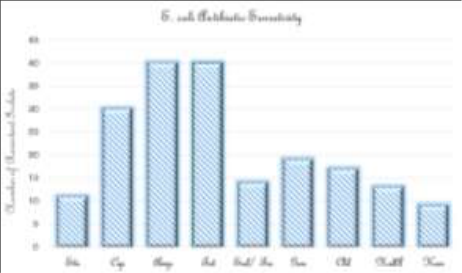 Figure 1
Introduction
Food-borne diseases, caused by agents that enter the body through the intake of contaminated food materials are one of the primary public health concerns (Tan et al., 2013) [18] . Meat is consumed by many people as an important source of protein and other nutrients. It has been estimated that 62 billion chickens, 1.5 billion pigs, 545 million sheep, 444 million goats, and 301 million cattle were slaughtered for meat consumption worldwide in 2014. Furthermore, pork is the most consumed meat (average consumption of 16 kg per year in 2013), followed by poultry (15 kg), beef/buffalo (9 kg), and mutton and chevon (2 kg). Meat consumption is known to be highest across high-income countries and lowest in low-income countries (Ritchie and Roser. 2019) [8] . E. coli encompasses a number of strains of the bacterium known as Escherichia coli, which normally inhabits the intestines of all animals, including humans. Most strains of E. coli are harmless, and, in fact, are necessary for us to develop and function properly. E. coli and other bacteria provide us with many necessary vitamins. However, a few strains of E. coli are capable of causing illness in humans. Of particular concern is the strain known as Escherichia coli 0157:H7, which can cause severe illness such as Enteropathogenic, enteroinvasive and enterotoxigenic types of E. coli can be a leading cause of food-borne diarrhoea (Akbar and Anal, 2011) [2] . E. coli 0157:H7 produces large quantities of one or more related potent toxins that cause severe damage to the lining of the intestine. These toxins (verotoxin, or VT, and shinga-like toxin) are closely related (or identical to) the toxin produced by shingella dysenteriae. Food Processing: Understanding and Controlling E. coli Contamination. Animals, such as dairy and beef cattle, chickens, pigs, and sheep are natural reservoirs for E. coli bacteria. However, E. coli also grows well outside the animal body, thriving, for example, in unclean food handling equipment. It affects the people's well-being, and imposes economic impacts (Akbar and Anal, 2013) [4] . Direct human or animal fecal contamination is also often a source of this bacteria. E. coli 0157:H7 infection, or hemorrhagic colitis, often causes severe bloody diarrhea, abdominal cramps, and occasional vomiting. Fever is either absent or of low grade. The illness is self-limiting and lasts for an average of eight days. In some persons, particularly the elderly and children under five years of age, the infection can also cause a complication called hemolytic uremic syndrome (HUS), in which the red blood cells are destroyed and the kidneys fail. About 2% to 7% of E. coli infections lead to this complication. In the United States, hemolytic uremic syndrome is the principle cause of acute kidney failure in children, and most cases of HUS are caused by E. coli 0157:H7. (Oluyege et al., 2009) [14] . In many developing countries, food-borne disease outbreak from bacteria, such as Escherichia coli and Salmonella spp. impose a substantial burden on health care systems and can markedly reduce the economic productivity of the countries. A huge number of acute diarrheal cases reported each year, while the reported cases of food poisoning are more than 120,000 per year in Thailand (Minami et al., 2010) [11] . It is hard to identify the pathogen and food vehicle responsible for the majority of food-borne infection. Poultry meat, red meat, desserts and egg can transfer the pathogens like Salmonella, E. coli and Campylobacter (Akbar and Anal, 2014b) [3] . Escherichia coli O157:H7 are mostly associated with food materials. The low infectious dose and life-threatening complication have made this organism an important pathogen and serious threat to public health. Unhygienic practices, use of contaminated instruments and materials in food processing are mainly associated with food-borne diseases (Wilfred et al., 2012) [20] . This is because the muscle of a non-diseased life animal is indispensably sterile. Once the animal is slaughtered, the muscles are exposed and can be contaminated by microorganisms. E. coli are known to naturally harbour in the gastrointestinal tract of farm animals. They cross-contaminate meats when the gastrointestinal tract ruptures during evisceration. It was observed during sampling that knives used for cutting meats were not sterilized intermittently (Feng et al., 2017) [15] . The prevalence of antimicrobial resistance among food-borne pathogens increased during recent decades (Akbar and Anal, 2014a) [1] . The frequent and unnecessary use of antimicrobial agents for farming and therapeutic purpose in animals and human are contributing to create resistant strains. Escherichia coli is known to be an indicator of faecal contamination, and its presence in food indicates the possible presence of other enteric pathogens. Some of the E. coli strains itself are highly pathogenic in human and animals. People with low immunity are the prime target of the pathogenic strains of E. coli (Keeratibul et al., 2009; Akbar and Anal, 2011) [2] . The objective of this study was to analyse the presence of E. coli and its pathogenic strain O157 in retail poultry meat at consumer counter (shops and markets). Antibiogram of the isolates were also analyzed, in order to investigate the resistance pattern of the isolates to commonly in use antibiotics. For effective food safety management plan, it is necessary to continuously monitor the presence of pathogens in food materials.'
Materials and Methods
Materials and Methods
Sampling
A total number of 130 broiler meat samples were collected from different open and supermarkets in Jalalabad (city and zones) in sterile polythene bags and kept in a priory disinfected sampling box. The samples were brought to the laboratory in a sampling box maintaining low temperature (≤ 4 o C) using ice pads. The collected samples were processed within six hours of its collection. The samples were collected randomly and each collected sample was marked with the identification code with respect to the date and time of collection. Sampling criteria were limited to 300 g of one sample in open market and one packet in the supermarket. Samples collection criteria were not limited to any specific part.
Isolation procedure of Escherichia coli
Meat with hard pieces or bony samples was first trimmed with sterile knife. Isolation and identification procedure in bacteriological analysis manual (Feng et al., 2002) [8] was followed with slight modification for the isolation and identification of Escherichia coli, whereas serological kit was used to confirm the pathogenic strain O157. The meat samples (25 g) were first transferred to the sterile flask containing 225 ml of sterile Tryptic Soy Broth (TSB) (Merck, Germany). The samples were then homogenized with stomacher machine (Bag Mixer, Inter science) for 10 min, and incubated at 37 o C for 16-24 hours. Following the incubation, part (two wire loop full) of the TSB was transferred to Macconkey Agar (MKA) (Himedia, India) and incubated at 37 o C for 24 hours. The lactose fermenting colonies on MKA was transferred to Eosin Methylene Blue Agar (EMBA) (Himedia, India) and incubated at 37 o C for a further 24 hours. Suspected colonies (with a green metallic sheen) were then confirmed by API 20E Kit (Biomerieux, France) along with API web. The pathogenic strain O157 was confirmed with the help of a latex agglutination kit (Oxoid, UK) from the preliminary confirmed E. coli isolates. Escherichia coli (TISTR 780) was used as control strains for the validation of nutritional media and immunological kits. Antimicrobial susceptibility test All the E. coli isolates were exposed to different antibiotics for its antimicrobial susceptibility and drug resistance pattern determination using a disk diffusion assay following the guidelines of clinical and laboratory standard institute. Pre-incubated 24 hours cultures of E. coli in sterile buffer peptone water with bacterial count 108 CFU/ml was swabbed over Mueller-Hinton agar (Merck, Germany). After placing the antibiotic discs aseptically, the plates were incubated at 37 o C for 18-24 hours and zone of inhibition were measured subsequently. The commercial antibiotics used in the study were: Ciprofloxacin (5 µg), Ampicillin (10 µg), Tetracycline (30 µg), Sulfamethoxazole/Trimethoprim (25 µg), Gentamicin (10 µg), Chloramphenicol (30 µg), Nalidixic acid (30 µg), Streptomycin (10 µg) and Kanamycin (30 µg) (Oxoid, UK). Out of all 130 samples analyzed for the presence of E. coli, 34.6 % (45/130) was found contaminated with E. coli, in which five were E. coli O157 strain making prevalence of 3.8% (5/130) of all samples investigated. The E. coli O157 was confirmed with the help of serological kit. The percentage of pathogenic E. coli was lower than the overall contamination. Presence of pathogenic strains of E. coli in broiler chicken meat is not only a potential threat of cross contamination, but can also lead to become an infectious dose for handlers and consumers. Escherichia coli presence in food materials are considered to be an indicator for the presence of other pathogenic bacteria in the respective food items (Shar et al., 2010) [18] . Rasmussen et al. (2015) [13] examined locally produced chicken meat and imported chicken thighs into Ghana for E. coli and observed that the local chickens 36 (64.29%) and imported chickens 73 (55.30%) were contaminated by E. coli. Adzitey (2015) [7] also detected 56% (39/70) of E. coli in beef samples sold in the Tamale metropolis of Ghana. Zhao et al. (2001) [23] reported 38.7% prevalence of E. coli in chicken meat in a similar study in Minami et al. (2010) [11] reported zero percent prevalence of E. coli O157:H7 in Thailand in a similar study. Hossain et al. (2008) [10] recorded 63.6% in broiler and 56.4% in layer equal to the overall 60 %prevalence in a similar study in Bangladesh. Rahimi et al. (2012) reported 4.7% E. coli O157:H7 prevalence in the raw meat, including beef, camel, sheep, goat, and water buffalo meat in Iran. Handling of meat and animal carcasses, cross contamination from soil, cutting instruments and the use of contaminated water for washing purpose can be a prominent source of contamination. Monitoring of foodborne pathogens in food products are the only means to cope with the problem promptly (Chang et al., 2013) [6] . The E. coli isolates including E. coli O157 were tested for its antibiotic susceptibility and resistance patterns against nine different commonly in use antibiotics. 24.5% (11/45) isolates were found resistant to antibiotic streptomycin, while the resistance 66.6% (30/45) were noted against ciprofloxacin. The E. coli isolates 88.9 % (40/45) were found resistant to ampicillin, while the same percentage of resistance was found against tetracycline. The highest resistance was found against ampicillin and tetracycline. 14 out of 45 (31.1%) E. coli isolates showed resistance to sulfamethoxazole /trimethoprim, whereas 42.2% (19/45) were found resistant to gentamicin, and 37.7% (17/45) were found resistant to chloramphenicol, 28.8% (13/45) against nalidixic acid and 20% (9/45) against kanamycin, illustrated in Figure1. Hossain et al. (2008) [10] reported that the E. coli isolates from Bangladesh were found 100% resistant to nalidixic acid and 63% to ampicillin. Out of all nine different antibiotics used against forty five different E. coli isolates of poultry meat, streptomycin and kanamycin were found more active as compare to other antibiotics used in the study. Oluyege et al. (2009) [14] reported 91.3% resistance against gentamicin, 34.8% against tetracycline and 8.7% against nalidixic acid in E. coli isolates from southwestern Nigeria. The nalidixic acid resistance percentage is in agreement with our study, while in case of tetracycline and gentamicin it varies. The resistance against drugs can be genetically transferred from one bacterium to another by transmissible elements like plasmids (Neu, 1994) [14] . These resistant bacteria can pass their resistance genes to their offspring by replication or to related bacteria through conjugation (Tomasz, 1994) [20] . Escherichia coli exchange the resistance genes with the help of conjugation (Madden, 2009) [11] . The study showed that all E. coli isolates of poultry meat are resistant to at least three antibiotics, commonly in use against Gram-negative bacteria. Nine E. coli isolates showed resistance to almost four antibiotics while fifteen isolates were found resistant to five antibiotics. The highest resistance of one E. coli isolate was noted against seven different antibiotics (ampicillin, tetracycline, ulfamethoxazole/trimethoprim, gentamicin, chloramphenicol, nalidixic acid and kanamycin) out of nine used in the study. The study showed that, most of the E. coli isolates are multidrug resistant and majority of the antibiotics were found inactive against them. 15 out of 45 isolates of E. coli were resistant to 5 antibiotics. 11 out of 45 isolates were resistant to 4 out of 10 antibiotic used in the study. 20 out of 45 E. coli isolates showed resistance to five antibiotics. Akond et al. (2009) [5] found multi-drug resistant E. coli showed resistant to more than six different types of antibiotics in a similar study in Bangladesh. Preventing food contamination and human infection from E. coli requires control measures at all stages of the food production continuum: from agricultural production, to processing, manufacturing, transporting, storing, and preparation of foods in both commercial establishments and the domestic environment.
Result and Discussion
Result and Discussion
Conclusion
This study revealed that the presence of E. coli and its pathogenic strains are common in the broiler chicken meat. Such contamination can easily lead to cause the infections related to this bacteria. Its presence in food materials is a problem, while the developments of drug resistance by these common pathogens are a more serious matter of concern for food safety and public health. It was concluded that the majority of commonly in use antibiotic are not active against E. coli isolates from poultry meat. New strategies and proper food safety management are needed to prevent the contamination of food materials and to reduce the drug resistance. Developing a new and natural antibiotic with a novel mode of action is necessary for the treatment of such multi-drug resistant bacteria.
References
22 in the original paper- Akbar A, Anal AK. Zinc oxide nanoparticles loaded active packaging a challenge study against Salmonella typhimurium and Staphylococcus aureus in ready-to-eat poultry meat. Food Control 2014 a;38:88-95.
- Akbar A, Anal KA. Food safety concerns and food-borne pathogens, Salmonella, Escherichia coli and Campylobacter. FUUAST Journal of Biology 2011;1(1):5-17.
- Akbar A, Anal KA. Prevalence and antibiogram study of Salmonella and Staphylococcus aureus in poultry meat. Asian Pacific Journal of Tropical Biomedicine 2013;3(2):163-168.
- Akond MA, Hassan SMR, Saidul A, Momena S. Antibiotic resistance of Escherichia coli isolated from poultry and poultry environment of Bangladesh. American Journal of Environmental Science 2009;5(1):47-52.
- Chang WS, Afsah-Hejri L, Rukayadi Y, Khatib A, Lye YL, Loo YY et al. Quantification of Escherichia coli O157:H7 in organic vegetables and chickens. International Food Research Journal 2013;20(2):10231029.
- Adzitey F. Prevalence of Escherichia coli and Salmonella spp. in beef samples sold at Tamale Metropolis, Ghana. International Journal of Meat Science 2015;5:8-13.
- Feng P, Weagant SD, Grant MA. Enumeration of Escherichia coli and the coliform bacteria. In Merker R. I. (Eds). Bacteriological analytical manual, 8th edn. Revision A. U.S. Food and Drug Administration, College Park, MD 2002.
- Ritchie H, Roser M. Meat and dairy production 2019. https://ourworldindata.org/meat-production#numberofanimals-slaughtered
- Hossain MT, Siddique MP, Hossain FMA, Zinnah MA, Hossain MM, Alam MK et al. Isolation, identification, toxin profile and antibiogram of Escherichia coli isolated from broilers and layers in Mymensingh district of Bangladesh. Bangladesh Journal of Veterinary Medicines 2008;6(1):01-05.
- Madden D. Antibiotic resistance in E. coli. A practical investigation of bacterial conjugation. The Welcome trust, national centre for biotechnology education university of Reading UK, 2009, 1-12.
- Minami A, Wanpen C, Chongsa-Nguan M, Seksun S, Shuko M, Kouichi T et al. Prevalence of food-borne pathogens in open markets and supermarkets in Thailand. Food Control 2010;21:221-226.
- Rasmussen MM, Opintan JA, Frimodt-Møller N, Styrishave B. "Beta-lactamase producing Escherichia coli isolates in imported and locally produced chicken meat from Ghana. PLoS One 2015;10:10. article e0139706.
- Neu HC. Emerging trends in antimicrobial resistance in surgical infections. A review. The European Journal of Surgery 1994;573:7-18.
- Oluyege AO, Dada AC, Ojo AM, Oluwadare E. Antibiotic resistance profile of bacterial isolates from food sold on a university campus in south western Nigeria. African Journal of Biotechnology 2009;8(21):5883-5887.
- Feng P, Weagant SD, Grant MA, Burkhardt W. Bacteriological Analytical Manual (BAM), Chapter enumeration of Escherichia coli and the coliform bacteria 2017, 4. https://www.fda.gov/food/laboratory-methodsfood/bam-4-enumeration Escherichia coli and coliformbacteria.
- Rahimi E, Kazemeini HR, Salajegheh M. Escherichia coli O157:H7/NM prevalence in raw beef, camel, sheep, goat, and water buffalo meat in Fars and Khuzestan provinces Iran. Veterinary Research Forum 2012;3(1):1317.
- Shar AH, Kazi YF, Kanhar NA, Soomro IH, Zia SM, Ghumro PB. Drinking water quality in Rohri City, Sindh, Pakistan. African Journal of Biotechnology 2010;9(42):7102-7107.
- Tan SL, Lee HY, Abu Bakar F, Abdul Karim MS, Rukayadi Y, Mahyudin NA. Microbiological quality on food handlers' hands at primary schools in Hulu Langat District, Malaysia. International Food Research Journal 2013;20(5):2973-2977.
- Tomasz A. Multiple-antibiotic-resistant pathogenic bacteria. A report on the Rockefeller university workshop. The New England Journal of Medicine 1994;330:1247-1251.
- Wilfred RS, Nithin PK, Naveen KGS. Prevalence of food borne pathogens in market samples of chicken meat in Bangalore. International Food Research Journal 2012;19(4):1763-1765.
- World health organization. Food-borne disease: a focus for health education. 1st edn. World Health Organization, Geneva 2000.
- Zhao C, Ge B, Juan DV, Robert S, Emily Y, Shaohua Z et al. Prevalence of Campylobacter spp., Escherichia coli, and Salmonella serovars in retail chicken, turkey, pork, and beef from the greater Washington, D.C., Area. Applied and Environmental Microbiology 2001;67(12):5431-5436.
Cited by 2
From OpenAlex, OpenCitations and reference lists read by Scinovex
- ارزیابی خسارات اقتصادی ناشی از بیماریهای باکتریایی در فارمهای مرغ گوشتی ولایت کابل ↗
واصفالدین مصلح, اسدالله صمدی · Journal of Natural Sciences – Kabul University · 2026
صنعت مرغداری در افغانستان نقش مهمی در تأمین امنیت غذایی ایفا میکند. با وجود رشد قابل توجه این صنعت، بیماریهای باکتریایی؛ مانند پلوروم، کولیباسیلوز و بیماری مزمنتنفسی، از جمله عوامل اصلی کاهش سودآوری در فارمهای مرغ گوشتی به شمار میروند. این مطالعهی مقطعی با روش توصیفی بههدف ارزیابی خسارات اقتصادی بیماریهای عمدهی باکتریایی در ۸۸ فارم مرغ گوشتی ولایت کابلانجام…
❝ 0PDF - THE IMPACT OF STORM WATERS TO WATER QUALITY IN SPRINGS AND RIVERS OF KISII MUNICIPALITY, KISII COUNTY, KENYA ↗
James Okinyi Manyara Meja, Evans Abenga Basweti, Anne Monyenye Omwoyo · International Journal of Social Sciences and Management Review · 2022
Storm water causes a major contamination for surface and subsurface waters in both urban and rural areas. In Kisii municipality it is observed that the major source of contaminants are non-point source pollution from farms and urban markets/garages. The study is carried in Kisii municipality on two rivers and five spring sampling a total of nine points, springs (4) and…
❝ 0PDF