
Research article · 2021 · Full text
International Journal of Agriculture Extension and Social DevelopmentDeterminants and food security impacts of small-scale irrigation in Ethiopia
Volume 4(1) · Pages 34–42 · DOI: 10.33545/26180723.2021.v4.i1a.67 ↗
Research areasChild Nutrition and Water AccessMicrofinance and Financial InclusionAgricultural Innovations and Practices
Abstract
Author-writtenEthiopia is principally an agronomic country with the vast majority of it people directly or indirectly involved in agriculture. Agriculture in the country is regularly small-scale rainfall reliant, traditional and survival farming with limited access to technology and institutional support services. The objective of this review was to review determinants of Small-scale irrigation participation and its impact on house hold food security. The review indicates that a much higher proportion of those who are poor are non-irrigating rather than irrigating households. Thus, the food insecurity occurrence in non-irrigating households is greater than in irrigating households. This suggests that small-scale irrigation has an important influence on household food security. This analysis shows that use of small-scale irrigation reduces the probability of a household being poor, controlling other factors. There were several challenges of irrigation use such as Lack of capacity to build irrigation cannel’s by own resources, Luck of irrigable farm land, insufficient flow of water, Lack of extension support by government office, Lack of access to other inputs and Entry barriers by set by irrigation water users’ association.
Summary
Source-checkedPlain-language reading of the full paper, prepared with AI and checked against the text. Each point links to the authors' own words.
Why it matters
- Ethiopia is primarily an agricultural nation where most of the population depends on farming. View evidence ↗
- Because Ethiopian agriculture relies mostly on rain, erratic rainfall patterns frequently lead to production failures. View evidence ↗
- Irrigation is viewed as a critical tool to stabilize crop production and reduce the risks associated with insufficient rain. View evidence ↗
The question
- The review aims to identify the factors that determine whether households participate in small-scale irrigation and how this participation affects their food security. View evidence ↗
What they did
- The study is conducted as a review of existing literature and empirical data regarding irrigation in Ethiopia. View evidence ↗
- The review analyzes research that utilizes binary logistic models and propensity score matching to evaluate irrigation impacts. View evidence ↗
What they found
- A higher percentage of poor households are those that do not use irrigation compared to those that do. View evidence ↗
- Food insecurity is more prevalent in households that do not practice irrigation than in those that do. View evidence ↗
- When other factors are controlled, the use of small-scale irrigation decreases the likelihood of a household living in poverty. View evidence ↗
- Only 10% of Ethiopia's total irrigation potential is currently utilized, with 368,160 hectares covered out of a potential 3,798,782 hectares. View evidence ↗
- Key barriers to irrigation include lack of financial capacity for canal construction, insufficient water flow, lack of government extension support, and entry barriers from water users' associations. View evidence ↗
- Empirical evidence shows that training, land size, and labor positively influence irrigation use, while distance from the river has a negative effect. View evidence ↗
What it means
- The author concludes that developing small-scale irrigation positively impacts the food security of rural households. View evidence ↗
- The author recommends that policymakers use these insights to promote the technological changes necessary for national economic development. View evidence ↗
Visual summary
1 visualsIllustrations explain the paper; they do not show study data.
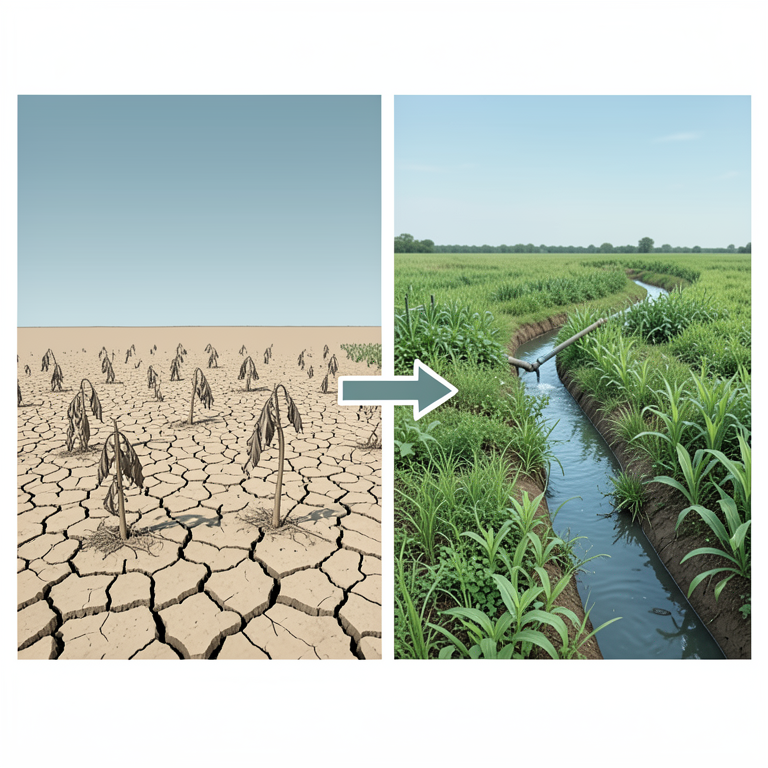
Irrigation and Food Security Relationship
AI-generated conceptual illustration (Ethiopian smallholder farmland). It explains the idea and does not show study data.
View source evidence ↗Introduction
Ethiopia is principally an agronomic country with the vast majority of it people directly or indirectly involved in agriculture. Agriculture in the country is regularly smallscale rainfall reliant, traditional and survival farming with limited access to technology and institutional support services (Desta, 2004) [14] . Irrigation in Ethiopia contributes to increase the farmers" income, household resilience and buffering livelihoods against shocks and stresses by producing higher value crops for sale at market and to harvest more than once per year. In turn, this provided them to build up their assets, buy more food and non-food household items, educate their children, and reinvest in further increasing their production by buying farm inputs or livestock. However, the benefits are very unevenly distributed among households (Eshetu, 2010) [16] . Agricultural production in Ethiopia is primarily rain-fed, so it depends on erratic and often un balanced rainfall. As a result, there are frequent failures of agricultural production. Irrigation has the potential to stabilize agricultural production and mitigate the negative impacts of variable or insufficient rainfall. Irrigation plays a great role in agricultural production through increasing crop yields, and enabling farmers to increase cropping intensity and switch to high-value crops (Zhou et al., 2008) [68] . Particularly small-scale irrigation is one of the major programs to improve agricultural production in the rural households of a country. It helps less income and food insecure households to overcome shortage of rainfall by giving optimal water for irrigation agriculture and livestock, strengthen the base for sustainable agriculture, provide increased food security to poor communities through irrigated agriculture and contribute to the improvement of human nutrition (FAO, 2003). According Awulachew et al. (2007) [4] , the reasons for the poor development of irrigation in the region (country) are fragmented and small farmland, political instability, lack of technologies, government owned land policy, lack of financial resources, and weak institutional set up in the country. The major limitations that constrained the development of the irrigation sub-sector are: (i) Agriculture is subsistence and predominantly based on traditional farming systems; (ii) Inadequate improved agricultural inputs; (iii) Limited access to improved irrigation technologies; (iv) Inadequate trained human power; (v) Inadequate extension services and limited availability of capital; (vi) Absence of appropriate institutions at different levels responsible for the promotion, planning and development of irrigated agriculture; (vii) Inadequate information system on agricultural water management and irrigation development (MOA, 2011) [42] . The study area has high water potential; farmers in the areas have long history of traditional practices and by now there is a better irrigation activity that gives opportunity to government in developing modern small-scale irrigation schemes. Irrigation is assumed to improve agricultural production and food security. However, it is not well known to what extent the households using irrigation are better off than those who depend on rainfall in the study area. Where this review initiated to conducted, an in-depth comparative analysis studies are scarce on factors that determine households" participation in small-scale irrigation and also there are no empirical studies conducted in the district for assessing impact of small scale irrigation on household food security status. Therefore this review is tried to fill these gaps. www.extensionjournal.com
Determinants and Food Security Impacts of Small-Scale Irrigation 2.1 Definitions and Concepts of Irrigation
Irrigation is defined as the artificial application of water to the crop for the purpose of food and fiber production overcoming deficiencies in rainfall and help in creating stabilized agriculture FAO (1994). It is application of artificial water to the living plants for the purpose of food production and overcoming shortage of rainfall and help to stabilize agricultural production and productivity (FAO, 2005) [21] . Small-scale irrigations are type of irrigations that defined as schemes that are controlled and managed by the users. Small-scale schemes developed, operated and maintained by individuals, families, communities, or local rules and landowners, independently of government W. Bart (1996) [65] . In the same way, Small-scale irrigation is a type of irrigation defined as irrigation, on small plots, in which farmers have the controlling influence and must be involved in the design process and decisions about boundaries (Tafesse, 2007) [60] . Water is a basic need for human beings and animals. It is essential for their metabolic processes. It is used to build healthy Workforce, Ensuring Food Security, Provision of Clean energy for Agriculture, Industry & Service Maintenance of Healthy Ecosystem, Recreation (Aesthetic Value), Transportation, Hedge against climate change and variability catalyst (MOWE, 2013) [49] . The most essential use of water in agriculture is for irrigation to produce enough food. According FAO (1996a) [19] , irrigated agriculture can be defined as the supply of water increased by artificial means, involving the use of water controls technology and including drainage to arrange excess water. Irrigation has been practiced in Egypt, China, India and other parts of Asia for a long period of time. Ethiopia also has a long history of traditional irrigation system (mainly diversion schemes).It enables farmers to increase crop production and achieve higher yields, food availability and affordability for nonirrigators and reduces the risk of crop failure if rain fails (Hussein and Hanjra, 2004) [32] . Irrigation contributes to agricultural productivity through solving the rainfall shortage, motivates farmers to use more of modern inputs and harvest throughout the year and creates employment to members of the households (FAO, 2011) [20] .
History of irrigation development in Ethiopia
Traditional irrigation is very old in Ethiopia. The traditional small-scale schemes are, in general, simple river diversions it is practiced in Ethiopia since ancient times producing subsistence food crops. However, modern irrigation systems are started in the 1960s with the objective of producing industrial crops in Aish Valley. The potential of irrigation water in Ethiopia is quite high and its drainage pattern is of great importance to its neighboring countries. From the total potential area, the area irrigated is low and the reasons on the past regime is due to lack of fund, data on different factors of natural resources, infrastructure, skill, research and suitable policy and hydro-politics of the region. Irrigation is a very early agricultural practice which is extensively used by a number of early civilizations such as the ancient Egyptians and Ethiopians Grove (1989) as cited by (Chazovachii, 2012) [12] . Evidence also shows irrigation has been practiced in Egypt, China, India and other parts of Asia for a long period of time. Irrigation is the basis of civilization in many regions. For instance, Egyptians have depended on Nile"s flooding for irrigation continuously for a long period of time on a large scale (Zewdie et al., 2007) [67] . Irrigated agriculture is not an entirely new phenomenon in Ethiopia. As some literatures indicated, Small-scale traditional irrigation has been practiced for decades throughout the highlands where small farmers could be diverted seasonally for limited dry season cropping (FAO, 1994). Modern irrigation has documented in the 1960s where the government designed large irrigation projects in the Awash Valley to produce food crops for domestic consumption and industrial crops for exports and it is strongly believed that rain fed agriculture should be supplemented by irrigation in order to achieve national food self-sufficiency and ensure household food security. The total irrigation potential in Ethiopia is 3,798,782 hectare but currently irrigation schemes have covered only 368,160 hectare, 10% of the potential (MoFED, 2012) [46] .
Classification of Irrigation Developments in Ethiopia
According to Fuad (2002) [22] irrigation in Ethiopia can be classified in to three: 1. Small-scale irrigation which are often community based and traditional methods covering less than 200hectares. 2. Medium scale irrigation which is community based or publicly sponsored, covering 200 to 3000 hectares. 3. Large scale irrigation covering more than 3000 hectares, which is typically commercially or publicly sponsored.
With regards to operation, management and performance of large-scale irrigation schemes in Africa, FAO (1987) identified the following special weaknesses: ▪ Over sizing government and administrations, leading to excessive recurrent costs ▪ Lack of management and technical skills ▪ Lack of consistent policy and failure to plan for the medium and long term ▪ Political interference in technical and economic decision making and failure to delegate authority as well as responsibility ▪ Lack of foreign exchange for such essentials as fuel, spare parts and replacement machinery ▪ Failure to give adequate return to farmers, leading to their abandoning the schemes Due to such problems in large-scale schemes, small-scale irrigation has been increasingly recognized as a valid and attractive option in irrigation development both by government and donor agencies. In a more practical sense, small-scale irrigation developments are concentrated with the upgrading of traditional community irrigation or village irrigation systems, newly designed and constructed irrigation systems and ground water and pump development (Smith 1988). Such upgrading of irrigation works are the major functions of all river diversion irrigation projects that have been undertaken in different parts of Ethiopia. www.extensionjournal.com
According to the Ministry of Water Resource (2002) [50] the main advantages of small-scale irrigation schemes are: ▪ Much lower investment costs, and in a majority of cases these costs are borne by the community ▪ Do not involve dams or storage reservoirs, hence no population displacement is involved ▪ Less demanding in terms of management, operation and maintenance ▪ No land tenure or resettlement implications ▪ No serious adverse environmental impact ▪ Allow a wider diffusion of irrigation benefits and permit farmers to learn irrigation techniques at their own pace and in their own way.
The Ethiopian Irrigation Strategy
Ethiopia has a massive water resource probable to be consumed for irrigated agriculture and hydroelectric power generation. Since the 1950s large-scale irrigation scheme with modernization of agricultural activities especially in ash valley are under taken for the production of industrial crops. But, from 1980s the significance of small-scale system is identified as a response to tackle the recurrent drought (FAO, 2005) [21] . The Ministry of Water Resources (MoWR) is responsible for the overall planning, development, management, utilization and protection of the country's water resources, as well as supervising all water development activities carried out by other organizations. Large-scale water supply is also handled by the ministry through its Water Supply and Sewerage Department (FAO, 2005) [21] .
The overall purpose of the Irrigation Policy, which is one section of the Water Resources Management Policy, is to develop the huge irrigated-agriculture potential for the production of the food crops and raw materials needed for agro-industries in a sustainable ways (FAO, 2005) [21] . The policy emphasizes: Water Resource Sector Policies have been developed and short-, medium-and long-term Sector increase Programs prepared for the period 2002-2016. These strategies include the supporting of water resources management and development; the creation of an enabling environment; Tran's boundary rivers management; stakeholder participation and gender mainstreaming; disaster-prevention and public care, and environmental health standard (FAO, 2005) [21] . Irrigation development is taken as one of the pillars of the plan for the modernization of the agriculture sector, which is conceptualized by the government of Ethiopia as the main instrument for operationalizing the Agricultural Development Led Industrialization (ADLI). This strategy gives a strong focus on increasing the agricultural productivity by addressing the problem of shortage of water through the introduction of irrigation development goals. In line with this objective, the Government of Ethiopia's (GoE) policy towards irrigation management and development has been outlined in the Water Resources Management Policy. This policy document issued in 1999, elaborates blueprint on the management of water supply, sanitation, irrigation and hydropower sectors. The overall goal of the Ethiopia Water Resource Management Policy is to enhance and promote all national efforts towards the efficient, equitable and optimum utilization of the available water resources of the country, to ensure significant socioeconomic development on a sustainable basis Haile (2008) [27] . The specific objectives of the policy are to: 1. promote the development of the water resources of the country for economic and social benefits of the people, on an unbiased and sustainable basis; 2. allocate and correctly apportion the water, based on wide-ranging and integrated plans, and optimize the allocation principles that incorporate efficiency of use, equity of access, and sustainability of resources; 3. Manage and combat drought as well as other drought associated impacts, and disasters through efficient allocation, redistribution, transfer, storage and efficient use of water resources; and 4. Support, protect and enhance water resources and the overall aquatic environment on a sustainable basis.
The general policies to irrigation sub-sector are: to ▪ Ensure the full integration of irrigation with the overall framework of the country's socioeconomic development plans, with particularly reference to the Agricultural Development Led Industrialization (ADLI) Strategy. ▪ Promote the development of irrigation based on strong strategic planning to achieve the socioeconomic goals and participatory approach for promoting efficiency and sustainability. ▪ Develop irrigation within the framework of the overall water resources management policy. ▪ Allocate a reasonable share of annual GDP for irrigation development. ▪ Promote decentralization and user-based management with a special emphasis to the needs of rural women's participation. ▪ Develop a hierarchy of schemes on the basis of achieving food self-sufficiency and production of industrial raw materials. ▪ Support and modernize traditional irrigation methods by providing inputs that would improve their efficiency and sustainability. ▪ Protect and maintain acceptable water quality standards for irrigation. ▪ Develop water allocation and priority setting criteria. ▪ Integrate the provision of appropriate drainage facilities as an integral operating procedure of the irrigation infrastructure.
The policy recognizes and adopts the hydrologic boundary or "basin" as the fundamental planning unit and water resource domain. It also describes policy on a variety crosscutting issues which include groundwater resources management, watershed management, water-rights allocation, full involvement and participation of all stakeholders in all phases of the project, developing various norms, and procedures and guidelines in regards to financial sustainability. Furthermore, the promotion of credit and cost recovery mechanisms as well as institutional capacity building and improvement in productivity, development of appropriate and affordable designs and technologies technical guides, standards and design manuals are consider in the policy. Finally cohesive effort and goal setting has been identified to mitigate the negative environmental www.extensionjournal.com impacts.
Methods of Irrigation
Irrigation methods are the system how to obtain water for irrigation purposes from its sources is. It depends on water resources, water rules, rain water, topography, plants cultivated and growing seasons Dupriez and De Leener (2002) [15] . There are only two general methods of applying irrigation water.1 surface irrigation 2. Sub-surface irrigation ▪ Surface irrigations are the oldest methods of irrigation, which convey water from the survey to the fields in lined or unlined channels. Surface irrigation is the introduction and distribution of water in a field by the gravity flow of water over the soil surface. ▪ Basin irrigation is the most common form of surface irrigation, particularly in regions with layouts of small fields. A basin is a piece of land, small or large, surrounded by earth bunds in which water is pounded. ▪ Furrow irrigation is accomplished by running water in small channels that are constructed with or across the slope of a field. Furrow irrigation avoids flooding the entire field surface by channeling the flow along the primary direction of the field using 'furrows,' 'creases,' or 'corrugations. ▪ Border irrigation is an open-field method viewed as an extension of basin irrigation to sloping, long rectangular or contoured field shapes, with free draining conditions at the lower end. Here a field is divided into sloping borders. ▪ Flood irrigation is an ancient method of irrigating crops. It is likely the first form of irrigation used by humans as they began cultivating crops and is still one of the most commonly used methods of irrigation used today. ▪ Drip irrigation is one of the more advanced techniques being used today because, for certain crops, it is much more efficient than flood irrigation, where a larger portion of the water is lost to evaporation. Drip irrigation is practiced in dry, arid regions where water is scarce and must be used sparingly. ▪ Sprinkler irrigation is sprayed into the air and allowed to fall on the ground surface somewhat resembling rainfall. According to Dupriez and De Leener (2002) [15] , Sprinkler irrigation imitates rainfall. It is also called overhead irrigation
Empirical Review on Small Scale Irrigation
Petros (2017) [55] employed logit regression model to identify determinants of Small-scale irrigation use at Boloso Sore district of Southern Ethiopia. Logistic regression model result indicates, four variables are found to be significant namely training, land size and labor which had significant and positive effect on the use of irrigation water use while, distance from the river had significant and negative effect on the use of irrigation water. Agidew (2017) [2] employed the binary logistic regression analysis to recognize the determinant factors that influence the use of irrigation water conducted at Arba Minch Zuria Woreda. The results show that sex of respondents'; household size engaged in the agricultural labor force and number of contact of respondents with agricultural development agents per month had significant positive effect on the use of irrigation water. While education level and attending on training had significant positive effect on the use of irrigation. And also, farm distance from the river and the main irrigation canal had significant negative effect on the use of irrigation water. Mamo (2018) [38] apply binary logistic regression analysis to examine the determinants of the performance of small scale irrigation in improving household farm income in Hadiya zone, Ethiopia. The result shows that five determinant factors, education level of respondents', household labor and land holding size, household income had significant positive effect on the use of irrigate on water. While, age of respondents and farm distance from river had significant negative effect on the use of irrigation water. AgerieNega (2013) [1] applied Heckman's two-stage to investigate the factors that affect participation of smallholder farmers in small-scale irrigation on the income of rural farm households in Dembia Woreda of North Gondar Zone. He revealed that distance from households farm to the nearest market center, education level of the household head, distance from households residence to the water source, access to extension service, total livestock holding, access to information, availability of family labor force, access to credit and gender of the household head are important determinants for participating in small-scale irrigation schemes. The analysis further revealed that irrigation participation, access to credit, gender of the household head, size of cultivated land, access to extension service and total livestock holding are positively and significantly associated with household total annual income. MuezHaileleul (2014) [51] employed Heckman"s two-stage to assess the impact of small-scale irrigation in ensuring rural households food security in EmbaAlajeWoredaTigray Regional state; Ethiopia. The result shown that sex, education level, cultivated land, distance to FTC, access to extension services, access to credit and water availability are the determinant households" participation in small-scale irrigation whereas household size, cultivated land, soil fertility, total livestock household consumption. TizitaDamtew (2017) [61] used to binary logistic regression assesses the effect of small scale irrigation on household food security in Bona-ZuriaWoreda. He reported that family labor, education level, land size, access to irrigation, health status of household heads and participation in nonfarm activities has positively and significantly affected household food security. In contrast age of household head and dependency ratio has negatively and significantly affected household food security. Abonesh ( 2006) employed Heckman two-step to analyze the impact of small scale irrigation on household food security and also to describe the management systems of the schemes.she reported that to determinant participation in irrigation are: nearness to the water source, household size, household size square, size of cultivated land, livestock holding, farmers perception of soil fertility status and access to credit service. After the selectivity bias is controlled by the model the second stage the following variables are found to significantly determine household food security: access to irrigation, household size, household size square, sex of the household head, size of cultivated land, access to extension service and nearness to the water source. www.extensionjournal.com
Tafesse (2007) [60] applied Heckman two stages to identify socio-economic and institutional determinants of small scale irrigation water use participation decision of farmers and the intensity of irrigation water use in Delo Mena and Berbere districts of Bale lowlands, southeastern Ethiopia. Econometric results of the Heckman second stage estimation procedure showed that access to improved technology for irrigation, market distance, distance from the main road, total labor in man equivalent, insect and pest and post irrigation implementation participation are found to significantly affect intensity of irrigation water use of the households.
Challenges of small scale irrigation development and utilization
Irrigation has the potential to stabilize agricultural production and mitigate the negative impacts of variable or insufficient rainfall in Ethiopia. In some areas of the country including the study area, delayed entrance of rainy seasons, early withdrawal and mal-distribution of rain were challenges from which great lessons have been drawn to seriously look into expansion of small, medium and large scale irrigation in perspective. Especially, in the study area there are many problems towards the development and management of irrigation schemes such as physical factors, technical factors and socio-economic factors (WBoARD, 2014). Farmers. Despite Small-scale irrigation has immense potential to improve the incomes of poor rural households in developing countries like Ethiopia, it is never free from problems. These problems of small-scale irrigation technology development range from individual household's biased attitudes to institutional arrangements. Accordingly, the major problems encountered in small-scale irrigation are problems related to cost, institutional problems, the policy environment, design issues, cultural factors and environmental problems (Getaneh, 2011
Opportunities of small scale irrigation use
According to the Ethiopian Growth and Transformation Plan (GTP 2010/11-2014/15), the main objectives of the water sector development plan are to develop and utilize water for different social and economic priorities in a sustainable and equitable way to develop irrigation schemes so as to ensure food security, to supply raw materials for agro-industries and to increase foreign currency earnings. In irrigation sub sector, the country is believed to have the potential of 5.1 million hectares of land that can be developed for irrigation through pump, gravity, pressure, underground water, water harvesting and other mechanisms. Thus, irrigation development, particularly small scale irrigation was be accelerated (MoFED, 2010) [41] . According to Haile [9], there are four interrelated mechanisms by which irrigated agriculture can reduce poverty, through: (i) increasing production and income, and reduction of food prices, that helps very poor households meet the basic needs and associated with improvements in household overall economic welfare, (ii) protecting against risks of crop loss due to erratic, unreliable or insufficient rainwater supplies, (iii) promoting greater use of yield enhancing farm inputs and (iv) creation of additional employment, which together enables people to move out of the poverty cycle. In the same way, Zhou and others mentioned that irrigation contributes to agricultural production in two ways: increasing crop yields, and enabling farmers to increase cropping intensity and switch to high-value crops. Therefore, irrigation can be an indispensable technological intervention to increase www.extensionjournal.com household income. Irrigation can benefit the poor specifically through higher production, higher yields, lower risks of crop failure, and higher and all year round farm and non-farm employment.
Determinants of small scale irrigation development and utilization
Irrigation can benefit the poor specifically through higher production, higher yields, lower risks of crop failure, and higher and all year round farm and non-farm employment (Hussain and Hanjra 2004) [32] . Farmers in poor areas have suffered from chronic poverty and severe food insecurity being vulnerable to climatic changes and dependent on variable rainfall. This is mainly attributed to a low level of agricultural productivity. Such low productivity areas are characterized by persistent rural poverty, and increasing population pressure has often resulted in a vicious circle of poverty and environmental degradation (Von Braun et al., 2008) [63] . As many of the low productivity areas have untapped water resources, irrigation development is being suggested as a key strategy to enhance agricultural productivity and to stimulate economic development (Bhattarai et al., 2002) [7] .
In the contemporary literature, irrigated farming is recognized as central in increasing land productivity, enhancing food security, earning higher and more stable incomes and increasing prospects for multiple cropping and crop diversification (Hussain et al., 2001; Smith, 2004). Further investment in complementary infrastructures (credits, extension and markets) can produce a spillover effects to neighboring farmers (Abonesh et al., 2006).
Contribution and impact of irrigation
Demand for irrigation water can be regarded as a derived demand for food. Currently many irrigation authorities started to hand over the management, operation, and maintenance of irrigation schemes to the user. According to Bhattarai et al. (2002) [7] , the potential contribution of irrigation towards farm output growth and the total beneficial impacts of irrigation development, both direct and indirect. ▪ Increased crop production (yield improvement) and increased farm income. ▪ Increased cropping intensity and crop diversification opportunities and the feasibility of year round crop production activities. ▪ Increased farm employment; more employment opportunities farming families as well as for hired laborers in the locality. ▪ Increased farm consumption and increased permanent capital (permanent asset accumulation due to irrigation). This has significant implication for reducing inherent food insecurity. ▪ Reduced food (crop) prices allowing access to food for all, which is more beneficial to landless and subsistence families and provides better nutrition intake. ▪ Increased access to farm link roads ▪ Multiple uses of water for livestock and home gardens. ▪ Increased recharge of groundwater, easy access to groundwater and less drudgery for women in fetching water for daily household needs. ▪ Visual and recreational benefits accrue out of irrigation facilities. ▪ Increased farm income (for farmers) and increased on farm and off-farm employment opportunities for rural landless laborers resulting in better school attendance of children of farm laborers and improved social capital in society. This is due to the income effects of irrigation. ▪ Improved rural infrastructure always coincides with irrigation facilities. This greatly reduces transaction costs and rural marketing costs. The benefits generated by these activities are also called indirect benefits of irrigation investments.
Small-scale Irrigation and Food Security
This study reviewed the economic contribution of small scale irrigation on rural household food security. Irrigation investment in India enabled farmers to increase diversification of crops, and use of more chemical inputs like pesticides, fertilizers or improved seed varieties (Bhattarai et al., 2007) [7] and switched from low-value subsistence production to high-value market-oriented production in China (Huang et al., 2006) [30] . Farmers in rural areas suffered from persistent poverty and food insecurity due to climatic changes and dependent on variable rainfall. This leads to low agricultural productivity. As a result, the low productivity areas characterized by persistent rural poverty and increasing population pressure have often resulted in a vicious circle of poverty and environmental degradation (Von Braun, 2008) [63] . As many of the low productivity areas did not use water resources, irrigation development is recognized as a backbone of agricultural productivity, enhancing food security, earning higher incomes and increasing crop diversification (Smith, 2004) [58] . In many developing countries, small scale irrigation schemes were consider as a means to increase production, reduce the risk of unpredictable rainfall and provide food security and employment to poor farmers (Burrow, 1987) [9] . Small-scale irrigation is a policy priority in Ethiopia for rural poverty alleviation, food security and growth. It enables households to generate more income, increase their resilience, and in some cases transform their livelihoods (MOFED, 2006) [45] . Small-scale irrigation in Ethiopia had a significant role in diversification of production to new types of marketable crops like fruits, cash crops and vegetables (Eshetu, 2010) [16] .
Conclusions
This review has identified key factors that influence use of irrigation and its impact on food security in the study area. This insight is also useful to rethink about the barriers of use of irrigation. Therefore, the review can be used by policy makers to promote technological change that is directly needed for the economic development of the country. The result of this review indicates that small-scale irrigation development has a positive impact on food security status of rural households. The review indicates that a much higher proportion of those who are poor are non-irrigating rather than irrigating households. Thus, the food insecurity occurrence in non-irrigating households is greater than in irrigating households. This suggests that small-scale irrigation has an important influence on household food security. This analysis shows that use of small-scale www.extensionjournal.com irrigation reduces the probability of a household being poor, controlling other factors. There were several challenges of irrigation use such as Lack of capacity to build irrigation cannel's by own resources, Luck of irrigable farm land, insufficient flow of water, Lack of extension support by government office, Lack of access to other inputs and Entry barriers by set by irrigation water users' association.
References
67 in the original paper- Agerie Nega Issihun. Determinants of Smallholder Rural Farm Households Participation in Small Scale Irrigation and Its Effect on Income in North Gondar Zone: A CrossSectional Approach (Evidence from Dembia Woreda). M.Sc Thesis Mekelle University, Department of Economics 2013.
- Agidew Abebe. The determinants of small-scale irrigation practice and its contribution on household farm income: The case of Arba Minch Zuria Woreda, Southern Ethiopia. African Journal Agricultural Research 2017;12(13):1136-1143, DOI: 10.5897/AJAR2016.11739.
- Agricultural Transformation Agency (ATA). Transforming agriculture in Ethiopia. Annual Report of 2013/2014. Ethiopian Agricultural Transforming Agency, Addis Ababa, Ethiopia 2014, 8.
- Awulachew SB, Yilma AD, Loulseged M, Loiskandl W, Ayana M, Alamirew T. Water Resources and Irrigation Development in Ethiopia. Colombo, Sri Lanka: International Water Management Institute. (IWMI Working Paper 123) 2007, 78.
- Awulachew SB, Merrey DJ, Kamara AB, Van Koopen B, De Vries F, Penning Boelle E. Experiences and Opportunities for Promoting Small-Scale/Micro Irrigation and Rainwater Harvesting for Food Security in Ethiopia. IWMI Working Paper 98, 2005.
- Bacha D, Namara R, Bogale A, Tesfaye A. Impact of Small-Scale Irrigation on Household Poverty: Empirical Evidence from the Ambo District in Ethiopia, Journal of Irrigation and Drainage 2011;60:1-10.
- Bhattarai M, Barker R, Narayanamoorthy N. Who Benefits from Irrigation Development in India Implication of Irrigation Multipliers for Irrigation Financing Irrigation and Drainage 2007;56:207-225.
- Bhattarai M, Barker R, Narayanamoorthy N. Who Benefits from Irrigation Development in India Implication of Irrigation Multipliers for Irrigation Financing Irrigation and Drainage 2007;56:207-225.
- Burrow C. Water Resources and Agricultural Development in the Topics: New York, John Wiley and Sons 1987.
- Burrow C. Water Resources and Agricultural Development in the Topics: New York, John Wiley and Sons 1987.
- Central Statistics Agency. Agricultural Sample Survey 2007/08, Addis Ababa, Ethiopia 2007/08.
- Chazovachii B. The Impact of Small Scale Irrigation Schemes on Rural Livelihoods: The Case of Panganai Irrigation Scheme Bikita District Zimbabwe. Journal of Sustainable Development in Africa 2012;14(4):217231.
- Dessalegn Rahmato. Water resource development in Ethiopia. Issues of sustainability and participation. Forum for Social Studies Discussion Papers. Addis Ababa. Ethiopia 1999.
- M.Sc. Thesis. Alemaya University, Ethiopia 2004, 61.
- Dupriez H, De Leener. Land use and life: Ways of water, Run off, irrigation and drainage; Tropical Handbook. Publisher: CTA and TERRES ET VTE, Netherlands 2002. ISBN: 287105-011-2.
- Eshetu S, Belete B, Goshu D, Kassa B, Tamiru D, Worku E et al. Income Diversification through Improved Irrigation in Ethiopia: Impacts, Constraints and rospects for Poverty Reduction. Evidence from 2010.
- Eshetu S, Belete B, Goshu D, Kassa B, Tamiru D, Worku E et al. Income Diversification through Improved Irrigation in Ethiopia: Impacts, Constraints and rospects for Poverty Reduction. Evidence from East Harerghe Zone, Oromia Region, Ethiopia. Overseas Development Institute, Research Inspired Policy and Practice Learning in Ethiopia and the Nile Region (Ripple), Working Paper 14, Ethiopia 2010.
- Eshetu S, Belete B, Goshu D, Kassa B, Tamiru D, Worku E et al. Income Diversification through Improved Irrigation in Ethiopia: Impacts, Constraints and rospects for Poverty Reduction. Evidence from East Harerghe Zone, Oromia Region, Ethiopia. Overseas Development Institute, Research Inspired Policy and Practice Learning in Ethiopia and the Nile Region (Ripple), Working Paper 14, Ethiopia 2010.
- FAO. Agriculture and Food Security World Food Summit, November, 1996, Rome 1996a.
- FAO (Food and Agriculture Organization of the United Nations). The State of Food Insecurity in the World: How Does International Price Volatility Affect Domestic Economies a Food Security? ISBN 978-92-5106927-1, FAO, Rome 2011. http://www.fao.org.
- FAO. Agricultural trade liberalization: Implications for irrigated agriculture. Rome, Italy 2005.
- Fuad A. Small Scale Irrigation and Food Security: A case study for central Ethiopia. Discussion papers no 4, Forum for Social Studies, Addis Ababa 2002, 55.
- G/Egziabher G. Risk and Irrigation Management in a Semi-Arid Economy. PhD Thesis, Department of Economics and Resource Management -Norwegian University of Life Sciences, Norway 2008.
- Glenn D. Determining Sample Size, Document, Program Evaluation and Organizational Development. Institute of Food and Agricultural Sciences: University of Florida, Gainesville, FL 32611, USA 2013, 3.
- Gujarati DN. Basic Econometrics.4thed.the McGrawHill Book Co., New York 2004, 1003.
- Hagos F, Makombe G, Namara R, Awulachew S. Importance of Irrigated Agriculture to the Ethiopian Economy: Capturing the Direct Net Benefits of Irrigation, IWMI, Working Paper 128, ISSN 10260862, Addis, Ethiopia.862, Addis, Ethiopia 2009.
- Haile T. Impact of irrigation development on poverty reduction in Northern Ethiopia (dissertation), National University of Ireland, Cork 2008.
- Haile T. Impact of irrigation development on poverty reduction in Northern Ethiopia. PhD thesis, National www.extensionjournal.com University of Ireland, Cork 2008.
- Hazell P, Poulton C, Wiggins S, Dorward A. The Future of Small Farms for Poverty Reduction and Growth. 2020 Discussion Paper No.42, IFPRI 2007. Available on:http://econpapers.repec.org/paper/fpr2020dp/42.htm
- Huang Q, Rozelle S, Lohmar B, Huang J, Wang J. Irrigation, Agricultural Performance and Poverty Reduction in China. Food Policy 2006;31:30-52.
- Huang Q, Rozelle S, Lohmar B, Huang J, Wang J. Irrigation, Agricultural Performance and Poverty Reduction in China. Food Policy 2006;31:30-52.
- Hussain I, Hanjra MA. Irrigation and poverty alleviation: Review of the empirical evidence, IWMI, Irrig and Drain 2004;53:1-15.
- Hussain I, Hanjra MA. Irrigation and Poverty Alleviation: Review of the Empirical Evidence, Irrigation and Drainage 2004;53:1-15.
- Kothari CR. Research Methodology, Methods and Techniques. 2nded. New Age International: University of Rajasthan, Jaipur 2004, 418.
- Kothari. Research Methodology, Methods and Techniques. 2nded. New Age International: University of Rajasthan, Jaipur 2004, 418.
- Lipton M, Litchfield J, Faures JM. The Effect of Irrigation on Poverty: A Framework for Analysis. Water Policy 2004;5:413-427.
- Mahelet GF. Factors Affecting Commercialization of Smallholder Farmers in Ethiopia: The case of North Omo Zone, SNNP region. Paper presented at the Fifth International Conference on the Ethiopian Economy, Addis Ababa, June 7-9, 2007.
- Mamo Esayas Ambe. Determinants of the Performance of Small Scale Irrigation in Improving Household Farm Income in Hadiya Zone, Ethiopia. International Journal of African and Asian Studies 2018;48:(2409-6938). www.iiste.org 39. Map 2010-2020.
- Mengistu Hulluka. Ethiopia: Agricultural sector development and the role of the National Agricultural Extension Program; Centre for Applied Studies in International Negotiation, The food chain in SubSaharan Africa, Geneva 2000.
- Ministry of Finance and Economic Development (MOFED). The Federal Democratic Republic of Ethiopia, Growth and Transformation Plan (GTP) 2010/11-2014/15. GTP Draft. September 2010, Addis Ababa, Ethiopia 2010.
- MOA (Ministry of Agriculture). Small-Scale Irrigation Capacity Building Strategy for Ethiopia. Natural Resources Management Directorate through the support of GIZ. MOA, Natural resource sector, Sustainable Land Management Program, Addis Ababa, Ethiopia 2011, 5-7.
- MoARD. Small-Scale irrigation situation analysis and capacity needs assessment. Addis Ababa, Ethiopia 2011.
- MoARD. Ethiopia's Agriculture Sector Policy and Investment Framework: Ten Year Road 2010.
- MoFED (Ministry of Finance and Economic Development). A Plan for Accelerated and Sustained Development to End Povert (PASDEP). (2005/062009/10). Ethiopia 2006.
- MoFED (Ministry of Finance and Economic Development). Performance and Challenges on the Five Year Strategic Plan of Growth and Transformation: Annual Report of MoFED, Addis Ababa, Ethiopia 2012.
- MoFED (Ministry of Finance and Economic Development). A Plan for Accelerated and Sustained Development to End Poverty (PASDEP) (2005/062009/10). Ethiopia 2006.
- MoWE (Ministry of Water and Energy). Water Resources Management and Irrigation Policy: Annual Report of MOWE, Addis, Ethiopia 2012.
- MoWE (Ministry of Water and Energy). Water Resources Management and Irrigation Policy: Annual Report of MOWE, Addis, Ethiopia 2013.
- MoWR. Irrigation Development Programme: Water sector Development Programme (2002-2016) Main Report. Addis Ababa. Ethiopia 2002.
- Muez Haileleul Aregawi. The Impact of Small-Scale Irrigation on Rural household Food Security the case of Emba Alajeworeda. M.Sc Thesis Mekelle University Department of Economics 2014.
- Mutsvangwa T, Doranalli K. Agriculture And Sustainable Development, Netherlands The Hague University Press 2006.
- Mutsvangwa T, Doranalli K. Agriculture and Sustainable Development, Netherlands, The Hague University Press 2006.
- Norton G, Alwang J, Masters W. Economics of Agricultural Development World Food systems and Resource Use, 2nd Edition, ISBN 0-203-85275-3, 270 Madison Avenue, New 2010.
- Petros Woldemariam, Yishak Gecho. Determinants of Small-Scale Irrigation Use: The Case of Boloso Sore District, Wolaita Zone, Southern Ethiopia. American Journal of Agriculture and Forestry 2017;5(3):49-59. Doi: 10.11648/j.ajaf.20170503.13.
- Rodrguez G. Logit Models for Binary Data. [Internet] Tsion T, Ranjan SK, Teklu T. Effectiveness of training offered by Ethiopian Institute of Agriculture Research to farmers: The case of Holetta, Melkassa and Debre Zeit Agricultural Research Centers, Ethiopia. Afr. J Agric. Res 2007-2010;5(7):500-5001.
- Shimeles M. Impacts of productive safety net program on households assets protection. The case of Habruand Ambasel districts in Amhara Region, Ethiopia. MSc presented to the School of Graduate Studies (SGS) at Haramaya University, Ethiopia 2009.
- Smith LED. Assessment of the Contribution of Irrigation to Poverty Reduction and Sustainable Livelihoods. Int. J Water Resourc. Dev 2004;20(2):243257.
- Smith LED. Assessment of the Contribution of Irrigation to Poverty Reduction and Sustainable Livelihoods. Int. J Water Resource. Dev 2004;20(2):243-257.
- Tafesse. Socio-economic and Institutional Determinants of Small Scale Irrigation hemes utilization in Bale Zone, Oromiya National Regional State. A Master Thesis, Alemaya University 2007.
- Tizita Damtew. The Effect of Small Scale Irrigation on www.extensionjournal.com Household Food Security in Bona-Zuria Woreda, Sidama Zone, Southern Ethiopia. M.Sc Thesis Haissa University 2017.
- Van Den Berg M, Ruben R. Small-scale irrigation and income distribution in Ethiopia. J Dev. Stud 2006;42(5):868-880.
- Von Braun J, Fan S, Meinzen-Dick R, Rosegrant MW, Pratt AN. International agricultural research for food security, poverty reduction, and the environment. In: Stansbury C. (ed.). What to expect from scaling up CGIAR investments and Bes-Bet Programs. International Food Policy Research Institute (IFPRI), Ishington, USA 2008, 35-36.
- Von Braun J, Fan S, Meinzen-Dick R, Rosegrant MW, Pratt AN. International agricultural research for food security, poverty reduction, and the environment. In: Stansbury, C. (ed.). What to expect from scaling up CGIAR investments and Best-Bet Programs. International Food Policy Research Institute (IFPRI), Washington, DC., USA 2008, 35-36.
- Bart WS. Irrigation Water management Training manual. In Irrigation Scheme Maintenance and peration 1996, 10(55). Rome: FAO.
- Widtose JA. Irrigation Practices. Publisher: Updesh Purhohit for Agrobios; India, Jodhpur. ISBN NO: 817754-110-2 2001.
- Zewdie M, Moti J, Ascimelis G. Assessment of Wendo Wesha irrigation scheme in Aissa Zuria. Proceddings of research project completion workshop Addis Abaaba, Ethiopia 2007.
- Zhou SD. Factors affecting Chinese farmers' decisions to adopt a water-saving technology. Canadian Journal of Agricultural Economics Dessalegne R. Water Resources Development in Ethiopia: Issues of Sustainability 1999-2008;56(1):51-61.
Cited by 7
From OpenAlex, OpenCitations and reference lists read by Scinovex
- Examining the Barriers to Redesigning Smallholder Production Practices for Water-Use Efficiency in Numbi, Mbombela Local Municipality, South Africa ↗
Mishal Trevor Morepje, Isaac Azikiwe Agholor, Moses Zakhele Sithole, Nomzamo Sharon Msweli, Variety Nkateko Thabane, Lethu Inneth Mgwenya · Water · 2024
Smallholder farmers in South Africa face issues related to water shortages and poor irrigation water management. This study investigated barriers to improving water-use efficiency (WUE) in smallholder production practices in Numbi, South Africa. The objectives were to identify barriers in redesigning production practices for higher agricultural productivity and analyze the relationship between irrigation water supply and the adoption of WUE…
❝ 5PDF - Ecosystem management is the key to reduce climate impacts and food security
Mohammed Ataur Rahman · International Journal of Research in Agronomy · 2021
Ecosystems provide food to all organisms living there. To secure energy and nutrients, healthy and functional ecosystems are required. Most of the ecosystems are vulnerable to anthropogenic activities and climate change and have lost their productivity. The hydrological cycle has been obstructed due to deforestation, construction of dams and embankments, unplanned infrastructures, and agricultural expansion, and thus food security is under threat. So, it is urgently needed to restore healthy and functional ecosystems. Some practices are mentioned in this paper for ecosystem-based adaptation, a
- Status of food insecurity and its determinants by smallholder farmers in Shashogo district, Hadiya zone, Central Ethiopia ↗
Tamrat Lolaso Moloro, Engdawork Assef, Teshale Woldeamanuel · Cogent Food & Agriculture · 2024
Food insecurity happens in both developing and developed countries. This paper addresses spatial and temporal patterns of food insecurity and its determinants factors. The study used explanatory and descriptive research methods. This data was originated from household survey of 229 respondents who were interviewed during March and April 2022. Households self-report result shows that 52 (22.7%) of the respondents were…
❝ 3PDF - Climate change adaptation and mitigation measures in Ethiopia: Review
Guduro Beriso · International Journal of Agriculture and Food Science · 2022
Climate change refers to future fluctuations of temperature, precipitation, wind and alternative components of Earth’s climate system. Global climate change within the style of higher temperature, reduced downfall, and inflated downfall variability reduces crop yield and threatens food security in low financial gain and agriculture primarily based economies. Ethiopia is one of the most vulnerable countries experiencing drought and floods as a result of climate variability and change. The general objective of this review is to administer and summary on adaptation and mitigation measures initiat
- Small-scale irrigation adoption among farmers in Gambella region, Ethiopia ↗
Chuol Bor, Pal Both Dol, Alemayehu Gurmessa, MARTHA SAMUEL BULLO, Bichiok Nyak Majiok · Discover Sustainability · 2026
Changes in climatic conditions pose a threat to food systems and livelihoods, particularly in areas dependent on rain-fed agriculture. Therefore, this study aimed to identify the factors influencing small-scale irrigation adoption by farmers in the Gambella region. The Abol, Itang, and Makuey districts were selected purposively, and three kebelles, namely, Bonga, Achewa, and Adura, were selected using the probability proportional…
❝ 1PDF - Physicochemical Characteristics of Water in the Bontanga Irrigation Dam in the Guinea Savannah Agro-Ecological Zone of Ghana ↗
Aquinas Kofi Ayertey, Thomas Apusiga Adongo, Richard Kwame Dogbey · International Journal of Environment and Climate Change · 2024
Fresh water resource is one of the most significant natural assets of a country. Irrigation dams are usually used for irrigation purposes and also often serve as a source of water for domestic use. Due to this, there is a need for proper maintenance, assessment, and sustainable use of irrigation dams. This study assessed the physicochemical properties of the water…
❝ 1PDF - Determination of fertilizer rates and intra-row spacing on yield and yield components of onion (Allium cepa L. Var. cepa) under irrigation in site zone, Somalia region, eastern Ethiopia
Yalew Teshome, Debebe Asfaw · International Journal of Agriculture and Nutrition · 2021
A field experiment was concted in Harwa irrgation station in 2017/18 to assess effect nitrogen fetlizer to observe and intra-row spacing on yield and yield components of Adama Red onion (Allium cepa L.) experiment observe the effect of six N rates (0, 46, 69, 92, 115 and 138 kg ha-1) and four intra-row spacing levels (7.5, 10 12.5 and 15 cm) on yield and yield components of onion (Allium cepa L.). Was laid out according to randomized complete block design in factorial arrangement with three replications. Results revealed that the interaction effects of N rates and intra-row spacing showed high