
Research article · 2020 · Full text
International Journal of Horticulture and Food ScienceAssessment of plant growth regulators and chemicals for potato (Solanum tuberosum L.) dormancy breaking and subsequent yield in central highlands of Ethiopia
Volume 2(1) · Pages 10–20 · DOI: 10.33545/26631067.2020.v2.i1a.32 ↗
Research areasPotato Plant Research
Abstract
Author-writtencommon practice in most potato producing regions of Ethiopia. However, the characteristic long tuber dormancy of improved potato varieties in Ethiopia constrains double or triple cropping using irrigation during the long dry season of the year. Thus, it is important to break the long dormancy of tubers for early sprouting and timely planting. Therefore, several types of researches were conducted so far to assess the effect of plant growth regulators and other chemicals to assess its effect on tubers dormancy break, sprouting, sprouts growth, and subsequent effect on tuber yield, yield related and tuber quality of potato varieties. For dormancy break, sprouting and subsequent yield various methods of applications (haulm & dipping) and concentration rates were applied. Moreover, the effect of dormancy-breaking treatment and storage methods were conducted. Results of the studies indicated that, tuber dormancy period and sprout vigour were significantly influenced by the interaction of GA3 and variety, while other sprouting as well as sprout growth traits were significantly influenced by the main effects of GA3 and varieties. The interaction effect of varieties and GA3 significantly influenced days to maturity. Planting of tubers treated with the highest concentration of GA3 produced a significantly highest marketable tuber yield. The optimum tuber size (medium size) for planting purpose was attained from planting of tubers treated with 40 ppm GA3. Significant increase in tuber number and weight due to GA3 application contributed to the increase of total tuber yield. Application of GA3 and storage methods as well as the interaction among the varieties and treatments significantly affected tuber dormancy period, sprouting characteristics and subsequent tuber yield. The mean values for tuber quality (DM & SG) related traits increased in response to treating the tubers with higher concentrations rate of GA3 for both methods of application. Potato varieties treated with GA3 showed significantly higher tuber dry matter yields, specific gravity and total starch content than the other variety. The highest net benefit with an acceptable marginal rate of return was attained in response to treating tubers with higher rates of GA3. Therefore, it could be concluded that haulm application and dipping tuber in GA3 at higher concentration increased tuber yield with a possibility of cultivating potato for two to three production cycles in a year that enhance productivity per unit area, food and nutrition security as well as farmers’ income.
Summary
Source-checkedPlain-language reading of the full paper, prepared with AI and checked against the text. Each point links to the authors' own words.
Why it matters
- Potato is a critical global staple food, ranking as the most consumed crop after wheat and rice. View evidence ↗
- In Ethiopia, the long dormancy period of improved potato varieties limits the ability to perform double or triple cropping during the dry season. View evidence ↗
- Traditional sprouting methods used by farmers often result in poor quality tubers due to rotting, etiolation, and apical dominance. View evidence ↗
The question
- The paper aims to review how different chemicals, specifically various application methods and concentrations of gibberellic acid (GA3), affect potato tuber dormancy breaking, yield, and quality. View evidence ↗
What they did
- The reviewed research utilized two primary application methods for dormancy breaking: haulm application and tuber dipping. View evidence ↗
- The studies examined the combined effects of dormancy-breaking treatments and different storage methods. View evidence ↗
What they found
- The highest concentrations of GA3 were found to produce the significantly highest marketable tuber yield. View evidence ↗
- Treatment with 40 ppm GA3 resulted in the optimum medium tuber size for planting. View evidence ↗
- High total and marketable yields, as well as significant dry matter and specific gravity, were achieved using haulm GA3 at 750 or 1000 ppm, or dipping at 40 or 50 ppm. View evidence ↗
- Compared to the control, 40 ppm GA3 produced the highest sprout number, length, thickness, and fresh/dry mass. View evidence ↗
- Applying 20 ppm GA3 before storing tubers in pit storage, farm yard manure, or diffused light stores promoted early dormancy termination and high marketable yields. View evidence ↗
- Tuber quality traits, specifically dry matter (DM) and specific gravity (SG), increased with higher concentrations of GA3 regardless of the application method. View evidence ↗
- Higher rates of GA3 treatment provided the highest net economic benefit with an acceptable marginal rate of return. View evidence ↗
What it means
- The authors conclude that using high concentrations of GA3 via haulm application or dipping increases yield and enables two to three production cycles per year. View evidence ↗
- The authors recommend GA3 foliar application and dipping to shorten dormancy, allowing farmers to increase productivity and income through multiple annual harvests. View evidence ↗
Visual summary
1 visualsIllustrations explain the paper; they do not show study data.
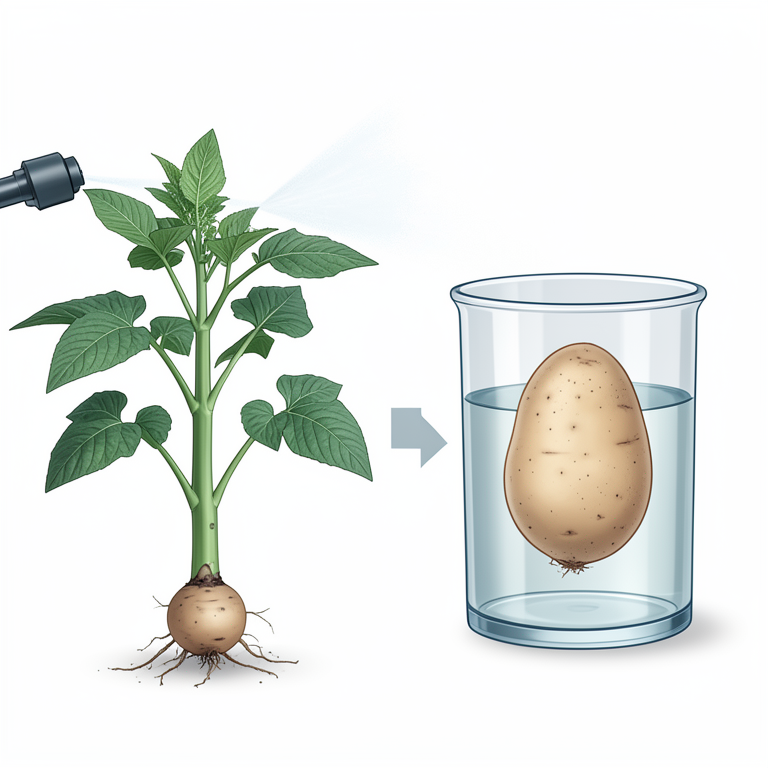
GA3 Application Methods
AI-generated conceptual illustration (potato plants (Solanum tuberosum L.)). It explains the idea and does not show study data.
View source evidence ↗Introduction
Potato (Solanum tuberosum L.) is one of the staple food crops in most parts of the world. It is the most consumed food crop world-wide next to wheat and rice (Birch et al., 2012; Hancock et al., 2014) [9,37] . The high yield potential of potato and its plasticity to environmental regimes makes it as one of the best crops for food and nutrition security in Eastern Africa (Kyamanywa et al., 2011) [50] . It contributes to world food security and has a critical role to play in developing nations facing hunger. According to FAO, potato production in Africa tripled from 1994 through 2011, from 8 to 24 million metric tons, largely due to the increase of cropping area. Same FAO data shows that the total production in Africa which was only 4% of global supply increased to 9% ten years later. However, food demand is increasing along with global population and average income (Lobell et al., 2009; Monfreda et al., 2008) [53,63] . Ethiopia has possibly the greatest potential for potato production; 70% of its arable land mainly in highland areas, above 1500 m.a.s.l, are believed to be suitable for potato production (Harnet et al., 2014) [38] . Despite high potential production environments and marked growth, the national average potato yield in Ethiopia is 14.18 t ha -1 (CSA, 2019) [19] , which is lower than the experimental yields of over 35 t ha -1 (Gebremedhin et al., 2013) [32] and world average yield of 20 t ha -1 (FAOSTAT, 2019) [31] as well as other top potato producing countries in Africa. The low yields are the result of a number of production constraints mainly involving abiotic and biotic stress factors (Hirut et al., 2016) [43] . Among the biotic constraints late blight, bacterial wilt, virus diseases and potato tuber moth constitute the major threats to potato production, while the abiotic stresses include soil nutrient deficiency, frost, drought, erratic rainfall, and air and high soil temperature especially in marginal areas (Gildemacher et al., 2009; Baye and Gebremedhin, 2013; Semegn et al., 2015) [34,6,79] . Moreover, lack of good tuber quality among growers is a major problem that adversely affects the expansion of potato production in many developing countries (Crissman et al., 1993) [18] . One major problem facing production of quality potato tuber is poor sprouting, due to dormancy which leads to delayed planting and poor crop emergence and vigor (Wiersema, 1985) [109] . After harvest, normal tubers show dormancy for about 1-15 weeks, depending on cultivar, tuber size, conditions before harvest and storage conditions. Farmers mostly prefer various traditional storage methods to enhance sprouting. Potato tubers sprouted in traditional ways are however, of poor quality due to apical dominance, rotting and sprout etiolating caused by the dark conditions. The use of low quantities of different dormancy breaking treatments, such as gibberellic acid (GA3) (Carrera et al., 2000; Demo et al., 2004) [15,25] , thiourea, rindite, carbon disulphide and bromo-ethane (Bryan, 1989) [11] has been suggested to promote potato tuber sprouting for immediate planting after harvest. However, under laboratory conditions gibberellins have been shown to be more stimulatory to potato tuber sprouting (Carrera et al., 2000) [15 ] and maintenance of tuber quality in terms of tuber health and vigor (Demo, 2002) [23] than any other growth promoting substances. Endogenous hormones have been proposed to play a significant role in tuber dormancy regulation (Suttle, 2004b) [89] . The level of endogenous GAs remains low during the middle period of storage (deep dormancy) and increase near the onset of dormancy (Bruinsma et al., 1967) [10] . Thus, exogenous application of GA3 is used to break potato tuber dormancy (Hemberg, 1958) [41] . Dipping or soaking of tuber in to GA3 solution on wounded tuber break the dormancy of tuber (Rappaport et al., 1958 ) [69] . By treating the tubers using gibberellic acid, the tubers will sprouts faster and the tubers treated with GA3 produce more number of tuber tubers (Rehman et al., 2001) [71] . To date, there is scarce information on the use of GA3 for potato sprouting under diffused light storage (DLS) conditions in eastern Ethiopia. Gemeda et al. (2017) [33] reported that for tubers treated with 20 ppm GA3 and stored under farm yard manure (FYM), the tuber dormancy period was reduced from 102.5 to 52 and 36.5 to 31 days, respectively. Timely availability of well-sprouted tubers at the on-set of rain as well as for irrigation is a pre-requisite for attaining proper planting materials which leads to high yields. Due to unavailability of sprouted tubers for planting at desired time, small scale farmers often promote potato sprouting by placing them in pits, sacks, teff straw and trenches and use genotypes with short dormancy. Medium to long dormancy genotypes are thus not easy to incorporate in the predominant cropping system in which farmers retain tuber from the previous harvest for replanting the next season. Potato producers' farmers mostly prefer various traditional storage methods to enhance sprouting. Potato tubers sprouted in traditional ways are, however, of poor quality due to apical dominance, rotting and sprout etiolation caused by the dark conditions. Under Ethiopian condition, the utilization of chemicals and plant growth regulators to regulate potato dormancy is not common. This is attributed to the lack of information regarding suitable chemicals and plant growth regulators, and their methods, rates, and time of application for efficient use. Moreover, potato producer farmers demand potato varieties having short dormancy period with desirable tuber qualities to use the varieties for multiple production cycles in a year. However, such varieties are not recommended for production by research because short tuber dormancy is considered a disadvantage for tuber storability or shelf life of table potato. Therefore, it is necessary to study dormancy breaking methods that will enhance sprouting of tubers of improved potato varieties until the breeding program develops varieties with short tuber dormancy period combined with high tuber yield, disease resistance, and quality in long run. Hence, introduction of chemicals and plant growth regulators that induces dormancy breaking is vital to have early tuber planting materials. Among the commercially available plant growth regulators, gibberellins (GA3) are widely used to break potato tuber dormancy and it can be employed under Ethiopian condition. Conversely, the efficient method of application and optimum rates of GA3 must be identified, and its influence on the subsequent performance of the crop was studied. In general, several plant growth regulators (PGRs) were tested to determine their role in potato tuber dormancy break, tuber yield and quality in other parts of the world and promising results were reported particularly where GA3 used under field and greenhouse conditions. Still, these PGRs have not been exploited for agricultural production in general and potato in particular. Thus, the objective of this paper is to review the different use of gibberellic acid (GA3) application methods and concentration rates and other chemicals to break potato tuber dormancy and subsequent effect on tuber yield and qualities.
Production of Potato in the Ethiopia
Potato is a crop that can be used to improve food security and cash income in Ethiopia. It is one of the root crops widely grown in the country with the highest rate of growth because increasing demand and emerging markets are providing great opportunity for resource-poor farmers to generate additional income (Gebremedhin et al., 2013) [32] . As a food crop, it has a great potential to supply high quality food within a relatively short period and is one of the cheapest sources of energy. Moreover, the protein from potato is of good composition with regard to essential amino acids in human nutrition (Berga et al., 1992) [8] . Currently, the national average potato production in Ethiopia reached 14.18 ton ha -1 (CSA, 2019) [19] . The national average potato yield is very low as compared to the attainable potential yield of (40 t ha -1 ) obtained under research conditions. This is due to narrow genetic basis of potato varieties, poor tuber quality, susceptibility to diseases and poor farmers' management (Haverkort et al., 2012; Tewodros, 2014) [40,95] . Potato production is influenced by environmental factors this process at a given site are basically air and soil temperatures, solar radiation, photoperiod, soil moisture and crop water use.
Potato Tuberization
Tuberization refers to the whole sequence of events from stolon formation to tuber induction (Vreugdenhil and Struik, 1989) [104] . Potato tuberization is a complex developmental process requiring interactions of environmental, biochemical and genetic factors (Kolomiets et al., 2001) [48] . It comprises the induction, initiation and growth of stolons, then cessation of stolon longitudinal growth followed by induction, initiation and growth of tubers (Sarkar, 2008) [76] . If a whole tuber or piece of tuber containing one or more eyes is planted, the buds sprout and a plant develops above the ground. Well before plant emergence the developing sprout grows adventitious roots, which constitute the root system. The underground portion also grows in to stem called stolons, which may bear new tubers at their tips (Ewing, 1997) [28] . Several plant hormones have been suggested to play a prominent role in the control of tuberization in potato. Available evidence indicates that photoperiod, temperature, irradiance, nitrogen and physiological age of the mother tuber affect tuberization either directly or indirectly by mediating changes in hormone concentrations (Ewing, 1990) [29] . Variation in soil texture moisture tent influences tuber size and extremely high temperatures can lead to drying out of the tubers and consequently a lower yield (Ewing, 1995) [30] .
Potato Tuber Dormancy
Dormancy of a potato tuber is defined as the physiological state in which autonomous sprout growth will not occur, even when the tuber is placed under conditions for sprout growth (Suttle, 2009; Reust, 1986) [91,72] . At harvest, potato tubers are dormant and will not sprout. After harvest, normal seed tubers show dormancy for about 1-15 weeks, depending on cultivar, tuber size, conditions before harvest and storage conditions. It can also be defined as a lack of growth due to the physicochemical condition of the tuber, which is influenced by a number of factors including plant hormones and storage temperature. It begins during tuber formation when the apical meristem of the stolon no longer gives rise to longitudinal growth, whereas the sub-apical parts take over, resulting in radial growth and producing the final tuber (Vreugdenhil, 2007) [105] . The authors mentioned that dormancy gradually develops in the tuber from the moment cell division in the stolon tip has stopped and the tuber starts to develop. Dormancy is a complex process that depends on genetic background, stage of tuber development, environmental and management conditions during tuber growth and storage (Aksenova et al., 2013) [3] . In potatoes, dormancy is the physiological state of the tuber in which autonomous (independent) sprout growth will not occur within two weeks, even when the tuber is kept in conditions ideal for sprout growth (Van Ittersum, 1992; Struik and Wiersema, 1999) [99,85] . During this period, postharvest environmental conditions have only limited impact on the sprouting behavior. Therefore, the period is classified as endo-dormancy. Temperature, water supply and the photoperiod during growth and storage are important environmental factors that regulate the sprouting behavior (Sonnewald, 2001) [80] .
Small tubers, such as mini-tubers, even have longer periods of dormancy (Lommen, 1993) [54] and are more sensitive to adverse conditions during storage (Struik and Lommen, 1999) [83] . Smaller micro-tubers (≤250 mg) had longer dormancy periods than did those greater than 250 mg with significant difference in sprouting speed (Leclerc, 1995; Struik and Lommen, 1999) [51,84] . Pruski et al. (2003) [68] reported that when dormancy of micro-tubers is not completed, less number of plants is produced. Micro-tuber dormancy appears to be correlated with field dormancy duration in cultivar specific manner (Leclerc et al., 1995) [51] . Endogenous hormones have been posited to plays key role in tuber dormancy regulation. Dormancy of mini-tubers is usually longer than the dormancy of normal seed tubers due to small size (Lommen, 1994) [55] . Sprouting and growth vigour of normal seed tubers also depend on seed tuber size and storage conditions (Struik and Wiersema, 1999) [85] . Larger sizes gave more vigorous sprouting and higher growth vigour of these sprouts and more weight (Van Ittersum, 1992) [99] . Small micro-tubers are more vulnerable to storage damage (Naik and Sarker, 1997) [65] .
Factors Affecting Tuber Dormancy
Seed potato quality can be measured by the ability to produce sprouts and daughter tubers. In addition to cultivar characteristics, seed quality is affected by production and storage conditions (Daniels-Lake and Prange, 2007) [22] . All these factors affect the physiological characteristics of seed potatoes. The physiological state of tubers can be assessed by accumulated temperature sum, incubation period or by combining chronological age and the incubation period (Caldiz et al., 2001) [14] . The duration of tuber dormancy is affected by the environmental conditions that exist during tuber development on the mother plant and during storage, where temperatures lower than 10°C delay dormancy breakage and sprout development (Burton, 1989) [13] . Relevant factors include relative humidity, temperature, photoperiod and diffused light (Struik and Wiersema, 1999) [85] . Especially the temperature effect is highly complex and cultivar specific. The chemical and structural characteristics of potatoes are affected by growing conditions, variety, maturity at harvest and storage conditions (Burton, 1989) [13] .
Genetic Variation
Dormancy of potato varies among genotypes. It may also vary within a tuber lot of one cultivar from a particular origin or year. The survival advantage, the inheritance pattern of tuber dormancy is complex and it is controlled by at least nine distinct loci (Van den Berg et al., 1996) [98] . In many potato cultivars, natural dormancy progression occurs over a period of many months. Usually, the dormancy period is shorter in early cultivars than in later cultivars, although this relation is not very strict. Similarly, Suttle (2007) [92] indicated that long tuber dormancy is generally found in wild potato populations whereas the reverse is often true in potato lines developed by modern breeding. The length of the dormancy period depends on the genetic background and is affected by pre-harvest and post-harvest conditions (Suttle, 2004a) [90] . With the onset of sprouting, the tuber turns into a source organ supporting growth of the developing sprout. The physiological age of the tuber has a great effect on the pattern of sprout growth, but the basis is genetic. In turn, the physiological age of the tuber is greatly influenced by growing & storage conditions and length of storage period (Akoumianakis et al., 2008) [2] . The physiological status of tuber potatoes has a great impact on the emergence, number of stems per plant, number of tubers per stem, tuber-size distribution and tuber yield of the progeny crop (Struik et al., 2006) [84] .
Growing Conditions
Growth conditions during tuber production (especially temperature, photoperiod, light intensity and nitrogen fertilization) can also affect the duration of dormancy (Van Ittersum, 1992) [99] . The length of dormancy period in any given variety is not constant and it varies from year to year, in addition to which the place of cultivation may influence the dormancy period (Struik and Wiersema, 1999) [85] . Potato grown in short day tends to have a shorter dormancy period. The duration of the dormancy period varies among and with condition during growth (White, 1983) [108] . The temperature at which the potato grown have a far greater influence on the length of dormancy (Scholte, 1987) [77] . According to Struik and Wiersema (1999) [84] potatoes grown at high temperature particularly at the end of growing period have shorter dormancy. The growing season or preharvest conditions can also affect dormancy length along with post-harvest conditions such as temperature and light (Aksenova et al., 2013) [3] .
Storage Conditions
According to, (Scholte, 1986; Struik and Wiersema, 1999; Struik et al., 2006) [77,85,84] , as metabolic processes and physiological events taking place before and after dormancy differ, the sensitivity towards environmental conditions and especially towards temperature, during the different stages of physiological development of the tuber may also vary. Moreover, heat & cold shocks, and similar accumulated day-degrees built up in different ways may all have their specific effects, depending on cultivar. Struik and Wiersema (1999) [85] described that diffused light may prevent rapid ageing of tubers. These authors stated that positive effect is realized both by effects on the development of the sprouts and on the condition of the mother tuber. The authors mentioned that the positive effect of prolonged exposure to light is cultivar specific and depends on storage temperature and photoperiod. At a temperature of 16 °C growth vigor of tubers remains highest under long days, whereas at 28 °C growth vigor decreases much faster under long days than under short days (Struik and Wiersema, 1999) [85] dormancy break and tuber initiations vary with variety and storage methods or conditions. Micro-tuber size, storage containers and conditions are significant factor for determining the viability of the micro-tuber. Therefore, gibberrlic acid, thiourea and their combinations, rindite and carbon disulfide were investigated and plays important role in dormancy breaking (Sadawarti et al., 2016) [74] . Thus, GA3 application has been reported to efficiently alleviate tuber dormancy (Mosley et al., 2007) [64] .
Dormancy Breaking and Sprouting
Dormancy is regarded as a period in the tuber life cycle from initiation to the time when sprouting starts. However, since this period is difficult to determine post-harvest dormancy is used for practical purposes and is defined as the period from dehaulming to the time when 80% of tubers show sprouts at least 2 mm long (Pande et al., 2007) [67] . The dormancy period varies from 2 to 3 months, depending on genotype and conditions of pre-and postharvest. Therefore, it should be evaluated before releasing any variety so that farmers are able to store their produce for a desired period of time under traditional storing conditions or in refrigerated infrastructure (Mani et al., 2014) [58] . Dormancy period is influenced by the age of tuber and environmental conditions that prevail during the tuber development on the mother plant and after harvest (Struik, 2007; Rehman et al., 2001) [82,71] . In order to terminate premature dormancy and induce sprouting there are diverse range of physical, chemical and hormonal treatments (Coleman, 1987; Burton, 1989; Suttle, 2009) [17,13,91] . A number of exogenous chemicals can remove dormancy from field grown tubers (Coleman, 1987; Wiltshire and Cobb, 1996) [17,110] , but similar evaluation for micro-tubers have been limited. For quality of a particular potato clone, its dormancy period and sprouting behavior are major criteria that should be documented before any promising clone is released (Viratanen et al., 2013) [102] . The earliest observable stage of sprouting is characterized by visible small white buds, often termed as "pipping" or "peeping" (Sonnewald, 2001; Daniels-Lake and Prangel, 2007) [80,22] . A tuber was considered sprouted if it had any sprouts ≥2 mm in length. Tubers with visible sprouts <2 mm in length were scored as peeping (Suttle et al., 2011) [88] . Initiation of dormancy break begins before the visible sprout development. In this context, researchers continue to examine the physiological processes associated with dormancy and subsequent sprout development. Dormancy breaking results in uniform tuber sprouting. It also decreases growing season and increases yield ( [66, 4, 62] . Morphologically, 2-3 mm initial growth of sprout is a reliable criterion for dormancy breaking of tuber.
Chemicals used to break dormancy of potato tuber
Plant growth regulators are chemicals that modify plant growth, flowering and dormancy by mimicking plant hormones (Kandil et al., 2012) [45] . Chemical dormancy breaking is an option to achieve rapid and uniform crop emergence as well as a high number of stems per plant. An endogenous plant hormones abscisic acid, cytokinins, gibberellic acid, and ethylene have been implicated in dormancy regulation (Wiltshire and Cobb, 1996) [110] . Dormancy is regulated by the relative concentrations of growth promoters and inhibitors. Gibberellins and cytokines are generally considered to be growth promoters, whereas abscisic acid and ethylene are believed to inhibit sprout growth (Sonnewald, 2001) [80] . Rehman et al. (2001) [71] investigated the effect of different pre-treatment components on potato tubers. The authors reported that dormancy duration was shortened in all varieties by applying chemical compounds. Among the chemicals applied for breaking down the potato nodes dormancy, one can refer to GA3, thiourea, ethylene, ethyl bromide, and carbon disulphide (Otroshy, and Struik, 2006) [66] . On a commercial scale, Rindite, bromoethane, CS2, GA3 and thiourea have been used to break potato tuber dormancy. Exogenous application of thiourea, offers an economical and safe method to break potato mini-tuber dormancy (Hosseini et al., 2011) [44] .
Gibberellic Acid (GA3)
Gibberellic acid (also called Gibberellin A, GA, and GA3) is a hormone found in plants. Its chemical formulae are C19H22O6. Gibberellins are growth promoters and to date over hundred gibberellins have been isolated and mainly produced in the leaves but may also be synthesized in the root and fruits (Davies, 2010) [23] , but not all are active in plants. Gibberellins contain over 136 compounds identified in various fungi and plants (MacMillan, 2002) [57] ; with all containing the gibbane structure (Davies, 2010) [23] . Among these already identified GA compounds, gibberellic acid (GA3), a fungal product, is the one most widely available, with GA1being the most important GA in plants. GA1 stimulates cell elongation and division in the stem, which together with cell turgor pressure, causes its elongation (Davies, 2010) [23] . GA3 is a naturally occurring plant growth regulator which may cause a variety of effects including the stimulation of tuber germination by breaking tuber dormancy. It occurs naturally in the tubers and tubers of many species and is produced commercially by growing Gibberella fujikuroi fungus culture in vats, then extracting and purifying the GA3 (Takahashi et al., 1991) [94] . Endogenous hormones have been proposed to play a significant role in tuber dormancy regulation (Suttle, 2004b) [89] . The level of endogenous GAs remains low during the middle period of storage (deep dormancy) and increase near the onset of dormancy (Bruinsma et al., 1967) [10] . Thus, exogenous application of GA3 is used to break potato tuber dormancy (Hemberg, 1958; Rappaport et al., 1957) [41,69] . Use of chemicals to regulate dormancy is a common practice in many countries. Being environmentally friendly and less toxic, GA3 treatment is widely used in many countries for breaking tuber dormancy (Akoumianakis et al., 2008) [2] . Gibberellins are able to breaking dormancy in potato tubers (Herrera et al., 1991) [42] . Application of gibberellic acid on potato, either by dipping or by spraying the tuber cause to break dormancy and increasing and elongation sprouts in potatoes (Mohammadi et al., 2014; Lorreta et al., 1995; Marinus and Bodleander, 1987) [66,56,59] . By use of gibberellic acid in potato greater number of buds per unit area occurs because gibberellin with reduced apical dominance, increase number of stems or stolones and thereby creates greater number of tuber (Mikitzel, 1993; Salcow, 1991) [61,73] . Alexopoulos et al. (2007b) [5] observed that an increase in glucose concentration in the tissues near the buds of GA-treated tubers prior to visible sprouting. These authors also found that sprouts that emerge from tubers subjected to GA treatment are thinner and longer than those that emerge from tubers in which dormancy has broken naturally. This difference may arise from the fact that tubers that break dormancy naturally have a greater physiological age, which affects membrane integrity (Knowles and Knowles, 1989) [47] , whereas GA treatment increases cell division and elongation (Taiz and Zeiger, 2002) [93] . GA3 has efficient penetration into the internal tissues of tuber (Otroshy and Struik, 2006) [66] . Since the tuber skin is a main hindrance for chemical permeation, it is advisable to apply these chemicals on tuber slices and/or on newly harvested tuber (Shekari et al., 2010) [78] . Dipping or soaking of tuber in to GA3 solution break the dormancy of tuber (Rappaport et al., 1958) [69] . GA3 is also applied on haulm to shorten the dormancy of potato and stimulate sprout initiation in a short period of time (Van Ittersum et al., 1993) [100] . To break the tuber bud dormancy or to shorten the resting period, GA3 is reported as hormone and widely used to break potato dormancy as well as stimulating the sprouting of potato tuber (Rehman et al., 2001; Salimi, 2010) [71,75] . Moreover, Salimi et al. (2010) [75] reported that dormancy period tended to decrease with an increase in the weight of mini-tubers, whereas the number of sprouts per mini-tuber, their length and fresh weight and the sprout mass per unit of sprout length of the longest sprout tended to increase with an increase in mini-tuber weight. Advancing breaking of dormancy was associated with removal of apical dominance. In addition, Dogonadze et al. (2000) [27] also observed that exogenous application of GA3 promoted tuber sprouting by enhancing RNA and DNA synthesis. Similarly, by treating the tubers using gibberellic acid the motivation of tubers will be happened faster and the tubers treated with GA3 produce more number of tubers (Burton, 1989; Rehman et al., 2001) [13,71] . Besides playing a role in the photoperiodic control of tuberization, gibberellins are regulators in tuber formation (Xu et al., 2006) [111] . GA3 application efficiently alleviates tubers dormancy (Mosley, 2007) [64] . GA3 application effectively reduced dormancy period and time needed for mini-tubers sprout emergence. However, suitable GA3 concentration for dormancy soothing of potato mini-tubers need to be standardized (Hassan-Panah et al., 2007) [39] . The microtubers treated with GA3 produced thin and elongated sprouts (Rehman et al., 2003) [70] . GA3 application as liquid solutions accelerated eyes growth via sprout emergence and produced more slim accessory shoots (Rehman et al., 2003) [70] . GA3 application at 160 ppm is the most suitable concentration for dormancy alleviation, acceleration of seedling emergence (Shekari et al., 2010) [78] . GA3 treatment after 2, 3 and 8 weeks of cold storage of mini-tubers was found best and most effective dose was 500 mg/1 GA3 in breaking dormancy and inducing precocious sprouting (Habib, 1999) [36] . GA3 1500 ppm and 5% thiourea decreases dormancy period from 63 days to 39 days (Hassan-Panah et al., 2007) [39] . GA3 at 30 ppm application is best suitable for dormancy alleviation (Benedetti, 2005) [7] while, 5 ppm GA3 is appropriate dose for dormancy relief and yield improvement of 'Agria', 'Marfona' and 'Gloria' potatoes (Rehman et al., 2003) [70] .
Cytokinins
All the cytokinins originate from isopentlyladenosine can enhance micro tuberization (Wang, 1985) [106] as well as modify tuber dormancy duration depending on cultivar (Wattimena, 1983) [107] . The cytokinins most prevalent in plants are those with a N6-side chain such as zeatin, isopentenyl adenine and N6-benzyladenine (Vivanco and Flores, 2000) [103] . In field grown tubers, exogenous cytokinin can break dormancy with greatest efficacy when applied near the end of the dormancy period (Turnbull and Hanke, 1985) [97] as the concentration of endogenous cytokinin begins to increase. Thus, cytokinin induces cell division and cell expansion in sprout within 48 hrs of cytokinin injection (Sukhova et al., 1993) [87] . These authors examined Kinetin and Zeatin is known to break dormancy in potato tubers.
Rindite
Promoting early establishment in potato tubers may be achieved by chemical treatment. Rindite (7:3:1 anhydrous ethylene chlorohydrin: ethylene dichloride: carbon tetrachloride), have been used to break potato tuber dormancy and to hasten sprouting (Denny, 1984) [26] . However, chemical treatments such as Rindite pose high toxicity risks, both for the workers handling the chemicals and for the environment. It was used extensively by the formal tuber production system to break potato tuber dormancy and promote sprouting. Though very effective, Rindite is toxic thus environmentally unfriendly and damaging to human health (Rehman et al., 2001) [71] and hence its use is discouraged. It is the effective dormancy release for microtubers and field tubers however, as stated above their mutagenicity, carcinogenicity and toxicity make their commercial use unacceptable (Kim et al., 1997; Wattimena, 1983) [46,107] . Rindite proved to be a much more effective dormancy breaking treatment than gibberellins (Pruski et al., 2003) [68] .
Auxin
Auxins are essential cognate regulators of cell cycle progression in all plant tissues (Francis and Sorrell, 2001) [32] . The most important naturally occurring auxin is indole-3-acetic acid (IAA). The authors mentioned that, such threshold levels of auxin such as indole-3-acetic acid (IAA) would be required for sprout growth, but would not be the initiators of dormancy. Thus auxins do not affect dormancy itself, but influence the growth of sprouts after dormancy has been broken (Alexopoulos et al., 2007a) [4] . The endogenous levels of auxin such as IAA are low in endodormant potato tubers and increase in shoot buds prior to the onset of growth (Suttle, 2004b) [89] . The author mentioned that, at relatively high doses exogenous auxins such as IAA and the more stable 1-naphthalene acetic acid were found to be potent inhibitors of sprout growth. In potatoes changes in endogenous levels of the auxins (IAA) are suggested to be more closely related to the regulation of subsequent sprout growth (Suttle, 2004a) [91] . The author showed that endogenous auxins levels were low until the end of dormancy and increased with sprout growth.
Ethylene
Ethylene is a naturally occurring gaseous plant hormone. It is believed to be involved in the modulation of a number of potato tuber biochemical pathways and processes such as sprouting and sprout elongation (Strom, 2007) [82] . The author stated that in general, ethylene or ethylene releasing compounds like ethephon enhance release from dormancy and increases sprouting of potato tubers. The author also suggested that, ethylene or ethylene releasing compounds also inhibit sprout elongation, which in turn makes ethylene treatment undesirable for rapid crop establishment. Ethylene production increases as sprouting commences and certain dormancy terminating agents stimulate ethylene production (Akoumiankis et al., 2008; Suttle, 2009) [2,92] . According to Timm et al. (1986) [97] the effect of ethylene on potato sprouting depends on the duration of exposure. Short or intermittent ethylene treatments stimulate sprouting (Timm et al., 1986) [97] whereas; prolonged continuous exposure to ethylene inhibits sprout elongation.
Other growth substances
Several researchers mentioned that rather than plant growth regulators various growth substances were also suspected to influence potato tuber dormancy. Some of these are; phenolic compounds, Jasmonic acid (Tuberonic acid), Brassinosteroids (BS) and volatile compounds. Potato periderm is a rich source of phenolics, and the original extracts assayed for inhibitory activity on dormancy control. Another study has demonstrated that the loss of tuber dormancy is accompanied by a reduction in phenolic acid content and an increase in phenolic conjugate levels (Cvikrova et al., 1994) [21] . According to Ewing (1995) [30] , tuberization is a photo periodically sensitive developmental process that is stimulated under short days by leaf derived factors.
Current evidence suggests that one of these leaf factors is a jasmonic acid derivative given the trivial name tuberonic acid (Yoshihara et al., 1989) [112] and the role of jasmonates in tuber dormancy inception and control is unknown. Endogenous contents of jasmonic acid have been measured in developing tubers and elongating sprouts and the role of jasmonates in tuber dormancy has not been determined. Brassinosteroids (BS) are a class of endogenous plant growth substances and were originally isolated from rape tuber pollen as growth-promoting substances (Clouse and Sasse, 1998) [16] . The authors found that depending on the assay system, BS elicits a wide range of biological activities including both growth promotion and inhibition. Korableva et al. (2002) [50] reported that post-harvest application of 2, 4-epibrassinolide prolong tuber dormancy and increase abscisic acid (ABA) content and ethylene production. However, the effects BS content and activities on dormancy status have not been reported and, as such, the role of this interesting class of regulators in tuber dormancy remains speculative. According to Burton and Meigh (1971) [11] , potato tubers produce a number of volatile compounds; several of these volatiles are potent growth inhibitors. Subsequent studies identified several bioactive volatiles including the 1, 4-and 1, 6-isomers of dimethylnaphthalene (Meigh et al., 1973) [61] . Application of these dimethyl-naphthalene derivatives results in a transient inhibition of sprout growth, and a commercial product containing these isomers has been marketed for post-harvest sprouts control (Lewis et al., 1997) [52] . In addition, Thiourea 1% breaks dormancy, accelerated plants emergence, increased tuber number per plant, and leading to maximum yield in potato minitubers of Marfona cultivar (Germchi et al., 2011) [35] .
Summary and Conclusion
Potato is cheap source of human diet and it has multi nutritional value. The production of potato in Ethiopia is not only as co-staple food but it is also cash crop for income generation in the highlands of the country. The production of potato in two or more cycles of production in a year is a common production practice in most potato production areas of the country which showed increasing trend due to expansion of small scale irrigation practices. In the country, potato varieties are recommended mainly depending on the performance of high yield and late blight disease resistance as well as long storage period of tubers. Because long shelf life of tubers is an advantage for potato producers and consumers for long period consumption and sale. However, the improved potato varieties are failed to fit the existing practice of two or more cycles of production in a year. Thus, lack of medium-term to longer tuber dormancy periods of potato varieties released in Ethiopia is one of the main limiting factors for smallholder farmer's to access good quality tuber at the time of planting for irrigation practices adversely affecting the production and productivity of potato crop. Therefore, various types of research were conducted so far using different GA3 application methods and concentration rates to assess the effect of Gibberellic Acid (GA3) on tuber dormancy, sprouting, sprouts growth, and subsequent effect on tuber yield, yield related and tuber quality of potato varieties (Abebe, 2010) [1] . The results of the studies indicated that both methods of application and various concentration rates had significant effect for tuber dormancy termination, sprouting, subsequent effect on tuber yield and tuber quality. Therefore, significant increase in tuber number and weight due to GA3 application contributed to the increase of total tuber yield. In general, the study indicated that haulm application of GA3 at 750 or 1000 ppm rates and dipping treatments of 40 or 50 ppm resulted in high total, marketable tuber yield and significant dry matter content and tuber specific gravity (Abebe, 2010) [1] . Moreover, the results of different concentration rate on three potato varieties showed that, the tuber dormancy period was significantly (P<0.01) influenced by treating tubers with GA3 concentrations, variety and the interaction of the two. Sprouting of tubers and other sprout characteristics (number of sprout, sprout length, lateral axillary sprout, sprout thickness, weight loss of tubers, sprouts fresh and dry mass) were significantly affected by treating of tubers with GA3 concentrations and variety but not the interaction of the two except sprout vigor (Gemeda et al.,2017) [33] . At the increased level of GA3 the increased trend was observed with regard to all sprout characteristics. The largest number of sprout, the longest sprout length, thicker sprout, the highest fresh and dry mass of sprout was observed from the application rate of 40 ppm GA3 concentration, while the lowest was for the control (Gemeda et al., 2017) [33] . According to the study on effects of different dormancy breaking and storage methods on tuber sprouting and subsequent yield of two potato varieties indicated that, exogenous application of GA3 combined with different storage methods immediately after harvest resulted in a shortened dormancy period, increased sprout mass and improvements in both yield and quality (specific gravity, dry matter, and total starch content) of the subsequent potato generation (Gemeda et al., 2017) [33] . The authors described that, the response of potato varieties to combination of GA3 and storage methods also differed due to genetic factors, GA3 treatment, and storage methods. From the studies, Gemada et al. (2017) [33] reported that, treating tubers of an improved variety with GA3 at 20 ppm before storage in diffused light store (DLS), pit storage (PS), or farm yard manure (FYM) promoted early dormancy termination and early emergence of shoots of high marketable tuber yield production. The result of the study indicated that both haulm application and dipping methods have effect on dormancy break, early emergency of shoots, increased tuber yield and quality of potato. From the study, for easy spray and to promote early dormancy termination, early emergency of shoots, high total and marketable tuber yield production and significant dry matter content and specific gravity, haulm applications of GA3 at a rate of 750 ppm rates or dipping tubers in 40 ppm GA3 solution were found to be optimum (Abebe, 2010) [1] . It can be concluded that foliar application and dipping potato tubers with GA3 at various concentration could be used to shorten tuber dormancy so that farmers' will be able to cultivate the crops multiple times during the year using both rain-fed and irrigation. This will enhance productivity per unit area, food and nutrition security as well as producers' income.
References
106 in the original paper- Abebe C., .Effect of Gibberellic acid on tuber dormancy breaking, subsequent growth, yield and quality of potato (Solanum tuberosum L.), M.Sc. Thesis Presented to the School of Graduate Studies of Haramaya University, Haramaya, Ethiopia, 2010. pp.92.
- Akoumianakis, K.A., Aivalakis, G., Alexopoulos, A.A., Karapanos, I.C., Skarmoutsos, K. and Passam, H.C. Bromoethane-induced changes in respiration rate, ethylene synthesis, and enzyme activities in potato tubers in relation to dormancy breakage. The Journal of Horticultural Science and Biotechnology. 2008; 83(4):441-446.
- Aksenova, N., Sergeeva, L., Konstantinova, T., Golyanovskaya, S., Kolachevskaya, O. and Romanov, G. Regulation of potato tuber dormancy and sprouting. Russian Journal of Plant Physiology. 2013; 60(3):301312.
- Alexopoulos, A. A., Akoumianakis K. A., Olympios C. M. and Passam, H. C. The effect of the time and mode of application of gibberellic acid and inhibitors of gibberellin biosynthesis on the dormancy of potato tubers grown from true potato tuber. Journal of Food and Agricultural Science, 2007b; 87(10):1973-1979.
- Baye Berihun and Gebremedhin Woldegiorgis. Potato research and development in Ethiopia: achievements and trends. In: G. Woldegiorgis, S. Schulz and B. Berihun, editors, Tuber Potato Tuber Production and Dissemination Experiences, Challenges and Prospects. EIAR and ARARI, Bahir Dar, Ethiopia, 2013. pp. 3544.
- Benedetti M, Bisognin DA, Segatto FB, Costa LC, Bendinelli MG, Brackmann A. Dormancy breaking of potato minitubers. Ciencia Rural, Santa Maria. 2005; 35:31-38
- Berga L, Gebremedhin W, Terrisa J, Bereke-Tsehai T, Yaynu H. December. Potato improvement research. In: Proceedings of the 2nd National Horticultural Workshop of Ethiopia, 1992; 1-3.
- Birch, P.R.J., Bryan, G., Fenton, B., Gilroy, E., Hein, I., Jones, J.T., Prashar, A., Taylor, M.A., Torrance L. and Toth, I.K. Crops that feed the world. Food Security, 2012; 4:477-508.
- Bruinsma, J. Sinnema, A. Bekker, D. and Swart, J. The use of GA3 and N-dimtaile amino succinate namic acid in the testing of tuber potato for virus infection. European Potato Journal. 1967; 10:136-152.
- Bryan, J.E. Breaking dormancy of potato tubers. International Potato Center, 1989.
- Burton, W. B., and Meigh D. F. The production of growth-suppressing volatile substances by stored potato tubers. Potato Res., 1971; 14: 96-101.
- Burton, W.G. The Potato. 3 rd edn. John Wiley and Sons, 1989; New York, USA.
- Caldiz, D. O., Fernandez, L. V., and Struik, P. C. Physiological age index: a new, simple and reliable index to assess the physiological age of seed potato tubers based on haulm killing date and length of the incubation time. Field Crops Research, 2001; 69, 69-79. http://dx.doi.org/ 10.1016/S0378-4290(00)00134-9.
- Carrera, E., Bou, J., García-Martínez, J.L. and Prat, S. Changes in GA 20-oxidase gene expression strongly affect stem length, tuber induction and tuber yield of potato plants. The Plant Journal, 2000; 22(3): 247-256.
- Clouse, S. D. and J. M. Sasse. Brassinosteroids: essential regulators of plant growth and development. Annu. Rev. Plant Physiol. Plant Mol. Biol., 1998; 49: 427-451.
- Coleman, W.K. Dormancy release in potato tubers: a review. American Potato Journal, 1987; 64(2):57-68.
- Crissman, C., McArthur Crissman, L. and Carli, C. Tuber potato systems in Kenya: A case study. International Potato Center, 1993.
- CSA (Central Statistical Agency). Agricultural sample survey of area and production of major crops 2018/19 (2011 E.C.) in Ethiopia. Volume I. Report on private peasant holdings, meher season. Statistical Bulletin 589. June, 2019 Addis Ababa, Ethiopia, 2019. pp. 58.
- Cvikrova, M., L. S. Sukhova, J. Eder and N. P. Korableva. Possible involvement of abscisic acid, ethylene and phenolic acids in potato tuber dormancy. Plant Physiol. Biochem., 1994; 32: 685-691.
- Daniels-Lake, B.J. and R.K. Prangel. The canon of potato science 41. Sprouting. Potato Research, 2007; 50 (3-4): 379-382.
- Davies, P.J. The plant hormones: their nature, occurrence, and functions. pp. 1-15. In: Plant hormones, 2010; Springer Netherlands.
- Demo, P. Strategies for tuber potato (Solanum tuberosum L.) production using rooted apical stem cuttings and tubers in Cameroon. Doctoral dissertation, Ph. D Thesis. 2002, University of Ibadan, Nigeria.
- Demo, P., Akoroda, M.O., El-Bedewy, R., and Asiedu, R. Monitoring storage loses of tuber potato (Solanum tuberosum L.) tubers of different sizes under diffuse light conditions. Proceedings, 6 th triennial congress of the African Potato Association (APA). 5-10 April, 2004. Agadir, Morocco, 2004; 363-370.
- Denny, F. E. Synergistic effects of three chemicals in the treatment of dormant potato tubers to hasten germination, Contrib. Boyce Thompson Inst. Plant Research, 1984; 14:1-14.
- Dogonadze, M. Z., N. P. Korableva, T. A. Platonova and G. L. Shaposhnikov. Effects of Gibberellin and Auxin on the Synthesis of Abscisic Acid and Ethylene in Buds of Dormant and Sprouting Potato tubers. Appl. Bioch. and Micro., 2000; 36 (5): 507-509.
- Ewing, E. E. Potato. pp 295-344. In: The Physiology of Vegetable Crops, (ed.). CAB International, 1997, UK.
- Ewing, E.E. Induction of tuberization in potato. pp 2541. In: Vayda. M.E. & Park, W.D. (eds.), The molecular and cellular biology of the potato. CAB International, Cambridge, 1990, UK.
- Ewing, E. E., 1995. The role of hormones in potato (Solanum tuberosum L.) tuberization. pp. 698-724. In: Plant hormone. Springer, Dordrecht. FAOSTAT (Food and Agricultural Organization Statistic). World food and agricultural organization data of statistics. Rome, Italy. FAO, Bulletin, Rome, 2019; 10:275.
- Francis, D. and Sorrell, D.A. The interface between the cell cycle and plant growth regulators: a mini review. Plant Growth Regulation, 2001; 33(1):1-12.
- Gebremedhin, W., Kassaye, N., Atsede, S., Abebe, C. and Berga, L. Proceedings of the national workshop on tuber potato tuber production and dissemination, 12-14 March 2012. Participatory potato tuber production: experiences from West and Southwest Shewa, and Gurage Zones. Potato tuber production and dissemination experiences, challenges and prospects, 2013, Bahir Dar, Ethiopia.
- Gemeda Mustefa, Wassu Mohammed, Nigussie Dechassa, and Dandena Gelmesa. Effects of different dormancy-breaking and storage methods on tuber tuber sprouting and subsequent yield of two potato (Solanum tuberosum L.) varieties. Open Agriculture., 2017; 2: 220-229.
- Gildemacher, P. R., Demo, P., Barker, I., Kaguongo, W., Woldegiorgis, G.,Wagoire, W. W and Struik, P. C. A description of tuber potato systems in Kenya, Uganda and thiopia. American journal of potato research, 2009; 86 (5): 373-382.
- Germchi, S., Behroozi, F.G. and Badri, S. Effect of thiourea on dormancy breaking and yield of potato (Solanum tuberosum L.) minitubers marfona cv. in greenhouse. 2011 .International Conference on Environmental and Agriculture Engineering IPCBEE Vol.15, 2011, IACSIT Press, Singapore.
- Habib, A. Microtuberization and dormancy breaking in potato (Solanum tuberosum L.) M.Sc. thesis, department of plant science, McGill University, Montreal, Quebec, 1999, pp.67.
- Hancock, R.D., Morris, W.L., Ducreux, L.J.M., Morris, J.A., Usman, M., Verrall, S.R., Fuller, J., Simpson, C.G., Zhang, R., Hedley, P.E. and Taylor, M.A. Physiological, biochemical and molecular responses of the potato (Solanum tuberosum L.) plant to moderately elevated temperature. Plant Cell Environment journal, 2014; 37: 439-450.
- Harnet Abrha, Derbew Belew, and Gebremedhin Woldegiorgis. Studies on effect of inter and intra-row spacing on Tuber tuber yield and yield components of potato (Solanum tuberosum L.) at Oflaworeda Northern Ethiopia. African J. Plant Science, 2014; 8(6): 285-290.
- Hassan-Panah, D., Yarnia, M. and Khorshidi-Benam, M.B. Effects of thiourea and GA3 on dormancy breaking of Agria potato mini-tubers. Journal of Agriculture Science, 2007; 4:81-94.
- Haverkort, A.J., van Koesveld, M.J., Schepers, H.T.A.M., Wijnands, J.H.M., Wustman, R. and Zhang, X.X. Potato prospects for Ethiopia: on the road to value addition, 2012. pp.528.
- Hemberg, T. The significance of the inhibitor β complex in the rest period of the potato tuber. Physiologia Plantarum, 1958; 11(3):615-626.
- Herrera J, Alizaga R, Guerara E. Effect of hydrogen cyanamide and gibberellic acid on tuber dormancy development and yield of potatoes. Agronomia Costarricans, 1991; 15:29-35.
- Hirut, B. G., Hussein A. S., Rob M., Mengistu F. and Walter D. J. Yield, Yield-related Traits and Response of Potato Clones to Late Blight Disease, in NorthWestern Highlands of Ethiopia. J. Phytopathol., 2016; doi: 10.1111/jph.12514.
- Hosseini, M.B., Afshari, R.T. and Salimi, K. Breaking dormancy of potato minitubers with thiourea. Potato J., 2011; 38 (1):9-12.
- Kandil, A.A., Sharief, A.E. and El-Atif, A.A. Encouragement germination of potato tuber cultivars (Solanum tuberosum L.). Journal of Basic & Applied Sciences, 2012; 8(1):223-230.
- Kim, H. S., J. H. Jeon, K.H. Choi, Y. H. Joung, B. Lee and Y. H. Joung. Changes of starch and sugar contents and activity of sucrose synthase during microtuberization. J. Kor. Soc. Hort. Sci., 1997; 38:211-215.
- Knowles, N.R. and Knowles, L.O. Correlations between electrolyte leakage and degree of saturation of polar lipids from aged potato (Solanum tuberosum L.) tuber tissue. Annals of Botany, 1989; 63(3): 331-338.
- Kolomiets, M.V., Hannapel, D.J., Chen, H., Tymeson, M. and Gladon, R.J. Lipoxygenase is involved in the control of potato tuber development. The Plant Cell, 2001; 13(3):613-626.
- Korableva, N. P., T. A. Platonova, M. Z. Dogonadze and A.S. Evsunina. Brassinolide effect on growth of apical meristems, ethylene production, and abscisic acid content in potato tubers. Biol. Plantarum. 2002; 45:3943.
- Kyamanywa, S., Kashaija, I., Getu, E., Amata, R., Senkesha, N.andKullaya, A. Enhancing Food Security through Improved Tuber Systems of Appropriate Varieties of Cassava, Potato and Sweet potato Resilient to Climate Change in Eastern Africa, 2011, ILRI, Nairobi.
- Leclerc, Y., Donnelly, D.J., Coleman, W.K., King and R.R. Microtuber dormancy in three potato cultivars. American Potato Journal, 1995; 72 (4):215-223.
- Lewis MD, Kleinkopf GE, Shetty KK. Dimethylnaphthalene and disopropyl naphthalene for potato sprouts control in storage:I. Application methodology and efficacy. Am. J. Potato Res. 1997; 74:183-197.
- Lobell D.B., Cassman K.G., Field C.B. Crop Yield Gaps: Their Importance, Magnitudes, and Causes, Annu. Rev. Environ. Resour. 2009; 34:179-204.
- Lommen, W.J.M. 1993. Post-harvest characteristics of potato minitubers with different fresh weights and from different harvests. I. Dry-matter concentration and dormancy. Potato Research, 36:265-272.
- Lommen, W.J.M. Effect of weight of potato minitubers on sprout growth, emergence and plant characteristics at emergence. Potato Research, 1994; 37(3):315-322.
- Lorreta L, Miktzel G, Nora F. Dry gibberellic acid combined with tale and fir bark enhances early and tuber growth of shepody. American Potato Jornal., 1995; 72:545-550.
- MacMillan, J. Occurrence of gibberellins in vascular plants, fungi, and bacteria. Journal of plant growth regulation, 2002; 20(4):387-442.
- Mani, F., Bettaieb, T., Doudech, N. and Hannachi, C. Physiological mechanisms for potato dormancy release and sprouting: a review. African Crop Science Journal, 2014; 22(2):155-174.
- Marinus J, Bodleander KBA. Growth and yield of seed potatoes after application of gibberellic acid befor planting. Netherland Journal of Agricultural Science, 1987; 26:354-360.
- Meigh, D. F., A. Authur, E. Filmer and R. Self. Growth-inhibiting volatile aromatic compounds produced by (Solanum tuberosum L.) tubers. Phytochemistry, 1973; 12:987-993.
- Mikitzel L.J. Influencing of seed tuber yield of ranger russet and shepody potatoes with gibberellic acid. American potato Journal., 1993; 70:667-676. http://dx.doi.org/10.1007/BF02849155
- Mohammadi, M.S., Kashani, A., Vazan, S. and Hasani, F. Evaluation of potato mini-tubers dormancy breaking affected by various chemicals, genotype and mini-tuber size. International Journal of Biosciences, 2014; 4(6): 100-108.
- Monfreda C., Ramankutty, N., Foley, J.A. Farming the planet: 2. Geographic distribution of crop areas, yields, physiological types, and net primary production in the year 2000, Glob. Biogeochem. Cycles, 2008; 22:1-19
- Mosley, A.R., Yilma, S. and Charlton, B.A. Production of pre-nuclear potato tuber from meristem to minitubers. Oregon State University, Potato Project, 119. MSC Thesis, Haramaya University, 2007.
- Naik, P.S. and Sarkar, D. Influence of light-induced greening on storage of potato microtubers. Biologia Plantarum, 1997; 39 (1): 31-34.
- Otroshy, M. and Struik, P. C. Utilization of tissue culture techniques in a tuber potato tuber production scheme. PhD Thesis, Wageningen University, Wageningen, the Netherlands, 2006, pp. 264.
- Pande, P.C., Singh, S.V., Pandey, S.K. and Singh, B. Dormancy, sprouting behavior and weight loss in Indian potato (Solanum tuberosum L.) varieties. Indian Journal of Agricultural Sciences, 2007; 77(1):715-720.
- Pruski, K. T., Astatkie, P., Duplessis, T., Lewis, J. N. and Struik, P.C. Use of Jasmonate for conditioning of potato plantlets and microtubers in greenhouse production of mini tubers. Americans Potato Journal Research, 2003; 80(3):183-193.
- Rappaport, L., Timm, H. and Lippert, L. Gibberellin on white potatoes: Applied to freshly harvested, resting potato tubers, or used in pre harvest foliar sprays, gibberellin promotes sprouting. California Agriculture, 1958; 12(2):4-14.
- Rehman, F. and Seung, K. L. Evaluation of Various Chemicals on Dormancy Breaking and Subsequent Effects on Growth and Yield in Potato Microtubers under Greenhouse Conditions. Acta Horticulture, 2003; 619:375-381.
- Rehman, F., Lee, S. K, Kim, H. S., Jeon, J. H., Park, J. and Joung, H. Dormancy breaking and effects on tuber yield of potatoes subjected to various chemicals and growth regulators under greenhouse conditions. Journal of Biological Science, 2001; 1(9):818-820.
- Reust, W. EAPR working group: Physiological age of the potato. Potato Research, 1986; 29:268-271.
- Salchow P. Results of application of growth regulators to potato tubers. Netherland Agricultural Science, 1991; 125-128.
- Sadawarti, M.J., Pandey K. K., Singh B. P. and Samadiya R. K. A review on potato microtuber storability and dormancy. Journal of Applied and Natural Science, 2016; 8(4):2319-2324.
- Salimi, K., Afshari, R.T., Hosseini, M.B. and Struik, P.C. Effects of gibberellic acid and carbon disulphide on sprouting of potato minitubers. Scientia horticulture, 2010; 124(1):14-18.
- Sarkar, D. The signal transduction pathways controlling in planta tuberization in potato: an emerging synthesis. Plant Cell Reports, 2008; 27(1):1-8.
- Scholte, K. Relation between storage temperature sum and vigour of tuber potatoes. pp. 28-29. In: Abstracts of Conference Papers and Posters 10 th Triennial Conference EAPR (Aalborg, Denmark), 1986; pp.2829.
- Shekari, F., Benam, M.B.K. and Hassanpanah, G. Effect of GA3 on dormancy breaking of 'Marfona' potato mini-tubers under greenhouse conditions. Journal of Food, Agriculture & Environment, 2010; 8(3&4):422-425.
- Semegn Kolech, Halseth, D., De Jong, W., Perry, K., Wolfe, D.,Tiruneh, F.M., and Schulz, S. Potato variety diversity, determinants and implications for potato breeding strategy in Ethiopia. American Journal of Potato Research, 2015; 92:551-566.
- Sonnewald, U. Control of potato tuber sprouting. Trends Plant Sci., 2001; 6:333-335.
- Storm, P. Promoting early establishment of potato crops by ethylene inhibitors, 2007.
- Struik, P.C. Response to the environment: temperature In: D. Vreugdenhill Bradshaw, J. Elsevier (eds.). Potato Biology and Biotechnology. Advances and Perspectives. Amsterdam, the Netherlands, 2007; pp.367-391.
- Struik, P.C., Van der Putten, P.E.L., Caldiz, D.O. and Scholte, K. Response of stored potato tuber tubers from contrasting cultivars to accumulated day-degrees. Crop Science, 2006; 46(3):1156-1168.
- Struik, P.C. and Wiersema, S.G. Seed potato technology. Wageningen Pers, Wageningen, the Netherlands, 1999; pp.383.
- Struik, P.S. and Lommen, W.J. Improving the field performance of micro-and minitubers. Potato Research, 1999; 42:559-568.
- Sukhova, L. S., Machackova, I. J. E, Bibik, N.D. and Korableva, N.B. Changes in the levels of free IAA and cytokinins in potato tubers during dormancy and sprouting. Plant Biology, 1993; 35(4):387-391.
- Suttle, J. C., Huckle, L. L. and Lulai, E. C. The Effects of Dormancy Status on the Endogenous Contents and Biological Activities of Jasmonic Acid, N-(jasmonoyl)- Isoleucine, and Tuberonic Acid in Potato Tubers. Am. J. Pot Res., 2011; 88:283-293.
- Suttle, J.C. Ethylene is not involved in Hormone and Bromoethane-Induced Dormancy Break in Russet Burbank Minitubers. American Journal of Potato Research, 2009; 86(2):278-285.
- Suttle, J.C. Dormancy and sprouting. In: Potato Biology and Biotechnology. Advances and Perspectives, Vreugdenhil D. (ed.). Amsterdam: Elsevier. 2007; pp.287-310.
- Taiz, L., and Zeiger E. Plant Physiology. Sinauer Association, Inc. Publishers Sunderland, Massachusetts, 2002.
- Takahashi, N., Phinney, B. and MacMillan. Gibberellins. Springer Verlag, New York, 1991.
- Tewodros Ayalew. Analysis of Tuber Potato (Solanum tuberosum L.) Systems with Special Focus in Ethiopia: Review. Asian Journal of Agriculture Research, 2014; 8:122-135.
- Timm, H., Hughes, D. L. and Weaver, M. L. Effect of exposure time of ethylene on potato sprout development. American Journal of Potato, 1986; 63(11):655-664.
- Turnbull, C.G.N. and Hanke, D. E. The control of bud dormancy in potato tubers: Evidence for the primary role of cytokinins and a seasonal pattern of changing sensitivity to cytokinin. Planta. 1985; 165:359-365.
- Van den Berg, J.H., Ewing, E.E., Plaisted, R.L., McMurry, S. and Bonierbale, M.W. QTL analysis of potato tuber dormancy. Theoretical and applied genetics, 1996; 93(3):317-324.
- Van Ittersum, M. K., K. Scholte and S. Warshavsk. Advancing growth vigor of tuber potatoes by a haulm application of gibberellic acid and storage temperature regimes. American Potato Journal, 1993; 70:21-34.
- Van Ittersum, M.K. Variation in the duration of tuber dormancy within a tuber potato lot. Potato Research, 1992; 35(3):261-269.
- Virtanen, E., Häggman, H., Degefu, Y., Välimaa, A. and Seppänen, M. Effects of production history and Gibberellic Acid on tuber potatoes. Journal of Agricultural Science, 2013; 5(12):145.
- Vivanco, J. M. and H. E. Flores. Control of root formation by plant growth regulators. pp. 1-16. In: A.S. Basra (ed.). Plant growth regulators in agriculture and horticulture: Their role and commercial uses. Food products Press, Inc, New York. 2000.
- Vreugdenhil, D. and Struik, P.C. An Integrated View of the Hormonal Regulation of Tuber Formation in Potato (Solanum tuberosum L.). Plant Physiology, 1989; 75:525-531.
- Vreugdenhil, D. The canon of potato science: Dormancy. Potato Research, 2007; 50(3-4):371.
- Wang, P. and Hu, C. Potato tissue culture and its applications in agriculture. In: P.H.U. (ed.). Potato physio1ogy, New York: Academic Press. 1985, pp.503577.
- Wattimena, G. A. Micro propagation as an alternative technology for potato production in Indonesia. Ph.D. Thesis. Univ. Wisconsin-Madison. 1983.
- White, J. Germination physiology of true potato tuber. A manuscript CIP, Lima Peru, 25. 1983.
- Wiersema, S.G. Physiological Development of Potato Tuber Tubers. Technical Information. 1985.
- Wiltshire, J.J.J. and Cobb, A.H. A review of the physiology of potato tuber dormancy. Ann. Applied Biol. 1996; 129(3):553-569.
- Xu, S., Li, J., Zhang, X., Wei, H. and Cui, L. Effects of heat acclimation pretreatment on changes of membrane lipid peroxidation, antioxidant metabolites, and ultrastructure of chloroplasts in two cool-season turf grass species under heat stress. Environmental and Experimental Botany. 2006; 56(3):274-285.
- Yoshihara, T., A. Omer, S. Sakamura, S. Kikuta and Y. Koda. Structure of a tuber-inducing stimulus from potato leaves (Solanum tuberosum L.). Agric. Biol. Chem. 1989; 53:2835-2837.
Cited by 8
From OpenAlex, OpenCitations and reference lists read by Scinovex
- Adapting breeding goals to greenhouse technological contexts for sustainable vegetable production ↗
Dimitrios Fanourakis, Georgios Tsaniklidis, Theodora Makraki, Theodora Ntanasi, Evangelos Giannothanasis, Vasileios Papasotiropoulos et al. · Horticultural Plant Journal · 2026
Protected cultivation performs a central undertaking in safeguarding year-round vegetable production, providing controlled environments which shelter crops against climatic extremes. Nevertheless, greenhouse systems diverge extensively in technological complexity, from low-tech passive tunnels to fully automated, high-input structures. This review integrates contemporary knowledge on how tomato, cucumber, and sweet pepper breeding agendas are being customized to the specific demands of greenhouse…
❝ 3PDF - Inducción de la brotación en tubérculos de ñame (Dioscorea rotundata Poir) con la aplicación de reguladores de crecimiento ↗
Diana Beatriz Sánchez López, Lily Lorena Luna Castellanos, Sol Mara Regino Hernández, Jorge Cadena Torres · Terra Latinoamericana · 2021
La dormancia natural que presentan los tubérculos de ñame puede durar varios meses, lo que hace que el almacenamiento en este cultivo sea de carácter obligatorio antes de iniciar con una nueva siembra. Esto implica riesgos y costos adicionales para el agricultor, lo que lo obliga en ocasiones a realizar las siembras usando tubérculos que aún no han completado su…
❝ 1PDF - A review of the phytochemistry and pharmacological activities of solanaceae family ↗
Khetade Roshan, Kapse Mona, Humne Rupali, Milind Umekar · International Journal of Pharmacognosy and Clinical Research · 2020
This family is called as nightshades family which is a family of flowering plants. The solanaceae is a large varied family of trees, shrubs and herbs including 98 genera and some 2,700 species. Most members of the Solanaceae are erect or climbing, annual or perennial herbs, but shrubs are not uncommon and there are a few trees eight genera, Solanum,
- Assessing the influence of different post-harvest dormancy-breaking methods on the physicochemical characteristics of potato ↗
Syed Mohsin Abbas, Raina Ijaz, Tanveer Hussain, Muhammad Nafees, Muhammad Wasim Haider, Alina-Stefania Stanciu et al. · Postharvest Biology and Technology · 2026
❝ 0 - Design and performance evaluation of brush roller type washing machine for porang tubers ↗
Suparlan Suparlan, Yose Rizal Kurniawan, Novrinaldi NOVRINALDI, Yusnan Hasani Siregar, Umi Hanifah, Lia Ratnawati et al. · Journal of the Saudi Society of Agricultural Sciences · 2025
Abstract Porang tubers require immediate processing due to their perishable nature and short post-harvest shelf life. To improved product quality, the tubers must be thoroughly cleaned to remove dirt and surface impurities before further processing. The washing process is often done manually in small- and medium-scale enterprises (SMEs). This method is labor-intensive, time-consuming, and inefficient. Therefore, mechanical washing equipment is…
❝ 0PDF - To study about the seasonal incidence Jassid and Hadda beetle of Brinjal (Solanum melongena L.) ↗
Shagufta Rafat · Acta Entomology and Zoology · 2023
The Solanaceae family includes brinjal (Solanum melongena L.), often known as eggplant, aubergine, garden egg, baingan, vankai, etc. It is one of the most significant main vegetables that is widely grown in tropical and temperate regions of the world (during the summer). India is regarded as the origin and diversification center for brinjal. Individually, brinjal leaves and seeds are also…
❝ 0PDF - Healing potentials of aqueous extract of irish potato tubers on indomethacin-induced peptic ulcer in albino rats ↗
U Ogbuagu, C U Igwe, L A Nwaogu, A I Airaodion, E O Ogbuagu · International Journal of Clinical Biology and Biochemistry · 2021
The healing potential of aqueous extract of Irish potato tubers (IPT) on indomethacin-induced peptic ulcer was investigated. Freshly harvested and dried IPT were milled into fine powder and extracted using water. Forty albino rats weighing 165.00 ± 21.21g were fasted overnight and ulcer induced with a single oral dose of indomethacin (30 mg/kg body weight). After confirmation of ulceration, 35
- Efficacy of ethanolic potato peel extract on the ice storage characteristics of minced lesser sardine (Sardinella fimbriata) to prevent lipid and protein oxidation ↗
Monalisa Mishra, ST Sharangdher, RK Sadawarte, VV Viswasrao, SB Patange, Gauri Kulkarni · Journal of Entomology and Zoology Studies · 2020
The present study was carried out to evaluate the effect of ethanolic potato peel extracts (Solanum tuberosum) on the ice storage characteristics of mince of a species of lesser sardine (Sardinella fimbriata). The concentrations of extract were of 2.5 g/kg of mince and 5 g/kg of mince. The proximate composition of fish mince and also different parameters were analysed like